


Tire pressure directly affects road noise by changing how much of your tire contacts the road and how stiffly your sidewall absorbs vibration. Under-inflated tires create a wider, softer contact patch that deforms excessively as it rotates, generating a low-frequency roar and vibration-type noise inside the cabin. Over-inflated tires, by contrast, harden the contact surface and bounce off pavement irregularities instead of absorbing them, producing a sharper, louder high-frequency noise — especially on rough concrete or chip-seal roads. In either case, running at the wrong PSI changes the acoustic behavior of your tires in ways that are both measurable and noticeable to the driver.
Whether high or low pressure makes more noise depends on the mechanism at work. Over-inflation increases tire-pavement impact noise because a harder tire transmits shock directly through the sidewall and into the chassis. Under-inflation, on the other hand, increases deformation noise because the tire flexes and distorts unevenly as it rolls, disrupting the airflow pattern through the tread and creating irregular vibrations. Both conditions also accelerate uneven tread wear — which compounds the noise problem over time and makes the cabin progressively louder even after you correct the pressure.
Fixing the noise starts with understanding the type of sound you are hearing, because not every loud tire is a pressure problem. A consistent droning hum, a rhythmic thump at low speeds, or a whining sound that gets worse on smooth roads all point to different root causes — some traceable to pressure, others to alignment, balance, or worn tread. Proper tire noise diagnosis involves listening carefully, noting when and where the sound changes, and using a few simple tests to isolate the source before reaching for the pump.
Tire pressure is one important lever among several that control how quiet your ride is, and correcting it is always the lowest-cost, highest-impact first step. Below, this guide walks through exactly how pressure and noise are connected, how to identify what your tires are telling you, and what practical steps will deliver the most meaningful reduction in road noise — both now and long term.
What Is the Relationship Between Tire Pressure and Road Noise?
The relationship between tire pressure and road noise is a direct mechanical one: pressure determines how your tire’s rubber deforms against the pavement, and that deformation pattern controls how much vibration, air turbulence, and acoustic energy enters your vehicle.
To better understand this connection, it helps to think of tire pressure not just as a safety specification but as an acoustic variable — one that shapes the entire noise signature of your vehicle from the ground up.
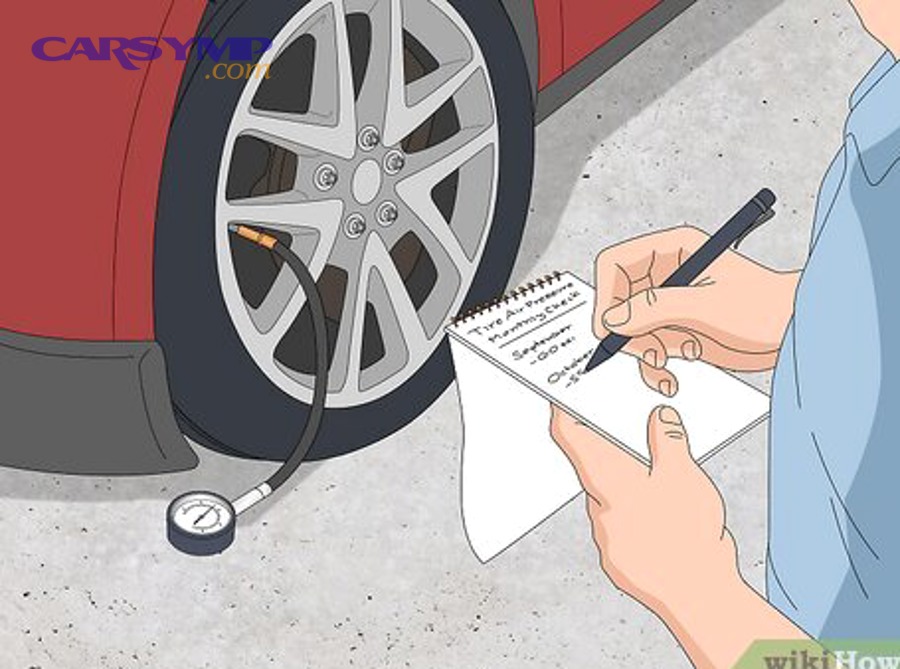
How Does Tire Pressure Change the Tire’s Contact Patch?
The contact patch is the small footprint of rubber that actually touches the road at any given moment. Its size, shape, and pressure distribution are directly controlled by how much air is inside the tire — and this footprint has a profound effect on how much noise your tires generate.
When a tire is under-inflated, the contact patch widens and flattens. More rubber is pressed against the road surface, which increases the road-to-rubber ratio. As the tire rotates, that larger, softer patch continuously deforms — flattening at the bottom of each revolution and rounding out again — and this constant flexing creates friction-based vibration noise that resonates through the wheel assembly and into the chassis. Drivers typically experience this as a low, droning roar that worsens at highway speeds.
When a tire is over-inflated, the opposite geometry appears. The contact patch shrinks to a narrow central strip, and the tire becomes rigid rather than compliant. Instead of conforming to small road imperfections, it bounces off them — transmitting sharp, high-frequency shocks directly into the suspension. On rough pavement, this produces a noticeably harsher and louder ride. The center of the tread also wears faster under this condition, which creates a new noise problem once that uneven wear pattern becomes established.
A useful mental image: think of an under-inflated tire like a soft-soled shoe walking on gravel — it conforms to every pebble and scuffs audibly. An over-inflated tire is like a hard-soled shoe on the same surface — it clicks and clacks off every irregularity with no cushioning.
How Does Sidewall Stiffness Influence Road Vibration and Cabin Noise?
Sidewall stiffness is the other half of the pressure-noise equation, and it operates through a different physical mechanism than the contact patch. Where the contact patch determines how much rubber meets the road, the sidewall determines how much of the resulting vibration gets absorbed before it reaches the car body.
At higher inflation pressures, sidewalls become stiffer and less compliant. They lose their natural ability to flex and absorb road irregularities — small bumps, expansion joints, gravel, and pavement texture variations — and instead pass those forces upward through the wheel, hub, and suspension into the chassis. This vibration transmission is what drivers hear as road noise inside the cabin: the lower the sidewall’s ability to absorb, the more the car body itself becomes a resonating chamber.
At lower pressures, sidewalls flex more readily. While this does absorb some shock, excessive flex introduces its own noise mechanism — the sidewall deforms so much during each rotation that it creates a slapping or thudding sensation, and the irregular stress distribution across the tire carcass generates structural vibrations that travel through the same chassis path. The key insight is that both extremes — too stiff and too compliant — produce noise, just through different acoustic pathways.
According to a study published on ResearchGate analyzing fifteen tires (seven winter, seven summer, one all-season) across consistent road conditions, a decrease in tire pressure of approximately 2 bar produced an average noise reduction of 1.5 dB — a measurable but modest change that confirms pressure is a real but not dominant noise variable.
Does High Tire Pressure Make Road Noise Worse?
Yes, high tire pressure does make road noise worse in most driving conditions, primarily because over-inflation hardens the tire surface, reduces the contact patch, and transfers more pavement shock directly into the vehicle structure instead of absorbing it.
However, the degree to which over-inflation worsens noise depends significantly on the type of road you are driving on — a detail that explains why some drivers notice the effect dramatically while others barely register it.
What Happens to Road Noise When Tires Are Overinflated?
When tires are over-inflated, the tire carcass loses its designed level of compliance. The rubber, which under normal pressure gently wraps around minor road surface variations, instead bounces off them. Each bounce transmits a brief but sharp impact force into the wheel rim, then up through the hub bearing, suspension arm, and strut tower into the vehicle body. Multiply that by four wheels rotating hundreds of times per minute, and the cumulative acoustic effect is a noticeably louder, harsher cabin environment.
The noise character changes too. Over-inflated tires tend to produce a higher-pitched, sharper sound compared to the low drone of under-inflated tires. On chip-seal roads — the rough, pebbled surface common on many state highways — over-inflated tires sound significantly louder than they would on smooth asphalt, because each pebble delivers a distinct impact that a normally inflated tire would largely absorb.
There is also a secondary effect that unfolds over time: over-inflation concentrates tire wear on the center strip of the tread. As the center wears down faster than the shoulders, the tread pattern becomes uneven. An uneven tread pattern generates inconsistent airflow through the tread grooves and creates the kind of irregular surface contact that produces a persistent, worsening roar — one that does not go away even after you correct the pressure, because the damage to the tread profile is already done.
Is There a PSI Level Where Road Noise Peaks?
Road noise does not increase in a perfectly linear relationship with PSI — instead, noise tends to rise sharply once pressure moves meaningfully beyond the manufacturer’s recommended range. Within the recommended window, noise changes are minimal. Outside it, the acoustic penalties accelerate.
The manufacturer’s recommended PSI (found on the door placard, not the tire sidewall) represents the engineered optimum: the pressure at which the contact patch, sidewall flex, rolling resistance, load capacity, and wear characteristics are all balanced. This balance happens to also minimize noise, because it maximizes the tire’s designed vibration-absorption behavior. Moving significantly above this number disrupts that balance and begins the cascade of effects described above.
It is important to note that the maximum pressure stamped on the tire sidewall is not a target — it is a safety ceiling. Running at or near maximum sidewall pressure on a vehicle whose door placard specifies a significantly lower number will produce measurably more road noise as well as a harsher, less controlled ride.
Does Low Tire Pressure Make Tires Louder?
Yes, low tire pressure also makes tires louder, but through a different mechanism than over-inflation. Under-inflated tires generate noise primarily through excessive deformation, irregular contact patch behavior, and the vibration patterns that excessive sidewall flex introduces.
Specifically, the increased road-to-rubber contact area creates more tread-level friction and air turbulence within the grooves and sipes of the tire. The tread blocks, designed to manage airflow at a specific contact geometry, begin to operate outside their design parameters — trapping and releasing air unevenly, which creates the characteristic low-frequency roar associated with soft tires. Additionally, the over-stressed shoulders of the tire wear in a wavy, cupped pattern over time. Once that heel-toe or cupping wear pattern is established, it generates its own rhythmic noise at every speed — a thumping or rumbling that worsens progressively.
At severely low pressures (10 or more PSI below recommended), the noise is accompanied by real safety risks: reduced steering response, heat buildup in the tire carcass, and risk of sidewall failure. At that point, tire noise is the least of the driver’s concerns.
What Types of Tire Noise Are Caused by Incorrect Tire Pressure?
There are three main categories of pressure-related tire noise — deformation noise, impact noise, and wear-pattern noise — classified by the physical mechanism that produces them and the pressure condition that triggers each one.

Understanding which type of noise you are hearing is the foundation of good tire noise diagnosis, because each sound points to a different underlying cause and requires a different corrective action.
What Does a Humming or Droning Noise Indicate About Tire Pressure?
A humming or droning noise — a continuous, low-frequency tone that rises with vehicle speed — most commonly indicates that under-inflation has already caused uneven shoulder or tread wear. The noise itself is not directly from the low pressure in real time; rather, it is the acoustic result of the wear damage that chronic under-inflation has produced.
Key characteristics of this sound:
- Constant and speed-dependent: The hum gets louder as you accelerate and decreases when you slow down
- Does not change with steering input: Unlike wheel bearing noise, a pressure-related hum remains consistent whether you are going straight or turning gently
- Often comes from one or two tires: Because wear patterns develop unevenly, the hum is usually more pronounced on one axle
The diagnostic test here is straightforward: if the hum changes noticeably when you weave gently left and right on an empty road, it is more likely a wheel bearing issue (which shifts load off the bearing as you turn) than a tread-wear problem. If it stays constant regardless of direction, check your tread surface for uneven wear and cross-reference with your inflation history.
What Does Thumping or Roaring Noise Say About Your Tire Inflation?
A rhythmic thumping at lower speeds or a broad, low roar that fills the cabin at highway speeds are both strong indicators of significant under-inflation that has progressed to flat-spotting, cupping, or heel-toe wear on the tire tread. Tire noise changes with road surface clues are especially helpful here: if the roar intensifies dramatically on rough concrete but quiets on smooth asphalt, the tread surface is almost certainly irregular.
Thumping specifically suggests flat spots — areas of the tire that have flattened from prolonged parking under low pressure or from the tire being driven underinflated long enough to deform the carcass. The tire is no longer perfectly round, and each revolution produces one distinct thump as the flat section contacts the road.
Roaring is a broader, more diffuse sound that suggests a more widespread irregular contact pattern — often from cupped or feathered tread. Cupping (also called scalloping) produces an undulating tread surface with high and low spots alternating across the tire’s circumference. Each high spot hits the road with more force than it should, and each low spot loses contact briefly, producing the rolling, wave-like roar that is difficult to tune out on long drives.
Rotating tires to confirm noise source is one of the most reliable diagnostic techniques available to any driver: if the roar moves from the front axle to the rear axle after a rotation, the problematic tire is confirmed. If the sound does not follow the tire after rotation, the issue is more likely alignment, suspension, or a wheel bearing rather than the tire itself.
Is a High-Pitched Whining Sound Related to Tire Pressure?
A high-pitched whining or screeching sound is less directly linked to tire pressure itself and more commonly associated with alignment problems, wheel imbalance, or feathering wear — though incorrect pressure can be the root cause that eventually produces those conditions.
Here is how the indirect chain works: a tire consistently run at the wrong pressure (either high or low) wears unevenly. Uneven wear produces feathering — where the leading edge of each tread block is higher than the trailing edge, or vice versa. That asymmetric tread surface generates a high-frequency scrubbing noise as it rolls across the pavement, producing the whine that drivers often mistake for a brake or alignment issue.
The diagnostic implication is important: if you correct your tire pressure and the whining continues, pressure alone will not fix it. The tread profile has already been compromised. The next steps are wheel alignment (to address the directional wear cause), tire rotation (to slow further uneven wear), and potentially tire replacement if the feathering is already significant. Pressure correction at this stage prevents further damage but does not undo what has already occurred.
How Does Optimal Tire Pressure Reduce Road Noise?
Optimal tire pressure reduces road noise by restoring the tire’s designed contact geometry — balancing the contact patch size, sidewall compliance, and tread wear rate simultaneously, so that the tire operates within the acoustic envelope its engineers intended.
The recommended method for achieving this is a three-step process — locate the correct PSI specification, measure accurately with a quality gauge, and check regularly — and the expected outcome is a measurable noise reduction along with improved ride quality and extended tire life.
How to Check Tire Pressure to Minimize Road Noise
Checking tire pressure correctly is not complicated, but several common mistakes undermine the accuracy of the reading and the effectiveness of the adjustment:
Step 1 — Find the correct target PSI. Look at the sticker on the inside of the driver’s door jamb (the door placard). This number — not the maximum pressure printed on the tire sidewall — is your target. Many vehicles specify slightly different pressures for front and rear tires, so note both.
Step 2 — Check tires when cold. Tire pressure rises as tires heat up from driving, because air expands with temperature. A tire that has been driven even five miles will read 4–6 PSI higher than its true cold pressure. Check pressure first thing in the morning or after the car has been parked for at least three hours to get an accurate baseline reading.
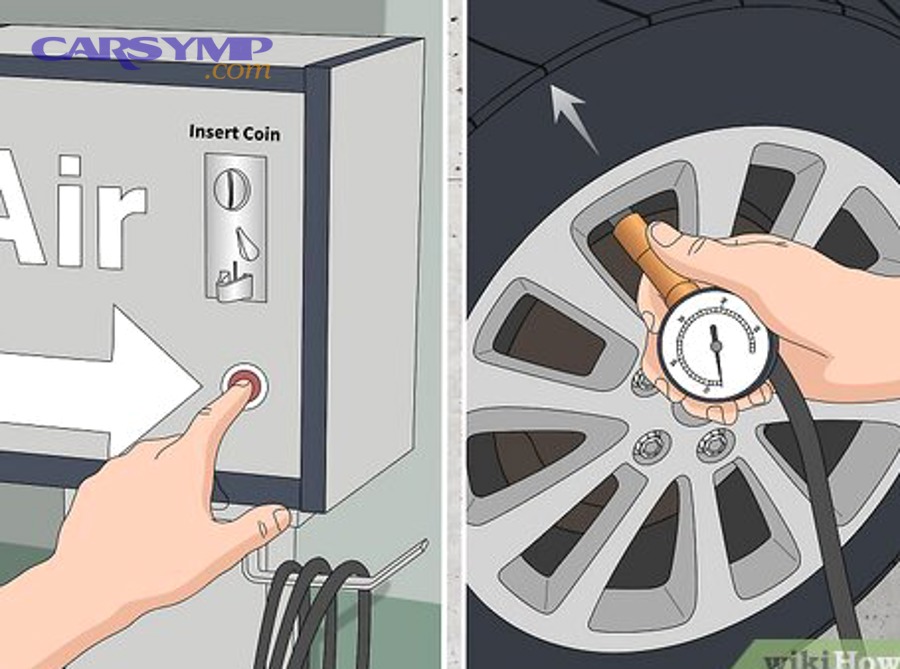
Step 3 — Use a quality gauge. Stick gauges are adequate but can be inconsistent. A digital gauge ($10–$20) provides reliable, repeatable readings without the mechanical variability of analog versions.
Step 4 — Adjust for seasonal temperature changes. For every 10°F drop in ambient temperature, tire pressure drops approximately 1 PSI. In climates with significant seasonal temperature swings, pressure that was correct in summer can fall noticeably below target by midwinter — enough to begin producing the deformation noise associated with under-inflation.
Step 5 — Check at least once a month. Tires lose 1–2 PSI per month through normal permeation, even without any puncture or valve leak. Monthly checks are the minimum frequency needed to stay within the optimal range consistently.
How Much Can Correct Tire Pressure Actually Reduce Road Noise?
Correcting tire pressure to the manufacturer’s recommended specification typically reduces road noise by 1 to 2 decibels in real-world driving conditions — a modest but perceptible improvement, particularly in quieter vehicles where ambient noise levels are already low.
It is important to set realistic expectations here. Road noise is a shared result of multiple variables, and tire pressure is only one contributor. Pavement type alone accounts for roughly half of the total road noise a vehicle experiences: a properly inflated tire on worn, rough concrete can be significantly louder than the same tire running slightly outside optimal pressure on smooth, dense asphalt. Pressure optimization works best as part of a broader maintenance approach — not as a standalone cure for a noisy ride.
The compound benefit of correct pressure, however, is more significant than the immediate noise reduction suggests. By preventing the uneven wear patterns that chronic over- or under-inflation causes, correct pressure also prevents the progressive noise escalation that follows tread damage. In other words, maintaining correct PSI today avoids the much louder noise problems — cupping, feathering, flat-spotting — that develop over months of incorrect inflation.
According to TireMart.com, under-inflated tires create a larger road-to-rubber ratio that measurably increases noise output, and the fix is as simple as checking pressure monthly and restoring it to the placard specification.
Is Tire Pressure the Only Factor That Affects Road Noise?
No, tire pressure is not the only factor that affects road noise — it is one of at least five major variables, alongside tread wear condition, wheel alignment and balance, road surface type, and tire design, all of which interact to determine how loud your ride feels.
Understanding where pressure fits within this broader noise ecosystem helps drivers prioritize the right fixes and avoid the frustration of correcting pressure and then wondering why the roar hasn’t disappeared.
The following table summarizes the five main contributors to road noise and their relative influence, to give a clear picture of how they compare:
| Factor | Primary Noise Mechanism | Noise Impact Level | Fixable By Driver? |
|---|---|---|---|
| Tire Pressure | Contact patch size, sidewall flex | Moderate (1–2 dB direct) | Yes — check monthly |
| Tread Wear (uneven) | Irregular road contact, cupping, feathering | High | Rotation, alignment, replacement |
| Wheel Alignment/Balance | Directional wear, vibration | High | Professional service |
| Road Surface Type | Pavement texture, aggregate size | Very High (~50% of total) | No — road-dependent |
| Tire Design/Compound | Tread pattern, rubber softness, noise rating | High | Yes — at time of purchase |
This table shows that while pressure is addressable and important, road surface and tread condition typically have a larger absolute effect on the noise a driver experiences day to day.
How Does Tire Pressure Compare to Tread Wear as a Noise Factor?
Tread wear — particularly uneven wear in the form of cupping, feathering, or heel-toe patterns — generally has a larger and more persistent noise impact than tire pressure in isolation. However, the two are closely linked, because incorrect tire pressure is one of the primary causes of the uneven wear patterns that amplify noise.
When tires wear evenly, the contact between tread and road remains smooth and consistent, and noise stays within the tire’s designed acoustic range. When tires wear unevenly — as they do when chronically under- or over-inflated — the contact surface becomes irregular. High spots hit the road harder than designed, low spots skip briefly off the surface, and the resulting irregular vibration pattern generates significantly more noise than even wear would produce at any pressure level.
The practical priority order is clear: correct tire pressure first (cheapest and fastest), then assess wear condition visually and by touch (run your hand across the tread surface to feel for waves, ridges, or uneven sections), then address rotation, alignment, or replacement as the wear pattern indicates. Pressure correction that comes after significant wear has already developed will stabilize the situation and prevent further deterioration — but it will not reverse the acoustic damage of tread that has already been compromised.
How Does Road Surface Type Interact With Tire Pressure to Influence Noise?
Road surface type and tire pressure interact in a compounding relationship: the rougher the pavement, the more dramatically incorrect tire pressure amplifies noise, and the larger the benefit of maintaining correct inflation becomes.
On smooth, dense asphalt — the quietest road surface type — the contact patch geometry that pressure controls matters relatively little acoustically, because the pavement itself provides little acoustic energy to amplify. A tire running 5 PSI over or under recommended will sound nearly the same to most drivers on a quality smooth surface.
On rough concrete, chip-seal (tar-and-pebble), or worn grooved highway surfaces — which are significantly louder pavement types — the same 5 PSI deviation produces a much more noticeable noise difference. Every small aggregate and surface irregularity becomes an opportunity for the mis-pressured tire to either bounce off sharply (over-inflation) or deform excessively (under-inflation), and each of those interactions adds measurable acoustic energy to the cabin.
This explains why many drivers find that a pressure correction makes a dramatic noise difference in some areas and almost no difference in others: the variable is the road beneath them, not their tires or their pressure. It also explains why drivers moving from smooth suburban roads to highway surfaces with rougher concrete often suddenly notice a tire noise problem that was not apparent before — the pavement exposed what the smooth road was masking.
What Else Can You Do to Get a Quieter Ride Beyond Adjusting Tire Pressure?
Getting a quieter ride beyond pressure adjustment involves three additional layers of intervention: choosing the right tire type for your specific noise sensitivity, selecting tires with a favorable acoustic rating at the point of purchase, and adding physical sound-dampening materials either inside the tire or within the vehicle cabin.
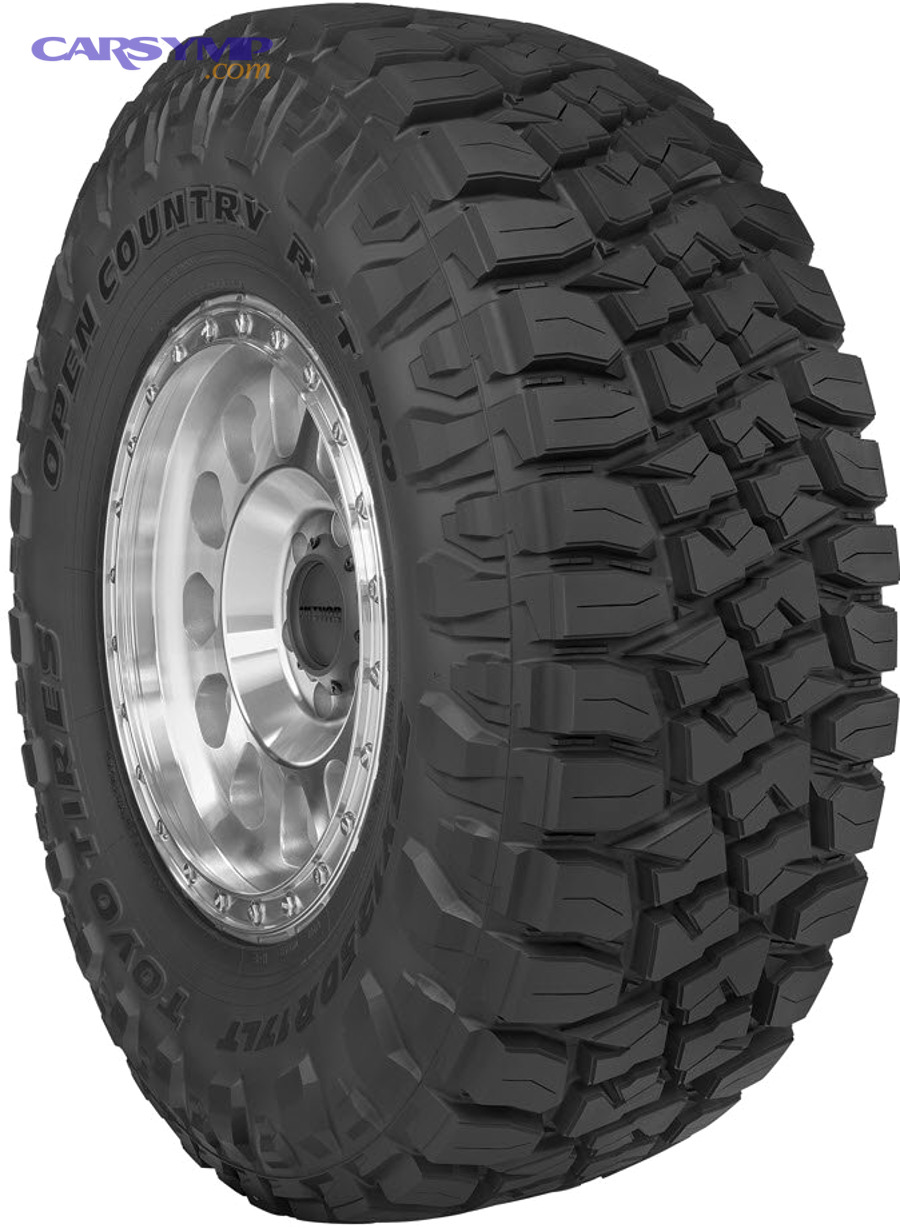
Each of these approaches addresses a different part of the noise pathway — from the tire-pavement interface all the way to the driver’s ears — and they are most effective when combined rather than applied in isolation.
Does Tire Type Affect How Much Pressure Influences Road Noise?
Yes, tire type significantly affects how sensitively noise responds to pressure changes, because different tire compounds and constructions have different levels of stiffness, vibration damping, and contact patch flexibility built in.
Winter tires, formulated with softer rubber compounds to maintain grip in cold temperatures, absorb pressure changes differently than summer tires. Their softer carcass provides more inherent vibration damping at a given PSI, which means the noise penalty for moderate over-inflation is less severe than it would be with a stiffer summer tire. However, winter tires also produce more baseline tread noise on dry pavement due to their more aggressive, open tread patterns — so the pressure-noise relationship starts from a different baseline.
All-season tires show the broadest pressure sensitivity for noise. Their compromise construction — neither as soft as winter tires nor as firm as summer performance tires — means they respond more noticeably to pressure deviations in either direction. Drivers running all-season tires will generally notice the most meaningful noise improvement from dialing in their pressure precisely to the placard specification.
Performance summer tires, with their stiffer rubber and shallower, more densely packed tread patterns, tend to be inherently louder on rough roads regardless of pressure but are less sensitive to moderate pressure variations within a reasonable range.
Do Noise-Rated Tires (EU Tire Label) Perform Better at Controlling Road Noise?
Yes, tires that carry a favorable noise rating on the EU tire label are engineered to produce lower rolling noise at the source, and they consistently outperform unrated or poorly rated tires at any given inflation pressure.
The EU tire noise label rates tires on a scale of one to three sound wave symbols, accompanied by a decibel figure measured under standardized test conditions. A one-wave tire (quietest category) generates noticeably less pavement-interaction noise than a three-wave tire, independent of pressure. The rating reflects design choices made at the tread pattern and compound level — factors that pressure adjustment cannot replicate.
The practical implication for drivers prioritizing cabin quietness: when replacing tires, selecting a tire with a one- or two-wave EU noise rating and then maintaining correct inflation will deliver significantly better results than running a three-wave tire at perfect pressure. The best acoustic outcome comes from combining a low-noise tire design with correct inflation — the label tells you the ceiling of what pressure management can achieve.
Can Acoustic Insulation Materials Compensate for Pressure-Related Road Noise?
Acoustic insulation materials can meaningfully reduce the amount of pressure-related road noise that reaches the cabin, but they work downstream of the noise source — they reduce transmission rather than reduce generation. Correct tire pressure and proper tire selection address the noise at its origin; insulation manages what gets through afterward.
Two approaches are most effective:
Foam-lined tires (also called acoustic tires or comfort foam tires): Some original equipment and replacement tires include a strip of polyurethane foam bonded to the inside of the tread area. This foam specifically targets tire cavity resonance — the booming, hollow sound created when sound waves bounce inside the air chamber of the tire. It does not affect pavement-impact noise directly but significantly reduces the resonant amplification that makes road noise feel deeper and more intrusive in the cabin. Several OEM manufacturers fit these tires as standard on quieter vehicles and EVs.
Cabin-side insulation — including wheel arch liners made from dense foam or mass-loaded vinyl, and floor or firewall damping panels — intercepts noise that has already passed through the tire and suspension and is traveling through the vehicle structure toward the occupants. These modifications are more invasive and costly than tire selection or pressure management but can produce dramatic cabin noise reductions in vehicles where the factory insulation is minimal.
How Do EV Owners Experience Tire Pressure and Road Noise Differently?
EV owners experience tire pressure and road noise in a fundamentally more noticeable way than drivers of conventional vehicles, for one primary reason: there is no engine noise masking the road. In a combustion vehicle, the constant background hum of the powertrain fills the frequency range where tire noise lives, partially masking it. Remove that masking, and every PSI deviation, every tread irregularity, and every pavement texture becomes acoustically exposed.
This makes correct tire pressure maintenance especially high-value for EV drivers. A pressure error that a combustion car driver might never notice becomes clearly audible in an electric vehicle at highway speeds. Many EV drivers report that a simple pressure correction — bringing tires from several PSI below placard back to specification — produces a cabin noise improvement that feels dramatic, precisely because the baseline is so quiet.
There is also a unique pressure trade-off specific to EVs: many electric vehicles recommend higher inflation pressures than comparable combustion cars, specifically to reduce rolling resistance and preserve range. This efficiency benefit comes at a noise cost — higher pressure on the stiff, wide tires common on EVs can produce a firmer, louder ride on rough roads. Foam-lined acoustic tires were in part developed to address exactly this compromise: allowing EV manufacturers to run the higher pressures needed for efficiency without the acoustic penalty that would otherwise accompany them.
For EV owners experiencing cabin road noise, the recommended sequence is: verify pressure against the door placard first, assess tread wear condition second, and then evaluate whether an acoustic tire upgrade makes sense as a longer-term solution — particularly if the vehicle is frequently driven on rough highway surfaces where the noise is most pronounced.