How to Diagnose Tire Noise: Causes, Warning Sounds & Fixes for Every Driver
Tire noise diagnosis is the process of identifying the mechanical or structural cause behind abnormal sounds coming from your tires while driving. Every driver will encounter some level of road noise throughout the life of their vehicle, but not every sound signals a problem. The challenge lies in knowing the difference between noise that is built into a tire’s design and noise that is warning you of something wrong under your car. Diagnosing tire noise correctly means matching the specific sound you hear — a hum, a roar, a thump, a whine — to the underlying cause, then choosing the right repair before the problem escalates into something dangerous or expensive.
Beyond identifying the sound itself, accurate tire noise diagnosis requires understanding what else could be making that noise. Wheel bearings, brake components, and worn suspension parts all produce sounds that travel through the same part of the car as tire noise, and they are frequently mistaken for one another. A driver who replaces a set of tires when the real problem is a failing wheel bearing has spent money without solving the issue. Equally, a driver who replaces a bearing when the culprit is cupping and uneven tread noise on a worn tire faces the same outcome. Knowing how to separate these noise sources is a core part of the diagnostic process.
The fixes available to drivers and technicians vary depending on the root cause. Some solutions are straightforward and inexpensive — correcting tire pressure, removing debris from treads, or scheduling a rotation. Others require professional tire & wheel service, including alignment correction, bearing replacement, or full tire replacement. Understanding which fix applies to which noise type prevents unnecessary repairs and helps you communicate clearly with a mechanic before authorizing any work.
To make this guide as practical as possible, it covers not only the standard diagnostic scenarios but also edge cases — how tire noise behaves differently on electric vehicles, how road surface affects what you hear, and why drivers so often feel the noise is coming from the wrong corner of the car. Next, let’s begin with the most important foundation: understanding what tire noise actually is, and how to tell when it crosses the line from normal to dangerous.
What Is Tire Noise and How Do You Know When It’s a Problem?
Tire noise is any sound generated at the contact point between a tire and the road surface, ranging from expected operational hum to abnormal sounds that indicate a mechanical issue requiring attention.
To better understand this distinction, it helps to look at what tire noise actually involves. When a tire rolls, its tread blocks compress and release against the road, air gets trapped and expelled from the grooves, and the rubber compound vibrates at frequencies that travel up through the wheel, axle, and chassis into the cabin. That process always produces some sound. What turns normal sound into a diagnostic problem is a change — noise that gets louder over time, noise that starts suddenly, or noise that changes its character when you accelerate, brake, or steer.
What Does Normal Tire Noise Sound Like?
Normal tire noise is a steady, low-level hum or road roar that stays consistent with speed and does not change when you turn the wheel. Drivers with wide tires or tires with deep, aggressive tread — such as all-terrain or winter models — will naturally hear more road noise than those running narrow, smooth all-season tires. This is not a warning signal. It is simply the acoustic result of a larger contact patch and more tread void channeling air.
Tread pattern design plays a major role in noise level. Tires with asymmetric or staggered tread block layouts are engineered specifically to reduce the tonal frequency of road noise, while tires designed for heavy towing or off-road use prioritize grip over quiet operation. Additionally, brand-new tires sometimes sound louder than expected for the first few hundred miles. The rubber compound and tread blocks need a short break-in period to conform to road contact, after which the noise typically settles.
What Are the Warning Signs That Tire Noise Needs Immediate Diagnosis?
Warning signs that tire noise requires immediate diagnosis include: noise that increases proportionally with speed, sound that changes pitch or volume when you steer gently left or right, rhythmic thumping that matches your wheel rotation rate, and any new noise that appeared suddenly without a change in road surface.
These specific patterns matter because they each point toward a different mechanical cause. Noise that grows louder as speed increases but does not change during steering is a classic tire wear or imbalance indicator. Noise that changes when you shift your weight slightly across lanes at highway speed is a strong signal of a wheel bearing issue. Rhythmic thumping that pulses like a heartbeat at low speeds and smooths out at higher speeds often points to a flat spot or tread separation.
A quick self-check before visiting a shop should include:
- Confirming whether the noise is present at all speeds or only above a certain threshold
- Noting whether the sound changes when you brake lightly
- Identifying which corner of the vehicle the noise seems loudest from
- Checking whether the sound worsens on certain road surfaces but disappears on smooth pavement
What Are the Main Causes of Abnormal Tire Noise?
There are five main categories of abnormal tire noise causes: uneven tread wear, improper tire inflation, wheel misalignment, wheel imbalance, and mechanical component failure — each producing a distinct type of sound and requiring a different repair approach.

Specifically, understanding these categories before you listen to your tires gives you a diagnostic framework rather than a guessing game. Each cause leaves a signature — in the sound itself, in the timing of the noise, and in the visual condition of the tire. The table below summarizes the five main cause categories, the sounds they typically produce, and the primary repair direction for each.
| Cause | Typical Sound | Primary Fix |
|---|---|---|
| Uneven Tread Wear | Humming, roaring, growling | Rotation, alignment, replacement |
| Improper Inflation | Slapping, thumping, screeching | Pressure correction |
| Wheel Misalignment | Humming, squealing, buzzing | Professional alignment service |
| Wheel Imbalance | Rhythmic thumping, vibration | Balancing service |
| Component Failure (bearing, suspension) | Grinding, growling, clicking | Bearing or suspension replacement |
This table is intended as a first-pass diagnostic reference. The sections below examine each cause in detail so you can match what you hear to the right root cause.
Does Uneven Tire Wear Cause Noise?
Yes, uneven tire wear is one of the leading causes of abnormal tire noise because irregular tread depth creates inconsistent contact between the rubber and the road, generating a roaring or humming sound as the uneven surface rotates at speed.
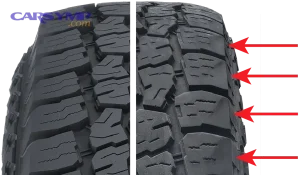
Specifically, there are three wear patterns most closely linked to noise: cupping (also called scalloping), feathering, and one-sided wear. Cupping and uneven tread noise diagnosis is particularly important because cupped tires — where the tread develops a wavy, dipped surface — produce a loud, rhythmic howling that many drivers mistake for a failing wheel bearing. Feathering, where tread ribs are rounded on one side and sharp on the other, typically produces a lower-frequency hum. One-sided wear, caused by Alignment issues causing tire noise, produces a steady scrubbing sound from the tire that carries the most load on its inner or outer edge.
All three patterns are also diagnostic clues about what caused the wear. Cupping almost always points to worn or weak shocks and struts. One-sided wear is a direct symptom of a misaligned axle. Finding the wear pattern tells you not just how to address the noise, but what upstream mechanical problem must be corrected to stop the noise from returning after new tires are installed.
Can Low or High Tire Pressure Cause Tire Noise?
Yes, both under-inflation and over-inflation directly affect the Tire pressure and noise relationship, though they produce distinctly different sounds and cause different types of road contact problems.
Underinflated tires sit flatter against the road than they should, spreading the contact patch wider and causing the sidewall to flex excessively with every rotation. This sidewall flex produces a slapping or thumping sound at lower speeds that can be mistaken for a loose wheel or flat spot. At higher speeds, the sound blends into a dull roar. Overinflated tires, by contrast, are stretched taut with less rubber contacting the road. The reduced contact patch creates a harsher, louder ride — particularly on rough pavement — because the tire has less ability to absorb road imperfections.
Checking tire pressure is always the first step in any noise diagnostic process because it costs nothing and takes under two minutes. Use a quality gauge and compare your readings to the manufacturer’s recommended pressure, found on the sticker inside the driver’s door jamb or in the owner’s manual. Note that the TPMS warning light only activates when pressure drops approximately 25% below the recommended level — meaning a tire can be meaningfully underinflated and producing noise without triggering a dashboard warning.
How Does Wheel Misalignment Contribute to Tire Noise?
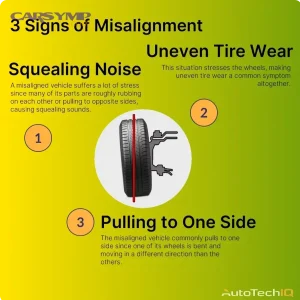
Alignment issues causing tire noise operate by forcing the tire to travel at a slight angle to its direction of movement, which causes the tread to scrub against the road rather than roll cleanly across it. This scrubbing produces a persistent humming, buzzing, or in more severe cases, squealing sound.
The three alignment parameters most often linked to noise are toe, camber, and caster. Toe misalignment — where the fronts of the tires point inward or outward relative to each other — is the most common noise trigger and produces a fast-wearing feathered tread pattern. Camber misalignment — where the tire leans inward or outward from vertical — creates one-sided wear and a lower-frequency hum. Drivers will often notice secondary symptoms: the vehicle pulling toward one side on a flat, straight road, or the steering wheel sitting off-center even when driving straight. Either symptom alongside tire noise is a strong indication that a wheel alignment service is overdue.
How Does Wheel Imbalance Cause Thumping Tire Noise?
Wheel imbalance causes a rhythmic thumping or vibration noise because an uneven weight distribution on the wheel and tire assembly creates a repeating heavy spot that pounds against the road surface with every full rotation.
This type of noise typically presents first as a light vibration felt in the steering wheel or seat, before progressing into an audible thump. The frequency of the noise increases with speed, which is a useful diagnostic marker. Wheel weights — the small adhesive or clip-on metal pieces attached to the wheel rim during balancing — can fall off after hitting a curb or pothole, immediately creating an imbalance. Tire replacement, rotation, or even significant tread wear can also shift the balance point enough to generate noise. As a general guideline for Preventing tire noise with proper maintenance, tire balancing should be performed every 6,000 to 9,500 kilometers or whenever you notice new vibration or sound accompanying a speed increase.
What Type of Noise Is Your Tire Making? A Sound-by-Sound Diagnosis Guide
There are five primary tire noise types — hum, roar, squeal, thump, grinding, and clicking — each of which corresponds to a specific mechanical cause and points toward a specific repair pathway.

This section is the practical core of tire noise diagnosis. Each noise type below is described by its acoustic character, the conditions under which it appears, and the most likely cause. Matching your sound to the correct category significantly narrows the diagnostic possibilities before you ever visit a shop.
What Causes a Humming or Droning Tire Noise?
Tire noise types: hum or drone is most commonly caused by uneven tread wear, wheel bearing degradation, or alignment problems — and distinguishing between these three causes requires one specific test.
That test involves gently and safely swerving slightly left and right at highway speed while noting whether the hum changes pitch or volume. If the sound noticeably shifts when you move weight from one side to the other, a wheel bearing is the likely source rather than the tire itself. This is the most reliable field test for the Wheel bearing vs tire noise comparison. Bearing noise changes with lateral load transfer; tire noise typically does not. If the hum stays constant regardless of steering input but increases with speed, uneven wear or alignment is the more likely cause. In either case, Rotating tires to confirm noise source is a standard next step — if the noise moves to a different corner after rotation, the tire itself is the problem; if it stays in the same location, the issue is in the wheel assembly or suspension.
What Causes a Squealing or Screeching Tire Noise?
Squealing or screeching tire noise is caused by tire slip against the road surface, and it most commonly occurs due to under-inflation, severe misalignment, abrupt acceleration or braking, or brake component wear rather than the tire itself.
A harmless squeak when making a slow, tight turn in a parking garage — particularly on smooth painted concrete — is normal and can be ignored. The same sound on regular road surfaces at normal driving speeds is not normal. At that point, the squeal is most likely caused by under-inflated tires lacking enough pressure to maintain proper road contact during directional changes, or by a misaligned wheel dragging slightly across the pavement. If the squeal occurs only when braking, the cause is almost certainly brake-related — specifically worn brake pads whose metal wear indicator is contacting the rotor. That sound is not a tire problem, but it requires equally urgent attention.
What Causes a Thumping or Womp-Womp Tire Noise?
A thumping or womp-womp tire noise is caused by an irregularity in the tire’s shape or weight distribution — most commonly under-inflation, tread separation, a flat spot from prolonged parking, or significant wheel imbalance.
The womp-womp pattern is distinctive because it pulses rhythmically in time with the tire’s rotation. At low speeds the thumps are slow and distinct; as you accelerate they merge into a faster, rougher vibration. Tread separation is the most serious cause in this category: when a tire’s internal belts begin to delaminate, the tread surface becomes uneven and the tire starts to lose structural integrity. This condition worsens rapidly and can lead to a blowout, making it a safety-critical finding rather than a maintenance inconvenience. Any thumping noise accompanied by visible sidewall bulging or bubbling requires immediate tire replacement before further driving.
What Causes a Grinding or Scraping Tire Noise?
A grinding or scraping noise from the tire area is caused by metal-to-metal contact from worn brake pads, hard debris embedded in the tread, or deteriorated suspension components contacting the wheel assembly.
The key diagnostic distinction here is whether the grinding sound occurs constantly while driving or only when the brakes are applied. Grinding that appears exclusively during braking points to severely worn brake pads, where the metal backing plate is now contacting the rotor directly. Grinding that is present at all times and worsens with speed is more likely to be a wheel bearing in an advanced stage of failure, or a piece of gravel or road debris lodged deeply in the tread. Visually inspecting the tread face for embedded material is always the first step. If the treads are clear, a professional inspection of the brake and bearing assemblies is needed without delay.
What Causes a Clicking or Popping Tire Noise?
A clicking or popping noise originating near the tires is most often caused by road debris trapped in the tread grooves, a worn CV joint, or loose wheel hardware — and it is one of the easier tire-adjacent noises to self-diagnose with a basic visual inspection.
Debris-related clicking is consistent and rhythmic, matching wheel rotation speed, and usually disappears on its own after a few miles or after removing the embedded material. CV joint clicking is distinctly different — it becomes most pronounced during slow-speed turns and typically disappears at highway speeds or when driving in a straight line. If you hear a clicking sound that intensifies when turning left or right in a parking lot or slow-speed maneuver, the CV joint rather than the tire is almost certainly the source. Loose lug nuts can also produce an intermittent clicking or knocking, particularly noticeable at low speeds immediately after a tire has been removed and re-fitted.
How Do You Diagnose Tire Noise Step by Step?
Diagnosing tire noise accurately requires a structured three-phase process — a controlled test drive, a visual tire and tread inspection, and if needed, a professional workshop evaluation — that together narrow the cause from broad category to specific component.

This method is used by both experienced DIY drivers and professional technicians, though the depth of each phase differs depending on available tools. What follows is the complete workflow you can apply before and during a tire & wheel service appointment.
How to Perform a Tire Noise Test Drive Diagnosis
The test drive is the first and most information-rich phase of tire noise diagnosis. Conduct it on a familiar stretch of road at various speeds, ideally including both slower residential roads and a section of highway.
Follow this sequence:
- Start at low speed (20–40 mph): Listen for thumping or clicking that is rhythmic with wheel rotation. These noises are easiest to isolate before road noise increases at higher speeds.
- Accelerate to highway speed: Note whether noise increases proportionally with speed — a sign of wear, imbalance, or bearing issues.
- Make gentle lateral movements: On a clear road, shift slightly left and right. A bearing problem will cause the hum to shift or increase on one side; a tire problem typically will not.
- Apply the brakes lightly: Any noise that stops or changes under light braking is likely brake-related, not tire-related.
- Note road surface changes: Pay attention to whether Tire noise changes with road surface clues — a noise that disappears on smooth asphalt but returns on coarse concrete suggests the issue is amplified by road texture rather than caused by a mechanical defect.
Having a passenger ride in the rear seat during the test drive significantly improves noise localization, as cabin acoustics from the front seat can make it difficult to determine which axle the sound originates from.
How to Visually Inspect Tires for Noise-Related Defects
A visual inspection takes under ten minutes and can confirm or eliminate several of the most common noise causes before any tools are required.
Work through this checklist on a flat surface with adequate lighting:
- Check tire pressure on all four tires with a gauge and compare to the door-jamb specification
- Run your hand across the tread face of each tire, feeling for raised or dipped sections that indicate cupping
- Look at the tread edges for feathering — tread blocks that are rounded on one side and sharp on the other indicate an alignment issue
- Check inner and outer tread depth on each tire — significant difference between the two sides indicates camber or toe misalignment
- Inspect the sidewalls for bulges, cracks, or swelling
- Look into the tread grooves for embedded stones, glass, or metal debris
For tread depth measurement, insert a quarter upside down into the main groove. If the top of the coin head is visible, the tread is at or below 4/32 inch — the threshold at which noise from wear becomes likely, and replacement should be planned. According to the National Highway Traffic Safety Administration (NHTSA), tires worn below 2/32 inch tread depth pose a significant safety risk in wet conditions, underscoring why combining noise diagnosis with a tread inspection is essential.
How Do Mechanics Diagnose Tire Noise in a Shop?
In a professional tire & wheel service environment, mechanics use three diagnostic tools that go beyond what a driver can assess visually: the lifted-vehicle spin test, road force balancing equipment, and chassis ears or stethoscope tools for precise sound localization.
During the lifted spin test, the technician raises the vehicle and spins each wheel by hand, listening and feeling for roughness, grinding, or resistance that indicates bearing wear. This test can confirm or eliminate a wheel bearing failure within minutes. Road force balancing goes beyond standard spin balancing by simulating the load applied to a tire as it rolls on the road. It detects radial force variation — an internal stiffness irregularity in the tire — that standard balancing misses entirely, and which is a common cause of thumping noise that persists even after a standard balance service. Chassis ears are small wireless microphones attached to different suspension and wheel components during a test drive that allow the technician to isolate exactly which component is generating the noise, solving the localization problem that makes tire noise so frequently misdiagnosed from inside the cabin.
Is That Noise Really the Tire — or Something Else?
The three mechanical systems most often confused with tire noise are wheel bearings, brake components, and suspension parts — each of which produces sounds that travel through the same vehicle structure as genuine tire noise and can be impossible to distinguish without a targeted diagnostic test.

This is one of the most practically important sections of any tire noise guide, because misidentifying the noise source leads directly to unnecessary repairs. The following comparisons give you the specific behavioral markers that separate each source from the others.
What Is the Difference Between Tire Noise and Wheel Bearing Noise?
In the wheel bearing vs tire noise comparison, the single most reliable distinguishing test is the highway swerve: bearing noise changes pitch or intensity when you gently shift vehicle weight side to side at speed, while tire noise stays consistent regardless of steering input.
A failing wheel bearing typically produces a cyclic growling, humming, or whine — which is why understanding whine explained in this context matters — that increases steadily with vehicle speed. The growl has a mechanical quality to it, almost like a low roar from within the wheel assembly rather than a surface noise from road contact. At early stages, the bearing noise may disappear at certain speeds or only appear above a specific threshold. As the bearing deteriorates, the noise becomes constant and progressively louder. The asymmetric loading of the bearing during a gentle lane change shifts stress from one side of the bearing to the other, changing the noise — something that simply does not happen with tire-generated sound. This test should always be performed safely on a clear road at steady highway speed with minimal traffic.
How Do You Tell Tire Noise Apart from Brake Noise?
Brake noise and tire noise are distinguished by one simple behavioral rule: brake noise is triggered or changed by applying the brakes, while tire noise is independent of braking and remains constant as long as the vehicle is moving at a given speed.
Worn brake pads produce a high-pitched squealing sound from the metal wear indicator contacting the rotor — this sound appears when the brakes are applied and typically stops when the pedal is released. In more advanced stages of brake wear, metal-to-metal grinding occurs continuously during braking but may also persist as a rubbing sound when coasting if the caliper is dragging. A sticking caliper — where the brake pad stays partially in contact with the rotor even when the pedal is not applied — produces a scraping or grinding sound that closely mimics a wheel bearing or tire issue. The diagnostic test here is to apply the brakes lightly and note whether the sound changes in any way. If it does, the brakes deserve inspection before any tire work is considered.
Can Suspension Problems Sound Like Tire Noise?
Yes, worn suspension components including shocks, struts, control arm bushings, and ball joints can all generate noise that travels through the wheel assembly and is perceived by the driver as tire noise — particularly at highway speeds or over uneven pavement.
Worn shocks and struts cause the wheel to bounce and skip more than it should over road imperfections, which amplifies contact noise and can produce a rattling or thumping that follows the rhythm of road bumps rather than wheel rotation speed. Deteriorated rubber bushings transmit vibration that would normally be damped into the chassis as audible noise. Ball joint wear can produce a clunking or knocking sound on turns and over bumps. The distinguishing characteristic of suspension noise is that it tends to respond to road surface quality more dramatically than tire noise — it worsens significantly on rough or broken pavement, while tire noise from wear or imbalance stays relatively consistent across smooth and rough surfaces. When noise source identification is ambiguous, a combined inspection covering tires, bearings, and suspension simultaneously is the most efficient path to an accurate diagnosis and a correct Repair cost estimate for common causes.
What Are the Fixes for Common Tire Noise Causes?
There are two primary tiers of tire noise repair: DIY fixes that drivers can perform without tools or professional assistance, and professional repairs that require shop equipment, alignment machinery, or component replacement — with the appropriate tier determined by the root cause identified during diagnosis.

The table below provides a quick-reference summary of repair options by noise cause, designed to help you walk into any tire & wheel service appointment with a clear understanding of what work is likely needed and what a reasonable repair cost estimate for common causes looks like.
| Noise Cause | DIY Fix Available? | Professional Service Needed | Approximate Cost Range |
|---|---|---|---|
| Under/over-inflation | Yes — inflate/deflate to spec | No | Free |
| Debris in tread | Yes — manual removal | No | Free |
| Wheel imbalance | No | Tire balancing | $15–$75 per axle |
| Uneven wear | No | Rotation ± tire replacement | $20–$200+ |
| Misalignment | No | Wheel alignment | $75–$150 |
| Wheel bearing failure | No | Bearing/hub replacement | $150–$400 per wheel |
| Worn brake pads | Limited | Brake pad/rotor service | $150–$400 per axle |
| Suspension component wear | No | Strut/shock/bushing replacement | $200–$800+ |
Cost ranges are approximate and vary by vehicle make, model, location, and parts quality.
When Can You Fix Tire Noise Yourself?
Three categories of tire noise cause are reliably addressable at home without professional tools: incorrect tire pressure, debris embedded in the tread, and a loose or missing center hubcap causing a rattling sound at low speeds.
Correcting tire pressure is always the first DIY step — it is free, takes two minutes, and eliminates one of the most common noise causes immediately. Check all four tires including the spare, use a reliable gauge rather than the gas station air fill estimator, and inflate to the number on the door jamb sticker rather than the maximum pressure printed on the tire sidewall. For tread debris, a visual inspection followed by careful removal with needle-nose pliers resolves clicking or ticking noise in minutes. A loose hubcap — identified by removing each hubcap and checking whether the noise disappears — can be reseated or replaced inexpensively. Any noise cause beyond these three categories requires professional diagnosis and service. Driving with a confirmed bearing failure, tread separation, or significant alignment issue while waiting for an appointment increases the risk of sudden component failure and compromises Safe-to-drive guidance with tire noise standards for your vehicle.
What Professional Repairs Resolve Tire Noise?
The five professional repairs that resolve the most common tire noise causes are: tire rotation, wheel balancing, wheel alignment, wheel bearing replacement, and tire replacement — with each addressing a specific root cause identified during the diagnostic process.
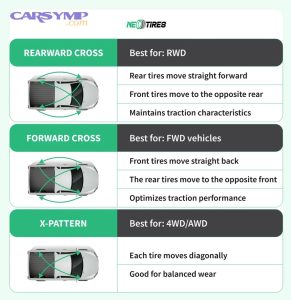
Tire rotation and rotating tires to confirm noise source serve a dual purpose: they both address uneven wear as a corrective measure and act as a diagnostic tool, since noise that moves to a different wheel position after rotation confirms the tire rather than the wheel assembly is the source. Wheel balancing corrects imbalance-induced thumping and should always accompany a new tire installation. Wheel alignment corrects the upstream cause of feathering and one-sided wear, stopping noise from recurring after new tires are installed. Wheel bearing replacement is required when the swerve test confirms bearing-generated hum or roar — a repair that should never be deferred, as a completely failed bearing can seize and cause loss of vehicle control. Tire replacement becomes necessary when wear has reached or exceeded legal limits, when cupping is severe enough that rotation cannot correct the noise, or when tread separation is found. Always replace tires in axle pairs when possible to maintain balanced handling characteristics.
Preventing tire noise with proper maintenance is ultimately the most cost-effective strategy of all. A routine that includes tire pressure checks monthly, rotation every 5,000–7,500 miles, balancing with each rotation, and alignment checks annually or after any significant impact reduces both noise occurrence and tire replacement frequency significantly.
Beyond the Basics — Special Tire Noise Situations Every Driver Should Know
There are four specialized tire noise scenarios that standard diagnostic guides rarely cover in depth: noise behavior in electric and hybrid vehicles, noise variation by tire category, the influence of road surface on diagnosis, and the psychoacoustic localization problem that causes drivers to identify the wrong source wheel.
These scenarios matter because they directly affect whether a standard diagnostic process gives you a correct answer. Knowing when your situation falls outside the normal diagnostic framework prevents misdiagnosis and unnecessary repairs.
Do Electric and Hybrid Vehicles Experience Different Tire Noise Problems?
Yes, electric and hybrid vehicles experience tire noise more acutely than combustion-engine vehicles, and they are particularly susceptible to a phenomenon called harmonic resonance noise that is rarely encountered in traditional vehicles.
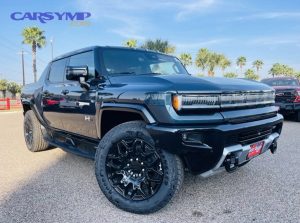
The fundamental reason is straightforward: internal combustion engines produce a constant layer of low-frequency background noise — the engine rumble — that masks a significant amount of road and tire noise from the driver’s perception. Remove that masking layer, as EVs do, and sounds that were always present become suddenly and sometimes alarmingly audible. Many new EV owners report what they describe as excessive tire roar or road noise on vehicles that are otherwise performing perfectly. In most cases, the tires themselves are functioning normally; they are simply no longer acoustically hidden by engine sound. Beyond perception, EVs add a structural challenge: their significant battery-derived weight increases the load on tires, accelerating tread wear and increasing the mechanical stress on wheel bearings. EV-rated tires with reinforced sidewalls and lower rolling resistance compounds address both the acoustic and structural demands of electric vehicle operation, and using non-EV-rated tires on a heavy electric vehicle can produce noise from premature wear that develops faster than the owner expects. For more in-depth guidance on EV-specific tire issues, resources like carsymp.com provide vehicle-specific diagnostic context useful for owners navigating these newer platforms.
Does Tire Noise Change Depending on the Type of Tire You Have?
Yes, tire noise varies substantially by tire category — all-season, performance, all-terrain, and winter tires each have distinct acoustic profiles determined by their tread block geometry, void ratio, and rubber compound hardness.
All-season tires are engineered for acoustic balance. Their tread blocks are arranged in staggered, varied-pitch patterns specifically designed to disrupt tonal resonance and produce a broad, low-frequency hum rather than a single-note drone that the ear finds intrusive. Performance tires prioritize contact patch size and lateral grip, which means wider tires with larger tread blocks — both of which increase road noise as a trade-off. All-terrain and mud-terrain tires are the noisiest category in normal road use, with their large, widely-spaced tread blocks generating a pronounced roar at highway speeds. Winter tires have sipes — thousands of small cuts in the tread blocks — that add a distinctive high-frequency hiss, particularly on dry pavement. Understanding your tire category’s normal acoustic signature is essential before diagnosing noise as a problem, because what sounds alarming on a passenger car fitted with performance tires may be completely normal for an SUV fitted with all-terrain tires.
How Does Road Surface Affect Tire Noise Diagnosis?
Road surface is one of the most significant and most underappreciated variables in tire noise diagnosis — and tire noise changes with road surface clues in ways that can either reveal or completely mask a genuine mechanical problem.
Coarse-chip asphalt amplifies road noise by providing an irregular contact surface that vibrates the tire at higher frequencies. Drivers who commute regularly on this surface may perceive their tires as abnormally loud when the noise is purely surface-generated. Concrete roads with expansion joints produce a rhythmic thumping that repeats at the interval of the joints — a sound that closely mimics the rhythmic thump of a wheel imbalance or flat spot but disappears instantly on asphalt. Wet roads add a layer of hissing from water displacement, which can mask bearing or wear noise at lower speeds. The correct diagnostic approach is to note the noise across at least three different surface types before concluding anything. If a noise that concerned you on coarse chip completely disappears on smooth tarmac, it is almost certainly road-surface amplification rather than a mechanical defect. If it persists across all surfaces, mechanical investigation is warranted.
Why Do Drivers Often Mislocate Where Tire Noise Is Coming From?
Drivers frequently misidentify which wheel is producing tire noise because vehicle structure acts as a resonance chamber that distributes sound throughout the cabin in ways that confuse human auditory localization — a phenomenon directly linked to how the inner ear perceives low-frequency directional sound.
The vehicle’s frame, floor, and door panels all transmit vibration. A humming wheel bearing on the rear right can produce a sound that appears to come from the front left to a driver sitting in the standard seating position. This is not a perception failure — it is a well-documented acoustic property of enclosed resonant structures. The swerve test partially compensates for this by detecting which bearing changes under lateral load, but it is not infallible. The most reliable solution available to shop technicians is chassis ears — a set of small wireless microphones clipped to different suspension points simultaneously during a test drive. The technician listens to each channel separately to isolate the loudest source. For drivers without shop tools, the single most effective self-help technique is to have a passenger physically move between the rear left and rear right seat positions during a highway test drive, listening for which seating position makes the noise loudest — a crude but surprisingly effective way to confirm whether the noise originates from a rear wheel before arriving at a tire & wheel service appointment.