


Tire cupping is a specific form of irregular tread wear where shallow, scalloped craters form at repeating intervals around the circumference of a tire — and it is almost always the direct cause of that mysterious rumbling or thumping noise drivers begin to notice at highway speeds. Unlike ordinary tread wear that fades uniformly across the surface, cupping creates alternating high and low contact points that strike the road unevenly with every rotation, generating a rhythmic noise that grows louder the faster you drive. Understanding what tire cupping is and why it produces that distinctive uneven tread noise is the essential first step before any meaningful diagnosis can begin.
The symptoms of tire cupping are more than auditory. Drivers experiencing this problem typically report a combination of increasing road noise, vibrations felt through the steering wheel or seat, and a subtle but persistent sense that the car is bouncing or floating slightly over smooth pavement. These sensations correspond directly to the uneven contact patch the scalloped tread creates — and each symptom points toward a specific mechanical cause waiting to be identified.
The causes of tire cupping span several vehicle systems, including suspension components, wheel balance, wheel alignment, tire pressure, and even tire quality itself. Because cupping is a symptom rather than a standalone problem, diagnosing the root cause correctly determines whether the fix is as simple as a rebalance or as involved as replacing worn struts and shock absorbers. Getting this diagnosis wrong means new tires will cup again within miles.
Knowing how to fix and prevent tire cupping protects both your tires and the deeper mechanical health of your vehicle. This guide walks through the complete tire noise diagnosis process — from recognizing the first signs of scalloped wear to identifying which component is responsible and what corrections will stop the problem from returning.
What Is Tire Cupping and Why Does It Cause Uneven Tread Noise?
Tire cupping is a type of irregular tread wear characterized by shallow, scooped indentations spaced at repeating intervals around the tire’s circumference, caused by the tire losing and regaining contact with the road surface repeatedly during normal driving.
To better understand this phenomenon, it helps to visualize what is actually happening between your tire and the road. A healthy tire maintains a consistent, flat contact patch with the road at all times. When a mechanical failure — worn shocks, imbalance, misalignment — disrupts this consistency, the tire begins to bounce. Each time it bounces and slaps back down onto the asphalt, the impact gradually grinds away a small depression in the rubber. Repeat this thousands of times per mile, and the result is the distinctive scalloped pattern known as cupping, scalloping, or heel-toe wear.
What Does Tire Cupping Look Like on the Tread?
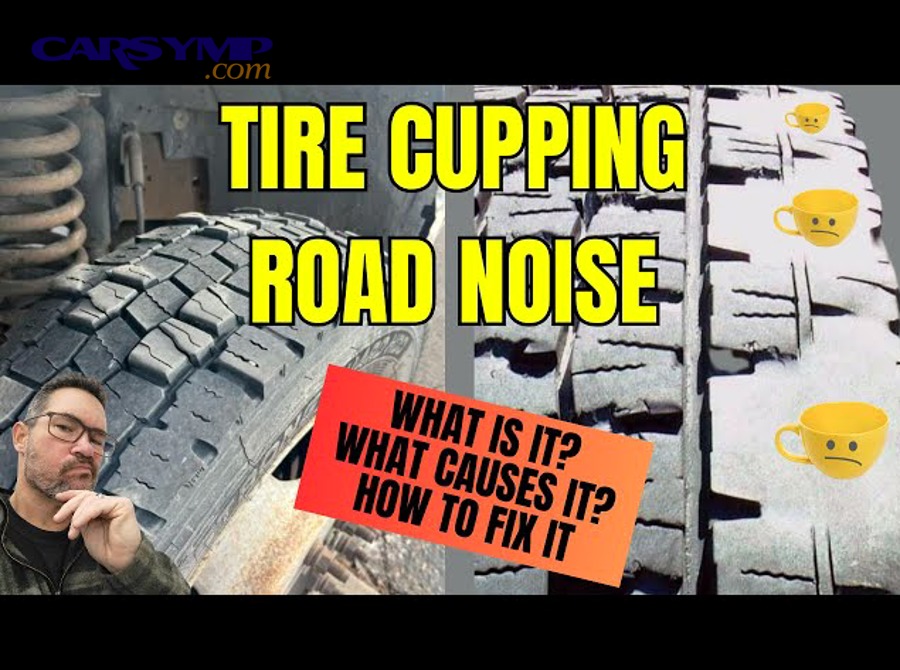
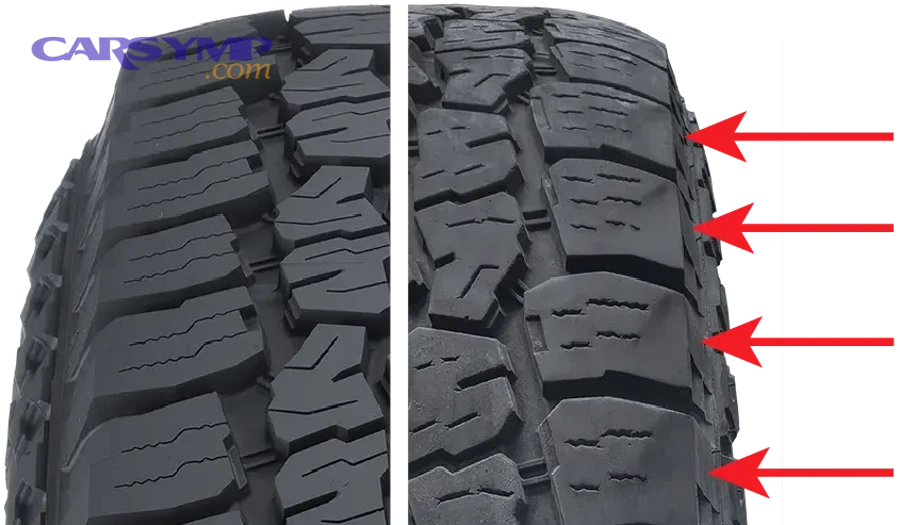
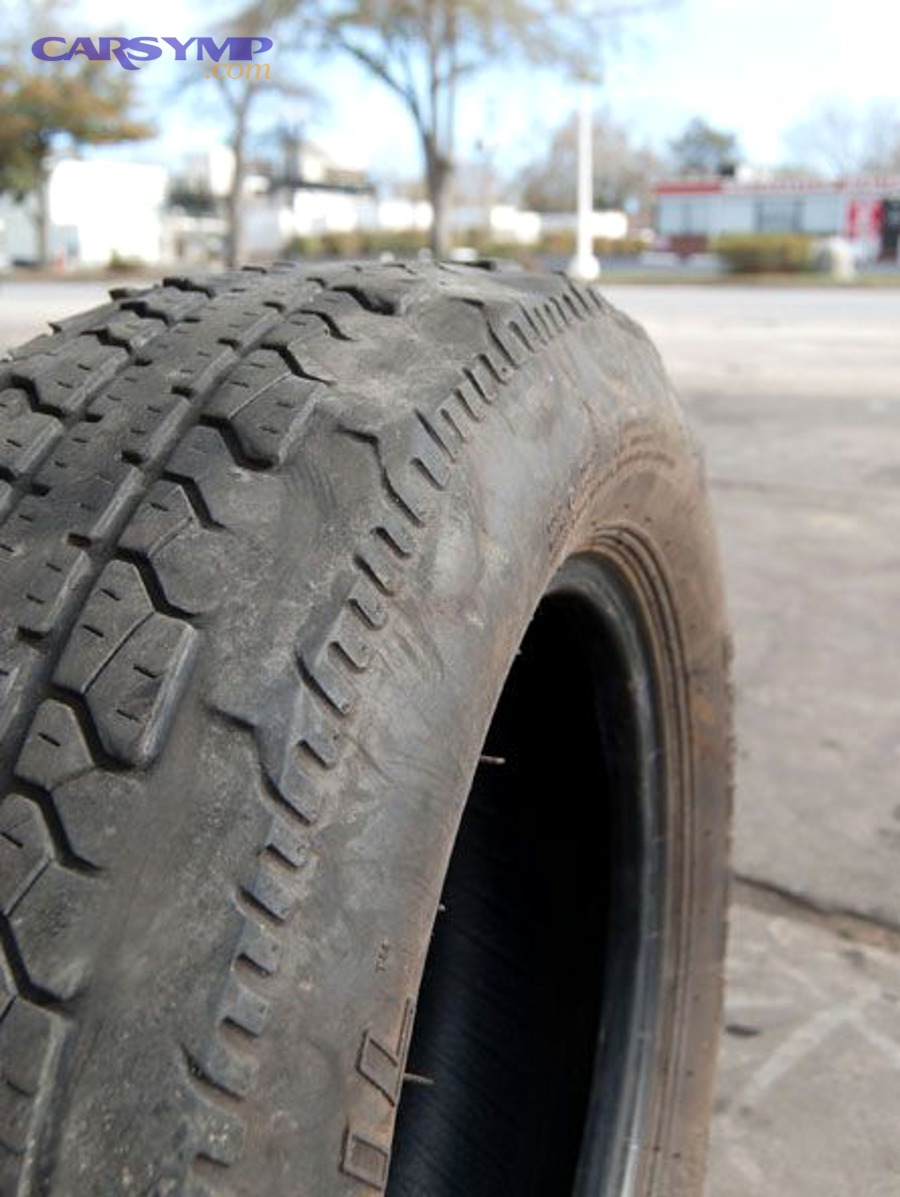
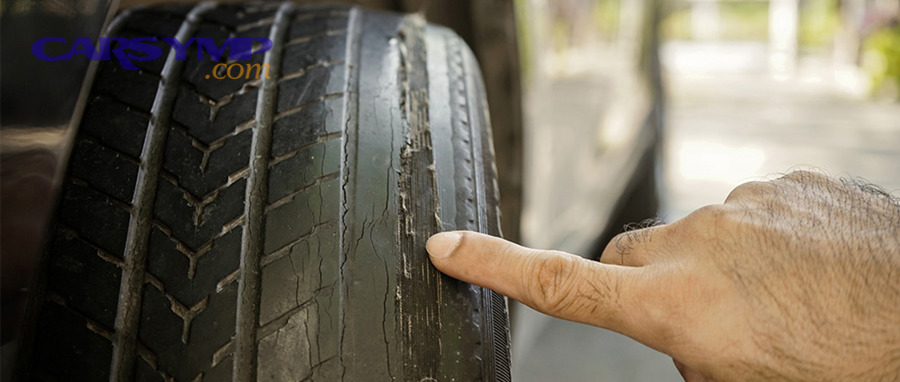
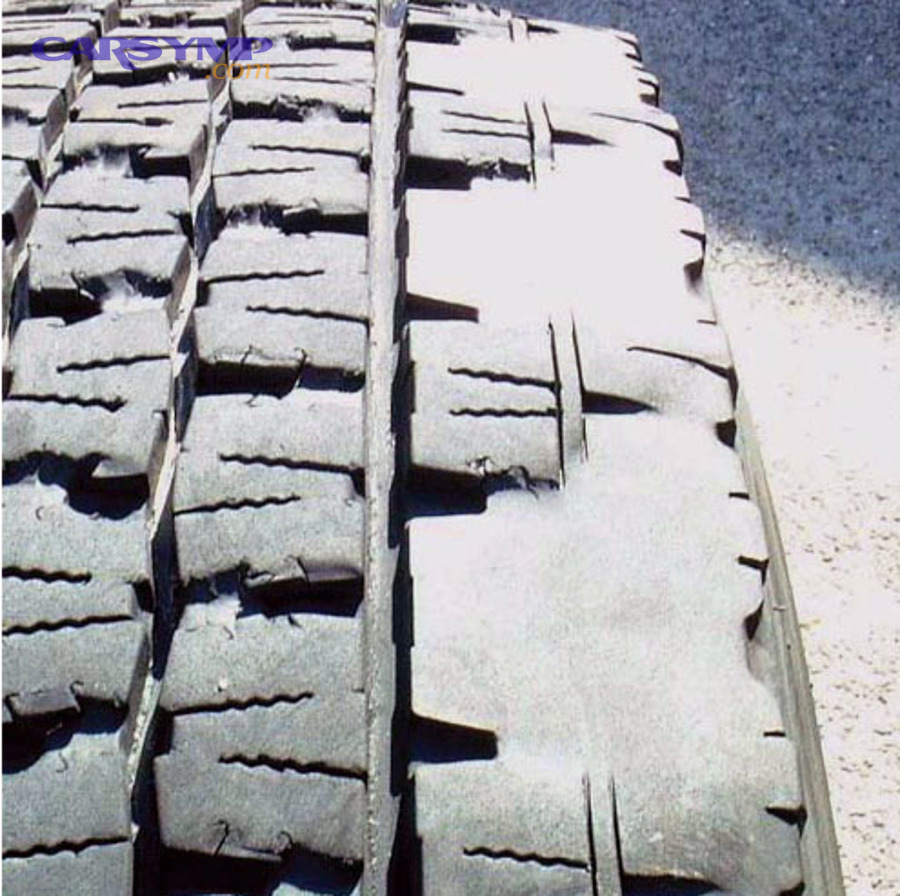
Tire cupping is visible as a series of shallow craters or scooped-out patches distributed around the tire’s tread surface, typically spaced three to four inches apart along the circumference.
Specifically, the worn patches vary in size and depth depending on how long the condition has been developing. In early stages, the indentations are subtle — slight low spots you can feel more easily than see. In advanced cases, the tire surface looks like someone has pressed a spoon into the rubber repeatedly, leaving rounded divots that alternate with relatively intact tread blocks.
To inspect for cupping, place your hand flat on the tread and slowly rotate the tire. You will feel the tread surface rising and falling in a wave-like pattern rather than remaining smooth and consistent. The location of the cupping also provides diagnostic clues: cupping along the inside edge of the tread often indicates alignment problems, while random patches distributed across the full tread width more commonly point to suspension bounce or imbalance issues.
Other irregular wear patterns that drivers sometimes confuse with cupping include feathering (angled wear sharp on one side, rounded on the other) and center wear (a band of wear running down the middle from overinflation). Tire cupping is distinct from both because of its scooped, crater-like appearance at irregular but repeating intervals.
What Does Tire Cupping Sound Like While Driving?
The sound produced by cupped tires is best described as a rhythmic thumping, growling, or aggressive humming that begins subtly at moderate speeds and intensifies noticeably as highway speeds are reached.
This noise pattern is a defining feature of tire noise diagnosis for cupping specifically. The rhythmic quality comes from the scalloped tread sections striking the road surface at the same point in each rotation — the noise is essentially the sound of an uneven surface making inconsistent contact. As speed increases, the frequency of those impacts per second increases, which raises both the pitch and volume of the sound.
Among tire noise types, the hum associated with cupping is distinct from the continuous drone of a failing wheel bearing, the high-pitched squeal of a braking issue, or the intermittent knock of a loose suspension component. A useful field test: if the noise is rhythmic and increases proportionally with speed on smooth roads, cupping is the most likely cause. If the noise changes pitch or volume when you slightly turn the steering wheel left or right, a wheel bearing problem should also be investigated.
Is Tire Cupping Dangerous to Drive On?
Yes — tire cupping is genuinely dangerous to drive on because it reduces traction, compromises braking efficiency, and makes vehicle handling unpredictable, particularly in wet or emergency conditions.
The danger is not always immediately obvious because the degradation is gradual. However, as the scalloped sections of the tread deepen, the tire progressively loses its ability to maintain consistent contact with the road. This matters most in three specific scenarios.
First, wet-road grip is significantly reduced. The cupped sections of the tread cannot channel water away from the contact patch as effectively as intact tread, which increases hydroplaning risk during rain. Second, braking distances increase because the tire is not applying uniform friction across its full contact patch. Third, the weakened rubber at the base of each cupped depression creates vulnerable points where cracks, bubbles, and eventually blowouts can develop — particularly under highway-speed heat and stress.
Beyond the tire itself, driving on significantly cupped tires also accelerates wear on suspension components. The increased vibration and uneven loading that cupping generates places additional stress on ball joints, tie rod ends, and wheel bearings, potentially triggering secondary failures in systems that were otherwise functional. Drivers experiencing noise, vibration, and uneven handling simultaneously should treat this as an urgent diagnostic situation, not a maintenance item to schedule for next month.
What Are the Most Common Causes of Tire Cupping and Uneven Tread Wear?
There are four primary causes of tire cupping and uneven tread wear: worn shock absorbers or struts, unbalanced tire and wheel assemblies, wheel misalignment, and incorrect tire pressure — each acting through a distinct mechanical mechanism.
Understanding which cause is responsible for a specific case of cupping is the central challenge of tire noise diagnosis. The sections below present each cause in order of how frequently it is identified as the primary culprit in shop diagnoses.
How Do Worn Shock Absorbers and Struts Cause Tire Cupping?
Worn shocks and struts cause tire cupping by allowing excessive vertical wheel movement, which causes the tire to repeatedly lose and regain road contact — each impact point gradually grinding a depression into the tread.
The suspension system’s primary job is to keep all four tires in consistent contact with the road regardless of surface irregularities. When shock absorbers or struts wear out, they lose their ability to dampen the tire’s rebound after hitting a bump or dip. The wheel begins to bounce — not dramatically, but persistently — and with each bounce, the tire slaps back down onto the road surface with concentrated force at the same relative point on the tread.
Worn struts and shocks are typically identified as the leading cause of rear tire cupping in particular, since rear suspension components often wear without producing obvious steering-related symptoms that alert drivers. The bounce test is the simplest field diagnostic: push down firmly on each corner of the vehicle and release. A healthy shock absorbs the energy and returns the body to rest in one smooth motion. If the vehicle bounces twice or more, the shocks or struts on that corner are worn and likely contributing to cupping. Replacement is recommended every 50,000 to 60,000 miles, always in pairs per axle for balanced performance.
How Do Unbalanced Tires Lead to Scalloped Tread Wear?
Unbalanced tires cause scalloped tread wear by creating persistent vibration through the wheel assembly, which produces localized tread contact at specific rotation points and gradually wears away the rubber unevenly.
When a tire and wheel assembly is not perfectly balanced, heavier sections of the assembly rotate with slightly more force than lighter sections. This weight difference creates a consistent vibration at a frequency that corresponds to the tire’s rotation speed. Over thousands of miles, this vibration causes specific points on the tread — particularly in rear tires — to wear faster than surrounding areas, producing the classic cupped appearance.
Notably, even a very small imbalance can trigger this process. Research from automotive service specialists indicates that an imbalance as small as 0.25 ounces can be sufficient to initiate rear tire cupping under certain conditions, particularly at highway speeds where vibration amplitude is highest. This is why tire balance checks every 5,000 to 7,000 miles are strongly recommended as a preventive measure — not just when symptoms appear. Balancing is a quick and inexpensive service that can improve tire lifespan by as much as 15 to 20 percent by eliminating vibration-driven wear.
Can Wheel Misalignment Cause Tire Cupping and Noise?
Wheel misalignment can cause tire cupping, particularly when camber or toe settings are incorrect, because misaligned tires make uneven contact with the road and generate irregular wear patterns that can include scalloping on specific tread edges.
Alignment refers to the geometric angles at which your tires meet the road. Three settings are relevant to cupping: camber (inward or outward tilt of the tire when viewed from the front), toe (whether tires point slightly inward or outward), and caster (the angle of the steering axis). When any of these settings falls outside specification, the tire does not roll in a perfectly straight line — it scrubs slightly with each rotation.
A diagnostic clue specific to misalignment is the location of the cupping. If the wear pattern appears primarily on the inside edge of the front tires, camber or toe misalignment is the most likely cause. If the vehicle also pulls to one side while driving straight, alignment is almost certainly involved. Alignment should be checked annually as a baseline and immediately following any significant impact such as hitting a deep pothole or curb.
Does Incorrect Tire Pressure Contribute to Uneven Tread Wear?
Incorrect tire pressure contributes to uneven tread wear, though it more commonly causes center wear (overinflation) or edge wear (underinflation) than classic cupping patterns.
That said, Tire pressure and noise relationship deserve careful attention in a cupping diagnosis because chronically underinflated tires flex excessively with each rotation, generating heat and stress that weakens the rubber structure and makes the tire far more susceptible to cupping when combined with even minor suspension or balance issues. Conversely, overinflated tires create a smaller, stiffer contact patch that distributes road impact unevenly and can accelerate irregular wear in tires that are already experiencing balance or alignment stress.
Monthly pressure checks are the most cost-effective maintenance habit for preventing tire wear problems of all types. The correct inflation level is specified on the door jamb sticker of your vehicle — not the maximum pressure listed on the tire sidewall, which is a different figure entirely.
How Do You Diagnose the Root Cause of Tire Cupping at Home?
Diagnosing the root cause of tire cupping at home involves three sequential inspection steps — visual and tactile tread inspection, the bounce test for suspension health, and the steering noise test for wheel bearings — which together identify the responsible component before a shop visit.
This self-diagnosis workflow is designed to give car owners enough information to arrive at a mechanic with a preliminary diagnosis, which helps avoid unnecessary parts replacements and reduces labor costs. The following sub-sections walk through each step in detail.
How to Inspect Tires for Cupping by Hand and Eye
Begin by parking on a flat surface, engaging the parking brake, and systematically inspecting all four tires by running a flat hand slowly across the full tread surface of each tire while slowly rotating the wheel.
You are feeling for alternating ridges and valleys in the tread — a smooth tire surface should feel uniformly flat under your palm. If you detect rising and falling sections spaced a few inches apart around the circumference, cupping is present. Confirm visually by crouching at eye level to the tread and looking for scooped-out patches where the rubber appears lower than surrounding tread blocks.
The location of the cupping provides the first diagnostic direction:
- Cupping on the inside tread edge only — likely alignment (camber or toe)
- Cupping distributed across the full tread width — likely suspension bounce or imbalance
- Cupping primarily on rear tires — most commonly worn rear shocks or struts
- Cupping on front tires only — balance, front strut, or alignment issue
How to Use the Bounce Test to Check Shocks and Struts
The bounce test is performed by pressing down firmly on each corner of the vehicle with both hands and releasing sharply, then observing how many times the body oscillates before settling.
A healthy shock absorber or strut dampens the energy of that push and returns the vehicle body to its resting position in a single, controlled motion with no secondary bounce. If the corner bounces two or more times after you release it, the shock or strut on that corner has lost its damping capacity and is the most probable cause of the cupping you observed in the tread inspection.
This test is most meaningful on the rear corners of the vehicle, where strut wear is often more advanced and less obvious than on the front. If both rear corners bounce freely, worn rear suspension is almost certainly your primary cupping culprit.
How to Identify Whether the Noise Is Tires or Wheel Bearings
To distinguish tire cupping noise from wheel bearing noise, perform a gradual speed sweep on a smooth highway and apply a gentle, deliberate steering input — a slight lane-change movement — and observe whether the noise changes.
This is a critical step in tire noise diagnosis because wheel bearing noise and tire cupping noise share a similar frequency range, and replacing the wrong component is a costly and frustrating outcome. The key behavioral difference is:
- Tire cupping noise remains consistent in pitch and rhythm regardless of steering input; it increases in intensity as speed rises but does not shift when the steering wheel is turned
- Wheel bearing noise changes — either increasing or decreasing — when you apply a gentle steering input that shifts weight loading from one side to the other
If the noise increases when turning gently right and decreases when turning left, the left-side wheel bearing is likely failing. The reverse pattern points to the right-side bearing. If the noise shows no response to steering inputs, focus your diagnosis on tire balance and suspension.
What Are the Fixes and Corrections for Tire Cupping and Uneven Tread Noise?
There are three primary fixes for tire cupping: tire rotation for early-stage cases, tire replacement for moderate to severe cupping, and suspension component repair or replacement — but the root cause must be corrected first, or any new tires will cup again.
This is the most important principle in the entire corrective process. Cupped rubber cannot be repaired. The tread indentations are permanent, and no amount of rotation, balancing, or alignment work will restore the original even surface once scalloping has occurred. What can be fixed is the underlying mechanical failure that caused the cupping, which prevents the problem from recurring in newly fitted tires.
When Is Tire Rotation Enough to Address Early-Stage Cupping?
Tire rotation is sufficient for early-stage cupping only when the indentations are minor, the root cause has already been corrected, and no significant noise or vibration is yet present.
Specifically, rotating the tires redistributes the wear load to new positions on the vehicle, which can temporarily smooth out the progression of early-stage irregular wear. However, rotation does not eliminate existing cupping — it simply moves the affected tire to a position where the wear may equalize more gradually. If the underlying problem (unbalanced wheels, worn shocks, misalignment) has not been fixed, rotating the tires will only shift where the new cupping develops, not stop it.
Tire rotation is most effective as a preventive measure. Rotating every 5,000 miles promotes even wear across all four tires and extends overall tire life significantly.
When Do Cupped Tires Need to Be Replaced?
Cupped tires need to be replaced when noise, vibration, handling changes, or visible tread depth loss are already present — and replacement should always be done in axle pairs to maintain uniform grip and handling balance.
If you have reached the point where you are actively noticing thumping sounds, steering vibration, or a sense of floating over smooth roads, the cupping is already severe enough that the tire’s safety margin has been compromised. Rotating or balancing a tire in this condition will not restore its function. The tire should be removed, and the tread depth and structural integrity of the carcass should be evaluated by a qualified technician.
When replacing cupped tires, always replace both tires on the same axle simultaneously. Installing one new tire paired with a significantly worn tire on the same axle creates mismatched grip that can affect braking and cornering stability, particularly in wet conditions. More importantly, before the new tires are mounted, the root cause of the cupping must be corrected.
Which Suspension Components Should Be Inspected and Replaced?
When tire cupping is attributed to suspension failure, the components that should be inspected include shock absorbers, struts, springs, ball joints, tie rod ends, control arm bushings, and wheel bearings.
Each of these components contributes to maintaining consistent tire-road contact. When any one of them develops excessive play, leaks, or wear, it introduces the kind of uncontrolled tire movement that produces cupping. The table below summarizes the most common suspension components involved in tire cupping, their associated failure symptoms, and typical replacement intervals to help prioritize your inspection:
| Component | Cupping Contribution | Key Failure Symptom | Service Interval |
|---|---|---|---|
| Shock Absorbers / Struts | Primary cause of bouncing | Excessive bounce test movement | Every 50,000–60,000 miles |
| Springs | Reduces ride height, affects balance | Sagging, uneven ride height | Inspect at strut replacement |
| Ball Joints | Allows wheel to wander | Clunking over bumps | Every 80,000–100,000 miles |
| Tie Rod Ends | Causes toe misalignment | Steering wander, looseness | Inspect annually |
| Control Arm Bushings | Introduces lateral wheel movement | Knocking under load | Every 60,000–100,000 miles |
| Wheel Bearings | Adds vibration, contributes to wear | Noise changes with steering input | Inspect when symptoms appear |
Always replace shocks and struts in pairs per axle. Installing a new shock on one side paired with a worn unit on the opposite side creates an asymmetric damping response that can affect handling and cause the replacement side to wear prematurely.
How Can You Prevent Tire Cupping and Uneven Tread Noise from Recurring?
Tire cupping can be prevented by following a consistent maintenance schedule that includes regular tire rotation, wheel balancing, alignment checks, monthly pressure monitoring, and periodic suspension inspections.
Prevention is both more effective and more economical than correction. Once cupping develops, the tire is permanently damaged and often must be replaced. The maintenance practices below eliminate the mechanical conditions that allow cupping to begin.
What Maintenance Schedule Prevents Tire Scalloping?
A complete anti-cupping maintenance schedule involves five recurring services performed at specific intervals, each targeting one of the known root causes of scalloped tread wear.
The following schedule addresses the tire pressure and noise relationship, balance, alignment, and suspension as an integrated system rather than a set of isolated services:
- Tire rotation — every 5,000 miles. Redistributes wear load evenly across all four tires and provides a natural opportunity to visually inspect each tire’s tread condition
- Wheel balance — every 5,000 to 7,000 miles. Eliminates vibration-driven wear before it can develop into noticeable scalloping, especially on rear tires
- Wheel alignment — annually or immediately following a significant road impact. Corrects camber, toe, and caster settings that cause edge-specific irregular wear
- Tire pressure — checked monthly. Maintains the correct contact patch geometry and prevents pressure-related wear acceleration
- Suspension inspection — every 50,000 miles or whenever bounce, handling, or noise symptoms appear. Catches worn shocks, struts, and bushings before they damage tires
Does Tire Quality Affect the Risk of Cupping?
Yes — tire quality directly affects the risk of cupping because lower-quality tires use thinner rubber compounds with less structural support, making them significantly more vulnerable to scalloping under the same mechanical stress that a higher-quality tire would absorb without damage.
This is particularly relevant when a vehicle has minor but acceptable suspension wear that is not yet causing problems with quality tires. Installing budget tires on a vehicle with borderline shock absorbers or slight imbalance dramatically increases the likelihood of cupping developing within the first 10,000 to 15,000 miles of use.
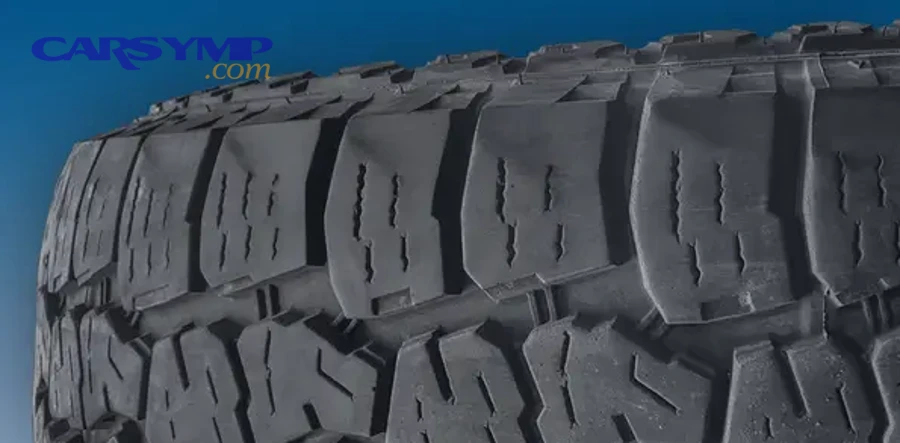
Tread design also matters. Off-road tires and certain aggressive all-terrain patterns feature large, widely spaced tread blocks that lack the continuous lateral support of highway-pattern tires. These blocks are more susceptible to deflecting under impact and wearing unevenly — which is one reason off-road tires produce more tire noise types, including hum and thumping, on paved roads even when they are not technically cupped. For daily highway driving, a reputable mid-range or premium touring tire with a manufacturer’s tread wear warranty offers both better cupping resistance and better noise characteristics than budget alternatives.
How Is Tire Cupping Different from Other Irregular Tire Wear Patterns?
Tire cupping differs from other irregular wear patterns in that it produces repeating, scooped craters distributed around the tread circumference, while feathering creates directional angled wear, camber wear concentrates on one edge, and center wear affects only the middle band of the tread.
Understanding these distinctions is important because each pattern points toward a different mechanical cause, and treating the wrong cause wastes both time and money. Drivers and technicians who can accurately identify the wear pattern on first inspection can proceed directly to the correct diagnostic path without eliminating irrelevant possibilities. Resources such as carsymp.com provide useful visual comparison guides for identifying specific tire wear patterns by appearance.
What Is the Difference Between Tire Cupping and Tire Feathering?
Tire cupping produces scooped, rounded indentations around the tread circumference driven by vertical bounce, while tire feathering produces angled, directional wear where individual tread ribs are sharp on one side and rounded on the opposite side, caused primarily by incorrect toe alignment.
To feel the difference: a cupped tire has a wave-like surface when you run your hand across the full tread face, alternating between high and low spots. A feathered tire feels smooth across the face but has tread ribs that are beveled — sharp on the leading edge and worn on the trailing edge (or vice versa depending on toe direction).
Feathering is almost exclusively an alignment-driven problem, specifically front toe misalignment. It does not typically produce the same rhythmic thumping noise associated with cupping. Instead, feathered tires tend to generate a more consistent, directional hum or roar. The correction for feathering is alignment adjustment, which may or may not require tire replacement depending on severity.
How Is Cupping Different from Camber Wear and Center Wear?
Cupping creates scattered, scooped patches across the tread, while camber wear concentrates wear uniformly on one edge of the tire, and center wear removes rubber from the central tread band only — and each pattern traces back to a distinct mechanical condition.
The table below compares all three wear patterns across key diagnostic dimensions to help drivers accurately identify which condition they are dealing with:
| Feature | Tire Cupping | Camber Wear | Center Wear |
|---|---|---|---|
| Wear Location | Scattered scoops around circumference | One edge (inside or outside) | Central tread band only |
| Appearance | Crater-like scoops / divots | Smooth, consistent edge degradation | Uniform center band thinning |
| Touch Test | Alternating ridges and valleys | Smooth but sloped to one edge | Flat center, raised edges |
| Primary Cause | Suspension bounce / imbalance | Camber misalignment | Overinflation |
| Associated Noise | Rhythmic thumping / growling | Edge-specific wear noise, hum | Minor noise increase |
| Primary Fix | Suspension repair + rebalance | Alignment correction | Adjust tire pressure |
Camber wear is commonly seen on the front inside tires of vehicles with worn struts that have allowed negative camber to develop. Center wear is straightforwardly caused by chronic overinflation and is the easiest of the three patterns to prevent through monthly pressure monitoring.
Can a Bent Rim or Tire Runout Cause Cupping-Like Noise and Wear?
Yes — a bent rim or tire runout can produce noise and wear patterns that closely mimic tire cupping, because both conditions prevent the tire from rotating as a perfect circle, generating the same rhythmic impact against the road surface that produces scalloped wear.
Tire runout refers to a condition where the tire is no longer geometrically round — it has a high spot that causes a slight hop or wobble with each rotation. This can result from manufacturing defects in lower-quality tires, damage from pothole impacts, or improper mounting. The noise produced is almost identical to cupping noise: rhythmic, speed-dependent, and present on smooth roads.
Bent rims are a particularly common and overlooked cause in regions with poor road surfaces. The bend is usually on the inner flange — the side of the rim facing the vehicle — which makes it invisible during a standard visual inspection from outside the car. The only reliable way to detect inner flange damage is to inspect the wheel on a lift. Fortunately, many bent rims can be repaired rather than replaced, making this a relatively cost-effective fix when caught early.
If a driver has replaced worn shocks, had wheels balanced and aligned, and still experiences rhythmic thumping or cupping-pattern wear on new tires, runout and bent rim should be the next items investigated.
Can Wheel Bearing Failure Accelerate Tire Cupping Over Time?
Yes — a failing wheel bearing can accelerate tire cupping because bearing wear introduces abnormal play and vibration into the wheel assembly, disrupting the tire’s consistent road contact and applying the same irregular stress that worn shocks and imbalanced wheels produce.
This creates a feedback loop that makes diagnosis particularly challenging: tire cupping increases vibration, and increased vibration accelerates bearing wear, which in turn worsens the conditions that drive further cupping. When a vehicle presents with both cupping wear and noise that responds to steering inputs, both the tire assembly and the wheel bearing should be inspected simultaneously rather than sequentially.
According to service data reported by GMB, a manufacturer of wheel bearing components, abnormal tire wear and wheel bearing failure are frequently found together in the same vehicle — and addressing only one without inspecting the other is a common reason that tire noise and wear problems recur after what appeared to be a successful repair. Diagnosing both systems as a pair, rather than in isolation, is the most reliable approach when both noise and uneven wear are present simultaneously.