


Your car tires are overdue for a rotation when you notice uneven tread wear between the front and rear axles, feel steering wheel vibration at highway speeds, experience the vehicle pulling to one side, hear unusual road noise, or find one tire losing air faster than the others. These warning signs share a common root cause: tires wearing down at different rates because each wheel position carries a different load, handles a different amount of braking force, and absorbs a different degree of road stress. When those differences go uncorrected for too long, the imbalance compounds — and what starts as a minor tread difference can escalate into a safety hazard.
Understanding what tire rotation actually is — and why it is non-negotiable for vehicle maintenance — helps explain why these symptoms appear in the first place. A tire rotation involves moving each tire from one wheel position to another in a manufacturer-recommended pattern, so that wear distributes evenly across all four tires over time. Without this periodic repositioning, front tires on most vehicles wear down significantly faster than rear tires, leading to a dangerous mismatch in grip, handling, and stopping power.
Equally important is knowing how often to rotate your tires so that you never let the warning signs reach a critical stage. For the majority of passenger vehicles, the standard recommendation is every 5,000 to 8,000 miles — a schedule that conveniently aligns with most oil change intervals. However, factors such as drivetrain type, driving habits, road conditions, and tire construction can shift that number in either direction.
Not every symptom your tires display points exclusively to rotation, though. Vibration, pulling, and uneven wear can each overlap with wheel alignment problems and tire imbalance issues — two separate services that are often confused with rotation. Knowing the difference between needing a tire rotation, a wheel alignment, or a tire balancing helps you communicate clearly with your mechanic and avoid paying for a service that does not address the actual problem. The sections below walk through all seven warning signs in full detail, then cover rotation frequency, drivetrain-specific rules, and the edge cases that apply to run-flat and staggered fitment tires.
What Is a Tire Rotation and Why Does It Matter for Your Car?
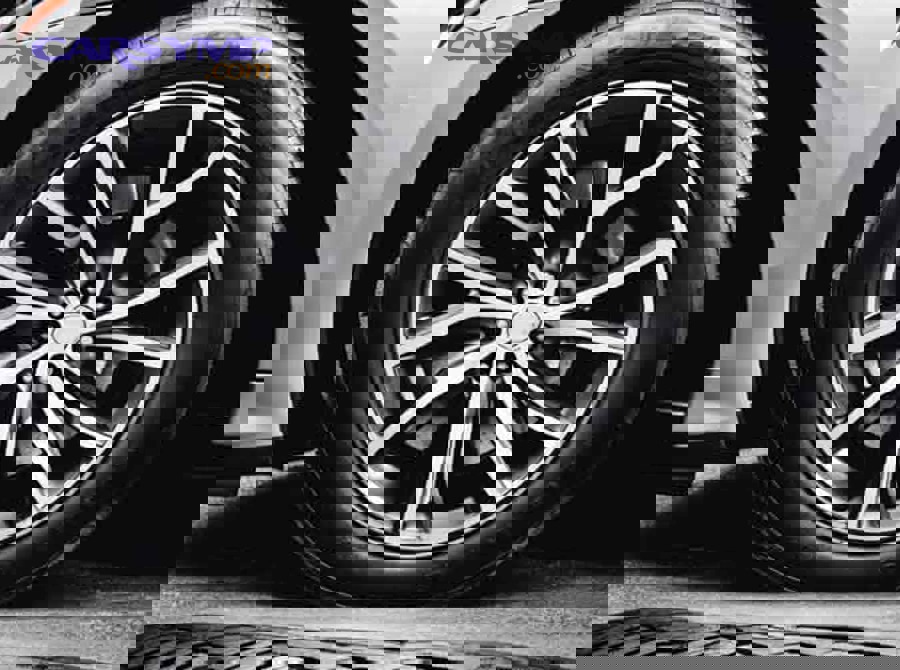
A tire rotation is a scheduled maintenance service in which all four tires are removed and reinstalled at different wheel positions — front to rear, side to side, or in an X-pattern — to equalize the rate of tread wear across the entire set. This single service directly extends tire lifespan, preserves handling balance, and reduces the risk of blowouts caused by over-worn rubber.
To better understand why rotation matters so much, it helps to first understand the mechanical forces that make uneven wear unavoidable without it.
How Does Uneven Tire Wear Happen in the First Place?
Uneven tire wear happens because each wheel position on your vehicle experiences a fundamentally different set of forces during normal driving. The front tires — especially on front-wheel-drive vehicles — carry the weight of the engine, handle all steering input, and absorb most of the braking load as the vehicle’s weight shifts forward under deceleration. The rear tires, by contrast, mainly carry the vehicle’s body weight and contribute less to braking and zero to steering. This difference in workload means front tires consistently wear faster than rear tires on most cars.
Beyond the front-to-rear difference, individual driving habits add another layer of complexity. A commuter who takes more left turns than right turns on their daily route will wear the outside edge of their left front tire faster than any other tire on the vehicle. Frequent hard braking wears the front tires’ center tread faster. Driving regularly on rough or pothole-ridden roads introduces cupping and scalloping — irregular wear patterns that develop when a tire bounces repeatedly against an uneven surface. These forces are invisible day-to-day but accumulate rapidly over thousands of miles, which is precisely why tire rotation must be performed on a regular schedule rather than only when symptoms appear.
Is Skipping a Tire Rotation Bad for Your Car?
Yes, skipping a tire rotation is bad for your car for at least three compounding reasons: it accelerates uneven tread wear, degrades handling and braking performance, and significantly increases the risk of a sudden tire failure at speed.
Specifically, the most immediate consequence of skipping rotation is accelerated front-tire wear on front-wheel-drive vehicles, which account for the majority of passenger cars on the road. When front tires wear down to their wear indicator bars while the rear tires still carry substantial tread depth, you face two bad options: replace only the front pair and create a traction mismatch, or replace all four and absorb a cost that rotation could have deferred by tens of thousands of miles. Beyond cost, degraded tread depth directly reduces wet-weather braking distance — a safety consequence that affects every driver sharing the road with that vehicle. According to the National Highway Traffic Safety Administration, poor tire maintenance — including failure to rotate tires — was a contributing factor in the conditions leading to 612 tire-related traffic fatalities recorded in a recent reporting year, underscoring that rotation is a safety issue, not merely a maintenance preference.
What Are the 7 Warning Signs Your Tires Are Overdue for a Rotation?
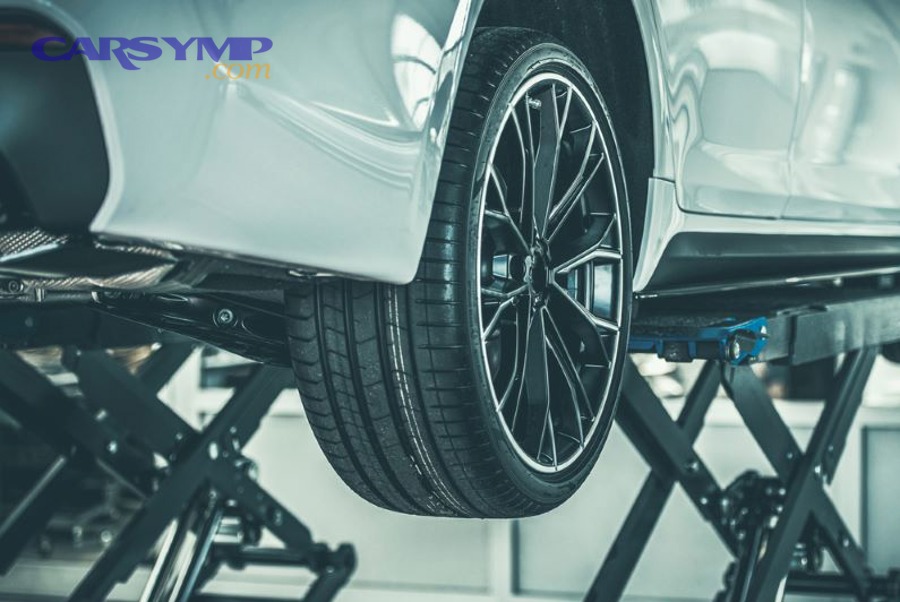
There are 7 main warning signs that your tires are overdue for a rotation: uneven front-to-rear tread depth, steering wheel vibration at highway speeds, vehicle pulling to one side, one tire losing air pressure faster than the others, increased road noise, visible cupping or scalloping on the tread surface, and a mileage count that has exceeded the recommended rotation interval. Each sign reflects a different stage of wear imbalance, and recognizing them early is the most reliable way to avoid costly tire replacement or a dangerous roadside failure.
Below is a detailed breakdown of each sign, what causes it, and what action it demands.
Sign 1 — Are Your Front Tires More Worn Than the Rear Ones?
Yes, front tires being noticeably more worn than rear tires is the single most telling sign that a tire rotation is overdue, and it is visible to any driver willing to crouch down and look.
To check, use the quarter test: insert a quarter into the tread groove with the top of the head facing down. If you can see the top of the head on any tire, that tire’s tread is at or below 4/32 of an inch — a level at which wet-weather traction becomes seriously compromised. Compare all four tires using this method. If your front tires consistently fail the test while your rear tires still show deep, healthy grooves, uneven wear has already progressed to a point where rotation should be scheduled immediately. Most modern tires also include built-in treadwear indicator bars — small rubber bridges molded into the tread grooves at 2/32 of an inch depth. When these bars become flush with the surrounding tread, replacement rather than rotation is the appropriate next step.
Sign 2 — Is Your Steering Wheel Vibrating at Highway Speeds?
Yes, steering wheel vibration at highway speeds — typically becoming noticeable above 45 miles per hour — is a warning sign that should not be ignored, and uneven tire wear is one of its most common causes.
When tread depth varies significantly between tires, the rolling diameter of each wheel becomes inconsistent. At lower speeds, the difference is small enough that the vehicle absorbs it without obvious feedback. But as speed increases, that inconsistency generates a rhythmic vibration that travels through the suspension and into the steering column, eventually reaching the driver’s hands on the wheel. The key distinction to understand here is that vibration felt primarily in the steering wheel points toward the front tires, while vibration felt through the seat or floor suggests the rear tires are more affected. Both patterns indicate that a tire rotation — and potentially a tire balancing — is due. A professional technician can quickly determine whether the vibration stems from uneven wear, a balance issue, or a combination of both.
Sign 3 — Is Your Car Pulling to One Side While Driving?
Yes, your car pulling to one side while driving is a legitimate warning sign, and uneven tire wear is one of several possible causes that should be evaluated before assuming alignment is the only culprit.
To perform a quick self-test, find a straight, flat, and empty road. Briefly release the steering wheel and observe whether the vehicle continues straight or drifts toward one side. A noticeable drift — particularly if it has developed gradually over recent weeks — often correlates with a tire on that side wearing down faster and producing less road resistance than its counterpart. However, pulling can also indicate a wheel alignment problem, unequal tire inflation, or a seized brake caliper applying friction to one wheel. Because the symptoms overlap, a technician will typically inspect tread depth, tire pressure, and alignment angles together rather than addressing just one factor in isolation.
Sign 4 — Is One Tire Losing Air Pressure Faster Than the Others?
Yes, one tire consistently losing air pressure faster than the others is a warning sign that often points to uneven wear, even when the deflating tire itself does not appear to be the most worn.
This is one of the more counterintuitive signs. When one tire carries more of the vehicle’s weight due to a wear imbalance across the set, the overloaded tire experiences greater internal stress and heat buildup, which accelerates pressure loss over time. Crucially, the tire losing pressure is not always the one with the most visible tread damage — it may simply be the tire compensating for wear elsewhere. The correct approach is to inspect and compare tread depth across all four tires rather than focusing only on the deflating one. If no puncture or valve stem leak is found and the pressure loss recurs after reinflation, uneven load distribution from deferred rotation is the most probable cause.
Sign 5 — Are You Hearing More Road Noise Than Usual?
Yes, an increase in road noise — particularly a low humming or droning sound that intensifies on smooth highway surfaces — is a recognizable sign that tire wear has become uneven and that rotation is overdue.
Road noise generated by tire wear is distinct from the sound produced by a rough road surface. On a well-maintained highway or smooth concrete, a vehicle with evenly worn tires runs quietly. When tread blocks begin wearing unevenly, the tread pattern no longer contacts the road surface uniformly with each rotation, creating a rhythmic noise that increases with speed. Cupping — a scalloped wear pattern where alternating sections of the tread wear high and low — is a particularly loud culprit. This pattern typically develops when a tire is out of balance or when the vehicle’s shock absorbers are worn, but it is also worsened by deferred tire rotation. If the humming appears suddenly or intensifies rapidly over a short mileage period, have the tires inspected promptly, as advanced cupping cannot be reversed by rotation alone and may require replacement.
Sign 6 — Can You See Visible Cupping, Scalloping, or Bald Spots?
Yes, visible cupping, scalloping, or bald spots on any tire surface are among the clearest and most urgent signs that a tire rotation is not just overdue — it may already be too late to save the affected tire.
Cupping appears as a series of high-and-low dips around the circumference of the tread, resembling the surface of a scallop shell. It develops when a tire bounces rhythmically against the road due to worn suspension components or severe imbalance, wearing down only the contact points rather than the full tread surface. Scalloping is a similar but typically more edge-focused pattern, appearing on the inner or outer shoulder of the tread and often caused by misalignment compounded by deferred rotation. Bald spots — areas where tread design has completely disappeared — indicate that the tire has been driven on well past the point of safe use. Any tire displaying bald spots should be replaced before the vehicle is driven again, regardless of what the other three tires show.
Sign 7 — Have You Exceeded 5,000–8,000 Miles Since Your Last Rotation?
Yes, exceeding 5,000 to 8,000 miles since your last tire rotation is itself a warning sign — even if none of the physical symptoms above are yet visible — because wear imbalance begins accumulating from the very first mile.
The most practical way most drivers track rotation intervals is by tying them to oil changes. Conventional oil change intervals of approximately 5,000 miles align precisely with the minimum rotation recommendation from the National Highway Traffic Safety Administration, making the two services easy to schedule together. Drivers using full synthetic oil, who may go 7,500 to 10,000 miles between oil changes, should schedule standalone tire rotations at the midpoint between oil changes to avoid exceeding the 8,000-mile rotation ceiling. If you genuinely cannot recall when your last rotation was performed, treat the uncertainty itself as a prompt to schedule one — the cost of a preventive rotation is always lower than the cost of replacing a prematurely worn tire set.
Do All These Signs Always Mean You Need a Rotation?
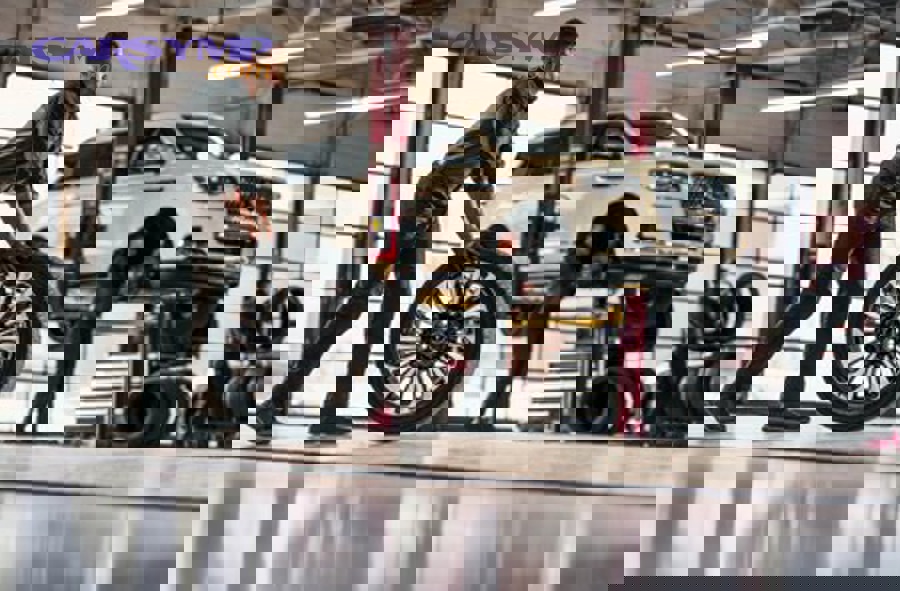
Not every symptom listed above exclusively means you need a rotation: vibration, pulling, and abnormal wear can each overlap with wheel alignment problems and tire imbalance issues, which are three distinct services that address different root causes but often produce identical symptoms.
Understanding the difference between these three services prevents misdiagnosis and ensures the correct repair is performed the first time.
What Is the Difference Between Needing a Tire Rotation vs. a Wheel Alignment?
Tire rotation repositions tires to equalize wear; wheel alignment corrects the angle at which tires contact the road — and while both can cause pulling and uneven wear, they address entirely different mechanical conditions.
The table below summarizes the key differences to help you understand which service applies to your situation:
| Symptom | More Likely Cause | Service Needed |
|---|---|---|
| Front tires worn faster than rear | Positional wear imbalance | Tire rotation |
| One-sided tread wear (inner or outer edge only) | Camber or toe misalignment | Wheel alignment |
| Vehicle pulls to one side | Either — or both | Inspect both; alignment check recommended |
| Gradual tread depth difference across all four | Deferred rotation schedule | Tire rotation |
| Rapid wear on one tire only | Alignment or suspension issue | Wheel alignment + inspection |
When a vehicle is brought in for alignment, a qualified technician measures the camber (vertical tilt of the tire), toe (inward or outward angle when viewed from above), and caster (backward or forward tilt of the steering axis) angles for each wheel. If these angles fall outside the manufacturer’s specified range, the wheels are adjusted to bring them back into spec. Rotation alone cannot correct an alignment problem — and performing rotation on a misaligned vehicle will simply cause the new tire positions to wear incorrectly in a different pattern. For this reason, many shops recommend an alignment check alongside or shortly after a rotation if uneven wear has already developed.
What Is the Difference Between Tire Rotation and Tire Balancing?
Tire rotation moves tires between wheel positions to equalize positional wear, while tire balancing corrects weight imbalances within each individual wheel-and-tire assembly — and both services are often needed simultaneously, making the decision about including balance during rotation a practical and cost-effective one.
When a tire is mounted on a wheel, the combined assembly is rarely perfectly uniform in weight distribution. Even small variations in rubber density or rim construction create a heavy spot that causes the wheel to wobble at speed. Balancing corrects this by attaching small counterweights to the rim at precisely calculated positions. The symptoms of an imbalance — steering wheel vibration, seat vibration, and uneven tread wear — overlap almost completely with the symptoms of deferred rotation, which is why the two are frequently confused. The practical guidance for most drivers is straightforward: if a rotation is overdue and vibration is present, request both rotation and balancing in the same service appointment. The marginal cost of adding balancing to a rotation visit is small, and the diagnostic overlap means addressing both at once eliminates the most common causes of vibration in a single appointment.
How Often Should You Rotate Your Tires — And Does It Depend on Your Car?
There are 3 primary factors that determine how often you should rotate your tires: your vehicle’s drivetrain type, your oil change interval, and whether your vehicle uses a specialized tire construction such as run-flat or staggered fitment tires that limits standard rotation patterns.

Each of these factors can shift the ideal rotation interval meaningfully, which is why the standard 5,000-to-8,000-mile guideline is a starting point rather than a universal rule.
Does Tire Rotation Frequency Change for FWD, RWD, and AWD Vehicles?
Yes, tire rotation frequency and pattern differ meaningfully across front-wheel-drive, rear-wheel-drive, and all-wheel-drive vehicles because each drivetrain distributes power, steering load, and braking force differently across the four wheels.
The table below outlines the key differences in wear behavior and recommended rotation approach by drivetrain type:
| Drivetrain | Primary Wear Location | Recommended Pattern | Suggested Interval |
|---|---|---|---|
| FWD (Front-Wheel Drive) | Front tires — steering + drive load | Forward cross or X-pattern | Every 5,000 miles |
| RWD (Rear-Wheel Drive) | Rear tires — drive load | Rearward cross or X-pattern | Every 5,000–7,500 miles |
| AWD (All-Wheel Drive) | All four — varies by torque split | X-pattern or full cross | Every 5,000 miles |
Front-wheel-drive vehicles are the most demanding case for tire rotation. The front tires handle both the drive force from the engine and all steering input simultaneously, meaning they can wear up to twice as fast as the rear tires if rotation is skipped. AWD vehicles present a different challenge: because the drivetrain can deliver torque to any of the four wheels depending on traction conditions, wear develops across all four tires but in highly variable and less predictable patterns. On AWD vehicles specifically, tread depth differences between tires can cause the drivetrain’s torque-distribution system to misinterpret wheel speed differences as wheel slip, triggering unnecessary corrections that accelerate drivetrain wear. Many AWD manufacturers specify a maximum allowable tread depth difference between tires — sometimes as little as 2/32 of an inch — before the tires must be replaced as a set. This makes regular tire rotation especially critical on AWD platforms. For Rotation with directional tires rules, note that directional tires — those with a tread pattern designed to rotate in only one direction — can only be rotated front-to-rear on the same side of the vehicle, never crossed to the opposite side, unless they are dismounted and remounted on different rims.
Should You Rotate Tires Every Oil Change?
Yes, rotating your tires at every oil change is the most practical and reliable scheduling approach for the majority of drivers, because the 5,000-mile oil change interval aligns precisely with the minimum tire rotation recommendation from the NHTSA.
Tying rotation to oil changes removes the cognitive burden of tracking a separate service interval. When you hand your keys to a technician for an oil change, adding a tire rotation to the same appointment takes approximately 15 to 20 additional minutes and costs a fraction of what a premature tire replacement would. The exception applies to drivers using full synthetic motor oil, which can extend oil change intervals to 7,500 or even 10,000 miles. At those longer intervals, the oil change schedule no longer serves as a reliable rotation trigger, and a standalone rotation appointment at the midpoint — roughly every 5,000 miles regardless of oil type — should be scheduled explicitly.
Can Run-Flat Tires or Staggered Fitment Tires Be Rotated?
Run-flat tires can technically be rotated front-to-rear, but their self-supporting sidewall construction limits serviceability and makes rotation more restricted than for standard tires; staggered fitment tires — where the rear tires are wider than the fronts — often cannot be rotated at all using standard patterns.
Run-flat tires are reinforced with stiff sidewalls that allow the vehicle to be driven at reduced speeds for a limited distance after a puncture, eliminating the need for a roadside spare. However, because these tires cannot be inspected internally for sidewall damage after being driven on while flat, many manufacturers recommend replacement rather than remounting after any run-flat event. For routine rotation between flat-free miles, front-to-rear rotation on the same side of the vehicle is generally permissible — but crossing a run-flat to the opposite side introduces the risk of mounting it in the wrong rotational direction if the tire is directional. Always verify with your vehicle manufacturer’s guidelines before rotating run-flat tires.
Staggered fitment setups, common on performance vehicles and many rear-wheel-drive sports cars, use wider rear tires specifically to improve traction during acceleration. Because the rear tires are a different size than the fronts, a standard cross or X-pattern rotation is physically impossible without dismounting and remounting the tires on different-sized rims — an expensive process that negates most of the cost savings rotation is intended to provide. For vehicles with staggered fitment, the practical guidance is to monitor each tire independently for wear and replace individual tires as needed, rather than attempting a rotation program.
Does Tire Rotation Actually Improve Fuel Economy?
Yes, regular tire rotation measurably improves fuel economy by maintaining even tread depth across all four tires, which reduces rolling resistance — the energy your engine must produce to keep the tires moving forward against road friction.
When front tires wear significantly lower than rear tires, the worn tires generate more rolling resistance per revolution because the tread surface deforms more aggressively under load with less rubber cushioning. Over thousands of miles, this increased resistance requires the engine to consume more fuel to maintain the same speed. Research cited by automotive industry sources estimates that neglecting tire rotation — and the resulting uneven wear — can reduce fuel economy by up to 3%. While that percentage sounds modest, it translates to a meaningful cumulative cost over the lifetime of a vehicle. For a driver covering 15,000 miles per year in a vehicle averaging 30 miles per gallon, a 3% fuel economy loss means approximately 15 additional gallons of fuel consumed annually — a real expense that a routine tire rotation schedule can eliminate entirely. Beyond fuel economy, the even rolling resistance produced by uniformly worn tires also reduces stress on wheel bearings, suspension components, and the drivetrain — compounding the long-term financial and mechanical benefits of staying on a consistent rotation schedule.
Catching the warning signs early — whether it is uneven tread depth you can see, vibration you can feel, or a mileage count you can check — is always less expensive and less dangerous than responding to a blowout or a handling emergency. A consistent tire rotation schedule, matched to your vehicle’s drivetrain and tire type, is one of the simplest and most cost-effective maintenance decisions any driver can make.