


tire rotation and TPMS sensor recalibration are two maintenance tasks that are deeply connected — yet most drivers treat them as completely separate concerns. When you rotate your tires, the physical sensors move to new wheel positions, but your vehicle’s computer still maps each sensor ID to its original corner. The result is a system that may misreport pressure locations or trigger a warning light even when all four tires are perfectly inflated. Understanding this relationship is not optional — it is the foundation of safe, accurate tire pressure monitoring after every rotation service.
The confusion typically begins the moment a TPMS warning light appears on the dashboard after a tire rotation. Many drivers assume a tire is flat or a sensor is broken, when in reality the system simply needs recalibration to recognize which sensor is now sitting at which corner. Knowing whether your vehicle requires a manual button reset, a menu-based reset, or simply a short drive to auto-relearn can save you an unnecessary dealership visit and prevent you from driving with a system that cannot accurately warn you of a real pressure drop.
The answer to “what must you do after rotating tires” depends significantly on whether your vehicle uses a direct or indirect TPMS system. Direct systems rely on battery-powered pressure sensors physically mounted inside each wheel — these sensors must be relearned to their new positions after rotation. Indirect systems use ABS wheel-speed data to infer pressure and do not require sensor ID relearning, though a system reset is still recommended. Identifying your system type is the first practical step in getting your TPMS back to full accuracy.
Beyond the standard rotation workflow, there are edge cases that many drivers and even some technicians overlook — staggered tire setups that prevent traditional rotation, spare tires equipped with TPMS sensors, seasonal tire swaps involving two complete sets of wheels, and the long-term effect of rotation frequency on sensor battery life. These scenarios carry their own TPMS recalibration rules and, when ignored, can result in persistent warning lights, mislabeled pressure readings, or a monitoring system that offers false reassurance. This article covers every layer of the tire rotation and TPMS relationship, from core mechanics to the most specialized edge cases.
What Is TPMS and Why Does It Matter During Tire Rotation?
TPMS is a federally mandated vehicle safety system that monitors the air pressure inside each tire in real time, alerting the driver when pressure falls 25% or more below the manufacturer’s recommended level. Introduced as a requirement for all new US passenger vehicles under the TREAD Act of 2000 and fully enforced from 2008 onward, TPMS exists because underinflated tires are a leading contributor to blowouts, poor fuel economy, and reduced handling performance. Its role during tire rotation matters because the system does not simply track pressure — it tracks pressure by position, which means any change in where a sensor sits relative to the vehicle creates a mapping conflict the system must resolve.
To understand why tire rotation complicates TPMS, it helps to first understand what the system is actually doing at the sensor level.

How Does a TPMS Sensor Work Inside Your Tire?
A direct TPMS sensor is a small, battery-powered electronic device mounted to the inside of the wheel, typically at the base of the valve stem. Each sensor contains a unique radio frequency identification number — its sensor ID — which it broadcasts continuously to a central receiver or ECU (Engine Control Unit) in the vehicle. The ECU is programmed to associate each specific sensor ID with a specific wheel corner: front-left, front-right, rear-left, and rear-right.
The following table illustrates how sensor ID mapping works at the factory, showing that each sensor ID is paired to a fixed corner position and a corresponding pressure target. When rotation moves a sensor from one corner to another, the ECU still expects to find it at the original location — and this mismatch is precisely what triggers recalibration requirements.
| Wheel Corner | Sensor ID (Example) | Assigned Pressure Target |
|---|---|---|
| Front Left | A1B2C3 | 35 PSI |
| Front Right | D4E5F6 | 35 PSI |
| Rear Left | G7H8I9 | 35 PSI |
| Rear Right | J0K1L2 | 35 PSI |
The sensors transmit their readings using low-frequency radio signals, typically at 315 MHz or 433 MHz depending on the manufacturer and region. They are sealed units with non-replaceable batteries rated for roughly 7 to 10 years of normal use. Importantly, the sensor itself only reports data — it has no awareness of its own position on the vehicle. That positional awareness lives entirely in the ECU’s memory, which is why recalibration after rotation is a software task, not a hardware one.
What Happens to TPMS When You Rotate Your Tires?
When you perform a tire rotation, the sensors physically travel with the wheels to new corners of the vehicle. However, the ECU’s memory does not update automatically in most vehicles — it continues to associate the old sensor ID with the old wheel position. The practical consequence is that after rotation, the front-left position on your dashboard display may actually be reading data from a sensor that is now sitting at the rear-right.
Specifically, this creates three problems:
- Mislabeled pressure alerts: If a tire goes low after rotation, the dashboard may indicate the wrong wheel, sending you to check the right-rear when the actual low tire is the front-left.
- False warning lights: If front and rear tires are set to different pressure targets (common in trucks and performance vehicles), the ECU will see a “front” sensor reporting a pressure it expects for the rear, and vice versa — triggering a false low-pressure alert.
- Loss of accurate monitoring: Until recalibration is complete, the system technically cannot guarantee its pressure alerts correspond to the correct wheel positions.
It is important to distinguish between sensor damage and sensor confusion. Tire rotation does not harm the sensors in any way — the hardware remains fully functional. The issue is purely a software mapping problem between the sensor IDs and their new physical locations. This means recalibration is always the solution, never sensor replacement.
Does Tire Rotation Mess Up Your TPMS Sensors?
No — tire rotation does not damage or impair TPMS sensors, but it does displace their position mapping in the vehicle’s ECU, which can produce false warning lights and inaccurate per-wheel pressure displays until recalibration is performed. The sensors themselves remain fully operational throughout the rotation process.

However, “not damaging sensors” is very different from “no action required.” Let’s explore what actually happens to the system’s behavior after rotation — particularly around the warning light most drivers encounter.
Will the TPMS Warning Light Come On After a Tire Rotation?
Yes, the TPMS warning light will commonly illuminate after a tire rotation, and this is a normal, expected system response rather than an indication of a fault or a flat tire. The light appears because the ECU detects that sensor IDs are now broadcasting from unexpected positions, or because pressure targets assigned to specific corners no longer match the pressures being received from the sensors that replaced them.
Before assuming the warning light signals a problem, drivers should take these steps in order:
- Manually check all four tire pressures with a handheld gauge. If all pressures are within spec, the light is almost certainly a positional recalibration issue, not a real pressure emergency.
- Inflate all tires to the correct PSI as listed on the driver’s door jamb sticker — not the maximum PSI printed on the tire sidewall.
- Proceed with TPMS recalibration using the appropriate method for your vehicle (covered in detail in the reset section below).
If the pressures are correct and the light remains on after inflating to spec, the system requires recalibration. This is the most common scenario drivers encounter and the primary reason this article exists.
Is It Safe to Drive with the TPMS Light On After Rotating Tires?
For a short period — particularly during a brief drive to complete an auto-relearn cycle — it is generally safe to drive with a TPMS light on after tire rotation, provided you have manually verified that all four tires are correctly inflated. However, driving for an extended period without completing recalibration carries a meaningful safety risk: if a tire genuinely loses pressure after rotation, the system may not alert you accurately, or may alert you with the wrong wheel location, delaying your response to a potentially dangerous situation.
The key rule is this: a manually verified pressure check buys you a short window of safety, but it does not replace the protection a fully calibrated TPMS provides. Complete the recalibration as soon as possible after every tire rotation, and do not treat the warning light as something that can be ignored indefinitely.
What Are the Types of TPMS Systems and How Does Each Respond to Rotation?
There are two main types of TPMS systems — direct and indirect — based on the method each uses to measure and report tire pressure, and they respond to tire rotation with fundamentally different recalibration requirements.

Understanding which system your vehicle uses is the single most important step in determining what you need to do after rotating your tires. More specifically, confusing a direct system for an indirect one — or assuming both work the same way — is the most common source of persistent TPMS problems after a DIY tire rotation.
What Is Direct TPMS and How Does It Handle Tire Rotation?
Direct TPMS uses a physical pressure sensor mounted inside each wheel to measure actual PSI values in real time and transmit them to the ECU via radio frequency. Because each sensor carries a unique ID tied to a specific corner position in the ECU’s memory, moving the sensors through tire rotation breaks that positional association and requires a relearn procedure to re-establish it.
Key characteristics of direct TPMS relevant to rotation:
- Sensor ID relearning is required after every rotation (unless the vehicle uses an auto-relearn system)
- Per-wheel pressure readings are displayed on the dashboard — making positional accuracy important for useful alerts
- Three relearn methods exist: auto-relearn (driving cycle), manual button reset, or OBD tool-assisted relearn
- Most US vehicles manufactured after 2008 use direct TPMS, making this the system the majority of drivers will encounter
Direct TPMS is more accurate and more informative than indirect TPMS, but it requires more active management during maintenance events like tire rotation. When Rotation with directional tires rules are also in play — meaning tires can only move front-to-rear on the same side — the sensor relearn still applies to whichever corners change, even if only two of the four positions are swapped.
What Is Indirect TPMS and Does It Need Recalibration After Rotation?
Indirect TPMS does not use pressure sensors inside the wheels. Instead, it taps into the vehicle’s ABS (Anti-lock Braking System) to monitor the rotational speed of each wheel. A tire that is losing air pressure will have a slightly smaller diameter and will therefore rotate faster than a fully inflated tire — the indirect TPMS detects this difference and triggers a warning.
Key characteristics of indirect TPMS relevant to rotation:
- No sensor ID relearning is required because there are no physical sensor IDs to map to positions
- A system reset is still recommended after rotation to re-establish the new baseline wheel-speed comparison for all four corners
- Less accurate than direct TPMS — it cannot detect a simultaneous pressure loss in all four tires because there is no differential speed change to measure
- More common in older vehicles and some European models — less prevalent in post-2008 US-market vehicles
To reset an indirect TPMS after tire rotation, most vehicles require the driver to navigate to the vehicle settings menu and select a “TPMS Calibration” or “Tire Reset” option, then drive at speeds above 25 mph for 20 to 30 minutes. This allows the system to re-record the baseline rotational speed for each newly positioned wheel.
According to the National Highway Traffic Safety Administration (NHTSA), both direct and indirect TPMS systems must alert the driver within 20 minutes of operating a vehicle with a significantly underinflated tire — a performance standard that can only be met if the system has been properly recalibrated after a tire rotation.
How Do You Reset TPMS After a Tire Rotation?
Resetting TPMS after tire rotation involves one of three primary methods — dashboard button reset, infotainment menu reset, or automatic relearn through driving — each taking between 10 and 30 minutes to complete and restoring full positional accuracy to the system.
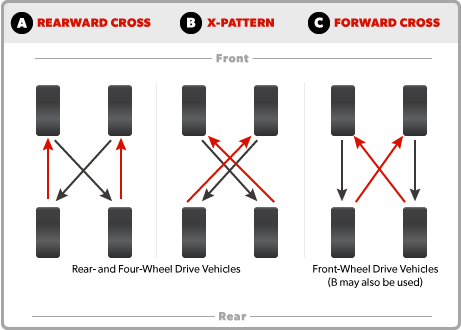
To begin, it helps to know that the reset procedure is not universal. Different vehicle makes and model years use different relearn protocols, and applying the wrong method will result in no change to the system’s mapping. Below is a complete breakdown of each method.
How to Reset TPMS Using the Dashboard Reset Button
The dashboard TPMS reset button method is the most widely applicable manual reset technique, available on a large number of Honda, Toyota, Nissan, Hyundai, and Kia models, among others. The button is typically located beneath the steering wheel column, inside the glove compartment, or on the lower dashboard panel, and is usually labeled “TPMS” or marked with the tire pressure warning symbol.
Follow these steps to complete a dashboard button reset:
- Park the vehicle and inflate all four tires to the exact PSI listed on the driver’s door jamb sticker.
- Turn the ignition to the “ON” position without starting the engine. On push-button start vehicles, press the start button once without pressing the brake pedal.
- Locate the TPMS reset button and press and hold it until the TPMS warning light on the dashboard blinks slowly three times, then release.
- Start the vehicle and drive at a minimum of 30 mph for 10 to 15 minutes. This driving cycle allows the ECU to relearn each sensor’s new position and confirm the pressure readings.
- Confirm the warning light has turned off. If it remains on after the drive, repeat the process or check that tire pressures are correct.
Post-rotation lug torque and recheck should always be completed before performing a TPMS reset — confirming that all lug nuts are torqued to spec eliminates the possibility that a loose wheel is contributing to abnormal sensor readings during the relearn drive.
How to Reset TPMS Through the Vehicle’s Infotainment or Settings Menu
Newer vehicles increasingly replace physical TPMS reset buttons with software-based reset options built into the touchscreen infotainment system or digital instrument cluster. This method is common on recent Ford, BMW, Chevrolet, and Mazda models, and offers the same outcome as the button reset with a slightly different activation path.
The table below outlines the general navigation path across most vehicles. While exact wording varies significantly by manufacturer and software version, this structure represents the most common menu flow:
| Step | Menu Path |
|---|---|
| 1 | Home Screen → Settings |
| 2 | Settings → Vehicle or Driver Assistance |
| 3 | Vehicle → Tires or Tire Pressure |
| 4 | Tires → TPMS Reset or Calibrate Tires |
| 5 | Confirm reset → Drive at 25+ mph for 20 minutes |
If the path does not match your vehicle’s interface, consult the owner’s manual or search the manufacturer’s support site with your vehicle’s year, make, and model. After initiating the menu-based reset, the same driving cycle applies as with the button method — sustained driving at moderate speed on a surface with gentle curves helps the sensors establish their new corner positions more quickly than straight highway driving.
When Does TPMS Relearn Itself Automatically After Rotation?
Many modern vehicles — including most Ford trucks, GM SUVs, newer BMW models, and a wide range of Nissan vehicles — use an auto-relearn protocol that requires no button press, no menu navigation, and no special tool. After rotating the tires, these vehicles simply need to be driven for a period of time at typical road speeds, and the ECU will identify each sensor’s new position automatically.
The auto-relearn process works by monitoring the radio frequency signals from each sensor during driving. As the vehicle turns corners, accelerates, and brakes, the ECU builds a positional model of where each sensor ID is located based on differential signal timing and strength. In most auto-relearn vehicles, this process completes within 5 to 20 miles of varied driving.
If the TPMS warning light persists after 20 miles of normal driving on an auto-relearn vehicle, it is a signal to:
- Verify all tire pressures manually
- Consult the owner’s manual for a supplemental reset procedure
- Consider whether an OBD-based relearn tool may be required for your specific model year
Car Symptoms that point to a failed auto-relearn — such as the warning light staying on permanently, a pressure reading frozen at a single value for all four tires, or the system showing “—” instead of a PSI number — indicate the ECU was unable to complete the relearn cycle and a more active reset method is needed.
How Do You Know Which TPMS Reset Method Your Vehicle Needs?
There are three TPMS relearn categories — Auto Relearn, Trigger Tool Relearn, and OBD Relearn — determined by the vehicle manufacturer’s system design, and matching your vehicle to the correct category is the essential first step before attempting any reset after tire rotation.

Choosing the wrong method does not damage the system, but it wastes time and leaves drivers falsely believing the reset was successful when the sensors were never relearned. Specifically, many drivers attempt a dashboard button reset on a vehicle that requires an OBD relearn — and wonder why the warning light never clears.
What Does Your Owner’s Manual Say About TPMS After Tire Rotation?
The owner’s manual is the single most authoritative source for your vehicle’s specific TPMS reset procedure, and it should always be the first place you check before attempting any recalibration method. The manual will identify whether your vehicle requires a button reset, a menu reset, a driving cycle, or an OBD tool, and it will specify the exact steps for each.
However, many owner’s manuals — particularly for vehicles using auto-relearn systems — do not explicitly address TPMS recalibration after routine tire rotation. In practice, this means:
- If the manual contains a TPMS reset section: follow it precisely for post-rotation recalibration
- If the manual says nothing about TPMS reset after rotation: your vehicle likely uses auto-relearn — drive normally for 20 miles and confirm the light clears
- If you have lost your manual: access the digital version through the manufacturer’s official website using your Vehicle Identification Number (VIN), or call the dealership’s service line — most technicians will walk you through the reset procedure for free over the phone
Do You Need a Professional or a Special Tool to Relearn TPMS?
For the majority of vehicles, no professional service or special tool is required to relearn TPMS after tire rotation — a button reset or short drive cycle is sufficient. However, a meaningful subset of vehicles — particularly those using OBD-based relearn protocols — do require either a dedicated TPMS relearn trigger tool or a full OBD scan tool with TPMS programming capability.
The following table maps vehicle brands to their most common relearn category to help drivers determine what they need before beginning the reset process:
| Relearn Category | Common Brands/Models | Tool Required? |
|---|---|---|
| Auto Relearn | Ford F-150 (2015+), GM trucks, Nissan Titan, newer BMW | No |
| Button/Menu Reset | Honda Civic/CR-V, Toyota Camry/RAV4, Hyundai Tucson | No |
| Trigger Tool Relearn | Older GM vehicles, some Chrysler/Dodge models | Yes — ~$30–$80 tool |
| OBD Relearn | Subaru (most models), some Honda and Acura | Yes — dealer or $150+ tool |
For vehicles in the OBD Relearn category, the cost of a professional service at a tire shop or dealership is typically between $20 and $50 — a reasonable investment that ensures the system is properly calibrated rather than left in a state where pressure alerts may point to the wrong wheel.
Special Scenarios That Affect TPMS During Tire Rotation
There are four special scenarios that affect TPMS behavior during and after tire rotation: staggered tire setups, spare tire sensor inclusion, seasonal tire set swaps, and TPMS sensor battery lifespan — each requiring specific handling that falls outside the standard rotation and reset workflow.

These scenarios are the edge cases where drivers most often encounter persistent TPMS issues they cannot resolve with a standard reset, and where understanding the underlying mechanics prevents frustration and unnecessary expense.
How Does TPMS Work with Staggered Tire Setups That Can’t Be Rotated?
A staggered tire setup is a configuration in which the rear tires are wider — and often a different diameter — than the front tires. This is common on rear-wheel-drive performance vehicles such as the Chevrolet Corvette, many BMW M-series models, and Dodge Challenger R/T variants. Because the front and rear tires are different sizes, traditional front-to-rear tire rotation is not possible without also remounting the tires on different wheels.
For drivers with staggered fitments, the practical TPMS implications are:
- Traditional rotation is not performed — only side-to-side rotation on the same axle may be possible in some configurations, but this is uncommon
- TPMS sensors remain on the same axle — front sensors stay at the front, rear sensors stay at the rear, so positional relearning is rarely required
- If a side-to-side rotation is performed (left-front to right-front and left-rear to right-rear), a partial relearn may still be needed depending on whether the ECU distinguishes between left and right on the same axle
The absence of traditional rotation with a staggered setup means front tires will wear significantly faster than rear tires. Drivers in this situation should monitor front tire wear closely and be prepared for earlier front tire replacement, regardless of TPMS considerations.
Should You Include the Spare Tire’s TPMS Sensor in Your Rotation?
Some vehicles — particularly full-size trucks and body-on-frame SUVs from Ford, GM, and Ram — are equipped with a fifth TPMS sensor in the full-size spare tire. When a spare tire with a sensor is included in a 5-tire rotation cycle, the ECU must now recognize and map five sensor IDs rather than four, which complicates the standard relearn process.
For vehicles with a 5-sensor TPMS system:
- Consult the owner’s manual specifically for 5-tire rotation relearn instructions — the procedure differs from the standard 4-sensor reset
- The ECU must be programmed to accept the spare’s sensor ID as a valid position in the rotation sequence
- Some vehicles require a dealer visit or OBD tool to add the spare sensor ID to the rotation map
- If the spare sensor is not programmed, the TPMS light may illuminate immediately after a rotation that includes the spare, and the system will be unable to accurately monitor the tire that the spare has replaced
Drivers who purchase a matching fifth wheel and tire to include in rotation — a practice that extends tire life by approximately 20% by equalizing wear across five tires — should always confirm that a fifth TPMS sensor is installed and properly programmed before performing their first 5-tire rotation.
How Does Tire Rotation Frequency Affect TPMS Sensor Battery Life?
TPMS sensor batteries are sealed, non-replaceable lithium batteries with an estimated operational life of 7 to 10 years or approximately 100,000 miles under normal driving conditions. A common concern among drivers who rotate their tires frequently — every 5,000 miles rather than the standard 7,500 to 10,000 — is whether additional rotation events meaningfully accelerate battery drain through increased recalibration activity.
The practical answer is: the battery drain associated with each additional relearn cycle is negligible. Sensor batteries are designed for continuous pressure reporting during all driving hours, not just recalibration events. The relearn cycle itself adds only minutes of incremental transmission activity per rotation event, which represents a fraction of a fraction of total battery life.
However, tire rotation does serve as a valuable trigger event for monitoring sensor health. At each rotation service, it is worth noting:
- Sensors older than 7 years should be tested with a TPMS activation tool for battery status, even if the system is currently functioning
- Sensors that fail to respond during a relearn cycle may indicate a dying battery rather than a system error
- Industry practice now recommends replacing TPMS sensors when mounting new tires, particularly if the existing sensors are already 5+ years old — the labor cost of sensor replacement is lowest when the wheels are already dismounted for new tires
According to the Tire Industry Association, TPMS sensor battery failure is the leading cause of persistent TPMS warning lights on vehicles older than 8 years, accounting for a significant portion of unnecessary dealer visits that could be prevented by proactive sensor replacement at the time of tire installation.
What Happens to TPMS When You Switch Between Summer and Winter Tire Sets?
A seasonal tire swap — switching from a summer set to a dedicated winter set mounted on a separate set of wheels — is fundamentally different from a standard tire rotation in terms of TPMS complexity. Because the two sets of wheels carry completely different sensor IDs, the ECU must recognize and accept an entirely new group of four sensor IDs each time the seasonal swap is performed.
Some vehicles — notably several BMW, Audi, and Ford models — are capable of storing up to eight sensor IDs in memory simultaneously (four for summer, four for winter). These systems auto-detect the active set when the vehicle is started after a seasonal swap and switch to the appropriate sensor map without any driver action.
For vehicles that can only store four sensor IDs, every seasonal swap requires a full relearn procedure — equivalent to a first-time installation rather than a simple rotation reset. In these cases:
- A TPMS trigger tool or OBD relearn tool is often necessary to program the new set’s sensor IDs
- A tire shop with TPMS programming equipment can complete this in under 10 minutes per swap
- Aftermarket universal TPMS sensors that can be programmed to clone or replace OEM sensor IDs are available and may simplify the seasonal swap process over multiple years
For drivers who perform seasonal swaps annually, investing in a compatible TPMS relearn tool for your specific vehicle brand — tools range from approximately $30 for a basic trigger activator to $150 for a full OBD-compatible programmer — pays for itself quickly compared to repeated dealer or shop fees over the life of the vehicle.