


Professional tire rotation costs between $20 and $75 per visit at most shops, while a DIY setup requires a one-time tool investment of $150 to $350 — but the real savings question goes far deeper than either number alone. When you factor in rotation frequency, long-term tire replacement costs, and the risk of doing it wrong, the math shifts considerably depending on your situation. Both methods beat the alternative of skipping rotation entirely, which can cost car owners hundreds of dollars in premature tire replacements over a vehicle’s lifetime.
Understanding how much a professional tire rotation costs — and what actually drives that price — helps car owners benchmark whether they’re overpaying or getting fair value. Shop type, vehicle type, geographic location, and bundled services all create a wide range from a free rotation at Costco to a $150 specialized service at a high-end dealership. Knowing where your vehicle falls in that range is the first step in making a financially sound decision.
For mechanically inclined drivers, DIY tire rotation presents a genuine opportunity to eliminate recurring service costs after the initial tool investment breaks even. However, the calculation is not as simple as “free after tools.” Time, safety risks, warranty exposure, and vehicle compatibility all factor into whether DIY is actually the smarter path — or a false economy that costs more down the road.
Extending tire life with proper rotation — whether done professionally or at home — is one of the highest-return maintenance decisions a car owner can make. Consumer Reports data shows that regular rotation can reduce tire purchases from twelve to eight sets over 120,000 miles, saving over $400 on tires alone. Next, this article breaks down every variable that determines which option truly saves more money for your specific situation.
What Is Tire Rotation and Why Does It Matter for Your Car?
Tire rotation is a routine vehicle maintenance service in which each tire is repositioned to a different wheel location on the car, designed to equalize tread wear across all four tires and extend their usable lifespan.
To better understand why this service matters so much to your wallet, it helps to see exactly how tires degrade differently based on where they sit on the vehicle.
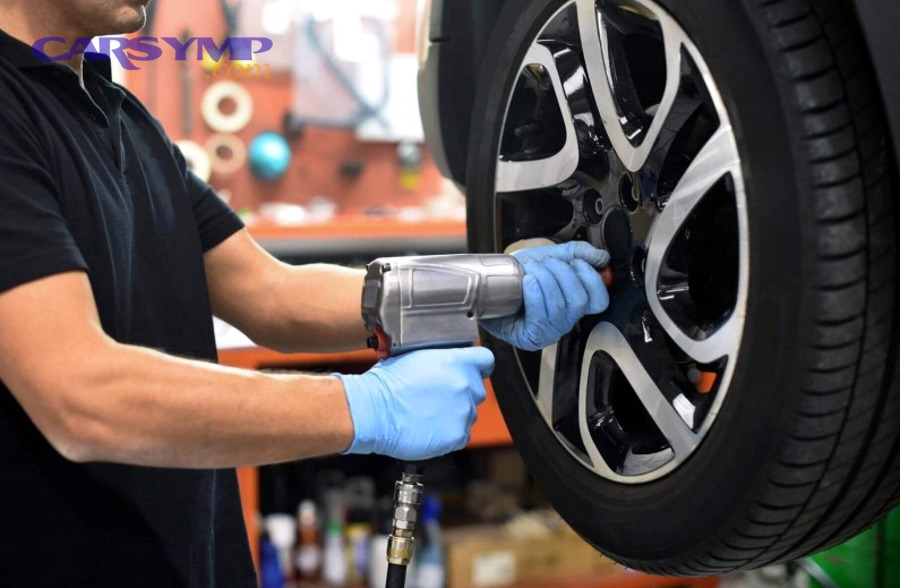
Every tire on your car experiences a different type and level of stress depending on its axle position, the drivetrain layout, and your driving habits. Front tires on front-wheel-drive vehicles handle acceleration, steering, and the majority of braking force simultaneously — meaning they wear significantly faster than the rear tires, which are largely along for the ride. Rear-wheel-drive vehicles distribute wear differently, with rear tires absorbing drive forces while fronts handle cornering and braking. All-wheel-drive systems spread torque more evenly but still produce uneven wear due to turning geometry. Without periodically moving each tire to a different position, the overworked tires burn out prematurely while the underused ones still have plenty of tread remaining — a costly imbalance that forces you to replace tires in mismatched pairs or full sets far ahead of schedule.
How Does Tire Wear Differ Between Front and Rear Tires?
The difference in wear rate between front and rear tires is one of the most important — and most underestimated — factors in tire ownership cost. On a typical front-wheel-drive vehicle, which represents the majority of passenger cars sold in the United States, front tires wear approximately three times faster than rear tires. This happens because front tires carry the combined burden of steering inputs, braking forces, and drive torque all at once, while rear tires simply roll. As a result, drivers who never rotate their tires on a FWD vehicle will typically need to replace the front pair every 20,000 miles while the rear tires may last 60,000 miles — a deeply inefficient and expensive wear pattern. On rear-wheel-drive vehicles, the rear tires absorb all drive forces and wear faster on the back axle, while AWD vehicles see more nuanced patterns where cornering geometry causes outer tire edges to wear sooner. Regardless of drivetrain, all vehicles benefit from tire rotation because no four-tire position experiences identical forces.
- FWD vehicles: Front tires wear ~3× faster; forward cross or X-pattern rotation recommended
- RWD vehicles: Rear tires wear faster from drive torque; rearward cross pattern typically used
- AWD vehicles: Wear is more even but cornering geometry still causes differential wear; X-pattern or forward cross used
- Directional tires: Can only rotate front-to-rear on the same side, limiting the benefit unless dismounted and remounted
How Often Should You Rotate Your Tires?
Most vehicle manufacturers and tire companies recommend rotating tires every 5,000 to 8,000 miles, which for the average driver translates to roughly every other oil change or about twice per year. This interval is not arbitrary — it reflects the point at which measurable tread depth differences between axle positions begin to appear, and intervening at this stage prevents the wear gap from becoming large enough to compromise handling or safety. However, the ideal frequency is not universal. Electric vehicles, which are significantly heavier than their gasoline counterparts due to battery packs, place more stress on all four tires and typically need rotation every 4,000 to 6,250 miles. High-performance vehicles with aggressive alignment settings or staggered tire sizes may also need more frequent attention. Trucks and SUVs carrying heavy loads regularly will wear tires faster than a lightly loaded commuter sedan. Signs you need a rotation often appear as visible tread depth differences between front and rear tires, increased road noise, or vibration through the steering wheel — any of which signals that rotation is overdue. Always consult your owner’s manual for the manufacturer-specific recommendation, as this interval directly affects both your warranty coverage and your actual cost per mile of tire use.
According to data published by Kelley Blue Book, drivers who follow manufacturer-recommended rotation intervals consistently report measurably longer tire service life compared to those who rotate reactively only when problems become visible.
How Much Does a Professional Tire Rotation Cost?
There are four main price tiers for professional tire rotation: free (with tire purchase programs), budget ($20–$35 at independent shops), standard ($40–$75 at dealerships and chains), and premium ($100–$150 for specialized or luxury vehicles), based on shop type and vehicle requirements.
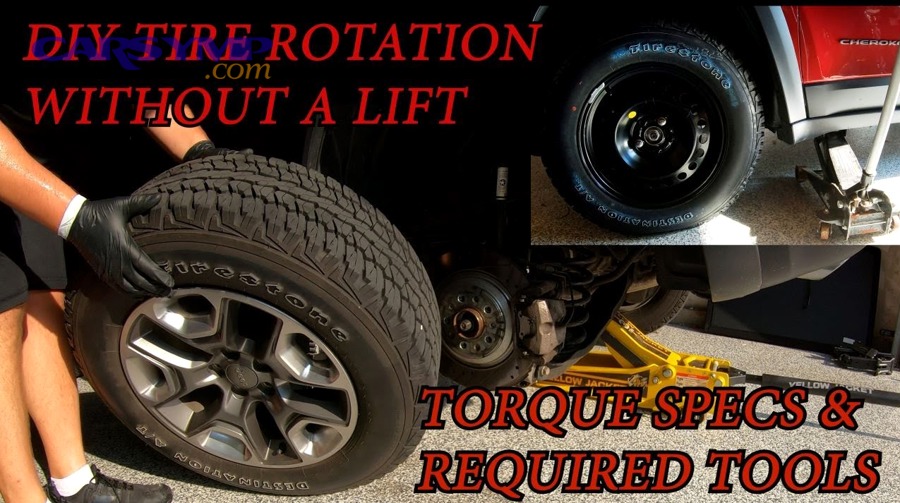
Specifically, the price you pay for a professional rotation depends on a combination of factors that most car owners don’t fully evaluate when choosing where to take their vehicle.
What Factors Influence the Price of a Professional Tire Rotation?
The price of a professional tire rotation is shaped by several variables working together, and understanding each one helps car owners avoid overpaying or being surprised at the register. The table below summarizes the primary cost drivers and their typical price impact:
| Cost Factor | Low End | High End | Notes |
|---|---|---|---|
| Independent shop | $20 | $35 | Most affordable; quality varies |
| National chain (Firestone, Jiffy Lube) | $25 | $50 | Consistent; coupons often available |
| Dealership | $30 | $100+ | OEM expertise; higher labor rates |
| Luxury/performance vehicle | $50 | $150 | Specialized tools; low-profile tires |
| Add-on: tire balancing | +$50 | +$80 | Recommended with each rotation |
| Add-on: wheel alignment | +$50 | +$100 | Only if pulling or handling issues |
Vehicle type plays a substantial role in cost variation. A standard commuter sedan on a common tire size takes a technician 15 to 30 minutes with a shop lift, making it a low-cost, low-complexity job that leans toward the cheaper end. A luxury SUV with oversized tires, or a sports car with low-profile rubber that requires extra care to avoid rim damage, takes longer and may require specialty equipment. Geographic location also matters significantly — shops in high cost-of-living urban markets charge more for labor than rural or suburban competitors, sometimes by 30 to 50 percent for the same service. Additionally, bundling a rotation with an oil change or tire balancing almost always reduces the per-service cost compared to scheduling each separately, since the vehicle is already on the lift.
Where Can You Get a Free or Discounted Tire Rotation?
Several major tire retailers and membership clubs offer free lifetime tire rotation when you purchase tires directly from them — a benefit that dramatically changes the long-term cost calculation for professional service. Costco Tire Center, Discount Tire, and Les Schwab all include complimentary rotation for the life of the tires purchased at their locations. America’s Tire, which operates in the western United States, offers the same benefit. For drivers who buy tires at these retailers, the ongoing professional rotation cost is effectively zero, which instantly makes DIY financially uncompetitive on a pure cost basis. Manufacturer prepaid maintenance plans also frequently include tire rotation. Toyota ToyotaCare covers rotations for the first two years or 25,000 miles, and HondaCare Maintenance bundles rotation with extended warranty services. Mavis Tire, Firestone, and Pep Boys regularly publish time-sensitive coupons that bring standalone rotation costs down to $9.99 to $19.99 — making professional service nearly as cheap as the cost of your own time. Checking for active promotions before scheduling a rotation can cut costs significantly without requiring any tool investment or mechanical skill.
How Much Does DIY Tire Rotation Actually Cost?
DIY tire rotation costs $0 per rotation after an initial tool investment of $150 to $350, but the true cost includes setup time, physical effort, and the risk of errors that could generate expensive downstream repair bills.
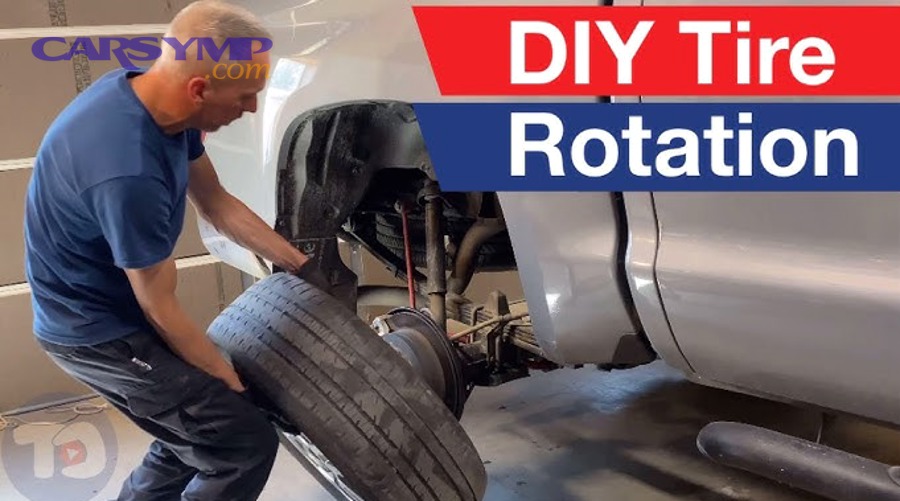
However, the real cost picture of rotating your own tires requires a clear-eyed look at what you actually need to do it correctly and safely.
What Tools Do You Need to Rotate Tires at Home?
Rotating tires at home requires a specific set of tools to do the job safely, and cutting corners on equipment is where DIY tire rotation becomes genuinely dangerous rather than simply inconvenient. The minimum required toolkit includes a floor jack rated for your vehicle’s weight, at least two jack stands (four is safer), a breaker bar or impact wrench, a calibrated torque wrench, wheel chocks, and a tire pressure gauge to check TPMS readings after repositioning. The following breakdown covers what each item typically costs:
- Floor jack (2–3 ton hydraulic): $50–$120
- Jack stands (set of 2–4): $30–$60
- Impact wrench (electric or pneumatic): $40–$150
- Torque wrench (click-type, 1/2″ drive): $30–$80
- Wheel chocks (set of 2): $10–$20
- Tire pressure gauge: $10–$20
- Total entry-level kit: approximately $170–$350
One important cost that DIY enthusiasts frequently overlook is the torque wrench. This is not optional — it is the single most safety-critical tool in the process. Overtightening lug nuts with an impact wrench alone can warp brake rotors, crack wheel studs, or make future removal dangerously difficult. Undertightening can cause a wheel to loosen at highway speed. Professional shops use calibrated tools and trained technicians for this step specifically. For vehicles equipped with a Tire Pressure Monitoring System (TPMS), Tire rotation and TPMS considerations also come into play: some vehicles require a TPMS reset or relearn procedure after repositioning sensors to different wheel locations, which may require a dedicated scan tool or a dealer visit, adding a hidden cost to the DIY process.
How Long Does a DIY Tire Rotation Take Compared to a Shop?
A first-time DIY tire rotation typically takes 60 to 90 minutes from setup to cleanup, compared to 15 to 30 minutes at a professional shop with a commercial lift. For experienced DIYers who have performed the process multiple times, the time investment compresses to around 30 to 45 minutes — still roughly double the shop time. This time gap matters when calculating the true cost of DIY rotation. If your time is worth $25 per hour and a professional rotation costs $40, you are essentially breaking even on time cost versus service cost on every single rotation — before factoring in the tool investment. For drivers who genuinely enjoy working on their cars or who own multiple vehicles, the time cost spreads across more rotations and the math improves. For busy professionals who would rather spend 30 minutes doing something else, paying $30 to $50 for a fast, professional rotation may represent better overall value even if the sticker price is higher.
DIY vs. Professional Tire Rotation: Which Is Cheaper Overall?
DIY tire rotation wins on long-term per-rotation cost for multi-vehicle households and mechanically confident owners, while professional service wins for single-car owners with access to free rotation programs or for anyone whose time has high value.
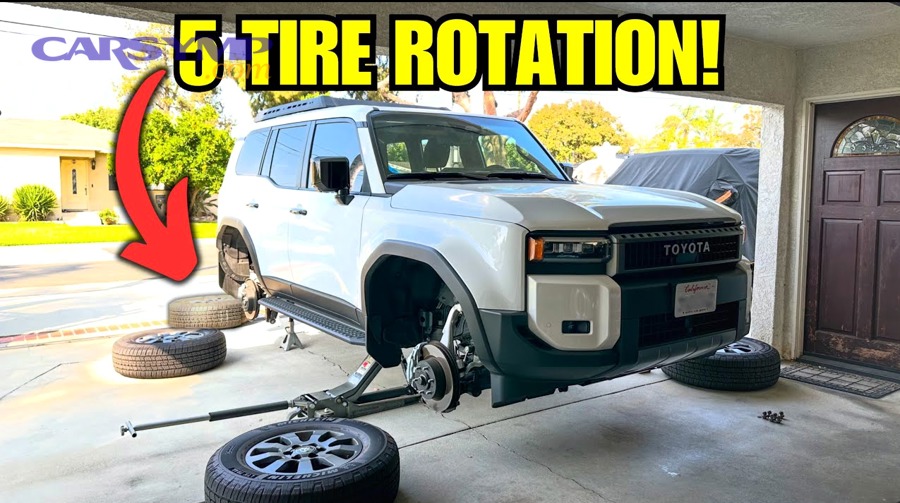
However, the comparison only becomes meaningful when you calculate the actual numbers across a realistic ownership timeline rather than comparing a single visit.
What Is the Break-Even Point for DIY Tire Rotation vs. Paying a Shop?
The break-even point for DIY tire rotation depends on your tool investment and your local shop rate, but for most car owners it falls between 3 and 5 years of regular rotation. The following table models several realistic scenarios to illustrate when DIY becomes financially advantageous:
| Scenario | Tool Cost | Shop Rate | Rotations/Year | DIY Break-Even |
|---|---|---|---|---|
| Single vehicle, basic tools | $200 | $40/visit | 2 | 2.5 years |
| Single vehicle, budget tools | $150 | $30/visit | 2 | 2.5 years |
| Two vehicles, shared tools | $250 | $40/visit | 4 total | 1.5 years |
| Single vehicle, free rotation program | $200 | $0/visit | 2 | Never breaks even |
The calculation shifts dramatically if you already own a floor jack and stands for other maintenance tasks like oil changes. In that case, the marginal tool cost for adding tire rotation may be as low as $30 to $80 for a torque wrench, reducing the break-even point to less than two rotations. Conversely, if your tire brand offers free lifetime rotation with purchase — a program available at Costco, Discount Tire, and Les Schwab — DIY never achieves a financial advantage, since you would be spending $150 to $350 on tools to replicate a service you already receive at no cost.
Does Rotating Tires — Either Way — Actually Save Money on Replacements?
Yes, rotating tires consistently — whether done professionally or at home — genuinely saves car owners significant money on tire replacements over the life of a vehicle, and skipping rotation is by far the most expensive option.
More specifically, the math is compelling regardless of which rotation method you choose. According to analysis published by Consumer Reports, a front-wheel-drive vehicle driven 120,000 miles without tire rotation will go through approximately twelve tires — replacing the fronts every 20,000 miles while the rears last 60,000 miles. With regular rotation every 8,000 miles, all four tires wear evenly and may reach 40,000 miles each, reducing total tire purchases to eight sets over the same distance. At an average replacement cost of $100 per tire, that represents a saving of $400 in tire purchases alone. Subtract the cost of fourteen rotations at $20 each ($280) and the net saving is still $120 — and that assumes the cheapest possible professional rotation rate. At a $40 rotation cost, the break-even shifts, but the directional conclusion holds: some form of consistent rotation is always financially superior to no rotation at all.
Is DIY Tire Rotation Safe for the Average Car Owner?
Yes, DIY tire rotation is safe for the average car owner — provided they have the correct tools, follow the proper rotation pattern for their vehicle’s drivetrain, and use a calibrated torque wrench to tighten lug nuts to specification.

That said, safety in this context is not binary — it depends heavily on preparation, and the risks of doing it wrong are more serious than most drivers realize.
What Are the Risks of Improperly Rotating Your Own Tires?
Improperly performed DIY tire rotation introduces several mechanical and safety risks that can cost far more to fix than a lifetime of professional rotations. The most common and serious risks include:
- Over-torqued lug nuts: Using an impact wrench without a torque wrench to finish can over-tighten lug nuts to 150+ ft-lbs when the specification may call for 80–100 ft-lbs. This warps brake rotors over time, causing pedal vibration and requiring rotor replacement at $150 to $300 per axle.
- Under-torqued lug nuts: Lug nuts not tightened to spec can loosen during driving, creating vibration, wobble, and in extreme cases, wheel detachment at speed — a catastrophic safety failure.
- Wrong rotation pattern: Using a forward-cross pattern on a vehicle with directional tires, or applying an X-pattern to a staggered fitment setup, can cause handling imbalances, accelerated uneven wear, and in AWD vehicles, stress on the differential.
- Jack placement errors: Placing the floor jack under a pinch weld, body panel, or unreinforced frame section can cause expensive structural damage or, more dangerously, cause the vehicle to shift off the jack while you’re beneath it.
- Warranty voidance: Incorrectly performed rotation documented by subsequent shop inspections can be used to deny tire warranty claims, converting a “free” DIY rotation into a full out-of-pocket tire replacement.
When Should You Always Choose a Professional Over DIY?
There are specific vehicle and situational contexts where professional tire rotation is not just more convenient but objectively the correct choice — and attempting DIY in these scenarios creates real risk of harm or financial loss.
Directional or staggered tires represent the clearest case. Directional tires feature a tread pattern designed to rotate in only one direction, meaning they can only move front-to-rear on the same side of the vehicle. Rotating them to the opposite side requires dismounting the tire from the rim and remounting it in the correct orientation — a process that requires a tire machine and balancing equipment unavailable to most home mechanics. Staggered fitment setups, common on performance vehicles and some luxury SUVs, use different tire widths on the front and rear axles, making cross-rotation physically impossible without the same dismount-and-remount process.
AWD vehicles warrant extra caution because many all-wheel-drive systems use torque-sensitive differentials and transfer cases that are sensitive to tread depth differences between tires. Some manufacturers specify that tires on AWD vehicles must be within 2/32″ of each other in tread depth to avoid drivetrain stress — a spec that requires a tread depth gauge to verify accurately. An incorrect rotation pattern on an AWD vehicle can create unequal tread depths that stress the center differential, potentially causing $1,000 to $3,000 in drivetrain repairs.
Vehicles under active manufacturer warranty should have documented service records from a shop, particularly if the warranty language specifies that tire maintenance must be performed at specified intervals to maintain coverage. DIY rotation with no documentation creates a gap in your service record that a manufacturer could use to deny a warranty claim on related systems.
Special Scenarios That Change the Cost Equation for Tire Rotation
Beyond the standard cost comparison, there are four specific vehicle types and maintenance scenarios where the financial and technical calculus of tire rotation changes substantially — and where the wrong decision can cost significantly more than the service itself.
These micro-context scenarios apply to a smaller but growing segment of car owners, and understanding them prevents costly surprises.
Does Tire Rotation Cost More for Electric Vehicles Like Tesla?
Yes, tire rotation costs more for electric vehicles than for equivalent gasoline-powered cars, primarily because greater vehicle weight accelerates tire wear and increases the frequency — and therefore total cost — of rotation service.
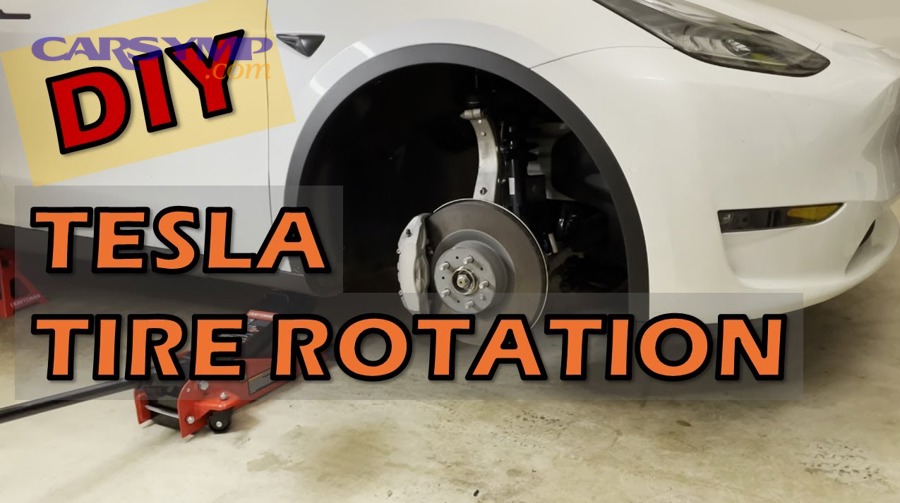
Electric vehicles are significantly heavier than comparable gasoline models due to their battery packs. A Tesla Model 3, for example, weighs approximately 4,000 to 4,400 pounds — roughly 20 to 30 percent more than a similar-size gasoline sedan. This additional weight increases tire wear rate across all four positions and compresses the recommended rotation interval. Tesla specifically recommends tire rotation every 6,250 miles or whenever tread depth difference between any two tires exceeds 2/32″ — whichever comes first. At that interval, an owner paying $40 per rotation would spend approximately $128 per year compared to $80 for a gasoline vehicle rotated every 7,500 miles. Over five years, that $240 difference is not trivial. Additionally, many EV wheel configurations use low rolling resistance tires that wear in distinctive patterns and may require specific rotation handling. Tire rotation and TPMS considerations are also more complex on EVs: Tesla’s TPMS system requires a relearn procedure after rotation, which some third-party shops charge an additional fee to perform, while Tesla Service Centers include it in the rotation service cost.
Can DIY Tire Rotation Void Your Car’s Warranty or Tire Warranty?
Yes, improperly performed or undocumented DIY tire rotation can void both your tire manufacturer’s warranty and, in some cases, your vehicle’s powertrain warranty — making this one of the most financially consequential risks of the DIY approach.
Most major tire brands include rotation requirements in their warranty terms. Michelin, Bridgestone, and Goodyear all specify that tires must be rotated at defined intervals — typically every 5,000 to 7,500 miles — for the treadwear warranty to remain valid. If a tire fails prematurely and you cannot produce a documented rotation history from a shop receipt or service record, the manufacturer can deny a pro-rated warranty claim that might otherwise cover $80 to $150 per tire. For a set of four premium tires costing $800 to $1,200, losing warranty coverage due to undocumented DIY rotation is a costly outcome. Some original equipment manufacturer warranties for new vehicles, particularly those from European luxury brands, specify that tire maintenance during the warranty period must be performed by a qualified technician and documented in the service record. DIY rotation without documentation creates a paper gap that can complicate warranty claims on related systems. The safest approach for DIY practitioners is to maintain a personal service log with dates, mileage, and rotation patterns performed — creating a paper trail even without a shop receipt.
What Is the Cost Difference for Rotating Tires on Staggered or Directional Setups?
Rotating tires on staggered or directional setups costs substantially more than a standard rotation because the process requires tire dismounting, remounting, and rebalancing — services that standard rotation pricing does not include.
For directional tires, which can only rotate front-to-rear on the same side of the vehicle without being flipped on the rim, a standard $30 to $50 rotation accomplishes limited wear evening. To rotate directional tires to the opposite side — which is necessary for full wear equalization — each tire must be dismounted from its rim, flipped, remounted, and rebalanced. That process typically costs $15 to $30 per tire in additional labor, bringing the total for a full directional rotation to $90 to $170 rather than $30 to $50. Many car owners with directional tires are unaware of this and simply perform front-to-rear same-side rotations, which provides partial benefit but not the complete wear equalization of a full rotation. Staggered fitment setups present an even more constrained scenario: because the front and rear tires are different widths (for example, 245mm front and 275mm rear on a performance coupe), side-to-side rotation within each axle is the only option, and front-to-rear rotation is impossible without remounting — which also requires rebalancing. In the rarest cases, center-lock wheel systems found on high-end Porsche and Ferrari models require specialized removal tools that are unavailable outside of authorized service centers, making professional rotation not just recommended but mandatory.
How Does Skipping Tire Rotation Entirely Compare in Cost to Both DIY and Professional Service?
Skipping tire rotation entirely is the most expensive option available to car owners — generating hundreds of dollars in additional tire replacement costs over a vehicle’s lifetime compared to either consistent professional service or diligent DIY rotation.
The long-term cost of zero-rotation tire management is starkly illustrated by the Consumer Reports modeling referenced earlier: at $100 per tire, a no-rotation approach results in spending $1,200 on twelve tires over 120,000 miles. Regular rotation at $20 per visit, performed fourteen times over the same distance, produces total spending of $1,080 — $120 less, with the added benefit of better handling, improved fuel economy, and maintained tire warranty coverage. At a $40 per rotation rate, the total rotation cost rises to $1,360 — slightly more than the no-rotation scenario in pure tire-plus-service spending. However, this comparison omits fuel efficiency degradation from uneven wear (estimated at 0.5 to 1.5 percent additional fuel consumption), the cost of replacing tires in mismatched pairs rather than matched sets, and the safety risk and potential accident liability from bald front tires on a vehicle that still has deep tread in the rear — a combination that produces dangerous handling imbalance in wet or emergency braking conditions. When all costs are included, skipping rotation is not a savings strategy. It is a deferred expense with compounding consequences — making any rotation method, DIY or professional, the clearly superior financial and safety decision for every car owner.
According to a long-term cost analysis model published by Consumer Reports, consistent tire rotation reduces total tire expenditure over 120,000 miles by eliminating four tire purchases, representing a gross saving of $400 at average tire pricing — before accounting for fuel efficiency and handling benefits.