


Proper tire rotation extends tire life by redistributing mechanical stress across all four tires, preventing any single tire from wearing down faster than the others. Every time you drive, your tires experience unequal forces — the front tires absorb steering input, braking load, and engine weight, while the rear tires handle different demands depending on your drivetrain. Without periodic repositioning, these differences compound over thousands of miles, quietly eroding tread depth and robbing you of thousands of miles of usable tire life. Tire rotation is not a luxury maintenance step — it is the most cost-effective way to ensure every tire reaches its full rated mileage.
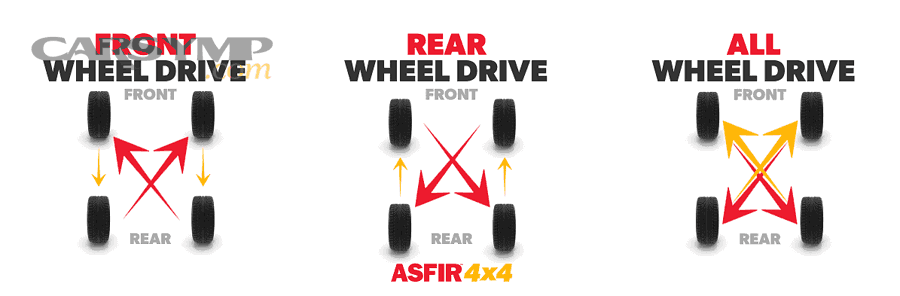
Understanding the right rotation pattern for your specific vehicle is equally important, because applying the wrong pattern can fail to address the actual wear imbalance your drivetrain creates. Front-wheel drive vehicles, rear-wheel drive vehicles, and all-wheel drive vehicles each place stress on tires in fundamentally different ways — and each requires a distinct rotation sequence to counteract that wear. Knowing your drivetrain type before you rotate is the first practical step every driver should take.
Beyond the pattern itself, rotation frequency determines whether the benefits actually accumulate. Most manufacturers recommend rotating tires every 5,000 to 7,500 miles, but drivers in high-stress conditions — city stop-and-go traffic, towing, or rough terrain — may need to rotate sooner. Getting this schedule right is what separates drivers who squeeze maximum mileage out of a tire set from those who replace tires prematurely.
Finally, the financial argument for consistent tire rotation is compelling and often underappreciated. A single professional rotation service typically costs between $20 and $50, yet the tread life it preserves can be worth hundreds of dollars in deferred replacement costs. Next, this article will walk through every dimension of proper tire rotation — from the science of why it works, to patterns, schedules, and the real money-saving calculus behind making it a permanent habit.
What Is Tire Rotation and Why Does It Matter for Tire Longevity?
Tire rotation is a scheduled maintenance procedure that repositions each tire to a different wheel location — front to rear, side to side, or diagonally — to equalize the uneven wear caused by a vehicle’s weight distribution, drivetrain forces, and steering mechanics. Specifically, tire rotation addresses a fundamental asymmetry in how vehicles consume tread: because no two wheel positions experience identical stress, tires left in place will always wear at different rates, and the fastest-wearing tire becomes the weak link that forces premature replacement of the entire set.
To better understand why this matters for longevity, it helps to examine what actually happens to tires at each position during normal driving.
How Does Uneven Tread Wear Shorten Tire Life?
Uneven tread wear shortens tire life because localized stress removes rubber unevenly, causing some sections of a tire to reach the legal wear limit while other sections remain underutilized — wasting the full lifespan engineered into the tire.
More specifically, front tires on most passenger vehicles bear over 60% of the vehicle’s total weight due to the engine’s forward placement, and they also manage every steering input and the majority of braking force. This combination causes the front tires to wear significantly faster than rear tires, particularly on the outer edges due to cornering forces. Over time, the front pair develops shallower tread depth than the rear pair. Once front tread drops below 2/32 of an inch — the legal minimum in most U.S. states — all four tires must be addressed, even though the rear tires may still have 50% or more of their tread life remaining. The result is a forced premature investment that proper tire rotation would have prevented.
The physical consequences extend beyond cost. Tires with uneven tread depth across an axle create handling instability, increase stopping distances on wet roads, and raise the risk of hydroplaning. On all-wheel drive systems, even modest tread depth differences between front and rear tires can generate drivetrain stress, potentially damaging transfer cases and differentials.
What Happens to Your Tires If You Never Rotate Them?
If you never rotate your tires, the outcome is predictable and costly: the tires bearing the highest load will exhaust their tread life thousands of miles before the others, forcing you to replace a partial set and discard tires that still have significant life remaining.
For a front-wheel drive vehicle with no rotation history, the front tires may reach their wear limit at 30,000–35,000 miles on a tire rated for 50,000–60,000 miles. The rear tires, bearing less stress, may still have 60–70% tread remaining at that same mileage. You are then faced with a choice between replacing only the front two tires — creating a tread depth mismatch that compromises AWD systems and handling balance — or replacing all four and discarding usable tire life. Neither outcome is efficient.
Beyond economics, unrotated tires generate safety hazards that escalate gradually. Vehicle pulling to one side, vibration at highway speeds, and reduced wet-weather grip are early indicators of advanced uneven wear. In the most severe cases, a heavily worn tire on a single axle can experience sudden tread separation or blowout under heat and load — a risk that accelerates exponentially once tread depth drops below 4/32 of an inch.
Does Tire Rotation Really Extend Tire Life? (The Evidence)
Yes, tire rotation genuinely extends tire life — specifically, it helps tires achieve their full rated mileage by equalizing tread consumption across all four positions, a benefit supported by manufacturer data, industry standards, and real-world mileage comparisons.
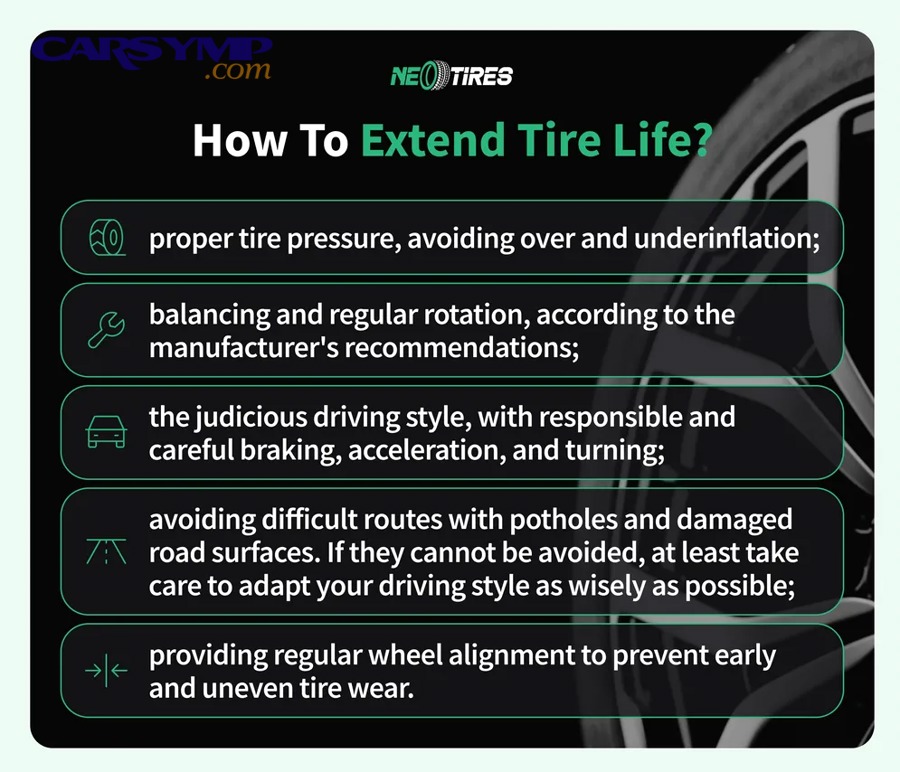
The mechanism is straightforward: rotation prevents any single tire from accumulating a disproportionate share of the total wear load. When all four tires share wear duty in rotation, each tire’s tread depth remains more uniform over time, and the entire set reaches the replacement threshold at approximately the same mileage — maximizing the value of every tire purchased.
How Many Miles Can Tire Rotation Add to Tire Life?
Tire rotation can add 5,000 to 15,000 miles to the functional lifespan of a tire set, with the actual gain depending on drivetrain type, driving conditions, tire construction, and rotation consistency.
To make this concrete: a 60,000-mile rated tire operated without rotation on a front-wheel drive vehicle may exhaust its front tires by 40,000–45,000 miles, effectively cutting the set’s life by 25–33%. The same tire, rotated every 5,000–7,500 miles, is far more likely to reach its rated mileage across all four positions simultaneously. According to Bridgestone’s tire maintenance documentation, consistent rotation is one of the top three factors — alongside proper inflation and alignment — that determines whether a tire achieves its rated tread life.
Many tire warranties reinforce this point directly. Major brands including Michelin, Goodyear, and Continental require documented rotation history as a condition of honoring tread life warranty claims. If you cannot demonstrate that you rotated your tires on schedule, the manufacturer may deny a warranty claim on a prematurely worn tire — making rotation not just a maintenance recommendation but a financial protection mechanism.
What Are the Correct Tire Rotation Patterns for Every Driver?
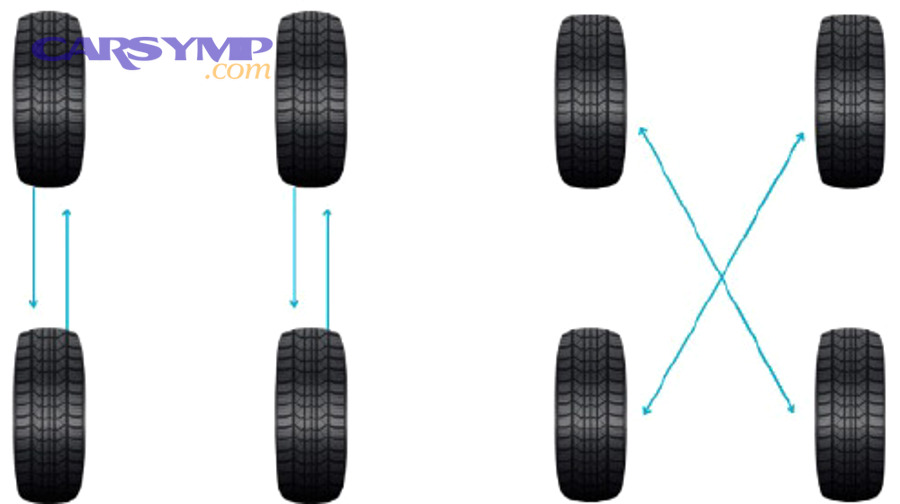
There are four main tire rotation patterns used across vehicle types: the Forward Cross, the Rearward Cross, the X-Pattern, and the Front-to-Rear (straight) pattern — each selected based on the vehicle’s drivetrain configuration and tire type.
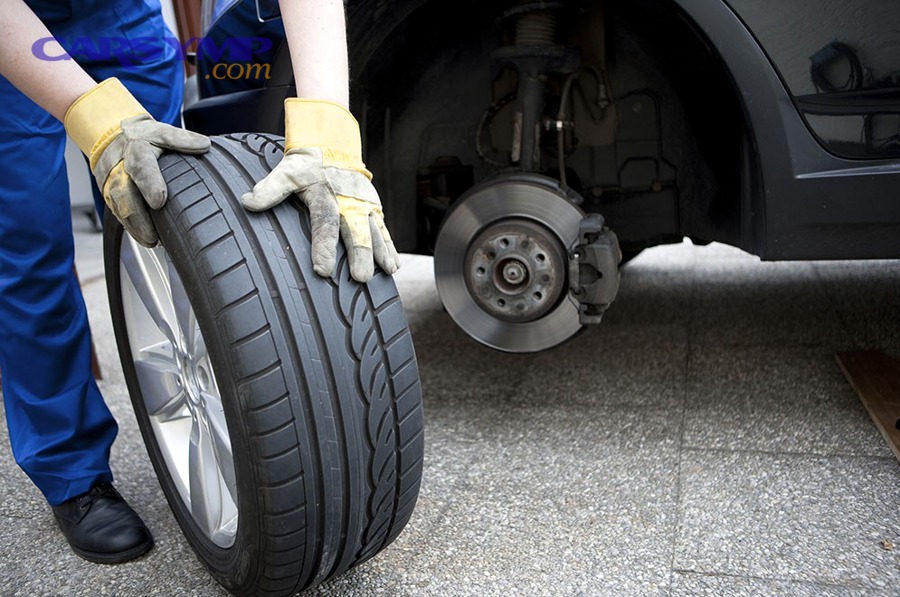
The pattern matters because it must counteract the specific wear imbalance your drivetrain creates. Using the wrong pattern — for instance, applying a forward cross to a rear-wheel drive vehicle — will fail to address the actual stress distribution and may even create new imbalances. The table below summarizes which pattern applies to each drivetrain type.
| Drivetrain Type | Recommended Pattern | Description |
|---|---|---|
| Front-Wheel Drive (FWD) | Forward Cross | Front tires move straight back; rear tires cross to opposite front positions |
| Rear-Wheel Drive (RWD) | Rearward Cross | Rear tires move straight forward; front tires cross to opposite rear positions |
| All-Wheel / 4WD | X-Pattern | All four tires swap diagonally across axles simultaneously |
| Directional Tires (any drivetrain) | Front-to-Rear (same side) | Tires move front to rear on the same side only; cannot cross sides |
This table shows the standard industry-recommended pattern for each common vehicle configuration, as outlined by The Tire and Rim Association.
What Is the Best Tire Rotation Pattern for Front-Wheel Drive Vehicles?
The Forward Cross pattern is the best rotation approach for front-wheel drive vehicles because it moves the most-stressed front tires to the lower-demand rear positions while bringing the rear tires forward with a side swap to begin absorbing the steering and braking load.
In practice, the forward cross works as follows: the front-left tire moves straight back to the rear-left position, and the front-right tire moves straight back to the rear-right position. The rear-left tire crosses forward to the front-right position, and the rear-right tire crosses forward to the front-left position. This cross-movement of the rear tires is intentional — it exposes each tire to both the driver’s side and passenger’s side wear patterns over multiple rotation cycles, producing the most balanced wear distribution possible.
An alternative for FWD vehicles is the X-Pattern, where all four tires move diagonally: front-left to rear-right, front-right to rear-left, and vice versa. The X-Pattern is particularly useful when one specific tire shows noticeably more wear than the others, as it ensures that tire is moved to the lowest-stress position on the next cycle.
What Is the Best Tire Rotation Pattern for Rear-Wheel Drive Vehicles?
The Rearward Cross pattern is the correct choice for rear-wheel drive vehicles, addressing the accelerated wear on rear tires caused by the drivetrain’s propulsion and acceleration forces being concentrated at the rear axle.
The execution is the mirror image of the forward cross: the rear-left tire moves straight forward to the front-left position, and the rear-right moves straight forward to the front-right. The front-left crosses back to the rear-right, and the front-right crosses to the rear-left. This ensures the heavily worn rear drive tires are rotated into the less stressful front steering positions, allowing tread depth to equalize over time.
Performance and sports vehicles powered by rear-wheel drive systems — particularly those with high-torque engines — often experience more aggressive rear tire wear and may benefit from rotating every 4,000–5,000 miles rather than waiting for the standard 7,500-mile interval. Drivers who notice rapid rear tread consumption should shorten their rotation cycle accordingly.
What Is the Best Tire Rotation Pattern for AWD and 4WD Vehicles?
The X-Pattern — a full diagonal swap of all four tires — is the recommended rotation method for all-wheel drive and four-wheel drive vehicles, because AWD and 4WD systems are uniquely sensitive to tread depth differences between axles.
In an AWD system, the drivetrain continuously monitors and adjusts torque distribution across all four wheels. When tread depth differs between the front and rear axles, the system interprets the difference in rotational speed as wheel slip and begins compensating unnecessarily. This constant micro-adjustment creates heat, mechanical stress, and premature wear on the transfer case, center differential, and driveshaft components — repairs that can cost thousands of dollars. Most AWD manufacturers recommend keeping tread depth within 2/32 of an inch across all four tires to avoid drivetrain stress.
Where the vehicle has a full-size spare tire of matching size and construction, tire professionals recommend including it in the rotation cycle on a five-tire pattern. This extends the mileage interval between purchases by distributing wear across five tires instead of four, effectively reducing wear per tire by 20%.
How Often Should You Rotate Your Tires? (The Right Schedule for Every Driver)
The standard tire rotation schedule recommended by most vehicle manufacturers and tire brands is every 5,000 to 7,500 miles, or approximately every six months for average drivers — a cadence that aligns conveniently with typical oil change intervals for easy bundling.
That said, this general guideline is a starting point, not a universal rule. Rotation frequency affects ride noise and handling over the long term: tires rotated on schedule maintain consistent tread depth across all positions, which produces quieter, more balanced handling. Tires left too long in one position begin to develop wear-induced vibration and directional noise that worsens progressively. The table below shows recommended intervals by driving profile.
| Driving Profile | Recommended Rotation Interval |
|---|---|
| Average city/highway commuting | Every 5,000–7,500 miles |
| Highway-heavy, low-stress driving | Every 7,000–8,000 miles |
| Stop-and-go city traffic | Every 4,000–5,000 miles |
| Towing, hauling, or off-road driving | Every 3,000–5,000 miles |
| High-performance driving | Every 3,000–4,000 miles |
Always cross-reference this table with your specific vehicle owner’s manual, which provides the manufacturer’s precise interval recommendation for your model.
Should You Rotate Tires More Often If You Drive in Harsh Conditions?
Yes, drivers operating in harsh or high-stress conditions should rotate their tires more frequently — specifically every 3,000 to 5,000 miles — because these conditions accelerate the rate of differential wear beyond what a standard interval can compensate for.
Stop-and-go city traffic subjects front tires to repeated braking stress with minimal highway rolling to redistribute load. Towing increases the load on rear tires dramatically, compressing tread rubber faster than unloaded driving. Off-road and rough-road driving introduces lateral scrubbing, rock abrasion, and irregular surface contact that creates asymmetric wear patterns invisible until they become severe. In any of these scenarios, waiting the full 7,500 miles between rotations allows wear imbalances to progress far enough that a single rotation cycle cannot fully correct them.
For drivers in these conditions, supplementing the mileage-based schedule with a visual tread inspection every 2,000–3,000 miles is strongly advisable. A simple tread depth gauge — available at auto parts stores for under $10 — can detect early imbalances before they become irreversible.
How Do You Know When Your Tires Need Rotation? (Warning Signs)
You can identify a need for tire rotation through four primary warning signs: vehicle pulling to one side, steering wheel vibration at highway speeds, visible tread depth differences between front and rear tires, and increased road noise from specific positions.
Each of these signals indicates that tread wear has already progressed unevenly to a degree the driver can detect. Vehicle pulling occurs when one axle’s tires have significantly less tread depth than the other, creating differential rolling resistance. Vibration at 55–70 mph typically indicates that one or more tires have developed irregular wear patterns — commonly called “cupping” or “feathering” — from remaining in a high-stress position too long. A noticeable increase in road noise from one end of the vehicle often indicates the tires at that position have developed shallow or irregular tread.
The quarter test offers a quick DIY tread depth check: insert a U.S. quarter into the tread groove with Washington’s head facing down. If you can see the top of Washington’s head, the tread depth is at or below 4/32 of an inch — the threshold at which wet-weather traction begins to degrade significantly, and immediate rotation (and possible replacement) is warranted.
What Are All the Benefits of Proper Tire Rotation Beyond Longer Life?
There are four primary benefits of proper tire rotation beyond tread life extension: improved vehicle safety and braking performance, more consistent handling and cornering stability, reduced road noise and vibration, and better fuel efficiency — all of which compound with every rotation cycle performed on schedule.
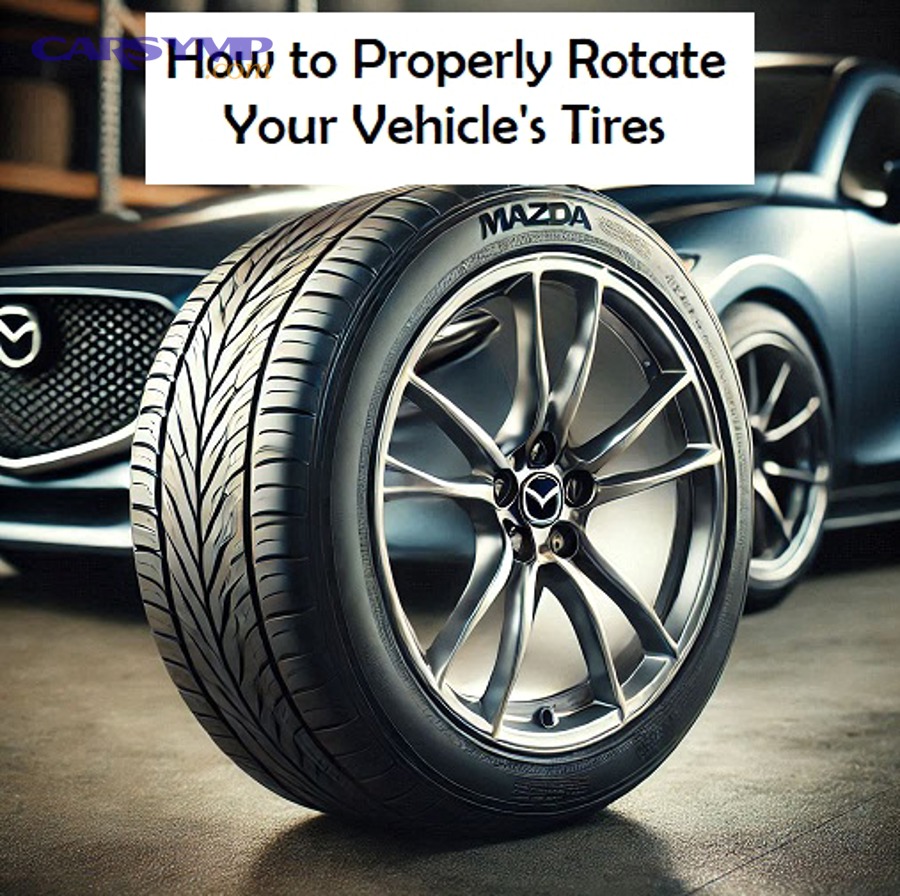
These benefits are interconnected: uniform tread depth across all four tires is the root condition that produces all of them simultaneously. How rotation affects ride noise and handling is particularly relevant here — tires worn unevenly across positions develop irregular surface patterns that generate resonant vibration and directional noise detectable inside the cabin. Regular rotation prevents these patterns from forming, maintaining the quieter, more composed ride the tires were engineered to deliver when new.
Does Tire Rotation Improve Vehicle Safety and Handling?
Yes, tire rotation improves vehicle safety and handling because uniform tread depth across all four tires ensures predictable braking distances, consistent cornering grip, and stable straight-line tracking under all driving conditions.
The physics are direct: a tire’s grip on the road surface is proportional to its tread depth and the integrity of the contact patch — the small area of rubber actually touching the pavement at any moment. When front tires are significantly more worn than rear tires, the vehicle’s front-end grip is disproportionately reduced. In emergency braking situations, this causes the front wheels to lock or activate ABS more aggressively while the rear tires still have margin, creating an unpredictable stopping response. In wet conditions, shallower front tread increases the risk of hydroplaning — where a wedge of water separates the tire from the road surface entirely — at speeds as low as 35 mph when tread depth falls below 4/32 of an inch.
According to data published by the National Highway Traffic Safety Administration (NHTSA), tire-related factors contribute to approximately 11,000 passenger vehicle crashes annually in the United States, with tread wear and underinflation among the leading tire conditions associated with those crashes. Maintaining even tread through rotation directly addresses one of these leading risk factors.
Can Regular Tire Rotation Improve Fuel Efficiency?
Yes, regular tire rotation contributes to improved fuel efficiency by maintaining balanced rolling resistance across all four tires, which reduces the engine load required to sustain cruising speed.
When tires wear unevenly, the more-worn tires develop a flatter, less rounded contact profile that increases their rolling resistance — the force the engine must overcome to keep the tire moving forward. On a vehicle where the front tires are significantly more worn than the rear, the engine is compensating for the additional drag at every revolution of those tires. While the per-tire fuel efficiency impact is modest, the U.S. Department of Energy notes that properly maintained tires — including correct inflation and even wear — can improve fuel economy by up to 0.5% to 3% compared to neglected tires operating with mismatched wear and low pressure. Over 15,000 annual miles at current fuel prices, even a 1% improvement represents meaningful cumulative savings.
During each tire rotation appointment, service technicians typically check and adjust tire inflation as part of the service — adding a second fuel efficiency benefit to the visit without additional cost.
How Does Tire Rotation Save You Money? (Cost-Saving Tips for Every Driver)
Tire rotation saves money through three compounding mechanisms: extending the tread life of your tire set to its full rated mileage, eliminating the cost of replacing partial sets due to uneven wear, and preserving tire warranty coverage that requires documented rotation history.
The financial case is strongest when viewed at the full tire set level. A mid-range all-season tire costs approximately $120–$180 per tire, making a full set of four a $480–$720 investment. A tire set that wears out prematurely due to skipped rotations — losing 15,000–20,000 miles of rated life — effectively costs 25–33% more per mile driven than a set maintained with consistent rotation. Across multiple tire sets over a vehicle’s lifetime, the cumulative savings from disciplined rotation can exceed $1,500–$2,000.
Additionally, rotating all four tires together ensures the entire set reaches the replacement threshold simultaneously. Replacing a full set at once allows you to choose matching tires optimized for your vehicle — avoiding the handling and safety compromises of mismatched tread depths. Replacing tires in pairs or individually is not only more expensive per visit but also degrades vehicle balance in ways that accelerate wear on the remaining older tires.
Is Tire Rotation Worth the Cost at a Shop?
Yes, professional tire rotation is worth the cost for the vast majority of drivers — the service fee of $20–$50 per visit returns a value 10 to 20 times greater in preserved tire life and deferred replacement costs.
Tire rotation cost vs DIY is a calculation many drivers consider, especially as awareness of home mechanic skills grows. A professional rotation at a tire shop or dealership includes not just the tire repositioning but also a torque wrench application to manufacturer specs, a TPMS sensor reset or relearn procedure, a visual inspection of each tire for damage or abnormal wear, and often a complimentary inflation check. The value of these supplementary checks — which can catch a developing sidewall crack or alignment issue before it becomes a $400 repair — typically exceeds the service fee on its own.
Many tire retailers and dealerships offer rotation as part of a service bundle, including it free with tire purchase or at no additional charge with scheduled oil changes. Drivers who purchase tires from national chains such as Discount Tire, Firestone, or Costco Auto frequently receive lifetime free rotations as part of the purchase agreement — effectively reducing the per-rotation cost to zero.
Special Tire Rotation Scenarios, Comparisons, and Advanced Considerations
Beyond standard rotation patterns and schedules, a subset of drivers faces specific vehicle configurations, tire types, or maintenance choices that require modified approaches to tire rotation — and understanding these edge cases ensures that even drivers with non-standard setups get the full benefit of consistent maintenance.
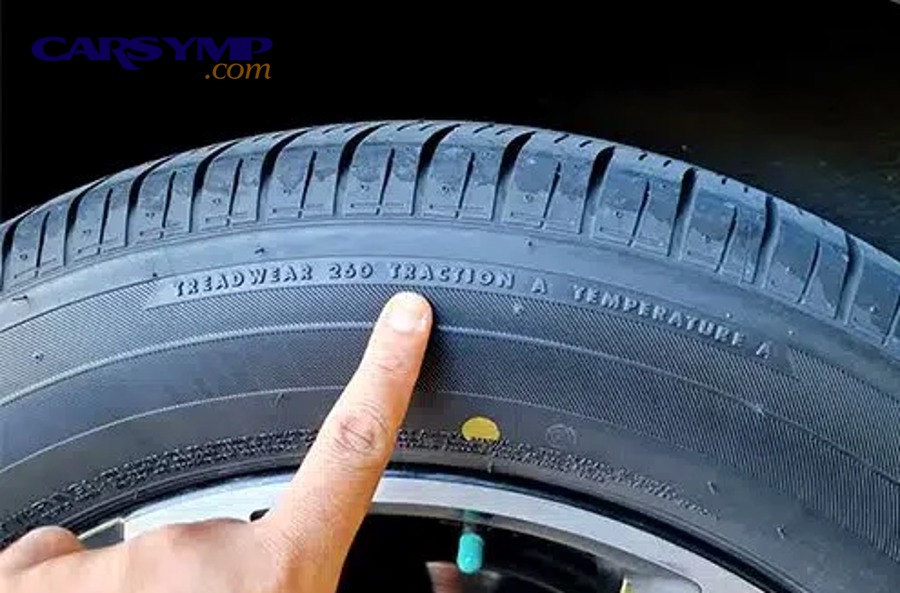
These scenarios cover directional and staggered-fitment tires, the often-overlooked interaction between rotation and TPMS sensor calibration, the DIY versus professional service decision, and the relationship between nitrogen inflation and rotation necessity. Each represents a distinct micro-intent for readers who have already understood the fundamentals and are seeking precision guidance.
Can You Rotate Directional and Staggered Fitment Tires?
Rotation with directional tires rules differs significantly from standard rotation: directional tires can only be rotated front-to-rear on the same side of the vehicle and cannot cross from left to right, because their tread pattern is engineered to channel water and grip in one specific rolling direction.
Reversing a directional tire’s rolling direction defeats the tread’s water evacuation design, reducing wet-weather grip and potentially increasing hydroplaning risk. The tread’s V-shaped or arrow-shaped grooves are optimized to push water outward at a specific rotation angle — only possible when the tire rolls in its designated forward direction. If a directional tire needs to be moved to the opposite side of the vehicle, it must be dismounted from its wheel and remounted in the reverse orientation — a task requiring professional tire mounting equipment and additional labor cost.
Staggered fitment vehicles — sports cars and performance vehicles that use wider tires on the rear axle than the front — present an even more restricted scenario. Because the rear tires are physically larger in diameter and width than the front tires, standard cross or diagonal rotation is geometrically impossible. The only option available without tire dismounting is same-side front-to-rear rotation, and only if the tires are non-directional. If the staggered fitment vehicle also uses directional tires, rotation may be entirely impractical without a full dismount-and-remount service. Drivers of performance vehicles in this configuration should consult their tire professional about whether a staggered fitment rotation is cost-effective or whether a different tire strategy — such as purchasing two separate pairs on different replacement cycles — is more practical.
Does Tire Rotation Affect Your Tire Pressure Monitoring System (TPMS)?
Yes, tire rotation affects the Tire Pressure Monitoring System on vehicles where TPMS sensors are assigned to specific wheel positions, because the system must learn each sensor’s new location after rotation to report accurate pressure readings from the correct wheel.
Modern TPMS systems use one of two sensor types: direct TPMS, where a physical sensor inside each wheel transmits pressure data to the vehicle’s ECU, and indirect TPMS, which estimates pressure by comparing wheel rotation speeds via the ABS system. On vehicles with direct TPMS — the more common system in vehicles manufactured after 2008, when TPMS became federally mandated in the U.S. — each sensor broadcasts a unique ID tied to a specific wheel position in the vehicle’s computer. After rotation, the sensor that was previously at the right-front position is now at the rear-left position, but the ECU still associates its ID with the right-front. If not recalibrated, the TPMS warning light may illuminate incorrectly, or worse, report low pressure in the wrong wheel, leading the driver to check the wrong tire.
The recalibration process — called a TPMS relearn — is performed with a handheld TPMS tool or through a specific driving cycle sequence described in the vehicle’s owner’s manual. Most professional tire shops include this relearn as part of a rotation service at no additional charge. Drivers who rotate their own tires at home must not overlook this step, as an incorrectly calibrated TPMS undermines one of the vehicle’s primary tire safety systems.
DIY Tire Rotation vs. Professional Tire Rotation — Which Is Right for You?
DIY tire rotation wins on cost savings ($20–$50 per service), while professional rotation is optimal for safety accuracy, TPMS recalibration, and integrated vehicle inspection — making professional service the better choice for most drivers.
To begin, the DIY case is legitimate for experienced home mechanics with the correct equipment: a quality hydraulic floor jack, a minimum of two heavy-duty jack stands, a calibrated torque wrench, and a clear understanding of the correct rotation pattern for their specific vehicle. Lug nuts must be torqued to the manufacturer’s specification — typically between 80 and 120 ft-lbs for passenger vehicles — because under-torqued lug nuts can loosen at highway speed while over-torqued ones can warp brake rotors or damage wheel studs. Without a torque wrench, DIY rotation introduces a real safety risk that negates the cost savings entirely.
On the other hand, professional rotation provides a torque-correct installation, a TPMS relearn, a visual tire inspection for sidewall damage or abnormal wear, a complimentary inflation check, and — in many cases — an alignment observation that flags whether the vehicle is pulling in a direction that will re-create uneven wear regardless of how frequently you rotate. For AWD and 4WD vehicle owners, where drivetrain sensitivity to tread differences is highest, professional service is strongly recommended over DIY.
The honest verdict: DIY is appropriate for mechanically confident drivers with the right tools who have non-directional tires on a non-AWD vehicle without active TPMS concerns. For every other configuration — which represents the majority of drivers — professional rotation is the safer, more complete, and ultimately more cost-effective choice.
Does Tire Rotation Still Matter If You Use Nitrogen Inflation?
Yes, tire rotation remains fully necessary for vehicles using nitrogen inflation — because nitrogen addresses pressure stability, not the mechanical wear forces that rotation is designed to counteract.
The nitrogen inflation benefit is real but narrow: nitrogen molecules are larger than oxygen molecules and permeate rubber more slowly, meaning nitrogen-inflated tires lose pressure at a slower rate than air-inflated tires, particularly across temperature fluctuations. This helps maintain consistent inflation between service visits. However, tread wear is not caused by gas molecule behavior inside the tire. Tread wear is caused by friction, load distribution, steering forces, and braking dynamics — physical forces acting on the tire’s external surface that are entirely unaffected by what gas fills the interior.
A nitrogen-inflated front-wheel drive tire placed on the front-left position will still wear faster than the rear tires, just as any other tire in that position would. The more stable pressure nitrogen provides may slightly improve the consistency of wear within each position, but it does not redistribute wear across positions — which is the entire purpose of rotation. Drivers who invest in nitrogen inflation for their tires should view it as a complement to rotation and inflation management, not a substitute for either. Both practices serve different functions, and both are necessary to fully maximize tire life.
In summary, proper tire rotation is one of the simplest, most accessible, and highest-return maintenance habits a driver can adopt. By equalizing tread wear across all four positions through the correct pattern and at the right schedule, drivers consistently unlock the full mileage potential of their tires, reduce safety risks, improve fuel efficiency, and protect their tire warranty coverage — all for a service that costs less than a tank of gas. Whether you drive a front-wheel drive commuter, a rear-wheel drive performance vehicle, or an all-wheel drive family SUV, the principles of rotation apply equally: rotate on schedule, use the right pattern, and let every mile deliver the value you paid for when you purchased your tires.