


A failing torque converter produces seven distinct warning signs that most drivers experience weeks — sometimes months — before complete transmission failure occurs. These signs include shuddering during acceleration, gear slippage, strange noises from the transmission area, overheating, delayed gear engagement, fluid leaks, and an illuminated Check Engine light. Recognizing even one of these symptoms early can be the difference between a $300 solenoid repair and a $3,000 transmission rebuild.
Understanding why these symptoms appear requires a basic grasp of what the torque converter actually does inside your automatic transmission. The converter acts as the hydraulic bridge between your engine and gearbox, using fluid dynamics to transfer power smoothly. When its internal components — the impeller, turbine, stator, or clutch lining — begin to degrade, the entire power delivery chain becomes unstable, and that instability expresses itself as the physical symptoms you feel behind the wheel.
Diagnosing torque converter problems correctly matters because many of its symptoms overlap with broader transmission issues, making misdiagnosis extremely common. A transmission shop that jumps to a full rebuild without testing the converter first can cost you thousands unnecessarily. Knowing how to describe your symptoms accurately, perform basic checks at home, and interpret diagnostic codes gives you a significant advantage before you ever walk into a repair shop.
Fixing a failing torque converter is not always as expensive as it sounds. Depending on the severity, solutions range from a fluid flush and solenoid replacement to a full converter swap — and understanding which fix applies to which symptom is exactly what this guide is designed to help you do. Below is a complete breakdown of all seven warning signs, their root causes, and your best options for resolving them cost-effectively.
What Is a Torque Converter and What Does It Do?
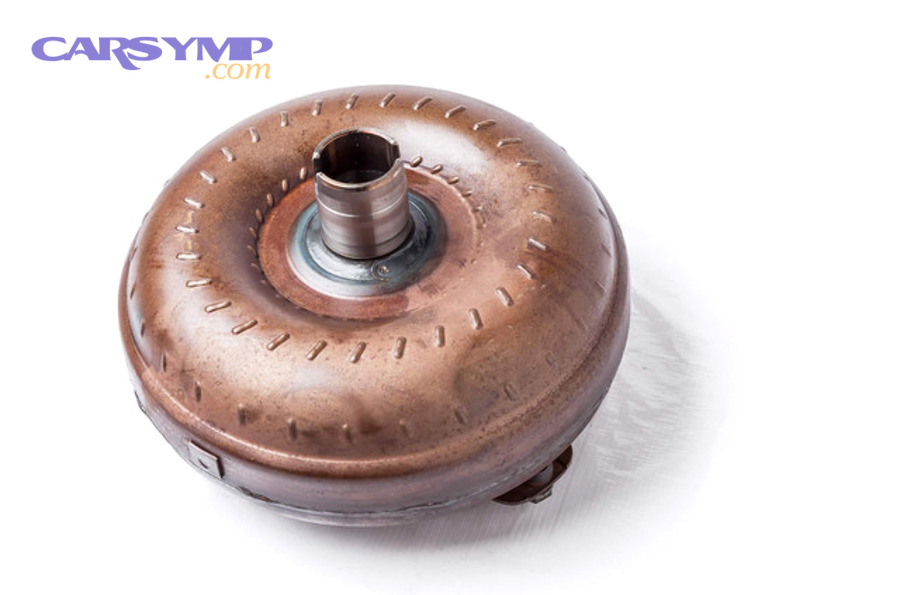
A torque converter is a type of fluid coupling — specifically a hydraulic coupling — positioned between the engine’s flexplate and the automatic transmission, designed to transfer rotational power, multiply torque at low RPM, and allow the engine to idle without stalling while the vehicle is stationary.
To better understand why each warning sign appears, it helps to first understand the component that produces them. The torque converter is often described as the automatic transmission’s equivalent of a manual clutch — but that analogy only tells part of the story.
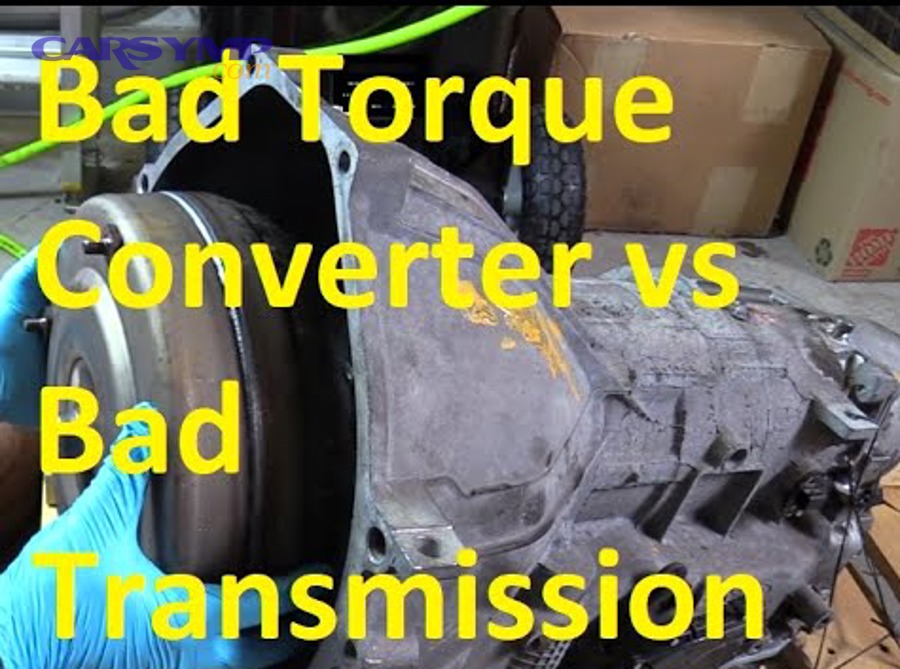
How Does a Torque Converter Work Inside an Automatic Transmission?
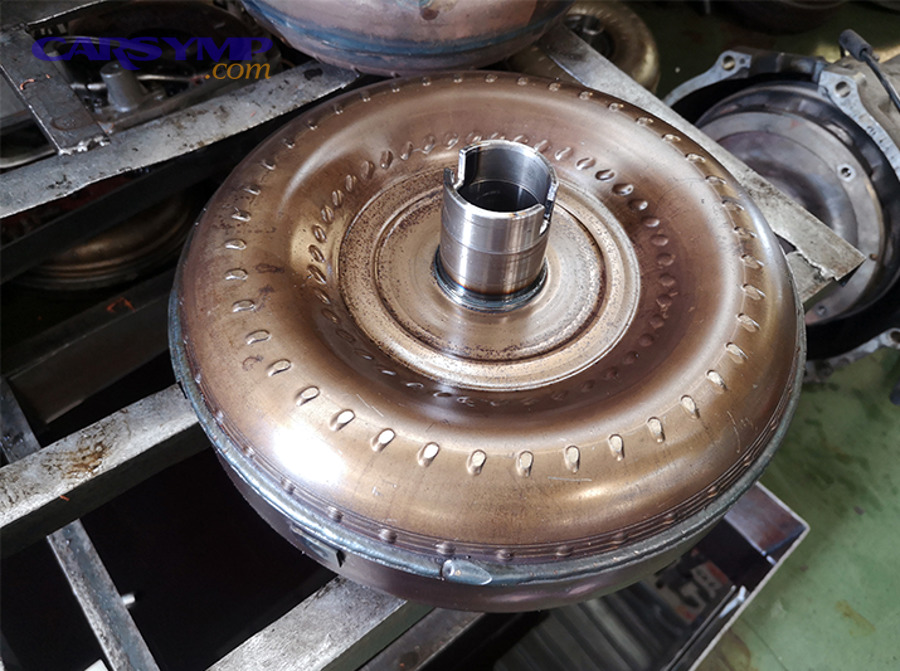
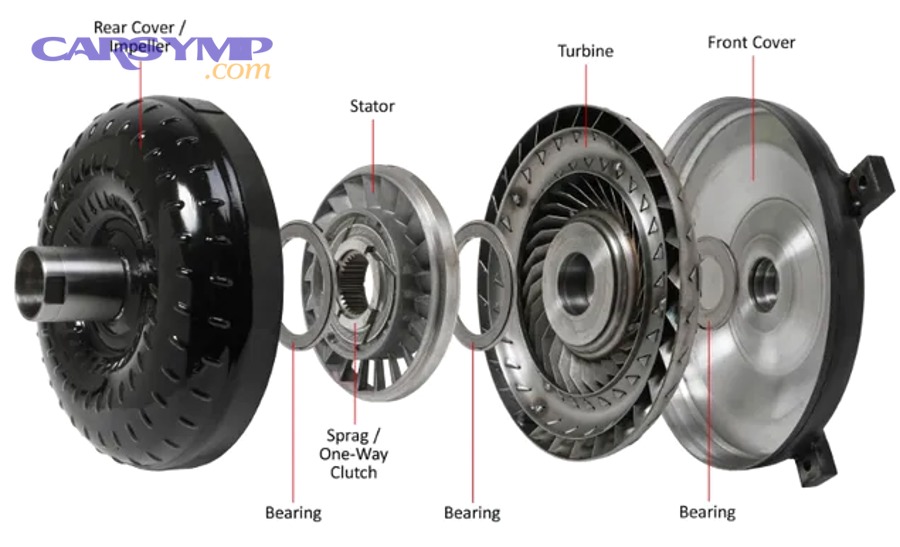
The torque converter contains four primary components, each playing a specific mechanical role in power transfer:
- Impeller (pump): Attached to the engine’s flexplate, the impeller spins with the engine and flings automatic transmission fluid (ATF) outward using centrifugal force. The faster the engine spins, the more fluid is expelled and the more energy is transmitted.
- Turbine: Positioned directly opposite the impeller inside the converter housing, the turbine receives the fluid thrown by the impeller. As fluid strikes its curved blades, the turbine begins to rotate — and this rotation is what drives the transmission input shaft and ultimately moves the vehicle.
- Stator: Sitting between the impeller and turbine, the stator redirects fluid returning from the turbine back toward the impeller at an optimized angle. This redirection is what creates torque multiplication at low RPM — the reason an automatic vehicle can pull away from a standstill smoothly without engine strain.
- Torque Converter Clutch (TCC): At highway cruising speeds, a lock-up clutch mechanically connects the turbine to the impeller, eliminating fluid slippage and improving fuel efficiency. This is the component most commonly associated with the characteristic shudder that signals TC issues in everyday driving.
Think of the impeller and turbine like two electric fans facing each other. When one fan is turned on, its airflow causes the second fan to spin — without any direct mechanical contact. That’s fluid coupling in its simplest form. The stator is what makes the automatic converter more efficient than a basic fluid coupling by recycling energy rather than wasting it.
What Happens to Your Car When the Torque Converter Starts to Fail?
When the torque converter begins to fail, the consequences rarely stay isolated to the converter itself. Specifically, a damaged converter disrupts hydraulic pressure throughout the transmission, forces internal components to operate under conditions they were not designed for, and accelerates wear across the entire drivetrain system.
The cascade effect works like this: a worn impeller reduces fluid pressure → the turbine receives less energy → the transmission struggles to maintain proper gear ratios → heat builds up from slippage → seals degrade → fluid leaks → pressure drops further. Each stage in this chain amplifies the damage caused by the previous one. A converter that begins with a minor shudder at 45 mph can — if left unaddressed — result in complete transmission failure within months. This is precisely why identifying torque converter problems at the earliest symptom stage is so critical to protecting both your vehicle and your budget.
What Are the 7 Warning Signs of a Failing Torque Converter?
There are 7 main warning signs of a failing torque converter: shuddering under acceleration, gear slippage, unusual transmission noises, transmission overheating, slow or delayed gear engagement, ATF leaks, and a triggered Check Engine light — each corresponding to a specific internal failure mode.
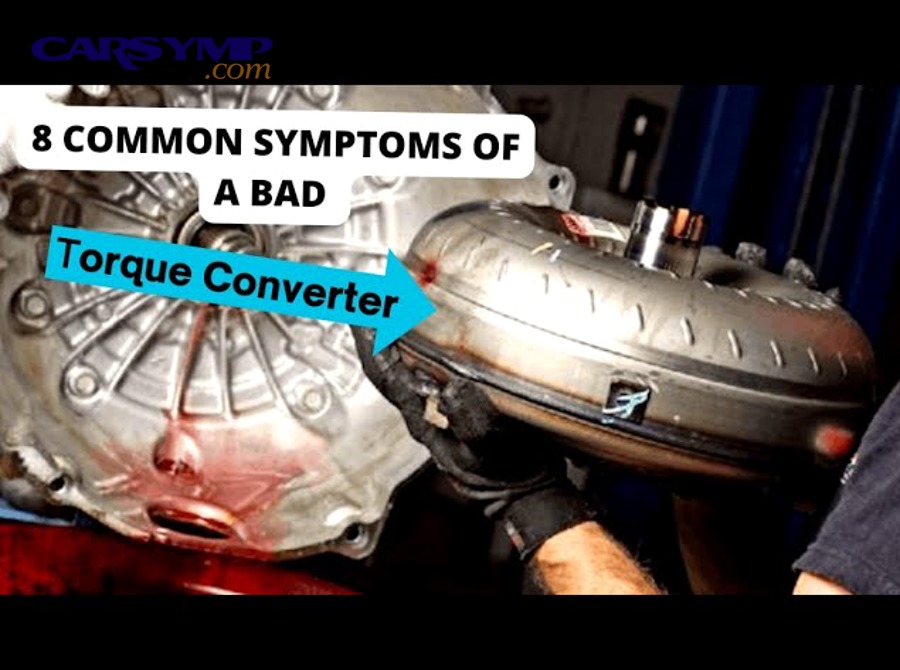
These symptoms rarely appear all at once. More commonly, one or two symptoms emerge first — often dismissed as minor quirks — before the situation escalates. The following breakdown covers each sign in detail, including what it feels like, what causes it, and how urgently it requires attention.
Does Your Car Shudder or Vibrate When Accelerating?
Yes, shuddering or vibrating during acceleration — particularly in the 40–45 mph range — is one of the most reliable early indicators of a failing torque converter, caused primarily by torque converter clutch (TCC) misalignment or worn friction material inside the converter.
The shudder sensation is often described as driving over a rumble strip or a patch of gravel even when the road surface is completely smooth. What makes this symptom particularly useful for diagnosis is its speed-specificity: it typically occurs within a narrow RPM/speed window where the TCC attempts to engage, then disengage, repeatedly in a phenomenon known as Shudder at cruise diagnosis — a condition where the clutch cannot achieve clean lockup due to degraded friction lining or contaminated fluid.
Importantly, this shudder is often intermittent in early stages — disappearing after a few seconds and returning unpredictably. Many drivers attribute it to road conditions or tire issues. However, if the shudder consistently appears between 40 and 50 mph during light throttle cruising and disappears when you accelerate harder or decelerate, the TCC is almost certainly the source. This specific behavior pattern distinguishes converter clutch shudder from tire imbalance or driveshaft vibration, both of which tend to be speed-dependent rather than throttle-load-dependent.
Is Your Transmission Slipping Between Gears?
Yes, transmission slipping — characterized by unexpected RPM spikes without a corresponding increase in vehicle speed — is a clear sign of a failing torque converter, caused by loss of hydraulic pressure or worn clutch lining inside the converter that prevents proper torque transfer.
Gear slippage feels as though the engine is revving freely while the car hesitates to accelerate. In automatic vehicles, the torque converter is responsible for maintaining consistent hydraulic pressure that allows the transmission to hold each gear firmly. When internal components wear — particularly the clutch lining or the converter’s sealing surfaces — fluid pressure drops and the transmission begins “hunting” between gears or failing to maintain a selected gear under load.
It is important to distinguish this from manual transmission clutch slip, which has a similar feel but an entirely different mechanical cause. In an automatic, slipping almost always points to either the converter or the valve body controlling fluid distribution. If slipping occurs specifically during hard acceleration or when towing, the converter’s capacity to multiply torque under load has likely been compromised.
Do You Hear Strange Noises Coming from the Transmission Area?
Yes, clicking, grinding, rattling, or whirring sounds from the transmission area are a strong indicator of a failing torque converter, most often caused by worn or damaged needle bearings inside the converter that can no longer support smooth rotation under load.
The needle bearings inside the torque converter allow the impeller, turbine, and stator to rotate independently of one another at different speeds. When these bearings wear down — through age, contaminated fluid, or heat cycling — the internal components begin making contact with surfaces they should never touch. The resulting noise changes in character depending on which bearing has failed: a rattling sound at idle that quiets at higher RPM often indicates turbine bearing wear, while a persistent grinding during acceleration typically points to the impeller bearing.
More critically, bearing failure generates metal debris that circulates through the transmission fluid, contaminating the entire transmission system. This means that ignoring a noisy converter doesn’t just damage the converter — it spreads abrasive particles throughout the valve body, clutch packs, and solenoids of the transmission itself.
Is Your Transmission Overheating Without an Obvious Cause?
Yes, a failing torque converter is a common cause of transmission overheating even when fluid levels appear normal, because internal slippage within the converter generates excessive heat that overwhelms the transmission’s cooling system.
When the TCC cannot achieve full lockup, the impeller and turbine spin at slightly different speeds — a condition called “slip.” This constant relative motion converts kinetic energy into heat rather than useful mechanical work. Over time, this heat buildup degrades ATF viscosity, causes internal seals to harden and crack, and warps precision-machined valve body surfaces.
Transmission overheating manifests as a temperature warning light on the dashboard, a burnt smell from beneath the vehicle, or erratic shifting behavior as the transmission enters a protective “limp mode.” If your transmission temperature warning light activates during normal driving — not during extreme towing or stop-and-go traffic — a failing torque converter should be among the first suspects investigated.
Are You Experiencing Slow or Delayed Gear Engagement?
Yes, a noticeable delay — sometimes 1 to 3 seconds — when shifting from Park into Drive or Reverse is a symptom of a failing torque converter, caused by insufficient hydraulic pressure building within the converter before the transmission can engage the drivetrain.
Under normal conditions, gear engagement should feel nearly instantaneous — a brief, smooth connection as the transmission takes up drivetrain load. When the converter’s internal fluid circuit loses integrity, the system takes longer to build the pressure required to connect the engine to the transmission. This delay is sometimes accompanied by a slight jolt or “clunk” as engagement finally occurs.
This symptom is also associated with abnormally high stall speed — the RPM at which the converter begins transferring torque to the transmission. A healthy converter typically stalls at the RPM specified by the manufacturer for that vehicle. A failing converter may stall at significantly higher RPM, meaning the engine must spin faster than intended before power is transmitted — a condition that stresses both the engine and the transmission simultaneously.
Is There a Transmission Fluid Leak Under Your Vehicle?
Yes, ATF leaks originating from the front seal of the torque converter or the converter housing are a direct symptom of seal degradation inside the converter, and they represent one of the most urgently actionable warning signs because low fluid levels accelerate internal wear exponentially.
Torque converter seals are made from synthetic elastomers designed to withstand heat and chemical exposure. As a converter ages or overheats repeatedly, these seals harden, shrink, and lose their ability to contain the pressurized ATF inside the converter assembly. The resulting leak appears as a reddish-brown fluid puddle beneath the front of the transmission, directly behind the engine.
To confirm the leak source, check the fluid’s characteristics: ATF is typically translucent red or dark burgundy (if aged), slightly sweet-smelling, and oily in texture — distinguishable from engine oil (darker, thicker) and coolant (bright green, yellow, or pink). Running a vehicle with low ATF from a converter seal leak causes the transmission to overheat and increases the risk of total clutch failure within the transmission itself.
Is Your Check Engine Light On Along with Transmission Problems?
Yes, a Check Engine light combined with transmission irregularities frequently indicates torque converter-related diagnostic trouble codes (DTCs), with the most common being P0740, P0741, P0742, and P0743 — each pointing to a specific failure within the torque converter clutch circuit.
The table below summarizes the most common torque converter-related fault codes, their meanings, and their typical causes:
| DTC Code | Description | Most Common Cause |
|---|---|---|
| P0740 | TCC Circuit Malfunction | Open or short in TCC electrical circuit |
| P0741 | TCC Performance / Stuck Off | TCC not locking up when commanded |
| P0742 | TCC Stuck On | TCC locked up and unable to disengage |
| P0743 | TCC Solenoid Circuit Electrical | Faulty TCC solenoid or wiring issue |
These codes are stored by the vehicle’s powertrain control module (PCM) when it detects that the torque converter clutch is not responding as commanded. The P0741 code — TCC Performance / Stuck Off — is the most commonly encountered TC issue in everyday vehicles, and it directly corresponds to the shudder and slippage symptoms described in the sections above. Reading these codes with an OBD-II scanner before authorizing any transmission work is essential, as they can prevent unnecessary and costly repairs.
What Causes a Torque Converter to Fail?
There are 4 primary categories of torque converter failure causes: fluid-related degradation, mechanical wear of internal components, maintenance neglect, and installation or compatibility errors — each producing a distinct pattern of symptoms that helps pinpoint the failure source.
Understanding the root cause behind your specific symptoms is essential to avoiding a repeat failure after repair. Next, let’s examine each cause category in detail.
Does Contaminated Transmission Fluid Damage a Torque Converter?
Yes, contaminated transmission fluid is one of the leading causes of torque converter failure, because degraded ATF loses its viscosity, lubricating properties, and chemical stability — accelerating wear on every internal component the fluid contacts.
Transmission fluid serves three simultaneous roles inside a torque converter: it transmits power through hydraulic pressure, it lubricates bearings and friction surfaces, and it carries heat away from internal components. When fluid becomes contaminated — through oxidation, water intrusion, or metal particle buildup from normal wear — it fails at all three functions simultaneously.
Dark brown or black ATF, a burnt smell during a dipstick check, or visible metal flakes in the fluid are all signs that the fluid has crossed its service life. Most manufacturers recommend ATF changes every 30,000 to 60,000 miles under normal conditions — a schedule that many vehicle owners extend far beyond recommended intervals. A fluid flush performed at the first sign of darkening ATF is frequently sufficient to prevent converter failure entirely, making it the single highest-value preventive maintenance step available.
Can Overheating Alone Destroy a Torque Converter?
Yes, sustained overheating alone can completely destroy a torque converter, because excessive heat degrades seal elastomers, reduces fluid viscosity below functional thresholds, and warps precision components that require tight tolerances to function correctly.
The thermal degradation cycle is self-reinforcing: heat causes seals to harden → seals leak → fluid level drops → remaining fluid overheats faster → more seal damage occurs. Vehicles used for frequent towing, driving in stop-and-go traffic, or operating in hot climates are particularly vulnerable to this failure mode because their converters spend extended periods in the heat-generating “slip” condition rather than achieving efficient lockup.
An aftermarket transmission cooler is one of the most cost-effective protective measures for vehicles that regularly tow or haul — reducing operating temperatures and dramatically extending converter and transmission service life.
What Role Do Worn Needle Bearings and Clutch Linings Play in Failure?
Worn needle bearings and degraded clutch linings are the most common sources of mechanical torque converter failure, as opposed to fluid or thermal failure, and they are the components most directly responsible for the grinding noises and shudder symptoms drivers notice first.
The needle bearings allow the stator, turbine, and impeller to spin at independent speeds during fluid coupling phases. As these bearings wear — typically after high mileage or following fluid contamination that reduced lubrication — the rotating components begin generating the metallic grinding and clicking noises described in the symptom section above.
The TCC clutch lining, meanwhile, is a friction material bonded to the converter’s lock-up clutch. Each engagement cycle between 40 and 60 mph generates heat and microscopically wears the lining. Over time, the lining thins to the point where it can no longer maintain consistent contact pressure during lockup — producing the characteristic cruise-speed shudder. When lining material detaches, it enters the fluid stream and contaminates the entire transmission circuit.
How Do You Diagnose a Bad Torque Converter?
Diagnosing a bad torque converter involves 3 main methods: a visual and fluid inspection you can perform at home, a stall speed test that requires no special tools, and a professional OBD-II scan combined with transmission-specific diagnostic testing — applied in that sequence from least to most invasive.
What Is a Stall Speed Test and How Does It Detect Converter Problems?
A stall speed test is a diagnostic procedure in which the driver places the vehicle in Drive, holds the brake firmly, applies full throttle briefly, and records the RPM at which the engine stabilizes — comparing that figure to the manufacturer’s specified stall speed to evaluate converter performance.
Performing the stall speed test safely:
- Ensure the engine and transmission are at normal operating temperature
- Set the parking brake firmly and place your left foot on the brake pedal with maximum pressure
- Shift into Drive
- Apply full throttle for no more than 5 seconds — exceeding this risks overheating the transmission fluid
- Note the peak RPM reading on the tachometer before releasing the throttle
- Repeat in Reverse and compare
Interpreting results:
- Stall speed matches manufacturer specification (typically 1,800–2,500 RPM depending on vehicle): Converter is likely functioning correctly
- Stall speed significantly higher than spec: The TCC clutch or internal one-way clutch is slipping — the converter cannot hold hydraulic pressure
- Stall speed significantly lower than spec: The stator one-way clutch has seized — the converter is not multiplying torque correctly
Never perform a stall speed test for longer than 5 seconds per attempt, and allow at least 60 seconds between attempts to prevent ATF overheating.
Can You Diagnose a Torque Converter Problem at Home Without Special Tools?
Yes, you can perform a meaningful preliminary diagnosis of torque converter problems at home without specialized equipment by using a systematic visual inspection combined with a careful assessment of your driving symptoms — though professional scanning is required to confirm the diagnosis definitively.
Home diagnostic checklist:
- Check ATF color and level: Pull the transmission dipstick (if accessible) with the engine warm and running. Healthy ATF is translucent red; dark brown or black fluid with a burnt smell indicates thermal degradation
- Inspect for leaks: Place a white cardboard sheet under the front of the transmission overnight. A reddish stain confirms an ATF leak from the converter seal area
- Document symptom patterns: Note the exact speed, throttle position, and driving condition when symptoms occur. Shudder at 40–45 mph under light throttle = strong TCC indicator; noise only at idle = bearing suspect
- Use a free OBD-II scanner app: Bluetooth OBD-II adapters cost $20–$40 and allow any smartphone to read transmission fault codes — enough to identify P074x codes without a shop visit
Home diagnosis is most reliable for ruling out obvious causes and gathering information before speaking with a technician. When symptoms persist despite clean fluid and no codes, professional testing — including a pressure test and, in some cases, converter removal for physical inspection — becomes necessary.
How Do You Fix a Failing Torque Converter — and What Does It Cost?
Fixing a failing torque converter involves 3 possible approaches: targeted component repair (solenoid replacement or fluid service), torque converter replacement, or full transmission removal with converter overhaul — selected based on the specific failure mode and its severity.
Can a Torque Converter Be Repaired, or Does It Always Need to Be Replaced?
No, a torque converter does not always require full replacement — some failure modes are repairable at significantly lower cost, while others make replacement the only viable option.
Repairable conditions:
- TCC solenoid failure (P0743): The solenoid is an external component accessible without removing the transmission on many vehicles. Replacement cost: $50–$150 parts, $100–$300 labor
- Fluid contamination causing shudder: A complete ATF drain and refill with fresh fluid and a manufacturer-approved friction modifier additive resolves TCC shudder in a significant percentage of cases — particularly in vehicles under 100,000 miles
- Minor seal leak: If caught early, seal replacement can be performed without full transmission removal on some vehicle designs
Conditions requiring full replacement:
- Worn or failed needle bearings (confirmed by grinding noise and metal debris in fluid)
- Physically damaged impeller or turbine blades
- TCC clutch lining fully worn or detached
- Converter housing cracks or structural deformation from overheating
How Much Does Torque Converter Replacement Cost?
A Torque converter repair cost estimate for a full replacement typically ranges from $600 to $1,400 total — covering parts ($150–$500 for the converter unit) and labor ($400–$900) — though the final figure varies significantly based on vehicle make, model, and geographic labor rates.
The table below provides a realistic cost breakdown to help set expectations before visiting a repair shop:
| Repair Type | Parts Cost | Labor Cost | Total Estimate |
|---|---|---|---|
| ATF flush + friction modifier | $40–$80 | $80–$150 | $120–$230 |
| TCC solenoid replacement | $50–$150 | $100–$300 | $150–$450 |
| Torque converter replacement (economy vehicle) | $150–$300 | $400–$700 | $550–$1,000 |
| Torque converter replacement (luxury/truck) | $300–$500 | $600–$900 | $900–$1,400 |
| Full transmission rebuild with new converter | $1,200–$2,500 | $800–$1,500 | $2,000–$4,000 |
The single largest cost driver in converter replacement is labor — not the part itself. Because the torque converter sits between the engine and transmission, the transmission must be fully removed to access it, a process that typically takes 5 to 10 hours at a shop’s hourly rate.
How Long Does It Take to Replace a Torque Converter?
Torque converter replacement typically requires 5 to 10 hours of shop labor, making it a full-day or two-day repair at most facilities — primarily because the entire transmission must be unbolted from the engine and lowered from the vehicle to reach the converter.
The specific duration depends on vehicle layout (front-wheel drive vs. rear-wheel drive), transmission type, and whether additional components require replacement at the same time. Front-wheel-drive transaxle configurations are generally more time-consuming to work on than rear-wheel-drive setups due to axle shaft removal requirements.
When a shop is already removing the transmission for a converter replacement, it is highly cost-efficient to simultaneously replace the rear main engine seal, transmission mount, and transmission filter — items that would otherwise require a separate labor investment to access at a later date.
Now that you understand how to identify, diagnose, and resolve the seven warning signs of a failing torque converter, the following section addresses the questions that experienced drivers and mechanics ask next: How do you tell the difference between a converter problem and other transmission issues? Can you drive with torque converter issues in the short term? And what makes some failure patterns unique to specific vehicles or driving conditions?
How Is Torque Converter Failure Different from Other Transmission Problems?
Torque converter failure is best distinguished from other transmission problems by its specific symptom profile — particularly speed-specific shudder, high stall speed, and TCC-related fault codes — whereas broader transmission issues such as valve body failure or clutch pack wear produce symptoms that are less speed-sensitive and more consistently present across all driving conditions.
This distinction matters enormously from a financial standpoint. A misdiagnosed transmission problem can result in an unnecessary $2,000–$4,000 rebuild when a $300 solenoid or fluid service would have resolved the issue. Let’s explore the key differentiators in detail.
What Is the Difference Between Torque Converter Shudder and Transmission Shudder?
Torque converter shudder occurs specifically at the TCC lockup speed (typically 40–45 mph) under light throttle, while general transmission shudder is present across a broader range of speeds and throttle inputs and is not isolated to the lockup engagement window.
The speed-specificity of TCC shudder is its most diagnostic feature. A driver experiencing converter clutch shudder will notice that:
- The vibration appears consistently between 40 and 50 mph
- Pressing the accelerator slightly harder causes the shudder to disappear immediately (because increased throttle commands the TCC to disengage)
- The shudder returns when throttle pressure returns to the light cruising level
- The vehicle drives smoothly at all other speeds
Transmission shudder from worn clutch packs or a failing valve body, by contrast, tends to occur during shift events at varying speeds, does not respond predictably to throttle adjustments, and is often accompanied by harsh engagement noises. Correctly attributing the shudder to the TCC rather than the broader transmission can save thousands of dollars in unnecessary repairs.
Torque Converter Clutch Solenoid Failure vs. Full Converter Failure: What’s the Difference?
The TCC solenoid is a small electrical valve that commands converter clutch engagement — and its failure mimics full converter failure in nearly every symptom, but costs dramatically less to fix: typically $150–$450 for solenoid replacement versus $600–$1,400 for full converter replacement.
The solenoid controls ATF flow to the TCC hydraulic circuit. When the solenoid sticks open, the TCC remains locked — causing stalling at low speeds and rough engagement. When it sticks closed, the TCC never locks up — causing the shudder and efficiency loss associated with persistent slip.
The most reliable way to differentiate solenoid failure from mechanical converter failure is through fault codes. A P0743 code (TCC Solenoid Circuit Electrical) strongly suggests the solenoid itself is the failure point, particularly when no grinding noises or metal debris are present in the fluid. A P0741 code with confirmed metal debris in the ATF points toward internal converter mechanical failure. Replacing the solenoid first — where possible — is a sound diagnostic and financial strategy before committing to converter replacement.
Can a Torque Converter Fail Prematurely in Towing or High-Load Vehicles?
Yes, torque converters in vehicles used for regular towing or heavy hauling are significantly more vulnerable to premature failure because sustained high-load operation keeps the converter in a heat-generating slip state for extended periods that exceed its thermal design limits.
During normal highway driving, the TCC locks up and eliminates slip — keeping temperatures manageable. During towing, however, the added drivetrain load causes the TCC to disengage and reengage repeatedly as the transmission hunts for the optimal gear ratio. This cycling prevents sustained lockup, keeps the converter operating in the high-slip zone, and generates continuous heat.
For truck owners who tow regularly, the following preventive measures dramatically reduce premature converter failure risk:
- Install an aftermarket transmission cooler: Reduces ATF temperature by 30–50°F under towing conditions
- Reduce ATF change intervals to 20,000–30,000 miles when towing regularly, rather than the standard 30,000–60,000 miles
- Select a torque converter rated for towing applications when replacing — higher-stall performance converters are not appropriate for towing; purpose-built tow-rated units with enhanced heat tolerance are the correct choice
Is It Worth Rebuilding vs. Buying a Remanufactured Torque Converter?
A remanufactured torque converter is the better choice for most daily drivers due to its lower cost, warranty coverage, and immediate availability, while a rebuilt unit makes sense for performance vehicles, rare applications, or situations where a remanufactured unit with the correct specifications is unavailable.
Remanufactured converters are factory-returned units that have been completely disassembled, cleaned, inspected, and rebuilt with new internal components — including bearings, seals, clutch lining, and stator — to original specifications. They typically cost $150–$400 and carry a 1- to 3-year warranty.
Rebuilt converters are units rebuilt from the customer’s core (their original converter), using the customer’s housing with new internal parts installed by a specialist rebuilder. They are appropriate when:
- The vehicle has a rare or obsolete converter no longer available in remanufactured form
- A specific stall speed or torque capacity modification is required for performance applications
- The customer’s original converter housing is in excellent condition and only internal components have failed
The following comparison table summarizes the decision framework:
| Factor | Remanufactured | Rebuilt (Core) |
|---|---|---|
| Cost | $150–$400 | $200–$600+ |
| Warranty | 1–3 years typical | Varies by rebuilder |
| Availability | Immediate (most common vehicles) | Depends on rebuilder schedule |
| Best for | Daily drivers, common vehicles | Rare units, performance builds |
| Quality consistency | Standardized | Varies by shop quality |
According to transmission industry data published by the Automatic Transmission Rebuilders Association (ATRA), remanufactured torque converters account for the majority of replacement units installed annually in North American repair facilities — reflecting their cost-effectiveness and reliability for standard passenger vehicle applications.
A critical point often overlooked: can you drive with torque converter issues in the short term? The answer depends on severity. Minor shudder or intermittent slip may allow limited driving to reach a repair facility, but overheating, significant slippage, or confirmed fluid leaks should be treated as stop-driving situations — continuing to operate the vehicle risks converting a $600 converter repair into a $3,000 transmission rebuild. When in doubt, have the vehicle transported rather than driven to the shop.
In short, catching torque converter failure symptoms early — the shudder, the slip, the noises — and responding with the correct diagnosis and appropriately scaled repair is the single most effective way to protect your transmission from catastrophic and expensive damage. The seven warning signs covered in this guide are your earliest opportunity to do exactly that.