


Driving with torque converter issues is possible for a very short time, but it is never truly safe. The torque converter sits between your engine and automatic transmission, transferring power through hydraulic fluid. When it begins to fail, that transfer becomes erratic, and every mile you drive risks compounding a manageable repair into a transmission-destroying event. The short answer is: you should not drive with known torque converter problems beyond what is absolutely necessary to reach a repair facility.
Recognizing the symptoms of a failing torque converter is the first line of defense for any driver. The most common warning signs — shuddering at highway speed, transmission slipping, overheating, and unusual noises — do not appear randomly. They follow a pattern of escalation, and understanding what each one signals helps you make faster, smarter decisions before the damage spreads deeper into your drivetrain.
The risks of continuing to drive are not limited to a rough ride or higher fuel consumption. A deteriorating torque converter circulates metal debris through your transmission fluid, scoring precision-engineered components that cannot simply be flushed clean. What starts as a $500 converter replacement can silently grow into a $4,000 transmission rebuild if the warning signs are ignored long enough.
Knowing exactly when to stop driving — and whether to drive yourself to the shop or call a tow truck — is the decision that separates a controlled repair from a roadside breakdown. Below, this guide covers every layer of that decision: what a torque converter does, how to identify its failure, how long you realistically have, and what your next steps should be.
Can You Drive With Torque Converter Issues?
Yes, you can drive briefly with torque converter issues, but only under mild symptom conditions, only at low speeds, and only as far as the nearest repair shop — because the risk of irreversible transmission damage rises with every additional mile.

To better understand where that limit sits, it helps to understand exactly what is being asked of a failing component every time you pull out of the driveway.
What Does a Torque Converter Actually Do in Your Vehicle?
A torque converter is a fluid coupling device that connects the engine to the automatic transmission, multiplying torque at low RPM and locking up at highway speed for fuel efficiency. It replaces the manual clutch found in stick-shift vehicles and makes smooth, automatic gear transitions possible.
Inside the converter, three main components work together. The pump (driven by the engine) spins transmission fluid outward. The turbine (connected to the transmission input shaft) catches that fluid and begins rotating, transferring engine torque to the drivetrain. The stator sits between the two, redirecting fluid flow to multiply torque during acceleration. At cruising speed, the torque converter clutch (TCC) engages mechanically, locking the pump and turbine together for a direct 1:1 connection that eliminates fluid slippage and improves highway efficiency.
When any of these components degrade — whether through worn needle bearings, a damaged stator, or a failing TCC — the fluid dynamics inside the converter become inconsistent. Power delivery to the transmission becomes choppy, fluid pressure fluctuates, and heat builds faster than the cooling system can manage.
How Serious Are Torque Converter Problems Compared to Other Transmission Issues?
Torque converter failure ranks as a mid-to-high severity transmission issue — more serious than low fluid or a worn solenoid, but initially less catastrophic than a broken transmission band or failed planetary gear set. The critical distinction is that converter failure actively degrades other components over time in a way that low fluid or a single faulty solenoid does not.
The table below compares common transmission problems by severity, repairability, and risk of spreading damage:
| Issue | Severity | Average Repair Cost | Risk of Spreading Damage |
|---|---|---|---|
| Low transmission fluid | Low | $20–$100 (fluid + filter) | Low if caught early |
| Faulty shift solenoid | Low–Medium | $150–$400 | Low–Medium |
| Torque converter failure | Medium–High | $500–$1,200 | High — metal debris circulates |
| Worn clutch packs | Medium–High | $800–$2,000 | Medium |
| Failed planetary gear set | Critical | $1,500–$4,000+ | Severe |
This comparison table shows why torque converter problems occupy a unique danger zone: the repair cost is moderate, but the consequence of delay is disproportionately expensive. A converter that begins shedding internal debris contaminates the entire transmission hydraulic circuit, turning a localized failure into a system-wide problem.
What Are the Symptoms of a Bad Torque Converter While Driving?
There are five primary symptom categories of a bad torque converter: shuddering, transmission slipping, overheating, delayed engagement, and abnormal noises — each indicating a different aspect of converter deterioration.
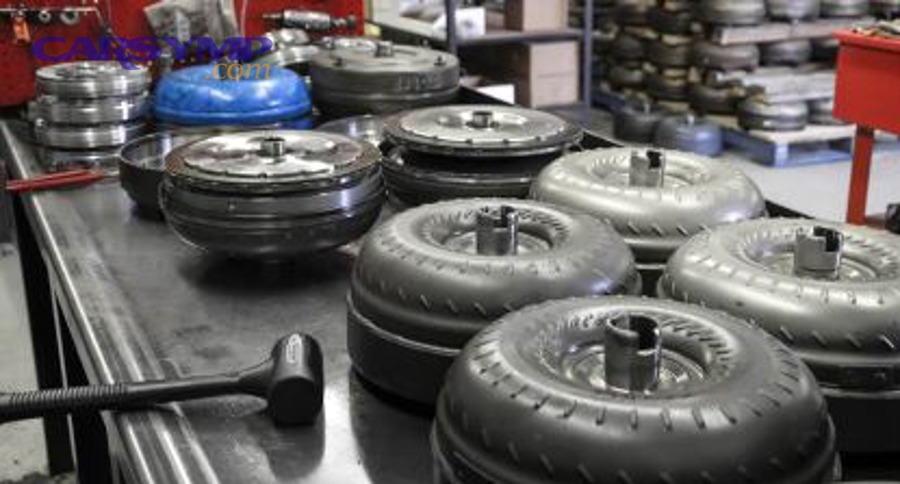
Specifically, these symptoms rarely appear in isolation. Most drivers notice one symptom first and, if they continue driving, discover that a second and third emerge within days or weeks. Recognizing the full symptom profile early is what allows you to stop driving before the damage becomes structural.
Why Does My Car Shudder or Vibrate at Highway Speed?
Torque converter shudder is a repetitive vibration felt through the seat and floor, typically between 40 and 50 mph, caused by the torque converter clutch (TCC) engaging and releasing erratically instead of locking up cleanly.
The TCC is designed to lock mechanically at highway speed, eliminating fluid coupling slippage. When the clutch lining wears or the hydraulic pressure controlling it weakens, the clutch alternately grabs and releases dozens of times per second, producing the characteristic shudder sensation. Many drivers initially mistake this for a tire balance problem or an engine misfire. The key diagnostic difference: torque converter shudder occurs within a specific and consistent speed range, disappears above or below that range, and is absent at full stop. Tire imbalance worsens progressively with speed; engine misfire produces roughness at idle and low RPM as well.
Driving with active TCC shudder accelerates wear on the converter clutch lining, and fragments of that lining enter the transmission fluid.
What Does Transmission Slipping Feel Like With a Bad Torque Converter?
Transmission slipping caused by a faulty converter feels like the engine revving freely — RPMs climbing visibly on the gauge — while the vehicle accelerates more slowly than the engine effort suggests, as if the connection between engine and wheels has gone soft.
This happens because a failing torque converter loses its ability to maintain consistent hydraulic pressure inside the transmission. Without stable pressure, the transmission’s clutch packs and bands cannot hold gear engagement firmly. The result is momentary disengagement: the engine spins, but full torque is not reaching the wheels. At lower speeds, slipping feels like sluggish acceleration from a stop. At highway speeds, it feels like a sudden loss of pull when you press the accelerator. In either case, the driver’s instinct is often to press harder on the gas — which increases RPM further and worsens fluid shear inside the failing converter.
Can a Faulty Torque Converter Cause Your Transmission to Overheat?
Yes, a faulty torque converter can absolutely cause the transmission to overheat, because a damaged converter reduces fluid circulation efficiency and generates excess heat through internal slippage that the transmission cooler cannot fully dissipate.
Automatic transmission fluid (ATF) serves two roles: hydraulic medium and coolant. A healthy torque converter manages fluid flow precisely, keeping temperatures within a safe operating range (typically 175–200°F under normal conditions). When the converter’s internal components are worn or the TCC fails to lock up properly, hydraulic slippage generates heat continuously. Fluid that cycles through a malfunctioning converter returns to the transmission hotter than designed. Over time, ATF begins to break down thermally, losing its viscosity and lubricating properties. A burning smell from under the vehicle and a transmission temperature warning on the dashboard are the two most recognizable signs that overheating has begun.
According to data published by the Automatic Transmission Rebuilders Association (ATRA), the majority of automatic transmission failures involve some degree of heat damage, and fluid degradation from overheating is among the leading contributors to premature transmission failure.
What Other Warning Signs Indicate Torque Converter Failure?
Beyond shuddering, slipping, and overheating, three additional warning signs commonly indicate torque converter failure: delayed or rough engagement from a stop, unusual mechanical noises (whining, clicking, or rattling), and an illuminated check engine light with torque converter-specific fault codes.
Delayed engagement means a noticeable pause — sometimes one to three seconds — between selecting Drive or Reverse and the vehicle actually beginning to move. This happens because the converter cannot build sufficient hydraulic pressure quickly enough to engage the transmission. Rough engagement means the car lurches or clunks when drive is selected, indicating inconsistent pressure spikes.
Noise from a failing converter typically includes:
- Whining or humming at idle, caused by worn needle bearings inside the converter
- Clicking or rattling during acceleration, associated with loose or degraded stator components
- Metallic grinding in severe cases, indicating significant internal damage
On the diagnostic side, a scan tool will often reveal OBD-II codes P0740 (Torque Converter Clutch Circuit Malfunction), P0741 (TCC Performance or Stuck Off), P0742 (TCC Stuck On), or P0744 (TCC Circuit Intermittent) when the converter or its control circuit is failing.
What Are the Risks of Driving With a Bad Torque Converter?
Driving with a bad torque converter carries three escalating risk levels: minor discomfort and efficiency loss at the earliest stage, fluid contamination and component scoring at the intermediate stage, and catastrophic transmission failure or active road safety hazards at the most severe stage.

More importantly, these risk levels do not stay static. Torque converter problems self-accelerate — the degraded component creates conditions (heat, debris, pressure loss) that cause further degradation, which creates more heat, more debris, and more pressure loss.
Can a Bad Torque Converter Destroy Your Transmission?
Yes, a bad torque converter can destroy your transmission — most directly by shedding metal debris into the transmission fluid that then circulates through every hydraulic circuit, valve, clutch, and bearing in the gearbox.
The internal components of a torque converter — needle bearings, stator thrust washers, clutch linings — are made of metal and friction materials. As these components wear or fracture under stress, particles enter the ATF. Unlike an engine with an oil filter specifically designed to trap fine particles, automatic transmissions rely on their fluid being kept clean to protect precision-tolerance valve body passages. Metal debris and fluid condition clues are visible during a drain inspection: dark, gritty fluid with a metallic shimmer or a burnt smell confirms that converter debris has entered the transmission circuit. Once scoring begins on the valve body or clutch drums, no fluid change reverses the damage. The transmission will require partial or full rebuild.
Is It Dangerous to Drive With Torque Converter Problems at Highway Speeds?
Yes, driving with torque converter problems at highway speeds is genuinely dangerous, not only mechanically, but as an active road safety risk. A converter that fails completely can cause sudden loss of drive — the equivalent of the vehicle going into neutral at 65 mph with no warning.
At highway speeds, the consequences of sudden power loss include:
- Inability to accelerate out of a merge or passing situation
- Unexpected deceleration that can cause rear-end collisions in fast-moving traffic
- Complete stall if the converter seizes, locking the drivetrain and potentially causing loss of vehicle control
- Loss of power steering and brake boost in some vehicles if the engine stalls as a result of converter seizure
These are not theoretical worst cases. They are the documented progression of a severely failed converter driven past its functional limits. At city speeds, the same failure is disruptive but more survivable. On a highway, it creates an immediate collision risk for the driver and surrounding traffic.
How Long Can You Drive With a Bad Torque Converter Before It Gets Worse?
There is no fixed mileage limit for driving with a bad torque converter — the timeline depends entirely on symptom severity, with mild shuddering potentially tolerating days of careful driving, while slipping, overheating, or noise indicating that the safe window has already closed.

The following severity framework helps drivers self-triage their situation:
| Symptom Level | Observable Signs | Estimated Safe Driving Window |
|---|---|---|
| Mild | Occasional TCC shudder at one speed, no other symptoms | Days — drive carefully to shop |
| Moderate | Slipping, consistent shudder, slight fluid smell | Hours — do not delay repair |
| Severe | Overheating warning, rough engagement, grinding noise | Zero — tow immediately |
| Critical | No drive engagement, burning smell, check engine + temp warning | Do not start the vehicle |
This table should not be read as permission to use the “mild” window casually. Even in a mild state, every drive risks transitioning to moderate without warning.
When Should You Stop Driving Immediately Due to Torque Converter Failure?
You should stop driving immediately when any one of the following conditions is present: a transmission temperature warning light, complete or near-complete loss of drive engagement, a burning smell from under the vehicle, loud metallic grinding, or a combination of two or more moderate symptoms appearing simultaneously.
These are not early warnings — they are terminal indicators. At this stage, the torque converter has moved beyond functional degradation into structural failure. Every additional mile driven with active overheating accelerates fluid breakdown exponentially. A transmission operating at 250°F instead of 200°F degrades its fluid twice as fast and scores its clutch surfaces in a fraction of the time. The repair cost difference between stopping now and driving 20 more miles can be the difference between a $600 converter replacement and a $3,500 transmission rebuild.
Can You Drive to the Shop, or Do You Need a Tow With Torque Converter Issues?
For mild symptoms only — occasional shudder with no slipping, no overheating, and no noises — driving carefully to a nearby shop is acceptable; for moderate or severe symptoms, a tow truck is the only responsible choice.
If you determine that driving to the shop is safe given your symptom level, follow these precautions:
- Avoid highway speeds. Keep vehicle speed below 45 mph to prevent TCC engagement and reduce heat buildup.
- Do not tow anything. Additional drivetrain load accelerates converter stress dramatically.
- Keep trips under 10 miles. Limit cumulative heat exposure by keeping the drive short.
- Monitor the temperature gauge. If any transmission warning light activates en route, pull over immediately and call for a tow.
- Avoid aggressive acceleration. Smooth, gradual inputs reduce hydraulic pressure spikes inside the failing converter.
If you are in any doubt about your symptom severity, default to a tow. The cost of a tow ($75–$150) is negligible against the cost of a transmission rebuild.
How Is Torque Converter Failure Diagnosed, Treated, and Prevented?
Torque converter failure is diagnosed through a combination of stall speed testing, transmission fluid inspection, OBD-II scan data analysis, and road test evaluation — with repair options ranging from converter replacement to full transmission service depending on how far the damage has progressed.

In addition, understanding the diagnostic process helps vehicle owners have more informed conversations with mechanics and avoid unnecessary repairs.
What Tests Do Mechanics Use to Confirm a Bad Torque Converter?
Mechanics use four primary tests to confirm torque converter failure: the stall speed test, transmission fluid inspection, OBD-II scan tool analysis, and a controlled road test evaluating TCC engagement behavior.
The stall speed test is the most direct converter-specific diagnostic. With the vehicle stationary and the brake held firmly, the mechanic briefly brings the engine to full throttle in Drive and records the RPM at which the drivetrain stalls (the engine can no longer overpower the converter). Normal stall speed varies by vehicle (typically 1,800–2,800 RPM depending on engine and converter specifications). Stall speed that is too low indicates stator one-way clutch failure; stall speed that is too high indicates converter clutch slippage or fluid coupling inefficiency.
Transmission fluid inspection provides immediate evidence of internal damage. Healthy ATF is translucent red with a slightly sweet smell. Fluid from a vehicle with a failing converter is typically dark brown to black, carries a burnt odor, and may contain visible metallic particles when viewed in daylight — these are the metal debris and fluid condition clues that confirm internal component degradation.
Torque converter problem codes and scan data from an OBD-II scanner reveal the control system’s perspective. Codes P0740–P0744 specifically target the TCC circuit and converter performance. A live data scan can also show whether the TCC is achieving commanded lock-up RPM, and whether transmission temperature is tracking within normal parameters during a test drive.
How Much Does Torque Converter Repair or Replacement Cost?
Torque converter replacement typically costs between $500 and $1,200 total (parts and labor), while delaying repair until transmission damage occurs elevates the total bill to $2,500–$5,000 or more for a partial or complete transmission rebuild.
The cost breakdown for converter replacement generally looks like this:
| Service | Parts Cost | Labor Cost | Total Estimate |
|---|---|---|---|
| Torque converter replacement only | $150–$500 | $350–$700 | $500–$1,200 |
| Converter replacement + fluid/filter service | $170–$530 | $350–$700 | $520–$1,230 |
| Partial transmission rebuild (converter damage spread) | $300–$800 | $1,200–$2,500 | $1,500–$3,300 |
| Full transmission replacement (severe damage) | $1,500–$3,500 | $500–$1,500 | $2,000–$5,000+ |
This cost table illustrates the financial logic of early repair clearly. The labor cost of replacing a converter is substantial because it requires removing the transmission to access the converter — but that same labor cost exists whether the transmission is healthy or damaged. Waiting until transmission damage has occurred simply adds parts cost on top of unavoidable labor.
For more detailed diagnostics and cost guidance specific to your vehicle, resources like carsymp.com provide symptom-based lookup tools that can help identify whether your described symptoms align with torque converter failure or a related transmission issue before you visit a shop.
Is Torque Converter Failure Different in Towing Vehicles vs. Daily Drivers?
Torque converter failure progresses significantly faster in towing vehicles than in daily drivers, because sustained high-load operation continuously stresses the fluid coupling at temperature ranges that accelerate wear on every internal converter component.
In a daily driver operating under normal urban and highway conditions, the torque converter operates within its thermal design envelope. The TCC locks up on the highway, eliminating fluid shear, and the converter temperature stays within safe limits during most of the operating cycle.
In a truck or SUV used for regular towing, the situation is fundamentally different. The added weight of a trailer increases drivetrain load, which forces the engine to produce more torque at lower RPM — exactly the condition that keeps the torque converter in fluid coupling mode (unlocked) for longer periods. Sustained fluid coupling means sustained heat generation inside the converter. ATF in a hard-working tow vehicle can reach temperatures 50–80°F higher than in a comparable unloaded vehicle on the same route. At those temperatures, fluid breakdown accelerates, bearing clearances tighten from thermal expansion, and TCC clutch linings wear faster. Vehicle owners who tow regularly and notice any of the early symptoms described above should treat the situation with greater urgency than a driver whose vehicle only commutes.
Can a Torque Converter Issue Be Misdiagnosed as a Transmission Problem?
Yes, torque converter issues are frequently misdiagnosed as general transmission problems, because the symptoms — slipping, shuddering, overheating, and fault codes — overlap significantly with faulty shift solenoids, worn clutch packs, and low fluid conditions that affect the transmission independently.
The most common misdiagnosis scenario involves TCC shudder being attributed to a faulty transmission solenoid. Both conditions can produce a P0740 or P0741 code, and both can cause shudder or inconsistent lock-up behavior. The diagnostic distinction requires a live data test: if the solenoid is receiving correct voltage and duty-cycle commands from the TCM but the TCC still fails to lock up cleanly, the converter itself is the fault. A mechanic who replaces the solenoid without verifying TCC mechanical engagement on a road test may return a vehicle that still shudders — and the customer then faces a second round of diagnosis and labor.
A second common misdiagnosis involves converter failure being masked by a low fluid level. Adding fluid temporarily restores hydraulic pressure, which can reduce slipping and even quiet a shudder, leading both driver and mechanic to believe the problem is resolved. Within days or weeks, symptoms return — often more severely — because the underlying mechanical wear inside the converter was never addressed. Any time a fluid top-up resolves symptoms that then return, the converter and its internal components should be tested directly before concluding the case is closed.
Torque converter problems occupy a difficult space for vehicle owners: the symptoms are easy to dismiss early, the consequences of dismissing them are expensive, and the decision of whether to drive or stop is not always obvious from behind the wheel. By understanding what the converter does, what each symptom means, and precisely where the threshold of safe driving ends, you put yourself in a position to make a decision based on mechanics rather than guesswork. When in doubt, the most reliable rule is the simplest one: if the transmission is misbehaving, the vehicle belongs in a shop, not on the road.