


Knowing when to change transmission fluid is one of the most cost-effective maintenance decisions a vehicle owner can make. The recommended interval ranges from every 30,000 miles for manual transmissions under severe service to every 100,000 miles for modern automatics under normal driving conditions — but the right answer for your vehicle depends on transmission type, driving habits, and fluid condition. Skipping this service doesn’t just shorten fluid life; it shortens transmission life, and a full transmission rebuild can cost between $4,500 and $6,000 compared to a fluid change that runs as little as $80.
Transmission fluid serves a dual role as both a lubricant and a hydraulic fluid, and its condition deteriorates with every heat cycle it endures. Understanding what the fluid actually does — and how it breaks down — is the foundation for understanding why the change interval exists in the first place. The type of transmission in your vehicle, whether automatic, manual, or CVT, directly determines how aggressively that fluid degrades and how frequently it needs replacement.
Beyond mileage, real-world driving conditions play an equally important role. Drivers who regularly tow trailers, navigate stop-and-go traffic, or operate in extreme climates may need to change their fluid at half the standard interval. Recognizing when your driving profile falls under a “severe service” schedule — rather than the more forgiving “normal service” schedule — is essential for protecting your transmission long term.
Even with the right interval in mind, the physical condition of the fluid tells its own story. Dark color, a burnt smell, metallic flakes in the fluid, or symptoms like slipping gears and rough shifting are all signals the fluid is overdue for a change. Next, this guide walks through every factor — transmission type, mileage thresholds, driving conditions, warning signs, and service options — so you have everything needed to make a confident, informed decision about your transmission fluid change schedule.
What Is Transmission Fluid and Why Does Its Change Interval Matter?
Transmission fluid is a specialized lubricant and hydraulic fluid formulated from refined mineral or synthetic base oils, combined with friction modifiers, anti-wear agents, detergents, and corrosion inhibitors that collectively keep the transmission operating smoothly. To better understand why change intervals exist, it helps to trace exactly what this fluid does inside the transmission — and what happens when it stops doing it effectively.
How Does Transmission Fluid Protect Your Transmission Over Time?
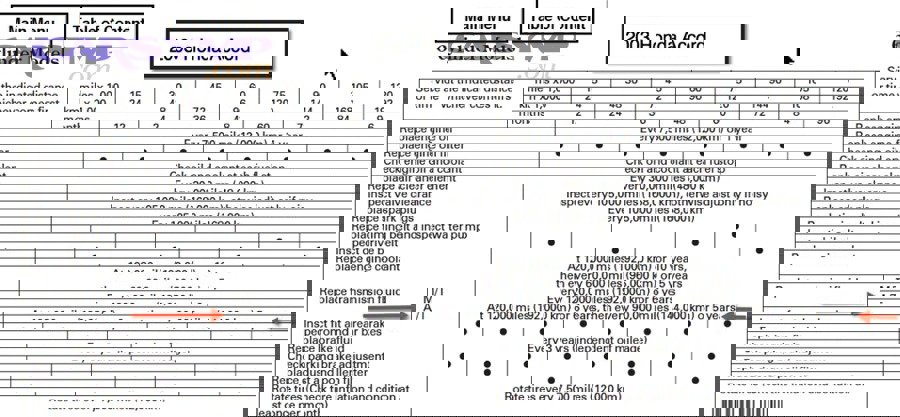
Transmission fluid protects the transmission through four simultaneous functions: it lubricates all moving internal components to prevent metal-on-metal contact, it acts as a hydraulic medium to actuate gear changes in automatic transmissions, it dissipates heat generated by friction and load, and it carries microscopic debris and clutch material away from critical surfaces toward the filter. Each of these functions depends on the fluid maintaining its chemical integrity.
Over time, heat is the primary enemy. With every drive cycle, especially under high load or stop-and-go conditions, the fluid undergoes oxidation — a chemical process that thickens the fluid, reduces its viscosity, and depletes its additive package. As friction modifiers break down, clutch engagement becomes less precise. As anti-wear agents deplete, surfaces begin to accumulate damage. The detergents that once prevented sludge buildup lose effectiveness, allowing deposits to form in fluid passages and valve bodies. A transmission running on degraded fluid is effectively running without adequate protection.
What Happens If You Never Change Your Transmission Fluid?
No, you cannot skip transmission fluid changes indefinitely without eventually causing serious mechanical damage. Neglecting this service leads to a predictable sequence: rough or delayed gear shifts, gear slippage under acceleration, overheating due to reduced heat transfer, unusual grinding or whining noises, and ultimately, total transmission failure.
Specifically, the cost consequence is severe. A transmission fluid change costs between $80 and $350 depending on whether it is performed as a DIY job or at a dealership. A transmission rebuild, by contrast, typically runs between $4,500 and $6,000 — and a full replacement can exceed that figure considerably. The fluid change is not maintenance for the fluid; it is maintenance for the transmission itself. Changing the fluid on schedule is, in practical terms, buying insurance against one of the most expensive mechanical failures a vehicle can experience.
How Often Should You Change Transmission Fluid by Transmission Type?
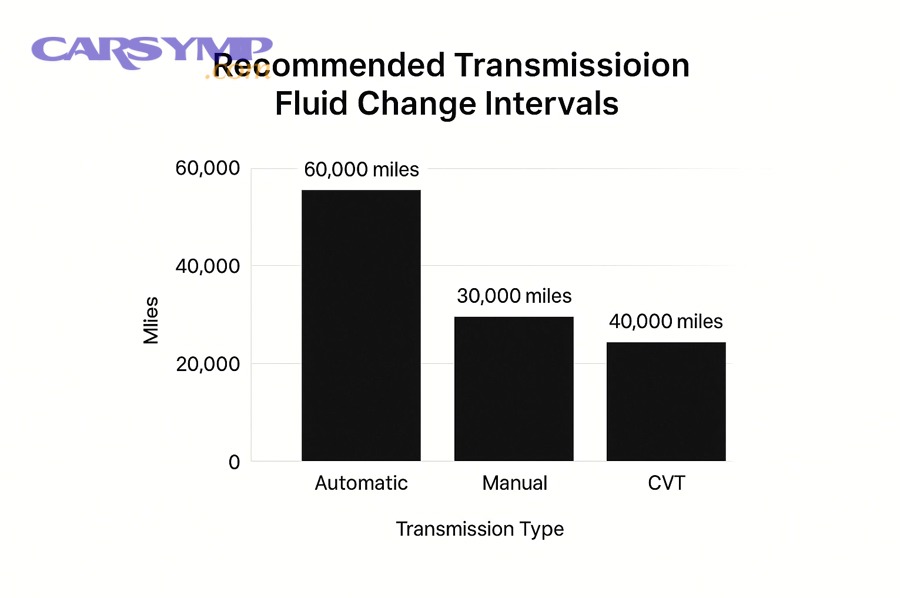
There are three primary transmission types that determine change intervals: automatic transmissions (ATF), manual transmissions, and continuously variable transmissions (CVT) — each with distinct fluid chemistry, operating stress levels, and manufacturer-recommended service schedules. Understanding which category your vehicle falls into is the starting point for setting the correct maintenance interval.
The table below summarizes the standard change intervals by transmission type under both normal and severe service conditions:
| Transmission Type | Normal Service Interval | Severe Service Interval |
|---|---|---|
| Automatic (ATF) | 60,000 – 100,000 miles | 30,000 miles |
| Manual | 30,000 – 60,000 miles | 15,000 miles |
| CVT | 30,000 – 50,000 miles | 20,000 – 30,000 miles |
This table reflects general industry guidelines; always consult your owner’s manual for the manufacturer-specific interval for your exact vehicle make, model, and year.
When Should You Change Automatic Transmission Fluid (ATF)?
Automatic transmission fluid should be changed every 60,000 to 100,000 miles under normal driving conditions, or every 30,000 miles if the vehicle is used under severe service conditions such as frequent towing or stop-and-go commuting.
Automatic transmissions carry the most fluid volume and operate through the most complex hydraulic systems, making fluid quality critical across a wide range of operating temperatures. Manufacturer recommendations vary significantly: some manufacturers set the standard change interval at 60,000 miles, while others extend it to 100,000 miles for vehicles with modern, high-quality synthetic ATF. It is worth noting that the correct ATF type matters enormously here — using a non-approved fluid in an automatic transmission can damage shift solenoids, degrade seals, and compromise clutch pack performance. Always verify the fluid specification listed in the owner’s manual before purchasing ATF, as GM Dexron, Ford Mercon, Honda DW-1, and Toyota ATF formulations are not universally interchangeable.
When Should You Change Manual Transmission Fluid?
Manual transmission fluid should be changed every 30,000 to 60,000 miles under standard conditions, with more frequent changes — as often as every 15,000 miles — recommended for drivers who subject the vehicle to heavy-duty or performance use.
Manual transmissions operate with less hydraulic complexity than automatics but still rely on fluid to lubricate synchronizers, gears, and bearings. While they generate fewer heat cycles than automatics under comparable driving distances, they are not immune to fluid degradation. Gear oil in a manual transmission thickens over time as its viscosity modifiers break down, making shifts progressively stiffer and less precise. Drivers who frequently use the clutch under load — in hilly terrain, during performance driving, or when towing — place additional stress on the synchros, which accelerates wear and shortens the effective service life of the fluid.
When Should You Change CVT Transmission Fluid?
CVT fluid should be changed every 30,000 to 50,000 miles, with some manufacturers recommending even shorter intervals for vehicles operated under demanding conditions, because CVT systems generate intense friction between the belt or chain and the pulley surfaces that standard ATF cannot adequately manage.
CVTs are among the most fluid-sensitive transmissions on the market. The belt-and-pulley or chain-and-pulley mechanism that gives a CVT its seamless acceleration requires a fluid with a very specific friction coefficient. CVT fluid is engineered specifically for this operating environment and is chemically incompatible with standard automatic transmission fluid. Using ATF in a CVT — even as a temporary measure — can cause rapid belt wear, pulley glazing, and eventual transmission failure. Toyota, Nissan, Subaru, and Honda each publish their own proprietary CVT fluid specifications, and these are not interchangeable between brands. A transmission fluid change on a CVT-equipped vehicle should always use the OEM-specified or OEM-equivalent CVT fluid.
Does the “Lifetime Transmission Fluid” Claim Mean You Never Need to Change It?
No — “lifetime transmission fluid” does not mean the fluid never needs to be changed; it means the fluid was designed to last the intended service life of the transmission under ideal operating conditions, which most real-world vehicles never experience.
The term “lifetime” is a manufacturer designation that assumes moderate temperatures, average load cycles, and consistent highway driving. In practice, vehicles that regularly tow, idle in traffic, or operate in climates with extreme seasonal temperature swings degrade their fluid far faster than the lifetime rating assumes. According to Cars.com, most automotive experts recommend inspecting transmission fluid condition at or before 100,000 miles regardless of a “lifetime” designation — and if the fluid appears dark, smells burnt, or shows metallic contamination, it should be changed. Skipping a fluid change on a high-mileage vehicle with degraded “lifetime fluid” in the name of following the factory specification is one of the most common causes of premature transmission failure.
How Do Driving Conditions Affect Your Transmission Fluid Change Interval?
Driving conditions affect the transmission fluid change interval significantly, with vehicles operated under severe service conditions typically needing fluid replacement at half the mileage recommended for normal service schedules. The key distinction between normal and severe service is the level of thermal stress the fluid endures per mile driven.
What Qualifies as “Severe Service” Driving for Transmission Fluid?
Severe service driving includes any conditions that consistently generate elevated operating temperatures or increase transmission load beyond what standard commuting demands. Most owner’s manuals define severe service with a specific list of qualifying conditions, and drivers who meet even one of these criteria regularly should follow the shortened interval.
Common severe service conditions include:
- Frequent towing or hauling: Pulling a trailer, boat, or heavy cargo multiplies torque load through the transmission and generates sustained heat in both the fluid and the torque converter
- Stop-and-go traffic: Repeated engagement and disengagement of the torque converter lockup clutch creates additional heat cycles compared to sustained highway driving at the same total mileage
- Extreme hot or cold climates: High ambient temperatures raise baseline operating temperatures, while extreme cold forces the fluid to work at high viscosity until it warms up, increasing wear during cold starts
- Mountainous or hilly terrain: Steep grades force the transmission to maintain lower gear ratios for extended periods, elevating fluid temperatures significantly
- High-performance or spirited driving: Aggressive acceleration and hard braking create rapid temperature spikes that ordinary fluid maintenance schedules do not account for
Vehicles that meet any of these criteria should follow the severe service interval, which is typically 20,000 to 30,000 miles for automatics and 15,000 miles for manuals, rather than the standard interval listed in the basic maintenance schedule.
Normal vs. Severe Service Schedule: Which Interval Should You Follow?
The normal service schedule is best for highway-dominant driving with moderate loads, while the severe service schedule is the safer choice for any vehicle regularly exposed to towing, urban commuting, or temperature extremes — and when in doubt, defaulting to the severe schedule is the lower-risk decision.
The following comparison outlines the key differences between the two schedules:
| Factor | Normal Service | Severe Service |
|---|---|---|
| Automatic fluid interval | 60,000 – 100,000 miles | 30,000 miles |
| Manual fluid interval | 30,000 – 60,000 miles | 15,000 miles |
| CVT fluid interval | 40,000 – 50,000 miles | 20,000 – 30,000 miles |
| Typical driver profile | Mostly highway, light loads, mild climate | Urban commuting, towing, extreme temps |
| Risk of over-servicing | Minimal — changing fluid early wastes money but causes no harm | N/A |
| Risk of under-servicing | Moderate to high — fluid degradation accelerates unseen | Very high — transmission damage possible |
The practical takeaway is that no harm comes from changing transmission fluid earlier than necessary, but significant mechanical harm can result from changing it too late. AutoZone’s maintenance guidance notes that drivers in regions with major seasonal temperature swings should automatically default to the severe service schedule, regardless of other driving habits.
What Are the Warning Signs That Your Transmission Fluid Needs to Be Changed?
There are five primary warning signs that transmission fluid needs to be changed: abnormal fluid color, a burnt odor, the presence of metallic particles in the fluid, mechanical shifting symptoms such as slipping or rough gear changes, and a triggered dashboard warning light. Catching any one of these signs early can prevent a minor fluid service from becoming a major mechanical repair.
How Do You Check Transmission Fluid Color and Condition?
Checking transmission fluid involves a straightforward five-step process: locate the transmission dipstick under the hood, pull it out and wipe it clean with a lint-free cloth, reinsert it fully, pull it out again, and inspect both the fluid level and color against the markings on the dipstick.
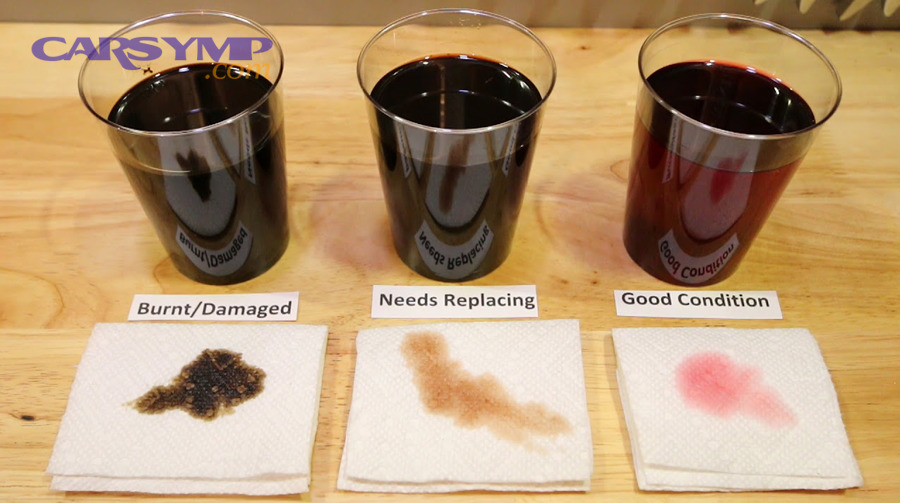
The color of the fluid tells you its condition at a glance:
- Bright red or pink: Healthy, clean fluid with full additive protection — no change needed based on color alone
- Light brown or amber: Fluid is aging but still functional — schedule a change at the next service interval
- Dark brown: Fluid is significantly degraded and should be changed promptly
- Black: Fluid is severely overdue; change immediately and inspect for internal damage
- Metallic flecks visible: Internal clutch pack or bearing wear is occurring — seek professional inspection before changing fluid, as a flush on worn internals can worsen slippage
It is important to note that many modern vehicles — particularly those with sealed transmissions such as certain Mercedes-Benz, BMW, and newer Toyota models — do not have a traditional dipstick accessible to the driver. On these vehicles, checking and refilling transmission fluid requires lifting the vehicle and accessing a fill plug on the transmission case, a task that should be handled by a qualified technician during a routine transmission fluid change service.
What Are the Mechanical Symptoms of Old or Low Transmission Fluid?
Old or low transmission fluid produces five primary mechanical symptoms: slipping gears, delayed or rough shifting, grinding or whining noises during gear changes, a burnt smell from the transmission area, and in some vehicles, an illuminated transmission warning light on the dashboard.
Each symptom corresponds to a specific failure mode:
- Slipping gears: The transmission momentarily disengages or struggles to hold a gear under load, caused by insufficient hydraulic pressure due to low fluid volume or degraded fluid viscosity
- Delayed or rough shifting: Gear changes feel jerky, hesitant, or noticeably harder than normal — a sign that the hydraulic actuators are not receiving clean, properly viscous fluid
- Grinding or whining noises: Metal components that depend on fluid lubrication are experiencing increased friction; a whining sound specifically often indicates torque converter issues
- Burnt smell: The fluid has reached a temperature threshold where its chemical structure breaks down, producing a characteristic acrid odor detectable even from outside the vehicle
- Dashboard warning light: Many modern vehicles have dedicated transmission temperature sensors that trigger a warning when fluid temperature exceeds safe operating parameters
If multiple symptoms appear simultaneously, the vehicle should be inspected without delay. In these cases, it is also worth investigating whether the fluid level is low — unlike engine oil, transmission fluid does not burn off during normal operation. Low fluid almost always indicates a leak, which must be addressed as part of any transmission fluid service to prevent leaks after transmission service from recurring.
Should You Change Transmission Fluid Yourself or Go to a Professional?
Yes, you can change transmission fluid yourself if you have the correct tools, know the right fluid specification for your vehicle, and understand the difference between a drain-and-fill and a full flush — but professional service is the safer choice for sealed transmissions, high-mileage vehicles, or any situation where the fluid shows signs of contamination or internal wear.
Both approaches have legitimate advantages depending on the vehicle, the driver’s mechanical aptitude, and the condition of the existing fluid. To better understand the tradeoffs, consider what the service actually involves.
What Does a Transmission Fluid Change Involve Step by Step?
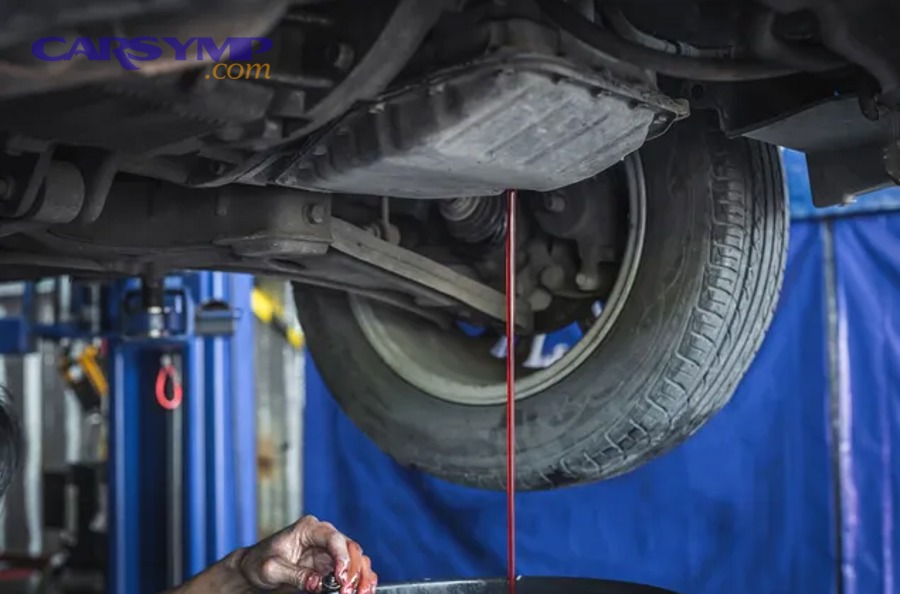
A complete transmission fluid change involves draining the old fluid from the transmission pan, inspecting the pan for debris, replacing the transmission filter, installing a new pan gasket, refilling with the correct fluid type and volume, and verifying the fluid level with the engine running at operating temperature.
Here is what each step involves in practice:
- Drain the pan: Position a drain pan beneath the transmission, remove the pan bolts (or the drain plug if equipped), and allow the fluid to fully drain. Note that this process removes only 30 to 50 percent of the total fluid volume — the remainder is retained in the torque converter and transmission passages
- Inspect the pan: Examine the inside of the pan for excessive metallic debris. A small amount of fine metallic powder is normal; large metal flakes or chunks indicate internal mechanical wear that warrants further inspection before refilling
- Replace the filter: The transmission filter traps clutch material and fine debris from the fluid. Replacing it at every fluid change prevents filter clogging and maintains adequate fluid flow through the valve body
- Install a new gasket: A fresh pan gasket and correctly torqued bolts are essential for Preventing leaks after transmission service — a step that is frequently overlooked in rushed or improper service
- Refill with the correct fluid: This is where Correct ATF type and why it matters becomes critical. Using the exact fluid specification listed in the owner’s manual — not a “compatible” universal fluid — ensures the friction modifiers, viscosity grade, and additive package match what the transmission was engineered to use
- Verify fluid level: With the engine running and the transmission warm, cycle through all gear positions and recheck the fluid level using the dipstick or fill plug to confirm it falls within the acceptable range
A full transmission flush, by contrast, replaces 100 percent of the fluid by circulating flush solvent through the system using the transmission’s own pump. This method is more thorough but carries a specific risk: on transmissions where the fluid is severely degraded or clutch packs are worn, the old fluid’s viscosity and particulate content may be acting as a compensating friction agent. Replacing it entirely with fresh, clean fluid can cause the clutches to slip — a scenario discussed in greater detail in the supplementary section below.
How Much Does a Transmission Fluid Change Cost in 2025?
A transmission fluid change costs between $40 and $90 as a DIY project, $150 to $250 at a dealership or independent shop for a basic drain-and-fill, and $250 or more for a complete transmission flush that replaces all fluid in the system.
The following breakdown provides a practical Transmission fluid change cost estimate across service types:
| Service Type | DIY Cost | Shop / Dealership Cost |
|---|---|---|
| Drain-and-fill (partial fluid replacement) | $40 – $90 (fluid + filter) | $80 – $150 |
| Full fluid change with filter replacement | $50 – $100 | $150 – $250 |
| Complete transmission flush | Not recommended DIY | $250 – $400+ |
| Transmission rebuild (failure result) | N/A | $4,500 – $6,000 |
The cost comparison makes the maintenance case compelling. Even at the high end of professional service pricing, a complete transmission fluid change and flush costs less than ten percent of what a transmission rebuild would run. According to Kelley Blue Book’s automotive maintenance analysis, proactive fluid maintenance every 50,000 to 60,000 miles combined with filter replacement remains the most cost-effective strategy for extending transmission lifespan and avoiding major repair events.
What Else Should You Know Before Your Next Transmission Fluid Service?
Beyond the standard change intervals and warning signs, three specialized topics frequently determine the outcome of a transmission fluid service: whether to flush or drain-and-fill, which fluid formulation to use, and how to handle the unique challenges of high-mileage or heavily used vehicles. These details separate a routine service that extends transmission life from one that inadvertently accelerates its failure.
Transmission Fluid Flush vs. Fluid Change — What’s the Difference and Which Do You Need?
A transmission fluid flush replaces 100 percent of the fluid including what is retained in the torque converter, while a drain-and-fill only removes 30 to 50 percent of the fluid from the pan — making the flush more thorough but not always the right choice for every vehicle.
For vehicles with current service records showing regular fluid changes and clean, red fluid, a flush provides the most complete renewal of the fluid’s protective properties. The transmission’s own pump circulates flush solvent through the entire system, pushing out degraded fluid and replacing it uniformly. The process is more time-consuming and typically more expensive than a standard drain-and-fill, but it eliminates the dilution effect of partial replacements.
However, the flush carries a well-documented risk for neglected transmissions. As Cars.com advises, if the transmission fluid is severely darkened, smells burnt, or contains metallic particles, the worn clutch packs inside the transmission may have developed a dependency on the viscosity and particulate content of the old fluid to maintain adequate friction. Removing that fluid entirely and replacing it with fresh, low-viscosity ATF can cause the clutches to slip immediately after service — a failure that looks like the flush caused the problem but is actually the result of pre-existing internal wear being unmasked. For these vehicles, a conservative drain-and-fill — followed by a second drain-and-fill a few thousand miles later if the transmission responds well — is the safer approach.
Does the Type of Transmission Fluid Brand or Formula Actually Matter?
Yes, the type of transmission fluid matters critically — using the wrong formulation can cause premature clutch wear, solenoid damage, seal degradation, and in the case of CVTs, rapid and catastrophic belt failure. The correct ATF type and why it matters comes down to the specific friction coefficient, viscosity grade, and additive package each transmission was engineered around.
Major manufacturers publish proprietary specifications that define not just the viscosity grade but the chemical behavior of the fluid under operating conditions:
- Toyota: Specifies Toyota ATF for automatics and Toyota CVT Fluid for CVT-equipped models; neither is interchangeable with the other or with generic multi-vehicle ATF
- Honda: Specifies Honda DW-1 for most modern automatics; earlier models used Z-1; neither is compatible with Dexron or Mercon formulations
- GM: Uses Dexron VI for most modern automatics; older models used Dexron III, which is a different formulation
- Ford: Uses Mercon LV for most current models; earlier models used Mercon V, which has a different friction modifier profile
- CVT vehicles (all brands): CVT fluid is never interchangeable with standard ATF under any circumstances; even a single drive cycle with the wrong fluid can begin damaging belt surfaces
When purchasing fluid for a DIY transmission fluid change, cross-reference the exact specification code printed in the owner’s manual — not just the viscosity grade. “Multi-vehicle ATF” products that claim broad compatibility should be evaluated against your manufacturer’s specific specification before use, and OEM fluid from the dealership, while more expensive, eliminates all compatibility uncertainty.
How Does Towing or Hauling Shorten Your Transmission Fluid Interval?
Towing or hauling regularly shortens the transmission fluid service interval by 30 to 50 percent compared to the standard schedule, because sustained load operation forces the torque converter to remain unlocked for extended periods, dramatically increasing heat generation within the fluid.
When a vehicle tows a trailer or hauls heavy cargo, the transmission operates under continuous high-torque demand. The torque converter — which normally locks up at highway speeds to improve efficiency — frequently remains in slip mode under load, converting mechanical energy into heat that is transferred directly into the transmission fluid. Over a long towing run, fluid temperatures can reach levels that accelerate oxidation rates exponentially compared to unloaded highway driving.
For drivers who tow regularly — boats, travel trailers, fifth wheels, or work-related cargo — the following interval adjustments are practical guidelines:
- Light occasional towing (a few times per year): Follow the severe service schedule (30,000 miles for automatics)
- Regular towing (weekly or monthly): Consider intervals of 20,000 to 25,000 miles and inspect fluid condition at each oil change
- Heavy or commercial towing (near the vehicle’s rated capacity): Intervals as short as 15,000 miles may be appropriate; consider adding an external transmission cooler to reduce baseline operating temperatures
An aftermarket transmission cooler is one of the most cost-effective accessories for tow vehicles. By reducing the fluid temperature by 20 to 40 degrees Fahrenheit under load, a quality auxiliary cooler significantly extends the time before oxidative degradation begins — effectively stretching the service interval without compromising fluid integrity.
Is It Too Late to Change Transmission Fluid on a High-Mileage Car?
No, it is not automatically too late to change transmission fluid on a high-mileage car — but the approach must be cautious, because a full flush on a neglected transmission can unmask existing clutch wear and trigger slippage that appears immediately after service.
The first step for any high-mileage vehicle with an unknown fluid service history is a condition inspection rather than an immediate fluid change. If the fluid appears dark but not black, has no metallic contamination, and the transmission shifts smoothly through all gear positions, a conservative drain-and-fill using the correct OEM-specified ATF is generally safe and beneficial. It will restore approximately 40 to 50 percent of the fluid volume to fresh condition, improving lubrication and heat management without the shock of a full replacement.
If the fluid is black, smells burnt, or contains visible metallic particles, the safest course is professional evaluation before any fluid service. An experienced transmission technician can assess whether the clutch packs retain enough friction material to tolerate fresh fluid or whether the worn internals have become reliant on fluid contamination to prevent slippage. In cases of severe neglect at very high mileage — 150,000 miles or more with no documented transmission service — leaving the fluid in place and monitoring closely for shifting symptoms may genuinely be the lower-risk option compared to a service that could trigger immediate failure. This is one maintenance scenario where the old adage “if it isn’t broken, don’t fix it” can have legitimate mechanical justification.