


CVT fluid service differences come down to three core variables: the type of fluid your transmission requires, the procedure used to replace it, and the interval at which service must occur. Unlike conventional automatic transmissions, continuously variable transmissions rely on a precisely formulated lubricant to maintain belt or chain tension, manage heat, and prevent shudder — and no two CVT systems are identical in what they demand. Using the wrong fluid, skipping a service, or choosing the wrong procedure can accelerate internal wear faster than almost any other maintenance mistake a vehicle owner can make.
Understanding how service procedures differ is equally important as knowing which fluid to use. A drain-and-fill replaces roughly 40 to 60 percent of the fluid in the pan, while a full flush exchanges nearly the entire system volume including the torque converter circuit. Each method carries distinct advantages and risks depending on the vehicle’s mileage, manufacturer recommendations, and current fluid condition. Knowing which procedure applies to your situation is the difference between a routine maintenance win and an expensive repair.
Beyond procedures, OEM versus aftermarket fluid choices introduce another layer of complexity. Manufacturer-branded CVT fluids — such as Nissan’s NS-3, Honda’s CVT-1, or Toyota’s TC — are engineered specifically for the friction characteristics of each CVT design. Aftermarket alternatives can meet or exceed these specifications, but only when the correct spec code is matched. The wrong aftermarket fluid, even one labeled “universal,” can cause shudder, overheating, and premature belt wear despite appearing visually identical to the correct product.
The risks of ignoring CVT fluid service differences extend well beyond voided warranties. Degraded fluid loses its anti-shudder properties, reduces hydraulic efficiency, and accelerates belt wear — often silently, until the transmission begins slipping or overheating under load. Next, this guide will walk through every major dimension of CVT fluid service differences so that vehicle owners, DIY mechanics, and service shoppers can make fully informed decisions before their next transmission fluid change.
What Is CVT Fluid and Why Is It Different from Regular Transmission Fluid?
CVT fluid is a specialized lubricant engineered for belt-and-pulley or chain-and-pulley continuously variable transmission systems, formulated with a unique friction modifier profile, viscosity index, and anti-shudder additive package that conventional automatic transmission fluid does not contain.
To better understand why this distinction matters, it helps to examine what CVT fluid actually does inside the transmission — and why substituting it with standard ATF is a fundamentally different kind of mistake than using the wrong engine oil grade.
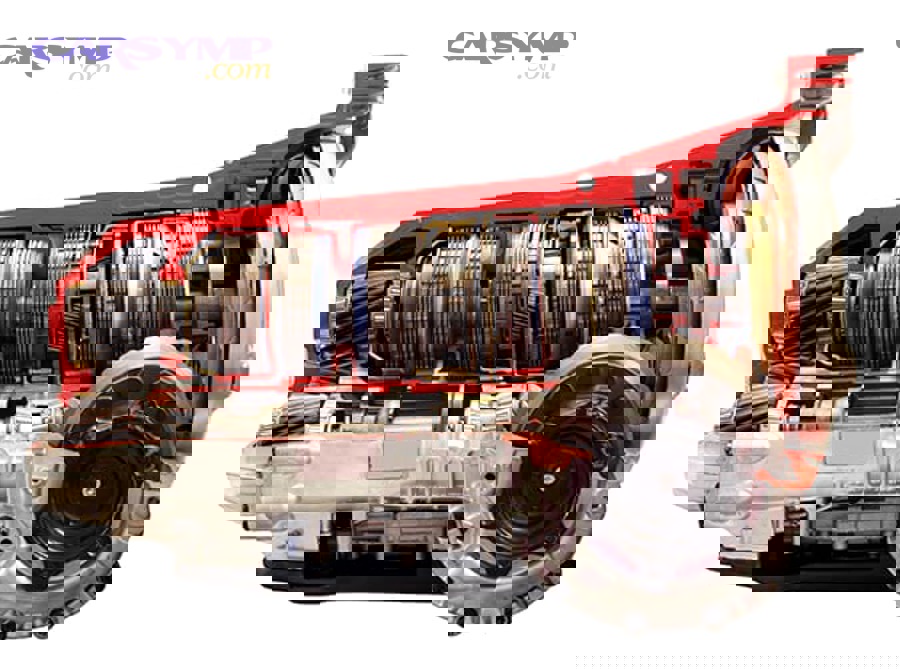
A CVT transmission operates through a steel push belt or chain running between two variable-diameter pulleys. The fluid must simultaneously lubricate the belt contact surfaces, transmit hydraulic pressure to control pulley ratio changes, and prevent the micro-vibrations known as belt shudder that occur under light acceleration. Standard ATF is formulated to optimize shift feel in stepped gear systems — it uses friction modifier chemistry that actively promotes smooth clutch engagement, which is the opposite of what a CVT belt requires. Introducing ATF into a CVT system disrupts belt grip, generates heat at the pulley contact surface, and can cause irreversible belt surface wear within a relatively short operating period.
What Are the Main Types of CVT Fluid Available Today?
There are three main categories of CVT fluid available today: OEM-branded fluid, OEM-equivalent aftermarket fluid, and universal CVT fluid — classified based on formulation specificity and compatibility range.
OEM-branded CVT fluid is produced or licensed directly by the vehicle manufacturer and carries the exact specification the transmission was designed around. Examples include Nissan NS-2 and NS-3, Honda CVT-1, Toyota TC, and Subaru CVTF-II. These fluids are the benchmark against which all alternatives are measured.
OEM-equivalent aftermarket fluid is produced by third-party lubricant manufacturers — including Idemitsu, Valvoline, and Castrol — and is formulated to meet or exceed a specific OEM specification code. When correctly matched to the vehicle’s required spec, these fluids perform equivalently to OEM products in controlled testing, often at a lower price point.
Universal CVT fluid is marketed as broadly compatible across multiple CVT platforms. However, the claim of universal compatibility is chemically difficult to substantiate — each OEM specification uses a distinct friction modifier package, and a single formulation cannot simultaneously optimize for all of them. Universal CVT fluids carry the highest compatibility risk and are generally not recommended for vehicles with documented manufacturer fluid requirements.
The table below summarizes the three fluid categories and their key characteristics:
| Fluid Category | Example Products | Spec Certainty | Risk Level | Best For |
|---|---|---|---|---|
| OEM-Branded | Nissan NS-3, Honda CVT-1, Toyota TC | Highest | Lowest | All CVT vehicles within warranty |
| OEM-Equivalent Aftermarket | Idemitsu NS-3, Valvoline CVT | High (if spec-matched) | Low | Budget-conscious owners with confirmed spec |
| Universal CVT Fluid | Generic multi-vehicle CVT fluid | Low | Highest | Not recommended for most applications |
Is CVT Fluid the Same as Automatic Transmission Fluid (ATF)?
No — CVT fluid is not the same as automatic transmission fluid. CVT fluid uses a fundamentally different friction modifier chemistry, viscosity profile, and additive package than ATF, making the two fluids incompatible despite their similar appearance and consistency.
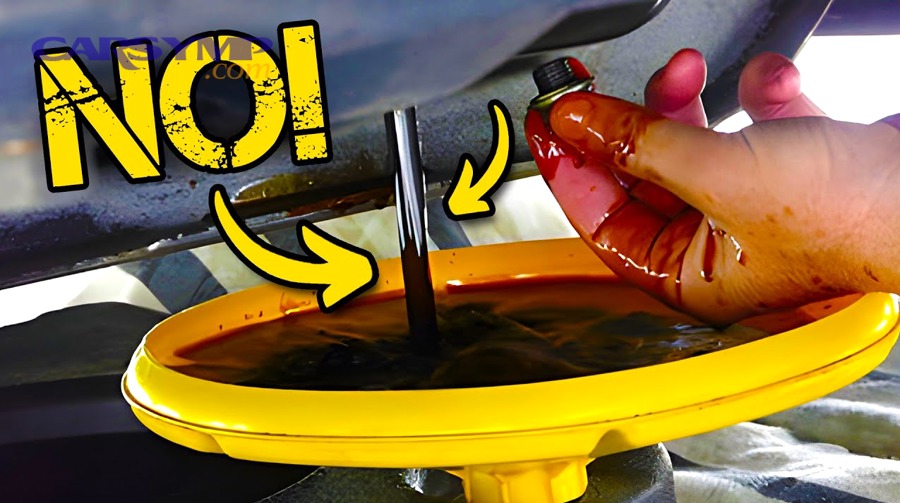
Specifically, the core chemical difference lies in how each fluid manages friction at contact surfaces. ATF is engineered to allow controlled slippage between clutch plates in stepped automatic transmissions — a characteristic that is essential for smooth gear changes but catastrophic in a CVT. When ATF enters a CVT, its friction modifiers reduce grip between the belt and pulley surface, causing the belt to slip under load. This slippage generates excess heat, accelerates belt surface abrasion, and can destroy a CVT within as few as 10,000 to 20,000 miles of contaminated operation, depending on driving conditions. The Correct ATF type and why it matters is a critical foundational concept for any vehicle owner considering a DIY fluid service — the wrong choice is not just suboptimal, it is mechanically destructive.
What Are the Different Types of CVT Fluid Service Procedures?
There are two primary CVT fluid service procedures: the drain-and-fill and the full flush — differentiated by the percentage of fluid exchanged, the equipment required, and the risk profile associated with each method.
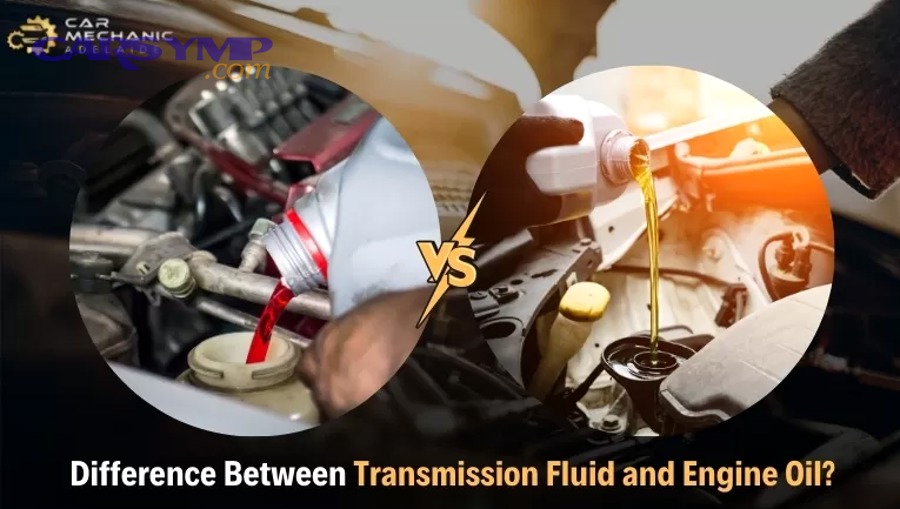
To better understand which procedure applies to your vehicle, it is important to examine what each service actually involves at a mechanical level, because the differences between them are significant enough to change outcomes for transmissions at different life stages.
What Is a CVT Fluid Drain-and-Fill Service?
A CVT fluid drain-and-fill service is a transmission maintenance procedure in which the transmission pan drain plug is opened, spent fluid is allowed to gravity-drain from the pan, and fresh manufacturer-specified CVT fluid is added to refill the system to the correct level.
More specifically, a standard drain-and-fill replaces approximately 40 to 60 percent of the total fluid volume in the system. The remaining fluid stays in the torque converter, valve body passages, and cooler lines. This partial exchange is intentional — it reduces the thermal shock of introducing all-fresh fluid at once and avoids the risk of disturbing accumulated debris in higher-mileage transmissions. During this service, filter and pan gasket replacement is often performed simultaneously if the transmission uses a serviceable filter element, making it a more comprehensive maintenance event than the drain step alone suggests. The drain-and-fill is the lower-cost, lower-risk option and represents the manufacturer-recommended procedure for the majority of CVT-equipped vehicles under normal operating conditions.
What Is a CVT Fluid Flush Service?
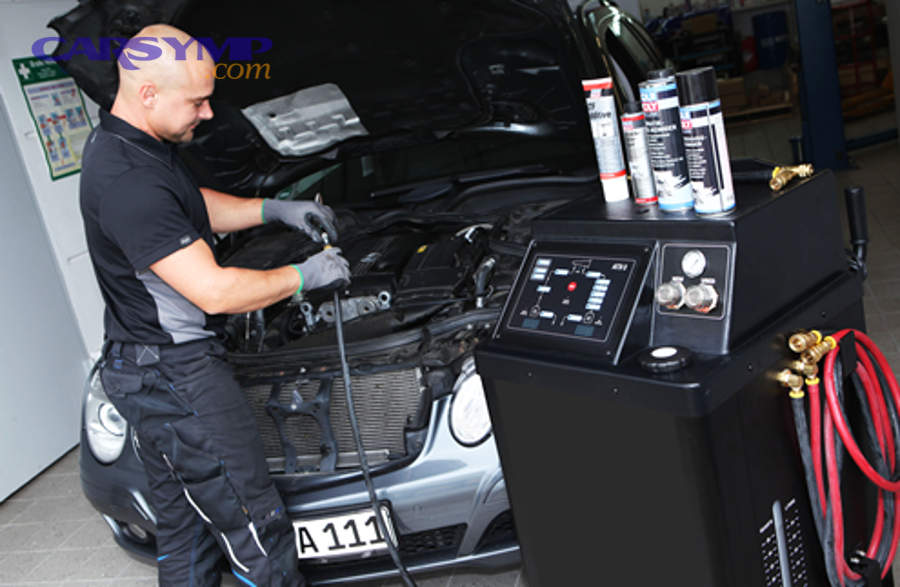
A CVT fluid flush is a transmission service procedure in which a specialized flushing machine connects to the transmission cooler lines and forces nearly 100 percent of the old fluid out of the entire system — including the torque converter, valve body, and cooler — while simultaneously introducing fresh fluid.
However, the higher fluid replacement volume of a flush also introduces a meaningful risk factor that is absent from a drain-and-fill. In higher-mileage CVTs, degraded fluid often carries fine metallic particles and sludge suspended in solution. This contamination can act as a mild sealant around worn seals and gaskets. When a flush machine forcibly exchanges all of this fluid at once, the sudden introduction of clean, low-viscosity fluid can expose latent seal leaks, cause renewed shudder in worn belt assemblies, or dislodge debris into valve body passages. For this reason, several major manufacturers — including Nissan and Honda — explicitly do not recommend flush procedures and specify drain-and-fill only in their service documentation.
Drain-and-Fill vs. Flush: Which CVT Service Does Your Car Actually Need?
A drain-and-fill wins for routine maintenance and vehicles with 60,000 or more miles, while a flush is best considered only for low-mileage, well-maintained CVTs under specific shop recommendations — and only when the transmission’s current fluid condition and mechanical integrity are confirmed.
The table below provides a direct side-by-side comparison across the most important service decision criteria:
| Criteria | Drain-and-Fill | Full Flush |
|---|---|---|
| Fluid Replaced | 40–60% | 90–100% |
| Cost (Approximate) | $80–$150 | $150–$300 |
| Risk Level | Low | Moderate to High |
| Equipment Required | Basic hand tools | Specialized flush machine |
| Recommended For | All mileage ranges, routine service | Low-mileage, well-maintained CVTs only |
| Manufacturer Support | Universally supported | Often explicitly discouraged |
| Filter Replacement Possible | Yes | Not always |
For the overwhelming majority of CVT owners, the drain-and-fill — performed at the correct interval with the exact specified fluid — is the safest, most cost-effective, and most manufacturer-aligned service choice. The phrase “Flush vs drain-and-fill for transmission fluid” represents one of the most frequently misunderstood topics in routine vehicle maintenance, and the data strongly favors the drain-and-fill for CVT applications specifically.
How Do CVT Fluid Service Intervals Differ by Brand and Vehicle?
CVT fluid service intervals differ significantly by brand and vehicle, ranging from every 30,000 miles for severe-duty Nissan applications to every 100,000 miles for certain Toyota models — based on fluid formulation stability, transmission design, and operating conditions.
To better understand why these intervals vary so widely, it is important to address the persistent myth that CVT fluid is a “lifetime” fluid requiring no service — a claim that transmission specialists widely dispute.
What Are the Recommended CVT Fluid Change Intervals for Major Brands?
The recommended CVT fluid change intervals vary across five major brands, with intervals split between normal and severe-duty driving conditions — and ignoring these intervals is one of the leading causes of premature CVT failure.
The table below presents manufacturer-recommended CVT fluid service intervals for the most common CVT-equipped vehicles:
| Brand | Normal Driving Interval | Severe Duty Interval | Notes |
|---|---|---|---|
| Nissan | 60,000–90,000 miles | 30,000–60,000 miles | NS-3 required; NS-2 vehicles often fail earlier when interval is ignored |
| Honda | 45,000 miles | 30,000 miles | HCF-2 or CVT-1 depending on model year |
| Toyota | 60,000–100,000 miles | 45,000–60,000 miles | Toyota TC fluid; some models marketed as “lifetime” |
| Subaru | 25,000–30,000 miles | 15,000–25,000 miles | Among the most conservative CVT service intervals |
| Mitsubishi | 30,000–45,000 miles | 20,000–30,000 miles | DIAQUEEN CVT-J4 or equivalent required |
Subaru’s conservative intervals reflect the brand’s acknowledgment that CVT fluid degrades more rapidly in their specific transmission architecture. Toyota’s longer intervals are tied to their TC fluid’s formulation stability, though many independent transmission specialists recommend not exceeding 60,000 miles regardless of the manufacturer’s published guidance. The concept of “lifetime fluid” has been largely discredited by real-world failure data — no CVT fluid maintains its anti-shudder and lubrication properties indefinitely under heat cycling and mechanical stress.
Does Driving Style Affect How Often You Should Change CVT Fluid?
Yes — driving style significantly affects how often CVT fluid should be changed, because severe driving conditions accelerate fluid thermal degradation, friction modifier depletion, and moisture contamination at a rate that standard service intervals do not account for.
Specifically, the following conditions qualify as severe duty and warrant shortened CVT service intervals:
- Frequent stop-and-go traffic: Increases heat cycling frequency and accelerates oxidation of the fluid’s base oil.
- Towing or hauling loads: Dramatically increases hydraulic pressure demands and belt slip events, generating heat spikes that degrade fluid faster than any other single factor.
- Mountainous or hilly terrain driving: Engine braking through the CVT creates sustained load on the belt-pulley interface, compressing anti-shudder additive molecules and reducing their effectiveness.
- Extreme temperature environments: Both high ambient temperatures and extreme cold stress the fluid’s viscosity index and accelerate additive breakdown.
- High-mileage vehicles: Worn seals and increased internal clearances cause greater fluid contamination from metallic wear particles.
For any vehicle regularly exposed to two or more of these conditions, reducing the CVT fluid service interval by 30 to 40 percent below the published normal-duty recommendation is a widely accepted conservative approach among transmission specialists.
What Is the Difference Between OEM CVT Fluid and Aftermarket CVT Fluid?
OEM CVT fluid wins in specification certainty and warranty alignment, while correctly spec-matched aftermarket CVT fluid is optimal for cost-conscious owners who can confirm the exact OEM specification their transmission requires.
However, the boundary between these two categories is more nuanced than it first appears, and the decision between OEM and aftermarket fluid carries both financial and mechanical implications that vehicle owners should understand before committing to a product.

Does Using Aftermarket CVT Fluid Void Your Warranty?
No — using aftermarket CVT fluid does not automatically void your warranty, provided the fluid meets or exceeds the OEM specification required by your vehicle’s manufacturer and you retain documentation of the service.
More specifically, the Magnuson-Moss Warranty Act in the United States prohibits manufacturers from voiding a warranty solely because an owner used a non-OEM part or fluid, as long as that alternative product meets the required performance specification. The critical qualifier is that the fluid must legitimately meet the OEM spec — not simply claim to. For CVT fluid, this means the aftermarket product must carry the specific certification or meet the documented specification code for your transmission, such as NS-3, HCF-2, or Toyota TC. Retaining purchase receipts, product data sheets, and service records is advisable whenever aftermarket fluid is used, as this documentation supports any warranty claim in the event of a dispute.
Which Aftermarket CVT Fluids Are Compatible with OEM Specifications?
There are several reputable aftermarket CVT fluid products that are compatible with major OEM specifications — classified by the spec code they are formulated to meet — and selecting the correct one requires matching the product’s documented specification to your vehicle’s requirement, not relying on a general compatibility claim.
Below is a reference table of commonly available aftermarket CVT fluids organized by the OEM specification they meet:
| OEM Specification | Compatible Aftermarket Options | Notes |
|---|---|---|
| Nissan NS-3 | Idemitsu NS-3, Valvoline CVT (NS-3 rated) | Idemitsu is OEM supplier for Nissan — considered highest-confidence aftermarket option |
| Honda HCF-2 | Idemitsu HCF-2, Genuine Honda only advised | Third-party options limited; Honda HCF-2 is uniquely formulated |
| Toyota TC | Idemitsu CVTF TC, Aisin CVT Fluid | Aisin is Toyota’s OEM transmission supplier |
| Subaru CVTF-II | Idemitsu CVTF-II equivalent | Confirm spec compatibility before purchase |
| Universal (avoid) | Various generic brands | Not recommended — specification certainty absent |
The key decision rule is straightforward: identify the exact OEM specification code from your owner’s manual or service documentation, then select an aftermarket fluid that explicitly lists that specification — not one that uses vague “compatible with” or “suitable for most CVTs” language. Any fluid that does not list a specific OEM specification code by name should be treated as a universal fluid and avoided accordingly.
What Happens If You Use the Wrong CVT Fluid or Skip Service?
Using the wrong CVT fluid or skipping scheduled service causes progressive belt wear, hydraulic pressure loss, anti-shudder failure, and ultimately transmission damage — consequences that range from drivability symptoms to full transmission failure depending on the severity and duration of the error.
To better understand how these failures develop, it helps to recognize that CVT damage from fluid neglect rarely happens suddenly — it accumulates gradually and silently until a threshold of wear is crossed that cannot be reversed by a fluid change alone.
What Are the Signs That Your CVT Fluid Needs to Be Changed?
There are five primary warning signs that CVT fluid needs to be changed: transmission shudder during light acceleration, a whining or humming noise from the transmission, overheating warnings or sluggish throttle response, a burnt smell from the transmission area, and visible darkening or contamination of the fluid on the dipstick or drain plug.
Specifically, each symptom maps to a distinct stage of fluid degradation:
- Shudder on acceleration: The anti-shudder additive package has depleted, allowing micro-slip between the belt and pulley surface. This is often the earliest and most recognizable symptom of degraded CVT fluid.
- Whining or humming noise: Reduced lubrication film thickness causes increased metal-to-metal contact noise from the belt assembly or pulley bearings.
- Sluggish throttle response or delayed ratio changes: Hydraulic pressure efficiency has dropped due to fluid viscosity breakdown, slowing pulley ratio adjustment response time.
- Overheating warning: Degraded fluid loses thermal transfer efficiency, causing the transmission to retain heat rather than dissipate it through the cooler circuit.
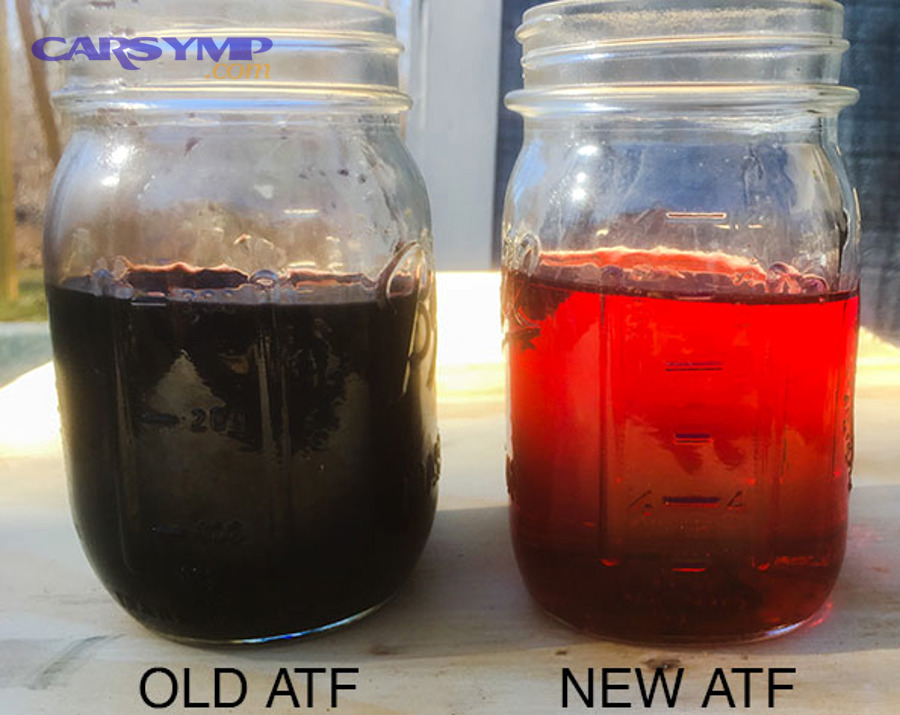
- Burnt smell or dark fluid: Oxidation and thermal breakdown have chemically altered the fluid — at this stage, the fluid is providing minimal protective benefit and may be actively accelerating wear.
It is important to note that shudder and noise can also indicate mechanical CVT damage rather than fluid degradation alone. A fluid check and change is always the first diagnostic step, but persistent symptoms after a fluid service warrant further inspection of the belt and pulley assembly.
Can You Mix Different Brands or Types of CVT Fluid?
No — mixing different brands or types of CVT fluid is not recommended, because incompatible additive packages — particularly friction modifier systems — can chemically interact, neutralize each other’s protective properties, and produce a blended fluid that meets neither product’s original specification.
Specifically, the risk lies in friction modifier incompatibility. Different CVT fluid formulations use distinct molecular friction modifier compounds calibrated to function at specific concentration levels. When two different formulations are mixed, the combined friction modifier concentration becomes unpredictable — potentially causing increased shudder, altered shift feel, or accelerated wear at the belt contact surface. If accidental mixing occurs, the recommended corrective action is a partial drain-and-fill as soon as possible to dilute the contaminated mixture, followed by a full drain-and-fill at the earliest opportunity to restore the correct fluid specification. Continuing to drive on a mixed fluid charge — particularly over an extended period — compounds the risk with each heat cycle the transmission experiences.
Advanced CVT Fluid Considerations for Specific Vehicles and Use Cases
Advanced CVT fluid service decisions require understanding brand-specific specification codes, high-mileage fluid formulations, towing-related degradation rates, and how CVT service compares structurally to service requirements for DCT and conventional automatic transmissions.
In addition to the foundational service differences covered above, these micro-semantic considerations apply to a significant portion of real-world CVT owners — particularly those with high-mileage vehicles, specialty use cases, or transmissions from multiple manufacturers in the same household or fleet.
What Do CVT Fluid Specification Codes Like NS-2, NS-3, and CVT-1 Actually Mean?
CVT fluid specification codes are manufacturer-assigned alphanumeric designators that define the precise friction chemistry, viscosity grade, and additive package a CVT transmission was engineered to operate with — and they are not interchangeable between brands or model generations even when they appear similar.
The table below decodes the most common OEM CVT fluid specification codes and the vehicles that require them:
| Specification Code | Manufacturer | Key Vehicles | Successor Spec | Notes |
|---|---|---|---|---|
| NS-2 | Nissan/Infiniti | 2003–2010 Altima, Murano, Rogue | NS-3 | Older spec; NS-3 is backward-compatible in most cases |
| NS-3 | Nissan/Infiniti | 2010–present CVT models | Current | Most widely required Nissan CVT spec |
| CVT-1 | Honda | 2014 and earlier CVT models | HCF-2 | Now largely superseded by HCF-2 |
| HCF-2 | Honda | 2015–present CVT models | Current | Honda Continuously Variable Fluid 2 |
| TC | Toyota | Corolla, Camry Hybrid, C-HR | Current | Aisin-sourced; widely available from third parties |
| CVTF-II | Subaru | Lineartronic CVT models | Current | Required for Subaru’s specific CVT architecture |
Cross-referencing these codes against your owner’s manual — not just the vehicle make and model — is essential because some manufacturers updated their required specification mid-model-cycle. A 2013 and 2016 version of the same vehicle may require different fluid specifications due to a mid-cycle transmission update.
Does CVT Fluid Service Differ for High-Mileage Transmissions?
Yes — CVT fluid service for high-mileage transmissions differs meaningfully from service on lower-mileage units, because worn internal components, degraded seals, and accumulated metallic contamination require a more conservative service approach that prioritizes stability over complete fluid replacement.
More specifically, high-mileage CVT fluid formulations — those designed for transmissions with 100,000 or more miles — typically incorporate seal conditioners that swell aging elastomer seals to reduce minor leakage, along with higher concentrations of anti-wear additives to compensate for increased internal clearances. For transmissions in this mileage range, the drain-and-fill method is even more strongly preferred over a flush, because the forceful fluid exchange of a flush can expose latent seal weaknesses that degraded fluid had been partially masking. Additionally, the interval for high-mileage CVTs should generally be shortened — not extended — because worn components generate more metallic particles per operating mile, accelerating fluid contamination at a faster rate than the transmission experienced earlier in its service life.
How Does Towing or Heavy Load Affect CVT Fluid Degradation?
Towing or carrying heavy loads accelerates CVT fluid degradation by generating sustained hydraulic pressure spikes, elevated belt slip events, and transmission operating temperatures that can exceed the thermal stability threshold of standard CVT fluid within a single towing session.
Specifically, most CVT-equipped vehicles carry published towing capacity limits that are directly tied to the transmission’s thermal management capability — not engine power alone. When a CVT operates at or near its towing limit, the belt-pulley interface experiences significantly higher contact forces than in normal driving, causing micro-slip events that generate localized heat at the belt surface. This heat transfers into the fluid, accelerating oxidation and friction modifier depletion at a rate that can double or triple normal fluid aging speed. For vehicles regularly used for towing, most transmission specialists recommend reducing the CVT service interval to 15,000 to 25,000 miles regardless of the manufacturer’s published normal-duty interval — treating every towing session as a severe-duty operating event.
How Is CVT Fluid Service Different from DCT or Traditional Automatic Transmission Service?
CVT fluid service is more specification-sensitive and typically more frequent than DCT or traditional automatic transmission service — with CVT requiring brand-specific fluid chemistry, DCT requiring dual-sump wet or dry clutch-specific fluid, and conventional automatic transmission service offering the most flexible fluid compatibility of the three.
The table below provides a direct structural comparison of service requirements across all three transmission types:
| Service Factor | CVT | DCT (Wet Clutch) | Conventional Automatic |
|---|---|---|---|
| Fluid Specificity | Very High — OEM spec required | High — wet/dry clutch specific | Moderate — ATF spec (Dexron, Mercon) |
| Typical Service Interval | 30,000–90,000 miles | 40,000–60,000 miles | 30,000–60,000 miles (severe); 60,000–100,000 (normal) |
| Flush Compatibility | Generally not recommended | Brand-dependent | Widely practiced |
| Mixing Risk | Very High | High | Moderate |
| Filter Service | Sometimes accessible | Typically included | Routinely included |
| Fluid Cost (per quart) | $15–$35 (OEM) | $12–$30 | $8–$20 |
The key takeaway from this comparison is that CVT fluid service sits at the high end of both cost and specificity among all consumer automatic transmission types. The narrow tolerance for fluid substitution, the shorter service intervals recommended by specialists, and the severe consequences of neglect make CVT fluid service one of the highest-priority maintenance items for any CVT-equipped vehicle — and one where the differences between doing it correctly and doing it wrong are more consequential than in virtually any other routine service category.