


Severe car vibrations are often not safe to ignore because they can signal tire failure, brake problems, steering instability, or drivetrain faults that may reduce control of the vehicle. In practical terms, the more violent, sudden, or speed-sensitive the shaking becomes, the more likely the car needs to be pulled over and inspected instead of driven normally.
That direct safety question leads to the next concern: what actually counts as a severe vibration rather than a minor annoyance. Drivers often notice shaking in the steering wheel, seat, or floor before they know the cause, so understanding how the vibration feels is the first step in making a sound safety decision.
The issue also becomes clearer when warning signs are grouped by condition. Some vibrations appear mainly at highway speed, some show up during braking, and others happen during acceleration or at idle. That pattern matters because it helps separate a relatively limited tire issue from a brake, suspension, or drivetrain problem.
Drivers also need a practical action plan, not just theory. A good vibration diagnosis starts with identifying when to slow down, when to stop immediately, and when towing is safer than continuing to drive. Introduce a new idea: the sections below explain how to judge severity, connect symptoms to likely causes, and choose the safest next step.
Is It Safe to Drive With Severe Car Vibrations?
No, severe car vibrations are usually not safe to drive with because they can reduce steering control, increase braking distance, and signal tire, wheel, brake, or drivetrain failure. To better understand that safety decision, drivers need to judge not just whether the car vibrates, but how strongly it shakes, when it happens, and whether control changes with speed or braking.
A mild tremor that appears only on rough pavement is very different from a forceful shake that rattles the steering wheel at 60 mph. The safety threshold changes when vibration becomes strong enough to affect lane stability, braking feel, or confidence behind the wheel. If the steering wheel visibly shimmies, the seat shakes hard, or the car feels unstable while cornering or stopping, the risk goes beyond comfort and enters the realm of active safety.
Severe vibration can come from something as common as a damaged tire or as serious as a failing suspension joint. The key point is that the driver does not need a full repair diagnosis before deciding to reduce speed and protect control. A road-safe decision should always come before a repair-perfect diagnosis. That is why the safest rule is simple: if the vibration grows quickly, feels violent, or comes with noise, smell, or pull, treat it as unsafe until proven otherwise.
When Is the Answer No?
Yes, there are clear cases where the answer is no, and those cases usually involve control loss, worsening vibration, or signs of mechanical failure. More specifically, drivers should stop normal driving when the car shakes hard enough to affect steering accuracy, pedal feel, or overall stability.
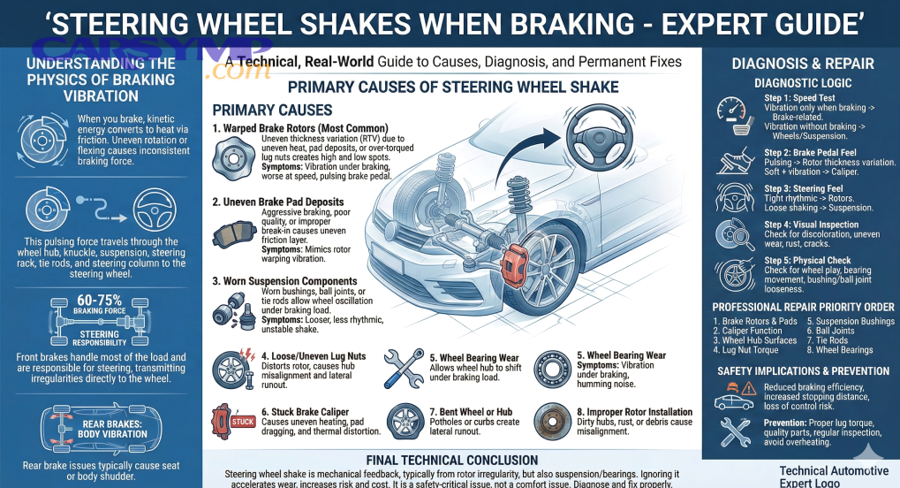
A forceful steering-wheel wobble at speed is one of the clearest warnings. That symptom often points to tire damage, wheel imbalance, a bent rim, loose wheel hardware, or worn front-end parts. Even if the car is still moving in a straight line, the vibration can worsen quickly as speed rises. The same logic applies when the brake pedal pulses heavily or the whole car shudders during braking. That pattern may indicate serious brake rotor distortion, uneven pad contact, or a worn suspension component allowing extra movement under load.
The answer is also no when vibration appears with any of the following:
- a thumping or flapping sound from a tire
- a burning smell near a wheel
- smoke, dust, or extreme heat from one brake corner
- loud clunking during acceleration or turning
- obvious tire bulges, cuts, or exposed cords
- warning lights combined with engine roughness
Drivers should also remember that severe vibration can come from engine problems. Engine misfire vibration symptoms usually include rough idle, hesitation, flashing check engine light behavior, and shaking that does not match road speed alone. In that situation, continued driving can damage the catalytic converter or leave the vehicle underpowered in traffic.
When Might a Car Still Be Moved a Short Distance Carefully?
Yes, a car might sometimes be moved a short distance carefully if the vibration is mild, stable, and not linked to control loss, tire damage, or brake trouble. However, the heading issue matters because “movable” does not mean “safe for regular driving,” and that distinction protects both the driver and the vehicle.
A short, careful movement may be reasonable when the vibration is noticeable but light, the steering remains steady, braking feels normal, no abnormal noise or smell is present, and the destination is a very nearby repair facility. Even then, the driver should avoid highway speeds, hard acceleration, and sudden braking. The goal is not convenience; the goal is to reduce risk during a controlled relocation.
The safest way to think about this is to separate three categories:
- Normal driving is safe: rare when severe vibration is already present
- Short emergency repositioning may be possible: only under controlled, low-speed conditions
- Towing is safer: preferred when symptoms are strong, worsening, or uncertain
According to a study by the National Highway Traffic Safety Administration from its tire safety guidance, underinflation, tire damage, and maintenance-related tire issues significantly increase crash risk because they affect stability and heat buildup. That principle supports a cautious response any time severe vibration may come from a wheel or tire problem.
What Counts as a Severe Car Vibration?
Severe car vibration is a strong, persistent shaking sensation that affects comfort, control, or confidence and changes noticeably with speed, braking, or acceleration. To better understand the issue, drivers should focus on intensity, location, and pattern rather than trying to name the exact failed part too early.
A severe vibration is not just “I can feel the road.” It is a symptom that repeatedly forces attention. The wheel may shimmy in the hands, the front seats may buzz or shake, or the floorboard may hum and pulse in a way that changes with throttle input. In other words, severity is measured by how much the symptom disrupts driving and whether it suggests a fault that can escalate.
The most useful driver-level measurement is practical, not technical. Ask these questions:
- Does the vibration grow with speed?
- Does braking make it sharply worse?
- Does the steering wheel move by itself?
- Does the car feel loose, unstable, or noisy?
- Did the symptom appear suddenly rather than gradually?
If the answer to one or more of those questions is yes, the vibration has moved beyond minor annoyance and into safety assessment territory. That is where vibration diagnosis becomes valuable, because the pattern of the symptom often tells the story faster than the driver expects.
What Does Severe Vibration Feel Like in the Steering Wheel, Seat, or Floor?
Severe vibration feels different depending on where it reaches the driver: the steering wheel suggests front-end influence, the seat often points to body or rear-related transfer, and the floor can suggest drivetrain or rotating component issues. Specifically, the location matters because it helps narrow down which system is most likely disturbing the vehicle.
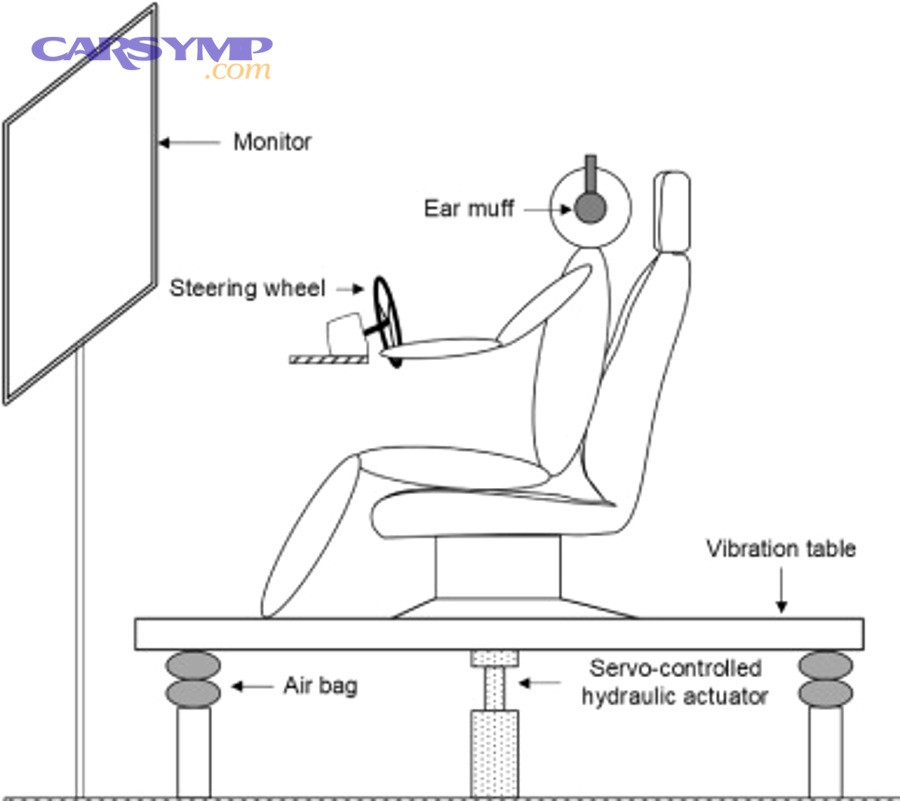
A steering-wheel shake usually gets the most attention because the driver can see and feel it directly. It often appears when front tires, wheels, hubs, brake components, or steering parts are involved. The wheel may tremble lightly at first and then begin to oscillate more dramatically as speed rises.
Seat vibration often feels deeper and more body-wide. Drivers may notice it in the cushion, seatback, or center console. Rear tire issues, driveline imbalance, wheel problems at the rear axle, or body-transmitted vibration may create this pattern. The important point is not to assume that a seat vibration is harmless just because the steering wheel feels calmer.
Floorboard vibration can feel like a hum, buzz, or pulsing through the feet. It often appears under acceleration or at a narrow speed range. That pattern may suggest axle, driveshaft, engine mount, exhaust contact, or related drivetrain movement. This is where Vibration at speed vs idle vs braking diagnosis becomes useful, because the driver can compare when the symptom appears and where it is felt strongest.
How Is Severe Vibration Different From Normal Road Feel or Minor Tire Harshness?
Severe vibration differs from normal road feel because it is repetitive, abnormal, and linked to mechanical imbalance, looseness, or friction rather than ordinary pavement texture. However, the distinction matters because many drivers delay action by assuming all shaking comes from rough roads.
Normal road feel changes with pavement type and usually disappears when the surface improves. It does not cause the steering wheel to oscillate, the brake pedal to pulse hard, or the vehicle to feel unstable in a straight line. Minor tire harshness may create extra firmness or a faint buzz, but it usually stays consistent and does not intensify suddenly with braking or speed.
Severe vibration, by contrast, creates a pattern. It tends to appear in a specific speed window, under braking load, during acceleration, or at idle. It may also arrive with other clues such as noise, odor, uneven tire wear, or steering drift. Once a vibration forms a clear pattern, it becomes a diagnosable symptom rather than a vague sensation.
According to guidance from the Car Care Council and standard service practice across brake and tire inspection procedures, abnormal steering-wheel shake, brake pulsation, and speed-sensitive vibration are all treated as symptoms requiring mechanical inspection rather than as normal operating behavior.
What Warning Signs Mean You Should Pull Over Right Away?
There are 6 main warning signs that mean you should pull over right away: violent shaking, tire distress, severe brake shudder, steering instability, loud mechanical noise, and burning smell or smoke. More importantly, these grouped signs matter because they indicate that continued driving may quickly lead to loss of control or secondary damage.

When a driver feels severe vibration, the instinct is often to “test it a little longer” and see whether it goes away. That is the wrong move when risk indicators are present. Pulling over is not an overreaction when the car feels unstable, the steering changes suddenly, or the vibration escalates with speed.
The table below summarizes the most important stop-now warnings and what they may suggest.
| Warning sign | What it may suggest | Why you should pull over |
|---|---|---|
| Violent steering-wheel shake | Front tire, wheel, hub, steering, or brake issue | Control can worsen quickly as speed rises |
| Heavy thumping or flapping | Tire belt separation or severe tire damage | Tire failure risk increases with heat and speed |
| Strong brake shudder | Rotors, pads, calipers, front suspension issue | Braking stability may be compromised |
| Clunking during acceleration or turning | CV axle, mount, suspension, or joint issue | A loaded component may be failing |
| Burning smell or smoke | Brake drag, overheated tire, or mechanical friction | Fire and component failure risks increase |
| Sudden pull plus vibration | Brake seizure, tire failure, alignment shift, or suspension fault | The vehicle may not track safely |
This table helps translate sensation into action. Drivers do not need certainty about the exact failed part to know that these symptoms justify stopping.
Which Tire, Wheel, and Brake Symptoms Make Continued Driving Risky?
Yes, tire, wheel, and brake symptoms are among the most dangerous vibration-related warnings because they directly affect contact with the road, stopping force, and stability. Specifically, continued driving becomes risky when vibration is paired with visible tire damage, rhythmic thumping, harsh brake pulsation, or wheel wobble.
A tire can look acceptable at a quick glance and still have internal separation. That is why a rhythmic thump, steering shake, or body wobble at speed should never be dismissed. A bulge in the sidewall, a cut in the tread area, uneven tread blocks, or metal showing through the rubber all point to immediate risk. Loose or improperly torqued lug nuts can also create vibration and are a true safety emergency.
Brake-related vibration is also serious when it is strong enough to change stopping behavior. A light pulse may reflect uneven rotor thickness or pad deposits, but a harsh front-end shudder can suggest more severe brake or suspension stress. If braking causes the wheel to shake violently or the car to dart, the safest move is to stop driving and arrange inspection or towing.
Which Steering, Suspension, or Drivetrain Symptoms Suggest Loss of Control Risk?
Yes, steering, suspension, and drivetrain symptoms can suggest real loss-of-control risk because they influence wheel direction, body stability, and torque delivery. In addition, these symptoms often worsen under load, which makes them especially dangerous during merges, braking, and lane changes.
Drivers should take the following signs seriously:
- the car wanders and shakes at the same time
- the steering wheel does not self-center normally
- a clunk appears when shifting from coast to throttle
- vibration gets worse while turning
- acceleration produces a strong shudder through the floor
- the vehicle feels like one corner is loose or delayed
A worn tie-rod end, ball joint, bushing, control arm, or axle can create one or more of these symptoms. If the vehicle also feels vague in steering response, the issue is no longer just mechanical discomfort. It is a control issue.
According to inspection principles used by state vehicle safety programs and standard suspension service guidance, looseness in steering and suspension components can directly affect directional stability and braking behavior. That makes immediate inspection appropriate when vibration appears together with wander, clunking, or steering imprecision.
What Causes Severe Car Vibrations While Driving?
There are 4 main causes of severe car vibrations while driving: tire and wheel faults, brake-related faults, suspension or steering wear, and drivetrain or engine-related problems. To better understand the issue, drivers should group causes by system because the vibration pattern usually reflects which system is under stress.

A proper vibration diagnosis starts with the system that is most likely to produce the symptom under the exact condition described by the driver. If the shake appears mostly at highway speed, tires and wheels rise to the top of the list. If the shake appears during braking, brake and front suspension components become more likely. If the vibration intensifies during acceleration or while turning under load, drivetrain parts move closer to the front of the diagnosis.
The goal is not to overwhelm the reader with every possible fault. The goal is to connect the major systems to the most common driving conditions that reveal them. That approach gives the article a strong practical flow and keeps the content aligned with real search intent.
Are Tire and Wheel Problems the Most Common Cause?
Yes, tire and wheel problems are the most common cause of severe driving vibration because they rotate constantly, react immediately to speed, and directly affect road contact. More specifically, imbalance, bent wheels, damaged tires, improper inflation, and uneven wear patterns account for many speed-sensitive vibration complaints.
A tire with a broken belt, flat-spotted tread, or severe cupping can produce anything from a mild buzz to a violent shake. Wheel imbalance often shows up in a narrower speed range, while bent wheels can create a repeating wobble that gets worse as road speed rises. Underinflation or overinflation may not be the only cause, but either condition can intensify instability and irregular wear.
Loose lug nuts deserve special attention because the symptom may begin as vibration before progressing to a more obvious wobble. Any recent tire service, wheel swap, curb impact, or pothole strike should raise suspicion. That history matters in vibration diagnosis because it provides a timeline, and the timeline often tells the technician whether the problem started from damage, wear, or recent service error.
Can Brake, Suspension, or Drivetrain Problems Cause Severe Shaking Too?
Yes, brake, suspension, and drivetrain problems can also cause severe shaking because they disturb force transfer, wheel control, or rotating balance under specific conditions. Besides tire faults, these systems explain many cases where vibration appears mostly during braking, acceleration, turning, or load changes.
Brake problems often produce a strong shudder during deceleration. Rotor thickness variation, heat-related distortion, pad material transfer, or a sticking caliper can all contribute. Suspension and steering wear can magnify that shake because worn parts allow more unwanted movement at the wheel assembly.
Drivetrain problems usually show up differently. A bad CV axle may cause vibration during acceleration, especially when power loads the joint. A driveshaft imbalance, worn universal joint, or mount failure may create a floor-level hum or shake that changes with throttle input. Engine-related faults can also enter the picture. Engine misfire vibration symptoms usually include roughness at idle, hesitation under load, intermittent power loss, and shaking that does not always track neatly with road speed. That distinction matters because not every vibration is caused by wheels or brakes.
According to a study by SAE International and long-established automotive service data on NVH behavior, vibration patterns often correlate strongly with operating condition, which is why technicians compare vehicle speed, engine speed, throttle load, and braking input during diagnosis.
How Does Vibration Change at Speed, During Braking, or While Accelerating?
Vibration at speed usually points toward tire and wheel issues, vibration during braking often points toward brake-related faults, and vibration during acceleration often suggests drivetrain load problems. To better understand the heading issue, drivers should compare the condition that triggers the shake because that condition is one of the strongest clues in Vibration at speed vs idle vs braking diagnosis.
Many drivers describe vibration as if it happens all the time, but a closer look often reveals a pattern. The car may feel smooth around town, shake hard on the highway, then feel mostly normal again when coasting. Another vehicle may only shudder when the brake pedal is pressed. A third may idle roughly in park and then feel different again when accelerating. These patterns narrow the field quickly.
The comparison below summarizes the most common symptom relationships.
| Driving condition | Common pattern | More likely systems involved |
|---|---|---|
| At highway speed | Shake grows with speed, often in steering wheel or seat | Tires, wheels, hubs, alignment-related tire wear |
| During braking | Shudder appears only or mainly when brakes apply | Rotors, pads, calipers, front suspension |
| During acceleration | Floor or body shake grows under load | CV axles, driveshaft, mounts, drivetrain |
| At idle | Shake occurs even while stopped | Engine misfire, mounts, accessory drive issues |
This comparison does not replace inspection, but it helps drivers describe the symptom accurately and respond faster.
What Does Vibration at Highway Speed Usually Suggest?
Vibration at highway speed usually suggests a rotating imbalance or tire-and-wheel problem because the force of rotation increases as speed rises. Specifically, the issue often points to imbalance, bent wheels, tire defects, uneven wear, or hub-related runout.
The reason this pattern is so common is simple physics. Small irregularities that are barely noticeable at 25 mph can become intense at 60 or 70 mph because rotational forces multiply. A wheel that is slightly bent or a tire that is slightly deformed can feel dramatic once speed crosses a threshold.
Highway-speed vibration may show up in the steering wheel, seat, or both. If the steering wheel shakes most strongly, front-end components become more likely. If the shake is more body-wide or seat-focused, rear tire or driveline contribution becomes more plausible. Either way, speed-sensitive vibration deserves attention because it tends to worsen precisely when the driver needs maximum stability.
What Is the Difference Between Vibration During Braking and Vibration During Acceleration?
Vibration during braking is usually linked to brake and front-end loading, while vibration during acceleration is more often linked to torque transfer through the drivetrain. However, the difference matters because both conditions can feel severe, yet they point technicians toward very different systems.
Braking vibration often feels like a pulse, shudder, or steering-wheel shake that begins only when the pedal is pressed. The car may feel mostly fine at steady speed and then shake under deceleration. That pattern usually moves the diagnosis toward rotors, calipers, pads, bushings, or worn front-end parts that become more obvious when weight shifts forward.
Acceleration vibration feels different. It often comes through the floor, seat, or whole body under throttle. The symptom may reduce when coasting and return when power is applied again. That points more strongly toward CV axles, driveshaft components, mounts, or other parts that react under engine torque.
To illustrate the broader pattern, a vehicle can also shake at idle and then smooth out slightly on the road, or the opposite can happen. That is why Vibration at speed vs idle vs braking diagnosis helps drivers avoid one of the biggest mistakes in troubleshooting: assuming every shake belongs to the same system.
What Should Drivers Do Immediately When Severe Vibrations Start?
The safest immediate method is to reduce speed, keep the car stable, move to a safe area, inspect only obvious hazards, and call for help if control or damage is suspected. To better understand the action sequence, drivers should focus on control first, diagnosis second, and convenience last.
When severe vibration begins, the first priority is keeping the vehicle predictable. Grip the wheel firmly, ease off the throttle, and avoid abrupt steering corrections. Sudden inputs can make an unstable vehicle feel worse. If traffic allows, signal early and move toward a shoulder, parking lot, or other safe stopping area.
Once stopped, do not rush into touching hot brakes or crouching near traffic. A safe visual check is enough in most roadside situations. Look for obvious tire damage, smoke, fluid leaks, or a wheel that appears tilted or unusually hot. If the cause is not immediately obvious and the symptom was severe, professional assistance is the safer choice.
Should You Slow Down, Pull Over, or Call for a Tow?
Yes, drivers should first slow down, then pull over if the vibration remains strong, and call for a tow when control, tire condition, braking, or mechanical integrity is in doubt. More specifically, the correct choice depends on symptom severity, but towing becomes the best option surprisingly often.
If the car vibrates lightly and remains stable, slowing down may reduce the symptom enough to reach a safer stopping point. If the shaking stays strong, increases, or comes with warning signs like smell, noise, or pull, pulling over is the correct move. Once the car is stopped, towing is the safest next step whenever the driver cannot confidently rule out tire, wheel, brake, steering, or suspension danger.
A good rule is this:
- Slow down when vibration first appears
- Pull over when the cause is unknown or the symptom stays strong
- Tow the vehicle when the problem seems structural, tire-related, brake-related, or control-related
What Should You Check at the Roadside Before Deciding to Continue?
There are 5 basic roadside checks before deciding to continue: tire condition, wheel appearance, smoke or smell, leaks or heat, and dashboard warnings. Specifically, these checks should stay visual and simple because roadside safety is more important than detailed mechanical inspection.
Start with the tires. Look for bulges, torn sidewalls, shredded tread, metal cords, or one tire sitting noticeably lower than the others. Then look at the wheels. A wheel that appears bent, loose, or misaligned within the arch should stop the decision to continue immediately.
Next, look and smell for overheating. Smoke near a wheel, a burning odor, or extreme heat around one corner can indicate brake drag or tire distress. Also check under the car for fresh fluid leaks and glance at the dash for warning lights. If a misfire or engine fault is active, Engine misfire vibration symptoms may also appear at idle, during acceleration, or together with a flashing warning light.
According to roadside safety recommendations from AAA and similar service organizations, drivers should avoid hands-on roadside repair attempts in unsafe traffic areas and should prioritize visibility, distance from live traffic, and professional assistance when the cause of vibration is uncertain.
When Is Towing Safer Than Driving the Car Yourself?
Yes, towing is safer than driving the car yourself when vibration affects control, suggests tire or brake failure, or remains unexplained after a basic visual check. In short, towing becomes the safer choice when the risk of worsening damage or losing control outweighs the convenience of continuing.

Many drivers wait too long before deciding to tow because the car can still move under its own power. That logic is understandable but dangerous. A vehicle does not need to be immobilized to be unsafe. If a tire is separating internally, a brake is overheating, or a suspension joint is loose, the car may still roll while becoming less safe mile by mile.
Towing is also the better choice when the symptom appeared suddenly after a curb strike, pothole impact, recent repair, or highway-speed event. Those situations raise the odds of structural or mounting damage that a roadside check cannot fully confirm. Choosing a tow in those conditions is not overcautious. It is a rational safety decision.
Which Symptoms Make Towing the Safer Choice?
Yes, several symptoms clearly make towing the safer choice: violent shaking, visible tire damage, brake smoke, major steering instability, heavy clunking, and unexplained severe vibration after impact. More importantly, these symptoms point to faults that can escalate quickly under load.
Towing is safer when:
- the steering wheel shimmies hard enough to affect lane control
- the tire shows a bulge, tear, missing tread, or exposed cords
- braking causes harsh shudder or smoke
- the vehicle pulls sharply or feels loose in front
- acceleration produces severe body shake or loud clunks
- vibration began immediately after striking a pothole, curb, or debris
- the cause remains uncertain after a basic visual inspection
This final checklist resolves the primary question of the article. When the symptom is severe and the cause is unclear, towing protects the driver from the worst-case outcome and protects the vehicle from added damage.
How Can Driving Through Severe Vibration Cause Bigger Damage or Higher Repair Costs?
Driving through severe vibration can cause bigger damage and higher repair costs because an unstable part stresses nearby components, increases heat, and multiplies wear over time. Thus, the cost of “getting home first” can easily exceed the cost of a tow.
A damaged tire can destroy itself completely and damage the wheel. A brake that drags can overheat rotors, pads, bearings, and seals. A loose suspension or steering part can wear faster and change alignment enough to ruin tires. A bad axle or mount can strain connected components under torque. If Engine misfire vibration symptoms are ignored, unburned fuel can overheat and damage the catalytic converter, turning a smaller drivability problem into a more expensive emissions repair.
The same principle applies to confidence and control. A problem that feels manageable in light traffic can become dangerous in rain, on curves, or during emergency braking. In that sense, the real cost is not only mechanical. It is also the reduced margin of safety the driver accepts every additional mile.
According to standard automotive maintenance data cited by major service organizations and OEM service literature, delayed response to tire, brake, and steering faults regularly turns single-component repairs into multi-component repairs because continued driving spreads heat, wear, and instability through connected systems.
How Can the Location and Pattern of Vibration Help Narrow Down the Problem?
The location and pattern of vibration help narrow down the problem by showing which system reacts under specific conditions and where the force is transferred into the cabin. Next, this supplementary view expands the core safety answer by helping readers connect the symptom they feel to the type of fault a technician may inspect first.

This section goes beyond the first-response safety decision and deepens the article’s semantic coverage. Once the driver knows when to stop and when to tow, the next useful question is how to describe the vibration clearly. That description matters because good symptom language speeds up repair and avoids wasted parts replacement.
A smart vibration diagnosis always combines two variables:
- Where the vibration is felt
- When the vibration is strongest
Those two variables often matter more than the driver realizes.
What Is the Difference Between Steering Wheel Vibration, Seat Vibration, and Floorboard Vibration?
Steering wheel vibration is often front-end related, seat vibration is often body or rear-transferred, and floorboard vibration often points toward drivetrain or rotating underbody components. Specifically, the difference is useful because each contact point receives force from a different path through the vehicle.
The steering wheel is connected directly to the front steering and suspension structure, so front tire, wheel, hub, and brake issues often show up there first. The seat receives vibration through the body shell and rear chassis, so rear tire or rear-body-transferred disturbances may feel stronger there. The floorboard often acts like a transmitter for drivetrain vibration, mount issues, exhaust contact, or underbody imbalance.
This is not a rigid rule, but it is a practical one. A driver who says, “The wheel shakes at 65 mph, but the seat feels normal,” gives a more useful starting point than a driver who only says, “The car vibrates.”
Why Does a Vibration That Gets Worse With Speed Differ From One That Appears Only Under Braking?
A vibration that gets worse with speed usually reflects rotating imbalance, while a vibration that appears only under braking usually reflects braking-force disturbance or weight-transfer sensitivity. However, the comparison matters because these two patterns often feel similar in intensity while coming from different systems.
Speed-related vibration grows because the rotating part spins faster and produces more force. That is why a tire or wheel problem may feel absent at 20 mph but obvious at 60 mph. Braking-related vibration, by contrast, may remain hidden until the brake system clamps and front-end load rises. Then the symptom appears suddenly even though the car felt stable moments earlier.
This is one of the strongest micro-semantic distinctions in vibration diagnosis, because it helps separate “always rotating” causes from “brake-applied” causes.
Can a Car Vibrate at Idle but Feel Different on the Road?
Yes, a car can vibrate at idle but feel different on the road because idle vibration often comes from engine smoothness or mount isolation rather than wheel speed alone. In addition, this distinction matters because it prevents drivers from assuming all vibration starts at the tires.
At idle, the vehicle is not relying on wheel rotation to create the symptom. That shifts attention toward engine balance, combustion quality, accessory drag, and mount condition. Engine misfire vibration symptoms are especially relevant here. The engine may shake the cabin at a stop, stumble under throttle, or trigger a warning light. Once road speed rises, other vibrations may mask or blend with that roughness.
A vehicle can also show both patterns at once. For example, an engine mount may make idle harshness obvious, while a separate wheel imbalance becomes noticeable only at highway speed. That is why a complete symptom history matters more than a single snapshot.
What Is the Difference Between Severe Vibration and Mild Vibration That Feels Noticeable but Not Dangerous?
Severe vibration threatens control or indicates likely damage, while mild vibration is noticeable but does not obviously affect stability, braking, or steering accuracy. To sum up, the difference comes down to intensity, pattern, escalation, and safety effect.
Mild vibration may be annoying, but it usually stays consistent and does not force the driver to change how they operate the vehicle. Severe vibration demands attention, creates uncertainty, and often gets worse with speed, braking, or load. Mild vibration can still deserve inspection, but severe vibration changes the driving decision immediately.
That contrast also helps frame the entire article. The real question is not whether any vibration matters. The real question is when vibration crosses the line from a drivability complaint to a safety warning. Once that line is crossed, reducing speed, stopping safely, and choosing towing when needed become the correct response.