


Vehicle vibration diagnosis starts with one simple rule: the moment when the vibration appears usually points to the system most likely at fault. A shake that shows up at road speed often comes from tires, wheels, hubs, or driveline parts, while a shake that appears at idle more often comes from the engine, ignition, fuel delivery, or mounts. A vibration that appears mainly during braking usually leads the diagnosis toward the brake system, especially the rotors, pads, calipers, or the front suspension geometry that transfers brake force into the steering wheel.
That symptom timing matters because drivers rarely experience vibration in only one way. Some people feel a light tremor in the seat at 55 mph, others feel the steering wheel pulse only when slowing from highway speeds, and others notice rough shaking while stopped at a traffic light. Those differences are not random. They are the most useful clues in a practical vibration diagnosis because they separate rotating road-speed issues from engine-speed issues and from brake-induced shudder. ([static.nhtsa.gov](https://static.nhtsa.gov/odi/tsbs/2018/MC-10158122-9999.pdf?))
The next step is to connect the symptom to the system. A road-speed shake usually points toward tire balance, tire damage, wheel runout, bearing play, axle issues, or driveline imbalance. Idle vibration usually raises suspicion around rough combustion, worn mounts, or uneven engine operation. Braking vibration usually points toward rotor thickness variation, friction transfer, caliper problems, or front-end looseness that amplifies brake judder through the steering wheel or floor. ([nhtsa.gov](https://www.nhtsa.gov/sites/nhtsa.dot.gov/files/brochure.pdf?))
Drivers also need to know when vibration becomes a safety issue. A minor shake from balance drift may be annoying, but a sudden new vibration, a severe braking shudder, or a vibration tied to tire damage or steering looseness deserves immediate attention. Introduce a new idea: the sections below break the problem down by timing, location, and driving condition so you can match common Car Symptoms to the most likely cause before paying for parts you may not need. ([static.nhtsa.gov](https://static.nhtsa.gov/odi/tsbs/2023/MC-10247895-9999.pdf?))
What does vibration at speed, idle, or braking usually mean?
Vibration at speed, idle, or braking usually means different systems are creating the shake: road-speed parts at speed, engine or mounts at idle, and brake-related faults during deceleration.
To better understand that pattern, the key is to stop thinking of vibration as one problem and start treating it as a symptom family with different triggers.

Is the timing of the vibration the fastest way to narrow down the cause?
Yes, the timing of the vibration is the fastest way to narrow down the cause because it separates engine-speed faults, road-speed faults, and brake-triggered faults before any tools come out.
Specifically, timing gives you a clean first filter. If the vehicle shakes only when stopped with the engine running, the tires are not the main suspect because the car is not rolling. If the shake grows stronger as speed rises, a rotating component in the wheel-end or driveline becomes more likely. If the vehicle feels smooth at cruise but shakes when the brake pedal is applied, the brake system moves to the top of the list.
This is why good technicians ask condition-based questions first. They want to know whether the vibration appears at 25 mph, 60 mph, idle in Drive, idle in Park, gentle braking, hard braking, or only after the vehicle warms up. Those answers often save more time than random part replacement. A condition-based approach also helps drivers avoid confusing two different problems, such as a mild tire imbalance at highway speed and a separate rough idle caused by uneven combustion.
The same logic applies to location. A steering wheel shake often suggests the issue is being transmitted through the front end. A seat or floor vibration often shifts suspicion toward the rear tires, rear brakes, driveline, or body resonance path. NHTSA-linked training material on vehicle vibration explains that automotive vibration sources are often rotating components at the wheel end, driveline, or engine, which is why timing and source separation matter early in diagnosis. ([static.nhtsa.gov](https://static.nhtsa.gov/odi/tsbs/2018/MC-10158122-9999.pdf?))
What is the difference between vibration at speed, vibration at idle, and vibration during braking?
Vibration at speed usually points to rotating chassis parts, vibration at idle usually points to the powertrain or mounts, and vibration during braking usually points to brake-induced force variation or front-end looseness.
However, the best way to use that comparison is to define each symptom by what is changing. In a speed-related shake, vehicle speed changes the intensity because the wheel-and-tire assembly, axle, or shaft rotates faster as the car moves faster. In an idle vibration, engine speed and combustion quality matter more than road speed because the vehicle can shake while standing still. In a braking vibration, brake torque and rotor or pad behavior become the trigger because the shake appears when the brake system loads the chassis.
That distinction matters in real-world troubleshooting. Drivers often describe all three as “my car shakes,” but each one follows a different logic path. Speed vibration often shows up in a narrow band such as 55 to 70 mph. Idle vibration often becomes more obvious in Drive with the engine loaded. Braking vibration may show up as steering wheel shimmy, brake pedal pulsation, or a buzzing felt through the floor during deceleration.
When you sort the symptom correctly at the start, the rest of the article becomes easier to apply. That is the foundation of useful vibration diagnosis, and it is the reason symptom timing is the first checkpoint instead of the last.
What parts commonly cause vibration in a vehicle?
There are five main groups of parts that commonly cause vibration in a vehicle: tires and wheels, brakes, suspension and steering parts, engine and mounts, and driveline components.
Next, each group creates vibration for a different mechanical reason, so grouping them by system makes troubleshooting much easier than guessing by sound alone.
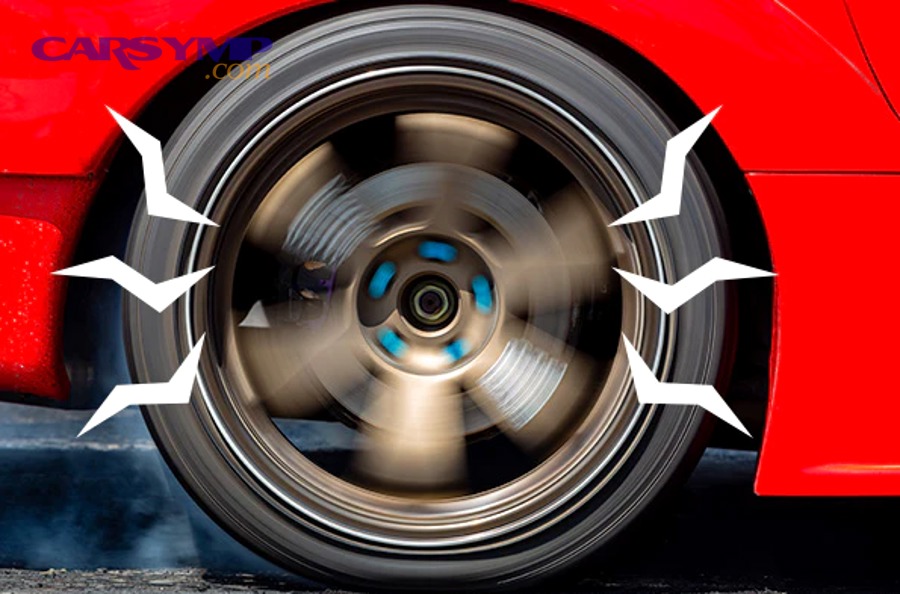
What are the main systems that can cause vehicle vibration?
There are five main systems that can cause vehicle vibration: wheel-end components, brake components, suspension and steering parts, powertrain components, and driveline assemblies, based on how each system generates and transmits movement.
For example, the wheel-end group includes tires, wheels, hubs, and bearings. These parts dominate many at-speed complaints because even a small imbalance or runout becomes noticeable once the assembly spins fast enough. NHTSA tire safety materials state that proper tire balance is required to avoid vehicle vibration or shaking as the tire rotates. ([nhtsa.gov](https://www.nhtsa.gov/sites/nhtsa.dot.gov/files/brochure.pdf?))
The brake group includes rotors, drums, pads, calipers, and the hardware that keeps brake force even from side to side. If friction or thickness varies as the rotor turns under braking, the driver can feel pulsation in the wheel, pedal, or body. SAE literature describes hot judder as a brake-induced, speed-dependent vibration that occurs while braking. ([sae.org](https://www.sae.org/gsdownload/?prodCd=2008-01-2544&))
The suspension and steering group includes control arms, bushings, ball joints, tie rods, struts, shocks, and alignment settings. These parts may not create the original force, but they often amplify or transfer it. Loose or worn components can turn a mild imbalance into a steering wheel shimmy.
The powertrain group includes the engine, ignition system, fuel system, air intake, and the mounts that isolate engine pulses from the cabin. This is where Motor mounts causing vibration at idle become a realistic concern, especially when the engine itself runs normally but the body still shakes.
The driveline group includes CV axles, U-joints, propeller shafts, differential components, and related couplings. These usually matter when the vibration changes with load, acceleration, or cruising speed instead of simple engine idle.
What is vehicle vibration diagnosis in practical terms?
Vehicle vibration diagnosis is the process of matching when the vibration happens, where it is felt, and what changes it to the system most likely creating the force.
More specifically, practical diagnosis is not a laboratory exercise. It is a disciplined way of narrowing the field. You ask when the vibration starts, whether braking changes it, whether acceleration changes it, whether shifting to Neutral changes it, and where the driver feels it most. Then you inspect the systems that fit that pattern instead of replacing parts one by one.
A useful diagnostic path also separates source from transfer path. The source creates the vibration, but the path determines how the driver feels it. A front brake issue may be felt through the steering wheel. A rear tire issue may be felt through the seat. A rough engine may feel worse in Drive because the mount and body structure transmit the engine’s pulses more directly.
That is why professional NVH work looks at both the generating component and the path into the cabin. Even if drivers never use the term NVH, this source-path logic is the backbone of smart troubleshooting. ([vibrationresearch.com](https://vibrationresearch.com/blog/nvh-testing-analysis-obserview/?))
Is vibration at speed usually caused by tires, wheels, or driveline issues?
Yes, vibration at speed is usually caused by tires, wheels, or driveline issues because those parts rotate with road speed, become more noticeable as speed rises, and often create narrow-band shake between specific mph ranges.

To better understand speed-related shaking, the first question is whether the vibration is tied to the vehicle moving faster rather than the engine revving higher.
What causes vibration only at certain speeds?
Vibration at certain speeds is usually caused by tire balance problems, tire defects, wheel runout, axle issues, or driveline imbalance that becomes most noticeable at a specific rotational frequency.
Specifically, a tire or wheel assembly can behave normally at low speed and then become obvious at highway speed when imbalance forces rise. That is why many drivers report a shake only between 55 and 70 mph. A bent wheel, separated tire belt, uneven tread wear, flat spotting, or radial force variation can all create a speed window where the vibration peaks. NHTSA-linked service material notes that tire balance and runout are primary factors in steering shake and shimmy events. ([static.nhtsa.gov](https://static.nhtsa.gov/odi/tsbs/2018/MC-10153653-9999.pdf?))
Uneven wear matters too. If the tread is chopped, feathered, cupped, or worn on one shoulder, the tire may no longer roll evenly. Underinflation, overinflation, or misalignment can worsen the problem over time. Manufacturer guidance posted through NHTSA also notes that unbalanced wheels can be noticeable through the steering wheel and can affect handling and tire life. ([static.nhtsa.gov](https://static.nhtsa.gov/odi/tsbs/2023/MC-10247895-9999.pdf?))
Driveline problems tend to stand out when vibration follows torque as well as speed. A worn CV joint, axle shaft imbalance, or propshaft issue can feel different from a simple tire imbalance because it may become stronger under throttle and ease off during coast-down. That distinction is why the next subheading matters.
How is vibration at speed different from vibration during acceleration or coasting?
Vibration at steady speed usually points more strongly to tire-and-wheel problems, while vibration during acceleration or coasting more often suggests driveline or load-sensitive component issues.
Meanwhile, the key comparison is load. If the vehicle vibrates at 60 mph whether you lightly accelerate, hold speed, or coast, the tire-and-wheel path remains a strong suspect. If the vibration grows under throttle and fades when you lift, torque-sensitive parts deserve more attention. That can include CV axles, prop shafts, differential mounts, or worn joints that react when the driveline twists under load.
This comparison also helps avoid misdiagnosis. Many owners rebalance tires repeatedly when the deeper issue is an axle or shaft. Others chase driveline problems when the real cause is a damaged tire. The better question is not only “At what speed?” but also “Under what load?”
If a shake changes dramatically with a gear change or throttle input, write that down before visiting a shop. That detail can shorten diagnosis significantly because it tells the technician whether to focus on wheel speed alone or wheel speed plus drivetrain torque.
According to a study by the U.S. Department of Transportation’s NHTSA tire safety materials, proper tire balance prevents vehicle shaking as the tire rotates, which supports why steady road-speed vibration commonly starts with tire-and-wheel inspection. ([nhtsa.gov](https://www.nhtsa.gov/sites/nhtsa.dot.gov/files/brochure.pdf?))
Does vibration at idle usually point to the engine or mounts?
Yes, vibration at idle usually points to the engine or mounts because the vehicle can shake while stationary, the engine is still generating pulses, and worn mounts can transmit those pulses directly into the cabin.
In addition, idle complaints become easier to isolate because road-speed parts are removed from the equation when the car is stopped.

What causes a vehicle to vibrate while idling or stopped?
A vehicle that vibrates while idling or stopped is usually reacting to uneven combustion, rough running, poor engine support, or a mount that no longer isolates normal engine pulses.
More specifically, Engine misfire vibration symptoms often include shaking at a stoplight, rough idle, a check-engine light, uneven exhaust note, and a cabin tremor that fades when RPM rises. Even a single cylinder that misfires can create a noticeable shake at idle because the engine has little rotational momentum to smooth out the imbalance. Recent automotive service guidance echoes this pattern, and academic work on idle vibration also points to powertrain imbalance and unstable combustion as important idle-vibration sources. ([rohnertparktransmission.com](https://rohnertparktransmission.com/blog/car-shaking-at-idle-causes-diagnosis-guide?))
Motor mounts causing vibration at idle is another common pattern. The engine always produces some vibration, but healthy mounts absorb much of it. When the rubber weakens, tears, or collapses, normal engine pulses pass into the body structure more easily. The result can feel like a much rougher engine even when the combustion side is only mildly imperfect.
Air-fuel problems, dirty injectors, vacuum leaks, ignition coil issues, spark plug wear, and carbon buildup can also create a rough idle. In those cases, the vibration is a symptom of uneven power delivery rather than a failed mount alone. The distinction matters because replacing mounts will not fix a true misfire, and tune-up parts will not fix a collapsed mount.
Academic research on idle vibration has found that powertrain rotational imbalance and unstable combustion can drive abnormal first-order vibration at idle, supporting why engine condition is central in stationary shake complaints. ([iiav.org](https://iiav.org/ijav/content/volumes/25_2020_36521584896523/vol_4/1708_fullpaper_568371609345225.pdf?))
Does the vibration change in Drive, Park, or Neutral?
Yes, the way vibration changes in Drive, Park, or Neutral can help separate mount problems from engine-performance problems because drivetrain load changes how engine pulses are transmitted at idle.
For example, if the engine feels much rougher in Drive with the brake applied but improves in Neutral, the extra load may be exposing weak mounts or a marginal idle control problem. If the engine shakes badly in every gear position, a more direct engine-running issue such as misfire, fuel imbalance, or ignition trouble becomes more likely.
This test is simple but valuable. A vehicle in Park may idle around the same RPM as in Drive, yet the cabin feels very different because the transmission load and mount angle change how the vibration reaches the body. That does not prove the mounts are bad, but it points the diagnosis in that direction.
Drivers can also watch for secondary signs. A mount-related shake may be strongest at idle but not accompanied by power loss. A true misfire often adds hesitation, stumbling, poor fuel economy, or fault codes. That is why gear-position behavior should be used as one clue inside a wider pattern, not as the only test.
According to a study by the University of Shanghai for Science and Technology and SAIC Motor Technical Center, published in the International Journal of Acoustics and Vibration in 2020, abnormal idle vibration was strongly tied to powertrain rotational-system imbalance and unstable combustion. ([iiav.org](https://iiav.org/ijav/content/volumes/25_2020_36521584896523/vol_4/1708_fullpaper_568371609345225.pdf?))
Is vibration during braking usually a brake problem?
Yes, vibration during braking is usually a brake problem because the shake appears when brake torque is applied, brake hardware is loaded, and rotor or friction variation is transmitted through the chassis.
However, braking vibration can also be intensified by worn steering or suspension parts, so the brake system is the starting point rather than the only checkpoint.

What causes a car to vibrate when braking?
A car vibrates when braking mainly because the brake system is applying uneven force, usually from rotor thickness variation, friction transfer, caliper issues, or brake surfaces that no longer engage evenly.
Specifically, many drivers say “warped rotors,” but the practical symptom is more often uneven friction or thickness variation that makes braking force rise and fall once per wheel rotation. The driver may feel that as steering wheel shake, pedal pulsation, or a buzzing sensation in the body. Research and engineering literature on brake judder describes it as a forced, brake-induced vibration, and studies of hot judder connect it to heat-related disc variation and vibration felt in the steering wheel, brake pedal, or floor. ([sae.org](https://www.sae.org/gsdownload/?prodCd=2008-01-2544&))
Calipers can also contribute. A sticking caliper can leave pad material unevenly distributed, create excess heat, and make the problem worse after repeated braking. If the complaint appears only after a long downhill section or repeated highway stops, heat-related brake behavior becomes a stronger suspect.
Loose front-end parts can magnify the sensation. A mild rotor issue that would otherwise feel small may become far more obvious if tie rods, control-arm bushings, or wheel bearings allow the assembly to move around under braking load.
According to a study by the University of Huddersfield in 2008, hot judder develops from high thermal input that can lead to disc thickness variation and vibration felt through the brake pedal, steering wheel, or floor pan. ([eprints.hud.ac.uk](https://eprints.hud.ac.uk/id/eprint/3878/1/2008-01-0818.pdf?))
How is braking vibration different from speed vibration?
Braking vibration is triggered by brake application, while speed vibration is triggered mainly by rotation with road speed, so the brake pedal becomes the deciding factor in separating the two.
On the other hand, many vehicles can show both symptoms. A driver may have a mild highway-speed shake from tire imbalance and a sharper steering shimmy only when slowing from 65 mph. The brake pedal test helps split them apart. If the vibration arrives only as pedal pressure increases, the brake system deserves immediate inspection. If the car shakes at the same speed regardless of braking, tires and wheels move back toward the top of the list.
The type of feedback matters too. Brake issues often add pedal pulsation or a cyclical steering kick under deceleration. Tire balance problems usually do not create a true pedal pulse. That difference helps even when the driver cannot describe the vibration perfectly.
Brake-induced vibration also deserves more urgency than many minor at-speed shakes because stopping performance is involved. That is why drivers should not dismiss “it only shakes when I brake” as a comfort issue.
Where you feel the vibration, can it reveal the source?
Yes, where you feel the vibration can reveal the source because the steering wheel, seat, floor, and pedals each receive movement through different mechanical paths.

Next, using the location of the shake adds a second layer to the diagnosis after timing and condition.
Does a steering wheel shake usually point to the front of the vehicle?
Yes, a steering wheel shake usually points to the front of the vehicle because front tires, front brakes, hubs, bearings, and steering linkages feed vibration directly into the steering system.
Specifically, front tire imbalance, front brake judder, bent front wheels, excessive front wheel-bearing play, or worn steering components commonly show up in the driver’s hands first. NHTSA-linked service information even notes that when vibration is felt in the steering wheel only, diagnosis should concentrate on the front tires. ([static.nhtsa.gov](https://static.nhtsa.gov/odi/tsbs/2013/MC-10112755-9999.pdf?))
That does not mean every steering-wheel shake is only a front tire problem, but it is a strong directional clue. For example, a steering wheel shimmy during braking often suggests the front brake or front suspension path is transmitting the disturbance. A steering wheel shake at highway speed often keeps the diagnosis focused on front wheel balance, runout, or alignment-related tire wear.
This location clue works best when combined with timing. Steering wheel shake at 65 mph points one way. Steering wheel shake only during braking points another. Steering wheel shake at idle can even occur from engine vibration entering the body and column, though that is less common.
What does seat, floor, or body vibration usually indicate?
Seat, floor, or body vibration usually indicates a rear-wheel, driveline, rear-brake, exhaust-contact, or broader chassis-transmission path problem rather than a front-steering-only issue.
More specifically, if the seat base buzzes or the floor hums at road speed, the rear tires and driveline become stronger suspects. Rear tire balance, rear wheel runout, propshaft issues, or rear brake judder can all show up through the body shell instead of the steering wheel. The same is true for some exhaust or mount contact problems that resonate through the underbody.
Location also helps with severity. A light seat tremor that appears only at one speed may point to a balance or tire-shape issue. A strong whole-body shake that suddenly appears can point to a more serious problem, such as tire damage, wheel damage, or driveline deterioration.
This is why good notes from the driver matter. “The whole car shakes” is less useful than “the steering wheel shakes at 60 mph” or “the seat vibrates but the wheel stays calm.” Better symptom language leads to faster diagnosis.
How can drivers diagnose vehicle vibration step by step before repair?
Drivers can diagnose vehicle vibration before repair by using five steps: identify when it happens, note where it is felt, test whether braking or throttle changes it, inspect obvious tire and wheel issues, and judge whether the symptom is safe to drive on.

Let’s explore that process in a practical order so you can move from symptom to likely cause without jumping straight to expensive parts.
What questions should you ask first when diagnosing vehicle vibration?
There are five first questions drivers should ask when diagnosing vehicle vibration: when does it happen, where is it felt, what speed triggers it, does braking change it, and does throttle or gear selection change it.
To illustrate, start with timing. Does the vibration happen at idle, only above a certain speed, or only when braking? Then note location. Is it in the steering wheel, seat, floor, or pedal? Next, note the speed band. Then ask whether it changes under light throttle, hard throttle, coast-down, or braking. Finally, check whether shifting between Park, Drive, and Neutral changes an idle shake.
After that, do a simple visual inspection. Look for uneven tire wear, obvious tire damage, missing wheel weights, loose lug nuts, fluid leaks near mounts, and any brake smell or heat after a drive. You do not need to perform a full workshop inspection, but you do need to notice clues that make one system stand out.
The table below summarizes a quick decision path for common Car Symptoms.
| Symptom pattern | Most likely starting point | Common next check |
|---|---|---|
| Shakes mainly at highway speed | Tires and wheels | Balance, runout, tread condition |
| Shakes while stopped at idle | Engine or mounts | Misfire signs, mount condition, gear-position effect |
| Shakes only when braking | Brakes and front end | Rotor condition, caliper behavior, front suspension play |
| Steering wheel shakes more than seat | Front-end path | Front tires, front brakes, steering linkage |
| Seat or floor vibrates more than wheel | Rear/driveline path | Rear tires, shaft, rear brakes, underbody contact |
This table gives context for the most common symptom-to-system matches, but it should guide inspection rather than replace it. A vehicle can have more than one vibration source at the same time.
Can you keep driving with vehicle vibration, or is it a safety issue?
No, you should not assume it is safe to keep driving with vehicle vibration because some vibrations come from tire damage, brake defects, or steering looseness that can become dangerous quickly.
More importantly, severity and recent change matter. A faint shake that has been stable for months may still need repair, but a sudden new vibration after hitting a pothole, a vibration tied to braking, or a shake accompanied by tire damage, pull, noise, or looseness deserves immediate caution. NHTSA-linked owner guidance notes that if you feel a sudden vibration or ride disturbance, you should reduce speed, avoid heavy braking or sharp steering, and stop when it is safe. ([static.nhtsa.gov](https://static.nhtsa.gov/odi/tsbs/2023/MC-10247895-9999.pdf?))
Drivers should treat the following as higher-risk warnings: strong brake shudder, visible tire bulge or sidewall damage, looseness in the steering wheel, metal-on-metal brake noise, or a vibration that rapidly gets worse during one trip. These symptoms suggest that diagnosis should happen before more driving, not after.
In short, comfort complaints can become safety complaints. A good vibration diagnosis does not only find the source. It also helps decide whether the vehicle can be driven carefully to a shop or should be towed.
What advanced clues can help distinguish similar vibration problems?
Advanced clues can distinguish similar vibration problems by separating balance from runout, heat-related change from cold behavior, wheel installation errors from true component failure, and engine vibration from chassis vibration.

Besides the core diagnosis, these finer details expand the picture when two problems feel almost the same to the driver.
Is wheel balance the same as wheel runout or tire defect?
No, wheel balance is not the same as wheel runout or tire defect because balance corrects mass distribution, runout describes shape deviation, and tire defects involve structural or tread-related irregularities.
Specifically, a balanced assembly can still vibrate if the wheel is bent or the tire is out of round. Likewise, a tire can measure round enough yet still create shake because the internal belt structure has changed or radial force variation is high. This is why repeated balancing sometimes fails to solve a complaint. NHTSA-linked service documents distinguish balance from runout and treat both as separate checks in steering-vibration diagnosis. ([static.nhtsa.gov](https://static.nhtsa.gov/odi/tsbs/2018/MC-10153653-9999.pdf?))
That distinction matters for repair decisions. A simple balance issue may be fixed with weights. A runout issue may require wheel repair or replacement. A structural tire defect may require tire replacement even if the numbers on a balancer look acceptable.
What does it mean if vibration appears only after the vehicle warms up?
A vibration that appears only after the vehicle warms up usually means heat is changing friction, clearances, rubber behavior, or rotational uniformity in a way that exposes the fault.
For example, brake judder often becomes more noticeable after repeated stops because heat affects disc thickness variation and pad transfer. Some tire issues change after the vehicle has been parked and then driven long enough to normalize shape. Mounts and bushings can also transmit vibration differently once warm, and some engine-running problems become clearer after fuel trim changes or hot idle conditions settle in. Engineering studies on hot judder specifically connect brake heat input to vibration behavior during braking. ([sae.org](https://www.sae.org/gsdownload/?prodCd=2008-01-2544&))
So when a driver says, “It is smooth cold, but it shakes after twenty minutes,” that is not a minor detail. It is a diagnostic clue that points toward temperature-sensitive systems.
Can incorrect wheel installation cause vibration even with new tires or brakes?
Yes, incorrect wheel installation can cause vibration even with new tires or brakes because improper centering, dirty mounting surfaces, uneven lug torque, or incorrect fitment can disturb how the wheel seats on the hub.
Especially after recent service, this possibility should be checked early. A wheel that does not sit flush against the hub can mimic balance and brake problems. Uneven lug tightening can also affect how the assembly seats and, in some cases, influence brake feel if rotor and wheel clamping are inconsistent. This is one reason technicians use proper torque sequence and clean mating surfaces during reinstallation.
That does not make incorrect installation the most common cause, but it becomes a very important clue when the vibration starts right after tire, wheel, or brake service.
How do professional shops separate engine vibration from chassis vibration?
Professional shops separate engine vibration from chassis vibration by comparing operating condition, frequency behavior, transfer path, and what changes when load, speed, braking, or gear position changes.
To sum up, engine-related vibration appears when the engine is running even if the vehicle is not moving, and it usually tracks engine order or combustion smoothness. Chassis-related vibration usually depends on road speed, brake application, or rotating wheel-end parts. Technicians also compare where the driver feels the movement and may use instruments to check whether the vibration frequency matches tire speed, driveshaft speed, or engine speed. NVH training material emphasizes separating the vibration source from the transfer path, which is the same logic behind the symptom-based method used in this guide. ([static.nhtsa.gov](https://static.nhtsa.gov/odi/tsbs/2018/MC-10158122-9999.pdf?))
According to a study by the University of Shanghai for Science and Technology and SAIC Motor Technical Center in 2020, abnormal idle vibration can be traced through excitation source and transfer path analysis, reinforcing why professional diagnosis distinguishes source from transmission path instead of guessing from the sensation alone. ([iiav.org](https://iiav.org/ijav/content/volumes/25_2020_36521584896523/vol_4/1708_fullpaper_568371609345225.pdf?))