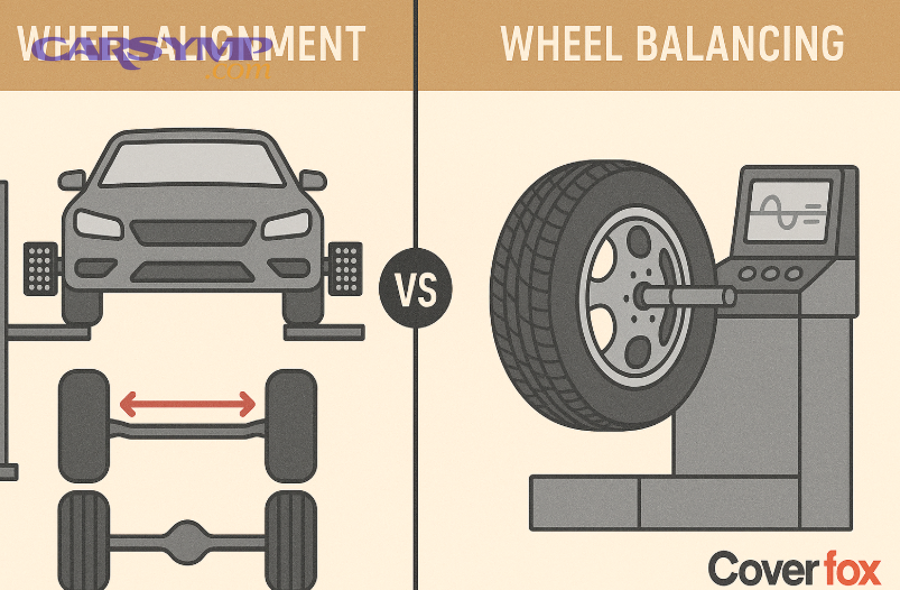
If your car shakes at speed, drifts to one side, or wears tires unevenly, the most likely answer is this: you may need wheel balancing, wheel alignment, or both, depending on the exact symptom pattern. Wheel balancing corrects uneven weight in the tire-and-wheel assembly, while alignment corrects the angles that control how the wheels meet the road. To begin, the fastest way to choose the right service is to match the symptom to the cause instead of guessing from the noise or feel alone.
The next question most drivers ask is what the difference actually looks like in real life. Specifically, wheel balancing usually shows up as vibration, especially at certain speeds, while alignment problems more often show up as pulling, a crooked steering wheel, or uneven tread wear. That simple distinction helps you move from confusion to a useful diagnosis before you spend money on the wrong service.
Then comes the practical issue of timing. Many drivers need balancing after new tires, lost wheel weights, or long periods of sitting that create temporary flat spots, while alignment is more often needed after potholes, curb hits, suspension work, or repeated steering corrections on a straight road. More importantly, knowing when each service matters can reduce tire wear, improve comfort, and prevent small issues from becoming more expensive ones.
Finally, some problems feel like balance or alignment issues but come from something else entirely, such as bent wheels, defective tires, or worn suspension parts. Introduce a new idea: the sections below explain the difference, sort symptoms by likely cause, compare the effects of each service, show when to book them, and clarify when another repair may be the real fix.
What Is the Difference Between Wheel Balancing and Wheel Alignment?
Wheel balancing is a service that corrects uneven weight in the wheel-and-tire assembly, while wheel alignment adjusts suspension angles so the tires point and track correctly. To better understand that difference, it helps to separate ride smoothness from directional control because the two services solve different problems even though drivers often confuse them.
Is Wheel Balancing About Weight Distribution Rather Than Wheel Angles?
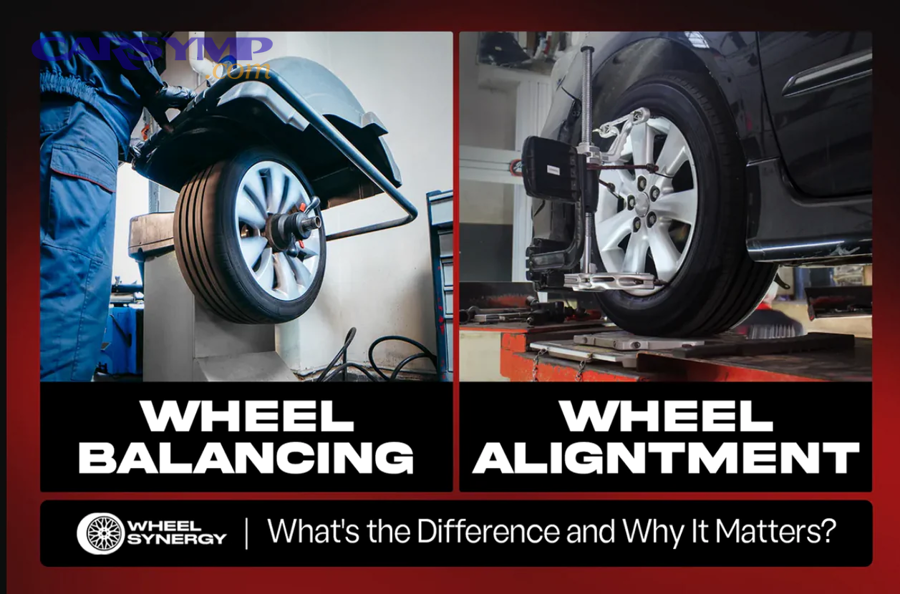
Yes, wheel balancing is about weight distribution rather than wheel angles because it corrects heavy and light spots around the rotating assembly, reduces vibration, and helps the tire roll more smoothly at speed. Specifically, a balanced assembly spins evenly, which means the tire does not bounce or wobble as road speed rises. That is why many balance-related complaints appear at 50 to 70 mph rather than at parking-lot speed.
In practice, a technician mounts the wheel and tire on a balancing machine, identifies where the mass is uneven, and adds small weights to offset the imbalance. Static imbalance affects up-and-down bounce, while dynamic imbalance can create side-to-side wobble. Drivers usually do not need to remember those technical labels, but they do need to remember the result: wheel balancing improves smoothness, steering feel, and tire life when vibration comes from uneven rotation.
Wheel balancing also matters after tire installation, after a weight falls off, or after a tire wears unevenly enough to change how the assembly rotates. In addition, drivers sometimes notice Tire flat-spot and balance issues after sitting overnight or for several weeks, especially in colder weather. In mild cases, the flat spot rounds out after a few miles. In other cases, the tire still shakes and the vehicle needs rebalancing or further inspection.
Is Wheel Alignment About Suspension Angles Rather Than Tire Weight?
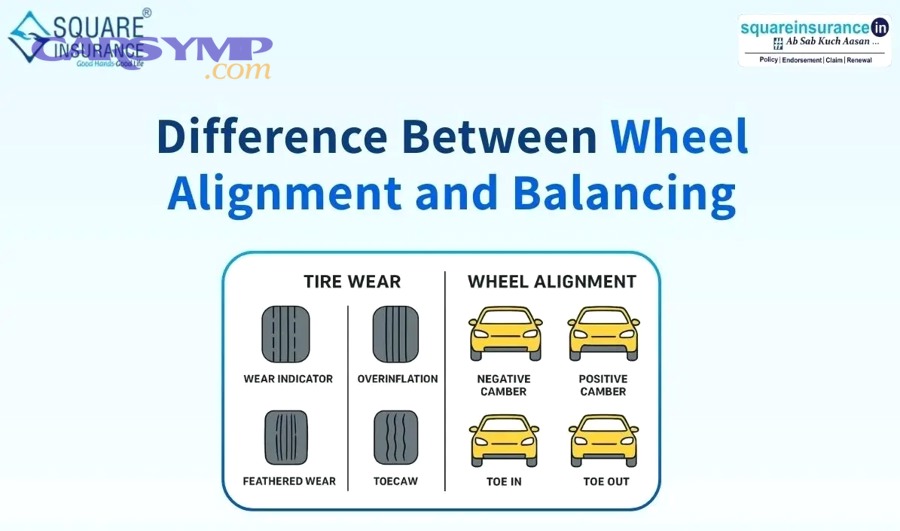
Yes, wheel alignment is about suspension angles rather than tire weight because it corrects toe, camber, and caster, improves straight-line tracking, and reduces uneven tire wear. However, alignment is not about making the wheel spin smoothly; it is about making the vehicle travel straight and keeping the tread in proper contact with the road.
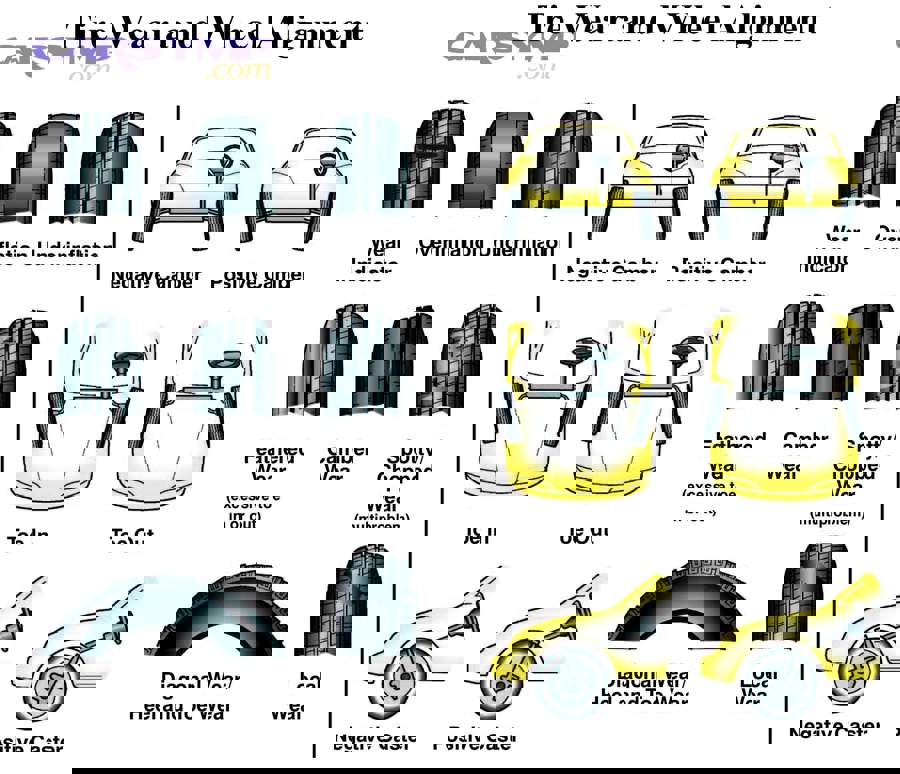
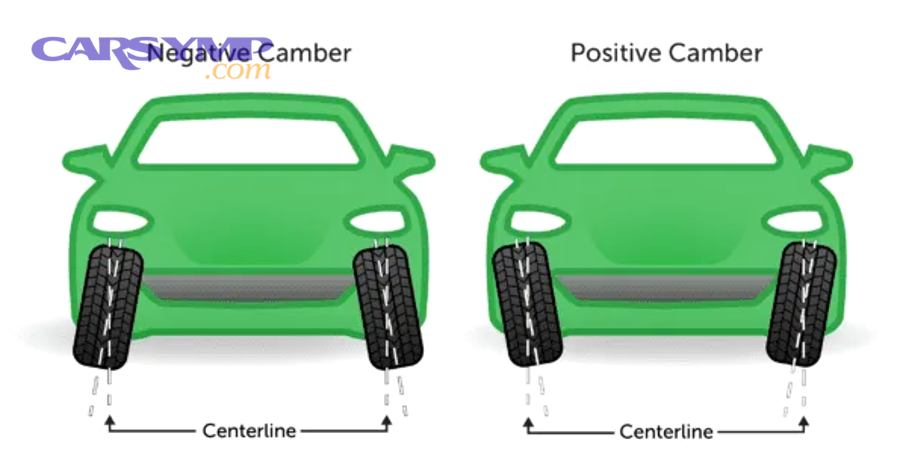
Toe describes whether the tires point slightly inward or outward when viewed from above. Camber describes whether the tops of the tires tilt inward or outward when viewed from the front. Caster affects steering stability and return-to-center feel. When those angles move out of specification, the vehicle may pull, the steering wheel may sit off-center, and the tread may scrub away faster on one edge or across the surface.
Alignment problems often develop after pothole strikes, curb hits, suspension wear, or replacement of steering and suspension parts. Unlike wheel balancing, which mainly affects comfort, alignment directly affects control, tire wear, and directional stability. That is why a car can feel smooth enough at speed but still clearly need alignment if it does not hold a straight path without constant correction.
What Symptoms Tell You Whether You Need Balancing or Alignment?
There are three common symptom groups that help drivers decide: vibration usually points toward wheel balancing, pulling or a crooked steering wheel usually points toward alignment, and mixed symptoms can mean both services are needed. Let’s explore those patterns in detail so the symptom leads the diagnosis rather than the other way around.
Which Symptoms Usually Mean You Need Wheel Balancing?
There are five main symptoms that usually suggest a balancing issue: steering wheel vibration, seat or floor vibration, speed-sensitive shaking, roughness after tire work, and recurring shake after a wheel weight is lost. More specifically, the classic clue is a vibration that becomes noticeable only within a certain speed range and then changes as you go faster or slower.
If the front wheels are imbalanced, many drivers feel the shake in the steering wheel. If the rear wheels are imbalanced, they may feel it more in the seat or cabin floor. That distinction is not perfect, but it is useful. The key feature is that the vibration follows road speed because the tire-and-wheel assembly is the part rotating faster and faster as speed rises.
Another strong clue appears after new tire installation or tire repair. If a vehicle drove smoothly before the service and shakes after the service, wheel balancing becomes one of the first things to check. The same logic applies after a wheel weight falls off. You may not see the missing weight immediately, but the new vibration often appears soon after it detaches.
Preventing balance issues starts with routine tire service, correct inflation, clean wheel mounting surfaces, and prompt inspection after hitting a pothole or debris. Drivers who rotate tires regularly also catch developing problems earlier because they feel changes in ride quality before the tread damage becomes severe.
Which Symptoms Usually Mean You Need Wheel Alignment?
There are four main symptoms that usually suggest an alignment problem: pulling to one side, an off-center steering wheel, unstable straight-line tracking, and uneven tire wear. In addition, these symptoms often appear together, which makes alignment easier to suspect even before the car reaches the shop.
If the road is level and the car consistently drifts left or right without strong wind, the wheel angles may be off. If the steering wheel is not centered even though the vehicle is traveling straight, alignment is again a likely cause. Many drivers describe this as the car “wanting” to go one way unless they keep correcting it. That repeated correction is one of the most useful real-world clues.
Uneven tread wear strengthens the diagnosis. For example, one shoulder of the tire may wear much faster than the other, or the tread blocks may develop a feathered feel when you run your hand across them. That kind of wear does not come from simple weight imbalance alone. It usually points to a geometry problem, worn suspension components, or both.
Alignment issues can also reduce fuel efficiency slightly because the tire scrubs instead of rolling cleanly. More importantly, they shorten tire life. A driver may tolerate a mild pull for months, but the tire often pays the price long before the steering complaint feels severe.
Can the Same Car Need Both Wheel Balancing and Alignment at the Same Time?
Yes, the same car can need both wheel balancing and alignment at the same time because a vehicle can vibrate from uneven rotation, pull from incorrect angles, and wear tires unevenly from both problems working together. In short, a single complaint does not always equal a single cause.
This overlap happens often after new tires, neglected maintenance, or a hard road impact. A pothole can knock alignment out while also damaging a tire or wheel enough to disturb balance. A vehicle can therefore pull slightly, wear one shoulder, and shake at highway speed. If a driver focuses on only one symptom, the shop may fix only part of the problem.
That is why symptom grouping matters. Vibration alone points more strongly to balancing. Pulling alone points more strongly to alignment. Vibration plus pulling, especially after an impact or tire replacement, often suggests a combined service inspection. Asking the technician to road-test the vehicle and inspect tire wear patterns can save time and prevent repeat visits.
How Can You Compare Balancing and Alignment by Cause, Effect, and Driving Feel?
Wheel balancing wins in ride smoothness, wheel alignment is best for straight tracking and tire wear control, and a combined inspection is optimal when symptoms overlap. Meanwhile, comparing cause, effect, and driving feel gives drivers a practical way to separate these services without relying on vague descriptions alone.
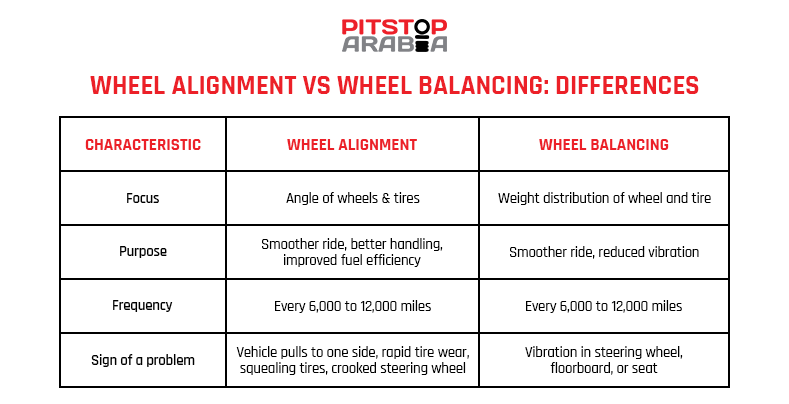
The table below compares the most useful differences between wheel balancing and wheel alignment in plain language.
| Category | Wheel Balancing | Wheel Alignment |
|---|---|---|
| Main purpose | Correct uneven rotating weight | Correct wheel angles and tracking |
| Most common symptom | Vibration at certain speeds | Pulling or off-center steering wheel |
| Driving feel | Shaky, buzzing, or humming through wheel/seat | Drifting, wandering, or steering correction needed |
| Tire wear pattern | May contribute indirectly if vibration persists | Often causes uneven shoulder wear or feathering |
| Common triggers | New tires, lost weights, uneven wear, long sitting | Potholes, curb hits, suspension work, worn parts |
| Best time to check | After tire service or speed-related shake appears | After impact, steering change, or uneven wear appears |
How Do Wheel Balancing and Alignment Differ in Causes and Effects?
Wheel balancing and alignment differ in three major ways: balancing starts with uneven rotating mass, alignment starts with wheel-angle deviation, and their effects show up as smoothness problems versus directional-control problems. To illustrate, the cause tells you what the service corrects, and the effect tells you what the driver feels.
Balancing causes usually include tire manufacturing variation, uneven tread wear, mud or debris stuck inside a wheel, lost wheel weights, or improper balancing during installation. The effect is vibration. That vibration may be light at first, but it often grows more obvious at higher speeds. Over time, it can reduce comfort and increase stress on tires and suspension components.
Alignment causes are different. They commonly include pothole damage, curb strikes, worn tie rods, worn bushings, sagging suspension parts, and steering or suspension repairs that alter geometry. The effect is rarely just “feel.” Instead, it changes how the car behaves: it pulls, wanders, or wears its tires in a pattern that signals poor road contact.
Because the effects differ, the priority differs too. A balancing problem irritates the driver and can accelerate wear. An alignment problem can also reduce confidence and control, especially in rain or during emergency maneuvers. That is why alignment problems should not be postponed when pulling and uneven wear are already visible.
How Do Tire Wear Patterns Differ Between Balancing and Alignment Problems?
Alignment problems usually create clearer and more directional wear patterns, while balancing problems are more likely to produce vibration first and irregular wear later. However, tire wear is not always exclusive to one cause, so it works best when combined with the way the car feels on the road.
When alignment is off, one shoulder may wear faster than the other, or the tread blocks may feel feathered when you brush them by hand. Excessive toe is especially known for scrubbing the tread across the road surface. Camber issues can overload the inside or outside edge. These are not random signs; they reflect how the tire meets the pavement mile after mile.
Balancing-related wear is usually less straightforward. Persistent bouncing or wobble can contribute to cupping or patchy wear over time, but those patterns can also come from weak shocks or struts. That is why a technician should never diagnose by tread alone. A good inspection links tire wear, steering feel, road-test behavior, and recent service history before recommending the fix.
When Should You Get Wheel Balancing or Alignment Done?
You should get wheel balancing after tire-related changes and wheel-speed vibration, and you should get alignment after impacts, steering changes, suspension work, or uneven tire wear. Besides the symptom itself, the event that happened just before the symptom often reveals which service matters most.
Do You Need Wheel Balancing After New Tires, Rotation, or Weight Loss?
Yes, you usually need wheel balancing after new tires, after certain tire repairs, and whenever a weight is lost because those changes alter the rotating assembly, affect smoothness, and can create speed-related vibration. More importantly, new tires are normally balanced during installation because even small mass differences matter once the wheel spins at highway speed.
Tire rotation alone does not always require rebalancing, but it can reveal an imbalance that you did not notice before because the same tire has moved to a more noticeable position on the vehicle. If the steering wheel begins to shake soon after rotation, the vehicle may need balancing or a closer tire inspection. The same is true when a driver sees adhesive residue or an empty clip location where a weight once sat.
Tire flat-spot and balance issues after sitting deserve special attention. A car parked for days or weeks can develop a temporary flat area where the tire contacts the ground. If the vibration disappears after several miles, the flat spot was likely temporary. If it remains, wheel balancing may help, but the tire may also have developed a more lasting shape problem that balancing alone will not correct.
Drivers often ask for a Wheel balancing cost estimate before booking service. The price varies by location, vehicle type, and whether the service is part of new tire installation, but the cost is usually modest compared with the expense of prematurely worn tires or repeated discomfort at highway speed.
Do You Need Wheel Alignment After Potholes, Curb Hits, or Suspension Repairs?
Yes, you often need wheel alignment after potholes, curb hits, or suspension repairs because those events can shift angles, change steering position, and accelerate uneven tire wear. Specifically, any impact strong enough to change how the car tracks should be treated as a possible alignment event even if the steering change feels minor at first.
A pothole strike can jar suspension components and alter toe enough to make the vehicle wander. A curb hit can do the same while also damaging a wheel or tire. Suspension repairs create another common trigger. Replacing tie rods, control arms, struts, ball joints, or other steering-related parts can change geometry even when the repair itself is correct. Alignment restores the intended relationship between those parts and the road.
Modern vehicles may also need follow-up checks after certain calibration-sensitive repairs. While not every repair requires additional electronic procedures, many newer cars combine physical alignment precision with driver-assistance performance. In practical terms, the straighter and more accurately the car tracks, the better the systems around it tend to behave.
What Should You Check First Before Booking Balancing or Alignment?
There are six things to check first: tire pressure, visible tire damage, tread wear pattern, recent impacts, missing wheel weights, and whether the problem is vibration or pulling. To sum up, those simple checks give the shop a better starting point and help you describe the complaint clearly.
Start with tire pressure because an underinflated tire can mimic handling and wear issues. Next, inspect the tread and sidewall for bulges, cuts, exposed cords, or abnormal wear. Then ask what happened before the symptom began. Did the car hit a pothole? Did a new tire just go on? Did the vibration begin after sitting in cold weather? These details matter because the timeline often points toward the right service.
Also note where the symptom is felt. Steering wheel shake suggests the front axle more strongly, while seat vibration points more strongly toward the rear. Pulling on a flat road, however, makes alignment the stronger suspect. The better your description, the easier it is for the technician to match the symptom to the cause.
How Do You Decide Whether Balancing, Alignment, or Another Repair Is the Real Fix?
You decide by matching the main symptom, the trigger event, and the tire condition: balancing usually fits vibration, alignment usually fits pulling and uneven wear, and other repairs become more likely when noise, looseness, or damage appears too. In short, the right fix comes from a pattern, not from one isolated clue.