


Choosing wheel weight types and placement correctly means matching the weight style to the wheel, placing it on the right correction plane, and confirming that the tire-and-wheel assembly spins smoothly at road speed. That is the core of good wheel balancing: the correct weight in the correct location, installed with enough precision to remove vibration instead of merely masking it.
The first decision is usually the easiest to understand but the easiest to get wrong in practice: clip-on weights and adhesive weights do not serve the same wheels equally well. Steel wheels often accept clip-on weights well, while many alloy and cosmetic wheels benefit from adhesive weights because they protect the rim finish and can be hidden inside the barrel.
Placement is the second half of the job. A wheel can have the right amount of weight but still feel wrong on the road if the weight sits on the wrong plane, is split badly, or is attached to a dirty surface. Placement affects vibration, appearance, durability, and whether a rebalance solves the complaint on the first visit.
Introduce a new idea: the most reliable way to understand weight choice and placement is to move from basics to application, then from common balancing to advanced cases such as Road force balancing and when it helps, wheel appearance concerns, and Preventing balance issues before they start.
What are wheel weight types and placement in tire balancing?
Wheel weight types and placement are the balancing tools and positions used to counteract uneven mass in a tire-and-wheel assembly so it rotates smoothly without creating vibration.
To better understand the issue from the heading, start with the simple truth: wheel balancing is not only about adding grams or ounces. It is about adding them in the right style and on the right part of the wheel so the balancer can correct both vertical and lateral imbalance.
What do wheel weights do during tire balancing?
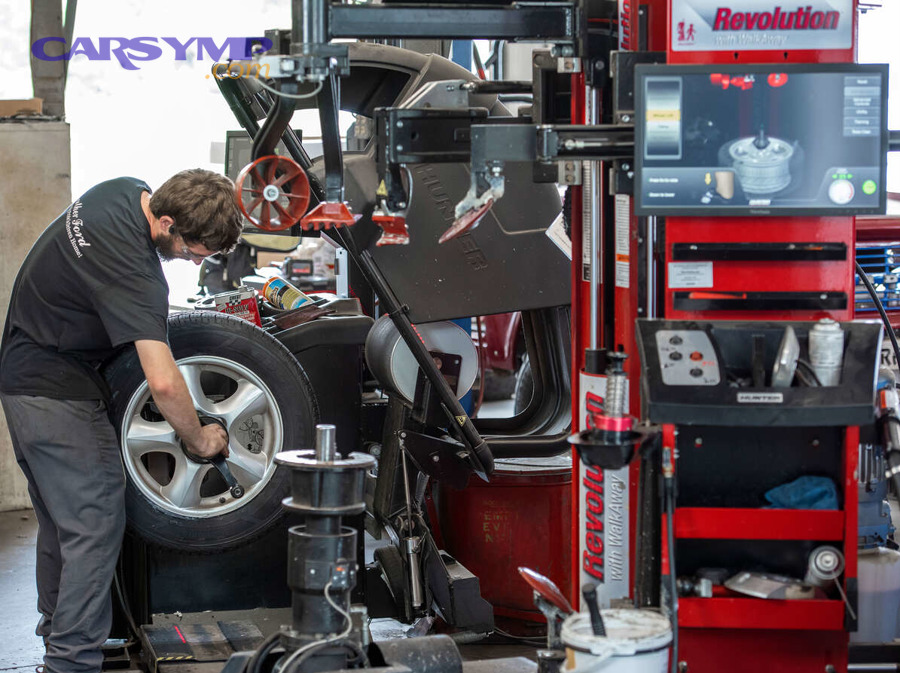
Wheel weights offset heavy spots in the rotating assembly. When a tire and wheel are not evenly distributed in mass, one section pulls harder as it spins. That uneven pull becomes vibration, often felt through the seat, floor, or steering wheel at certain speeds. Weights correct that imbalance by countering the heavy area so the assembly rotates more evenly.
Specifically, wheel weights are not there to make the wheel “perfectly heavy” everywhere. They are there to neutralize the force created by mass concentration. On a basic balance, the machine identifies how much correction is needed and where. On a more advanced balance, the machine can also detect uniformity problems that ordinary balancing alone may not solve.
This matters because the symptoms of imbalance often mimic other issues. Drivers may feel a highway-speed shake and assume they need alignment, suspension parts, or even new tires. In reality, poor wheel balancing is often the simpler cause. NHTSA notes that vibration is a tire performance issue that should be evaluated by a tire service professional, and it also states that tire balancing keeps the vehicle from shaking or vibrating. ([nhtsa.gov](https://www.nhtsa.gov/vehicle-safety/tires?))
Why does weight placement affect balancing accuracy?
Weight placement affects balancing accuracy because the same amount of weight produces a different corrective effect depending on the plane and exact position where it is installed.
More specifically, a wheel is not corrected only across one flat circle. Modern assemblies often require correction on inner and outer planes. If the weight goes on the wrong lip, too far inward, too far outward, or slightly off the machine-indicated clock position, the correction becomes incomplete. The result may be a reduced vibration instead of a cured vibration.
That is why trained technicians focus on centering the assembly correctly, selecting the proper weight, and positioning it precisely. The Tire Industry Association highlights those exact points as core parts of tire balance training, noting that proper centering and selecting and positioning the correct wheel weight are essential parts of the process. ([tireindustry.org](https://www.tireindustry.org/resources/resources/press-releases/2020/third-week-of-tia-training-webinars-on-tire-balance/?))
According to the U.S. Tire Manufacturers Association’s tire care guide, an out-of-balance tire-and-wheel assembly can cause abnormal tread wear due to vibration and irregular road contact. ([ustires.org](https://www.ustires.org/sites/default/files/2024-05/Tire%20Care%20and%20Safety%20Guide%20%20Page%202%20deleted%20FINAL%2002%2029%2018%20%281%29_1.pdf?))
Which wheel weight types should you choose for different wheels?
There are 2 main wheel weight types for passenger vehicles: clip-on weights and adhesive weights, chosen primarily by rim design, finish sensitivity, and where the correction must be placed.
To reconnect to the issue from the heading, the best weight is not the one that is easiest to install. It is the one that fits the wheel safely, holds securely, corrects the imbalance on the required plane, and does not create unnecessary cosmetic damage.
What is the difference between clip-on and adhesive wheel weights?
Clip-on weights attach mechanically to a rim flange, while adhesive weights stick to a cleaned barrel surface; clip-ons are often best for suitable steel rims, and adhesive weights are often best for many alloy or appearance-sensitive wheels.
For example, clip-on weights are fast, durable, and easy to place on wheels with accessible flanges. They remain common on steel wheels and some designs that safely accept them. Adhesive weights, by contrast, work well when the outer flange should remain unmarked or when the visible face of the wheel should stay clean. They also allow more flexibility for hidden placement behind spokes or along the inner barrel.
The practical difference is bigger than appearance. Adhesive weights depend heavily on surface preparation. If brake dust, tire lubricant, moisture, or residue remains on the mounting surface, the weight may shift or fall off. Clip-on weights create a different concern: the wrong clip profile can damage the rim, fit loosely, or fail to seat securely.
The table below summarizes what the two weight styles are generally best at.
| Weight type | Best use case | Main advantage | Main caution |
|---|---|---|---|
| Clip-on | Steel wheels and wheels designed for flange weights | Fast install and secure mechanical retention | Wrong clip profile can mar or loosen on the rim |
| Adhesive | Alloy wheels, custom rims, hidden placement | Protects appearance and works inside the barrel | Requires a clean surface and proper placement pressure |
That distinction matters in daily service. Michelin explains that proper balancing allows the tire to rotate smoothly and consistently, reducing internal stress and promoting more uniform tread depth. ([michelinman.com](https://www.michelinman.com/auto/auto-tips-and-advice/tire-maintenance/wheel-alignment-wheel-balancing))
Which wheel weight type is best for steel wheels, alloy wheels, and custom rims?
Steel wheels usually favor clip-on weights, alloy wheels often favor adhesive weights, and custom rims usually need adhesive weights or hidden-placement strategies to protect finish and appearance.
However, the best choice still depends on the exact rim profile. Some steel wheels may accept adhesive placement just fine. Some alloy designs may allow clip-on weights only on the inner side. Many premium or aftermarket wheels are better served by adhesive weights placed inside the barrel because visible clips can damage coating, spoil appearance, or interfere with customer expectations.
This is where wheel balancing becomes more than a machine procedure and becomes a fitment decision. The wheel’s lip shape, coating, spoke layout, brake clearance, and even the owner’s appearance standards affect the correct answer. Shops that ignore those details often create comebacks: the balance number may be technically acceptable, but the result may not hold, look right, or feel right at speed.
If you are comparing service menus, a generic Wheel balancing cost estimate may not tell the full story. A standard rebalance is usually cheaper than diagnostic balancing, but complex wheels, hidden-weight placement, and road force balancing and when it helps can raise the labor and equipment cost because the technician is solving more than a simple heavy spot.
According to Hunter Engineering, larger and wider tape-weight-only wheel styles can create challenges for traditional dynamic balancing, which is one reason advanced placement strategies and systems such as SmartWeight exist. ([hunter.com](https://www.hunter.com/wheel-balancers/road-force/?srsltid=AfmBOoqxD5Zzxdb3RDFTXLYzXy7AeL0tg9ALzj9FVaLVUE_9k54B-T6p))
Where should wheel weights be placed for proper tire balancing?
Wheel weights should be placed on the exact correction planes and clock positions identified by the balancer, usually on the inner lip, outer lip, or inside barrel depending on wheel design and required balance method.

Let’s explore the issue directly: placement is not guesswork, and it is not “close enough.” A few degrees off or one plane inward can leave vibration in the assembly, especially at higher speeds.
Should wheel weights be placed on the inner lip, outer lip, or inside the barrel?
Yes, wheel weights may be placed on any of those locations if the wheel design and balancer call for it, because each location serves a different balancing and cosmetic purpose.
Specifically, inner lip placement is common when the inner flange accepts a clip-on weight and the correction plane sits there. Outer lip placement works similarly but is less desirable on many modern wheels because it is visible and may mark the finish. Inside-barrel placement, usually with adhesive weights, is common on alloy wheels because it preserves appearance and still allows accurate correction when the machine is set up for that mode.
The key point is that the machine and the wheel together decide the right location. If a wheel is set to hidden mode, the balancer may instruct the technician to split weight placement behind spokes. If the wheel is a steel rim with exposed flanges, clip-on weights at the lips may be the most efficient and durable choice.
A common mistake is to treat the inner barrel as the universal answer. It is not. Barrel placement works only when the machine is configured for that plane and the wheel geometry allows the correction to function as intended. Otherwise, the assembly may still carry a couple imbalance.
How do technicians decide the exact spot for wheel weight placement?
Technicians decide the exact spot by mounting the wheel correctly, entering or measuring wheel dimensions, spinning the assembly, and following the machine’s precise weight amount and location instructions.
Then, the quality of the setup determines the quality of the answer. If the wheel is not centered on the balancer, the machine can recommend a mathematically correct weight for a physically incorrect setup. That is why centering and flange selection matter just as much as the actual weight type.
On modern machines, the process can include laser location, automatic width measurement, and optimization modes that reduce the total weight used. On more advanced diagnostic machines, the process can also include road force measurement, which simulates how the tire behaves under load. That extra step matters when the wheel is “balanced” yet the driver still feels a shake.
Hunter states that miscentering during wheel balancing procedures is the number one cause of improper balancing and customer comebacks. The same source says its Road Force system can identify tire uniformity issues, rim runout, improper bead seating, and pull issues that standard balancing may miss. ([hunter.com](https://www.hunter.com/wheel-balancers/road-force/?srsltid=AfmBOoqxD5Zzxdb3RDFTXLYzXy7AeL0tg9ALzj9FVaLVUE_9k54B-T6p))
According to a 2023 GM service bulletin, the Hunter Road Force balancer allows technicians to perform a static balance and check Road Force during a single measurement so the tire-and-wheel assembly can be verified against specification before it goes back on the vehicle. ([static.nhtsa.gov](https://static.nhtsa.gov/odi/tsbs/2023/MC-10244274-0001.pdf?))
How does wheel design change weight placement considerations?
Wheel design changes weight placement because flange shape, spoke layout, finish type, barrel depth, and brake clearance all affect where weights can go and how visible or durable they will be.
More importantly, two wheels of the same diameter can need very different balancing strategies. A plain steel wheel with open flanges gives the technician broad options. A split-spoke alloy wheel with a delicate finish, narrow barrel zones, and large brake hardware gives far fewer safe choices.

Do alloy, aftermarket, and OEM wheels require different placement strategies?
Yes, alloy, aftermarket, and OEM wheels often require different placement strategies because their shapes, finishes, and customer expectations differ in ways that affect safe correction and appearance.
For example, many OEM wheels are designed around standard service procedures and commonly supported balancer settings. Aftermarket wheels may use unusual spoke spacing, thin outer lips, deeper barrels, or finishes that make visible clip-on weights undesirable. Performance wheels may also demand better aesthetic concealment because the owner expects the face of the wheel to remain clean.
That is why shops frequently use hidden or split-weight modes on premium wheels. Instead of placing one obvious adhesive strip in a visible location, the technician may divide the correction and hide it behind two spokes. This preserves appearance while still achieving the needed correction.
The same logic applies to brake packages. Big calipers, tight wheel clearance, and inner-barrel contours can restrict where adhesive weights can sit safely. A weight that technically balances the wheel but contacts the caliper is not a solution.
How do appearance and finish protection influence weight placement?
Appearance and finish protection influence placement by pushing weight correction away from visible flanges and toward hidden barrel locations that avoid chipping, scratching, or obvious visual clutter.
Meanwhile, appearance is not a minor concern. For many drivers, especially owners of late-model alloy or custom wheels, visible weights on the outer flange look like bad workmanship even when the wheel is balanced correctly. Shops that understand this often balance in a way that protects both function and finish.
This is also where good terminology helps. Some shops shorthand customer complaints as Car Symp, meaning the service path begins with the driver’s Car Symptoms rather than with a machine reading alone. If the car symptom is steering-wheel shake after new tires on premium wheels, the technician should think not only about balance amount but also about placement mode, wheel finish, and whether hidden placement is needed.
Michelin notes that imbalance can create flat spots or cupping and put added strain on suspension and steering components over time, which means a cosmetic decision should never undermine functional correction. ([michelinman.com](https://www.michelinman.com/auto/auto-tips-and-advice/tire-maintenance/wheel-alignment-wheel-balancing))
What placement mistakes can cause poor balancing results?
The most common placement mistakes are using the wrong weight type, installing weights on the wrong plane, mounting them on dirty surfaces, miscentering the wheel, or trusting a balance reading without diagnosing runout or uniformity problems.

To better understand the issue from the heading, think of balancing errors in two groups: correction errors and process errors. Correction errors happen when the wrong weight or wrong position is chosen. Process errors happen when the machine setup, wheel mounting, or verification step is poor.
Can the wrong wheel weight type lead to balancing problems?
Yes, the wrong wheel weight type can cause balancing problems because it may not hold securely, may not fit the rim profile correctly, and may force the technician into a poor correction location.
Specifically, a loose or incorrect clip-on weight can shift, mar the lip, or detach. A poorly adhered stick-on weight can fall off after exposure to heat, water, or road debris. Both failures lead to the same outcome: the assembly returns to an imbalanced state, sometimes so gradually that the driver notices a vibration days later and does not connect it to recent service.
The wrong type can also make the technician compromise on placement. If the wheel really needs an adhesive weight in a protected barrel zone but receives a visible clip-on for convenience, the correction may be less elegant and the rim may suffer unnecessary damage.
What are the most common wheel weight placement mistakes to avoid?
The most common placement mistakes are dirty mounting surfaces, incorrect clock position, wrong correction plane, stacked weights without need, poor centering on the balancer, and skipping verification after installation.
For example, adhesive weights should not be stuck onto brake dust, tire soap residue, or a cold contaminated barrel and then trusted blindly. The surface needs cleaning, drying, and firm application. Clip-on weights should not be hammered onto incompatible flanges. The wheel must also be centered correctly before the initial spin, because a bad mount produces misleading correction data.
Another mistake is assuming all shake is simple imbalance. Sometimes the tire has radial force variation, the wheel has runout, or the bead is not seated properly. Ordinary balancing can reduce symptoms but not eliminate them. That is why road force balancing and when it helps matters most when a vehicle still vibrates after a normal rebalance.
SEMA has highlighted vibration-inducing factors that can mimic unbalance and emphasized best practices that reduce vibration complaints. Hunter also states that standard balancing cannot detect all non-balance-related issues, while Road Force diagnostic balancing can identify uniformity and runout conditions. )
According to Hyundai service procedures published through NHTSA, even a perfectly balanced tire-and-wheel assembly can still be “oval shaped” and cause vibration, which is why diagnosis before and during balancing matters. ([static.nhtsa.gov](https://static.nhtsa.gov/odi/tsbs/2024/MC-10253770-0001.pdf?))
How do you know the chosen weight type and placement are correct?
You know the chosen weight type and placement are correct when the wheel verifies on the machine, the weights fit and clear safely, and the vehicle drives without the previous speed-related vibration.
In short, the job is not complete when the weight is attached. It is complete when the correction holds, the assembly clears all components, and the road test or customer symptom confirms improvement.
What signs show that wheel weights are correctly placed?
Correctly placed wheel weights produce a clean machine reading, secure fitment, no contact issues, and a smoother drive with reduced shake through the steering wheel, seat, or floor.
More specifically, the best confirmation comes in layers. First, the balancer should show the assembly within specification after the final spin. Second, the technician should visually confirm that adhesive weights are secure and clip-on weights are seated correctly. Third, the assembly must clear the brake package and suspension. Fourth, the vehicle should no longer produce the same highway-speed vibration that brought it in.
That final step matters because customers judge wheel balancing by feel, not by the machine screen. If the vibration remains, the problem may be elsewhere, or it may require diagnostic balancing rather than another routine spin. Hunter says its diagnostic balancer performs a traditional balance and Road Force Measurement in less time than a conventional balance while identifying issues that standard balancing can miss. ([hunter.com](https://www.hunter.com/wheel-balancers/road-force/?srsltid=AfmBOoqxD5Zzxdb3RDFTXLYzXy7AeL0tg9ALzj9FVaLVUE_9k54B-T6p&))
When should a wheel be rebalanced after changing weight type or placement?
A wheel should be rebalanced after any weight loss, tire rotation with symptoms, impact damage, vibration complaint, new tire installation, or any time placement has been changed to solve appearance or clearance concerns.
Besides, rebalancing is often cheaper than the wear it prevents. A modest wheel balancing cost estimate is small compared with premature tire wear, repeat shop visits, or long-term suspension stress caused by continued vibration. Shops also rebalance after pothole impacts, curb strikes, seasonal tire swaps, or whenever a driver reports a vibration that starts at a repeatable speed range.
NHTSA advises drivers to pay attention to changes in tire performance, including vibration, and to consult a tire service professional if that symptom appears. ([nhtsa.gov](https://www.nhtsa.gov/vehicle-safety/tires?))
What advanced placement considerations matter beyond standard wheel balancing?
Advanced placement considerations include road force diagnosis, split-weight hiding, oversized assembly behavior, brake-clearance limits, and finish-protection strategies that go beyond a standard static or dynamic balance.

Below the basic balancing decision, the topic becomes less about adding weight and more about solving why a “balanced” wheel can still feel bad. This is where micro-level decisions create the difference between an acceptable result and a premium result.
How does road force balancing change weight placement decisions?
Road force balancing changes placement decisions by adding load-based diagnosis, which helps the technician decide whether to add weight, rotate the tire on the rim, or address uniformity and runout before final placement.
Specifically, standard balancing measures imbalance during free spin. Road force balancing presses a roller against the tire to simulate load. That lets the machine detect tire stiffness variation, wheel runout, and force-related issues that a normal balancer may not identify. The technician may then match-mount the tire, reposition the assembly, or choose a different correction strategy instead of simply adding more weight.
This is why road force balancing and when it helps is a practical question, not just a technical one. It helps when a vehicle still vibrates after a normal balance, when new tires do not ride as smoothly as expected, when low-profile tires amplify sensitivity, or when premium wheels require more exact diagnosis. Hunter states that Road Force uses a diagnostic load roller to simulate road conditions and identify vibration issues that standard balancers cannot detect. ([hunter.com](https://www.hunter.com/wheel-balancers/road-force/?srsltid=AfmBOoqxD5Zzxdb3RDFTXLYzXy7AeL0tg9ALzj9FVaLVUE_9k54B-T6p))
What is split-weight or behind-spoke placement, and when is it used?
Split-weight or behind-spoke placement divides the required correction into separate adhesive segments hidden behind spokes, usually to preserve appearance on alloy or custom wheels.
To illustrate, a wheel may need a visible correction point near the face, but placing one weight there would look poor. A hidden mode lets the balancer calculate equivalent correction using two separated adhesive placements that stay out of view. The method is especially useful on premium wheels with open spokes where visible weights are easy to see.
This is not merely cosmetic. It also helps maintain customer confidence in the service. When a vehicle leaves the shop with clean-looking wheels and a smooth ride, the balance feels complete in both functional and visual terms.
Do oversized, off-road, or performance wheels need special weight placement considerations?
Yes, oversized, off-road, and performance wheels often need special placement considerations because higher assembly mass, wider barrels, aggressive tread patterns, and tighter tolerances can magnify small balancing errors.
For example, larger truck tires often need more total correction and may respond more noticeably to improper centering or weak adhesive preparation. Low-profile performance tires can transmit vibration more sharply into the chassis, which means the balancing outcome must be cleaner. Wider wheels may also create situations where traditional balancing methods use more weight than optimized methods.
Hunter states that SmartWeight was developed to improve balance on larger, wider tape-weight-only wheel styles while reducing the amount of weight needed. ([hunter.com](https://www.hunter.com/wheel-balancers/road-force/?srsltid=AfmBOoqxD5Zzxdb3RDFTXLYzXy7AeL0tg9ALzj9FVaLVUE_9k54B-T6p))
Can brake clearance, wheel finish, or corrosion risk limit where weights should go?
Yes, brake clearance, wheel finish, and corrosion risk can limit weight location because a correct balance reading is still unusable if the weight contacts hardware, damages coating, or promotes long-term finish problems.
Especially on modern vehicles with large calipers, the inner barrel may offer only narrow safe zones for adhesive weights. On winter-driven cars, corrosion risk and surface contamination also matter more because weights need secure attachment despite harsh exposure. On coated wheels, finish preservation may require gentler cleaning methods and careful placement away from delicate edges.
Preventing balance issues therefore starts before the final spin. It begins with inspecting the wheel, cleaning the mounting surface, choosing the right mounting hardware on the balancer, confirming clearance, and deciding whether the complaint calls for standard balancing or diagnostic balancing. That upstream discipline is what prevents downstream comebacks.
According to Hunter, over 24 OEMs approve or require its Road Force system in their facilities, and the company also states that miscentering is a leading source of improper balancing and customer returns. ([hunter.com](https://www.hunter.com/wheel-balancers/road-force/?srsltid=AfmBOoqxD5Zzxdb3RDFTXLYzXy7AeL0tg9ALzj9FVaLVUE_9k54B-T6p))
Thus, the best answer to wheel weight types and placement is not a single rule. It is a sequence: identify the wheel, choose the compatible weight type, place it on the correct plane, verify clearance and retention, and move to road force diagnosis when a standard balance does not fully solve the vibration. That approach gives drivers the smooth ride they expect, helps shops avoid repeat work, and turns wheel balancing from a routine service into a correctly finished repair.