


DIY wheel bearing replacement can be safe for some car owners, but it is not a universal beginner repair because the job combines heavy disassembly, exact torque requirements, and a high risk of damaging the new bearing if the installation method is wrong. A safe approach starts with understanding the bearing type, the tool list, and the specific points where DIY mistakes turn a routine repair into a repeat job.
The first major question is whether the repair is realistically within your skill level. Some vehicles use bolt-on hub assemblies that many experienced DIYers can replace with standard hand tools and a torque wrench, while others use press-in bearings that often require a press kit, careful support of the knuckle, and precise handling of seals and encoder rings. That is why the first step is not removal, but honest assessment.
The second major issue is tools. A wheel bearing replacement is rarely just a socket-set job. Most vehicles also need a breaker bar, axle nut socket, torque wrench, jack stands, and sometimes a slide hammer, hub puller, or bearing press kit. Tool choice affects both safety and repair quality, especially when seized parts, corrosion, or tight clearances complicate the work.
The third major issue is risk control. Incorrect bearing seating, contamination, damaged ABS components, and wrong axle nut torque can shorten bearing life or create warning lights immediately after reassembly. Introduce a new idea: the sections below explain how to judge the job, choose the right tools, avoid common mistakes, and decide when professional help is the smarter option.
Can You Replace a Wheel Bearing Yourself Safely?
Yes, you can replace a wheel bearing yourself safely if the vehicle uses a DIY-friendly design, you have the correct tools, and you follow torque and installation procedures exactly.
To better understand that answer, you need to separate “possible” from “appropriate.” A wheel bearing repair becomes safe only when the vehicle is properly supported, the old parts come apart without excessive improvisation, and the new bearing goes in without side-loading, contamination, or incorrect torque. Many home mechanics successfully handle bolt-on hub assemblies. Fewer succeed consistently with press-in bearings because that version of the job punishes small mistakes.

Is DIY wheel bearing replacement safe for all car owners?
No, DIY wheel bearing replacement is not safe for all car owners because the repair demands lifting safety, high-torque fastener control, and exact installation technique.
Specifically, the job becomes unsuitable when any of these conditions apply:
- You do not know whether the vehicle uses a hub assembly or a press-in bearing.
- You do not have jack stands, a torque wrench, or the correct axle nut socket.
- The car has severe corrosion or seized suspension hardware.
- The repair requires pressing the bearing into the knuckle and you do not have the correct press tools.
- You cannot access model-specific torque specifications and reassembly procedures.
A safe DIY job depends on control. When a mechanic works without control, they start substituting hammer force for alignment, guessing torque values, or reusing damaged components. That is usually where wheel bearing replacement turns into a second repair. In practice, many failures blamed on a “bad new bearing” are actually installation failures.
According to SKF, one of the leading causes of improper fit and premature wheel hub failure is improper torquing of the bolts and nuts that secure the hub and tire, especially the axle nut that sets bearing preload.
What makes wheel bearing replacement a risky DIY repair?
Wheel bearing replacement is a sensitive mechanical repair because it combines structural load parts, rotational precision, and safety-critical torque settings in one job.
More specifically, the repair is risky for four reasons. First, the bearing itself is a precision part, so force applied through the wrong race can damage it before the car even leaves the driveway. Second, the surrounding hardware often includes very tight axle nuts, rusted knuckle surfaces, and brake components that require controlled disassembly. Third, some modern bearings include encoder seals for wheel speed signals, so incorrect orientation can trigger ABS sensor issues related to wheel bearings. Fourth, under-torquing or over-torquing can change preload and shorten service life dramatically.
This is why “Can I do it?” should always be followed by “Can I do it without guessing?” If the answer to the second question is no, the safer path is to stop early.
According to NSK, wheel hub bearing replacement requires close attention to correct part selection, careful fitting, and protection of magnetic encoder components used by ABS systems.
What Is DIY Wheel Bearing Replacement and Why Is It So Sensitive to Technique?
DIY wheel bearing replacement is the removal and installation of the wheel-end bearing or hub unit that supports wheel rotation, and it is sensitive because even small installation errors can affect load handling, heat, and sensor operation.
To better understand the repair, think of the wheel bearing as a part that must do two jobs at once: it must let the wheel rotate smoothly and also support vehicle weight, cornering force, and road impact. That combination makes it different from a simple bolt-on accessory. The bearing must sit squarely, remain clean, and operate under the preload intended by the vehicle manufacturer.

What does a wheel bearing do in a vehicle?
A wheel bearing is a precision rolling component inside the wheel end that allows smooth wheel rotation while carrying radial and axial loads from the vehicle and the road.
For example, every time you accelerate, brake, or turn, the bearing absorbs force. That is why a healthy bearing stays quiet and stable, while a worn bearing usually creates humming, growling, or grinding that changes with speed and sometimes with steering input. This is also why Wheel bearing vs tire noise diagnosis matters. Tire roar can mimic bearing noise, but a bearing problem often changes when the vehicle loads one side more heavily in a turn.
A proper diagnosis protects your time and money. Replacing the wrong side, or replacing a bearing when the real problem is tire cupping, wastes parts and labor. Before beginning any repair, a good mechanic confirms the symptom pattern, checks for play, and inspects the hub area for roughness or visible damage.
Why does incorrect installation cause early failure or unsafe driving?
Incorrect installation causes early failure because a wheel bearing depends on correct seating, correct support during pressing, and correct final torque to maintain its designed load path.
More specifically, several mistakes cause trouble fast:
- Pressing through the wrong race damages internal rolling elements.
- Installing a bearing cocked in the bore distorts alignment.
- Contaminating the bearing with dirt or metal debris shortens life.
- Reusing single-use hardware can weaken clamping force.
- Over-tightening or under-tightening the axle nut changes preload.
- Damaging the seal allows water intrusion and grease loss.
These errors create heat, noise, looseness, or premature wear. In severe cases, wheel-end problems can escalate beyond noise and become handling or retention issues. Preventing premature bearing failures is therefore not just about buying a quality part. It is mainly about technique, cleanliness, and torque accuracy during installation.
NHTSA recall documents have noted that overheated or incorrectly adjusted wheel-end bearings can lead to looseness, hub failure, and increased crash risk in affected assemblies.
What Tools Do You Need for DIY Wheel Bearing Replacement?
There are three main tool groups for DIY wheel bearing replacement: essential hand tools, safety equipment, and specialty tools required by bearing design and vehicle condition.
Next, the real tool question is not “What is the minimum?” but “What do I need to complete the repair without improvising?” That is the standard that keeps the job safe and protects the new bearing.

What essential hand tools and safety equipment are required?
There are two main categories of essentials: core hand tools for disassembly and safety equipment for stable vehicle support and personal protection.
The basic list usually includes:
- Floor jack rated for the vehicle
- Two jack stands on a solid surface
- Wheel chocks
- Lug wrench or impact gun for wheel removal
- Socket set and ratchets
- Breaker bar
- Torque wrench
- Axle nut socket of the correct size
- Screwdrivers and pry tools
- Penetrating oil
- Hammer or dead-blow hammer
- Wire brush for cleaning mating surfaces
- Gloves and safety glasses
- Service information with torque specs
These tools cover the safe baseline. The torque wrench deserves special attention because it is the difference between a correct final assembly and an expensive guess. Many DIYers spend heavily on removal tools and then skip the one tool that protects bearing preload.
What specialty tools may be needed for press-in bearings or seized hubs?
There are several specialty tools that may be needed: a slide hammer, hub puller, bearing press kit, snap-ring pliers, separator tools, and sometimes access to a shop press.
More specifically, the tool need depends on the vehicle design. Bolt-on hub assemblies may need only a puller if corrosion has frozen the hub in place. Press-in bearings usually require more. The knuckle may need to come off the vehicle, the hub may need to be pressed out first, a snap ring may hold the bearing in place, and the new bearing may need to be installed with a support collar that matches the outer race precisely.
This is the point where many home repairs become unstable. If a DIYer lacks the right adapters, they begin using sockets, improvised spacers, or direct hammer blows. Those shortcuts are exactly why wheel bearing replacement has a reputation for returning as a comeback repair.
According to Timken and SKF guidance, correct alignment, proper support, and adherence to torque recommendations are central to avoiding seal damage and premature failure during wheel-end service.
Which Type of Wheel Bearing Are You Replacing?
The two main wheel bearing designs are press-in bearings and bolt-on hub assemblies, and the difference between them largely determines whether the repair is reasonable for DIY.

To better understand the job, identify the design before buying parts or tools. This single step saves time, prevents underestimating the repair, and helps you decide whether the job belongs in the garage or the shop.
What is the difference between a press-in wheel bearing and a hub assembly?
A press-in wheel bearing is a standalone bearing pressed into the knuckle, while a hub assembly is a preassembled unit that usually bolts on as one piece.
However, the practical difference matters more than the definition. A hub assembly is typically easier to replace because the bearing is already integrated. You unbolt the old unit, clean the mounting surface, and install the new one with the correct torque sequence. A press-in bearing requires removal of the hub from the bearing, removal of the bearing from the knuckle, careful handling of snap rings, and exact support during installation. The margin for error is much smaller.
The comparison below shows what the table contains: the main differences in labor, tooling, and DIY difficulty between the two common bearing types.
| Bearing Type | Typical DIY Difficulty | Common Tool Demand | Main Risk |
|---|---|---|---|
| Bolt-on hub assembly | Moderate | Standard sockets, breaker bar, torque wrench, possible puller | Corrosion, stuck hub, wrong torque |
| Press-in bearing | High | Press kit or shop press, adapters, snap-ring tools, torque wrench | Bearing damage during pressing, misalignment, ABS encoder damage |
For most readers, that comparison answers the hidden question behind the title. If your vehicle uses a press-in bearing, the job is not automatically impossible, but it is much less forgiving.
Which wheel bearing type is easier for DIY replacement?
Hub assemblies are usually easier for DIY replacement, while press-in bearings are usually better for experienced mechanics or shops with pressing equipment.
Meanwhile, the easier choice is not always quick. Corrosion can turn a simple hub assembly into a fight, especially in rust-prone regions. A supposedly easy bolt-on unit can stay welded to the knuckle by oxidation and require a slide hammer, heat strategy, or specialty removal tool. That is why vehicle age and climate matter nearly as much as bearing design.
If you want a realistic self-assessment, use this rule: a bolt-on hub can be a capable weekend DIY job; a press-in bearing is a technique-intensive repair where the wrong tool choice can destroy the new part during installation.
What Are the Main DIY Wheel Bearing Replacement Risks?
The main DIY wheel bearing replacement risks are vehicle support failure, damaged new parts, incorrect torque, contamination, and sensor-related errors.
Next, each of these risks deserves separate attention because the job often fails through one of them rather than through lack of effort. Most DIY bearing problems come from one bad moment, not from the whole process being impossible.

What mistakes can damage the new bearing, hub, or ABS sensor?
There are five common mistake groups: wrong pressing force, wrong orientation, dirty assembly, damaged surfaces, and incorrect final torque.
More specifically:
- Applying installation force through the inner race when fitting the outer race, or vice versa, can bruise the bearing internally.
- Installing a magnetic encoder bearing backwards can cause immediate ABS warning lights.
- Leaving rust or debris on the mating surface can prevent the hub or bearing from sitting fully square.
- Reusing damaged axle nuts or snap rings can reduce clamping security.
- Striking sensitive components directly can damage seals, tone rings, or sensor targets.
This is the exact zone where ABS sensor issues related to wheel bearings appear after the repair. A car may drive quietly yet show an ABS or traction-control warning because the encoder side faces the wrong direction or the sensor gap changed during reassembly. That is why careful orientation and clean mounting surfaces matter just as much as brute disassembly strength.
According to Dayco and NSK technical guidance, some wheel bearings use a magnetic encoder integrated into the seal, and reversing that orientation or damaging the encoder during installation can prevent accurate wheel-speed sensing and trigger ABS faults.
What safety hazards can happen during the repair itself?
The main repair-stage hazards are unstable lifting, slipping high-torque tools, seized hardware release, eye injury from debris, and hand injury from impact tools.
For example, an axle nut often requires major force to loosen, which means the car must be supported correctly before the mechanic commits body weight to the breaker bar. Likewise, brake dust, rust flakes, and snapped fastener fragments can all become injury sources when removal turns aggressive. Even a simple mistake such as prying against the wrong suspension point can damage adjacent components.
This is why professional shops appear calm during wheel bearing replacement. They are not just faster; they are working within a controlled setup. A careful DIYer can create a similar level of control, but only by slowing down, stabilizing the vehicle, and refusing shortcuts.
How Do You Replace a Wheel Bearing at a High Level?
Wheel bearing replacement follows seven broad stages: verify the fault, lift and secure the vehicle, remove brakes and hub hardware, extract the old unit, prepare the mounting area, install the new bearing correctly, and torque everything to specification.
To better understand the method, treat it as a controlled sequence rather than a single removal task. The outcome depends as much on preparation and reassembly as it does on taking the old bearing out.
What are the basic steps in a DIY wheel bearing replacement?
The high-level process has seven main steps, and each one protects the final result.
- Confirm the diagnosis. Rule out tire cupping, uneven tread wear, and other causes through Wheel bearing vs tire noise diagnosis.
- Loosen fasteners strategically. Break the axle nut and wheel nuts loose at the correct point in the process.
- Lift and secure the vehicle. Use chocks and jack stands on solid ground.
- Remove brake and hub-related components. Keep bolts organized and avoid stretching hoses or sensor wiring.
- Remove the old bearing or hub. Use the correct puller or press approach for the design.
- Clean and inspect all mating surfaces. Remove rust, burrs, and debris before installation.
- Install and torque the new components correctly. Follow sequence, spec, and single-use hardware rules.
Specifically, the most important hidden step is surface preparation before installation. Many noisy post-repair results come from rust scale or burrs left on the knuckle or hub face. If the new part cannot sit perfectly flush, it starts life misaligned.
When should you stop the DIY job and switch to a professional?
You should stop and switch to a professional when the repair requires press-fit control you do not have, the parts will not come apart cleanly, or the correct torque and assembly procedure are unclear.
In addition, stop the repair if any of the following happens:
- The hub or knuckle surface is visibly damaged.
- A snap ring will not release without destructive force.
- The axle splines are seized and repeated force is escalating risk.
- The ABS sensor or wiring may be damaged.
- You do not know whether the bearing orientation is correct.
- You cannot verify the final torque values.
Stopping is not failure. It is a correct safety decision. The most expensive version of DIY is not the first attempt; it is the attempt that damages new parts and still ends at the repair shop.
According to Timken’s published procedures, proper alignment, seal protection, and exact adjustment sequence are essential in wheel-end service, reinforcing why incomplete tooling or uncertain procedure is a valid stop point.
Should You Do It Yourself or Pay a Professional?
DIY wheel bearing replacement is cheaper when the repair is straightforward and you already own the tools, but professional repair is often the safer value when the design is press-in, corrosion is severe, or the cost of one mistake is high.

However, cost alone is the wrong comparison. The better question is total ownership of the outcome: who is more likely to finish the job once, with correct preload, no warning lights, and no repeat teardown?
Is DIY wheel bearing replacement cheaper than professional repair?
Yes, DIY wheel bearing replacement can be cheaper than professional repair because you save labor, control part selection, and can reuse tools later, but only if the job goes right the first time.
The cost advantage changes based on three factors:
- Tool ownership: If you already own a torque wrench, jacks, and sockets, DIY becomes more attractive.
- Bearing type: Hub assemblies favor DIY more than press-in bearings.
- Error cost: One damaged new bearing, stripped fastener, or ABS fault can erase the savings quickly.
This is why “cheaper” must include risk-adjusted cost. On paper, DIY often wins. In reality, the price gap narrows fast when specialty tools, stuck parts, and time loss enter the picture.
How does DIY wheel bearing replacement compare with professional repair?
DIY wins in labor savings and learning value, while professional repair wins in equipment, speed, and error control; the better choice depends on bearing type, vehicle condition, and your tolerance for risk.
More specifically, professional repair offers four advantages: controlled pressing equipment, faster diagnosis, access to service data, and accountability if the repair fails early. DIY offers three different advantages: lower labor cost, scheduling flexibility, and direct familiarity with your own vehicle. The deciding factor is not courage. It is repeatable precision.
If your vehicle has a bolt-on hub and the area is not heavily corroded, DIY can be a solid choice. If the car uses a press-in bearing, has severe rust, or has encoder-related wheel speed hardware, professional service often delivers better value despite the higher invoice.
What Related Technical Issues Can Affect DIY Wheel Bearing Replacement Results?
Several related technical issues can affect the result: ABS faults, post-install noise, corrosion-driven fit problems, and weak post-repair inspection.
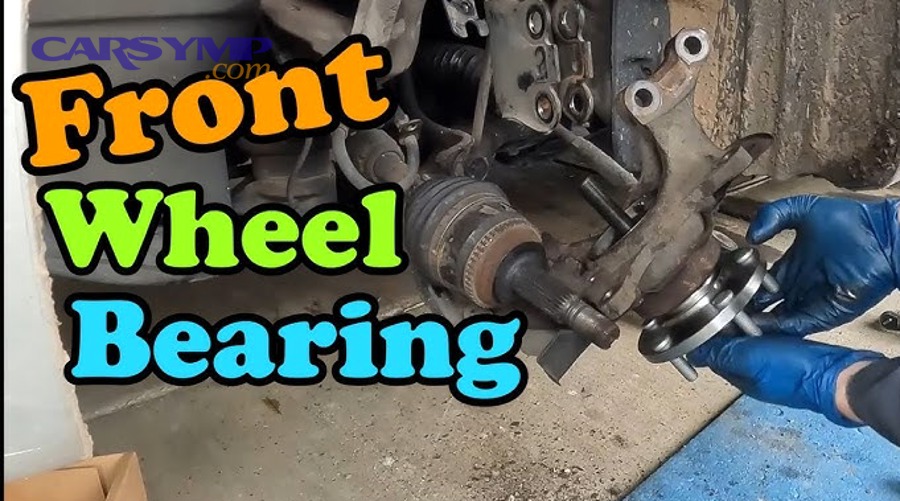
Besides the core repair, these issues explain why some jobs look successful in the garage but reveal problems on the first test drive. This section expands the topic beyond direct replacement steps and deepens the practical context around carsymp.com-style symptom-driven troubleshooting.
How can ABS sensor issues appear after wheel bearing replacement?
ABS sensor issues can appear after wheel bearing replacement when the magnetic encoder faces the wrong direction, the sensor gap changes, wiring is stressed, or debris interferes with signal reading.
More specifically, modern wheel speed systems often rely on a tone ring or magnetic encoder that must align correctly with the sensor. A backward-installed bearing can create an immediate warning light even if the wheel spins smoothly. Rust buildup behind a hub can also change alignment enough to disturb signal quality. During reassembly, wiring clips may be left loose or harness routing may place the wire in a stress point.
The practical lesson is simple: after reassembly, do not evaluate success by silence alone. Also check warning lamps, scan tool data if available, and whether the wheel speed signal behaves normally during a road test.
Why do some new wheel bearings still make noise after installation?
Some new wheel bearings still make noise after installation because the original diagnosis was wrong or the installation introduced misalignment, preload error, or surface contamination.
For example, tire cupping, aggressive tread pattern noise, or differential noise can mimic a bearing. That is why Wheel bearing vs tire noise diagnosis remains relevant even after parts replacement. In other cases, the diagnosis was correct, but the new part sits crooked because corrosion was not removed from the mounting face. Improper torque can also leave the assembly too loose or too tight, both of which can create early noise.
When a new bearing makes noise, do not assume the new part is defective first. Check seating, torque, surrounding surfaces, and symptom pattern under turning load.
How does rust or corrosion change the difficulty of DIY wheel bearing replacement?
Rust and corrosion increase difficulty by freezing hubs in place, distorting mating surfaces, damaging fasteners, and forcing more aggressive removal methods.
Especially in older vehicles, corrosion turns a moderate repair into a high-effort extraction job. A hub that should slide out may need a puller or slide hammer. A knuckle bore may need extensive cleaning before a new bearing can seat fully. Rust also raises the risk of collateral damage because the force needed for disassembly increases around brake backing plates, shields, and sensor mounts.
This is one of the strongest reasons to make a pre-repair judgment. A rust-belt car with seized hardware can move the repair from “confident DIY” to “shop job” before the first bolt comes free.
What post-repair checks help confirm the wheel bearing was installed correctly?
The most useful post-repair checks are torque verification, play inspection, warning light confirmation, noise evaluation during a road test, and a recheck after the first drive.
To sum up, use this checklist:
- Confirm all critical fasteners were torqued to specification.
- Verify the wheel rotates smoothly without binding.
- Check for play at the wheel after reassembly.
- Confirm ABS and traction-control lights stay off.
- Perform a careful road test at low and moderate speeds.
- Listen for humming, growling, or clicking that changes with load.
- Reinspect after the test drive for looseness, leaks, or heat concerns.
A disciplined final inspection is part of Preventing premature bearing failures. The bearing does not “break in” from a bad install. It either starts in the correct operating condition or it begins accumulating damage immediately.
In short, DIY wheel bearing replacement can be a smart repair for prepared car owners, but it rewards precision more than boldness. The best result comes from correct diagnosis, correct tools, clean installation, correct torque, and the willingness to hand the job to a professional when the repair moves beyond safe home control.