


Premature bearing failures are preventable in most cases because the main causes are usually controllable: poor lubrication, contamination, incorrect installation, misalignment, and weak inspection routines. To answer the primary intent directly, maintenance teams extend bearing life when they treat bearings as part of a complete operating system rather than as simple replaceable parts.
The first secondary intent is understanding what premature bearing failures actually are and how they differ from normal end-of-life wear. That distinction matters because a bearing that fails early usually leaves clues in heat, noise, vibration, lubricant condition, and damage patterns long before total failure occurs.
The second secondary intent is identifying the common causes and the preventive actions that matter most. Specifically, teams need to know which factors deserve daily attention, which belong in shutdown work, and which issues require deeper process correction rather than repeated part replacement.
The third secondary intent is recognizing symptoms, warning signs, and specialized conditions that change the prevention strategy. Introduce a new idea: below, the article moves from definition and causes to prevention methods, installation practices, early warning signs, practical checklists, and advanced cases that affect reliability in real maintenance environments.
What are premature bearing failures?
Premature bearing failures are bearing breakdowns that happen before the expected service life because operating, maintenance, or installation conditions damage the bearing too early.
To better understand premature bearing failures, the key is to compare actual service life with the life the bearing should reasonably achieve under correct load, lubrication, alignment, and contamination control.
Is every bearing failure truly premature?
No, not every bearing failure is truly premature, because some bearings simply reach normal wear-out life, some operate beyond their design limits, and others fail only after very long service under acceptable conditions.
That distinction matters because maintenance teams can waste time chasing the wrong root cause if they label every failed bearing as a maintenance mistake. A bearing that runs for its expected life and then shows gradual surface fatigue may be reaching normal end-of-life. By contrast, a bearing that overheats early, develops roughness soon after installation, or shows contamination scoring far ahead of schedule usually points to a preventable problem.
In practice, maintenance teams should ask three questions before calling a failure premature. First, did the bearing operate under the intended load, speed, and temperature range? Second, did the machine receive the correct lubricant, in the correct amount, at the correct interval? Third, did the environment expose the bearing to moisture, dust, shock, current, or poor sealing that the original design did not control well? When the answer reveals a gap in these basic conditions, the failure is usually premature.
This distinction also improves decision-making after removal. If technicians recognize normal fatigue rather than contamination, they can plan replacement intervals instead of making unnecessary design changes. If they recognize early surface distress, they can fix the real cause before the next bearing suffers the same fate.
According to bearing reliability guidance from major industrial manufacturers, most early failures are linked to lubrication, contamination, handling, or mounting errors rather than true exhaustion of bearing life.
How is premature bearing failure different from normal bearing wear?
Premature bearing failure differs from normal bearing wear because early failure starts from avoidable damage mechanisms, while normal wear develops gradually after the bearing delivers most or all of its intended service life.
More specifically, normal wear usually appears as progressive fatigue after long service. The machine may show rising vibration slowly, lubrication may age at an expected rate, and replacement can often be scheduled during planned downtime. Premature failure looks different. It often appears as sudden temperature increase, noise shortly after startup, irregular wear marks, grease discoloration, abrasive scoring, cage damage, or looseness long before the expected interval.
This difference is important for maintenance planning. Normal wear suggests that the bearing selection and operating practice are generally sound. Premature failure suggests that the system around the bearing has a weakness. That weakness may involve dirty mounting conditions, wrong fits, over-lubrication, under-lubrication, shaft misalignment, housing distortion, overloading, or insufficient sealing.
For automotive readers who encounter similar principles through wheel-end components, the logic is familiar. A wheel bearing replacement should not become routine at unusually low mileage unless the environment, installation method, or surrounding hardware is introducing extra stress. In both industrial equipment and vehicle applications, the part often fails early because the system lets damage enter before the rolling elements wear out naturally.
What causes premature bearing failures most often?
There are 8 main categories of premature bearing failure causes: lubrication errors, contamination, installation damage, misalignment, overload, incorrect fits, temperature extremes, and electrical damage.
Let’s explore these causes in a structured way, because prevention becomes far easier once teams group failures by root mechanism instead of by symptom alone.
What are the main categories of premature bearing failure causes?
There are 8 main categories of premature bearing failure causes based on damage mechanism: lubrication problems, contamination ingress, mounting errors, misalignment, overload, fit problems, thermal stress, and electrical effects.
Specifically, lubrication problems remain one of the most common causes. Bearings fail when grease or oil loses film strength, becomes contaminated, gets applied in the wrong amount, or does not match the operating speed and temperature. Under-lubrication increases metal-to-metal contact, while over-lubrication can raise temperature and churn the lubricant.
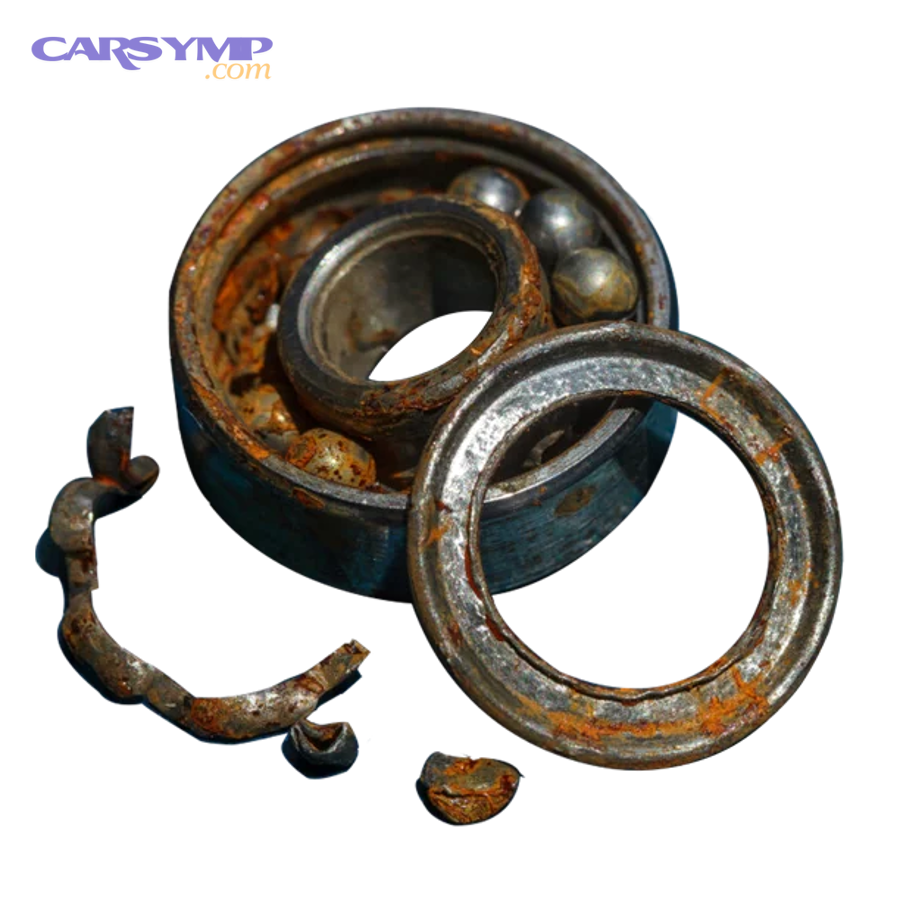
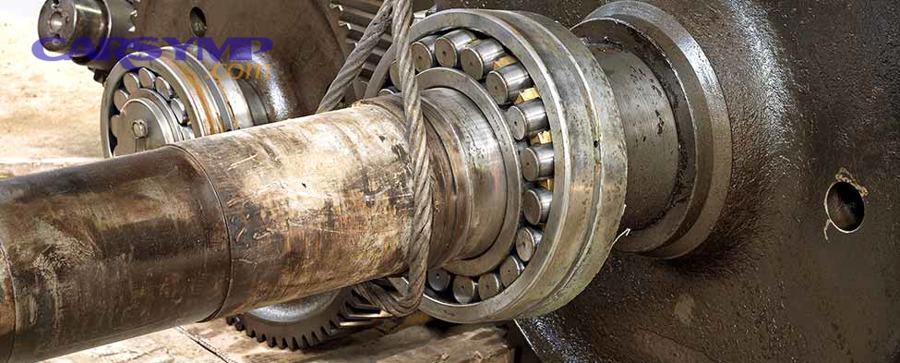
Contamination is another major category. Dust, water, debris, chemical residue, and metal particles enter through poor seals, dirty tools, improper storage, or unclean handling practices. Once particles enter the raceway, they scratch surfaces, accelerate wear, and shorten fatigue life.
Installation damage often occurs before the machine even restarts. Hammering through the wrong ring, forcing a bearing onto a shaft, heating it incorrectly, or using damaged mounting surfaces creates internal stress that appears later as noise, heat, and rough operation.
Misalignment and overload also matter. If the shaft and housing do not hold the bearing in proper relationship, the load stops distributing evenly across rolling elements. Some elements carry too much stress, fatigue begins early, and surface distress spreads quickly. Overload creates a similar effect, especially in shock-loaded or poorly balanced systems.
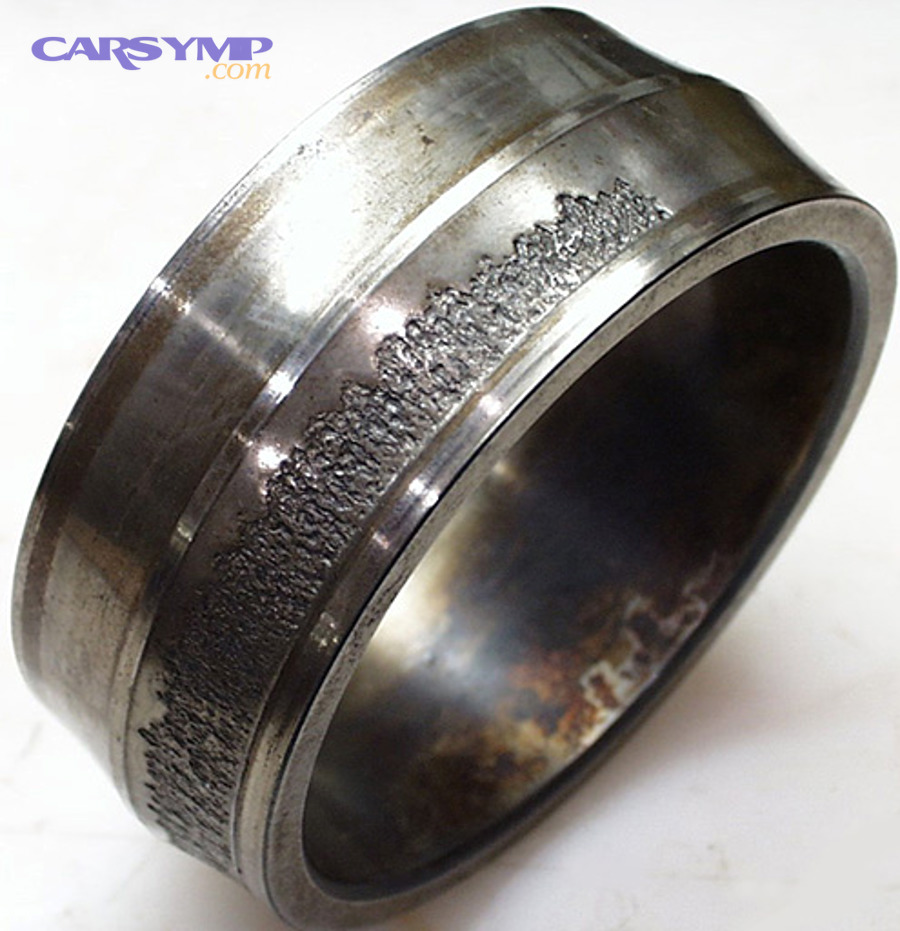
Incorrect fits, temperature extremes, and electrical damage form the remaining categories. Loose or overly tight fits change internal clearance. Excessive heat degrades lubricant and material stability. Stray current can cause fluting, which produces characteristic washboard-like damage patterns on raceways.
To make these categories easier to review, the table below shows what each cause typically does inside the bearing system.
| Cause category | What it does | Common result |
|---|---|---|
| Lubrication error | Reduces protective film or creates heat | Wear, smearing, overheating |
| Contamination | Introduces abrasive or corrosive material | Scoring, pitting, surface distress |
| Installation damage | Creates stress before service begins | Early roughness, cracking, cage damage |
| Misalignment | Uneven load distribution | Localized fatigue, heat, vibration |
| Overload | Exceeds design capacity | Indentation, fatigue, deformation |
| Incorrect fits | Alters internal clearance or movement | Creep, heat, looseness |
| Thermal stress | Changes material and lubricant behavior | Grease breakdown, loss of clearance |
| Electrical damage | Causes arcing across contact points | Fluting, pitting, noise |
The table shows that similar symptoms can come from different causes, which is why good diagnosis must follow the damage mechanism, not just the sound or heat level.
Which causes are preventable and which are harder to control?
Lubrication, contamination, handling, installation, sealing, and inspection are highly preventable causes, while extreme loads, harsh environments, and some application design limits are harder to control without engineering changes.
However, even the harder-to-control causes often become manageable when teams improve the surrounding process. For example, a wet environment may be unavoidable, but better seals, corrosion-resistant materials, and shorter relubrication intervals can still reduce failure risk. A shock-loaded machine may still need redesign, but alignment correction and better fit control can lower stress concentration.
The most preventable causes are usually also the least expensive to improve. Clean mounting tools, correct grease selection, trained installation methods, and disciplined inspection routines cost far less than repeated failures. These actions also produce compound benefits: fewer shutdowns, lower spare usage, better reliability forecasting, and longer bearing life.
Harder causes typically involve application physics. If the load is too high for the bearing type, if the shaft bends in service, or if electrical current regularly passes through the rotating assembly, the bearing will continue to fail until the design or operating condition changes. That is why root-cause reviews should include both maintenance actions and machine-level constraints.
For teams trying to explain failures to operators or fleet users, this distinction also mirrors familiar Car Symptoms logic. Some signs come from service habits and contamination, while others point to deeper system mismatch. The same idea appears in wheel-end service, where a wheel bearing replacement may solve the immediate issue, but not the deeper cause if the hub, alignment, seal, or load condition remains wrong.
How can maintenance teams prevent premature bearing failures?
Maintenance teams prevent premature bearing failures through 6 core practices: correct lubrication, contamination control, precision installation, alignment verification, condition monitoring, and documented preventive routines.
More importantly, these practices work best when they operate as one system, because a perfectly lubricated bearing can still fail early if dirt enters, fit is wrong, or installation creates hidden damage.
What preventive maintenance practices reduce bearing failures the most?
There are 6 preventive maintenance practices that reduce bearing failures the most: proper lubricant selection, correct lubricant quantity, sealing and cleanliness control, correct mounting, alignment checks, and routine condition inspection.
Specifically, lubricant selection comes first because the lubricant must match speed, load, temperature, and environment. Teams should choose grease or oil based on operating reality rather than habit. A high-speed application, a hot application, and a wet application do not need the same product. Once the right lubricant is selected, the quantity and interval matter just as much. Too little lubricant creates film starvation, while too much raises heat and churn.
Cleanliness control is equally critical. Bearings should stay in original packaging until use, mounting tools should remain clean, housings should be wiped and inspected, and seals should be checked for wear or distortion. Contamination often enters during short, ordinary tasks, not only during major failures.
Correct mounting reduces invisible damage. Technicians should press on the correct ring, verify fit dimensions, use proper heating methods when needed, and avoid impact loading through rolling elements. After mounting, alignment checks ensure the bearing will carry load evenly instead of concentrating stress.
Routine inspection closes the loop. Teams should track temperature, sound, vibration, lubricant appearance, and leakage over time. A single reading helps only slightly; a trend reveals whether the system is stable or deteriorating. This is the same reason predictive maintenance programs outperform reactive replacement strategies in many industrial settings.
For readers connecting this to transport or vehicle service, the principle remains the same. Safe-to-drive guidance with failing bearing depends on catching warning signs before severe heat, looseness, or wheel-end instability develops. Prevention is always cheaper and safer than waiting for obvious failure.
Can better lubrication alone prevent most premature bearing failures?
No, better lubrication alone cannot prevent most premature bearing failures, because contamination, installation damage, misalignment, and incorrect fits can destroy a bearing even when the lubricant is technically correct.
That said, lubrication still deserves top priority because it interacts with almost every other factor. Correct lubricant forms the film that separates contact surfaces, helps control temperature, and resists corrosion. Wrong lubricant or poor relubrication timing removes that protection quickly. Yet a clean, well-lubricated bearing can still fail if the shaft is bent, the housing is distorted, or dirt enters past a damaged seal.
The most effective maintenance teams therefore treat lubrication as one pillar of a broader control strategy. They specify lubricant type, quantity, relubrication interval, and application method. Then they support it with cleanliness discipline, accurate installation, and regular trend monitoring.
A useful rule is this: if lubrication is good but bearing failures continue, the problem usually lies in contamination, fit, alignment, or machine condition. If lubrication is poor, the team must correct it first before interpreting other symptoms confidently.
According to long-standing tribology research and industrial reliability practice, improper lubrication contributes to a large share of rolling bearing failures, but it rarely acts alone when failure patterns are fully investigated.
How should bearings be installed and handled to avoid early failure?
Bearings should be installed and handled through clean preparation, correct tool use, proper fit control, correct force direction, and post-installation checks to avoid damage before service begins.
Next, installation deserves close attention because many “mystery” failures actually begin on the workbench, not during machine operation.
What installation mistakes damage bearings before startup?
The most common installation mistakes are striking through rolling elements, using dirty tools, forcing bad fits, overheating bearings, misapplying preload, and ignoring mounting surface condition.
More specifically, force direction is one of the biggest errors. If a technician presses a bearing onto a shaft by pushing through the outer ring, or into a housing by pushing through the inner ring, the rolling elements transmit the force and can indent the raceways. Those tiny marks later grow into vibration and noise.
Dirty handling is another silent killer. Dust on a bench, fibers on gloves, metal chips in a housing, and reused contaminated grease all shorten bearing life. The bearing may feel fine at startup, but contamination begins damaging the contact surfaces immediately.
Incorrect fit is equally serious. A fit that is too tight can remove needed clearance and raise heat. A fit that is too loose can allow creep, fretting, or movement between surfaces. Improper heating adds another risk. Excessive or uneven heating changes material condition and can damage seals or lubricant. Technicians should use approved induction or controlled heating methods rather than open flame or improvised heating.
Mounting surface quality also matters. Burrs, dents, poor shaft finish, and out-of-round housings disturb how the bearing sits and carries load. That is why careful measurement and surface inspection belong to installation, not only to machine-shop work.
The lesson for any bearing system, including wheel-end units, is that installation quality directly influences life. A wheel bearing replacement performed with poor torque control or damaged mating surfaces may appear complete, yet still plant the seeds of an early repeat failure.
How do correct fits, alignment, and sealing compare in failure prevention?
Correct fits win in stability, alignment is best for load distribution, and sealing is optimal for contamination control; together, they prevent most early damage mechanisms more effectively than any one factor alone.
Meanwhile, each factor protects the bearing in a different way. Correct fits keep the bearing seated properly and preserve internal geometry. Alignment keeps the rolling load spread as evenly as possible across the contact path. Sealing prevents water, grit, and debris from entering the system and damaging the lubricant film.
If one of these fails, the others cannot fully compensate. A well-sealed bearing still fails early if misalignment overloads one side of the raceway. A perfectly aligned bearing still fails if contamination enters past worn seals. A clean and aligned system still overheats if the fit removes internal clearance or allows movement.
For maintenance planning, the comparison points to a useful priority sequence. First, control cleanliness and sealing to keep harmful material out. Second, verify fits and mounting dimensions to preserve the bearing’s internal operating condition. Third, check alignment so the load acts as intended in service. Teams that control all three usually see the strongest gains in bearing life.
What warning signs show that a bearing is heading toward premature failure?
The main warning signs are rising temperature, abnormal noise, increasing vibration, lubricant leakage or discoloration, metal debris, and growing looseness.
Besides identifying symptoms, teams must learn what those symptoms mean, because early action depends less on noticing a sign than on interpreting it correctly.
What early symptoms should maintenance teams check first?
There are 7 early symptoms maintenance teams should check first: unusual sound, rising temperature, vibration change, lubricant condition, leakage, visible debris, and shaft or housing movement.
To begin, sound is often the easiest signal. A healthy bearing typically produces steady, predictable sound. Rumbling, grinding, clicking, or high-pitched whining can indicate surface damage, contamination, or loss of lubrication. Temperature is another fast signal. A stable machine has a normal operating range; when temperature climbs above its usual trend, the cause may be friction, overload, or excessive grease churning.
Vibration adds more diagnostic value because it can reveal damage before the human ear hears it clearly. Rising vibration at consistent operating conditions often points to developing defects. Lubricant condition also matters. Grease that darkens, hardens, leaks excessively, or contains metallic particles provides direct clues about internal distress.
Movement or looseness is especially serious. If the shaft or housing shows more play than normal, internal clearance or fit condition may have deteriorated significantly. In vehicle-related contexts, similar symptoms appear in Car Symptoms such as droning noise that changes with speed, looseness, or heat near the hub. Those same clues inform Safe-to-drive guidance with failing bearing, because growing looseness can quickly turn from a maintenance issue into a safety issue.
The goal is not just to detect failure, but to detect trend direction. One hot reading may reflect a temporary event. A rising pattern across temperature, sound, and lubricant condition signals real progression.
Are vibration, noise, and heat enough to diagnose the cause?
No, vibration, noise, and heat are not enough to diagnose the cause by themselves, because multiple failure modes create similar symptoms and only combined evidence reveals the true mechanism.
However, those signs are still essential starting points. They tell the team that something is wrong and help prioritize urgency. A noisy bearing may suffer contamination, misalignment, surface fatigue, or electrical damage. Heat may come from over-lubrication, excess load, poor fit, or inadequate cooling. Vibration may reflect internal defect growth, imbalance, looseness, or a nearby mechanical issue.
That is why good diagnosis combines symptom data with maintenance history. Teams should review lubricant type and interval, installation date, fit records, seal condition, alignment measurements, operating changes, and removed-part inspection. The failure pattern on the raceway or rolling elements often confirms what symptoms alone cannot.
This step prevents expensive misdiagnosis. Replacing a bearing without checking the real cause often leads to repeat failure, wasted labor, and unnecessary downtime. In cost-sensitive sectors, that repeat cycle is what inflates a Wheel bearing replacement cost estimate or any other bearing service budget. The replacement part is only one cost; repeated labor, machine stoppage, and collateral damage often cost more than the component itself.
What is the best prevention checklist for extending bearing life?
The best prevention checklist uses 3 time-based layers—daily checks, weekly trend review, and shutdown inspection—to extend bearing life and reduce repeat failures.
In short, a checklist works because it turns general best practices into repeatable actions, and repeatable actions are what protect reliability over time.
What should a daily, weekly, and shutdown bearing prevention checklist include?
A strong bearing prevention checklist includes daily operating checks, weekly condition reviews, and shutdown verification tasks, each designed to catch a different stage of developing damage.
Daily checks should stay simple and consistent. Operators or technicians should listen for abnormal sound, verify temperature against normal range, inspect for grease leakage, and look for contamination around seals or housings. These short checks catch obvious change early.
Weekly checks should go deeper. Teams should review vibration or condition-monitoring trends, inspect lubricant appearance, check seal condition more closely, and compare machine behavior against recent history. Weekly review is where early drift becomes visible.
Shutdown checks should be the most detailed. During planned downtime, teams can verify alignment, inspect fits and seating surfaces, review relubrication accuracy, examine removed grease or debris, confirm seal integrity, and document any damage patterns found. This is also the right moment for root-cause discussion rather than simple replacement.
The table below summarizes what each interval should cover.
| Interval | Main focus | Typical tasks |
|---|---|---|
| Daily | Fast operating stability check | Sound, temperature, leakage, visible contamination |
| Weekly | Trend confirmation | Vibration review, grease condition, seal inspection |
| Shutdown | Root-cause control | Alignment, fits, housing condition, damage analysis, documentation |
This checklist structure helps teams match effort to timing. Daily actions catch obvious changes quickly, weekly actions track trend direction, and shutdown work corrects underlying causes before restart.
Which is better for extending bearing life: reactive replacement or preventive control?
Preventive control is better for extending bearing life, reactive replacement is only useful for restoring operation after failure, and predictive trend review is best when teams want both reliability and planning efficiency.
Thus, reactive replacement should not be the main strategy. It solves the immediate breakdown but usually ignores why the breakdown happened. When the root cause remains in place, the next bearing enters the same damaging environment and fails again.
Preventive control works better because it reduces the damage mechanisms before they grow. Clean handling, correct lubrication, fit verification, seal maintenance, and routine monitoring directly lower failure probability. Predictive review adds another advantage by showing when degradation is accelerating, which allows teams to intervene during planned downtime instead of emergency stoppage.
This difference affects cost, safety, and credibility. A site that relies on reactive replacement often accepts repeated interruptions as normal. A site that uses preventive control and trend review treats repeat failure as evidence that the process still needs correction. That mindset is what truly extends bearing life.
According to industrial maintenance studies across rotating equipment, planned and condition-based maintenance programs reduce unplanned downtime and lower total maintenance cost compared with failure-driven replacement alone.
Which specialized bearing failure modes and operating environments require extra prevention strategies?
Specialized failure modes such as electrical fluting, false brinelling, fretting corrosion, and wet-environment damage require extra prevention because standard lubrication and routine replacement do not fully address their root causes.
More importantly, these cases expand the topic beyond common failure patterns and help maintenance teams avoid overlooking rare but costly mechanisms.
What is the difference between contamination damage and electrical fluting?
Contamination damage is caused by abrasive or corrosive material entering the bearing, while electrical fluting is caused by current passing through the bearing and damaging the raceway surface.
However, the two can sound similar during operation because both often create noise and vibration. The visual pattern is what separates them. Contamination damage usually appears as scratches, dents, abrasive wear, or irregular surface distress. Electrical fluting often appears as evenly spaced corrugation-like marks on the raceway, producing a washboard pattern.
The prevention methods also differ. Contamination calls for better seals, cleaner handling, cleaner lubricant application, and environmental control. Electrical fluting requires electrical grounding solutions, insulated bearings, shaft grounding devices, or changes to drive and motor arrangements.
This comparison matters because replacing the bearing alone will not solve electrical fluting. The current path must be interrupted or redirected, or the same pattern will return.
Can false brinelling happen even when the machine is not running?
Yes, false brinelling can happen even when the machine is not running because vibration, transport movement, or small oscillations can damage contact points without normal rotation.
Specifically, this problem often occurs during storage, transport, standby periods, or equipment that vibrates while idle. The rolling elements move microscopically in place rather than rotating through full cycles, which damages the contact surfaces and displaces lubricant from the loaded zone.
Prevention therefore focuses on storage and handling practices as much as operating practices. Equipment may need shaft locking, rotation during storage, reduced transport vibration, or protective packing strategies. Bearings stored for long periods may also need inspection before use instead of automatic installation.
This rare mode shows why bearing protection starts before operation begins. The service environment includes warehouse conditions, shipping conditions, and idle machine behavior—not just production time.
What special precautions are needed in wet, washdown, or corrosive environments?
Wet, washdown, and corrosive environments require stronger seals, suitable corrosion-resistant materials, tighter cleanliness control, compatible lubricants, and more frequent inspection intervals.
In addition, these environments demand realistic maintenance intervals. Moisture and chemicals attack both the bearing surfaces and the lubricant. A lubrication schedule that works in a dry indoor application may fail quickly in washdown or outdoor service. Seals must resist not only water intrusion but also chemical exposure and pressure during cleaning.
Teams should also inspect the area around the bearing, not just the bearing itself. Splash paths, drainage, enclosure gaps, and cleaning methods often determine whether contamination reaches the component. Prevention improves when maintenance and operations coordinate on how the equipment is washed, not only on how the bearing is replaced.
This principle also applies in vehicle contexts, where repeated water intrusion, damaged seals, or corrosion can make wheel bearing replacement recur sooner than expected.
How do specialty lubricants and grease compatibility affect bearing life?
Specialty lubricants improve bearing life when they match the operating environment, while incompatible greases shorten bearing life by reducing film performance, increasing separation, or destabilizing the lubricant structure.
More specifically, high-temperature, moisture-resistant, food-grade, or heavy-load applications may require specialty formulations that ordinary grease cannot support well. Yet even the correct specialty grease can fail if technicians mix it with an incompatible product during relubrication. The mixture may soften, harden, separate, or lose load-carrying ability.
That is why grease control needs documentation, labeling, and training. Technicians should know what product belongs to each asset, what interval applies, and whether old grease must be purged before changeover. Lubrication succeeds when product choice and process discipline work together.
According to tribology practice across industrial maintenance programs, lubricant selection and compatibility management play a major role in controlling friction, wear, and service life in rolling-element bearings.