


Choosing the right oil filter is the fastest way to avoid wrong filter fitment—because most “fitment” failures aren’t mysterious at all. They happen when the gasket doesn’t seat, the threads don’t match, or the filter can’t flow oil the way your engine expects, and that can turn a routine service into a sudden leak.
Next, you’ll learn what “wrong filter fitment” actually means in practical, under-the-car terms (threads, gasket diameter, bypass design), so you can spot incompatibility before you tighten anything down.
Then, you’ll get a compatibility-first buying method—part-number verification, spec cross-checks, and quick physical checks—that reduces risk even when you’re standing in front of a wall of look-alike filters.
Introduce a new idea: once you understand why fitment mistakes fail (double-gasketing, wrong thread pitch, wrong gasket landing, overtightening), the rest becomes a repeatable process you can apply to every filter replacement you do.
What does “wrong filter fitment” mean (size vs compatibility)?
Wrong filter fitment means the filter physically installs but does not seal, align, or operate correctly for your engine—usually because the thread spec, gasket dimensions, or internal valve design doesn’t match what the filter mount and lubrication system were designed for.
To better understand why this matters, it helps to separate “looks like it fits” from “is compatible under pressure and heat.”
Is a filter that “threads on” automatically the right fit?
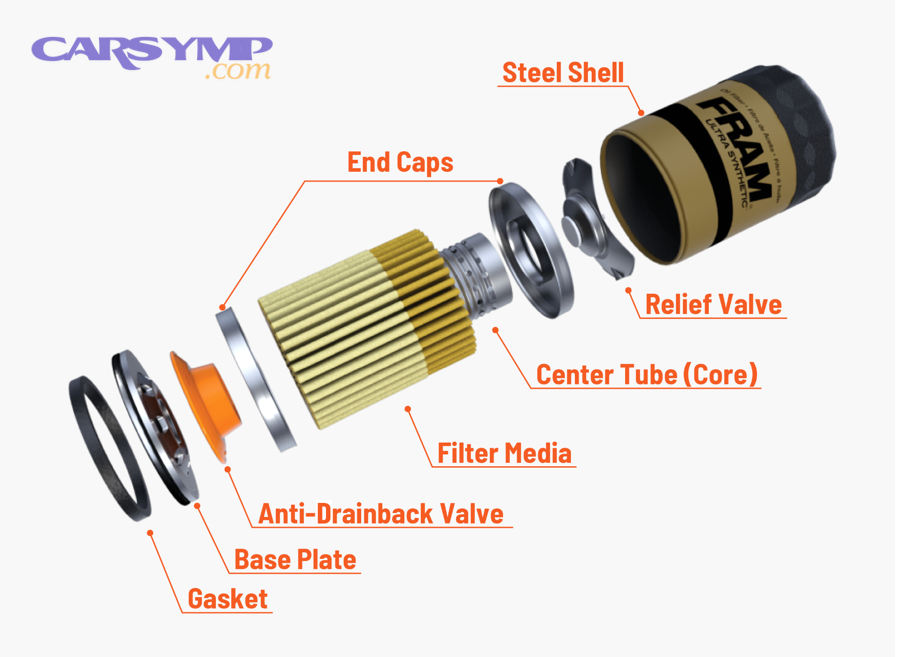
No—a filter that threads on is not automatically the right fit because (1) threads can partially engage while still being incorrect, (2) the gasket can touch but not seat on the correct sealing land, and (3) the filter’s bypass/anti-drainback design can be incompatible with the oiling system’s expectations.
More specifically, “threads on” only proves that the center hole isn’t wildly different—it does not prove correct thread pitch, gasket OD/ID, gasket compression range, or base plate geometry.
What “false fit” looks like in real life
- The filter turns smoothly for the first few rotations, then binds (common when pitch is close-but-wrong).
- The gasket contacts the pad, but the filter “bottoms out” early or rocks slightly (wrong gasket position/OD).
- The filter installs and doesn’t leak immediately… but leaks after a hot drive when oil pressure and viscosity shift.
What’s the difference between “wrong size” and “wrong compatibility”?
Wrong size is mainly about packaging and clearance (length/diameter interfering with a frame rail, exhaust, skid plate, or splash shield). Wrong compatibility is about whether the filter can seal and function correctly—threads, gasket seating, and the internal flow path.
In addition, wrong size can still be safe if the filter is otherwise compatible and has enough clearance; wrong compatibility can be unsafe even if the filter is the “right size,” because it can dump oil quickly or restrict flow.
Compatibility includes (at minimum)
- Thread diameter and pitch (the mount stud must match the filter’s threaded center).
- Gasket OD/ID and location (the gasket must seal on the engine’s machined pad).
- Base plate design (inlet hole layout must align with the mount’s oil passages).
- Valve strategy (anti-drainback valve and bypass behavior should match system needs).
What are the common filters where fitment goes wrong (oil, fuel, air)?
There are 3 common filter categories where fitment errors show up differently: oil filters, fuel filters, and air/cabin filters, based on how they seal and how sensitive the system is to restriction.
Then, once you know the “failure mode” for each filter type, you can avoid mixing up what “fitment” even means.
1) Oil filters (spin-on or cartridge)
Fitment goes wrong through thread mismatch, gasket mismatch, double-gasketing, wrong housing O-ring, or incorrect cap torque.
2) Fuel filters
Fitment issues often show up as hard starts, hesitation, stalling, or loss of power because the system is sensitive to restriction and air leaks. (We’ll cover Fuel filter symptoms and replacement timing later, because many DIYers confuse fuel starvation symptoms with “bad gas” or ignition problems.)
3) Air/cabin filters
Fitment is usually about sealing edges and airflow direction—less catastrophic than oil, but still important for HVAC performance and dust bypass.
How do you choose the correct filter size and compatibility before you buy?
Choose the correct filter by using a 3-layer verification method: (1) confirm the exact part number from an OEM-grade source, (2) cross-check critical specs (threads, gasket, height/clearance), and (3) do a fast visual/physical sanity check before installation—so you don’t discover incompatibility after the engine is full of oil.

Next, we’ll turn that into a repeatable “buying workflow” you can do in under five minutes.
Should you trust the parts store “fits your vehicle” filter list?
Yes—but only as the starting point, because (1) catalogs can be wrong for mid-year engine changes, trims, or swapped engines, (2) cross-references can collapse multiple part numbers into “close enough,” and (3) prior owners may have changed housings, adapters, or sandwich plates.
More importantly, the goal is not to distrust the catalog—it’s to verify with one more layer before you tighten the filter.
What to do at the shelf (fast, no tools)
- Match the exact part number from your owner’s manual or a reputable catalog.
- Confirm the gasket looks centered and similar diameter compared to the old filter (if you brought it).
- Check that the new filter’s base plate inlet holes are similar style and spacing.
What specs matter most (thread pitch, gasket OD/ID, height, bypass)?
There are 4 specs that matter most for avoiding wrong filter fitment: thread pitch, gasket OD/ID (and gasket location), height/diameter clearance, and bypass/anti-drainback behavior.
Then, if you validate these four, you catch the majority of “it fit… until it didn’t” scenarios.
1) Thread pitch and diameter (non-negotiable)
- If pitch is wrong, you risk cross-threading or partial engagement that fails under vibration.
- Even if it “catches,” it may not clamp the gasket correctly.
2) Gasket OD/ID + gasket landing position
- The gasket must compress on the engine’s sealing surface—not on a chamfer, ridge, or recess.
- Wrong gasket placement can create a leak that only appears after warm-up.
3) Height and diameter clearance
- Ensure room for removal and installation (wrench clearance, skid plates, exhaust proximity).
- Avoid “bigger is better” if it crowds hot components or rubs.
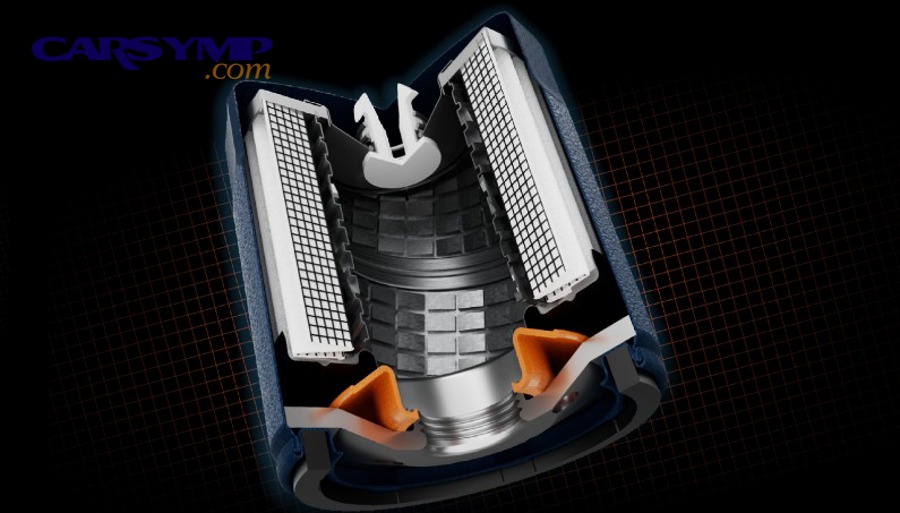
4) Bypass valve and anti-drainback valve (system behavior)
- A bypass valve that opens differently than expected can change how oil flows when cold or when the media loads up.
- An anti-drainback valve matters when the filter mounts sideways or upside-down (it helps prevent dry-start delay).
How can you verify fitment at home ?
You can verify fitment at home using VIN-based confirmation + old-filter comparison + mount inspection, which together catch both catalog errors and “previous owner mods.”
Specifically, do it in this order:
Step 1 — VIN-based lookup (best for split years and trims)
Use VIN in a reputable catalog so the system resolves the exact engine and production split.
Step 2 — Old filter comparison (best for catching oddballs)
Compare: thread feel, gasket diameter, base plate layout, and overall height.
Don’t blindly copy the old filter if you suspect it was wrong; use this as a clue, not the authority.
Step 3 — Mount inspection (best for catching adapter/housing changes)
Look for an oil cooler adapter, sandwich plate, remote filter lines, or a non-OEM housing.
Step 4 — Build your “DIY filter replacement checklist”
Keep this checklist somewhere you’ll actually use it:
- Correct part number verified (manual + VIN lookup)
- Threads match (start by hand, smooth engagement)
- Gasket surface clean + gasket oiled
- Correct tightening method (hand tight + specified fraction turn)
- Post-start leak check + re-check after warm-up
Which fitment mistakes cause leaks or bypass—and how do you prevent them?
The biggest fitment mistakes that cause leaks or bypass are double-gasketing, wrong gasket landing, wrong thread pitch, and over/under-tightening, and you prevent them by cleaning the mount, confirming the old gasket came off, hand-starting threads, and tightening to the correct compression—not by “making it extra tight.”
Next, we’ll break down each mistake with prevention steps you can actually follow on the ground in your driveway.
What is “double-gasketing” and why is it so dangerous?
Double-gasketing is when the old filter’s rubber gasket sticks to the engine, and the new filter’s gasket stacks on top—creating a seal that can blow out once oil pressure rises.
More specifically, stacked gaskets don’t compress evenly; the filter can feel “tight,” but the seal is unstable under heat and pressure.
Prevent it every time
- After removing the old filter, wipe the mounting pad with a clean rag and confirm you can see bare metal (or the machined sealing surface).
- Visually confirm the old gasket is on the old filter, not on the engine.
Why can overtightening warp the gasket or crack a housing?
Overtightening causes problems because (1) it can extrude or deform the gasket so it no longer seals evenly, (2) it can make removal destructive later, and (3) on cartridge housings it can damage threads or crack plastic/aluminum components.
Then, once the sealing surface is distorted, you’ll chase leaks even with the “right” parts.
Better tightening rule (safer than brute force)
- Spin-on: oil the gasket, hand-tighten until gasket contact, then tighten the specified fraction turn (common guidance is about 3/4 turn, but follow filter instructions when provided).
- Cartridge: torque the cap to spec with a torque wrench (and replace the correct O-ring).
How do wrong threads or cross-threading show up during install?
Wrong threads or cross-threading usually show up as binding, gritty resistance, wobble, or angled seating during installation—especially in the first few turns when the filter should be easiest to spin.
In addition, cross-threading often feels “tight” too early, which tempts people to grab a wrench and force it—making the damage worse.
Prevention
- Always start the filter by hand. If it doesn’t spin smoothly, stop.
- Back it off, realign, and try again. If it still binds, assume incompatibility and verify specs.
What causes filter bypass events (cold starts, clogged media, wrong bypass spec)?
Filter bypass events happen when the system decides “some oil flow is better than no oil flow,” typically during cold starts (thick oil) or when the filter media is restricted, allowing a bypass valve to open so oil can still reach engine bearings.
More importantly, bypass isn’t automatically “bad”—but a wrong bypass strategy for the application can change how quickly oil pressure stabilizes and how much unfiltered oil circulates under certain conditions.
How to reduce unwanted bypass conditions
- Use the correct viscosity oil for your climate (cold starts matter).
- Replace oil and filter on time so the media isn’t overloaded.
- Avoid off-catalog substitutions where the bypass design is unknown.
What happens if you use the wrong filter—and when should you stop driving?
If you use the wrong filter, the most common outcomes are oil leakage, oil starvation risk (from severe restriction or seal failure), chronic seepage, or abnormal start-up noise, and you should stop driving immediately if you see a sudden leak, a rapid oil-pressure warning, or oil pooling under the vehicle.
Next, we’ll translate those risks into clear “stop vs. monitor” decisions.
What are the immediate symptoms (leaks, oil pressure light, noises)?
Immediate symptoms of wrong filter fitment include fresh oil dripping at the filter, an oil smell/smoke near hot surfaces, an oil-pressure warning, and ticking/knocking that appears right after service.
Specifically, the “time window” matters: problems that appear in the first 60 seconds are usually gasket seating, double-gasketing, or a loose filter; problems after a warm drive often point to gasket deformation or a sealing-land mismatch.
Stop-driving symptoms (do not “see if it goes away”)
- Oil-pressure warning light stays on or flickers abnormally
- Oil visibly pouring or spraying from the filter area
- Rapid puddle formation under the engine
Can a wrong filter damage the engine even if it doesn’t leak?
Yes—a wrong filter can damage the engine even if it doesn’t leak because (1) it may restrict flow enough to delay pressure on cold start, (2) it may bypass too easily under normal conditions, and (3) it may not trap contaminants effectively over the intended interval, increasing wear risk over time.
Then, the danger is that everything can look “fine” in the driveway while wear accumulates quietly.
What’s the risk difference between oil filter wrong-fit and fuel filter wrong-fit?
Oil filter wrong-fit risks fast catastrophic failure (oil loss and oil starvation), while fuel filter wrong-fit more often causes drivability problems (hesitation, stalling, poor acceleration) that may strand you or stress the fuel pump rather than instantly dumping a fluid onto the ground.
However, fuel issues can still become expensive if the restriction is severe, so the right response is early diagnosis—not extended driving while symptoms worsen.
Quick pointer
- Oil filter problems: treat as urgent safety/engine risk.
- Fuel filter problems: treat as drivability + fuel system health risk, verify symptoms and schedule service.
How can you diagnose wrong filter fitment after installation (in 10 minutes)?
You can diagnose wrong filter fitment in 10 minutes by doing a controlled idle test + visual leak inspection + pressure/indicator check + post-warm re-check, which quickly separates “simple seating issue” from “wrong part or damaged threads.”
Then, if anything looks off, you fix it before you drive far enough to create a big problem.
What to inspect first (gasket seat, mount surface, oil residue trails)?
First inspect the gasket seat and the mounting surface, because most fitment failures are sealing failures you can see.
Specifically, use a bright light and look for:
- A wet ring forming at the gasket perimeter
- Oil residue trails running down from the filter seam
- A gasket that appears pinched or unevenly compressed
Common “tell”
- If oil starts at the gasket line and spreads outward, it’s usually a sealing issue (gasket, double gasket, dirty pad).
How do you check for incorrect part number or wrong housing O-ring?
Check the part number mismatch by confirming the installed filter’s part number (printed on the can or box) against the verified part number you should be using (manual/VIN lookup).
In addition, for cartridge systems, check the housing O-ring:
- Correct O-ring size and profile
- Correct groove placement (some caps have multiple grooves)
- No twisting, nicks, or old O-ring left behind
What is the safe “restart and recheck” routine after a filter change?
A safe restart and recheck routine is: start → idle 30–60 seconds → shut down → inspect → restart → warm to operating temp → re-inspect, and it works because leaks often appear only after the gasket heats and pressure stabilizes.
More specifically:
- Start and let it idle. Watch the oil-pressure light/gauge.
- Shut off and immediately inspect with a light.
- Restart, then bring it to operating temp (or at least a short warm-up).
- Recheck the gasket line and the ground beneath the vehicle.
Build it into a Preventive maintenance filter schedule
If you want fewer surprises, make leak checks part of a simple routine:
- Quick look under the car after every oil change
- Recheck after the first short drive
- Track intervals so you’re not running filters beyond their intended service window
How do bypass valves and anti-drainback valves affect filter “compatibility”?
Bypass valves and anti-drainback valves affect compatibility because they change how oil behaves when conditions aren’t ideal—cold starts, thick oil, or high restriction—and the “wrong” valve behavior can create delayed lubrication, noisy startups, or frequent bypass flow that reduces filtration under specific conditions.

Next, we’ll cover the two valve types separately so you know what matters for your engine layout and driving conditions.
What does an anti-drainback valve do, and when do you need it?
An anti-drainback valve helps keep oil from draining out of the filter when the engine is off, so oil reaches key surfaces faster on startup—especially when the filter mounts sideways or upside down.
More specifically, if your filter orientation allows oil to drain back, an effective anti-drainback valve reduces “dry-start delay,” which many drivers perceive as brief ticking at startup.
How does bypass valve pressure relate to cold-start oil flow?
Bypass valve pressure relates to cold-start oil flow because cold oil is thicker and can raise differential pressure across the media; when that pressure gets high enough, the bypass can open to keep oil moving to the engine.
In addition, this is why “it fits” is not the same as “it’s compatible”: the internal design influences behavior when your engine is under stress (cold start, high RPM, long intervals).
What does the research say about filter media differences vs fuel consumption?
According to a study by Universidad Politécnica Salesiana from the Grupo de Ingeniería Automotriz, Movilidad y Transporte (GiAUTO), in 2025, testing five spin-on oil filters in real driving at high altitude found clear oil-cleanliness differences between filter media (using ISO 4406 cleanliness codes), while short-term fuel-consumption differences were not statistically significant (ANCOVA, p = 0.29).
This matters because it reinforces a practical takeaway: once you’ve avoided wrong fitment, “better” filters are often about filtration behavior and service strategy, not instant MPG.
Where does “Fuel filter symptoms and replacement timing” fit into a DIY plan?
Fuel filters are a different system, but the DIY mindset should be the same: match the correct part, watch for restriction symptoms early, and replace on schedule rather than after failure.
If your vehicle uses a serviceable fuel filter, common clogged-fuel-filter symptoms include hard starting, sluggish acceleration, rough idle, stalling, and poor fuel economy, and replacement timing varies by manufacturer and use case—so your best baseline is the owner’s manual plus symptom awareness.
Practical wrap-up
If you only remember one rule: “Wrong vs right” fitment is compatibility under pressure. Verify part number, confirm threads and gasket seating, tighten correctly, and recheck for leaks—because the best filter is the one that seals perfectly and keeps oil moving when it matters most.