


Most car owners should get a wheel alignment checked about once a year or every 12,000 to 15,000 miles, but the right schedule depends on road conditions, driving habits, tire wear, and suspension condition. That direct answer matters because alignment is not only about comfort; it affects tire life, steering stability, and the way your vehicle tracks on the road. )
Just as important, Wheel alignment symptoms often appear before a routine interval arrives. A car that pulls to one side, a steering wheel that sits off-center, or uneven tire wear can all signal that you should book service sooner rather than later. Those signs help drivers move from a calendar-based guess to a condition-based decision. ([firestonecompleteautocare.com](https://www.firestonecompleteautocare.com/repair/alignment/problems/?))
The timing also changes after real-world events. Hitting potholes, bumping curbs, driving on rough roads, or replacing suspension and steering parts can alter wheel angles enough to justify an earlier check. That is why alignment frequency recommendations are always part schedule, part symptom awareness, and part maintenance context. ([tablet.lesschwab.com](https://tablet.lesschwab.com/article/alignment/when-to-get-your-car-alignment-checked.html?))
Many drivers also confuse wheel alignment with tire balancing or tire rotation, which leads to delayed repairs and wrong expectations. Introduce a new idea: the main content below explains the normal service interval, the most common warning signs, the situations that change the schedule, and the related services that drivers often mix together.
How Often Should You Get a Wheel Alignment?
Most vehicles benefit from a wheel alignment check about once a year or every 12,000 to 15,000 miles for three practical reasons: tire wear control, steering stability, and preventive maintenance timing. To better understand that recommendation, it helps to separate a routine alignment check from an actual adjustment, because not every inspection ends with a correction. )

A routine schedule works because alignment changes gradually on many daily-driven vehicles. Roads are never perfectly smooth, tires age, suspension bushings flex, and repeated small impacts slowly shift wheel angles away from specification. When that happens, the car may still feel acceptable to drive, but the tires can begin wearing in ways that shorten their useful life. That is why many shops and maintenance guides suggest checking alignment around the same time drivers rotate tires or perform annual maintenance. )
The best way to interpret alignment frequency recommendations is to treat them as a baseline, not a rigid law. A lightly used car driven mostly on smooth highways may stay within spec longer than one driven daily through potholes, steep driveways, and city curbs. In other words, the schedule gives you a safe maintenance rhythm, while vehicle behavior tells you whether you need service earlier.
Is a Wheel Alignment Needed Every Year?
Yes, a yearly wheel alignment check is a sensible preventive practice for most drivers because road impacts accumulate, tire wear develops slowly, and steering changes can appear before they feel severe. More specifically, the yearly interval works as a low-friction reminder that fits naturally into regular auto care. )
An annual check does not mean every car will need a paid adjustment every year. It means a professional inspection once a year gives you a chance to catch mild toe, camber, or steering-angle deviations before they become expensive tire problems. This is especially useful for owners who do not inspect tread wear often or who drive enough miles that minor misalignment can become major uneven wear within a single tire lifecycle.
A yearly check is also helpful because alignment problems are not always dramatic. Many drivers expect obvious pulling before they act, but slight misalignment can wear tread edges long before the car feels unsafe. Preventing alignment problems often starts with simple consistency: check tire pressure monthly, inspect tread wear visually, and keep alignment inspection on a predictable schedule instead of waiting for a severe symptom.
According to AutoZone, most vehicles benefit from a wheel alignment every 12,000 to 15,000 miles or about once a year. )
What Is the Recommended Mileage Interval for a Wheel Alignment?
The recommended mileage interval for a wheel alignment is commonly about 12,000 to 15,000 miles, although the real need depends on road quality, suspension wear, tire condition, and driving events. Specifically, mileage is useful because it gives drivers a concrete maintenance trigger. )
Mileage guidance matters most for commuters, rideshare drivers, delivery drivers, and families who cover long distances every month. If you drive 15,000 to 20,000 miles a year, waiting for a random symptom may allow a small angle problem to ruin a costly set of tires. By contrast, a lower-mileage vehicle might reach the one-year mark before it reaches the mileage benchmark, which is why “whichever comes first” is a smart way to think about alignment timing.
It also helps to connect mileage to other maintenance events. Many drivers schedule alignment checks when they rotate tires, replace tires, or service worn steering and suspension parts. That approach reduces the chance of forgetting and makes the service decision easier because you are already evaluating tire condition at the same time.
A practical takeaway is simple: if you cannot remember the last alignment inspection and you have driven well over 12,000 miles, an alignment check is reasonable even if symptoms are mild. That is not over-maintenance; it is a low-cost step that can protect far more expensive tires.
According to Russ Darrow Mitsubishi, a common rule of thumb is to check wheel alignment every 12,000 miles or annually, whichever comes first. ([russdarrowmitsubishi.com](https://www.russdarrowmitsubishi.com/prevent-tire-wear-by-having-your-alignment-and-suspension-checked/?srsltid=AfmBOopQZwrH3LsC8d5mgWuMM-VPE-V8kWKGxx5UohvW7incrOCZn2q8&))
What Signs Show That You Need a Wheel Alignment Sooner?
The most common wheel alignment symptoms are pulling to one side, an off-center steering wheel, and uneven or premature tire wear, and each one can justify service before the normal interval arrives. To better understand those signs, it helps to read the vehicle’s behavior and the tire tread together rather than relying on one clue alone. ([firestonecompleteautocare.com](https://www.firestonecompleteautocare.com/repair/alignment/problems/?))

Symptoms matter because alignment is a geometry problem that shows up in motion and on the tire surface. A car can drift, the steering wheel can sit crooked while the car goes straight, or the tread can scrub off on one edge faster than expected. The earlier you notice those clues, the easier it is to correct the problem before tire damage becomes permanent. ([firestonecompleteautocare.com](https://www.firestonecompleteautocare.com/repair/alignment/problems/?))
Drivers sometimes ignore subtle symptoms because the vehicle still feels controllable. That is a mistake. Alignment problems rarely improve on their own, and ongoing use usually multiplies the cost by accelerating wear or hiding worn suspension parts that need repair alongside the alignment.
Does Pulling to One Side Mean You Need a Wheel Alignment?
Yes, pulling to one side often means you need a wheel alignment because mis-set wheel angles affect straight-line tracking, steering-center position, and tire scrub; however, tire pressure, brake drag, or worn parts can cause a similar sensation. Therefore, pulling is a strong signal to inspect the vehicle, not a reason to assume alignment is the only issue. ([firestonecompleteautocare.com](https://www.firestonecompleteautocare.com/repair/alignment/problems/?))
When a vehicle pulls consistently on a flat road with correct tire pressure, alignment becomes one of the first things to check. In many cases, front toe settings or cross-angle differences make the car seek one direction instead of rolling neutrally. The driver responds by holding the steering wheel slightly off center, which masks the real problem while adding long-term tread wear.
This is where DIY checks before alignment appointment can save time and money. Before booking service, check all four tires for correct pressure, look for one tire that appears more worn than the others, and confirm that the pull happens on more than one road. If the pull disappears after tire pressure correction, the issue may be simpler than alignment. If it remains, an alignment inspection becomes more justified.
It is also worth noting that a car can pull after an alignment if another issue remains unresolved, such as uneven tire wear or worn suspension components. That is why a good shop evaluates alignment numbers and mechanical condition together instead of treating the printout as the whole story.
Firestone lists pulling to one side and an off-center steering wheel among the common symptoms of bad wheel alignment. ([firestonecompleteautocare.com](https://www.firestonecompleteautocare.com/repair/alignment/problems/?))
What Tire Wear Patterns Suggest a Wheel Alignment Problem?
There are four common wear patterns that often point toward an alignment problem: inner-edge wear, outer-edge wear, feathering, and rapid uneven tread wear across the vehicle. To illustrate why these matter, each pattern reflects how the tire is contacting the road at the wrong angle or being scrubbed during rolling. ([firestonecompleteautocare.com](https://www.firestonecompleteautocare.com/repair/alignment/problems/?))
Inner-edge wear often suggests excessive negative camber or toe-related scrubbing, while outer-edge wear can be associated with positive camber or repeated edge loading. Feathering feels like a sawtooth pattern when you run your hand across the tread, and it commonly signals toe issues. Rapid uneven wear between left and right tires often tells you the vehicle is not tracking evenly even if steering feel seems manageable.
These patterns matter because once uneven wear becomes advanced, alignment can stop further damage but cannot restore lost tread. That is why the best alignment decision is often made when the wear is first noticeable, not when the tire is nearly finished. Drivers who rotate tires regularly are more likely to catch these clues early because the tires come off the vehicle and can be inspected closely.
For practical ownership, inspect your tread at least monthly. Look at both shoulders, feel for feathering, and compare front and rear wear. If you notice asymmetry, document it with photos before the appointment. That small step helps the technician understand whether the issue is recent, progressive, or tied to another component problem.
Firestone identifies uneven or premature tread wear as one of the hallmark signs of bad alignment. ([firestonecompleteautocare.com](https://www.firestonecompleteautocare.com/repair/alignment/problems/?))
Which Situations Change Wheel Alignment Frequency Recommendations?
Potholes, curbs, rough roads, and suspension or steering repairs all justify earlier wheel alignment checks because they can change wheel angles suddenly, not gradually. More importantly, these events can shift the schedule from “routine annual maintenance” to “inspect it now.” ([tablet.lesschwab.com](https://tablet.lesschwab.com/article/alignment/when-to-get-your-car-alignment-checked.html?))

Normal mileage intervals assume ordinary use. Real life is less tidy. One hard pothole strike can alter toe enough to wear a tire quickly, and one steering repair can change alignment enough that driving without correction becomes a gamble. In short, events matter as much as distance.
This is why smart alignment planning uses two triggers: routine intervals and event-based checks. If either trigger appears, the inspection becomes reasonable. That approach is more accurate than waiting for the odometer alone.
Do Potholes, Curbs, and Rough Roads Make You Need an Alignment Earlier?
Yes, potholes, curbs, and rough roads can make you need a wheel alignment earlier because they introduce impact loads, disturb suspension geometry, and increase the chance of steering-angle shifts. Specifically, repeated minor impacts can matter almost as much as one major hit. ([tablet.lesschwab.com](https://tablet.lesschwab.com/article/alignment/when-to-get-your-car-alignment-checked.html?))
Everyday driving hazards affect alignment in different ways. A deep pothole can create a sudden change. Repeated curb brushes can gradually stress tie rods, bushings, and wheel position. Broken pavement and speed bumps may not damage the car instantly, but over time they increase the odds that alignment numbers move out of specification.
Drivers in urban environments often underestimate this risk because the events feel routine. However, a vehicle that regularly encounters patched roads, construction zones, and sharp driveway transitions lives a harder alignment life than a highway cruiser. That does not mean it needs constant service, but it does mean the owner should shorten the gap between checks and pay closer attention to early symptoms.
Preventing alignment problems in these conditions starts with defensive driving habits. Slow down for potholes when safe, avoid parking-lot curb impacts, keep tire pressure correct so the tire can absorb some road shock properly, and inspect steering feel after any obvious hit. If the steering wheel suddenly sits crooked or the car starts drifting, do not wait for the next yearly service.
Less Schwab notes that potholes and speed bumps contribute to alignment problems and recommends getting a vehicle aligned at least once or twice a year as basic maintenance. ([tablet.lesschwab.com](https://tablet.lesschwab.com/article/alignment/when-to-get-your-car-alignment-checked.html?))
Should You Get a Wheel Alignment After Suspension or Steering Repairs?
Yes, you should usually get a wheel alignment after suspension or steering repairs because replacement parts can change wheel angles, steering-center position, and tire contact patterns even when only one part was replaced. In addition, the risk of fast tire wear makes delaying the check a poor trade-off. ([rts.i-car.com](https://rts.i-car.com/ask-i-car/10880.html?))
This is especially true after replacing tie rods, control arms, ball joints, struts, some shock assemblies, steering racks, or any component that affects wheel location. Even when a mechanic installs the new part carefully, small dimensional differences between old and new components can move the suspension geometry enough to require correction. A vehicle may feel better immediately after the repair because worn parts are gone, yet still be out of alignment.
Owners sometimes ask whether replacing just one part means alignment is optional. In practice, the answer is often no. A single changed component can alter toe or steering-center position enough to shorten tire life quickly. That is why alignment is better viewed as the finishing step of many front-end repairs, not an upsell attached to them.
For modern vehicles, this topic can extend further. Some repairs that affect steering angle or chassis geometry may also intersect with camera or sensor systems, so the shop may need to verify related calibrations depending on the vehicle design. That does not apply to every car, but it is one reason not to treat front-end geometry as a minor detail.
I-CAR states that an alignment check should be done after repairs are completed when steering parts have been replaced or when adjustable parts such as a tie rod have been replaced. ([rts.i-car.com](https://rts.i-car.com/ask-i-car/10880.html?))
What Factors Determine How Often Different Drivers Need a Wheel Alignment?
The drivers who need more frequent wheel alignment checks are high-mileage commuters, city drivers on poor roads, rural-road drivers, performance-oriented drivers, and anyone whose vehicle sees frequent impacts or heavy use. To better understand why, alignment frequency is shaped by usage severity, not just by time. )

Two drivers can own the same model and need very different alignment schedules. One may drive smooth interstates and park carefully; the other may cross railroad tracks daily, hit patched roads, climb curbs accidentally, and drive thousands more miles each month. The second vehicle will usually need closer monitoring because alignment drift happens faster under harder use.
This section matters because generic maintenance advice becomes more useful when matched to the way a real person drives. Wheel alignment is not a one-size-fits-all interval. It is a risk-managed maintenance habit.
Which Types of Drivers Need More Frequent Wheel Alignment Checks?
There are five common driver groups that usually need more frequent alignment checks: high-mileage commuters, rideshare or delivery drivers, city drivers, rural-road drivers, and enthusiastic performance drivers. More specifically, each group increases alignment risk through distance, road severity, repeated impacts, or aggressive cornering loads. )
High-mileage commuters accumulate wear faster simply because they spend more time rolling. Rideshare and delivery drivers multiply that effect with frequent stops, turns, curb proximity, and urban obstacles. City drivers deal with potholes, drainage grates, manhole covers, and parking-lot curb contact. Rural-road drivers may encounter gravel, washboard surfaces, shoulder drop-offs, or rougher pavement transitions. Performance-oriented drivers load the tires and suspension harder during acceleration, cornering, and braking.
For these groups, a rigid annual schedule may be too relaxed. A better strategy is to combine regular tire inspections, steering feel awareness, and checks around tire rotations or seasonal maintenance. That pattern catches misalignment before it becomes a tread-replacement event.
DIY checks before alignment appointment are especially useful for these drivers. Look for fresh steering-wheel offset, compare inside and outside tread edges, confirm tire pressure, and note whether the vehicle drifts only on one road or in multiple conditions. Bringing that information to the shop improves diagnosis and reduces the chance of misreading a symptom caused by something else.
AutoZone notes that annual steering and alignment checks are smart, especially when steering issues appear. ([autozone.com](https://www.autozone.com/diy/maintenance/car-maintenance-checklist-guide?))
How Do Road Conditions and Driving Style Affect Alignment Frequency?
Smooth-highway driving usually allows longer intervals between alignment checks, while rough roads and aggressive driving shorten them because impacts, load transfers, and tire scrub increase geometry change and tread stress. However, even calm drivers should not ignore visible symptoms when they appear. ([tablet.lesschwab.com](https://tablet.lesschwab.com/article/alignment/when-to-get-your-car-alignment-checked.html?))
Road conditions affect alignment because the suspension is constantly absorbing inputs from the surface. Smooth pavement produces fewer sharp disturbances, while broken pavement creates repeated shocks that can move settings gradually over time. Driving style adds another layer. Hard cornering, fast curb approaches, and abrupt braking all place higher loads on tires and front-end components.
The practical outcome is simple: the rougher the environment and the harder the use, the shorter the ideal inspection rhythm. A highway commuter may be comfortable with an annual check plus symptom monitoring. A driver in a city with severe road damage may want to inspect sooner after winter or after any notable pothole hit.
This is also where preventing alignment problems becomes realistic rather than theoretical. Maintain proper tire pressure, avoid clipping curbs during parking, slow down for rough pavement when safe, replace worn steering and suspension parts before they create secondary damage, and respond early to small steering changes. Those habits do not eliminate alignment drift, but they reduce how quickly it develops.
Less Schwab explains that potholes and rough-road conditions can affect alignment and drivability while increasing tire wear and reducing fuel economy. ([tablet.lesschwab.com](https://tablet.lesschwab.com/article/alignment/when-to-get-your-car-alignment-checked.html?))
How Is Wheel Alignment Different From Related Tire and Steering Maintenance?
Wheel alignment sets suspension angles so the tires meet the road correctly, tire balancing corrects uneven weight distribution, and tire rotation changes tire positions to even out wear. To better understand service recommendations, drivers need to know that these jobs solve different problems even when they are scheduled near the same time. ([firestonecompleteautocare.com](https://www.firestonecompleteautocare.com/blog/alignment/tire-balance-vs-alignment/?))

Confusing these services leads to bad maintenance decisions. A driver with vibration may pay for alignment when balancing is the real need. Another may rotate tires and assume that fixes uneven wear that is actually being caused by bad toe. The terminology sounds similar, but the function is different.
Once you understand the distinction, service decisions become much easier. Symptoms point toward the right job, and shops can explain recommendations more clearly.
What Is the Difference Between Wheel Alignment and Tire Balancing?
Wheel alignment is best for correcting pull, off-center steering, and uneven directional tire wear, while tire balancing is best for fixing vibration caused by uneven wheel-and-tire weight distribution. Meanwhile, neither service replaces the other because each targets a different mechanical problem. ([firestonecompleteautocare.com](https://www.firestonecompleteautocare.com/blog/alignment/tire-balance-vs-alignment/?))
Alignment changes angles such as toe, camber, and caster so the tires roll in the correct direction and maintain proper contact with the road. Balancing adds or adjusts small weights on the wheel assembly so the tire spins smoothly at speed. If your steering wheel shakes on the highway, the seat vibrates, or the floor buzzes, balancing is often part of the solution. If the car drifts, the wheel sits crooked, or tread wear looks abnormal, alignment becomes the better suspect.
The difference also matters for expectations. Balancing can make the ride smoother without changing the vehicle’s straight-line tracking. Alignment can improve tracking and tire wear without curing a vibration caused by imbalance or a bent wheel. That is why a good diagnosis begins with symptoms, not with whichever service sounds most familiar.
For car owners, the simplest memory trick is this: balance is about spin, alignment is about direction. Once you remember that, most service recommendations make more sense.
Firestone explains that tire balancing corrects uneven weight distribution, while wheel alignment adjusts the suspension angles so the tires contact the road the way they should. ([firestonecompleteautocare.com](https://www.firestonecompleteautocare.com/blog/alignment/tire-balance-vs-alignment/?))
Is Wheel Alignment the Same as Tire Rotation?
No, wheel alignment is not the same as tire rotation because rotation changes tire position to distribute wear, while alignment corrects wheel angles that may be causing abnormal wear in the first place. More importantly, rotation manages the tires you have, while alignment protects how they wear going forward. ([autozone.com](https://www.autozone.com/diy/maintenance/car-maintenance-checklist-guide?))
Tire rotation is a maintenance pattern. It helps front and rear tires share wear more evenly because they experience different loads and duties. On many vehicles, the front tires steer and carry different cornering stress than the rears, so rotating them at regular intervals helps extend overall tread life. But if the car is out of alignment, rotating the tires only moves the problem around the vehicle.
This distinction is why shops often mention alignment when tires show unusual wear during a rotation visit. The rotation is still useful, but it does not cure the underlying geometry issue. In fact, rotating badly worn tires without addressing alignment can spread noise and unevenness to other corners of the car.
A practical ownership routine is to rotate tires at the recommended interval, inspect tread closely during that service, and use any signs of feathering, edge wear, or steering change as a trigger to consider alignment. That sequence keeps maintenance organized and makes tire wear easier to interpret.
AutoZone’s maintenance guidance separates tire rotation from steering and alignment checks, recommending routine tire service and annual alignment attention when steering issues are present. ([autozone.com](https://www.autozone.com/diy/maintenance/car-maintenance-checklist-guide?))
What Special Cases Can Change Wheel Alignment Recommendations Even More?
New tires, 2-wheel versus 4-wheel alignment setups, modified suspensions, and some ADAS-related repair contexts can change alignment recommendations because they add vehicle-specific factors beyond the normal annual schedule. In addition, these cases help drivers avoid oversimplified advice. ([rts.i-car.com](https://rts.i-car.com/ask-i-car/10880.html?))
This section sits beyond the main answer, but it adds useful micro-semantics that many car owners search during the same journey. The key idea is that the normal rule still applies, yet special situations can make earlier checks more valuable or more necessary.
Do New Tires Always Require a Wheel Alignment Check?
No, new tires do not always require a wheel alignment check, but getting alignment verified is often wise because old wear patterns can reveal underlying geometry issues that would quickly damage the new set. Specifically, alignment is more important when the previous tires wore unevenly or the car already showed tracking symptoms. )
When drivers buy new tires, they often focus on the tires themselves and ignore the conditions that wore out the old ones. If the old set showed heavy inside-edge wear, feathering, or one-sided tread loss, installing fresh rubber without checking alignment risks repeating the same damage. In that situation, alignment is not an upsell; it is protection for the purchase you just made.
If the old tires wore evenly and the car tracks straight with centered steering, alignment may not be automatically necessary the same day. Still, many owners choose to pair the services because it establishes a clean baseline for the new tires and reduces future uncertainty.
This is one of the best moments for DIY checks before alignment appointment. Examine the removed tires, take photos of the tread edges, and note whether wear differed front to rear or side to side. That evidence helps determine whether alignment, inflation habits, or driving conditions played the biggest role.
How Does Wheel Alignment Differ for 2-Wheel and 4-Wheel Alignment Setups?
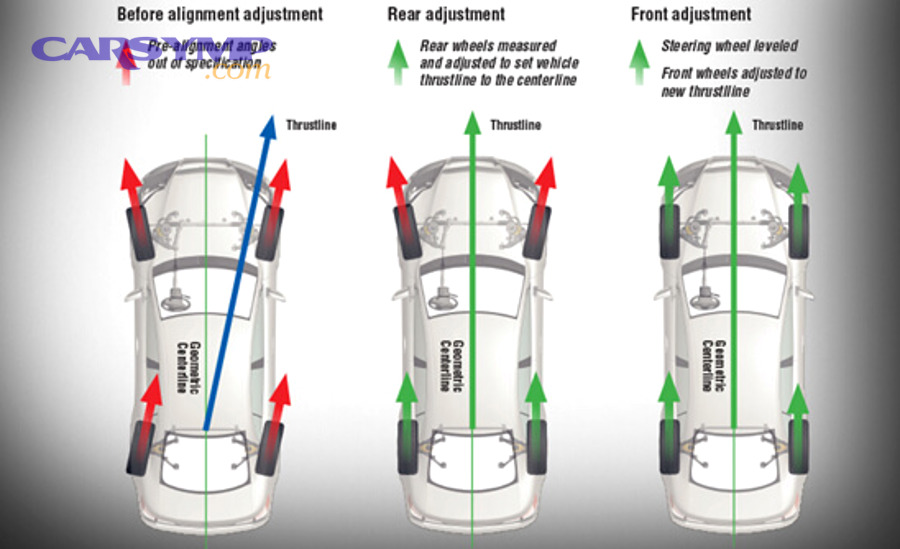
A 2-wheel alignment focuses mainly on the front wheels, while a 4-wheel alignment evaluates all four wheels and is generally the better fit for vehicles with adjustable rear geometry or full-system tracking needs. However, the right service depends on vehicle design, not just price. ([rts.i-car.com](https://rts.i-car.com/ask-i-car/10880.html?))
Many drivers use the term wheel alignment as if there were only one procedure. In practice, the service scope varies by suspension layout. Some vehicles primarily need front-angle adjustment, while others require a true four-wheel measurement and correction so the vehicle tracks squarely from front to rear. A rear issue can influence steering-center feel and directional stability even if the front settings are corrected.
For everyday owners, the useful lesson is to ask what your vehicle actually requires rather than assuming the cheaper option is enough. Good shops can explain whether the rear is adjustable, whether thrust angle matters on your platform, and how the service matches the vehicle design.
This distinction also affects frequency interpretation. A car with rear geometry issues may feel “off” even after repeated front-focused work if the full alignment picture is never addressed.
Can Modified, Lifted, or Lowered Vehicles Need More Frequent Alignments?
Yes, modified, lifted, or lowered vehicles often need more frequent alignment attention because altered ride height changes suspension geometry, increases sensitivity to wear, and can narrow the window for stable tire contact. More specifically, modifications can make small changes matter more.
Changing ride height affects control-arm angles, steering link geometry, and tire contact behavior. Even if the vehicle is aligned after the modification, ongoing use can reveal that the setup is more sensitive to road impacts or bushing wear than the factory arrangement. Larger tires, offset wheels, and stiffer suspension parts can add further stress.
Owners of modified vehicles should not assume factory interval guidance is enough. A better approach is to check alignment after the build, inspect it again after components settle, and monitor tread wear closely during the first months of driving. That is especially important if the vehicle sees off-road use, aggressive driving, or heavy loads.
Preventing alignment problems in modified vehicles is less about finding one perfect number and more about creating a monitoring habit. If you changed the geometry, you changed the maintenance context too.
Does ADAS or Steering Sensor Calibration Matter After Alignment-Related Work?
Yes, ADAS or steering sensor calibration can matter after certain alignment-related repairs because some modern driver-assistance systems depend on accurate vehicle geometry, steering-center information, and properly completed repair procedures. Therefore, alignment should sometimes be viewed as part of a larger calibration workflow rather than as a stand-alone service. ([rts.i-car.com](https://rts.i-car.com/ask-i-car/10880.html?))
Not every vehicle and not every repair will require additional calibration. But many newer cars use cameras, steering-angle sensors, and lane-support systems that assume the chassis and steering are correctly set. If suspension or steering repairs alter those assumptions, the car may need procedure-specific verification after the mechanical work is complete.
For owners, the practical step is simple: ask the shop whether your specific make and model has post-repair calibration requirements when steering or suspension components are replaced. That question is especially relevant after collision repairs, tie-rod replacement, rack work, or repairs that affect mounting points.
I-CAR notes that alignment checks are tied to post-repair procedures when steering-related parts or adjustable components are replaced, which is why modern repair planning may extend beyond the alignment rack alone. ([rts.i-car.com](https://rts.i-car.com/ask-i-car/10880.html?))
In short, the best wheel alignment schedule for most car owners is about once a year or every 12,000 to 15,000 miles, with earlier checks whenever wheel alignment symptoms appear or when road impacts and repairs change the maintenance context. If you want to protect tires, improve straight-line stability, and keep maintenance predictable, the smartest plan is simple: follow a baseline schedule, watch for symptoms, perform a few DIY checks before alignment appointment, and focus on preventing alignment problems before they become expensive tread wear.