How Wheel Alignment Works, Why It Matters, and Signs Drivers Shouldn’t Ignore
Wheel alignment is the process of adjusting wheel angles so a vehicle tracks straight, steers predictably, and uses its tires evenly. When alignment is correct, the car feels stable, the steering wheel stays centered, and the tires maintain better contact with the road. That direct answer matters because most people searching for wheel alignment want more than a definition—they want to understand why this service affects safety, tire life, and everyday auto maintenance. Next, this article explains the core concept in simple language and connects it to real driving behavior.
Many drivers also want to know whether their vehicle already shows Wheel alignment symptoms. A car that pulls to one side, wears tires unevenly, or drives with an off-center steering wheel often points to alignment trouble, although suspension & steering wear, tire issues, or road conditions can produce similar Car Symptoms. Then, the article breaks down the most common warning signs so readers can tell the difference between a likely alignment issue and another problem.
Another major search intent involves service decisions: when to book an alignment, what kind of alignment the car needs, and how alignment compares with related tire & wheel service tasks. Questions about 2-wheel vs 4-wheel alignment differences, Alignment vs balancing differences, and When to align after suspension or tire work are all part of the same decision journey. Moreover, understanding these related topics helps drivers avoid paying for the wrong service.
Drivers also search for practical details such as Alignment frequency recommendations, DIY checks before alignment appointment, How to read an alignment printout, and Preventing alignment problems over time. These details deepen the main topic and help readers move from theory to action. Introduce a new idea: below, the article moves from basic explanation to diagnosis, service timing, comparisons, and special cases so the topic is covered completely and clearly.
What Is Wheel Alignment and How Does It Work?
Wheel alignment is a suspension and steering adjustment process that sets the wheel angles to manufacturer targets so the vehicle tracks straight, steers correctly, and wears tires evenly. To better understand wheel alignment, it helps to separate the idea from common myths, especially the belief that alignment means physically straightening bent wheels.

Wheel alignment does not mean moving a tire into a visually straight position by guesswork. Instead, a technician adjusts suspension angles so each wheel sits at the correct relationship to the road and to the other wheels. The goal is controlled tire contact, predictable steering response, and balanced vehicle behavior under acceleration, braking, and cornering.
In everyday driving, correct alignment helps a car resist drifting, reduces steering correction on straight roads, and slows down irregular tread wear. That is why alignment belongs to long-term auto maintenance, not just emergency repair. It supports tire durability, steering precision, and driver comfort at the same time.
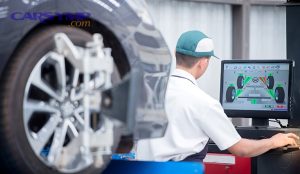
Modern alignment service relies on digital measuring equipment mounted to each wheel. The system reads current angles and compares them with manufacturer specifications. The technician then adjusts the relevant suspension points until the values fall within the allowed range. In practical terms, that means wheel alignment is about geometry, not guesswork.
Is wheel alignment the same as adjusting your wheels or suspension?
No, wheel alignment is not the same as repairing your wheels or suspension because alignment adjusts angles, suspension repair replaces worn or damaged parts, and wheel repair addresses physical wheel damage. Specifically, this distinction matters because many drivers assume alignment alone can solve every steering or tire problem.
If a vehicle has bent suspension arms, worn ball joints, damaged tie rods, broken springs, or a bent wheel, alignment cannot fully correct the problem until those failed parts are repaired or replaced. Alignment depends on healthy hardware. A technician can set angles only when the underlying components still hold those settings properly.
This is why many shops inspect suspension & steering parts before beginning an alignment. If a tie rod end has excess play, the measured angle may change as the wheel moves, making the alignment unstable. Likewise, a bent rim can create vibration and tracking issues that mimic alignment trouble without being caused by alignment itself.
Drivers often use “wheel alignment” as a catch-all phrase for front-end problems, but the correct distinction saves time and money. If the car pulls because of a sticking brake caliper, alignment alone will not fix it. If the steering wheel sits off-center after replacing tie rods, an alignment may be exactly what the vehicle needs. The key is matching the service to the real cause.
What do camber, caster, and toe mean in wheel alignment?
There are three main alignment angles—camber, caster, and toe—based on how each wheel tilts or points relative to the road and the vehicle’s centerline. To illustrate Toe/camber/caster explained simply, each angle affects the car in a different but connected way.
Camber is the inward or outward tilt of the wheel when viewed from the front of the vehicle. If the top of the tire leans inward, that is negative camber. If it leans outward, that is positive camber. Too much camber, in either direction, often causes inner-edge or outer-edge tire wear and can alter cornering feel.
Caster is the forward or rearward tilt of the steering axis when viewed from the side. Positive caster usually improves straight-line stability and steering return after a turn. When caster is uneven side-to-side, the vehicle may pull toward the side with less positive caster, depending on road conditions and tire behavior.
Toe is the direction the tires point compared with the vehicle centerline when viewed from above. If the fronts of the tires point inward, that is toe-in. If they point outward, that is toe-out. Toe tends to have one of the fastest and strongest effects on tire wear, especially feathering or scrub across the tread.
For most daily-driven vehicles, technicians pay very close attention to toe because small errors can create noticeable wheel alignment symptoms. Camber and caster also matter, but toe frequently determines whether the steering feels calm or nervous and whether the tire tread remains even across its usable life.
Why Does Wheel Alignment Matter for Drivers?
Yes, wheel alignment matters because it protects tire life, improves steering control, increases road stability, and supports safer, more efficient driving. More importantly, this issue matters to drivers because alignment affects the way the vehicle behaves every single day, not just during a repair visit.

A properly aligned car rolls with less resistance from scrub and less fight between the tires. That helps the vehicle move more naturally down the road. The driver does not need to make constant steering corrections, and the tires do not grind away at the tread because they are dragging slightly sideways.
This matters financially as well as mechanically. Tires are expensive, and alignment errors can shorten their useful life long before the tread would normally wear out. Poor alignment can also stress suspension & steering components by forcing them to work in less natural positions over time. Even if the savings are not immediate, the long-term maintenance effect is real.
Alignment also shapes the driver’s confidence. A vehicle that wanders at highway speed, pulls during light cruising, or feels unsettled over bumps becomes tiring to control. By contrast, a well-aligned car feels composed. It tracks with less effort and responds more consistently to steering input.
Can bad wheel alignment cause uneven tire wear and poor handling?
Yes, bad wheel alignment can cause uneven tire wear and poor handling because incorrect angles distort tire contact, upset straight-line tracking, and reduce steering predictability. Specifically, these symptoms often appear gradually, which is why many drivers miss them until the tires show visible damage.
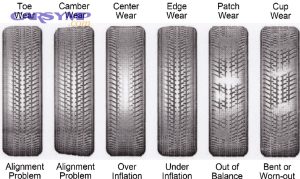
Uneven tire wear is one of the clearest outcomes of poor alignment. Excessive toe can create feathered tread blocks, while bad camber may wear out the inner or outer shoulder more quickly than the rest of the tire. If left uncorrected, the tire loses useful tread depth in one zone while the rest of the tread still looks serviceable.
Handling problems often appear before the driver sees the tires. A car may drift left or right, feel unstable at speed, or require constant micro-corrections on a straight road. The steering wheel can also sit slightly off-center even when the vehicle is moving straight. These are classic wheel alignment symptoms, though they should still be checked against tire pressure, tire condition, and road crown before reaching a final conclusion.
In practical terms, alignment matters because tire wear and handling are connected. Once the tread wears unevenly, the tire itself can worsen how the vehicle behaves, even after alignment is corrected. That is one reason early diagnosis is valuable: the sooner the angles are corrected, the better the chance of saving the tires.
How does wheel alignment affect safety, fuel economy, and ride quality?
Wheel alignment affects safety, fuel economy, and ride quality by improving tire contact, reducing rolling scrub, and helping the car move in a stable, predictable line. In addition, these three outcomes matter because alignment problems rarely stay isolated to one driving symptom.
From a safety perspective, alignment supports predictable steering response. When the vehicle tracks true, the driver can place it more accurately on the road and react more calmly in emergency situations. A car that pulls unexpectedly or feels vague through the steering wheel is harder to manage, especially in wet weather or during quick lane changes.
From an efficiency perspective, misaligned wheels can create extra drag because the tires are not rolling in the most natural direction. While alignment is not the biggest factor in fuel use, persistent scrub can make the vehicle work harder than necessary. Over time, that means the car may use more energy to cover the same distance.
From a comfort perspective, ride quality often feels smoother when alignment is correct. The car tends to move with less wandering and less steering correction, which reduces fatigue on longer drives. That comfortable, settled feeling is one reason alignment belongs in regular auto maintenance rather than being treated as a last-minute repair.
What Signs Show That a Car Needs Wheel Alignment?
Yes, a car may need wheel alignment when it pulls sideways, wears tires unevenly, holds the steering wheel off-center, or feels unstable in a straight line. To better understand these car symptoms, drivers should look for patterns rather than relying on one sign in isolation.

Many alignment problems announce themselves slowly. The vehicle may begin with a slight drift on level pavement, then develop more obvious tire wear, and later feel twitchy or resistant to tracking straight. Because the change can be gradual, drivers sometimes adapt to it without realizing the car feels worse than it should.
The clearest warning signs include:
- Pulling to one side on a level road
- Steering wheel that sits crooked when driving straight
- Uneven or rapid tire wear
- Wandering or loose straight-line feel
- Squealing tires during low-speed turns in some cases
- Steering that does not return naturally after a turn
These symptoms become more important when they appear together. One isolated sign might come from tire pressure or road shape, but several signs at once make alignment a much stronger suspect.
Does a crooked steering wheel always mean the alignment is off?
No, a crooked steering wheel does not always mean the alignment is off because tire pressure, road crown, worn steering parts, or previous repair issues can also shift steering feel. However, a crooked wheel is one of the strongest clues that alignment should be checked.
If the steering wheel sits noticeably left or right while the car travels straight on a fairly level road, the front toe setting or steering wheel centering may be incorrect. This often happens after tie rod work, suspension & steering replacement, curb impact, or general wear that changes alignment geometry over time.
Still, it is important not to over-diagnose. A heavily crowned road can push many vehicles slightly toward one side. Unequal tire pressure can also create pull or steering offset. In some cases, a conicity issue inside the tire itself can mimic an alignment problem. That is why a basic pre-check matters before scheduling service.
This is also where DIY checks before alignment appointment can help. Drivers can confirm tire pressures, inspect tread wear visually, note whether the pull changes on different roads, and record when the steering wheel sits off-center. That information helps the shop diagnose the car more accurately.
What are the most common symptoms of poor wheel alignment?
There are five main symptoms of poor wheel alignment: pulling, uneven tire wear, an off-center steering wheel, wandering, and unstable handling based on how the incorrect angles affect tire contact. More specifically, each symptom reflects a different way alignment errors show up on the road.
Pulling to one side: The car drifts left or right without constant steering input. This is one of the most recognizable wheel alignment symptoms, though it can overlap with tire or brake issues.
Uneven tire wear: The tread wears faster on one edge or develops feathering. This is often the most expensive symptom because it shortens tire life directly.
Off-center steering wheel: The wheel stays turned slightly while the vehicle moves straight. This often appears after suspension & steering work or after hitting a pothole or curb.
Wandering or loose tracking: The car does not feel planted on the highway and needs repeated steering correction. Drivers often describe this as the vehicle feeling “nervous” or “floaty.”
Reduced steering stability: The vehicle may feel less composed during lane changes or in windy conditions. While this can have multiple causes, alignment is a major one.
| Symptom | What the Driver Notices | Common Alignment Link |
|---|---|---|
| Pulling | Car drifts left or right | Camber/caster imbalance, toe issues |
| Uneven tire wear | Inner, outer, or feathered tread wear | Toe or camber out of spec |
| Off-center steering wheel | Wheel not straight while driving straight | Front toe or steering centering issue |
| Wandering | Frequent correction needed on highway | Toe instability, combined geometry issues |
The table above summarizes how common car symptoms connect to likely alignment patterns. It does not replace a shop measurement, but it helps drivers understand why these signs tend to appear together.
According to the U.S. Department of Energy, keeping tires properly maintained and inflated can improve vehicle efficiency, which supports the broader maintenance principle that correct rolling conditions—including alignment-related tire behavior—matter for vehicle performance.
When Should Drivers Get a Wheel Alignment?
Drivers should get a wheel alignment after impact events, after certain repair work, when symptoms appear, and at reasonable service intervals to protect tire life and steering quality. Next, timing matters because waiting too long can turn a small angle error into a costly tire problem.

Alignment timing is best understood in two ways: event-based timing and preventive timing. Event-based timing happens after something changes the vehicle geometry, such as hitting a pothole, striking a curb, replacing steering components, or installing new suspension parts. Preventive timing happens because normal wear, road impacts, and mileage gradually shift settings over time.
This is why Alignment frequency recommendations are usually flexible rather than absolute. A vehicle driven on smooth roads may hold alignment longer than one used on broken city streets. Likewise, a car with fresh tires may deserve a check sooner if you want to protect the new tread from uneven wear.
Do you need a wheel alignment after hitting a pothole, curb, or after suspension work?
Yes, you often need a wheel alignment after a pothole, curb strike, or suspension work because those events can shift wheel angles, change steering position, and accelerate tire wear. More importantly, many alignment problems begin with exactly these kinds of incidents.
A pothole or curb impact can jar the steering and suspension hard enough to change toe, camber, or caster. Sometimes the change is obvious right away: the steering wheel turns crooked or the car begins to pull. Other times, the vehicle feels almost normal at first, but the tires start wearing unevenly over the next few weeks.
The same logic applies when to align after suspension or tire work. If tie rods, control arms, ball joints, struts, springs, or other suspension & steering parts are replaced, alignment should usually follow because the relationship between the wheels and chassis has been disturbed. Tire installation alone does not always require alignment, but new tires make it easier to notice existing alignment problems and make it more important to correct them quickly.
A simple rule helps here: if a repair changes steering or suspension geometry, alignment should be considered part of the job. If the vehicle suffers a significant road impact, alignment should be checked even if the symptoms seem minor.
How often should wheel alignment be checked on a daily-driven vehicle?
Wheel alignment should be checked periodically, after impact events, and whenever symptoms appear, with timing based on road conditions, tire wear patterns, and recent repairs. In short, the best frequency is condition-based, not just calendar-based.
Many drivers use a practical routine: check alignment when installing new tires, after any major suspension & steering work, after a serious pothole or curb strike, or whenever the vehicle starts pulling or wearing tires unevenly. That routine aligns well with real-world auto maintenance because it ties service to the events most likely to change alignment.
For daily-driven vehicles, a proactive check during routine tire & wheel service can also make sense, especially for cars used on rough roads or high-mileage commutes. If a car sees a lot of highway travel, preserving straight-line tracking and even tread wear can justify more regular attention. If a car spends most of its life on damaged urban streets, preventive checks become even more valuable.
The most useful Alignment frequency recommendations are therefore simple:
- Check alignment when symptoms appear
- Check after suspension or steering repairs
- Check after major road impacts
- Check when installing expensive new tires
- Consider periodic inspection as part of broader tire & wheel service
What Types of Wheel Alignment Are There?
There are three main service types—2-wheel, 4-wheel, and thrust-angle alignment—based on drivetrain layout, suspension design, and how many wheels are adjustable or measured. To better understand service choices, drivers need to know that not every vehicle uses the same alignment approach.

Some shops still use “front-end alignment” or “2-wheel alignment” as a common phrase, especially for older vehicles or vehicles where rear adjustments are limited. Modern cars with independent rear suspension often benefit from a full 4-wheel measurement because rear wheel position affects how the vehicle tracks and how the steering wheel centers.
Thrust-angle alignment focuses on the direction the rear wheels push the vehicle compared with the chassis centerline. If the rear axle or rear geometry is not aligned correctly, the car may “dog track” or require the steering wheel to sit off-center even when the front settings look acceptable.
What is the difference between two-wheel, four-wheel, and thrust-angle alignment?
Two-wheel alignment is best for vehicles with front-only adjustments, four-wheel alignment is best for vehicles where all wheel positions affect tracking, and thrust-angle alignment is optimal when rear-wheel direction influences straight-line stability. Specifically, these 2-wheel vs 4-wheel alignment differences matter because the wrong service description can confuse drivers.
2-wheel alignment usually focuses on the front wheels. The shop measures and adjusts front settings, often on vehicles where the rear wheels are not independently adjustable. It is the simpler service, but it may not tell the full story on newer platforms.
4-wheel alignment measures all four wheels and adjusts front and rear settings where the design allows. Even when the rear wheels have limited adjustment, measuring them matters because rear geometry influences vehicle direction and steering wheel centering.
Thrust-angle alignment uses the rear wheel direction as a reference point. If the rear wheels point slightly off the centerline, the technician uses that information to align the front wheels properly relative to the thrust line. This approach is especially helpful when diagnosing a vehicle that feels straight enough but keeps the steering wheel off-center.
| Alignment Type | Main Focus | Best Fit |
|---|---|---|
| 2-Wheel Alignment | Front wheel angles | Vehicles with front-only adjustment emphasis |
| 4-Wheel Alignment | Front and rear wheel geometry | Most modern vehicles |
| Thrust-Angle Alignment | Rear wheel direction vs vehicle centerline | Vehicles with steering-center or tracking issues linked to rear geometry |
The table above shows how the service types differ by scope and purpose. It helps readers match common shop language to the actual work performed.
Is four-wheel alignment always better than front-end alignment?
No, four-wheel alignment is not always automatically better because the correct service depends on vehicle design, available adjustments, and the actual problem being diagnosed. However, four-wheel measurement is often the more complete option for modern vehicles.
If a vehicle uses rear suspension geometry that influences thrust angle, measuring only the front can miss the reason the steering wheel sits crooked or the car drifts slightly. In that case, four-wheel alignment provides a more complete diagnosis. Yet on some older or simpler designs, front-focused adjustment may still be appropriate if the rear setup is fixed and in good condition.
The real takeaway is not that one label always wins. It is that the vehicle’s design and symptoms should guide the service choice. Asking what is measured, what is adjustable, and whether rear geometry is included gives drivers a better answer than relying on a generic package name alone.
What Is the Difference Between Wheel Alignment and Tire Balancing?
Wheel alignment fixes angle-related tracking and tire wear problems, while tire balancing fixes weight-related vibration; suspension issues, meanwhile, usually involve worn or damaged hardware. To better understand Alignment vs balancing differences, drivers should compare symptoms, not just service names.

Alignment and balancing are often mentioned together because both belong to tire & wheel service. However, they solve different problems. Alignment is about where the wheels point and tilt. Balancing is about how evenly the tire and wheel assembly rotates at speed.
A tire that is out of balance typically causes vibration, especially at certain speed ranges. A car with poor alignment typically pulls, wanders, or wears tires unevenly. The two problems can exist at the same time, which is why drivers sometimes confuse them.
Suspension problems add another layer. Worn bushings, failing tie rods, weak shocks, or bent components can create looseness, noise, instability, and irregular tire wear. In those cases, alignment may still be needed, but only after the damaged parts are addressed.
Does wheel alignment fix vibration, and does tire balancing fix pulling?
No, wheel alignment usually does not fix vibration, and tire balancing usually does not fix pulling because the two services target different mechanical causes. However, mixed symptoms can happen when a vehicle has more than one issue at the same time.
If the steering wheel shakes at highway speed, wheel balancing is often a stronger suspect than alignment. If the car drifts left or right and the steering wheel sits off-center, alignment is a stronger suspect than balancing. This distinction helps drivers avoid booking the wrong service based on one vague symptom.
That said, the real world is not always neat. Unevenly worn tires caused by long-term alignment problems can later create vibration. Similarly, a badly damaged tire can create pull. This is why symptom patterns, tire inspection, and a basic shop evaluation matter more than guessing from one sensation alone.
A useful pre-appointment habit is to note when the issue appears:
- Vibration at speed: often balancing or tire issue
- Pulling on straight roads: often alignment or tire issue
- Loose wandering feel: often alignment or suspension issue
- Noise over bumps: often suspension issue
These notes support better diagnosis and make DIY checks before alignment appointment more valuable.
How do wheel alignment, tire balance, and suspension issues compare?
Wheel alignment wins for straight-line tracking and tire-wear correction, tire balancing is best for speed-related vibration, and suspension repair is optimal for looseness, damage, and component failure. More specifically, comparing the three side by side makes service decisions far easier.
Wheel alignment addresses tire angle geometry. It is the right service when the steering wheel sits crooked, the car pulls, or the tread wears unevenly.
Tire balancing addresses rotating weight distribution. It is the right service when vibration appears at certain speeds, especially through the steering wheel or seat.
Suspension repair addresses worn or broken parts. It is the right service when clunks, looseness, instability, or visible component wear appear.
| Issue Type | Main Symptom | Best Service Match |
|---|---|---|
| Wheel Alignment | Pulling, uneven tire wear, crooked steering wheel | Alignment adjustment |
| Tire Balance | Vibration at speed | Wheel balancing |
| Suspension Problem | Clunks, looseness, poor control, worn parts | Inspection and component repair |
The table above shows how the most common symptoms map to the most likely service category. It is a practical shortcut for drivers trying to decide what to ask for at the shop.
How Do Special Vehicle Setups and Advanced Systems Change Wheel Alignment Needs?
Yes, special vehicle setups and advanced systems can change wheel alignment needs because ride height, hardware changes, and electronic driver-assistance systems alter how the car tracks and responds. Moreover, these cases matter because standard alignment assumptions do not always fit modified or technology-heavy vehicles.

Once the basic topic is understood, this supplementary section expands the semantic context. Not every driver needs these details, but they matter for lowered cars, lifted vehicles, performance setups, and vehicles equipped with advanced safety systems. This is where micro-level decisions affect the overall alignment outcome.
Does a lowered or lifted vehicle need a different wheel alignment setup?
Yes, a lowered or lifted vehicle often needs a different wheel alignment setup because changing ride height alters suspension geometry, steering angles, and tire contact patterns. Specifically, modifications change the position from which the suspension operates, so factory assumptions may no longer fit perfectly.
Lowering a car can increase negative camber or change toe as the suspension settles into a new range of motion. Lifting a vehicle can also change toe and steering geometry, especially on trucks and SUVs. If those changes are ignored, tire wear may accelerate and straight-line stability may decline.
That does not always mean a radically custom alignment is necessary. It means the technician should understand the modified setup, the driver’s goals, and the realistic balance between tire life and handling. A daily-driven lowered car usually needs a different compromise than a weekend performance build.
Can wheel alignment affect ADAS features and steering assist systems?
Yes, wheel alignment can affect ADAS features and steering assist systems because these systems depend on the vehicle tracking predictably and, in some cases, on accurate steering-angle relationships. In addition, some repairs that lead to alignment work may also require electronic recalibration.
Advanced driver-assistance systems such as lane-keeping support, steering assist, and camera-based directional features assume the vehicle behaves consistently. If the car drifts because of poor alignment, the driver may feel that the vehicle is fighting for lane position or behaving unnaturally.
Not every alignment service automatically requires full electronic recalibration, but the relationship matters. After certain suspension, steering, windshield, or sensor-related repairs, the vehicle may need both mechanical alignment and system calibration to restore normal operation. That is why shops sometimes treat alignment as part of a larger post-repair procedure.
What is the difference between performance alignment and daily-driver alignment?
Performance alignment wins in cornering response, daily-driver alignment is best for tire longevity and comfort, and mixed-use setups are optimal for drivers balancing both goals. More specifically, the alignment target depends on how the vehicle is used.
A performance-focused setup may use more aggressive camber and sharper responses to improve grip in turns. That can make sense for track use or spirited driving, but it may also increase tire wear or reduce everyday comfort. A daily-driver setup usually favors even tread wear, calm highway behavior, and lower maintenance demands.
This is an important reminder that “best alignment” is not one universal setting. The best alignment is the one that matches the vehicle, the road conditions, and the driver’s priorities.
Should you get an alignment after a minor curb hit even if the car feels normal?
Yes, you should consider an alignment after a minor curb hit even if the car feels normal because small impacts can change toe or steering position before obvious symptoms appear. Thus, early checking is often cheaper than discovering the problem after the tires begin wearing unevenly.
A vehicle does not need to feel dramatically wrong for alignment to be off. In fact, some of the most expensive tread damage begins with mild misalignment that stays unnoticed for weeks. A quick inspection or alignment check after an impact can catch these small shifts before they create a larger tire bill.
That is one of the most effective forms of Preventing alignment problems: respond early to road impacts, keep tires properly inflated, inspect tread regularly, and treat alignment as part of proactive auto maintenance instead of waiting for a severe symptom.
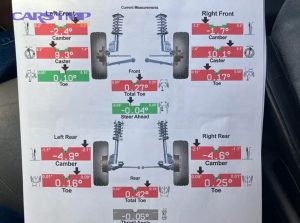
As a final practical note, drivers often benefit from knowing How to read an alignment printout. The most important points are simple: compare “before” and “after” values, check whether toe, camber, and caster fall within specification ranges, and confirm the steering wheel was centered during the process. The printout should show that the vehicle moved closer to manufacturer targets, not just that a service was performed.
In short, wheel alignment is a core service that connects tire life, steering feel, road stability, and broader tire & wheel service decisions. Understanding the signs, timing, service types, and special cases helps drivers make better choices and protect both comfort and cost over time.