


wheel alignment and tire balancing are not the same service. Wheel alignment adjusts suspension angles so the tires meet the road correctly, while tire balancing corrects uneven weight in the wheel-and-tire assembly so it spins smoothly. For most car owners, the practical difference is simple: alignment usually solves pulling, off-center steering, and uneven tread wear, while balancing usually solves speed-related vibration and shimmy. (firestonecompleteautocare.com)
The next question is how to tell them apart in real driving. Drivers usually notice alignment issues through directional behavior, such as drifting left or right, while balancing issues more often show up as steering wheel, seat, or floor vibration that gets worse at certain speeds. That symptom-based distinction matters because the wrong service can leave the real problem unresolved. (bridgestonetire.com)
A second important intent behind this topic is timing. Many drivers want to know When to align after suspension or tire work, whether new tires automatically require balancing, and whether one visit should include both services. In practice, new tires are commonly balanced during installation, while alignment is usually recommended when wear patterns, impacts, or steering and suspension repairs suggest the vehicle’s geometry has changed. (firestonecompleteautocare.com)
A third intent is understanding consequences. Alignment affects tire life, steering stability, and road contact, while balancing affects smoothness, comfort, and how evenly the rotating assembly behaves at speed. Introduce a new idea: the sections below break the topic into direct definitions, symptom diagnosis, causes, service timing, and deeper related questions so car owners can make the right maintenance decision with confidence. (bridgestonetire.com)
What Is the Difference Between Wheel Alignment and Tire Balancing?
Wheel alignment adjusts wheel and suspension angles, while tire balancing corrects uneven weight distribution in the tire-and-wheel assembly.
To better understand that difference, it helps to separate what each service changes on the car and what each service is supposed to fix.
Is Wheel Alignment the Same as Tire Balancing?
No, wheel alignment is not the same as tire balancing because the services correct different problems, use different procedures, and improve different driving symptoms.
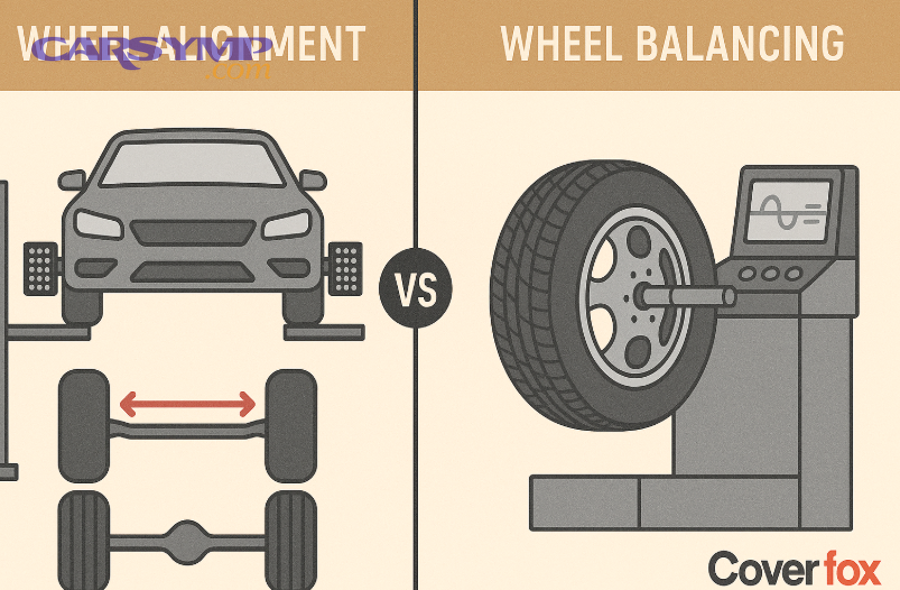
Specifically, alignment focuses on the relationship between the wheels, suspension, and road. A technician measures and adjusts angles such as toe, camber, and caster so the tires point and contact the road as intended. That is why wheel alignment has the strongest effect on straight tracking, steering wheel centering, and tread wear. If the angles are off, the tire can scrub across the road instead of rolling evenly, which creates premature wear and can make the car wander.
Tire balancing works at the rotating assembly level. A balancing machine spins the wheel and tire to find heavy spots, then a technician adds small weights to counter that uneven mass. The goal is a smoother spin and less vibration. If the weight is not distributed evenly, the tire may roll with a shake that travels into the steering wheel, seat, or floor, especially at highway speed. (firestonecompleteautocare.com)
What Does Wheel Alignment Correct on a Car?
Wheel alignment corrects suspension and steering angles that control how the tires meet the road, mainly toe, camber, and caster.
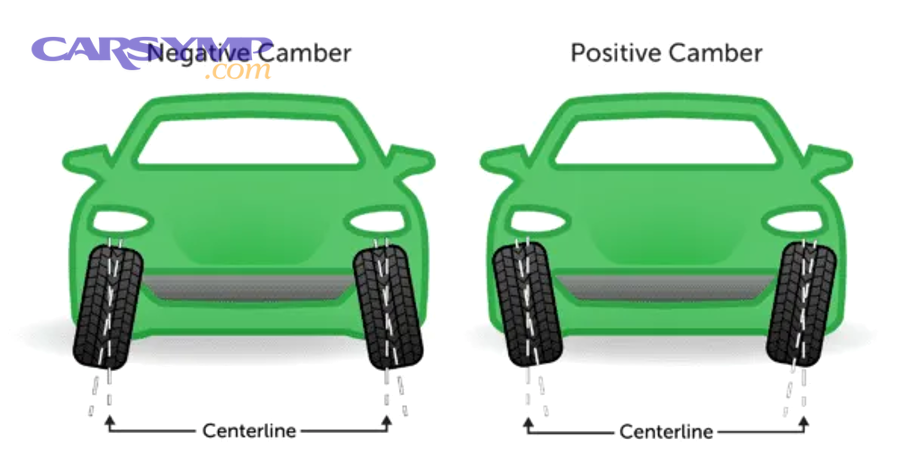
More specifically, toe describes whether the fronts of the tires point inward or outward relative to each other. Camber describes whether the tire leans inward or outward when viewed from the front of the car. Caster describes steering-axis tilt, which affects stability and steering return. These are not abstract shop terms. They directly shape how the vehicle tracks on the road, how the steering wheel sits when driving straight, and how evenly the tread wears over time.
Alignment is also about preserving the intended contact patch. When the angles drift out of specification after a pothole strike, curb hit, worn part, or suspension repair, the tire no longer presses the road the way the engineer intended. That can reduce tire life and make the car feel less settled, especially on crowned roads or at speed. Bridgestone defines alignment as the angles of the tire and suspension axis relative to each other and the ground, including camber, caster, and toe. (bridgestonetire.com)
What Does Tire Balancing Correct on a Wheel and Tire Assembly?
Tire balancing corrects uneven mass in the mounted wheel-and-tire assembly so it rotates smoothly at road speed.
For example, a tire and wheel can look perfectly round yet still have one section slightly heavier than another. That small weight difference becomes more noticeable as speed rises because the assembly spins faster and the force repeats more quickly. The result is often a vibration that comes and goes within certain speed ranges. Balancing addresses that by measuring the heavy spot and placing weights where they offset the imbalance.
This is why balancing is commonly included when new tires are installed. The tire and wheel are matched, mounted, spun on a balancing machine, and corrected before the vehicle goes back on the road. According to Firestone, tire balancing corrects any weight imbalances on tire and wheel assemblies, while alignment adjusts suspension angles so the tires contact the road properly. (firestonecompleteautocare.com)
According to Firestone Complete Auto Care in 2024, wheel alignment benefits include improved vehicle handling, fuel efficiency, and tire life, while tire balancing is intended to reduce vibration and help the assembly roll smoothly. (firestonecompleteautocare.com)
How Can You Tell Whether You Need Alignment or Balancing?
You can usually tell by the symptom pattern: alignment problems cause pulling, off-center steering, and uneven wear, while balancing problems cause speed-related vibration and shimmy.
To better understand the issue, look at what the car does consistently, what changes with speed, and what the tires themselves are showing.
What Symptoms Usually Point to Wheel Alignment Problems?
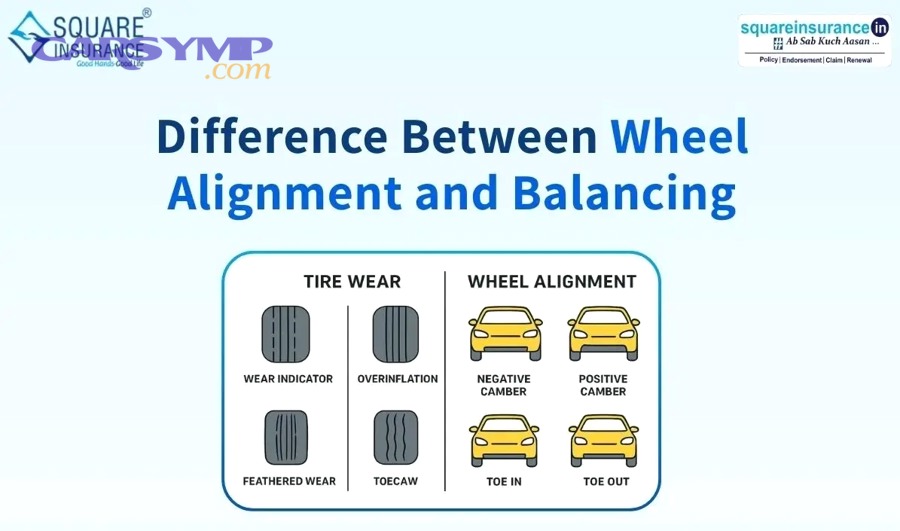
There are 4 main Wheel alignment symptoms: pulling to one side, an off-center steering wheel, uneven tread wear, and unstable straight-line tracking.
Specifically, pulling is one of the most recognizable signs. If you drive on a reasonably flat road and the vehicle consistently drifts left or right, the angles may be off. An off-center steering wheel is another classic clue. The car may move straight enough, but the wheel sits crooked when you are not turning. Uneven tread wear is even more diagnostic because it shows that the tire is not contacting the road evenly across its surface. In some cases, the car may feel nervous or unwilling to hold a straight line without constant small corrections.
These wheel alignment symptoms matter because they build over time. A small toe problem can gradually create feathered tread or shoulder wear. A camber issue can wear the inside or outside edge much faster than the rest of the tire. That is why alignment problems often reveal themselves both in how the car feels and in what the tires look like during inspection. (bridgestonetire.com)
What Symptoms Usually Point to Tire Balancing Problems?
There are 4 main tire balancing symptoms: steering wheel shake, seat or floor vibration, speed-sensitive shimmy, and accelerated wear linked to vibration.
More specifically, balancing issues tend to appear once the vehicle reaches a certain speed range, often moderate to highway speeds. The steering wheel may shake lightly or strongly if the front assembly is affected. If the rear assembly is the problem, the driver may feel more vibration through the seat or floor than through the steering wheel. Unlike alignment, imbalance often feels worse the faster the vehicle goes, though the exact range depends on the tire, wheel, and vehicle.
Balancing problems can also create secondary effects. A constant vibration can reduce comfort, make the drive feel harsher, and contribute to uneven wear over time. Some drivers describe this as a “buzz,” a “shimmy,” or a repeating shake that seems tied to speed more than road direction. That pattern is a strong clue in any Car Symp checklist because it points technicians toward the rotating assembly before they chase steering geometry.
How Do Alignment Symptoms Compare With Balancing Symptoms?
Alignment wins in directional diagnosis, balancing is best identified by vibration diagnosis, and road-force or part inspection becomes important when symptoms overlap.
However, the easiest comparison is this: alignment makes the car point or wear wrong, while balancing makes the car spin wrong. A car with poor alignment may pull, drift, or wear tires unevenly without much vibration. A car with poor balance may feel smooth at low speed but start shaking once the tires spin fast enough. That difference is why mechanics ask whether the problem changes with speed or remains present all the time.
The table below summarizes what drivers usually notice first.
| Symptom or condition | More often points to alignment | More often points to balancing |
|---|---|---|
| Pulls left or right | Yes | No |
| Steering wheel off-center | Yes | No |
| Uneven shoulder or feathered wear | Yes | Sometimes indirectly |
| Steering wheel shakes at certain speeds | Sometimes | Yes |
| Seat or floor vibration at speed | Rarely | Yes |
| Problem started right after new tire install | Sometimes | Yes |
| Problem started after pothole or suspension repair | Yes | Sometimes |
This table shows why symptom timing matters. A pull after a curb strike usually suggests geometry change. A new shake after fresh tires often suggests a balancing issue, although poor mounting, bent rims, or tire defects can create similar symptoms. Les Schwab notes that vibration while underway is often a symptom of out-of-balance tires rather than bad alignment. (lesschwab.com)
According to Bridgestone, common signs of alignment trouble include uneven tread wear, vehicle pulling to one side, and a steering wheel that sits off center while driving straight. (bridgestonetire.com)
Why Do Cars Need Wheel Alignment or Tire Balancing?
Cars need wheel alignment or tire balancing because road impacts, part wear, tire installation, and normal use gradually change geometry or weight distribution.
Next, the best way to choose the correct service is to understand what typically causes each one.
What Causes a Car to Go Out of Alignment?
There are 5 common causes of alignment change: potholes, curb strikes, worn suspension parts, steering-component wear, and suspension or ride-height work.
Specifically, alignment shifts when the physical relationship between the wheel and the chassis changes. A hard pothole or curb hit can knock angles out of specification. Worn tie rods, ball joints, bushings, or control-arm components can let the wheel move slightly out of its intended position. Replacing struts, control arms, tie rods, springs, or other steering and suspension parts can also alter geometry enough that the car needs to be reset on an alignment rack.
When to align after suspension or tire work depends on what changed. If work affects steering angle, ride height, or suspension mounting points, alignment should be checked as part of the repair process. Even when the vehicle feels mostly normal, a small geometry error can still shorten tire life over thousands of miles. Firestone explains that alignment adjusts the steering and suspension system rather than directly manipulating the tire or wheel itself. (firestonecompleteautocare.com)
What Causes Tire Imbalance?
There are 5 common causes of tire imbalance: manufacturing variation, mounting differences, missing wheel weights, uneven tread wear, and wheel or tire damage.
For example, every tire and wheel has slight variation in mass. That is normal, and balancing corrects it during installation. Later, weights can fall off, the tread can wear unevenly, or the assembly can develop a heavy spot due to damage, flat spotting, or defects. Even a small change can turn into a noticeable shake at speed because the rotating force repeats with every revolution.
This is also why a vehicle can feel smooth at city speed and rough at highway speed. The imbalance is still there at lower speed, but the driver does not feel it as strongly until the assembly spins faster. If the vibration remains after rebalancing, the cause may be something balancing alone cannot fix, such as a bent rim, abnormal tire wear, or another mechanical issue. (lesschwab.com)
Can the Same Car Need Both Alignment and Balancing at the Same Time?
Yes, the same car can need both services because geometry and rotating weight can be wrong at once after impacts, tire replacement, or suspension work.
More specifically, the overlap is common. A pothole can jar the alignment and also damage a wheel. New tires are normally balanced during installation, but the vehicle may still need an alignment if the old tires wore unevenly or the car already pulled before the change. After suspension repair, the geometry may need correction, and the tires may still need balancing if vibration remains or the assemblies were remounted.
For the owner, the takeaway is practical rather than technical: one symptom does not always mean only one service. A car can pull and vibrate. A car can wear tires unevenly and still have a balance-related shimmy at speed. That is why a good inspection often looks at both systems together instead of assuming a single cause from the first symptom alone. Firestone notes that alignment and balancing often happen during the same visit even though they are different services. (firestonecompleteautocare.com)
According to Firestone Complete Auto Care in 2024, untreated alignment issues can shorten tire life by thousands of miles and damage steering and suspension components over time. (firestonecompleteautocare.com)
When Should Car Owners Get an Alignment, a Balance, or Both?
Car owners should get balancing when vibration appears or new tires are installed, alignment when the car pulls or wears tires unevenly, and both when symptoms overlap after impact or repair.
To better understand the timing, it helps to look at the most common service moments in ordinary car ownership.
Do You Need Tire Balancing After Getting New Tires?
Yes, you usually need tire balancing after getting new tires because each mounted assembly has slight weight variation that must be corrected for smooth rotation.
More specifically, balancing is part of the standard tire installation process at most shops. The new tire is mounted on the wheel, inflated, spun on a balancing machine, and corrected with weights before the vehicle leaves. That step reduces shake, improves comfort, and helps the tread wear more evenly from the start.
Drivers sometimes confuse this with alignment because both services are often mentioned during a tire purchase. The difference is that balancing is usually routine with new tires, while alignment is conditional. If the car tracks straight, the steering wheel is centered, and wear patterns do not suggest geometry issues, a shop may not insist on alignment. But if the old tires showed edge wear, feathering, or the car already pulled, an alignment check makes sense at the same visit. Les Schwab states that mounting and balancing are included with new tire installation. (lesschwab.com)
Do You Need Wheel Alignment After Suspension or Steering Work?
Yes, you usually need wheel alignment after suspension or steering work because those repairs can change toe, camber, caster, or steering-wheel centering.
In addition, the more directly the repair affects wheel position, the more necessary the alignment becomes. Replacing tie rods, control arms, struts, ball joints, springs, or similar parts can alter geometry immediately. Even if the new parts restore factory condition, the system still needs to be measured and set accurately afterward. This is the clearest answer to the question of when to align after suspension or tire work: if the repair changes steering or suspension geometry, align the car after the job is complete.
Skipping that step can leave the vehicle driveable but inefficient. The owner may not notice a strong pull right away, yet the tires can still scrub slightly and wear faster over time. That is why many repair shops treat post-repair alignment as part of the complete repair outcome rather than an optional add-on. (firestonecompleteautocare.com)
When Is It Better to Get Both Services Together?
There are 4 common times to get both services together: after new tires with wear concerns, after pothole or curb impact, after major suspension work, and when both pull and vibration appear.
Specifically, combining the services makes sense when the symptom picture is mixed. If the steering wheel shakes at 60 mph and the car also drifts left, addressing only one service may solve only half the problem. The same is true after replacing worn tires that were damaged by prior misalignment. Balancing the new tires will smooth rotation, but alignment is what helps prevent the new set from wearing the same bad way again.
Getting both together can also save diagnostic time. The technician can inspect tires, wheels, steering, and suspension as a system rather than in isolation. That is especially useful after impact damage, where the vehicle may have a bent wheel, disturbed alignment, or both. According to Firestone, checking tire balance during an alignment service can be a practical way to catch needed adjustments in the same visit. (firestonecompleteautocare.com)
According to Les Schwab, out-of-balance wheel and tire assemblies can cause steering wheel or floorboard vibration that becomes worse at higher speeds, which is why balancing is commonly tied to new tire installation and highway-speed complaints.
Which Service Matters More for Tire Wear, Comfort, and Safety?
Alignment matters more for tire wear and directional control, while balancing matters more for ride comfort and speed-related smoothness; both contribute to overall safety and operating cost.
However, the better question is not which service is universally more important, but which neglected problem creates the bigger risk for your current symptoms.
Which Affects Tire Wear More: Alignment or Balancing?
Alignment affects tire wear more directly because it changes how the tread contacts and scrubs against the road on every rotation.
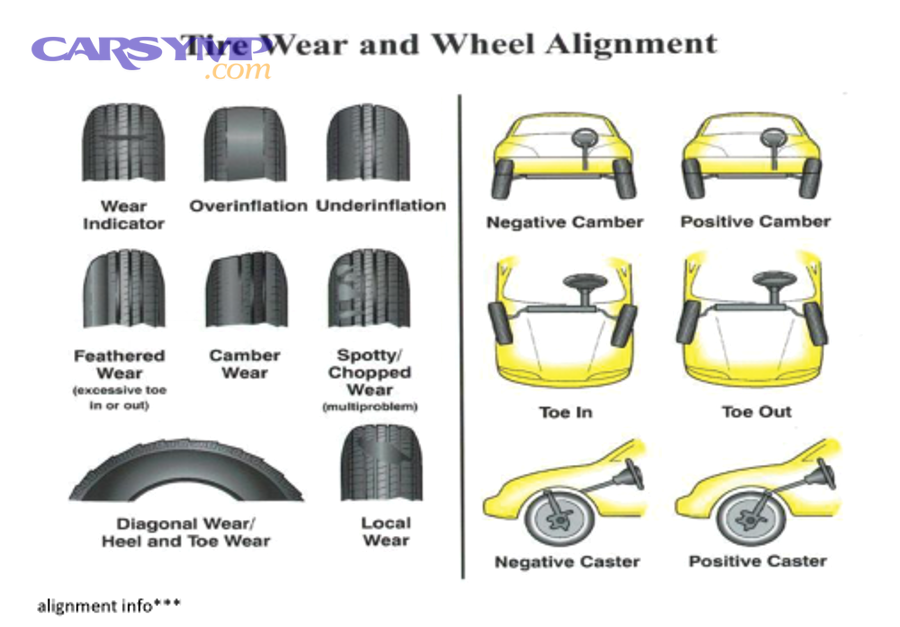
More specifically, toe and camber errors create predictable wear patterns. Excessive toe can feather the tread blocks and create a sawtooth feel. Camber errors can wear one shoulder much faster than the other. These are direct geometry effects. Balancing can contribute to irregular wear, but usually in a more indirect way through repeated vibration and less stable rotation.
For car owners trying to protect tire life, alignment deserves extra attention whenever the tires show edge wear, rapid shoulder wear, or feathering. Those patterns point to how the vehicle is pointing and loading the tread, not just how smoothly the assembly spins. Bridgestone notes that improper tire alignment can cause uneven and premature wear, including heel-toe style tread wear associated with toe problems. (bridgestonetire.com)
Which Affects Ride Comfort More: Alignment or Balancing?
Balancing affects ride comfort more immediately because imbalance creates the kind of shake and vibration drivers feel most directly in the cabin.
Meanwhile, alignment tends to affect comfort in a subtler way. A poor alignment can make the car feel restless, require more steering correction, and reduce driver confidence on long trips. But balancing creates the more obvious physical sensation: a wheel shake in the hands, a floor buzz under the feet, or a seat vibration that appears at certain speeds. That repeated movement is what most drivers describe as “the ride feels rough.”
This distinction matters because some owners judge severity only by discomfort. A car that vibrates badly may feel worse than a car with mild misalignment, yet the misalignment can still be doing more long-term damage to the tires. That is why comfort and tire life do not always rank the same problem first.
Can Ignoring Either Service Lead to Bigger Repair Costs?
Yes, ignoring either service can increase costs because alignment can destroy tires early and balancing can add strain, vibration, and diagnostic complications over time.
More importantly, both problems can hide behind one another. A driver may ignore a mild drift until the front tires wear unevenly enough to need early replacement. Another driver may ignore highway vibration until it becomes harder to tell whether the cause is balance, a bent rim, irregular wear, or another front-end issue. In both cases, delay usually means the final bill includes more than the original correction.
Safety is part of this cost discussion too. Tire maintenance affects how well the vehicle steers, stops, and maintains traction. The smoother and more evenly the tires work, the more predictable the vehicle feels in normal driving and emergency maneuvers. NHTSA states that properly maintained tires improve steering, stopping, traction, and load-carrying capability. (nhtsa.gov)
According to NHTSA tire-safety guidance, proper tire maintenance supports steering, stopping, traction, and safe operation, which is why owners should not ignore persistent wear patterns or vibration complaints. (nhtsa.gov)
What Related Questions Help Car Owners Understand Alignment and Balancing More Deeply?
Related questions deepen the topic by explaining service overlap, edge cases, and technical terms that influence diagnosis beyond the basic alignment-versus-balancing comparison.
In addition, these questions expand the article from direct search intent into the micro-semantics that help readers interpret real maintenance situations more accurately.
Do New Tires Need Alignment, Balancing, or Both?
New tires almost always need balancing, alignment only when wear patterns, handling symptoms, or repair history suggest geometry is off, and both when installation follows prior tire wear or front-end work.
Specifically, the reason new tires need balancing is mechanical and routine: every mounted assembly has some weight variation. Alignment is more diagnostic. If the previous tires wore evenly and the car drove straight, balancing may be enough. If the previous set wore on one edge, feathered across the tread, or the steering wheel sat crooked, alignment becomes important to protect the new set from repeating that same wear pattern.
This distinction helps owners avoid two common misunderstandings. The first is thinking alignment automatically comes with every new tire purchase. The second is thinking alignment is unnecessary just because the tires are new. New rubber does not correct bad geometry; it only gives bad geometry fresh tread to wear through. (lesschwab.com)
Can a Car Be Properly Balanced but Still Need an Alignment?
Yes, a car can be properly balanced and still need alignment because smooth rotation does not guarantee correct steering geometry or tread contact.
For example, a car may have no noticeable vibration at all yet still pull slightly to one side, hold the steering wheel off center, or wear one shoulder of the tire faster than the other. In that case, balancing may already be fine, but alignment is still wrong. This is one of the most important diagnostic distinctions for owners because it explains why “the tires feel smooth” is not enough evidence that the vehicle does not need service.
The reverse can also happen. A car may track straight but vibrate at highway speed because the assembly is imbalanced while the alignment angles remain acceptable. These two services are linked in maintenance conversations, but they solve different layers of vehicle behavior. (lesschwab.com)
Can a Pothole Affect Alignment Without Affecting Tire Balance?
Yes, a pothole can affect alignment without affecting balance because a hard impact can disturb suspension geometry even if the wheel assembly’s weight distribution stays the same.
More specifically, a pothole strike can bend or shift parts enough to change toe or camber without knocking off a wheel weight or altering mass distribution. The driver may notice a new pull, crooked steering wheel, or fresh tire scrub, yet little or no vibration. That pattern strongly suggests alignment first. Of course, severe pothole damage can also bend a rim or damage a tire, in which case the vehicle may need both inspection paths.
This is why post-impact diagnosis should not rely on one symptom alone. The smart approach is to ask what changed after the hit: direction, steering position, smoothness, or all three. That symptom history guides the inspection more effectively than guessing from impact alone. (firestonecompleteautocare.com)
How Do Toe, Camber, and Caster Relate to Balancing Differences?
Toe, camber, and caster relate to alignment, not balancing; balancing deals with weight distribution, while those three angles control tracking, contact, and steering behavior.
To better understand the distinction, think of alignment as geometry and balancing as rotational mass correction. Toe changes whether the tires point slightly inward or outward. Camber changes whether the tire leans inward or outward. Caster affects steering stability and self-centering feel. None of those measurements tell a technician where the heavy spot is on a wheel. Likewise, adding or moving wheel weights does not correct toe, camber, or caster.
For owners, that means technical language can still be simplified into a useful rule: if the discussion is about angles, it is alignment; if the discussion is about spinning smoothness, it is balancing. Keeping those terms separated helps make shop recommendations easier to understand and reduces the chance of approving the wrong service for the wrong complaint. Bridgestone’s tire terminology defines alignment through camber, caster, and toe, while Firestone distinguishes alignment from tire balancing as separate maintenance procedures. (bridgestonetire.com)
According to Bridgestone tire terminology guidance, alignment refers to the angles of the tire and suspension axis relative to each other and the ground, which is why toe, camber, and caster belong to alignment diagnosis rather than balancing. (bridgestonetire.com)
In short, wheel alignment and tire balancing work together but solve different problems. Alignment protects tracking and tire wear by correcting geometry, while balancing protects smoothness and comfort by correcting rotating mass distribution. When car owners match symptoms to the correct service, they make better maintenance decisions, protect tire life, and avoid paying for work that does not address the real cause.