


Red flags in shop responses to reviews are often more revealing than the star rating itself because they show how a business behaves when nobody is standing at the service counter. If you can read the response patterns correctly, you can predict whether a shop will communicate clearly, take responsibility, and fix problems—or deflect, deny, and pressure you once your car is already apart.
Beyond spotting obvious rudeness, you also want to identify subtle warning signs: vague “copy-paste” apologies, shifting blame to the customer, or replies that avoid the real issue while sounding polished. These patterns matter because they usually mirror how the shop will handle estimates, delays, parts choices, and warranty conversations.
Because review responses are public, they also reveal a shop’s internal standards: whether they protect customer privacy, whether they document work, and whether they can explain decisions without getting defensive. That public “paper trail” helps you choose where to book and what to ask before you authorize repairs.
Giới thiệu ý mới: Next, you’ll learn the most common red flags in shop responses to reviews, why each one matters, and how to turn what you see into a safer decision for your vehicle and your wallet.
What counts as “red flags in shop responses to reviews” for an auto repair shop?
Definition: Red flags in shop responses to reviews are public reply behaviors that signal poor accountability, weak communication, or unfair policies—often the opposite of transparent, customer-centered service. To begin, focus on how the shop addresses facts, tone, and next steps, not just apologies.
Specifically, a response becomes a red flag when it does at least one of these things: it dodges the customer’s concrete claims, attacks the reviewer personally, or hides behind policy language without explaining how the shop will make it right. In other words, the response is evidence of how the shop handles conflict when money, time, and reputation are on the line.
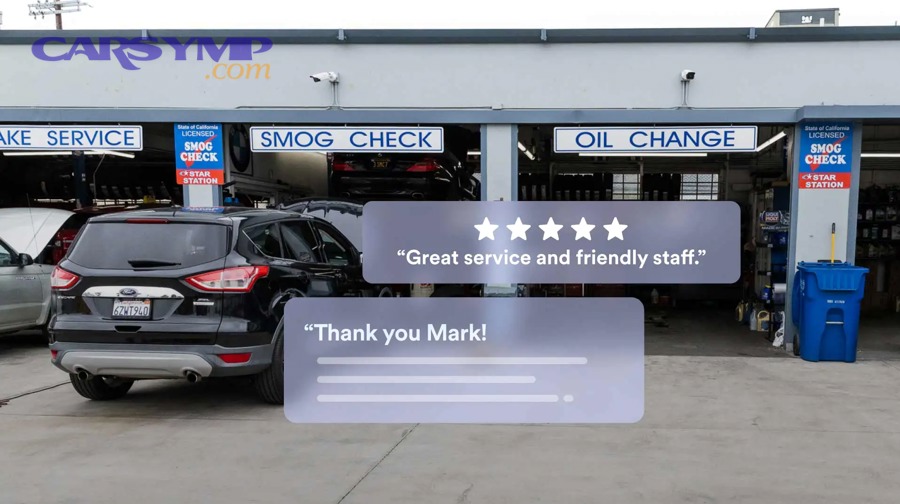
Below are the “core attributes” that make a reply meaningful—and the absence of them is the first warning sign:
- Specificity: Does the shop address the exact complaint (date, service type, outcome), or only offer generic phrases?
- Accountability: Do they acknowledge their role and offer a remedy path, or only blame external factors?
- Professional tone: Do they remain calm and respectful even when they disagree?
- Privacy discipline: Do they avoid exposing customer details or “outing” a person publicly?
- Process clarity: Do they explain what will happen next (inspection, recheck, refund policy, warranty steps)?
These attributes matter because a shop’s public response is often a simplified version of the same communication you’ll get when you ask about pricing, parts options, delays, or warranty. Next, you’ll see how tone—especially defensive tone—predicts the experience you’re likely to have.
Theo nghiên cứu của BrightLocal từ bộ phận Local Consumer Review Survey, vào 03/2024, 69% người tiêu dùng cảm thấy tích cực hơn khi nội dung đánh giá mô tả trải nghiệm tích cực—ngụ ý rằng “chi tiết” và “câu chuyện thật” có giá trị hơn lời khen chung chung.
This table contains the most common reply patterns and what they usually signal, so you can scan faster when you’re evaluating multiple shops.
| Response pattern | What it often signals | Risk for you |
|---|---|---|
| Generic apology with no details | Low effort reputation management | Harder to resolve issues later |
| Public argument / sarcasm | Low emotional control, combative culture | Stressful disputes, poor follow-through |
| Blame-shifting to customer | Weak accountability standards | Higher chance of “not our fault” outcomes |
| Exposing customer details | Poor privacy discipline | Risky data handling, unprofessional conduct |
| Only “call us” without steps | Containment, not resolution | Resolution depends on how persistent you are |
Do defensive, hostile, or sarcastic replies mean you should avoid the shop?
Yes—often. Defensive, hostile, or sarcastic replies are strong red flags in shop responses to reviews because they show the shop prioritizes “winning the argument” over solving the customer’s problem. However, you should confirm with patterns across multiple replies before you decide.
Here’s why this tone matters more in auto repair than in many other industries: a repair job has information imbalance (the shop sees the car; you often don’t), high urgency (you need transportation), and high switching cost (towing, downtime). So, a shop that becomes combative in public is more likely to become rigid when you’re trying to negotiate a fair fix.
What does “defensive” look like in a review response?
Definition: A defensive response denies the customer’s experience without addressing evidence, replaces explanation with accusation, or uses authority (“we’re the experts”) as a shortcut to avoid accountability. For example, it may say “You don’t understand cars” instead of explaining what failed and why.
Defensiveness often hides one of these operational issues:
- Poor documentation: They cannot confidently explain the diagnosis or decision trail.
- Weak service advisor training: They rely on attitude instead of clarity.
- Policy-first culture: The shop’s default move is to shut down disagreements quickly.
Next, watch for hostility and sarcasm, because those are the “loud” versions of the same risk.
Why is sarcasm a bigger red flag than a short reply?
Answer: Sarcasm is a red flag because it signals contempt, and contempt kills cooperation—especially when a repair dispute requires calm problem-solving and compromise. In practice, sarcasm often correlates with “we won’t recheck it unless you pay again” attitudes.
Short replies can be harmless (a busy shop keeping responses brief), but sarcasm is a choice. So, treat it as a cultural indicator: how they treat critics in public is how they’ll treat you when you ask hard questions about cost or warranty.
When can a firm response be okay?
Yes, sometimes. A firm response can be acceptable if it stays professional, protects privacy, corrects misinformation with evidence, and still offers a solution path. For instance, “We can’t find your invoice; please contact us with your visit date so we can investigate” is firm but fair.
The difference is simple: a good shop defends facts while respecting the person; a bad shop attacks the person to avoid the facts. Next, you’ll learn the more subtle patterns that suggest blame-shifting, pricing games, or reputation manipulation.
Theo nghiên cứu của Harvard Business Review từ nhóm nghiên cứu về hành vi người tiêu dùng, vào 02/2018, việc doanh nghiệp phản hồi đánh giá có liên quan đến việc cải thiện xếp hạng trung bình theo thời gian—nhưng hiệu quả phụ thuộc vào cách phản hồi, không chỉ “có phản hồi”.
Which response patterns suggest blame-shifting, pricing games, or “policy shields”?
Grouping: There are five common red-flag response patterns in auto repair reviews: blame-shifting, policy shielding, evidence dodging, intimidation language, and “private-only” containment. Below, you’ll learn how to recognize each pattern and what it typically means for your next visit.
1) Blame-shifting: “You caused it” or “your car is just old”
Answer: Blame-shifting replies are red flags because they pre-frame every complaint as customer fault, making refunds, rechecks, or warranty claims harder. Specifically, watch for replies that dismiss legitimate questions like “why wasn’t this explained before approval?”
Healthy shops can explain age-related failure without blaming you. They’ll say: what failed, why it failed, what evidence they saw, and what options exist. So, if you see repeated “not our responsibility” phrasing, assume that accountability is not part of their service model.
2) Policy shielding: quoting rules to avoid solutions
Answer: Policy shielding happens when the shop quotes policy (diagnostic fees, restocking, “no refunds”) without addressing whether the outcome was fair or whether their process caused the problem. Next, look for whether they explain the reasoning behind the policy and offer a remedy path.
A legitimate policy explanation includes: what the customer agreed to, why the policy exists, and what exception process exists for unusual cases. A red-flag policy reply is: “That’s our policy” with no empathy and no path forward.
3) Evidence dodging: refusing to discuss specifics
Answer: Evidence dodging is a red flag when the shop avoids clarifying what work was performed, what parts were used, or what tests were run—especially if the customer reports repeat failures. For example, they may respond with vague statements like “we did everything correctly” without mentioning steps.
In auto repair, “proof” usually means inspection notes, before/after measurements, photos, part numbers, torque specs, or test results. So, if responses never mention documentation, you should expect documentation to be weak during your own visit.
4) Intimidation language: legal threats or public shaming
Answer: Threatening reviewers with legal action, calling them liars, or shaming them publicly is a major red flag because it signals the shop uses fear to control reputation. More importantly, it suggests disputes escalate rather than resolve.
Professional shops may correct false statements, but they rarely threaten. If you see repeated intimidation, choose a different shop—your time and stress are part of the cost of repair.
5) “Call us” without steps: containment instead of resolution
Answer: “Please call us” is not automatically bad, but it’s a red flag when it’s the only move and the shop never indicates investigation steps or accountability. In other words, they want the conversation off-platform without committing to action.
A healthier version includes: “We want to review the invoice, recheck the vehicle, and discuss options—please call with your visit date.” Next, you’ll learn a practical method to evaluate whether a response contains real accountability and proof.
Theo nghiên cứu của Reuters từ dữ liệu về quy định của FTC, vào 08/2024, FTC đã hoàn tất quy tắc cấm mua bán đánh giá giả và tăng khả năng xử phạt—điều này làm cho các dấu hiệu né tránh hoặc “đẩy chuyện vào riêng tư” càng đáng chú ý khi bạn đánh giá độ trung thực.
How can you read review responses for accountability, proof, and repair-quality signals?
How-to: Use a 6-step reading method—identify the claim, check the shop’s evidence, assess ownership, look for remedy steps, scan privacy discipline, and compare across replies—to judge whether the shop behaves transparently. Below, you’ll apply the method quickly even when reviews are messy.
To begin, assume the reviewer may be emotional and the shop may be defensive; your job is to find repeatable patterns, not decide who “won” a single argument.
Step 1: Identify the exact customer claim
Answer: First, isolate what the customer says happened: unexpected upsell, misdiagnosis, repeat failure, delay, damage, or poor communication. Next, note whether the claim is about the car outcome (technical) or the process (service), because shops often dodge process complaints.
When a review is vague, the response matters even more: a good shop will ask clarifying questions and show a process for verification; a red-flag shop will assume the customer is wrong and end the conversation.
Step 2: Look for evidence signals (not just confidence)
Answer: Evidence signals include references to inspection notes, test results, timelines, part numbers, warranty terms, or a recheck process. For example, “We performed a charging system test and documented voltage drop” is evidence; “Our technicians are the best” is not.
Shops that can cite process details publicly (without leaking private data) are more likely to have consistent internal documentation. So, if you never see process language, be prepared to ask harder questions before authorizing work.
Step 3: Measure ownership using “we” language vs “you” language
Answer: A healthy response uses “we” to describe actions and responsibility (“we’ll review, we’ll recheck, we’ll explain”), while red-flag replies use “you” to corner the customer (“you misunderstood, you didn’t maintain it”). In practice, repeated “you” language predicts more friction at the counter.
Step 4: Check whether the shop offers a concrete remedy path
Answer: A remedy path means the shop states what happens next: schedule a recheck, review invoice details, re-evaluate diagnosis, discuss partial refund, or apply warranty coverage. Next, confirm the shop sets expectations about timing and who will handle it.
A red flag is an “open loop” response: apology + invitation to call + no plan. If the shop won’t define steps publicly, they may not have a consistent internal process.
Step 5: Scan for privacy discipline (a hidden professionalism test)
Answer: Privacy discipline is a strong signal of professionalism. A good shop avoids sharing your license plate, invoice totals, or personal details in public. Conversely, shops that “dox” reviewers often have weak boundaries—an operational risk in any dispute.
Step 6: Compare across multiple replies for consistency
Answer: The final step is pattern matching: do they respond consistently with calm tone, evidence, and solution steps, or do they oscillate between friendliness and hostility? Tóm lại, consistency is the best predictor of your future experience.
Theo nghiên cứu của Pew Research Center từ mảng Internet & Technology, vào 12/2016, 82% người lớn ở Mỹ cho biết họ ít nhất thỉnh thoảng đọc đánh giá trực tuyến trước khi mua lần đầu—vì vậy phản hồi của cửa hàng trở thành “tín hiệu” quan trọng khi bạn chọn nơi sửa xe.
What do “good” responses look like across common complaint types?
Grouping: There are four complaint types where red flags in shop responses to reviews show up most clearly: pricing disputes, repeat failures, delay/communication issues, and perceived dishonesty. Below, you’ll see what strong responses contain—and what weak responses avoid.
Pricing disputes: estimates, approvals, and “surprise” add-ons
Answer: A strong response clarifies the estimate vs final invoice, states what was authorized, and invites a structured review of the invoice line-by-line. For example, it might explain diagnostic findings that changed the scope and how the customer was contacted for approval.
A red-flag response says the customer “doesn’t understand” or hides behind “shop supplies” and “standard procedure” without explaining what was added and why. Next, watch whether the shop mentions how they prevent surprises: digital inspections, photos, or written approvals.
Repeat failures: the car breaks again after service
Answer: A good response acknowledges the frustration, offers a recheck, and differentiates between “related” and “new” failures with diagnostic steps. In contrast, a red-flag response immediately denies responsibility and refuses to re-inspect unless the customer pays again.
Shops that handle repeat failures well usually mention warranty coverage boundaries and re-diagnosis process. They don’t promise a free fix blindly; they promise a fair investigation with documentation.
Delays and poor communication: missed deadlines, no updates
Answer: Strong responses explain the cause (parts delays, additional findings, staffing) and admit where communication broke down, then state the new communication plan. For instance, “We should have updated you daily; we’ll assign a single point of contact.”
Red-flag responses insult the customer for “being impatient” or act like downtime is inevitable and not worth explaining. That’s a warning because your time is part of the total repair cost.
Perceived dishonesty: “upsell pressure,” “bait-and-switch,” or “gaslighting”
Answer: Good shops respond by explaining decision points and offering to review records, photos, or inspection notes—without humiliating the reviewer. Conversely, red-flag shops attack the person, threaten legal action, or claim the reviewer is “fake” without evidence.
Professional shops can disagree respectfully and still leave the door open for resolution. Next, you’ll turn these patterns into a decision framework: when to book, when to call, and when to walk away.
Theo nghiên cứu của Search Engine Land từ dữ liệu khảo sát (Womply) được tóm tắt, vào 08/2019, các doanh nghiệp phản hồi đánh giá có xu hướng đạt doanh thu cao hơn trung bình—nhưng điều đó chỉ có ích khi phản hồi thể hiện quy trình và trách nhiệm.
How do you decide whether to book, call, or walk away based on responses?
How-to: Decide using a 3-lane rule: book if responses show evidence and accountability, call if signals are mixed but repair culture seems professional, and walk away if you see hostility, blame-shifting, or privacy violations. Dưới đây is how to apply it without overthinking.

Lane 1: Book—when responses show accountability and process
Answer: Book when you repeatedly see calm tone, specific references to process, and concrete remedy steps. For example, the shop responds to negatives by inviting a recheck, referencing documentation, and explaining warranty boundaries professionally.
Before booking, you can still protect yourself by asking two process questions: “How do you document findings?” and “How do you handle rechecks or comebacks?” If the answers match the response style, that’s a positive consistency signal.
Lane 2: Call—when the content is decent but incomplete
Answer: Call when responses are polite but vague, or when the shop asks for offline contact while still implying an investigation process. Next, use the call to test whether they become clearer and more accountable when you ask detailed questions.
A practical call script is to ask for their communication workflow: how approvals happen, how they update customers, and what documentation you receive. If they answer directly, the “vagueness” in public replies may simply be caution about privacy.
Lane 3: Walk away—when you see repeated aggression or privacy breaches
Answer: Walk away when a shop repeatedly insults reviewers, reveals personal details, or threatens people publicly. More importantly, walk away when they never offer a remedy path—because disputes will cost you time, stress, and sometimes additional money.
Even if the shop is cheaper, the hidden cost of conflict can erase any savings. Tổng kết lại, your goal is not to find “perfect” reviews; it’s to find predictable professionalism under pressure.
Theo nghiên cứu của BrightLocal từ Local Consumer Review Survey, vào 01/2025, nhiều người tiêu dùng chỉ dùng một số ít nguồn để đọc đánh giá—vì vậy một cửa hàng có phản hồi thiếu trách nhiệm có thể “làm lệch” ấn tượng của bạn nếu bạn không kiểm tra kỹ.
What should you do to protect yourself if you still choose a shop with mixed signals?
How-to: Protect yourself with a 7-step pre-authorization routine: document symptoms, demand a written estimate, require approval checkpoints, request old parts, confirm warranty terms, ask for evidence (photos/tests), and keep communication in writing. Below is the routine you can follow in under 10 minutes.
1) Document the problem before you arrive
Answer: Write down symptoms, when they occur, warning lights, recent repairs, and any noises or smells. Next, take short videos if the symptom is audible or visible (rattle, squeal, smoke), because intermittent issues are easy to dispute later.
2) Separate diagnostics from repair authorization
Answer: Authorize diagnostics first, then authorize repairs only after you receive findings and options. Specifically, confirm the diagnostic fee and what you get for it: written findings, test results, photos, and an estimate.
3) Require approval checkpoints for scope changes
Answer: Tell the shop: “No additional work without my approval.” Next, ask how they will contact you (text/email/call) and insist that approvals be documented, not verbal-only.
4) Ask for evidence, not just conclusions
Answer: Evidence can include photos of leaks, worn parts, scan tool readings, or measurements. For example, “show me the voltage drop result” is more useful than “your alternator is bad.”
5) Clarify parts choices and warranty terms in plain language
Answer: Confirm whether parts are OEM, aftermarket, or remanufactured, and ask what warranty covers: parts, labor, and time/mileage limits. In contrast, red-flag shops may talk vaguely about warranty but avoid specifics.
6) Request old parts back when appropriate
Answer: Requesting old parts helps deter unnecessary replacements and gives you a simple verification tool. Next, if they claim parts must be returned (core charge), ask for photos and explanation.
7) Keep communication and receipts organized
Answer: Save estimates, approvals, invoices, and messages. Tóm lại, documentation turns “he said / she said” disputes into solvable problems.
Theo nghiên cứu của Associated Press từ phân tích về đánh giá giả, vào 11/2024, các tổ chức theo dõi phát hiện tỷ lệ đáng kể đánh giá có khả năng giả và một phần có thể do AI tạo—vì vậy bằng chứng và giấy tờ càng quan trọng khi bạn xử lý tranh chấp sửa chữa.
Contextual Border: Up to this point, you’ve used responses to reviews as a behavioral signal. Ngoài ra, you can strengthen your decision by cross-checking the review ecosystem itself—ratings, volume, authenticity, and platform patterns.
How do you cross-check the review ecosystem so responses don’t mislead you?
Answer: Cross-checking means you validate what review responses imply by looking at volume patterns, reviewer credibility signals, and platform consistency—so you don’t over-trust a polished reply or over-react to one angry post. Dưới đây are four high-leverage checks.
How can rating patterns and volume protect you from “perfect-looking” shops?
Answer: Very high ratings can be real, but they’re also easy to manipulate; volume and time distribution help you judge credibility. Specifically, when you see clusters of reviews in a short time, repetitive phrasing, or many “no details” reviews, treat it as a caution signal.
In the middle of your analysis, it helps to explicitly do the exercise of Comparing review score vs review volume so you don’t pick a shop that looks “perfect” but lacks enough real-world data.
What are the most reliable authenticity signals in local shop reviews?
Answer: Authentic reviews tend to mention specific services, timelines, costs ranges (not exact totals), and outcomes, while fake-looking reviews overuse generic praise and lack context. Next, check whether reviewers have histories across different businesses and whether their profiles look human.
If you’re unsure, use a checklist aligned with How to spot fake mechanic reviews: repeated templates, unnatural positivity, identical complaint structures, and sudden bursts of five-star posts.
Why should you compare platforms, not just one site?
Answer: Platforms have different moderation and different customer demographics, so patterns that look “normal” on one site can look suspicious on another. In practice, cross-platform consistency is a stronger trust signal than any single score.
When you read auto repair reviews across sources, prioritize consistency in complaint themes and shop behavior—especially how the shop responds to the same type of issue over time.
How can a specialized resource help you connect symptoms to review behavior?
Answer: A symptom-focused resource can help you translate your issue into smarter questions before you book, which reduces misunderstandings and conflicts that often show up in review disputes. For example, if you’re researching warning signs and service expectations, carsymp.com can support your prep by helping you frame symptoms clearly and ask for evidence-based diagnostics.
Theo nghiên cứu của BrightLocal từ Local Consumer Review Survey 2024, vào 03/2024, người tiêu dùng cho thấy xu hướng ít “tin ngay” và đánh giá cao yếu tố minh bạch—vì vậy việc đối chiếu nền tảng và tính xác thực giúp bạn tránh bị dẫn dắt bởi phản hồi bóng bẩy.
FAQ (Frequently Asked Questions)
Is it a red flag if a shop never responds to reviews?
Answer: Not always, but it reduces your visibility into their dispute-handling style. However, if a shop has many negative reviews and never responds, that can signal low accountability or weak customer service processes.
Are “we’re sorry you feel that way” replies always bad?
Answer: Often yes, because they acknowledge emotion while denying responsibility. Specifically, it’s a red flag if the shop uses that line without addressing facts, evidence, or remedy steps.
What is the biggest single red flag in shop responses to reviews?
Answer: Public hostility or personal attacks are the biggest red flag because they predict escalation and low cooperation. Next, privacy violations are a close second because they reveal poor professionalism and boundaries.
Can a shop have a few bad responses and still be good?
Answer: Yes, if the bad responses are rare, older, and not repeated—and if most replies show accountability and process. In contrast, repeated patterns across months indicate culture, not a one-off mistake.
How many responses should you read before deciding?
Answer: Read at least 10–20 responses if available, focusing on negative and mixed reviews where conflict is visible. Tóm lại, your goal is pattern detection, not perfection.