Decode auto repair reviews for drivers: real vs fake ratings
Auto repair reviews can help you pick a trustworthy place, predict how you’ll be treated, and avoid wasted time—but only if you read them like evidence, not entertainment.
Reviews also reveal patterns that a single visit can’t: consistency of diagnosis, clarity of estimates, and whether problems truly get resolved without repeat comebacks.
Beyond choosing where to go, you can use review language to anticipate cost fairness, service quality, and what to ask before you authorize work.
Giới thiệu ý mới: below is a practical, step-by-step way to interpret reviews so they guide decisions instead of creating noise.
What do auto repair reviews actually measure, and what do they miss?
Auto repair reviews mostly measure the customer experience—communication, transparency, timing, and trust—while they only partially capture technical skill because most drivers can’t verify the underlying diagnosis without outcomes over time.
To connect the dots, start by separating “service signals” from “mechanical outcomes,” then read for repeatable patterns rather than one dramatic story.
Service signals are the easiest for reviewers to judge: how clearly the advisor explains options, whether the estimate matches the final invoice, and how the team handles delays or parts availability. Mechanical outcomes show up later and often indirectly: “the fix held,” “the noise came back,” “check engine light returned,” or “they replaced X but the real issue was Y.”
So, treat each review as a partial sensor reading. One review is a snapshot; many reviews create a trend line. That’s why the same shop can look “amazing” to one person and “awful” to another—because they may be reporting different attributes (front-desk communication vs diagnostic accuracy).
Accordingly, aim to answer two questions while reading: (1) How reliably do they communicate and document work? (2) How often do reviewers report confirmed outcomes after days or weeks?
The most useful reviews include context: vehicle make/model, mileage, initial complaint, what tests were done, what was replaced or repaired, and whether the symptom disappeared. If you see that level of detail repeatedly, you’re likely looking at a place that documents and explains the work.
According to BrightLocal’s Research team, in March 2024, 69% of consumers said they feel positive when written reviews describe specific positive experiences, which supports prioritizing detailed narratives over vague praise.
How can you read a review like a diagnostic report, not a rant?
You can read reviews like a diagnostic report by extracting four fields—problem, process, proof, and post-visit outcome—then comparing those fields across multiple reviewers to find consistency.
Next, use those four fields to filter emotion from evidence and turn scattered opinions into a decision-ready summary.
Problem: What was the complaint? (Noise, vibration, warning lights, overheating, misfire, brake squeal.) Look for reviewers who state symptoms clearly rather than only saying “my car was broken.”
Process: Did the team inspect, test, and explain? Strong process language includes “tested,” “measured,” “showed me the worn part,” “scanned codes,” “pressure tested,” “road tested,” or “provided photos.” Weak process language includes “they just told me” without any supporting steps.
Proof: Did the shop document an estimate, authorization, and final invoice with line items? Proof shows up as “estimate matched invoice,” “called before doing extra work,” and “explained alternatives.”
Post-visit outcome: Did the fix last? Reviews that mention “two weeks later,” “after a month,” “passed emissions,” or “no more leak” carry more weight than “seems fine so far.”
To reduce bias, avoid overvaluing reviews written on the same day as the visit. Same-day reviews can be helpful for customer-service signals, but long-term outcome is the real test for repairs.
In practice, build a mini “case series”: read 10–20 reviews, and for each one, jot a one-line summary using those four fields. If you keep seeing the same “process” behaviors—clear estimates, prior authorization, photos, returned parts—that’s a reliable operational fingerprint.
According to BrightLocal’s Research team, in March 2024, 96% of consumers found the “search reviews” function useful on platforms that support it, which makes keyword-scanning for your symptom terms a high-leverage first pass.
Which review signals predict trustworthy workmanship and communication?
The best predictors are repeatable behaviors: transparent estimates, documented testing, consistent timelines, and respectful explanations—because these are operational habits that show up across many customers and reduce the chance of guesswork repairs.
To make this actionable, look for clusters of the same signals across different vehicle types and different reviewers.

Here are high-signal phrases and what they usually mean:
- “They explained options” → indicates shared decision-making and less pressure selling.
- “Called before doing extra work” → suggests they respect authorization boundaries.
- “Showed me the old part / photos” → signals documentation and accountability.
- “Fixed it right the first time” → points toward accurate diagnosis and quality control.
- “Gave a timeline and updated me” → suggests operational maturity and fewer surprises.
Also watch for “meronymy clues”—parts, procedures, and sub-steps that show the reviewer saw the work breakdown. Mentions of specific components (e.g., serpentine belt, tensioner, wheel bearing, valve cover gasket) are not proof by themselves, but they often correlate with well-documented service.
Now, the negative predictors are equally important:
- Estimate drift without approval → “price changed at pickup” without a prior call.
- Unclear diagnosis language → “they weren’t sure but replaced it anyway.”
- Rushed dismissal → “said it’s normal” without testing or explanation.
In addition, patterns matter more than outliers. One angry review can reflect a one-off failure; many reviews describing the same communication problem indicates a systemic habit.
According to BrightLocal’s Research team, in March 2024, 88% of consumers said they would use a business that replies to all reviews compared with 47% for one that doesn’t respond, reinforcing that operational responsiveness is a measurable trust signal.
When should you trust star ratings, and when should you read deeper?
You should trust star ratings for a quick first filter, but you must read deeper when the volume is low, reviews are extremely polarized, or the text lacks specifics—because averages hide variability, and variability is where costly surprises live.
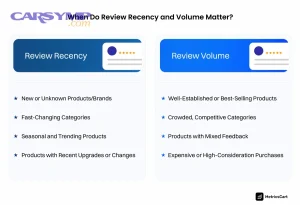
To keep moving with confidence, combine rating level, review volume, and recency into a single “confidence check.”
Use this simple framework:
- High rating + high volume + recent activity → likely stable operations.
- High rating + low volume → read carefully for detail and authenticity.
- Mid rating + high volume → look for what keeps recurring (time delays, pricing disputes, comebacks).
- Low rating + recent negative streak → treat as a warning until proven otherwise.
Before the table, here’s what it helps with: this table shows how to weigh rating versus volume so you don’t get fooled by a small sample size or a large but outdated history.
| Scenario | Risk | What to do |
|---|---|---|
| 4.8 stars, 25 reviews | Small sample may be skewed | Read all reviews; look for detailed diagnostics and outcomes |
| 4.3 stars, 400 reviews | Average hides variability | Filter by newest; scan for repeat complaints (pricing, delays, comebacks) |
| 3.6 stars, 900 reviews | Operational inconsistency | Identify which issues dominate: communication vs workmanship vs policy |
| 4.9 stars, 2,000 reviews | Potential review management effects | Check for authenticity cues, detailed negatives, and response quality |
Here is the required concept, stated explicitly in-body: Comparing review score vs review volume is less about “which number is bigger” and more about statistical confidence—how likely the displayed average reflects today’s service.
According to BrightLocal’s Research team, in March 2024, 59% of consumers expected businesses to have 20–99 reviews, and 71% said they wouldn’t consider a business below three stars, which supports using rating as a gate and volume as a confidence multiplier.
How can reviews help you estimate whether pricing is fair?
Reviews can help you estimate fair pricing by revealing whether costs are explained, whether quotes match invoices, and which line items repeatedly surprise customers—because fairness is often about transparency and consistency, not the lowest number.
To apply this, extract “price context” from reviews, then compare it to your repair category and vehicle complexity.
First, look for reviews that include any of these pricing anchors: labor hours, parts brand (OEM/aftermarket), diagnostic fee, shop supplies, and taxes. Even when the exact numbers differ by region, the structure of the bill tends to be consistent inside a well-run operation.
Second, look for “policy transparency” language: “they explained the diagnostic fee,” “they applied it toward the repair,” “they offered options,” or “they told me the risk of doing only the minimum fix.” These are strong predictors that you won’t get blindsided.
Third, watch for repeated surprise items. If multiple reviewers mention “fees I wasn’t told about,” “extra work without approval,” or “pressure to approve add-ons,” that’s a fairness red flag even if the star rating is decent.
To embed your required phrase naturally: Using reviews to estimate fair pricing means you’re not hunting for a single dollar amount—you’re verifying whether the shop’s pricing behavior is predictable, explained, and consistent across customers.
For a more evidence-based mindset, compare pricing comments within similar repair categories (brakes vs diagnostics vs drivability issues). Then account for vehicle type, because access difficulty and parts availability can change labor time significantly.
According to Harvard Business School research published in October 2011 (Michael Luca), a one-star increase in Yelp rating was associated with a 5–9% revenue increase for independent restaurants, illustrating how strongly ratings influence demand—and why businesses have incentives to manage perception, making transparency cues essential when interpreting price claims.
How do you spot fake or manipulated reviews before they mislead you?
You can spot manipulated reviews by checking reviewer authenticity, language patterns, timing clusters, and whether negative reviews are unnaturally absent—because fake reviews tend to optimize persuasion while real reviews tend to contain imperfect, specific context.
Next, combine “profile checks” with “pattern checks” so you’re not relying on a single clue.

Use these practical checks:
- Reviewer footprint: Real reviewers often have a history (other reviews, photos, varied categories). A brand-new profile with one glowing review can be legitimate, but many of them is suspicious.
- Specificity balance: Real reviews include mixed details (what went well, what was annoying, what was explained). Fake reviews often read like marketing copy: “best ever,” “highly recommended,” without any vehicle or problem context.
- Time clustering: A sudden burst of five-star reviews in a short window—especially with similar wording—can indicate a campaign.
- Extremes without substance: Both fake praise and fake attacks can be extreme while lacking concrete facts.
Here is the exact required phrase, used in-body: How to spot fake mechanic reviews starts with this rule of thumb—if the review tries to sell you instead of informing you, slow down and verify across multiple platforms.
Also check whether the business has a believable spread of feedback. A completely “perfect” profile can be less trustworthy than one with a few thoughtful negatives and professional responses.
According to the U.S. Federal Trade Commission’s Bureau of Consumer Protection, in August 2024 the FTC announced a final rule banning fake reviews and testimonials, highlighting that fake or AI-generated reviews can misrepresent real experiences and distort consumer choices.
What does a business’s response style reveal about accountability?
A business’s review responses reveal accountability by showing whether it listens, documents, and offers resolution steps—because good service cultures respond with specifics and calm clarity, while weak cultures respond with blame, deflection, or legal-sounding intimidation.
To go further, evaluate response patterns across both positive and negative feedback, not just one carefully written reply.

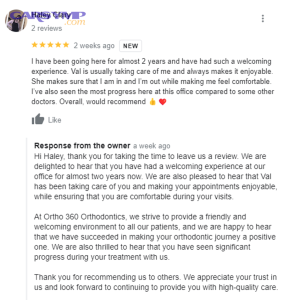
Professional responses typically share three traits: they thank the customer, acknowledge the issue, and invite next steps with a contact path. Even if they disagree, they avoid personal attacks and avoid exposing private details.
Concerning responses often include: “That never happened,” “You’re lying,” public shaming, or vague statements like “we stand by our work” with no offer to inspect and resolve. Over time, these responses teach you how you’ll be treated if something goes wrong.
Here is the required phrase, included naturally: Red flags in shop responses to reviews include aggressive tone, refusal to discuss resolution, and patterns of dismissing multiple customers with the same scripted denial.
Also note whether the business responds consistently. A shop that replies only to praise but ignores problems may be managing image rather than service recovery.
According to BrightLocal’s Research team, in March 2024, 88% of consumers said they would use a business that replies to all of its reviews compared with 47% for one that doesn’t, suggesting that consistent response behavior is a meaningful trust signal.
How do you use reviews to choose the right specialist for your situation?
You use reviews to choose the right specialist by matching your problem category to repeated success stories in similar vehicles, then verifying the shop’s diagnostic approach and parts strategy—because specialization shows up as consistent outcomes, not just general friendliness.
To make this practical, search review text for your symptom keywords and compare how different shops describe their process.
Start with your core issue type: electrical, drivability, AC/heat, brakes, suspension, engine mechanical, or emissions. Then look for reviews that mention similar conditions and outcomes. This is especially useful when reviewers mention the same platform-specific pain points (for example, chronic misfire diagnosis, intermittent no-start, or repeated battery drain).
Now embed the required phrase in-body: Choosing a shop based on specialty reviews means you’re prioritizing demonstrated repeat success in your problem category over generic “great service” claims.
Also, scan for evidence of diagnostic discipline. Specialists often describe testing steps and confirmation, while generalists may jump straight to common replacements. You don’t need to be a mechanic to notice the difference—just look for language that describes verification.
To connect this with your own context, bring your notes: when the issue happens, how long it lasts, what makes it worse, and what you’ve already tried. Then cross-check that with reviewers who describe similar triggers.
Include your required term in-body without putting it in headings: if you’re researching Car Symptoms, reviews that describe the same symptom pattern (not just the same part replaced) are the ones to prioritize.
According to BrightLocal’s Research team, in March 2024, 96% of consumers said the “search reviews” function is useful, which supports using keyword searches (symptom terms, part names, “diagnosis,” “warranty”) to locate the most relevant specialty experiences faster.
What review patterns predict quality service over time?
Review patterns that predict quality service include stable performance across months, consistent documentation, low mentions of repeat failures, and credible handling of mistakes—because long-term quality shows up in the absence of recurring “comeback” stories and the presence of repair follow-through.
Next, translate those patterns into a shortlist you can trust for both today’s visit and future maintenance.
Look for these patterns:
- Recency consistency: good reviews are not only historical; they continue in the last 3–6 months.
- Outcome confirmation: reviewers return to say the issue stayed fixed after time passed.
- Operational reliability: repeated mentions of updates, accurate timelines, and clean estimates.
- Service recovery maturity: when a mistake happens, the shop reinspects and resolves without defensiveness.
Now include your exact phrase in-body: What review patterns predict quality service is less about perfection and more about repeatability—how consistently the same positive behaviors show up across different customers and different problems.
Also watch for “process language density.” High-quality operations tend to produce reviews with more concrete nouns (tests, parts, steps) and fewer pure adjectives (amazing, awful) without explanation.
According to BrightLocal’s Research team, in March 2024, the share of consumers who “always” or “regularly” read online reviews remained high (75% in 2024), suggesting consumers increasingly rely on patterns across multiple reviews rather than single anecdotes.
What do reviews reveal about warranty support and the risk of repeat visits?
Reviews reveal warranty support by showing how the business handles comebacks, whether it honors written terms, and how quickly it reinspects—because warranties are only valuable when the process is smooth and the customer isn’t blamed for the failure.
To keep this grounded, scan specifically for comeback stories and the shop’s response style under pressure.
Focus on three signals:
- Clarity: reviewers mention written warranty duration or coverage boundaries.
- Speed: the shop reinspects promptly rather than pushing the customer to the back of the line.
- Ownership: the shop treats the comeback as a shared problem to solve, not a debate to win.
Now embed your required phrase in-body: Warranty and comeback rate clues in reviews appear when multiple reviewers describe “fixed it again at no charge,” “stood behind their work,” or the opposite—“wouldn’t honor it,” “charged me again,” “said it’s unrelated” without explaining why.
To interpret repeat-visit risk, count how often reviews mention “came back” or “still doing it.” Then compare that with how often reviewers mention successful resolution after a return visit. A responsible shop can have comebacks—what matters is the resolution behavior.
According to BrightLocal’s Research team, in March 2024, 47% of consumers found “sort by newest” highly useful among review functions, supporting the tactic of prioritizing recent comeback/warranty stories because they best reflect current policies and staffing.
To shift from reading to acting, the next section moves from evaluation to contribution—how to write feedback that improves the whole ecosystem without oversharing personal details.
How can you write a review that helps other drivers without causing drama?
You can write a helpful review by documenting what happened in a clear, verifiable sequence—symptoms, diagnosis steps, authorization, final work, and outcome—while keeping the tone factual so future drivers can judge relevance and credibility quickly.
To make this easier, use a repeatable template and include only the details that support decision-making.
Here is the exact phrase included naturally in-body: How to leave a helpful repair review starts with writing for the next driver, not for your emotions—your goal is to reduce uncertainty for someone with a similar problem.
What details make your review credible and actionable?
A credible review includes your vehicle context (make/model/year, approximate mileage), the main complaint, what the shop did to diagnose, what you approved, and whether the issue was solved—because specificity is what separates useful guidance from generic praise or venting.
Next, keep it scannable: short sentences, clear timestamps (“same day,” “two days,” “one week later”), and a final outcome statement.
Try this structure inside your review: “I brought in [vehicle] for [symptom]. They diagnosed by [tests/inspection], quoted [range], called before extra work, completed in [time]. After [time], [outcome].”
According to BrightLocal’s Research team, in March 2024, 69% of consumers said written reviews describing positive experiences make them feel positive about using a business, reinforcing that concrete details improve usefulness.
How should you mention pricing and estimates responsibly?
You should mention pricing responsibly by describing whether the estimate matched the invoice, whether you were called for approval, and what line items surprised you—because fairness signals are usually about process, not just the total amount.
Next, anchor your comment to scope: “brake pads and rotors,” “diagnostic only,” “oil leak tracing,” rather than quoting a number with no context.
Include your required phrase in-body as a reminder: Using reviews to estimate fair pricing works best when reviewers describe scope, parts quality, and whether the shop explained trade-offs.
According to Harvard Business School research reported in October 2011, higher star ratings can materially influence demand and revenue, which increases the value of transparent, context-rich pricing reviews that are hard to fake convincingly.
When is it fair to update a review after a follow-up visit?
It is fair to update a review after a follow-up visit when the outcome changes—either the repair proves durable over time or a comeback is resolved (or not)—because reviews should reflect the final truth of the experience, not only the first impression.
Next, be explicit about what changed: “Initial fix didn’t hold, returned, they rechecked and resolved at no charge; now stable after X weeks.”
This is where Warranty and comeback rate clues in reviews become valuable to others, because they show how the shop behaves after the sale.
According to BrightLocal’s Research team, in March 2024, consumers strongly value review recency and sorting tools, so updating outcomes helps future readers interpret risk accurately.
What should you do before posting a negative review?
Before posting a negative review, contact the business with a clear summary and give a chance to inspect or correct the issue—because many disputes are misunderstandings that can be resolved faster through a calm, documented conversation.
Next, if you do post, stick to verifiable facts: dates, what was authorized, what was charged, and what the outcome was. Avoid accusations you can’t support.
Include your exact phrase in-body so it’s easy for readers to recognize: Red flags in shop responses to reviews become clearer when your review is factual and the response is still dismissive or aggressive.
According to the U.S. Federal Trade Commission’s Bureau of Consumer Protection, in August 2024 the FTC highlighted enforcement aimed at deceptive review practices, which underscores the importance of honest, experience-based reviews that reflect real transactions.
Frequently asked questions
Which platforms are worth checking first for repair feedback?
Start with widely used local-review platforms, then confirm across at least one secondary site so you can spot consistency and reduce the risk of being misled by one platform’s quirks.
Here is the required phrase included in-body: Best sites for auto repair shop reviews typically include Google, Yelp, Better Business Bureau listings for certain service trades, and vehicle-owner communities where people discuss long-term outcomes.
According to BrightLocal’s Research team, in March 2024, Google remained the most-used site for reading online reviews (81% in 2024), which makes it a strong starting point—but cross-checking adds safety.
What should you ask the business after reading reviews?
Ask about estimates, diagnostic process, warranty terms, timeline updates, and how they handle comebacks—because these questions directly address the most common review pain points.
Here is the required phrase included in-body: Questions to ask after reading reviews include “Will you call before additional work?”, “Is the diagnostic fee applied to the repair?”, “What is the written warranty and what is excluded?”, and “How do you document findings?”
According to BrightLocal’s Research team, in March 2024, consumers reported strong preference for businesses that engage with reviews, so asking about communication and updates aligns with what predictably shapes satisfaction.
How can you tell whether a shop’s reputation is stable right now?
Check the newest 10–20 reviews, look for repeated operational signals, and verify that feedback spans different months—because a stable reputation depends on current staffing, policies, and workload, not only older history.
To reinforce the method in plain language: look for the same positive behaviors repeating and the same negative problems not repeating.
Here is the required phrase included in-body: What review patterns predict quality service often show up as steady recency, consistent documentation, and professional resolution behavior.
Where does the phrase “auto repair shop” fit into your review research?
Use the phrase auto repair shop as your core entity when searching, then add your vehicle make/model and your symptom keywords so you find the most relevant experiences and avoid generic results.
Once you find a promising candidate, apply the same evidence-based reading method: problem, process, proof, and post-visit outcome.