


ASE certification is an independent, industry-recognized credential that shows a technician has demonstrated job-related knowledge through standardized testing and verified hands-on experience. If you’re trying to choose a repair shop with less risk, it’s one of the clearest signals you can check quickly.
Beyond “Is this person qualified?”, most drivers also want to know how certifications connect to real outcomes: fewer repeat visits, fewer surprises on the invoice, and fewer safety issues after the repair. That’s where understanding what ASE does—and does not—represent becomes practical.
Another common goal is figuring out how to verify what a shop claims. Titles like “master” or “specialist” can be real, exaggerated, or outdated, so you need a simple way to separate valid credentials from marketing language.
More importantly, “Giới thiệu ý mới”: once you understand ASE, you can combine it with a few other checks to make confident repair decisions—especially when the problem is intermittent, expensive, or tied to safety systems.
What is ASE certification, and what does it actually verify?
ASE certification is a competency credential that verifies a service professional has passed a standardized exam and met required experience for a specific repair domain. Next, the key is to treat it as a skills signal—not a blanket promise of perfection.
ASE stands for the National Institute for Automotive Service Excellence, a nonprofit credentialing organization created to help consumers and employers distinguish trained, tested professionals from unverified claims. In practical terms, ASE certification means: (1) a technician passed a role-specific exam, (2) the certification maps to a defined work area (brakes, electrical, engine performance, etc.), and (3) the credential must be maintained through periodic renewal.
Specifically, what ASE verifies is job-related knowledge measured under a controlled testing standard—how systems work, how failures present, and what correct diagnostic/repair steps look like. This matters most when you’re dealing with modern vehicles where faults are networked (modules, sensors, CAN communication), and guessing gets expensive fast.
However, verification is narrower than most people assume. ASE does not certify that every repair a technician performs will be flawless, that the shop uses OEM parts, or that the business practices are fair. It’s a professional benchmark for technical knowledge and ongoing learning.
To connect this to real-world decision-making, look at it like a “minimum competence plus commitment” marker: the technician invested time to pass tests, prove experience, and keep credentials current—signals that often correlate with better diagnostic discipline.
The phrase certified mechanic gets used loosely in advertising, but ASE is one of the most recognizable programs that ties “certified” to an exam-and-experience standard rather than a generic training attendance certificate.
Theo nghiên cứu của Automotive Service Excellence (ASE) từ trang thông tin dành cho người lái xe (Drivers), vào giai đoạn 2024–2025, ASE mô tả chứng nhận là kết quả của bài thi chuyên môn kèm yêu cầu kinh nghiệm thực hành đủ điều kiện.
How do ASE tests and work-experience requirements really work?
ASE certification typically requires passing a test plus meeting a hands-on work-experience requirement for that test area. Next, understanding this structure helps you spot the difference between “passed an exam” and “fully credentialed professional.”
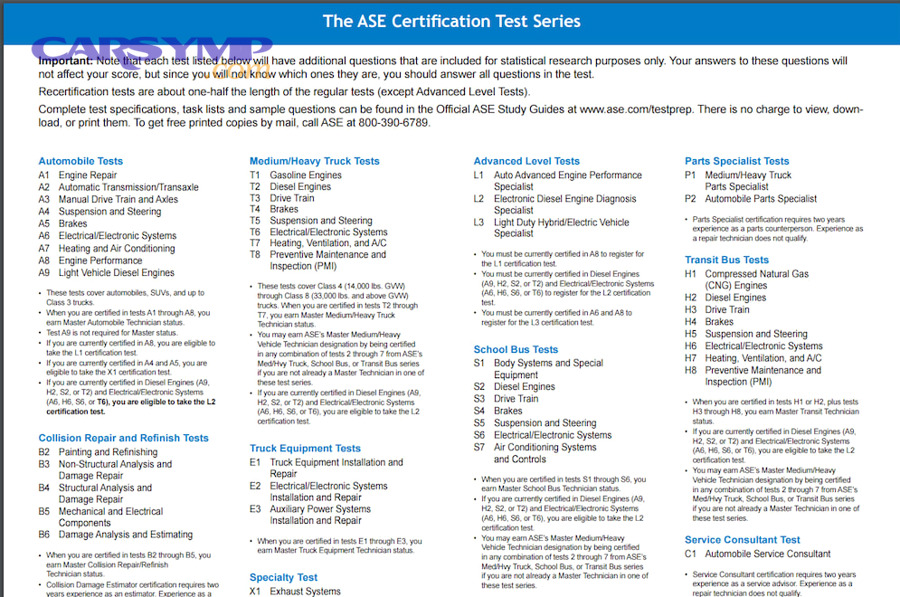
ASE is built around test series that map to real shop roles—automobile, collision, truck, parts, service consulting, and more. Each certification corresponds to a specific domain, so a technician can be certified in brakes but not necessarily in engine performance. That’s a feature, not a flaw: it keeps credentials tied to real job tasks rather than vague “mechanic” labeling.
Experience requirements matter because automotive competence is not purely theoretical. A tech can memorize concepts, but real diagnostics involves pattern recognition, tool usage, workflow discipline, and safe procedures. That’s why ASE requires a minimum amount of relevant, hands-on experience before awarding the credential, even if the person can sit for certain tests earlier.
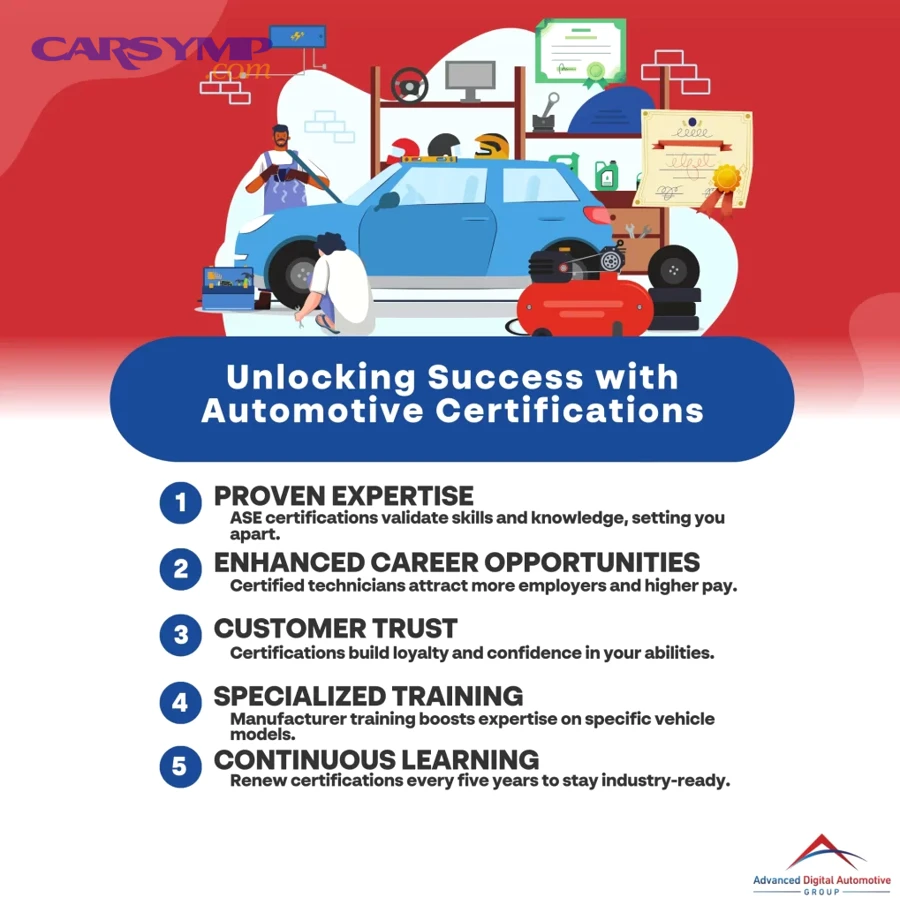
Another practical detail: ASE credentials are time-limited and must be renewed. Renewal forces ongoing learning as vehicle technology changes—direct injection patterns, ADAS calibrations, EV/Hybrid safety procedures, network diagnostics, and scan-tool interpretation. When you see “current ASE,” it signals continued engagement, not just a one-time achievement years ago.
So what should you ask a shop? Not “Are you ASE-certified?” as a yes/no question, but: Which certifications are current, and who holds them for the work my car needs? This keeps the conversation concrete and reduces the chance of mismatched expertise.
Also, avoid the trap of assuming the service writer is the certified person. Some shops have certified technicians but your conversation is with a non-technical advisor. That’s normal—just ensure the repair plan is backed by the credentialed tech who will actually diagnose/repair the vehicle.
Theo nghiên cứu của Automotive Service Excellence (ASE) từ trang Work Experience, vào giai đoạn 2024–2025, ASE nêu rõ chứng nhận cần “đậu bài thi” và “đủ kinh nghiệm thực hành liên quan” trước khi được cấp chứng chỉ.
What do different ASE test series and “Master Technician” mean?
ASE credentials are grouped into series, and “Master” generally indicates a technician holds a full set of certifications within a defined series. Next, knowing the series prevents you from overvaluing a title that may not match your repair type.
ASE offers many certifications across the transportation industry, but most drivers encounter the automobile series most often. Within each series, tests focus on major systems (e.g., engine repair, automatic transmission, brakes, electrical/electronic systems, heating & A/C, suspension & steering, engine performance). This system-based structure mirrors how a competent diagnostic process isolates faults.
“Master Technician” is meaningful when it’s tied to the series relevant to your vehicle and the shop’s actual services. For example, a master-level credential in one series doesn’t automatically cover specialty work like collision estimating, heavy-duty diesel, or advanced drivability for every platform. It does, however, show broad coverage within that defined category—often a strong indicator of diagnostic range.
When you’re dealing with a symptom that “moves” between systems—like a stall that looks fuel-related but is actually a wiring issue, or a battery drain that’s really a module sleep problem—broad certification coverage becomes especially valuable.
To keep it practical, match the credential to your problem:
- Braking, pulling, vibration → prioritize brake/suspension/steering credentials.
- No-start, intermittent stall, misfire → prioritize electrical/electronics and engine performance credentials.
- Harsh shifting → prioritize transmission credentials.
- A/C weak or inconsistent → prioritize heating & A/C credentials.
If your issue is complex, ask who will lead diagnosis and what credentials they hold for that system. This reduces the chance of “parts swapping” and increases the odds of a measured test plan.
Theo nghiên cứu của Automotive Service Excellence (ASE) từ trang About ASE và thông tin test series, vào giai đoạn 2022–2025, ASE mô tả hệ thống bài thi theo từng mảng kỹ năng, với hàng chục bài thi bao phủ nhiều hệ thống và vai trò trong ngành.
How can a driver verify ASE credentials and avoid misleading claims?
You can verify ASE status by asking for current credential details and cross-checking shop claims with clear identifiers. Next, verification should be routine—especially before approving high-cost diagnostic time or major component replacement.
Start with simple, non-confrontational questions that a legitimate shop can answer easily:
- Who will diagnose the vehicle? (Name/role, not just “our techs.”)
- Which ASE areas are current for that technician? (System-specific, not generic.)
- When were the certifications last renewed? (Current vs expired.)
- Will the same person who diagnoses also confirm the repair and test drive?
Then watch for “marketing-only” phrasing. A shop might say “ASE shop” even if only one tech is certified, or if certifications are old, or if the certified tech doesn’t work on your type of repair. None of this is automatically bad, but you should clarify coverage.
Also distinguish between:
- Technician credential (ASE-certified person) vs
- Shop recognition programs (facility-level commitments that may require a certain share of certified staff)
In real life, misleading claims often appear when a shop is trying to rush a decision—“You need this today”—without showing test results, inspection notes, or a written plan. If the diagnosis is expensive, ask for the evidence and the next measurement step before authorizing parts.
For intermittent issues, insist on a test plan that connects symptom → test → result → decision. This is where experienced, credentialed technicians often stand out: they describe what will be measured, not just what will be replaced.
To keep your verification calm and cooperative, you can frame it as: “I’m comparing shops and want to understand who is best suited for this specific issue.” The right shop will welcome that transparency.
Theo nghiên cứu của Automotive Service Excellence (ASE) từ thông tin chương trình và hướng dẫn dành cho người tiêu dùng được công bố rộng rãi, vào 2022–2025, ASE nhấn mạnh chứng nhận gắn với bài thi theo mảng hệ thống và tính hiệu lực theo chu kỳ, vì vậy người dùng nên kiểm tra trạng thái “current” thay vì chỉ tin bảng hiệu.
Why does ASE matter when choosing a repair shop for safety and value?
ASE matters because it increases the likelihood of disciplined diagnosis, correct procedures, and fewer costly comebacks. Next, it becomes most valuable when the repair is safety-related or the symptom is complex and easy to misdiagnose.
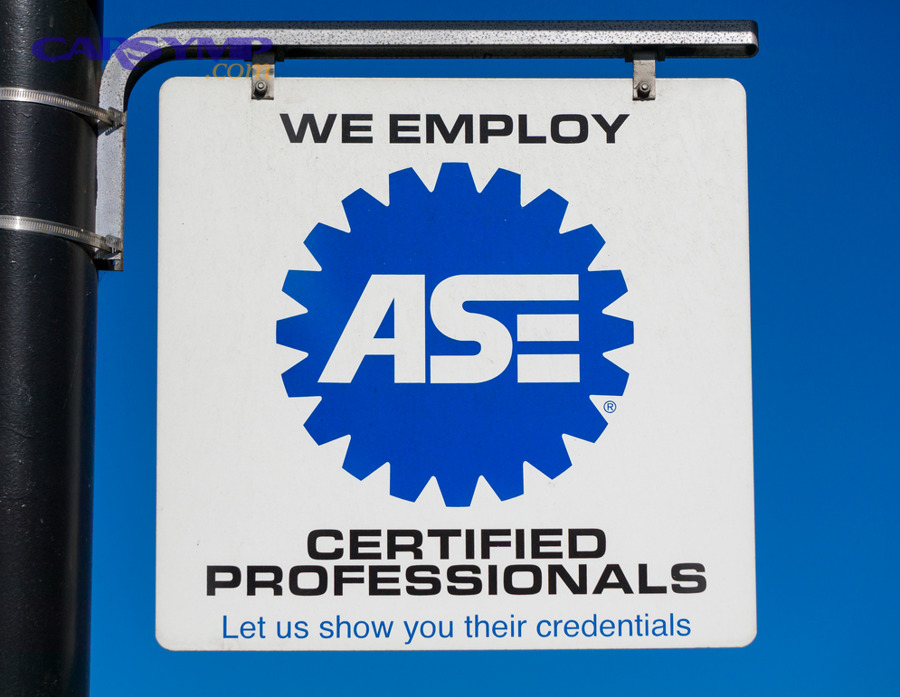
From a driver’s perspective, “value” isn’t only price—it’s correctness. A cheaper repair that doesn’t fix the issue is often the most expensive outcome. ASE credentials are one proxy for technical rigor, because the tech has proven knowledge under a standardized assessment rather than relying only on tenure or confidence.
Safety systems are a clear example: brakes, steering, suspension geometry, wheel torque procedures, and stability control interactions. Small procedural mistakes (wrong torque, missed worn component, incorrect bedding-in, skipped road test) can create unsafe conditions. Technicians who invest in certification often follow checklists, measurements, and confirmatory tests more consistently.
Complex, intermittent faults are the other big area. Electrical and network issues can present as random warnings, no-starts, or weird behavior that disappears during a quick check. A technician trained to test rather than guess is more likely to document conditions, scan data, freeze frames, and repeatable triggers—reducing unnecessary parts replacement.
There’s also a consumer-trust angle. Many drivers feel vulnerable in repair settings because they can’t easily validate what’s being claimed. Certifications reduce that asymmetry a bit by giving you an external benchmark you can ask about.
If you’re comparing business models, remember that the real difference is less “brand” and more process. The Pros/cons of chain shops vs local certified techs often come down to staffing stability, who actually diagnoses the car, and whether the shop encourages measured testing over sales-driven part replacement.
Theo nghiên cứu của Automotive Service Excellence (ASE) từ khảo sát người tiêu dùng được công bố qua PR Newswire, vào 10/2022, 41% người tham gia nói chứng nhận ASE có ảnh hưởng tới việc chọn cơ sở sửa chữa hoặc họ ưu tiên cơ sở có kỹ thuật viên ASE.
What ASE cannot guarantee, and what you should check instead
No, ASE does not guarantee honest pricing, perfect workmanship every time, or the right parts choice for your budget. Next, the smartest approach is to pair ASE with evidence-based paperwork, transparent communication, and quality control steps.
It’s easy to over-interpret credentials, so let’s be precise about what ASE does not automatically cover:
- Business ethics: Certifications don’t prove fair pricing, honest sales tactics, or warranty behavior.
- Shop culture: A certified technician can still be pressured to rush or skip steps in a poorly managed shop.
- Parts quality: ASE doesn’t certify which parts a shop chooses (OEM vs aftermarket tiers).
- Consistency: Even strong technicians can have off-days; process and quality checks matter.
So what should you check instead—especially before authorizing expensive work?
This table contains a simple “ASE + process” checklist so you can see what each signal tells you and what it does not.
| Signal | What it helps confirm | What it does NOT confirm | What to ask for |
|---|---|---|---|
| Current ASE certifications | Tested knowledge + verified experience in specific areas | Fair pricing, parts quality, perfect workmanship | Which cert matches my repair + renewal status |
| Written diagnostic results | Evidence-based decision path | That the first proposed repair is the only solution | What test result led to this recommendation? |
| Clear estimate with line items | Transparency on labor, parts, taxes, shop fees | That the estimate won’t change if new findings appear | What conditions would change the final price? |
| Warranty and return policy | Accountability after repair | That a different component won’t fail later | Coverage terms + what’s excluded |
| Post-repair verification | Quality control (road test, scan reset, recheck) | That the root cause was fully addressed long-term | What verification steps were completed? |
One of the best “instead checks” is learning How to read repair estimates like a pro: you’re looking for measurable labor time, specific part numbers or quality tiers, and a written diagnostic conclusion—not vague labels like “replace parts as needed.”
Also, tie the estimate to the symptom. If your complaint is “vibration at highway speed,” and the estimate is a long list of unrelated components, ask which item directly addresses the symptom and what test confirms it.
Finally, keep quality control in mind: a competent shop can still make a mistake if steps aren’t verified. A short post-repair checklist (torque recheck, leak check, scan for codes, road test under the same conditions) is a practical safeguard.
Theo nghiên cứu của Automotive Service Excellence (ASE) từ tài liệu hướng dẫn và thông tin chứng nhận công khai, vào 2024–2025, ASE mô tả chứng nhận tập trung vào năng lực kỹ thuật theo mảng hệ thống; vì vậy người tiêu dùng vẫn cần kiểm tra ước tính, quy trình xác minh sau sửa và chính sách bảo hành để quản trị rủi ro.
How ASE connects to shop recognition programs like the Blue Seal
ASE Blue Seal recognition is a facility-level program that signals a shop employs a high share of ASE-certified professionals and covers each service area with certified staff. Next, it helps you evaluate the shop as a system, not just a single technician.
Many drivers focus on a single technician, but shop outcomes depend on the whole workflow: intake accuracy, communication, parts sourcing, technician assignment, and quality checks. That’s why shop-level recognition programs can matter—when they’re real and current.
ASE’s Blue Seal program (and similar concepts in other industries) is built around the idea that a shop should demonstrate a consistent commitment to professional certification. Instead of “we have one certified person somewhere,” the program pushes staffing coverage—so each service category offered has at least one certified professional, and a large portion of service staff are credentialed.
For the customer, this is useful when:
- You don’t know which technician will get assigned until after drop-off.
- Your repair crosses multiple systems (e.g., drivability + electrical + emissions).
- You want a shop where diagnostic culture is likely to be standardized.
Even then, treat it as a probability boost, not a guarantee. A strong facility-level signal should still be paired with good documentation, a clear estimate, and a post-repair verification step.
If a shop advertises recognition, ask a simple question: “Which service areas are covered by certified staff here?” A confident, organized shop can answer without defensiveness.
Theo nghiên cứu của Automotive Service Excellence (ASE) từ trang Blue Seal Program, vào 2024–2025, chương trình nêu điều kiện theo hướng “tỷ lệ nhân sự có chứng nhận” và “mỗi mảng dịch vụ có ít nhất một kỹ thuật viên ASE,” giúp người dùng đánh giá năng lực ở cấp cơ sở.
How to use ASE in a practical, low-stress decision process
Use ASE as one filter in a short process: match credentials to your symptom, demand measurable evidence, compare estimates fairly, and insist on verification. Next, this method reduces overspending and lowers the chance of repeat visits.
Here’s a practical process you can run in minutes—especially when the repair is expensive or safety-related:
- Define the symptom precisely: when it happens, under what conditions, and what changes it (temperature, speed, load, bumps, rain).
- Match the system: brakes, steering, electrical, drivability, HVAC, etc.
- Ask who will diagnose and what system-relevant ASE credentials are current.
- Ask for the test plan: what will be measured first, and what result would change the decision.
- Request a written estimate with line items and the conditions that would change the price.
- Confirm verification steps: road test, re-scan, recheck for leaks/noise/torque as applicable.
This process matters because many disputes come from mismatched expectations—drivers think they bought a fix, but the shop thinks they sold a first step. A clear test plan and estimate prevents that.
It also helps you avoid fear-based upsells. If you’re told something is urgent, ask: “What specific measurement shows it is unsafe today?” A credible answer includes thickness, play, leakage rate, fault codes, scan data, or a manufacturer spec comparison—not a vague warning.
If you’re tracking recurring Car Symptoms like intermittent no-start, random warning lights, or vibrations that move around, this structured approach plus verified credentials can save you from replacing parts that were never the root cause.
Ultimately, ASE makes the biggest difference when it changes behavior: better diagnosis discipline, clearer repair logic, and more consistent verification. It’s not just a badge—it’s a standard you can reference when asking for evidence and process.
Theo nghiên cứu của Automotive Service Excellence (ASE) từ thông tin tổng quan trên website chính thức, vào 2024–2025, ASE nêu chứng nhận có thời hạn và cần tái chứng nhận theo chu kỳ, củng cố vai trò “cam kết học tập liên tục” trong quyết định chọn nơi sửa xe.
Contextual Border: From here, we move beyond the core meaning of ASE and into the less obvious signals that help you choose the right place for modern vehicles, complex diagnostics, and long-term maintenance confidence.
Beyond ASE: what else should you look for in a modern repair decision?
Beyond ASE, you should look for training relevance, data/tool access, communication quality, and verification discipline—because modern repairs are as much about process and information as hands-on skill. Next, these factors become decisive for advanced electronics, ADAS, and intermittent faults.
OEM training, platform experience, and when they matter more than a badge
OEM training can be stronger for brand-specific procedures, while broad credentials support cross-platform fundamentals. Next, you should prioritize OEM experience when the job involves software updates, ADAS calibration, or known platform-specific failure patterns.
Some repairs are “generic” (pads/rotors, batteries, belts), while others are platform-dependent (module programming, immobilizer issues, advanced drivability, hybrid isolation faults, ADAS sensor calibration). A shop can have great general skills but still struggle if it lacks the tools, subscriptions, or procedures for your make.
So your question should be: “Do you have documented experience with this platform and the specific procedure?” This reduces delays, towing surprises, and “dealer-only” referrals after you’ve already paid for diagnosis.
Tooling, scan data access, and the reality of modern diagnostics
Modern diagnostics depend on scan-tool capability, data access, and structured interpretation as much as mechanical skill. Next, ask what data will be captured—codes, freeze frames, live parameters—and how results will guide the next step.
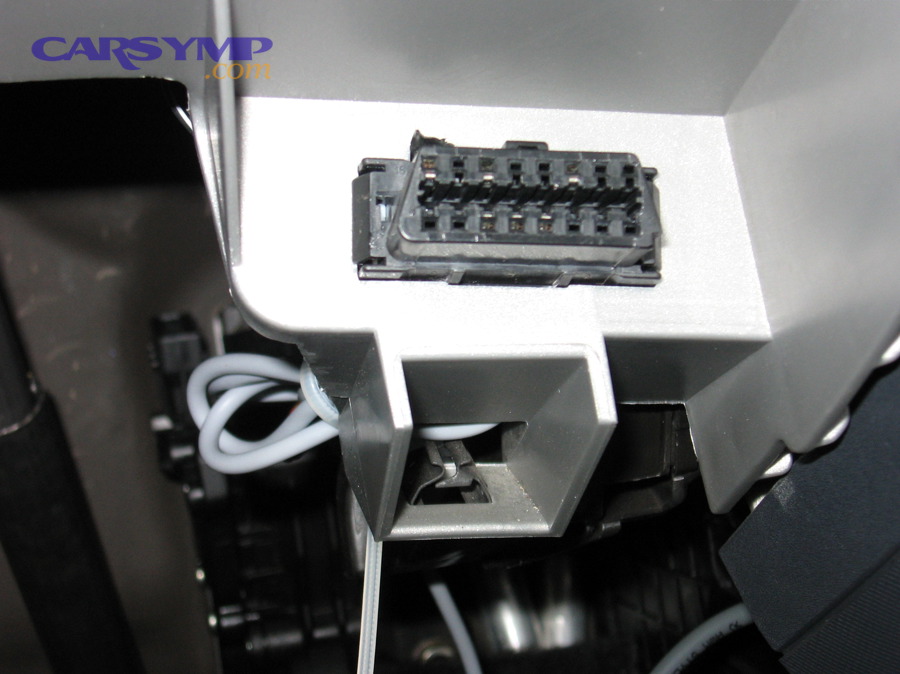
Many “hard” issues today are not purely mechanical. They’re networked: modules communicate, sensors cross-check each other, and a voltage drop can ripple into unrelated warning lights. A competent shop documents scan results and ties them to the symptom rather than guessing.
Ask whether the shop can access service information, wiring diagrams, technical service bulletins, and guided diagnostic routines. If they can’t, even a skilled technician may waste time re-inventing procedures.
Communication discipline: the hidden factor that protects your wallet
Communication discipline protects you because it prevents approval-by-confusion and keeps diagnosis tied to evidence. Next, demand short written notes that connect symptom → test → result → recommendation in plain language.
The strongest shops don’t just “tell” you what to replace—they show you what they measured and why it matters. This is where many customers feel the difference between a well-run operation and a sales-driven one. Clear notes make it easier to compare two shops fairly and reduce “he said/she said” disputes later.
When the service advisor’s language is vague, ask for the technician’s diagnostic notes. This is a normal request and a healthy transparency signal.
FAQ: quick answers drivers ask before choosing a certified shop
These quick answers help you use credentials correctly without over-trusting them. Next, treat each answer as a prompt to ask one better follow-up question.
- Does ASE mean the shop will be cheaper? Not necessarily; it more often means you’re paying for a higher probability of correct diagnosis and fewer comebacks.
- Is one ASE-certified person enough? It depends on your repair; for complex issues, ask who will handle diagnosis and whether certifications match that system.
- Should I avoid a shop without ASE? Not always; some excellent techs have strong OEM training. If there’s no ASE signal, demand stronger evidence, clearer estimates, and tighter verification.
- How do I compare two estimates? Compare the diagnostic logic, labor lines, parts quality tier, warranty, and verification steps—not just the final number.
Theo nghiên cứu của Automotive Service Excellence (ASE) từ trang thông tin chương trình và chứng nhận, vào 2024–2025, ASE nhấn mạnh tiêu chí kỹ thuật theo bài thi và tái chứng nhận; do đó các yếu tố bổ trợ như công cụ chẩn đoán, dữ liệu dịch vụ, và quy trình giao tiếp/kiểm tra sau sửa là phần bắt buộc để ra quyết định đúng trong xe đời mới.
- ASE certification explained
- How to verify technician credentials
- Choosing a repair shop with evidence-based diagnosis
- Reducing comebacks with post-repair verification