


If you’re trying to find a mechanic who truly understands your car make, the fastest path is to build a shortlist of brand-specialist shops, verify proof (tools, training, procedures), and then choose the best fit based on diagnostics quality, parts policy, and warranty clarity—not hype.
Many owners also want to know whether an OEM-certified repair shop is “worth it,” what that certification really means, and which repairs actually benefit from it (especially when safety systems and calibrations are involved).
Just as important, you need a repeatable way to judge any shop’s trust signals—communication, written findings, documented parts choices—so you don’t get trapped in vague recommendations or unnecessary work.
Introduce a new idea: below is a step-by-step framework that moves from definitions to finding options, then to vetting, comparisons, and red flags—so you can choose confidently and know when a second opinion is the smarter move.
What does “make-specific (brand-specialist) mechanic” mean, and do you actually need one?
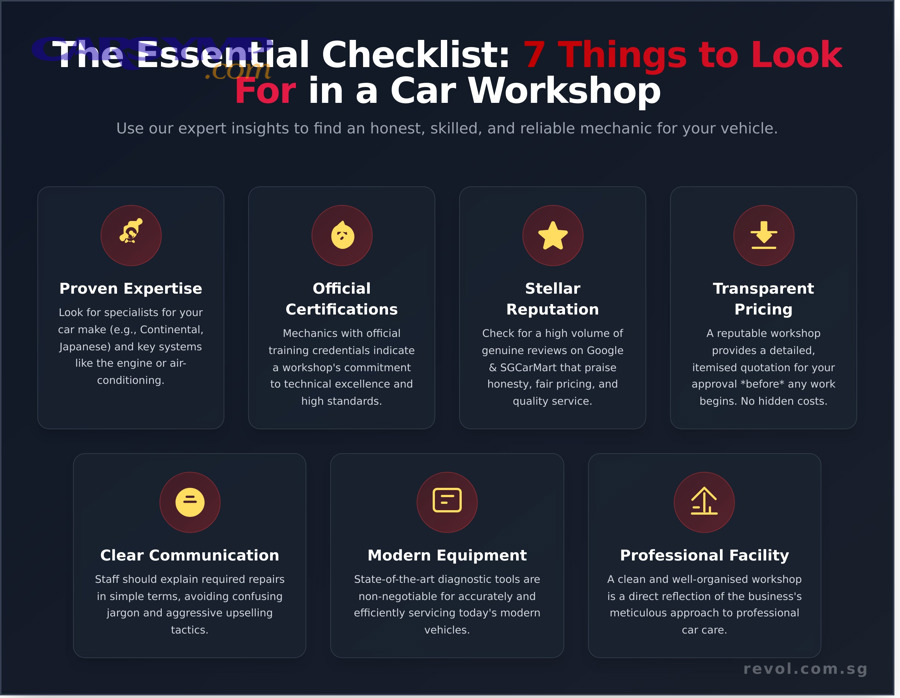
A make-specific (brand-specialist) mechanic is a technician or shop that focuses on one brand (or a small set of brands) and builds deeper capability with that make’s common failure patterns, diagnostic tooling, software, and repair procedures. Especially when modern cars rely on networks, modules, and calibrations, that specialization can be the difference between “guess-and-replace” and a clean, documented fix.
Is a brand-specialist mechanic better for your car make?
Yes—when you have complex symptoms, a brand-specialist mechanic is often better for your car make for at least three reasons: they diagnose faster with brand tools, they recognize repeat problems earlier, and they follow make-specific procedures more consistently. However, the “better” choice depends on your job type and the shop’s proof—not just their marketing.
Specifically, specialization pays off when the problem lives in the gray zone: intermittent faults, communication issues between modules, “no codes but still runs poorly,” or repairs that require programming and calibrations. A general shop can be excellent, but brand specialists tend to see the same platforms repeatedly, which sharpens their pattern recognition.
Three situations where the “Yes” is strongest:
- Electronics-heavy faults: warning lights, sensor faults, ADAS faults, network codes, or “Car Symp” like random stalls and recurring limp mode after parts replacement.
- Programming-dependent repairs: key/fob registration, immobilizer programming, throttle body adaptations, module replacement, or secure gateway access issues.
- Known-brand pain points: a specific make’s common cooling, timing, transmission, or turbo issues—where the “right test first” saves money.
On the other hand, you usually don’t need specialization for predictable maintenance (fluids, filters, brakes) as long as the shop follows specs and uses correct parts.
According to a study by Northwestern University from the Kellogg School of Management, in 2013, repair shops quoted higher prices to callers who appeared uninformed—highlighting why expertise and clear expectations matter when you choose and negotiate a repair plan. (kellogg.northwestern.edu)
What problems are most likely to require make-specific expertise?
There are 6 main types of problems that most likely require make-specific expertise: (1) programming/keys, (2) network and module communication, (3) advanced drivability diagnostics, (4) ADAS-related faults and calibrations, (5) emissions readiness complexity, and (6) hybrid/EV safety work—based on how much the repair depends on brand-specific software and procedures.
To better understand why, think about what “specialist” really buys you: access to the right instructions (procedures/TSBs), the right interface (tools/subscriptions), and the right reference library (repeat exposure to your make).
1) Keys, immobilizers, and security access
When a car cranks but won’t start—or starts and stalls—some makes require a specific sequence, tool, or security handshake to confirm key authorization. Specialists are more likely to have the right tooling and the habit of verifying antenna/receiver issues versus replacing parts blindly.
2) Module programming, coding, and adaptations
A battery replacement, throttle body, steering angle sensor, or transmission module may require adaptation steps and post-repair checks. The “fix” isn’t the part alone; it’s the procedure around it.
3) Network faults (CAN/LIN) and intermittent electrical issues
If a car intermittently loses power steering, lights up multiple warnings, or randomly goes into limp mode, the fault may be a network dropout, ground issue, or module handshake failure. Specialists typically carry better diagrams, pin-out references, and known-failure locations for that make.
4) ADAS faults and calibrations after repairs
Modern cars may require calibration after glass replacement, bumper work, alignment changes, or sensor removal. Even small misalignment can degrade system behavior; organizations like IIHS and training bodies emphasize calibration sensitivity in real-world repairs. (rts.i-car.com)
5) Emissions readiness and “no code” failures
A failed inspection, incomplete monitors, or recurring catalyst/EVAP issues can be make-specific in testing strategy and drive-cycle completion.
6) Hybrid/EV high-voltage and thermal management
High-voltage systems demand safety training, insulated tooling, and correct disable/enable procedures. This is one area where “close enough” is not good enough.
How can you find a reliable brand-specialist mechanic for your car make near you?
You can find a reliable brand-specialist mechanic for your car make near you by using 5 steps—(1) build a shortlist from trusted directories and brand communities, (2) verify specialization proof, (3) screen by phone with diagnostic-focused questions, (4) compare policies in writing, and (5) book a diagnostic appointment with clear deliverables.
Next, the goal is to avoid “random searching” and instead apply a repeatable filter that surfaces real specialists—including the best independent mechanic options—while reducing the risk of paid ads and empty claims.
Which sources help you find make-specific specialists fastest?
There are 5 main sources that help you find make-specific specialists fastest: OEM-certified shop locators, credentialing bodies (like ASE-style credentials), reputable local listings with review depth, make-owner communities, and collision networks—based on how directly they verify capability.
Let’s explore each source, and what it’s good (and not good) for:
1) OEM-certified locator tools (best for safety-critical and collision-adjacent work)
If the repair touches sensors, structure, or brand-required procedures, an OEM-certified repair shop locator can be a strong starting point. Keep in mind: certification may be brand- and repair-type specific, so you still verify scope.
2) Credentials and training signals (best for technician competence clues)
Credentials don’t guarantee honesty, but they can signal investment in knowledge. ASE, for example, outlines a wide range of certification tests across disciplines. (ase.com)
3) Google Business profiles + review quality (best for consistency patterns)
Look for: repeated mentions of diagnostics quality, “fixed what others couldn’t,” strong owner replies, and photos of tooling and workflow. Avoid: “cheap/fast” only reviews, suspicious review spikes, and vague praise with no details.
4) Make-owner forums, subreddits, and club groups (best for specialist names)
Enthusiast communities often know who the true specialists are—especially for recurring model problems. Use them to generate names, then verify proof independently.
5) Collision and calibration-capable networks (best when ADAS is involved)
If your repair involves camera/radar calibration, glass replacement, or post-collision issues, look for shops that explicitly document pre/post scans and calibrations.
According to a survey by AAA, in 2016, two out of three U.S. drivers reported they do not trust auto repair shops in general—while 64% said they have found a shop they trust—supporting the value of using a structured method to shortlist and verify a specialist. (newsroom.aaa.com)
What questions should you ask before booking to confirm they really specialize in your make?
There are 10 essential questions to ask before booking to confirm real specialization, based on the shop’s ability to diagnose, follow procedures, and stand behind parts and labor.
More specifically, use these questions as your “proof checklist”—and listen for confident, specific answers, not vague assurances:
- “Do you work on my make every week? Which models/engines do you see most?”
You want frequency, not a one-off. - “What scan tools and software subscriptions do you use for my make?”
A specialist should name tools and explain why. - “Can you perform module programming/coding if needed?”
If they can’t, ask who they sublet to—and how that affects warranty. - “What does your diagnostic process include?”
Listen for: verification, testing, documenting results—not “we’ll throw a part at it.” - “Will I get written findings and test results?”
Written findings reduce confusion and help you decide whether to seek a second opinion. - “Do you use OEM parts, aftermarket parts, or both—and how do you decide?”
This is where Questions to ask about warranty and parts matter most: insist on documentation of part brand, warranty terms, and why that part was chosen. - “What warranty do you provide on parts and labor?”
Ask for the exact term and what voids it (overheating, contaminated fuel, prior damage, etc.). - “If the first fix doesn’t resolve the symptom, what happens next?”
A good shop explains comebacks fairly and how they handle follow-up diagnostics. - “Can you show me photos or examples of similar repairs on my make?”
Not everyone will have this, but many specialists do. - “What is the expected timeline—and what could change it?”
Look for realistic planning rather than promises.
If you want a quick script for How to evaluate a local mechanic shop, treat the call like a mini-interview: you’re hiring a problem-solver, not buying a product.
What is an OEM-certified repair shop, and what does that certification actually guarantee?
An OEM-certified repair shop is a facility recognized by a specific manufacturer program as meeting defined requirements for equipment, training, and process—though what it guarantees varies by automaker and may focus heavily on collision standards rather than general mechanical repairs. Therefore, the safest approach is to treat OEM certification as a strong signal, then verify what it covers for your exact repair.
In addition, it helps to understand that many OEM programs tie certification to audit-able standards (tooling, training completion, repair procedures) and continuous updates—because cars change quickly.
One well-known training and standards signal in collision repair is I-CAR Gold Class, which describes ongoing role-based training investment across a repair team. (info.i-car.com)
Does OEM certification mean the shop uses OEM parts and factory procedures every time?
No—OEM certification does not automatically mean OEM parts and factory procedures are used every time, for at least three reasons: certification scope varies by brand, parts usage may depend on insurer/customer choice, and some repairs allow approved alternatives while still requiring OEM procedures for safety-critical steps. However, a quality OEM-certified shop should explain parts choices clearly and document procedures when required.
Moreover, the practical question is not “certified or not,” but “what’s documented?” You want repair orders that specify:
- Which parts were used (OEM, OE-equivalent, aftermarket brand)
- Which procedures were followed (including calibration, torque specs, and post-repair verification)
- What was tested (scans, road test, alignment checks, leak checks)
If a shop can’t explain how their certification changes their workflow, treat the badge as marketing—not proof.
Which repairs benefit most from OEM-certified capability?
There are 5 main categories of repairs that benefit most from OEM-certified capability: collision structural work, airbag/safety system repairs, ADAS calibration-related repairs, glass replacement with camera involvement, and module replacement that requires brand programming—based on safety impact and manufacturer procedure dependence.
Especially with ADAS, calibration is where “almost correct” can become “dangerously wrong.” Industry safety discussions and research summaries emphasize that even small misalignment can affect outcomes and that repair complexity has increased with crash avoidance systems. (iihs.org)
1) Structural/collision repairs on modern materials
If your vehicle uses ultra-high-strength steel, aluminum, or mixed materials, OEM procedure adherence matters more.
2) Airbags and restraint systems
SRS repairs require exact steps, correct components, and post-repair validation.
3) ADAS calibrations after glass/bumper/alignments
If a forward camera sits near the windshield, calibration may be required after replacement or bracket disturbance. Large auto glass providers describe recalibration as a standard part of returning safety systems to proper function. (safelite.com)
4) Windshield replacement with camera brackets
Even small mounting angle deviations can alter lane-keeping and braking triggers, which is why calibration guidance is widely emphasized. (rts.i-car.com)
5) Module replacement that requires programming
For many makes, a replacement module is not “plug and play.” It often needs coding, security pairing, or configuration.
According to a report by the AAA Foundation for Traffic Safety, in August 2023, available ADAS technologies could prevent approximately 37 million crashes and nearly 250,000 deaths over 30 years—making correct repair and calibration practices more consequential as these systems become common. (aaafoundation.org)
How do you choose the best shop from your shortlist for your specific car make?
The best shop from your shortlist is the one that wins on (1) diagnostic accuracy and documentation, (2) transparent parts-and-warranty terms, and (3) make-appropriate tooling and procedures—while still fitting your timeline and budget. Next, you’ll compare shops with a simple scorecard so you can choose based on evidence, not vibes.
To illustrate, use this practical scorecard. It helps you “rank” a brand-specialist shop, a dealer, and a strong independent mechanic using the same standards.
Shop Selection Scorecard (what the table contains): This table compares three common shop types across the criteria that most directly affect outcomes for make-specific repairs.
| Criteria | Brand-Specialist Independent | Dealership Service Dept | General Independent Shop |
|---|---|---|---|
| Diagnostic depth on your make | High (if proven) | High (varies by tech) | Medium (varies widely) |
| Programming/coding capability | Often strong | Usually strong | Sometimes limited |
| Parts strategy | Flexible + explainable | Often OEM default | Often aftermarket-heavy |
| Warranty clarity | Varies; must verify | Usually standardized | Varies; must verify |
| Transparency (written findings) | Often strong | Mixed | Mixed |
| Price | Medium | High | Low–Medium |
| Best use-case | Complex make issues | Warranty, recalls, brand workflows | Routine repairs, simple faults |
Brand-specialist vs dealership: which is better for your situation?
Brand-specialist wins in long-term relationship value and make-focused diagnostics, dealership is best for warranty/recalls and direct OEM pipeline support, and a strong general shop can be optimal for routine maintenance and straightforward repairs. However, the “right” choice depends on your exact symptom, your vehicle age, and how you want repairs documented.
Meanwhile, here are the most decisive criteria:
Choose a dealership when:
- You have an active warranty or recall.
- The job involves manufacturer goodwill or a software campaign.
- You need direct OEM documentation for coverage.
Choose a brand-specialist independent when:
- You’re out of warranty and the symptom is complex or recurring.
- You want continuity with the same technician and a focused diagnostic approach.
- You want flexible parts choices, explained clearly.
Choose a general shop when:
- The repair is routine and spec-based (brakes, fluids, basic suspension).
- The shop has strong reviews and demonstrates good documentation habits.
If you’re unsure, this is one of the best moments for When to seek a second opinion: when one shop recommends a major repair without showing test results, or when the estimate jumps from “small fix” to “engine/transmission replacement” without a clear chain of evidence.
OEM-certified shop vs non-certified specialist: what’s the real difference?
An OEM-certified shop wins in audit-driven standards and documented manufacturer alignment, while a non-certified specialist can be best when they have equal tooling and deeper make focus but don’t participate in the certification program; the optimal choice is the one that proves competence for your repair type. However, certification can matter more when safety systems and calibrations are involved.
More importantly, “non-certified” does not mean “unqualified.” Many excellent specialists don’t carry OEM badges due to program costs, facility requirements, or because their work is primarily mechanical rather than collision-focused.
So, if you’re comparing the two, ask for proof that replaces the badge:
- Tooling list and subscriptions used for your make
- Training certificates relevant to your system (EV, ADAS, diagnostics)
- Sample repair documentation (photos, scans, calibration reports)
- Written warranty terms and parts policy
If one shop is certified but vague, and the other is non-certified but precise and documented, choose the shop that behaves like a professional diagnostic partner.
What red flags should make you avoid a “specialist” shop for your car make?
There are 8 major red flags that should make you avoid a “specialist” shop for your car make: vague diagnostics, no written findings, pressure tactics, inconsistent pricing explanations, refusal to discuss parts and warranty, repeated “try this part” behavior, poor comeback handling, and suspicious review patterns—based on transparency and repair discipline. Next, you’ll learn how to spot these quickly before you spend money.
Should you walk away if a shop won’t give diagnostic findings in writing?
Yes—you should walk away if a shop won’t give diagnostic findings in writing for at least three reasons: you can’t verify what was tested, you can’t compare recommendations across shops, and you lose leverage if the repair doesn’t fix the symptom. Besides, written findings protect both you and the shop by defining what problem was actually diagnosed.
Specifically, written findings don’t have to be fancy; they just have to be real. A credible diagnostic summary usually includes:
- Customer complaint restated (“vehicle stalls after warm,” “warning light returns,” “Car Symp: intermittent no-start”)
- Codes and freeze-frame data (if present)
- Tests performed and results (fuel pressure, smoke test, voltage drop, scope pattern, calibration status)
- Recommended next step with reasoning
- Any “unknowns” and what would clarify them
If a shop refuses documentation, you’re not hiring a diagnostician—you’re buying a gamble.
What pricing patterns signal bad diagnostics or upselling?
A “cheap scan then big parts list” pattern signals bad diagnostics, while a structured diagnostic fee with documented tests is best for complex issues, and a flat-rate quote is optimal for routine jobs—based on how the shop reduces uncertainty. However, the key is whether pricing matches a real process.
To begin, watch for these risky patterns:
Pattern 1: Ultra-low diagnostic fee + immediate major replacement
A shop charges a tiny fee, reads generic codes, then recommends expensive parts without testing. That’s not diagnosis—it’s guessing.
Pattern 2: Vague estimate ranges with no explanation
A quote that swings wildly (“$300–$3,000”) without a plan for narrowing the fault means you’ll keep paying to discover what should have been tested earlier.
Pattern 3: Bundled “maintenance” used to hide sales pressure
A shop uses packages to push services unrelated to your complaint, especially when you came in for a single symptom.
Instead, a good shop will explain why the diagnostic cost exists and what you get:
- A defined time block (e.g., 1 hour)
- A list of tests likely to be performed
- A deliverable: written findings + next steps
- A clear policy on whether diagnostic fees apply to the repair
And if the recommendation feels too big, too fast, or too confident without evidence, that’s your signal for When to seek a second opinion—especially before authorizing engine, transmission, high-voltage battery, or extensive electrical work.
According to a study by Northwestern University from the Kellogg School of Management, in 2013, callers who signaled being uninformed received higher quotes—reinforcing why asking informed questions and demanding clarity on testing and parts can improve outcomes. (kellogg.northwestern.edu)
At this point, you can define what “specialist” really means, find candidates, verify OEM certification relevance, compare shop types, and avoid the most common traps. The next section expands into the micro decision: when not to choose OEM-certified and how to decide in advanced-tech edge cases.
When should you not choose an OEM-certified shop for your car make?
You should not choose an OEM-certified shop when your repair is routine, your vehicle is older and doesn’t require brand-specific calibration/programming, or the certified option can’t document relevance to your job—because certification is not automatically the best value for every repair. Next, you’ll use “antonym thinking” (certified vs non-certified, dealer vs independent) to pick the right level of specialization.
Is a non-certified independent specialist “good enough” for routine service on your make?
Yes—a non-certified independent specialist is often good enough for routine service on your make for at least three reasons: routine maintenance follows published specs, quality depends more on process than badges, and strong independent shops can document parts, torque specs, and warranties clearly. However, you still need proof of discipline—especially for modern cars with sensitive systems.
Specifically, for oil service, brakes, fluids, spark plugs, belts, and basic suspension, the winning factors are:
- Correct spec fluids and parts
- Clean workmanship and torque discipline
- Proper inspection and documentation
- Clear warranty coverage
This is where an independent mechanic who specializes in your make can be the “sweet spot”: deep familiarity, reasonable cost, and more direct communication.
What changes if your car is EV/hybrid or has advanced driver-assistance systems?
EV/hybrid and ADAS-equipped cars change the decision because repairs often require high-voltage safety procedures, precise calibration workflows, and post-repair verification that many general shops don’t have the equipment or training to perform consistently. Especially with ADAS, calibration is not optional if the manufacturer specifies it.
For example, ADAS components can be affected by windshield replacement, camera bracket disturbance, bumper removal, alignment changes, or collision repair. Large providers and repair research discussions consistently emphasize recalibration as part of restoring proper function. (safelite.com)
What you should demand in these cases:
- Pre-repair and post-repair scan documentation (when applicable)
- Calibration report (static/dynamic) if sensors/cameras were disturbed
- Clear statement of who performs calibration (in-house vs sublet)
- For EV/hybrid: high-voltage safety process and technician qualification
What if your car make requires module programming or has a secure gateway?
If your car make requires module programming or uses a secure gateway, you should prioritize a shop that can prove software access and successful programming history—because otherwise the repair can stall after the part is installed, leaving the vehicle unusable or partially functional. More importantly, you want the shop to explain the “access path,” not just promise they can do it.
To illustrate, module programming challenges often appear as:
- Replacement module won’t communicate or won’t initialize
- Immobilizer/key pairing required after a swap
- Feature coding needed (options, VIN write, calibration)
- Security authorization or token-based access steps
What proof looks like:
- The shop can name the programming platform/subscription used
- They describe a process for stable power support during programming
- They can show example documentation (even anonymized) of successful coding work
If a shop says, “We’ll figure it out after the part arrives,” that’s a risk—because the programming step can be the real repair.
How can you document repairs to protect warranties, insurance claims, or resale value?
There are 6 key documentation items you can collect to protect warranties, insurance claims, and resale value: itemized repair order, parts list with brands/part numbers, written diagnostic findings, calibration/scan reports (if applicable), photos of affected areas/steps, and a maintenance log—based on what third parties accept as proof.
Thus, treat documentation as part of the service you’re buying, not an afterthought. It also makes future diagnosis easier if the symptom returns.
Ask the shop to include:
- “Customer concern,” “cause,” and “correction” language
- Part numbers and whether parts are OEM/OE-equivalent/aftermarket
- Warranty terms in writing and what conditions apply
- Calibration proof when safety systems are involved
If the shop pushes back, that’s useful information: strong shops don’t fear documentation, because it shows their work and protects their reputation.
According to a survey by AAA, in 2016, distrust in auto repair was widespread—yet most drivers who found a trustworthy provider stuck with them—supporting the idea that documentation and consistency are how trust becomes repeatable. (newsroom.aaa.com)