


STEP 1 — Title & outline analysis (for intent-match and semantic SEO)
– Main keyword (focus): how to evaluate a local mechanic shop
– Predicate (main action): vet / evaluate / choose
– Relations lexical used: Antonym (trustworthy vs bad), plus Synonym set (mechanic shop / auto repair shop / garage)
– Search intent type (from outline): How-to + Grouping + Comparison + Boolean + Definition
– Primary intent: evaluate/vet a local mechanic shop using a practical checklist before authorizing repairs
– Secondary intent 1: spot red flags that signal a bad shop
– Secondary intent 2: know what questions and proof to request (estimates, diagnostics, warranty)
– Secondary intent 3: compare shop types (dealer vs independent vs chain vs specialist) to pick the best fit
– Answering-formula map (H2 level):
1) Definition → “What does it mean to vet…?”
2) Boolean → “Is this shop trustworthy?”
3) Grouping → “15-point checklist…”
4) Definition/How-to → “Evaluate pricing & estimates…”
5) Grouping → “What questions should you ask…?”
6) Grouping → “Red flags…”
7) Comparison → “Which type of shop is best…?”
8) Definition/How-to → “Confirm quality after repair…”
9) Comparison/Grouping → “Advanced factors…”
You can evaluate a local mechanic shop by running a simple, repeatable checklist that verifies trust signals (process, documentation, and accountability) before you approve work—so you avoid bad repairs, surprise charges, and “paying twice.”
Then, you can protect yourself by learning the most common red flags that separate a trustworthy garage from a bad one, because scammy behavior usually shows up in how a shop estimates, explains, and documents repairs.
Besides that, you can make smarter decisions by asking the right questions and requesting the right proof (written estimates, diagnostic findings, warranty terms), so you’re judging the shop’s process—not just their promises.
Introduce a new idea: once you can vet a shop’s trustworthiness, you can choose the right type of shop for your situation and confirm repair quality after the job is done.
What does it mean to “vet” a local mechanic shop before you authorize repairs?
Vetting a local mechanic shop is a decision process where you verify a shop’s trust signals—credentials, diagnostic method, estimate transparency, and warranty accountability—before you authorize repairs, so you reduce the risk of overpaying or getting poor workmanship.
To better understand why vetting matters, it helps to see auto repair the way economists do: it’s a “credence” service, meaning you often can’t fully judge whether the repair was necessary or correctly performed just by looking at the car afterward. That information gap is exactly why a trustworthy garage invests in clear documentation and a consistent process, while a bad shop leans on vague language and pressure.
In practice, vetting is not about catching a mechanic in a lie. It’s about confirming that the shop behaves like a professional service provider:
- They diagnose before they prescribe. They explain how they confirmed the root cause, not just the symptom.
- They quote before they wrench. They provide a written estimate and get approval for changes.
- They document what they did. They give an itemized invoice and explain parts choices.
- They stand behind the work. They offer a clear parts-and-labor warranty and a comeback process.
The biggest mindset shift is this: you are not “picking the nicest person.” You are choosing the most reliable system. A trustworthy system produces consistent paperwork, consistent communication, and consistent outcomes—whether you’re dealing with a front-desk advisor or the lead technician.
Evidence (why process matters): According to a study by Northwestern University from the Kellogg School of Management, in 2016, consumer price expectations changed the auto-repair price quotes consumers received—showing that information and framing can influence outcomes in repair pricing. (kellogg.northwestern.edu)
Is this mechanic shop trustworthy? (A quick yes/no pre-screen you can do in 10 minutes)
Yes—many mechanic shops are trustworthy, and you can usually tell quickly by checking three signals: consistent reviews over time, transparent estimates and approvals, and clear explanations of diagnostic reasoning.
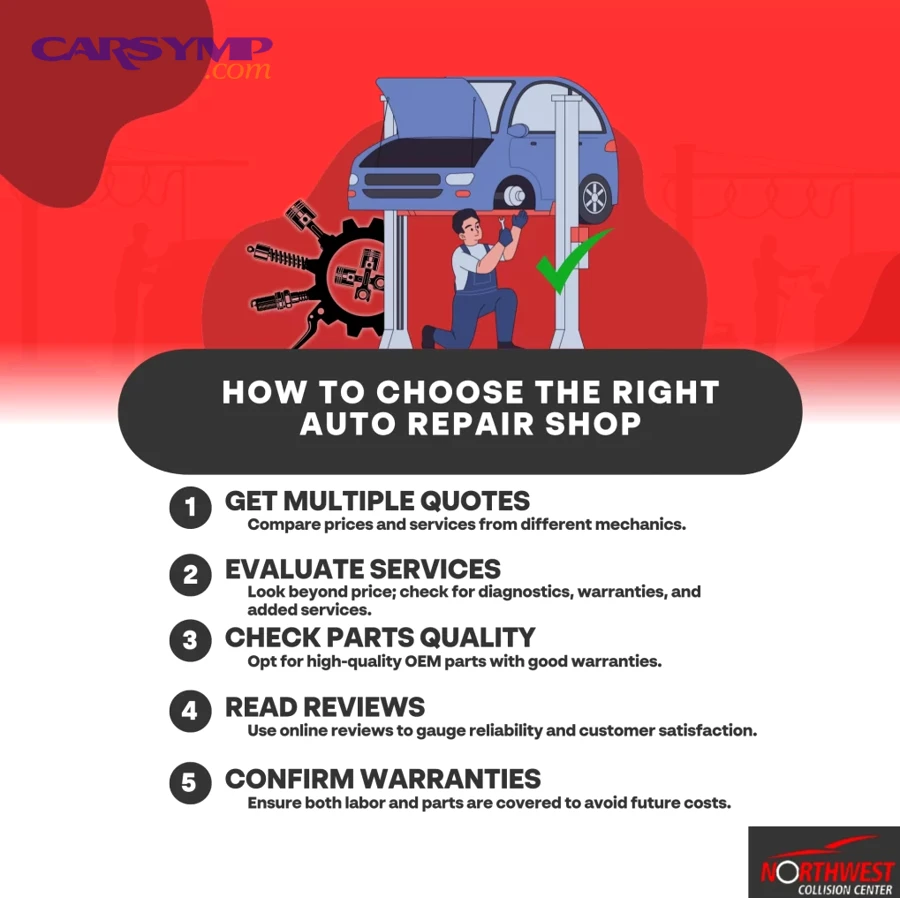
Next, that “10-minute pre-screen” works because it focuses on signals that are hard to fake consistently. A bad shop can post a discount, put on a clean uniform, and smile; it’s much harder to maintain honest documentation habits and stable feedback patterns for years.
Here’s the fastest yes/no filter you can run before you ever drop off your keys:
A quick “Yes” usually looks like this
- Reviews mention specific outcomes (“fixed recurring misfire,” “showed photos,” “called before extra work”) rather than only vibes.
- The shop offers written estimates and explains what could change (for example, hidden damage discovered after disassembly).
- They’re comfortable answering basic questions without rushing you.
- They can explain how they diagnose: scan results, measurements, test drive notes, or inspection findings.
A quick “No” often looks like this
- Reviews are suspiciously repetitive, extremely generic, or only recent.
- The shop refuses written estimates or won’t itemize charges.
- They push urgency without evidence (“you must do this today”) and won’t show you why.
- They won’t clearly state warranty terms in writing.
Do reviews show consistent workmanship and fair pricing over time (not just a high star rating)?
Yes, reviews can reliably help you evaluate a local mechanic shop if you use them correctly—by focusing on patterns, specificity, and time coverage rather than star averages alone.
Then, treat reviews like a “story dataset,” not a scoreboard. The goal is to learn how the shop behaves when things are complicated, not how they behave on an easy oil change.
Use this mini-method for Using reviews and referrals effectively:
- Sort by newest and scan the last 20–40 reviews for consistency.
- Look for repair narratives (symptom → diagnosis → evidence → outcome).
- Read the negative reviews carefully and compare them with the owner’s response. A trustworthy garage typically responds with policies, documentation, and an invitation to resolve—not insults.
- Check reviewer profiles for authenticity (local guides, multiple reviews, varied businesses).
- Cross-check with referrals: ask coworkers, neighbors, and local car groups for “who fixed it right the first time.”
Also, pay attention to what reviews don’t say. If nobody mentions written estimates, explanations, or warranties, that’s not automatically bad—but it’s a missing trust signal you’ll want to confirm by asking directly.
Do they clearly explain the repair process and ask for approval before extra work?
Yes, a trustworthy mechanic shop should explain the repair process and request approval before extra work for three reasons: it prevents surprise charges, it protects you legally/ethically, and it shows the shop follows a documented workflow.
Next, watch for the exact moment a shop moves from “inspection” to “authorization.” A professional shop uses clear language:
- “Here’s what we found.”
- “Here are your options (good/better/best).”
- “Here’s the not-to-exceed estimate.”
- “Do we have approval to proceed?”
A bad shop often skips that bridge and jumps straight to “We already did it” or “We had to do it.” That’s the behavior your vetting process is designed to prevent.
One practical tactic: when you drop the car off, say, “Please call me before doing any additional work beyond the diagnostic. I need approval first.” A good shop won’t be offended; they’ll treat it as normal.
What should be on a 15-point checklist to evaluate a local mechanic shop?
There are 15 main checklist points to evaluate a local mechanic shop—process, proof, pricing, and protection—because those criteria reveal whether the shop can diagnose correctly, communicate clearly, and stand behind their work.
Then, instead of memorizing “tips,” use a structured checklist you can reuse with any garage (dealer, chain, or independent mechanic). Here’s the 15-point checklist grouped into five buckets:
A) Reputation & fit (1–3)
- Consistent long-term reviews + credible referrals
- Experience with your make/model and your type of repair
- Clear policies for scheduling, approvals, and updates
B) Credentials & capability (4–6)
- Verified certifications/training (tech and shop-level)
- Proper tools for modern diagnostics (scan tools, testing gear)
- Willingness to explain diagnostic reasoning
C) Estimate transparency (7–9)
- Written estimate that’s itemized (labor, parts, fees, tax)
- Clear labor rate / labor hours explanation
- Parts options offered (OEM vs aftermarket) with tradeoffs explained
D) Documentation & professionalism (10–12)
- Inspection notes or evidence (photos, measurements, codes)
- Clear final invoice with part brands and labor performed
- Organized facility and consistent communication
E) Warranty & accountability (13–15)
- Written parts-and-labor warranty
- Clear comeback/return policy for repeat symptoms
- Transparency about sublet work (who does programming/ADAS/towing)
Which credentials and shop standards should you check (and which ones are “nice-to-have”)?
There are three main credential categories to check—technician competence, shop standards, and specialization proof—because those categories show whether the shop can handle your car reliably.
Next, here’s what matters most in real life:
Must-check credentials (high impact)
- Technician competence signals: documented training, certifications, and experience with your repair category (brakes, drivability, electrical).
- Shop standards: posted policies for estimates/approvals, warranty terms, and record-keeping.
- Make/model experience: evidence they regularly service your brand (service history stories in reviews, referrals, or the shop’s stated focus).
Nice-to-have credentials (useful but not required)
- Memberships, plaques, or “best of” awards (helpful only if backed by consistent proof).
- Specialty equipment claims (valuable when you actually need it—like programming, hybrid/EV work, or ADAS calibration).
A practical semantic shortcut: if you drive a niche brand or you’re chasing a stubborn problem, prioritize Finding specialists for your car make over “general popularity.” A shop that’s merely famous might not be the best fit; a specialist who sees your problem weekly often diagnoses faster and more accurately.
What documentation should you expect (written estimate, inspection notes, old parts, final invoice)?
There are four main documentation items you should expect—written estimate, diagnostic/inspection notes, parts transparency, and a final invoice—because documentation is the strongest sign a mechanic shop is trustworthy.
Then, use this “paper trail” approach:
1) Written estimate (before repairs)
- Itemized line items: labor hours, labor rate (or flat rate), parts cost, shop supplies, taxes
- Clear scope: what’s included, what isn’t, and what could change
- Approval step: signature or documented verbal authorization
2) Inspection/diagnostic evidence (during decision)
- Codes (if applicable), test results, measurements (battery/charging, compression, brake thickness, tire tread, leak-down, etc.)
- Photos or notes that connect the evidence to the recommendation
- A “why this fix” explanation
3) Parts transparency
- OEM vs aftermarket options (when appropriate)
- Brand/tier disclosure for key components (brakes, sensors, suspension, ignition parts)
4) Final invoice (after repairs)
- Labor performed + parts installed + warranty terms
- Any sublet services disclosed (alignment, programming, calibration)
If a shop resists documentation, don’t debate. Simply treat it as a failed checklist item and continue your search.
How can you evaluate pricing and estimates without being an expert?
You can evaluate pricing and estimates without being an expert by checking three factors—itemization, diagnostic logic, and authorization controls—so you can compare shops fairly and avoid vague quotes that inflate later.
Specifically, the trick is to stop asking, “Is this price good?” and start asking, “Is this estimate structured?” A structured estimate is easier to compare, easier to approve, and harder to manipulate.
Here’s how to judge estimate quality in minutes:
- Itemization: Do you see parts, labor hours, and fees separately?
- Scope clarity: Does the estimate define exactly what work will be performed?
- Parts options: Are you offered choices with explained tradeoffs?
- Change-control: Do they promise approval before extra work?
- Diagnostic basis: Do they explain what evidence led to the recommendation?
Also, watch for the “estimate trap”: a low initial number paired with vague scope. A bad shop can win on price if you compare only the first line of the quote. A trustworthy garage competes on clarity.
What should a written estimate include to prevent surprise charges?
A written estimate should include scope, itemization, and approval controls to prevent surprise charges, because those three elements define what you agreed to and what requires your permission.
Next, use this exact checklist when you read the estimate:
- Vehicle details: year/make/model + VIN (or at least plate)
- Complaint statement: your described symptom in plain language
- Labor line items: labor hours (or flat rate), labor rate (or total labor), and what labor includes
- Parts line items: part name, quantity, and price; ideally the brand/tier for major parts
- Fees and taxes: shop supplies, disposal fees, taxes clearly listed
- Not-to-exceed language: a cap or range if uncertainty exists
- Authorization statement: “No additional work without approval”
- Warranty summary: parts/labor coverage and duration (or reference to written policy)
If any of these are missing, ask for clarification before you approve. A good shop will revise the estimate or explain calmly.
Is a diagnostic fee normal, and what should you get in return?
Yes, a diagnostic fee is normal, and you should get at least three deliverables in return: a clear problem statement, the evidence used to confirm it, and a recommended repair plan (with options) tied to that evidence.
Then, think of diagnostics as paid expertise—not a “cover charge.” But paid expertise must produce something tangible. Ask for:
- What they tested (scan, measurement, inspection, test drive)
- What they observed (codes, readings, symptoms reproduced)
- What they concluded (root cause, not just a part name)
- What they recommend (repair path + alternatives if relevant)
Evidence (why transparent pricing info changes outcomes): According to a study by Harvard University from Harvard’s economics research archive (DASH), in 2011, a field experiment collecting repair price quotes found that the information provided to shops and the context of the request could affect quoted prices—highlighting why structured diagnostics and comparable estimates matter for consumers. (dash.harvard.edu)
What questions should you ask a mechanic shop before you say “yes”?
There are two sets of questions you should ask before saying “yes”—diagnosis questions and accountability questions—because those questions reveal whether the shop is solving the real problem and whether they will stand behind the result.
Next, you can use these questions without sounding confrontational if you frame them as clarity requests: “So I understand what we’re doing and why.”
Diagnosis questions (competence + evidence)
- “What evidence confirms the root cause?”
- “What else did you rule out, and how?”
- “If we don’t fix it, what risk increases?”
Accountability questions (price + warranty + control)
- “Can you itemize the estimate and explain what might change?”
- “Will you call before any additional work?”
- “What warranty covers parts and labor, and what’s excluded?”
- “Will you return the old parts if I request them?”
- “Who performs any sublet work, and how is it warranted?”
This is where choosing an independent mechanic can be a major advantage for many drivers: the best independent shops often rely on repeat customers, which encourages them to explain clearly and document thoroughly. Meanwhile, chains can be consistent and convenient, but your outcome often depends on the location’s management and tech team.
Can they explain the root cause and how they verified it (not just the symptom)?
Yes, a trustworthy mechanic shop should explain the root cause and verification for three reasons: it prevents unnecessary part replacement, it reduces repeat failures, and it proves the recommendation is evidence-based.
Then, listen for verification language. A good explanation sounds like:
- “We reproduced the issue under these conditions.”
- “We tested X and got Y reading, which indicates Z.”
- “We inspected A and found B wear/damage.”
- “We ruled out C because the measurement was within spec.”
A weak explanation sounds like:
- “It’s probably the alternator.”
- “That code means replace the sensor.”
- “We always do it this way.”
Codes don’t equal causes. Measurements and tests connect symptoms to causes.
Will they provide parts options (OEM vs aftermarket) and explain tradeoffs?
Yes, a trustworthy garage should provide parts options and explain tradeoffs because it helps you balance cost and longevity, it reduces misunderstandings, and it shows the shop is optimizing for your goal—not just their margin.
Next, the best shops present options like this:
- OEM: usually best fit and consistency; often higher cost
- High-quality aftermarket: strong value when reputable brands exist
- Economy parts: only acceptable in limited cases (and should be disclosed)
Ask one clarifying question: “If this were your car and you planned to keep it 3–5 years, which option would you choose and why?” A professional will answer without drama.
What are the most common red flags that signal a “bad” mechanic shop?
There are five main red-flag categories that signal a bad mechanic shop—vague estimates, pressure tactics, weak diagnostics, poor documentation, and unclear warranty—because those behaviors correlate with surprise charges and repeat repairs.

Next, treat red flags as decision triggers, not negotiation topics. You don’t need to “win” the conversation; you need to protect your car and your wallet.
Here are the red flags that matter most:
1) Vague money language
- “Ballpark” numbers with no written scope
- Refusal to itemize or explain fees
- “We’ll see once we get into it” with no approval process
2) Pressure and fear
- “You’re unsafe to drive” without showing evidence
- “Today-only” urgency for non-emergency work
- Upselling unrelated services (flushes, packages) without inspection data
3) Parts-cannon behavior
- Replacing parts based on guesses or codes alone
- No explanation of what was tested or ruled out
4) Documentation avoidance
- No written estimate, no notes, minimal invoice detail
- Defensive attitude when you ask for clarity
5) Warranty fog
- “We warranty our work” without written terms
- Blaming the car or “something else” immediately if the issue returns
Do they refuse to provide a written estimate or won’t explain charges?
Yes, refusing a written estimate or refusing to explain charges is a major red flag for three reasons: it removes your ability to compare quotes, it enables surprise add-ons, and it prevents accountability if the result is poor.
Then, the solution is simple and calm:
- Ask once: “Can you put that in writing and itemize labor and parts?”
- If they resist, say: “I’m going to get another estimate.”
- Leave with your keys.
A trustworthy garage sees this as normal. A bad shop treats transparency as optional.
Do they push immediate decisions or upsell unrelated work without evidence?
Yes, pushing immediate decisions or upselling unrelated work without evidence is a red flag for three reasons: it exploits anxiety, it increases unnecessary spending, and it usually indicates the shop is selling packages rather than solving your problem.
Next, use this one-sentence reset: “What measurement or inspection result shows this is needed today?” If the answer is vague, you have your signal.
A fair shop can show you brake thickness, fluid condition, leak evidence, or failing test results. A bad shop leans on urgency.
Which type of shop is best for your situation: dealer vs independent vs chain vs specialist?
Dealerships win for warranty/recalls and brand-specific programming, chains are best for standardized maintenance and convenience, and an independent mechanic or specialist is optimal for personalized service and complex diagnostics—especially when the shop regularly works on your make.
Meanwhile, the “best shop” depends on the job, not just the logo. Use this comparison table to pick a shop type based on what you need (the table summarizes practical tradeoffs most drivers face):
| Shop type | Best for | Watch-outs |
|---|---|---|
| Dealership | Warranty/recalls, OEM programming, brand-specific bulletins | Higher cost, less flexibility on parts choices |
| Chain shop | Basic maintenance, tires/brakes, convenience, consistent menus | Quality varies by location; upsell risk at some stores |
| Independent mechanic | Ongoing relationship, honest guidance, value | Capability varies—verify tools/process |
| Specialist | Finding specialists for your car make, complex drivability/electrical, niche brands | Scheduling lead time; may cost more than generalist for simple jobs |
When is a dealership service department the better choice?
A dealership is the better choice when your car needs warranty or recall work, OEM programming, or brand-specific diagnostic procedures, because dealers typically have direct access to manufacturer systems and procedures tied to your VIN.
Then, consider the dealer for:
- Check-engine issues involving programming, modules, or immobilizer/security systems
- Advanced driver-assistance recalibration when required by OEM procedures
- Recalls, warranty repairs, and technical service bulletins tied to your model
Even if you don’t plan to repair at the dealer, a dealer diagnosis can sometimes provide clarity—though you should still compare the repair estimate with other vetted shops afterward.
When is an independent specialist the better choice than a general shop?
An independent specialist is the better choice when you have a recurring problem, a niche brand, or a complex diagnosis, because specialists see the same failure patterns repeatedly and tend to test faster and more accurately.
Next, here’s when a specialist shines:
- European vehicles (BMW/Mercedes/Audi) with common platform-specific faults
- Diesels with emissions and drivability issues
- Performance vehicles where parts selection and installation quality matter
- Electrical gremlins that require deep diagnostic discipline
Evidence (why repeat-customer reputation changes expert behavior): According to a study by the University of Chicago from the Journal of Political Economy, in 2002, research on expert-service markets like auto repair emphasized how reputational incentives can shape expert behavior and consumer outcomes. (journals.uchicago.edu)
How do you confirm quality after the repair so you don’t pay twice?
You confirm quality after the repair by using a post-repair verification routine—invoice check, evidence check, and symptom check—so you catch mistakes early and protect your warranty rights.
In addition, post-repair verification is where your earlier vetting pays off: a trustworthy garage has no problem walking you through what changed and what to monitor.
Use this practical post-repair routine:
1) Invoice verification (before you leave)
- Match the final invoice to the estimate (scope and totals)
- Confirm any changes were approved
- Verify parts and labor line items are clear
- Confirm warranty terms are written and specific
2) Evidence verification (ask for proof where it matters)
- For brakes: brake pad thickness notes, rotor condition explanation
- For alignment: alignment printout
- For diagnostics: what tests changed from failing to passing (where applicable)
- For replaced parts: request old parts if you want confirmation
3) Symptom verification (within the next 24–72 hours)
- Drive under the conditions that caused the issue
- Confirm warning lights stay off
- Listen/feel for changes (noise, vibration, braking feel)
- Monitor fluid spots or smells if relevant
This process doesn’t require mechanical skill. It requires consistency.
What should the final invoice and warranty paperwork include?
The final invoice and warranty paperwork should include three essentials: a clear description of labor performed, identified parts installed (ideally with brand/tier for key parts), and written warranty terms for parts and labor, because those details are your proof if the problem returns.
Then, look for:
- Date, mileage, vehicle identifier
- Itemized labor operations (not just “repair”)
- Parts list with quantities and pricing
- Fees and taxes clearly separated
- Warranty duration and what triggers a warranty claim
- Notes about any sublet work (alignment, programming, calibration)
If the invoice is vague, ask for a clearer version while you’re still at the shop.
What should you do if the problem returns (“comeback” repair)?
If the problem returns, you should document the symptom, contact the shop promptly, and request a re-check under the written warranty, because fast reporting and clear records increase your chance of a fair resolution.
Next, follow this calm escalation path:
- Document: when it happens, under what conditions, photos of warning lights if present
- Call and schedule: “The same symptom returned; I’d like a warranty re-check.”
- Bring paperwork: estimate, invoice, diagnostic notes
- Ask for the plan: what they will test first, and whether there’s a charge (many reputable shops re-check at no charge under warranty conditions)
A trustworthy garage treats comebacks as a normal part of service accountability. A bad shop treats them as an inconvenience and pushes blame immediately.
Introduce a new idea: once you can identify a trustworthy garage and verify repairs, you can choose between two “good” shops by looking at advanced differentiators that most people never ask about.
What advanced factors can help you choose between two “good” mechanic shops?
Between two good mechanic shops, choose the one that wins on evidence quality, process transparency, modern capability, and quality-control documentation, because those factors predict fewer repeat visits and better long-term outcomes.

Next, these advanced factors matter most when both shops already pass the basic checklist. This is where micro-semantics—small but meaningful differences—help you make a confident decision.
Do they use digital vehicle inspections (photos/video) and keep a clear approval trail?
Yes, digital vehicle inspections and a clear approval trail are a strong differentiator for three reasons: they make recommendations verifiable, they reduce misunderstandings, and they create a paper trail that protects both you and the shop.
Then, what you want is not “fancy tech.” You want evidence continuity:
- Photos of worn parts
- Notes tied to measurements (tread depth, pad thickness, leak source)
- Approvals recorded before extra labor begins
If a shop can show you what they’re seeing, you’re no longer forced to guess.
Do they handle sublet work transparently (towing, programming, ADAS calibration), or hide it?
A transparent shop wins here, because transparency clarifies accountability, warranty ownership, and turnaround time, while hidden sublet work increases confusion and finger-pointing.
Next, ask one question: “Is any part of this job sublet, and who warranties it?” A professional answer includes:
- Who performs it (their partner vendor)
- How long it typically takes
- How warranty claims are handled if the issue relates to that sublet service
A bad shop either hides sublet work or pretends everything is done in-house.
Can they service modern systems (EV/hybrid safety, OEM-level scanning, ADAS calibration)?
Yes, modern capability matters if your car requires it, because EV/hybrid systems and driver-assistance calibration are safety-critical and often require specific tools and procedures.
Next, capability should be confirmed—not assumed. You don’t need to interrogate them; simply ask:
- “Do you service hybrids/EVs, and what safety procedures do you use?”
- “If calibration is needed, do you do it in-house or sublet it?”
- “Do you have the scan tool capability for this model?”
If your car is older, you may not need this—but if you drive a newer vehicle, this can be the deciding factor between two good shops.
Do they document quality control (torque specs, final test drive notes, checklist sign-off)?
Yes, documented quality control is a top-tier trust signal for three reasons: it reduces installation errors, it standardizes outcomes across technicians, and it makes it easier to troubleshoot if a problem returns.
Then, quality control looks like:
- A checklist that includes final inspection steps
- Notes that a test drive was performed when appropriate
- Clear torque/spec adherence culture (especially for wheels, brakes, suspension)
You don’t need the torque numbers; you need the habit. A shop that checks its own work tends to deliver more consistent results.