


Buying coverage is not really about the sales pitch; it is about the contract. Common warranty exclusions and fine print tell you what a plan actually pays for, what it refuses to cover, and what obligations you must meet before a claim can succeed. If you want to avoid expensive surprises, you need to read the coverage language before you buy, not after a repair fails.
The first issue most readers want answered is simple: what does a warranty usually leave out? That question matters because many buyers assume protection is broader than it really is. In practice, exclusions often narrow the plan to specific parts, specific failure types, and specific claim conditions, which means the real value of a warranty depends on details, not headlines.
The second issue is how to tell what a warranty actually covers before you commit. That is where definitions, named components, exclusions, deductibles, waiting periods, and repair procedures become more important than marketing phrases. A good buyer compares contract language, not just price, and checks whether the plan fits the actual risks of ownership and the likely cost of future repairs.
The third issue is how to avoid denied claims later. Many denials happen not because the product never had coverage, but because the owner missed a maintenance requirement, used the wrong claim process, or assumed a verbal promise mattered more than the written terms. Next, the main content breaks down the contract language, the common exclusion patterns, and the decision-making steps that help you choose coverage with fewer surprises.
What are common warranty exclusions and fine print?
Common warranty exclusions and fine print are contract terms that define what coverage omits, limits, or requires before the provider will pay for a claim.
To better understand the issue, you need to see these terms as the operating rules of the warranty rather than decorative legal language. Exclusions tell you what the plan refuses to cover. Fine print explains the conditions, definitions, deadlines, and procedures that control whether a claim is approved, reduced, or denied. Together, they determine the real value of the agreement.
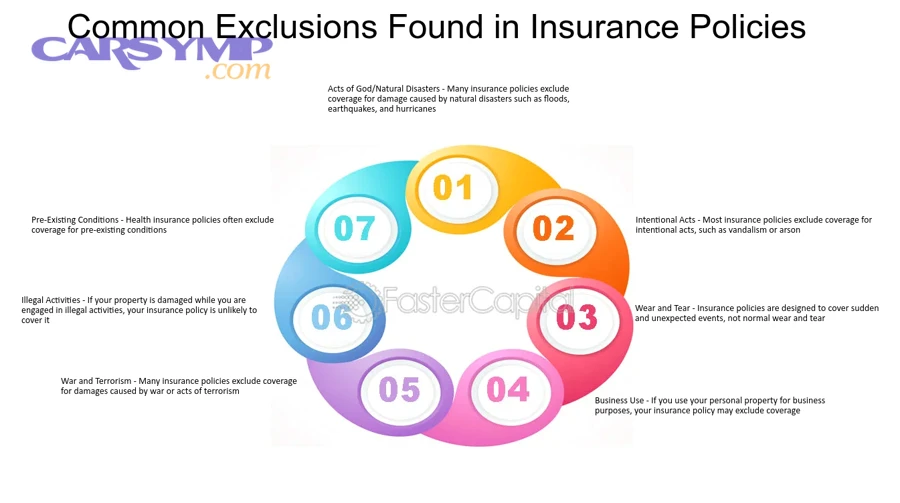
A warranty looks generous when a brochure says “comprehensive coverage,” but the contract may narrow that promise through definitions and exceptions. For example, a plan may say it covers a mechanical failure, yet define that phrase so narrowly that normal wear, corrosion, contamination, overheating, pre-existing issues, or damage caused by another failed part are excluded. In other words, coverage is usually shaped less by the headline and more by the exceptions.
The phrase warranty on repairs is often misunderstood for the same reason. Some consumers think it means every repeat problem will be fixed at no cost. In reality, a repair warranty usually applies to a specific repair order, specific parts, specific labor, and a limited time or mileage window. If a later failure involves a different cause, a different part, or an excluded condition, the shop or warranty provider may decline coverage even though the customer feels the issue is related.
Fine print also matters because warranties and service contracts are not always the same thing. A manufacturer’s written warranty, a third-party vehicle service contract, and a shop’s labor guarantee can all protect the consumer, but each uses different definitions and exclusions. That is why readers should pay attention to four contract elements from the start: what is covered, what is excluded, what the owner must do, and how a claim must be filed.
The Federal Trade Commission explains that federal warranty law requires disclosure standards for written warranties and provides consumer remedies for breach of warranty or service contract obligations. (ftc.gov)
Is fine print the same as hidden exclusions?
No, fine print is not always the same as hidden exclusions because it can also contain definitions, deadlines, procedures, and owner obligations that are necessary to interpret the coverage.
Specifically, readers should not assume that small print automatically means deceptive intent. Some fine print exists to explain how the contract works in normal situations. It may define terms like “breakdown,” “covered repair,” “authorized facility,” or “maintenance records.” Those provisions can be legitimate and useful. The problem begins when buyers do not read them and later discover that an ordinary-looking clause sharply restricts coverage.
Hidden exclusions are a narrower problem. They refer to limits that materially reduce the value of the warranty but are not obvious from the sales message. A plan may sound broad yet exclude seals and gaskets unless a major covered component fails first. It may cover brakes in theory but exclude wear items, friction materials, machining, or routine service, which drastically changes what the buyer receives. That is why Warranty on brake jobs and common repairs deserves careful review: a brake warranty often protects workmanship or defective replacement parts, but not normal pad and rotor wear, misuse, or unrelated hydraulic faults.
A useful reading strategy is to ask one question every time you see a favorable promise: “What conditions limit this promise?” That method turns passive reading into active evaluation and helps you spot the difference between neutral explanation and meaningful restriction.
What do “exclusions,” “limitations,” and “conditions” mean in a warranty?
Exclusions remove items or events from coverage, limitations cap the scope or amount of protection, and conditions set the requirements you must satisfy to keep a claim valid.
More specifically, exclusions answer the question “What is not covered?” A contract might exclude normal wear, cosmetic blemishes, maintenance services, rust, abuse, or failures caused by modifications. Limitations answer the question “How much or under what narrow scope is it covered?” A plan may cap labor time, reimburse up to actual cash value, require a deductible, or only cover named components. Conditions answer “What must the owner do?” They may require prompt reporting, documentation, or inspections.
These three elements work together. A plan can appear broad on the first page, then shrink through exclusions, become less valuable through limitations, and become harder to use through conditions. When buyers miss that structure, they often overestimate the plan’s protection.
The safest habit is to mark these three categories separately while reading the contract. Highlight exclusions in one color, limitations in another, and conditions in a third. That simple method quickly reveals whether the plan is truly broad or just heavily qualified.
What does a warranty usually not cover?
There are several main categories a warranty usually does not cover: routine maintenance, normal wear items, cosmetic issues, misuse, accidental or environmental damage, and failures tied to unauthorized modifications or neglected service.
To better understand those exclusions, it helps to group them by cause rather than by part. Most warranty providers try to distinguish between a covered defect or covered breakdown and everything else that can happen through time, usage, neglect, environment, or outside influence. That distinction explains why many consumers are surprised by denied claims: the failed part matters, but the cause of the failure matters even more.
Routine maintenance is one of the most common exclusions. Oil changes, filters, tire rotations, brake pad replacement, alignments, fluid services, spark plugs, wiper blades, and similar upkeep items are usually the owner’s responsibility. These items keep a vehicle operating properly, but a warranty normally does not pay for them just because they wear out over time.
Wear items are another frequent exclusion. Brake pads, brake rotors, clutches, belts, hoses, batteries, bulbs, and tires often wear down through normal use. That does not mean every brake-related complaint is excluded, but it does mean buyers should not assume a provider will cover a standard brake service. When evaluating What repair warranties typically cover, the answer is often narrower than expected: they may cover defective parts installed during the repair, defective workmanship, or a repeat failure caused by that repair, but not the entire surrounding system and not the next predictable wear cycle.
Cosmetic damage also falls outside many plans. Paint defects, dents, scratches, trim wear, upholstery issues, fading, cracking, or noise complaints with no covered mechanical cause may be excluded. Likewise, damage from collision, flooding, fire, road debris, corrosion, vandalism, contamination, or improper towing is usually treated separately from warranty coverage.
Unauthorized modifications can trigger another category of exclusion. Lift kits, tuned software, aftermarket performance parts, or non-standard electrical accessories may not automatically void all protection, but they can complicate causation. If the provider concludes the modification contributed to the failure, it may reject the claim for that problem.
The FTC advises consumers that few auto service contracts cover all repairs and maintenance and that buyers should get the coverage in writing before they pay. (consumer.ftc.gov)
Which repairs, parts, and situations are most commonly excluded?
There are six common exclusion groups: maintenance services, wear items, cosmetic defects, outside damage, owner-caused problems, and modification-related failures.
For example, maintenance services usually include oil and filter changes, tune-ups, coolant flushes, brake service, wheel balancing, and similar routine tasks. Wear items include pads, rotors, tires, clutches, bulbs, and batteries. Cosmetic defects include paint damage, trim issues, rattles with no covered defect, and appearance-related deterioration. Outside damage includes collision, hail, flood, theft-related damage, or environmental corrosion. Owner-caused problems include neglect, overheating after warning signs, contaminated fuel, or operating the vehicle with low fluids. Modification-related failures involve custom parts or altered systems that can affect the failed component.
These groups matter because they give you a mental checklist. If a repair request belongs to one of these buckets, you should slow down and read the claim language carefully before assuming the warranty applies.
This is also the point where Dealer warranty vs independent shop warranty becomes relevant. A dealer-backed warranty may align more closely with manufacturer policies or dealership repair processes, while an independent shop warranty usually focuses on the shop’s own labor and installed parts. Neither is automatically better in every case; the real difference is scope, documentation, and who decides whether the later repair is related to the original work.
Are wear and tear, maintenance, and cosmetic damage covered or excluded?
Wear and tear, maintenance, and cosmetic damage are usually excluded, while sudden defects or covered breakdowns are more likely to qualify for payment.
However, the key word is “usually.” A contract may cover a defective replacement part that fails early, but still exclude the normal wear that occurs after a reasonable service life. A plan may cover a failed caliper caused by an internal defect, but not a routine brake pad replacement. It may cover a mechanical component that stops working unexpectedly, but not the cosmetic trim around it. In practice, the dispute often comes down to whether the provider views the problem as deterioration, maintenance, or an eligible failure.
This comparison helps readers set realistic expectations. If the issue developed through ordinary use over time, coverage is less likely. If the issue involves a qualifying defect or specified breakdown, coverage is more plausible. That is why you should not ask only “What part failed?” but also “Why did it fail, and how does the contract classify that cause?”
How can you tell what a warranty actually covers before you buy?
You can tell what a warranty actually covers by reading five contract sections first: definitions, covered items, exclusions, owner obligations, and the claim procedure.
Below that simple method lies the difference between smart comparison and blind purchase. Many people scan only the summary page, but the real meaning of the contract appears when you connect the favorable language to the restrictive language. Coverage is not just a list of benefits; it is a network of promises controlled by definitions and conditions.
Start with definitions. If the contract defines “breakdown,” “covered repair,” or “failure” in a restrictive way, that definition may control the entire plan. Then read the coverage section and ask whether it uses named-component coverage or broad exclusionary language. After that, review exclusions closely. Next, locate the owner’s responsibilities, including maintenance duties, reporting deadlines, inspections, and documentation rules. Finally, read the claim procedure and note whether prior approval is required.
This process also helps when comparing a product warranty with a service warranty from a repair facility. For example, a shop may provide a warranty on repairs that covers parts and labor for a specific job, while an extended vehicle service contract may apply to later failures across certain systems. They are not interchangeable, and buyers should not evaluate them with the same assumptions.
The FTC states that consumers do not have to use the dealer for repairs or maintenance to keep a warranty in effect, although the warranty can require chosen facilities or parts when the work or parts are provided for free. (consumer.ftc.gov)
What sections of the warranty document should you read first?
You should read the definitions, coverage scope, exclusions, owner responsibilities, and claim instructions first because those sections reveal the true value of the plan.
Specifically, definitions tell you how the contract interprets the most important words. Coverage scope tells you which systems, parts, or repair events are included. Exclusions show what is removed. Owner responsibilities explain what you must do to keep protection in force. Claim instructions explain what happens when something goes wrong and whether pre-authorization or a specific repair network is required.
A practical approach is to read in this order:
- Definitions
- What is covered
- What is not covered
- Maintenance and owner obligations
- Claim filing steps
- Deductible and reimbursement rules
- Cancellation and transfer terms
That order works because it mirrors the life cycle of a future claim. First you identify whether the event falls within the contract language, then you test the exclusions, then you confirm whether your own actions could affect approval.
Is a named-component warranty different from exclusionary coverage?
Yes, a named-component warranty is different from exclusionary coverage because one lists what is included, while the other starts broader and lists what is left out.
More specifically, named-component coverage can be easier to interpret when the list is detailed and precise. If the failed part is not named, coverage may be weak or nonexistent. Exclusionary coverage often sounds broader because it covers more categories initially, but buyers still need to inspect the exclusions carefully. A broad opening promise can be narrowed by exceptions for wear, seals and gaskets, consequential damage, diagnostics, fluids, or pre-existing conditions.
When comparing the two, named-component coverage rewards careful parts-level reading. Exclusionary coverage rewards careful exception-level reading. The better option depends on the contract’s actual wording, the reliability of the product or vehicle, and the buyer’s tolerance for risk.
Which fine-print clauses can lead to denied claims?
The fine-print clauses most likely to lead to denied claims are maintenance requirements, pre-authorization rules, timing deadlines, repair-location restrictions, documentation rules, and causation exclusions.
More importantly, these clauses often affect valid-looking claims. A consumer may experience a real breakdown and still lose coverage because the provider says the owner failed to preserve eligibility. This is why claim risk is not only about the failed part; it is also about process discipline.
Maintenance requirements are a leading issue. If the contract requires scheduled service, fluid checks, or periodic inspections, the provider may ask for receipts or logs. If the owner cannot show that required maintenance occurred, the provider may argue neglect or inability to verify eligibility. Some plans also require the customer to stop using the product or vehicle once a problem appears, because continued use may worsen the damage and create a new exclusion.
Pre-authorization is another major trigger. Some contracts require approval before teardown, parts ordering, or repair work begins. If the owner authorizes work too early, the provider may say it never had a chance to inspect the failure or confirm that the repair fell within contract terms. Even when the customer believes the repair was urgent, skipping the process can undermine the claim.
Timing deadlines matter too. A contract may require prompt notice after the symptom appears. It may impose time limits for reporting, inspection, or follow-up documentation. Missing those deadlines can create an avoidable denial.
The FTC also warns consumers to look for exclusions that deny coverage broadly or tell them where a car has to be serviced in an auto service contract. (consumer.ftc.gov)
Can a claim be denied if you miss maintenance or paperwork requirements?
Yes, a claim can be denied if you miss maintenance or paperwork requirements because the provider may treat those omissions as a failure to meet coverage conditions, a lack of proof, or evidence of neglect.
For example, a contract may require oil-change records, proof of mileage, repair estimates, diagnostic findings, or prior authorization numbers. If you cannot produce them, the provider may argue it cannot verify that the failure qualifies. Even if the failure seems unrelated to the missing record, the dispute becomes harder because the provider controls the review process and the contract language may support its request.
The practical lesson is simple: keep receipts, save inspection reports, document dates, and follow the claim instructions exactly. Organized paperwork does not guarantee approval, but disorganized paperwork makes denial easier.
This point matters for Warranty on brake jobs and common repairs as well. If a repair shop warranties its parts and labor for a brake job, the customer should keep the invoice, note the date and mileage, and return promptly if symptoms reappear. Without that documentation, even a reasonable repeat complaint can become difficult to connect to the original repair.
What claim conditions and owner obligations should you compare between plans?
You should compare six owner obligations between plans: maintenance duties, claim deadlines, repair authorization rules, shop restrictions, documentation standards, and deductible timing.
Specifically, ask these questions before buying:
- Do I need prior authorization before repairs begin?
- Must I use a specific dealer, network, or repair facility?
- What receipts or service logs must I keep?
- How quickly must I report a problem?
- Is diagnostic time covered or excluded?
- Does the deductible apply per visit, per repair, or per component?
These questions reveal whether a plan is easy to use in real life. Two warranties with similar price and coverage labels can perform very differently if one has fewer procedural hurdles. In content planning terms, this is where the buyer moves from “what does the contract say?” to “can I realistically use this contract when something fails?”
How should you compare warranty plans based on exclusions and fine print?
You should compare warranty plans by scope, exclusions, deductibles, waiting periods, claim rules, and repair flexibility rather than by price alone.
To better understand that comparison, imagine two plans with the same monthly cost. One appears cheaper over time but excludes diagnostics, imposes a long waiting period, uses a per-component deductible, and requires a narrow repair network. The other costs slightly more but has a clearer claims process, broader covered systems, and fewer procedural traps. The second plan may deliver more real value even if its sticker price is higher.
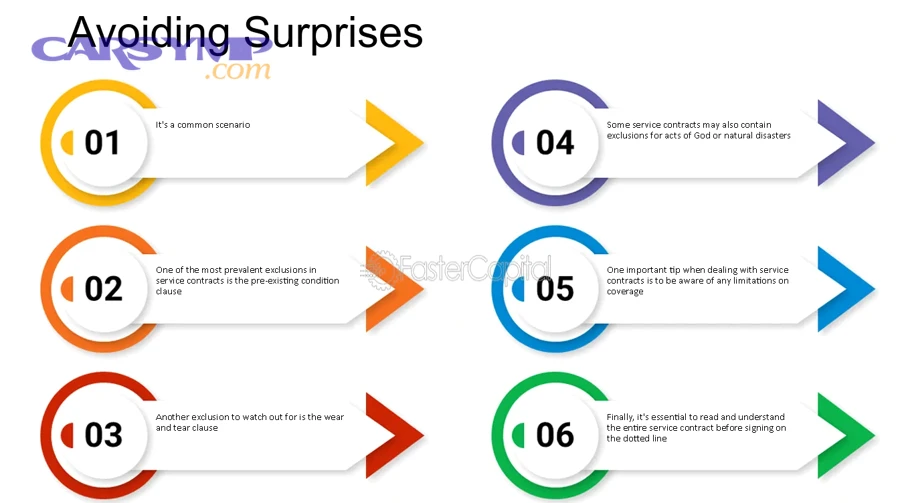
A useful side-by-side comparison should include:
| Comparison Point | Plan A | Plan B | Why It Matters |
|---|---|---|---|
| Covered systems or parts | Determines basic scope | ||
| Top exclusions | Reveals major limits | ||
| Waiting period | Affects early claims | ||
| Deductible structure | Changes out-of-pocket cost | ||
| Repair facility rules | Affects convenience | ||
| Diagnostic coverage | Changes approval cost | ||
| Maintenance proof required | Affects claim readiness | ||
| Cancellation and transferability | Affects long-term value |
This table gives readers a practical framework for comparing plans by contract substance instead of sales language. A strong comparison also asks what kind of ownership the plan is meant to support. A commuter who drives many miles may prioritize drivetrain scope and claim convenience. A low-mileage owner may care more about cancellation rights and deductible design.
This is also where Dealer warranty vs independent shop warranty should be evaluated neutrally. A dealer warranty can offer stronger brand alignment, manufacturer parts access, and easier integration with dealership service records. An independent shop warranty can offer lower repair costs, more personal communication, and strong labor guarantees on specific work. The better choice depends on scope, claim process, and who will stand behind the repair when a dispute arises.
Is the cheapest warranty always the riskiest when you read the fine print?
No, the cheapest warranty is not always the riskiest, but low price often signals narrower coverage, more exclusions, higher friction in the claims process, or greater out-of-pocket exposure.
However, high price is not proof of strong protection either. Some expensive plans simply market broader peace of mind while still limiting common claim types. What matters is the ratio between cost and usable coverage. A cheaper plan may be worthwhile if it aligns closely with the buyer’s biggest risks and avoids the exclusions most likely to affect that owner.
The smart comparison question is not “Which plan is cheapest?” but “Which plan gives me the clearest, most usable protection for the failures I am most likely to face?” That shift in thinking turns the purchase from emotional reassurance into informed risk management.
What is the best way to compare two warranty plans side by side?
The best way to compare two warranty plans side by side is to use a written checklist with the same criteria, the same repair scenarios, and the same ownership assumptions.
For example, test both plans against a realistic situation: a covered component fails after the waiting period, diagnostics are needed, the vehicle is at a local shop, and the owner has maintenance records. Then ask which plan pays more, requires fewer steps, offers more facility flexibility, and excludes fewer related parts. A scenario-based comparison exposes differences that brochures hide.
This method also works well for repair-specific promises. If a shop offers a warranty on repairs, compare the time and mileage term, whether labor is included, whether roadside expenses are excluded, and whether coverage applies nationwide or only at the original location. Those details matter more than the phrase “guaranteed work” on its own.
What should you check before buying coverage to avoid surprises later?
You should check the contract, exclusions, claim steps, maintenance duties, deductible rules, and cancellation terms before buying coverage to avoid the surprises that most often lead to regret.
In addition, you should test whether the plan matches how you actually use the product or vehicle. A broad-looking warranty can still fail your needs if it excludes the components most likely to wear or fail in your ownership pattern. The goal is not to buy the most impressive promise; the goal is to buy the most relevant and usable protection.
A strong pre-purchase review should answer these questions:
- What exactly is covered?
- What exactly is excluded?
- What proof must I keep?
- What steps must I follow before authorizing repairs?
- How is the deductible applied?
- Are diagnostics, taxes, or fluids included?
- Can I choose my repair facility?
- Can I cancel, and can I transfer the plan?
- Does the written contract match what the salesperson said?
This final point is critical. Sales language can simplify the offer, but the contract governs the dispute. If the brochure sounds broader than the written agreement, assume the contract controls. Buyers who compare those two sources before paying often avoid the most frustrating surprises later.
The FTC advises consumers to get warranty or service-contract coverage in writing and make sure the seller’s statements match the contract before paying. (consumer.ftc.gov)
Should you rely on a sales summary or only on the written contract?
No, you should not rely on a sales summary alone because the written contract is the document that usually controls coverage, exclusions, and claims.
Specifically, sales summaries are designed to communicate benefits quickly. They rarely explain every condition or exclusion. The written agreement does. If there is a conflict between a spoken promise and the contract, the dispute usually turns on the written terms and whatever documentation you can prove. That is why consumers should request the full contract before paying and read it while they can still walk away.
This rule applies whether you are buying a manufacturer-backed plan, a third-party service contract, or a local shop guarantee. A simple line like “covered nationwide” may mean something very different once you read the sections on authorization, reimbursement, and approved facilities.
What pre-purchase checklist helps you spot risky fine print fast?
The fastest pre-purchase checklist uses eight checks: scope, exclusions, waiting period, deductible, claim steps, maintenance proof, repair-location rules, and cancellation or transfer rights.
More specifically, start by circling the biggest ownership risks you care about. Then see whether the contract covers those risks without burying them under narrow conditions. After that, scan for waiting periods, broad exclusions, and procedural hurdles. If any clause seems unclear, ask for the answer in writing before you buy.
In short, the best coverage decision comes from matching the contract to your real risk, your repair habits, and your ability to follow the process. That approach reduces disappointment and improves the practical value of the protection you choose.
Which specialized warranty clauses are easy to miss in fine print?
The specialized warranty clauses easiest to miss are pre-existing condition clauses, modification exclusions, consequential-damage exclusions, arbitration terms, cancellation rules, and transferability limits.
Besides the major exclusions, these smaller clauses often determine whether the plan has long-term value. They rarely get the spotlight in sales conversations, yet they can change your legal options, resale flexibility, and ability to recover costs after a serious failure. That is why they belong in the supplementary content of any authority-building article on warranty fine print.
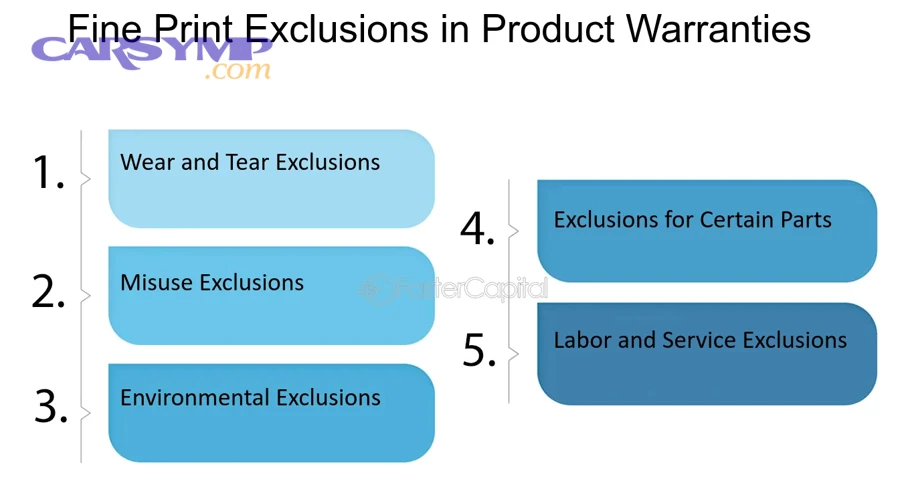
A specialized clause is not always unfair. Sometimes it simply allocates risk in a way most consumers overlook. The key is to notice it early and decide whether the tradeoff is acceptable. A buyer who expects easy claim handling, open shop choice, or broad downstream damage coverage can be disappointed if these rare but important clauses are buried near the end of the contract.
What is a pre-existing condition clause, and why does it matter?
A pre-existing condition clause excludes problems that began, showed symptoms, or could reasonably be linked to prior damage before the coverage started.
To illustrate, a component may fail after the contract begins, but the provider may argue that warning signs existed earlier. This clause matters because it changes the timeline of causation. Instead of asking only when the failure became severe, the provider asks when the condition began. If the plan includes inspections or waiting periods, this issue becomes even more important.
Buyers should read the definition carefully. Some contracts use strict wording that allows the provider to deny claims when symptoms, codes, noise, or leakage appeared before activation. Others define the concept more narrowly. That difference has a major effect on real-world claim value.
Are aftermarket parts, modifications, or non-standard use excluded?
Yes, aftermarket parts, modifications, or non-standard use are often excluded when the provider believes they caused, contributed to, or complicated the failure.
However, buyers should distinguish between broad fear and contract-specific analysis. Not every modification destroys every form of coverage. The real issue is causation and contract language. If a modification has no connection to the failure, the dispute may be different from a case where the modification clearly affects the damaged system. Consumers should look for wording about performance parts, altered electronics, commercial use, towing beyond limits, racing, or non-standard installation.
This is another reason the phrase What repair warranties typically cover needs careful explanation. A shop might stand behind the repair it performed even on a modified vehicle, but not agree to cover problems caused by unrelated aftermarket parts. The boundary of responsibility must be read, not assumed.
What is consequential damage, and is it usually excluded?
Consequential damage is secondary damage that happens because another failure triggered it, and it is often excluded or restricted unless the contract says otherwise.
For example, one component may fail first, but the larger bill may come from the damage that spreads afterward. A contract might pay for the original covered component yet reject the related downstream damage. This clause matters because it affects the size of the claim, not just eligibility. A plan that appears valuable at the part level may be much less valuable at the total-repair level if consequential damage is excluded.
When reading this language, buyers should check whether the contract covers “direct” damage only, whether it excludes associated failures, and whether seals, gaskets, fluids, diagnostics, or collateral parts are treated separately. Those details often determine whether a major failure results in modest reimbursement or meaningful protection.
Do arbitration, cancellation, and transferability terms affect long-term value?
Yes, arbitration, cancellation, and transferability terms affect long-term value because they shape dispute options, exit flexibility, and the resale usefulness of the contract.
More specifically, arbitration clauses can affect how warranty disputes are resolved and whether formal litigation is limited. Cancellation terms determine whether you can recover some value if you sell the vehicle, change plans, or become dissatisfied. Transferability matters because a transferable plan can add confidence for the next owner and improve resale appeal, while a non-transferable plan may lose value once you are ready to move on.
Thus, these clauses may not be the first things buyers ask about, but they materially affect the contract’s real-world usefulness. A plan with decent component coverage but rigid dispute handling and poor transfer value may be weaker overall than a plan with slightly narrower coverage but better long-term flexibility.