


Noise only when reversing usually points to a “direction-sensitive” contact: a brake pad shifting against hardware, a thin shield brushing the rotor, a parking-brake shoe touching inside the hat, or a suspension joint loading differently when backing up.
Many drivers notice it first in tight parking maneuvers—slow speed, light pedal pressure, and steering angle all amplify tiny clearances that stay quiet when driving forward.
You can often narrow the cause by matching the sound (squeal, scrape, click, clunk) to when it happens (first stop in reverse, only while turning, only with the pedal applied, or even with no braking).
To begin, think in “sound families,” then follow a safe, repeatable checklist that separates normal pad behavior from issues that can damage rotors or reduce braking confidence.
What does noise only when reversing usually mean?
It usually means a part is moving into contact only under reverse rotation or reverse load, most commonly in the brakes (pad/hardware/rotor shield) but sometimes in suspension or driveline joints.
Next, classify the sound and the exact moment it appears, because that single detail often identifies the system before you lift a wheel.
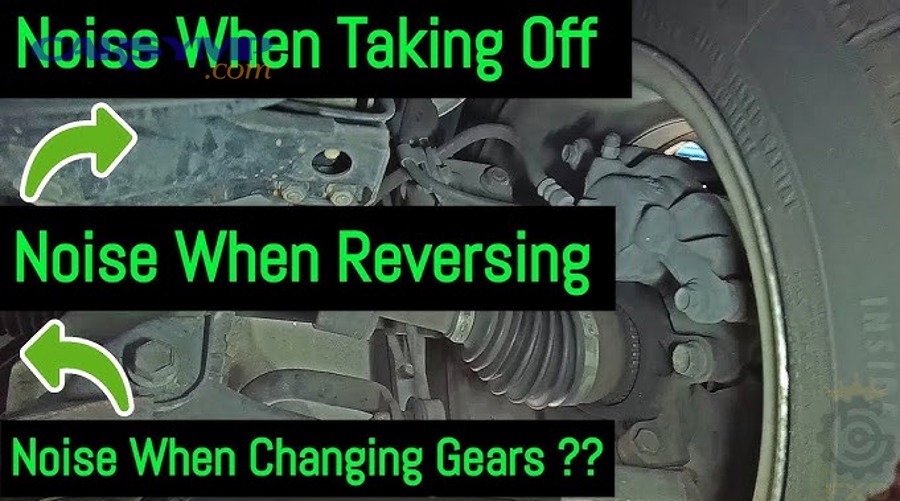
Why direction changes the contact pattern
In a disc brake, the rotor reverses direction and the pad’s “leading edge” becomes the “trailing edge.” If the pad fit is slightly loose, the friction material can shift and tap the bracket or abutment clips as the torque direction flips. That small movement can create a chirp or click that simply doesn’t happen in forward stops.
To illustrate, imagine a book sliding on a shelf: push it one way and it presses a different corner first. In reverse braking, the pad can press its opposite corner into a clip or shim, and if that corner is worn unevenly or has a sharp edge, it can squeal briefly.
Besides that, many vehicles use a small drum-style parking brake inside the rear rotor “hat.” Backing up can change how the shoe arcs touch the inner drum surface—especially if the adjuster is tight, the shoe lining is glazed, or the hardware is slightly misaligned.
How to tell “brake-related” from “not braking” noises
A quick discriminator is whether the noise happens only when the brake pedal is applied. If it appears only with pedal input, brake components are the prime suspects. If it happens while coasting backward with no pedal, consider wheel bearing roughness, loose shields, exhaust heat shields, CV joints, or suspension bushings shifting.
However, some brake noises can happen with no pedal if a shield is touching or a parking-brake shoe drags lightly. So the best approach is to combine “pedal on/off” with “straight vs turning” and “first stop vs always.”
Is it ever normal to hear a brief squeal when backing up?
Yes—brief reverse squeal can be normal when pads are cold or slightly damp, when friction surfaces are lightly glazed, or when pad edges are sharp and momentarily resonate at low speed.
However, if the sound is loud, repeats every reverse stop, or turns into grinding or scraping, treat it as a fault until proven otherwise.
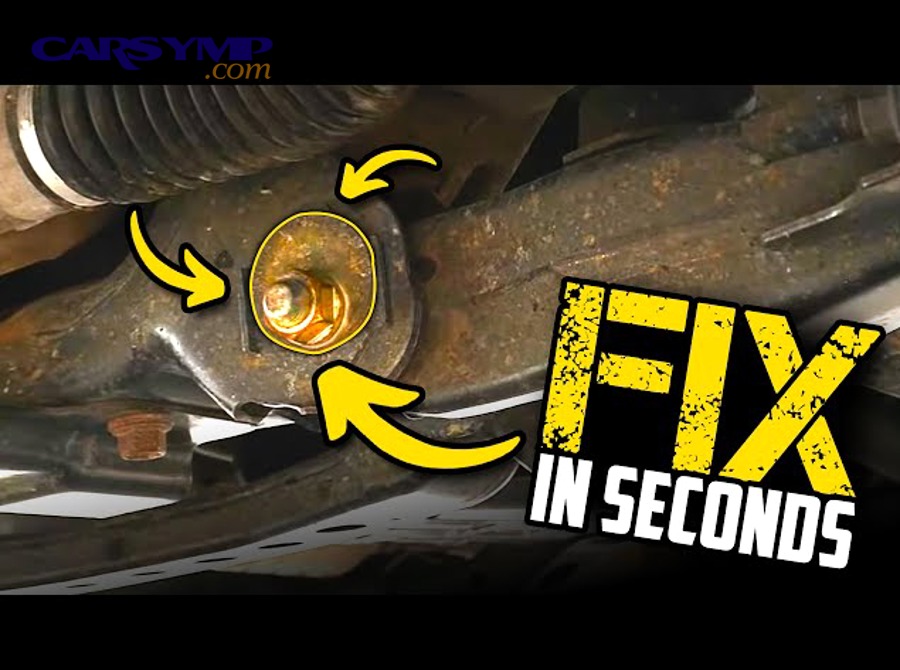
Normal scenarios that can create a short reverse squeal
Morning moisture or light surface rust: Overnight humidity can create a thin film on rotors. The first reverse stop can squeal as the pad wipes the surface. This often disappears after a few gentle stops.
Low-speed resonance: Reverse braking in a parking lot is usually slow and light. Light pressure can let the pad “sing” against the rotor, especially with harder friction compounds or semi-metallic pads.
Edge bite from pad geometry: Some pads have chamfers and slots designed to reduce noise. If the chamfer is worn unevenly or the pad is installed slightly skewed, reverse can briefly excite the sharp edge.
Red flags that mean it’s not normal
Grinding, scraping, or metallic rasp: These point to metal-to-metal contact, debris trapped, or a shield scraping continuously. Unlike a short squeal, these sounds often feel harsh and may be felt through the pedal.
Noise with vibration or pull: If the vehicle pulls to one side during reverse braking, or the pedal pulses, consider rotor runout, caliper slide issues, or uneven pad deposits.
Smell or heat: A burning smell after backing up, or a wheel noticeably hotter than the others, suggests dragging hardware, a stuck caliper, or a parking brake that isn’t releasing fully.
Which brake components commonly cause reverse-only squeal or chirp?
Reverse-only squeal or chirp most often comes from pad-to-hardware movement, uneven pad edges, caliper slide friction, or a thin shield lightly touching the rotor as the wheel rotates backward.
Next, inspect the “small parts” first—clips, shims, slides, and shields—because they create the most direction-sensitive noises with the least visible wear.
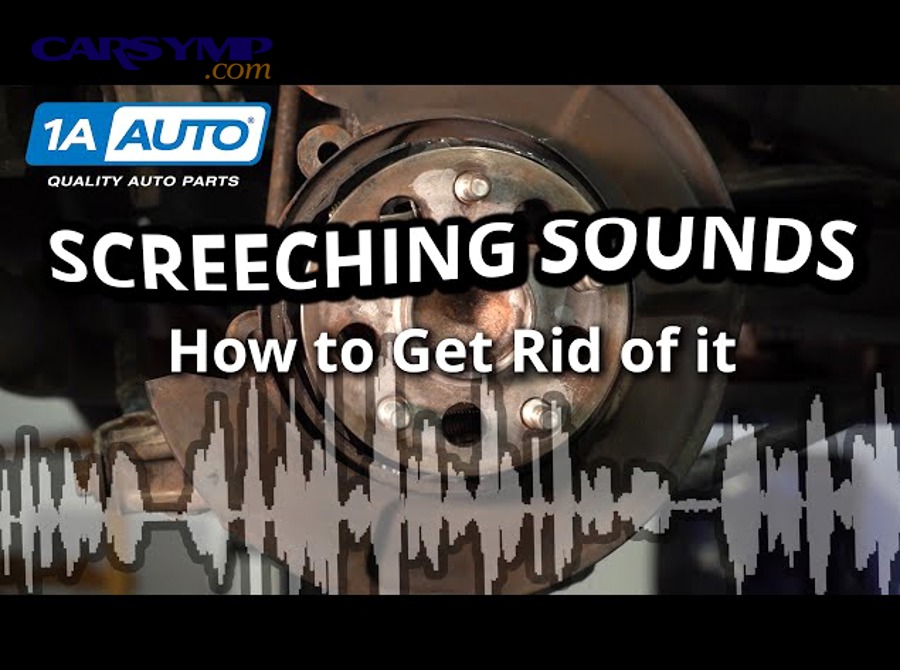
Pad fit, abutment clips, and anti-rattle hardware
Pads are designed to sit snugly in the bracket with abutment clips. If clips are corroded, bent, missing, or installed incorrectly, the pad can rock and “tick” as reverse torque shifts it. Even a tiny clearance can make a noticeable sound at low speed.
Check for shiny witness marks on the bracket ears and clips—polished metal indicates movement. Also look for uneven pad ear wear, which can indicate the pad is binding or skewing.
Shims, backing plates, and lubrication points
Anti-squeal shims and backing plate contact points reduce vibration. If the shim is missing, torn, or contaminated, the pad may resonate more in the low-speed reverse condition. Likewise, incorrect or absent high-temp brake grease on pad ears or caliper contact points can allow stick-slip motion that creates chirps.
Be careful: lubrication belongs only on metal-to-metal contact points specified by the pad/brake design—never on the friction material or rotor face.
Caliper slides and guide pins
Sliding calipers rely on guide pins to center the caliper over the rotor. If a guide pin is dry, rusted, or sticking, the caliper may not retract evenly. Reverse braking can load the caliper differently and create a chirp or squeak when the pad is pulled across the rotor at a slight angle.
Symptoms often include uneven pad wear between inner and outer pads, or a pad that looks tapered.
Dust shields and backing plates
A thin dust shield can bend slightly from road debris, curb contact, or prior brake work. In forward motion it might clear, but in reverse the rotor’s airflow and slight rotor runout can make it kiss the shield at one spot, producing a rhythmic scrape.
If you’re doing a broader brake noise diagnosis, a quick check is to look for fresh shiny arcs on the shield edge where the rotor has been touching.
Why scraping or grinding in reverse often points to contact or wear
Scraping or grinding in reverse is usually caused by continuous contact—metal-to-metal pad wear, debris trapped between pad and rotor, a bent shield, or a parking-brake shoe dragging inside the rotor hat.
Next, prioritize a visual inspection because grinding can rapidly damage rotors and turn a simple service into a more expensive repair.
Worn pads reaching the wear indicator or backing plate
Many pads include a wear indicator that creates a high-pitched squeal when pad thickness is low. In some cases, it can be more noticeable in reverse because the pad shifts and the indicator contacts differently. If pad material is fully worn, the backing plate can grind against the rotor, producing a harsh metallic sound in either direction.
Look through the wheel spokes or remove the wheel to measure pad thickness. If you can’t confidently see the inner pad, don’t assume—inner pads often wear faster on sliding calipers with sticky pins.
Debris trapped between rotor and shield or pad and rotor
A small stone can wedge between the dust shield and rotor, creating a repeating scrape that may change pitch as you back up and turn. Similarly, rust flakes from a corroded rotor edge can lodge near the pad edge and scrape under light pressure.
To isolate it, try reversing slowly in a straight line, then repeat with a gentle steering angle. Debris and shield contact often changes with steering because the knuckle and shield relationship shifts slightly.
Parking brake shoes dragging inside the rear rotor hat
On many rear disc brake setups, the parking brake uses small shoes inside the rotor hat. If the adjuster is too tight, the shoe lining is delaminating, or the return springs are weak, the shoe can drag. Reverse motion can make this more pronounced, especially during a reverse stop or when the vehicle rolls backward with the parking brake just released.
Clues include a scraping sound from the rear, a hot rotor hat area, or parking brake travel that feels unusually short or inconsistent.
Why clicking, clunking, or knocking in reverse can come from suspension or driveline
Clicking or clunking in reverse often comes from parts that shift under torque reversal—control arm bushings, ball joints, sway bar links, engine/trans mounts, or CV joints—especially when backing while turning or transitioning from brake to throttle.
Next, test whether the sound happens with braking, with acceleration, or simply when the vehicle changes direction, because that separates brake movement from torque-load movement.
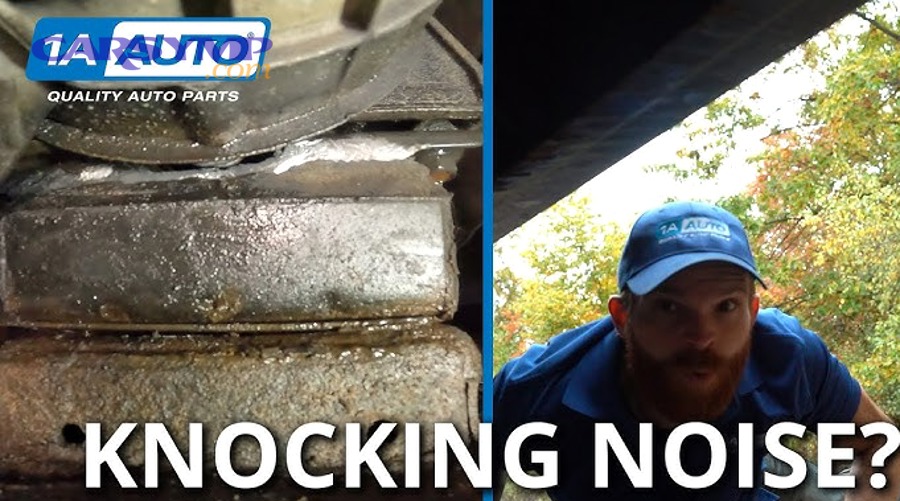
Torque reversal and mounts
Reverse gear often produces higher driveline torque at low speed. If an engine mount or transmission mount is weak, the powertrain can shift and “thunk” when you go from reverse coasting to reverse acceleration, or when you brake in reverse and the torque path changes.
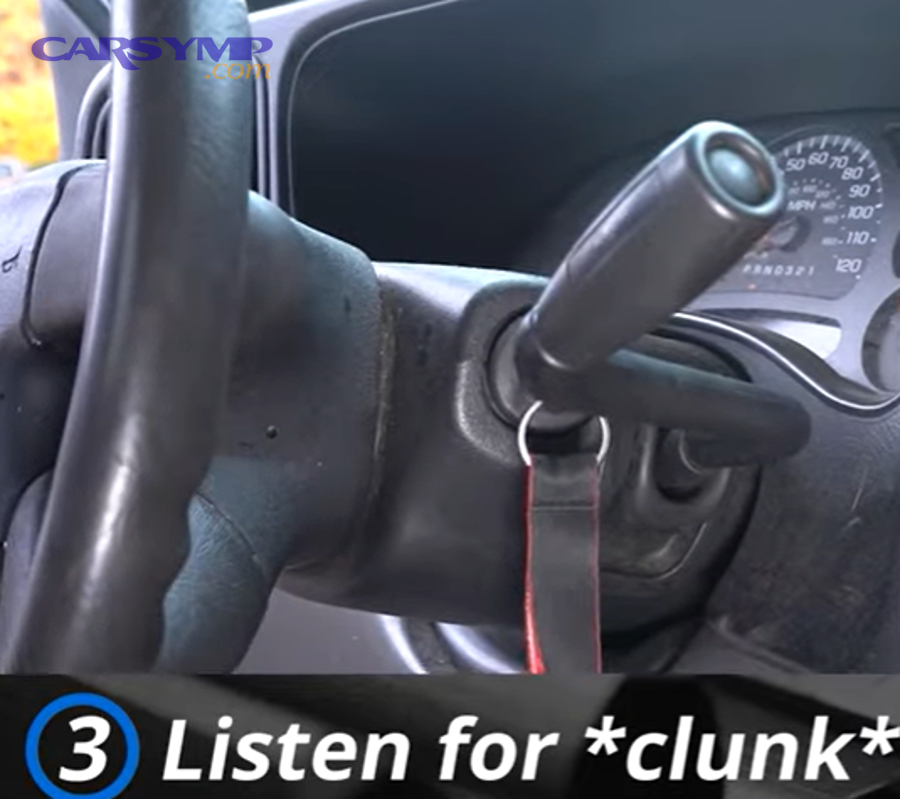
This noise is frequently felt as a single clunk rather than a repeating scrape. It may also happen when shifting from Drive to Reverse with the brake applied.
CV joints and steering angle sensitivity
Outer CV joints often click when turning under power. If you hear clicking while backing up with the wheels turned, and it changes with steering angle, a CV joint becomes more likely. Reverse can reveal wear differently because the joint loads on a different wear surface.
Try a controlled test in an empty lot: back up slowly in a tight circle, then repeat in the opposite direction. If clicking is stronger in one turning direction, that supports a CV joint hypothesis.
Control arm bushings, ball joints, and sway links
Suspension bushings can shift under reverse braking forces. A cracked bushing may allow the arm to move slightly, creating a knock during the first reverse stop. Similarly, worn sway bar links can click as the suspension articulates over small bumps while reversing.
Unlike brake squeal, these sounds often correlate with chassis movement—bumps, driveway lips, or steering input—more than with brake pedal pressure alone.
How can you diagnose reverse-only noise safely at home?
You can diagnose most reverse-only noises by matching sound type to a short checklist: confirm whether braking triggers it, localize the corner, inspect shields and pad hardware, then check for play in suspension and wheel components.
To begin, use repeatable low-speed tests in a quiet area, because consistency is what turns a “mystery noise” into a specific mechanical contact.
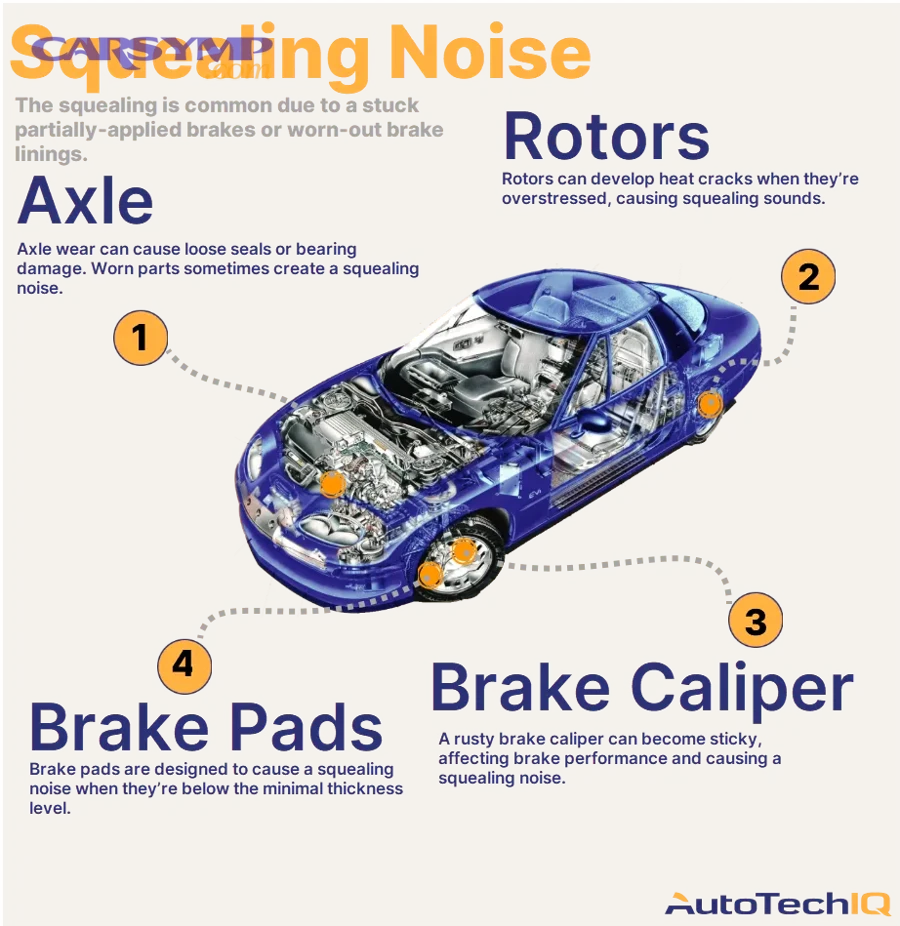
Step 1: Confirm the trigger (pedal, steering, speed, first stop)
Start with four quick observations: (1) Does it happen only with the brake pedal pressed? (2) Does steering angle change it? (3) Does it occur only at the first reverse stop, or every time? (4) Does it change with speed? Write it down—these patterns are more valuable than guessing.
If the noise occurs only with braking, focus on pads, clips, slides, shields, and parking brake shoes. If it occurs with no braking and changes with steering, consider CV joints, bearings, or shields.
Step 2: Localize the corner without lifting the car
In a quiet area, open the windows and back up slowly while lightly applying the brakes. If safe, have a helper stand well away from the vehicle and listen from the side (never behind the car). The goal is to identify front vs rear and left vs right.
You can also use a smartphone voice memo placed inside the cabin near the suspected corner to compare recordings from different maneuvers.
Step 3: Quick visual checks (wheel-on)
Look through the wheel spokes: check rotor surface condition, obvious shield contact, and pad thickness if visible. A bent dust shield often shows a shiny scrape line. Also check for rocks lodged between the rotor and shield area.
At this stage you can do a simple “hand test” after a short drive: carefully feel near (not on) the wheel/rotor area for unusual heat differences between corners. A dragging brake or parking brake can make one corner significantly hotter.
Step 4: Lift and inspect the usual suspects (wheel-off)
With the car safely supported on jack stands, remove the wheel and inspect pad hardware, abutment clips, and caliper slides. Look for missing anti-rattle springs, uneven pad ear wear, torn shims, and dry or stuck guide pins.
Also rotate the hub/rotor by hand (if possible) and listen for scraping. If you see shield contact, gently reshape the shield away from the rotor. If you need a specific Brake dust shield rubbing fix, the safest approach is small, incremental bends with rechecks, not aggressive prying.
Step 5: Use a sound-to-cause table to avoid random part swapping
This table helps connect what you hear to what you should inspect first, so you don’t replace good parts chasing the wrong noise.
| Sound in reverse | Most likely area | Best first check |
|---|---|---|
| Short squeal at low speed | Pads/hardware | Pad fit, abutment clips, shims, chamfers |
| Rhythmic scrape (wheel-speed related) | Dust shield / debris | Shiny arc on shield, trapped stone, rotor edge rust |
| Harsh grinding | Severe pad wear / debris | Pad thickness, rotor scoring, metal-to-metal contact |
| Clicking while turning under power | CV joint | Tight-circle reverse test, boot condition |
| Single clunk on direction change | Mounts / bushings | Shift D↔R test, mount inspection, bushing cracks |
For deeper confirmation, a structured brake noise diagnosis with a technician can include measuring rotor runout, checking pad taper, and verifying parking brake shoe clearance with the rotor removed.
When does reverse-only noise mean it’s unsafe to drive?
It’s unsafe to drive when reverse-only noise comes with grinding, loss of braking feel, warning lights, pulling, overheating, or any sign that braking parts are wearing into metal-to-metal contact.
Next, treat safety symptoms as higher priority than “finding the exact noise,” because the wrong kind of contact can reduce stopping performance quickly.
Unsafe signs that require immediate inspection
Grinding or continuous scraping: This can indicate pads worn through, debris trapped, or a damaged rotor surface. Continuing to drive can destroy the rotor and increase stopping distance.
Pedal changes: A suddenly spongy pedal, a pedal that sinks, or a pulsing pedal paired with noise suggests hydraulic or rotor issues that deserve prompt attention.
Pulling or instability: If the vehicle pulls during braking (even only in reverse), it can indicate uneven braking force, a sticking caliper, or contamination that compromises control.
Overheating and smell: A hot wheel, smoke, or a strong burning odor can signal dragging brakes or a parking brake not releasing. Heat can damage seals, fluid, and friction materials.
Situations where you should avoid further testing
If the noise is loud enough to be felt as vibration, if you see deep rotor grooves, if braking performance feels reduced, or if a warning light is on, stop DIY driving tests and move to a safe inspection plan. The goal is not to “recreate the sound” at all costs.
In these cases, towing or a cautious short-distance drive to a repair facility (only if braking is clearly normal) is safer than repeated reverse stops trying to pinpoint the noise.
How do you prevent reverse-only brake noise after repair or service?
You prevent reverse-only brake noise by ensuring correct pad fit and hardware condition, proper slide lubrication, clean rotor surfaces, correct torque practices, and careful bedding-in so pad deposits remain even.
Next, focus on the small details—clips, shims, and shield clearance—because most reverse-specific noises come from minor movement, not major component failure.
Use complete hardware kits and correct lubrication
Whenever pads are replaced, replacing abutment clips and anti-rattle hardware reduces the chance of pad movement and chatter. Clean the bracket lands where clips sit; rust buildup can pinch pads, causing uneven wear and noise.
Lubricate only the specified contact points with appropriate high-temp brake lubricant: pad ears, caliper bracket contact points, and guide pins (if the design uses greased pins). Avoid contaminating friction material.
Check rotor condition and pad bedding
Uneven pad deposits can create noise and vibration. Lightly resurfacing or replacing rotors when they’re scored, heat-spotted, or out of spec helps pads seat evenly. After installation, follow a controlled bedding-in procedure appropriate for the pad compound to stabilize friction and reduce squeal.
Also verify that rotor retaining screws (if present) are seated and not causing runout, and that wheel lug nuts are torqued evenly to specification.
Verify shield and parking brake clearance
After any brake work, spin the rotor to confirm it rotates freely with no shield contact. For rear rotors with internal parking brakes, ensure shoe clearance is correct and the mechanism returns fully. Small drags can become loud in reverse at low speed.
Finally, recheck after a short test drive: listen for new sounds and confirm both sides are behaving similarly, because asymmetry often reveals an installation detail that needs correction.
Contextual Border: The sections above focus on the most common, high-probability causes and a practical diagnosis path. Next is a compact extension for edge cases, cost expectations, and decision-making when you want a professional confirmation.
Extra checks, edge cases, and deciding on a professional inspection
These extra checks help when the noise is subtle, intermittent, or shared between brakes and suspension, and they also clarify when paying for a professional diagnosis is the fastest path to certainty.
Next, use these micro-level cues to reduce uncertainty without replacing parts blindly.
Is reverse-only noise ever caused by pad design or compound choice?
Yes. Some high-friction or performance-oriented compounds can be noisier at low speed, and reverse braking can highlight that resonance. If the noise began immediately after pad replacement and everything is installed correctly, pad formulation, chamfers, and shim quality become stronger suspects.
In that case, small refinements—verifying hardware, applying correct shim strategy, and ensuring proper bedding—often help more than changing major parts.
What if the sound happens only while turning in reverse?
If it happens only while turning, prioritize components affected by steering angle: CV joints, wheel bearings under side load, and shields that shift relative to the rotor when the knuckle rotates. Also consider that turning changes caliper torque vectors slightly, which can make a marginal clip or pad ear finally speak up.
To narrow it, repeat the same reverse stop straight vs turning, and compare left-turn vs right-turn behavior.
How much does a professional diagnosis typically cost?
Pricing varies by shop and region, but many facilities offer a baseline inspection fee or diagnostic charge that can be applied toward repair. When you ask about Shop diagnosis cost for brake noise, you’re usually paying for time: road test, lift inspection, measurement checks, and a written estimate.
To get the best value, describe your exact trigger pattern (pedal/steering/speed/first stop) and mention what you already inspected, so the technician can skip redundant steps and focus on confirmation.
What’s the fastest “small fix” to check before replacing parts?
The fastest checks are: confirm shield clearance, verify pad hardware is present and seated, and ensure guide pins move smoothly. If you find a shield touch point, a careful adjustment is often enough; if you find missing clips or seized pins, correcting those can eliminate reverse-only noise immediately.
And if you need a Brake dust shield rubbing fix, make sure the rotor spins freely afterward, then re-test in reverse at low speed to confirm the sound is gone without introducing new rubbing points.