


Rotor issues that cause noise usually come from a change in the rotor’s shape, surface, or friction behavior—so the pad no longer glides smoothly and instead vibrates, scrapes, or “talks” through the suspension and cabin.
Warped rotors are one of the most searched explanations, but the real culprit is often rotor runout, thickness variation, hot spots, or uneven pad material transfer that makes the braking system oscillate like a speaker.
Beyond vibration, some rotor problems create pure sound—squeal, chirp, clicking, or grinding—because edges, ridges, corrosion, or grooves act like a file against the pad and shield, especially at low speeds.
To connect symptoms to the right fix, the key is to match the noise pattern to the rotor defect and confirm it with a few simple checks—Tiếp theo, we’ll break down each common rotor fault and the fastest ways to verify it.
What rotor problems most commonly create braking noise?
The most common rotor-related noises come from uneven rotor thickness, surface damage, corrosion ridges, and runout that makes pads vibrate or scrape instead of braking smoothly. Sau đây, we’ll group the problems by how they “make sound.”
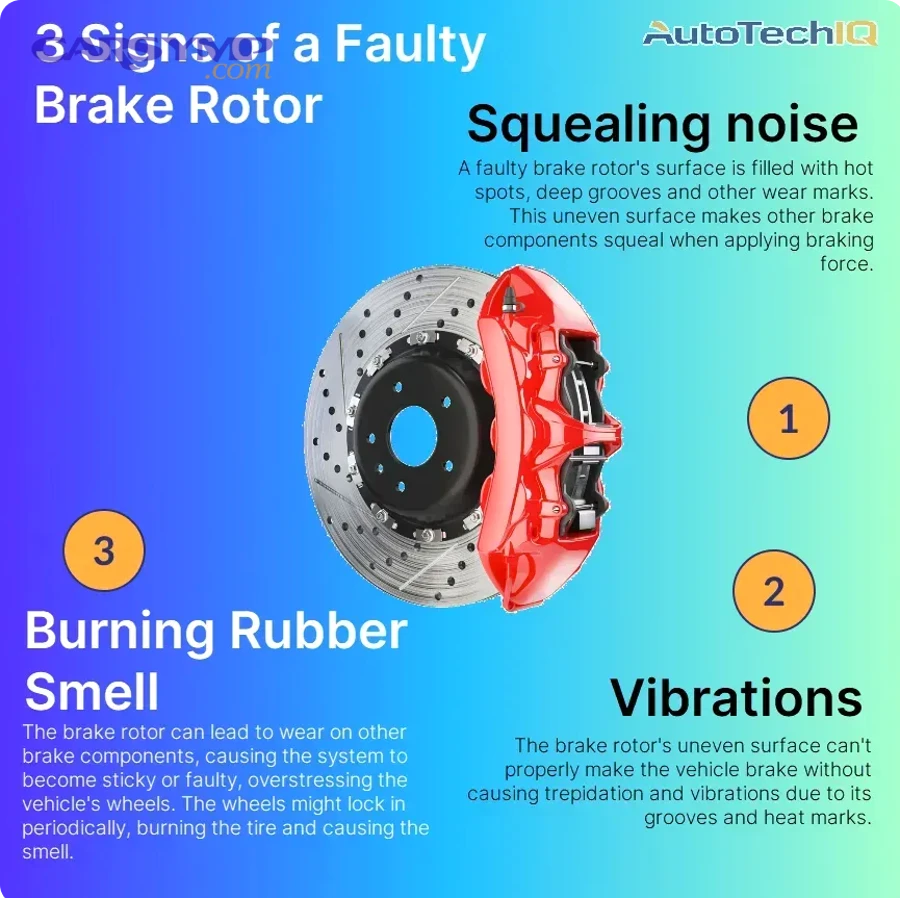
Which rotor defects create high-pitch squeal?
High-pitch squeal often happens when the pad rides over a glazed, polished rotor face or a rotor with uneven friction patches, creating rapid micro-vibrations. Cụ thể, squeal is less about “metal-on-metal” and more about resonance between pad, rotor, and caliper.
Glazing forms when brakes run hot and the surface “shines,” reducing bite and encouraging slip-stick friction. That slip-stick is a classic squeal generator: the pad alternately grabs and releases, vibrating at an audible frequency. A mirror-like rotor face can also make the pad’s leading edge chatter, especially if the pad compound is hard or the car is lightly braked in city driving.
Để hiểu rõ hơn, watch for squeal that appears with light pedal pressure, disappears with harder braking, and returns at low speed—this pattern often points to surface condition and friction transfer rather than a single broken part.
Which rotor defects create grinding or scraping?
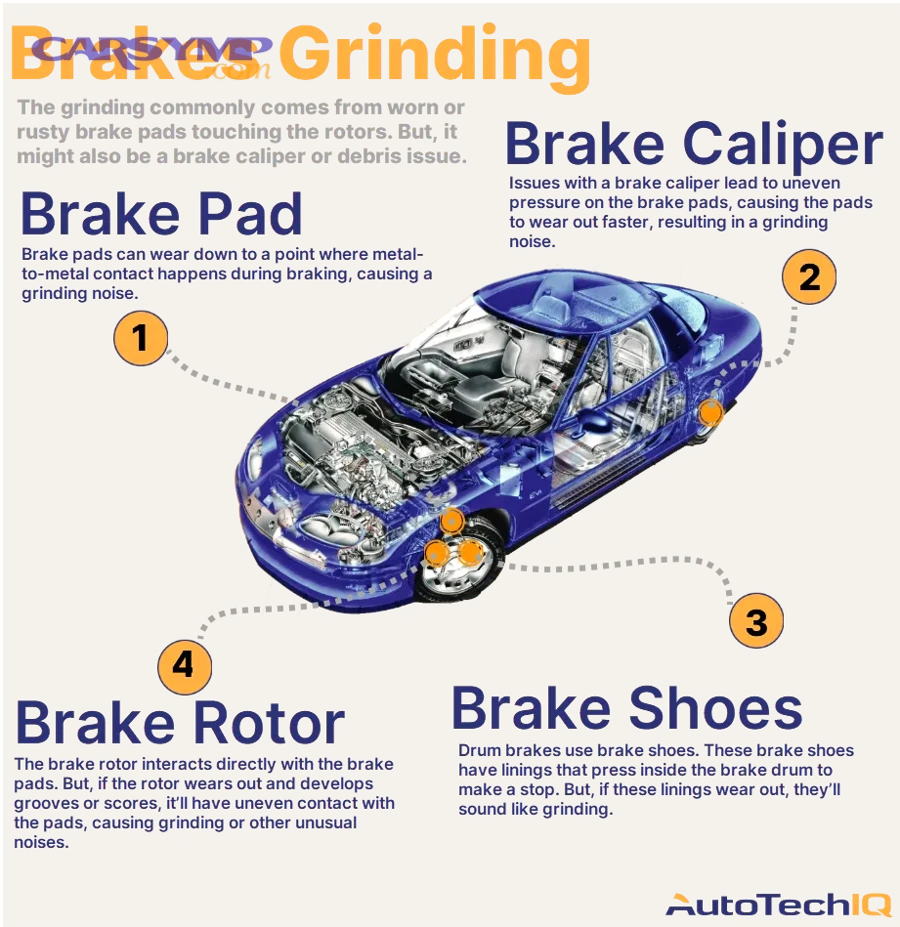
Grinding or scraping is more likely when the rotor face is scored, deeply grooved, rust-scaled, or has a sharp outer lip that contacts pads, backing plates, or dust shields. Bên cạnh đó, debris trapped between pad and rotor can mimic rotor damage and leave matching grooves.
A rotor that has been run with worn pads can develop ridges and “railroad tracks” (parallel grooves). If the grooves are deep enough, the pad can’t conform, so edges catch and release with a gritty sound. Corrosion can do the same: after rain or storage, rust builds on the rotor and the first few stops sound harsh until it’s cleaned off—unless the rust is heavy and pitted, which keeps the noise around.
Quan trọng hơn, if you hear grinding that changes with wheel speed even without braking, don’t blame the rotor immediately—wheel bearings, shields, and stones can produce similar sounds. Still, rotors with sharp lips or heavy pitting frequently amplify these noises when the brakes are applied.
Which rotor defects create thumping, pulsing, or rhythmic rubbing?
Rhythmic thumps and pulsing often trace to thickness variation, hot spots, or runout that pushes pads in and out once per rotation. Tuy nhiên, people call this “warped,” even when the rotor isn’t literally bent like a potato chip.
When the rotor’s thickness varies, the caliper piston retracts and extends slightly as the thick spot passes, which you feel as pedal pulsation. That same oscillation can create a low-frequency groan or rubbing sound, especially at slow speed with light braking. Hot spots—harder friction patches created by overheating—can also “grab” unevenly, creating a repeating noise and a steering wheel shimmy.
Tóm lại, if the sound repeats with rotation and the pedal or steering wheel also pulses, you’re likely dealing with a geometry or friction-uniformity issue rather than a simple squeal from pad edges.
Can warped rotors cause squeal, grinding, or thumping?
Yes—warped rotors (or more accurately, rotors with runout and thickness variation) can cause thumping and pulsing most reliably, and they can also trigger squeal or grinding by pushing pads into unstable contact. Để bắt đầu, separate “true warp” from the effects you feel and hear.

What drivers mean by “warped rotors” vs what’s actually happening
Most “warped rotor” complaints describe brake judder: vibration during braking that feels like a wobble or pulse. Cụ thể, the common measurable causes are rotor runout (wobble) and disc thickness variation (DTV), not a uniformly bent disc.
Runout is the rotor not spinning perfectly true relative to the hub. DTV is the rotor not being the same thickness all the way around. Either condition can create uneven braking force once per wheel rotation, and that uneven force becomes vibration and sometimes noise. On modern cars, even small runout can be magnified by pad deposits and heat cycles until it becomes obvious at highway braking.
Đặc biệt, if vibration appears only at a certain speed range (like 50–70 mph) and mostly under moderate braking, that’s classic for runout/DTV-driven judder. If the noise is the headline symptom, you still need to check for surface ridges and pad transfer that “sing” at low speeds.
How “warp-like” rotor conditions lead to noise
When the rotor wobbles or varies in thickness, the pad contact pressure oscillates; the pad can repeatedly slip and grab, producing squeal, chirp, or a low groan depending on frequency. Tiếp theo, the system’s stiffness determines what you hear.
In a stiff setup (performance pads, firm bushings), oscillation often becomes higher-frequency squeal. In a softer setup (more compliant suspension, softer pad compound), you may hear a rumble or groan. If the rotor has a sharp lip or uneven corrosion on top of runout, the pad edge can also scrape rhythmically, sounding like rubbing or a cyclical grind.
Ngược lại, a rotor can be visually “fine” yet still cause noise because the defect is geometric (runout) or friction-based (pad material transfer). That’s why a “looks good” rotor still needs measurement if symptoms persist.
Quick clues that point toward warped-rotor-style problems
Three quick clues are: the noise repeats with wheel rotation, the brake pedal pulses, and the steering wheel shakes during braking at speed. Ngoài ra, the problem is often worse after a long downhill or repeated hard stops.
If the noise happens only when reversing, that can still be rotor-related—rust ridges, pad edge catch, or rotor lip contact—but it more often suggests pad hardware, dust shield, or pad backing contact. Use the sound timing: once-per-rotation sounds usually implicate rotor geometry or a high spot; constant scraping may be shield contact or debris.
Như vậy, “warped rotors” can absolutely be the root cause, but you’ll fix it faster if you treat it as runout/DTV plus surface condition—not as a purely visual problem.
Why do rotors develop hot spots and thickness variation that “sing”?
Rotors develop hot spots and thickness variation when heat and pressure aren’t distributed evenly, leading to uneven friction transfer and localized hard patches that change how pads grip. Hơn nữa, these changes can create both vibration and audible noise.
Uneven pad material transfer: the hidden noise maker
Many rotor “defects” are actually uneven pad material transfer—thin, patchy layers of pad compound fused to the rotor face. Cụ thể, these patches create alternating high-friction and low-friction zones that the pad rides over like speed bumps in friction.
When the pad hits a high-friction patch, it grabs harder, heating that area more, which encourages more transfer—a feedback loop. Over time, the rotor develops measurable thickness variation or at least friction variation that feels and sounds like a rotor problem. This is why bedding-in matters: correct bedding lays down an even transfer layer, reducing noise and improving bite consistency.
Để minh họa, if you replaced pads but didn’t clean or resurface the rotor, the new pad may “print” onto old deposits and begin to chatter. Conversely, resurfacing or replacing rotors without matching pad bedding can create a new uneven layer quickly, bringing the noise back.
Thermal stress and localized overheating
Hot spots often form when brakes are overheated or held at a stop after hard braking, trapping heat under the pad. Tiếp theo, that trapped heat can change the rotor surface structure and create a harder patch.
Examples include: repeated aggressive stops, towing downhill, track days without cool-down laps, or a stuck caliper slide pin causing one pad to drag. Even normal driving can create hotspots if a caliper doesn’t release fully. Once a hard spot exists, it can machine the pad unevenly and cause a repeating noise or a “whoop-whoop” tone under light braking.
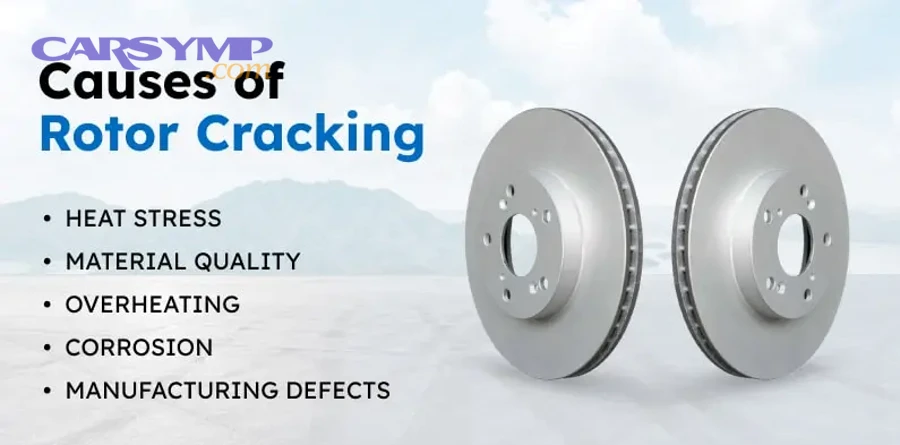
Quan trọng hơn, overheated rotors can also develop heat checking—small surface cracks. Minor heat checking isn’t always dangerous, but it can contribute to noise, especially if cracks intersect with grooves and create sharp edges that interact with the pad.
Hub cleanliness and torque: how installation causes thickness problems later
Even a good rotor can become noisy if it’s mounted on a rusty hub face or lug nuts are torqued unevenly, which introduces runout that later turns into thickness variation. Bên cạnh đó, this is why “new rotors, same noise” happens.
A speck of rust or scale on the hub can tilt the rotor. As you drive, the tilted rotor causes uneven pad contact; uneven contact causes uneven deposits; uneven deposits become DTV. The fix chain is predictable: clean hub, verify runout, torque properly, and bed pads. Skipping the early steps often means you’re back chasing noise a few weeks later.
Tổng kết lại, hot spots and thickness variation are as much about braking habits and installation quality as they are about the rotor itself.
How do rotor surface finishes (glazing, grooves, rust ridges) create noise?
Rotor surface conditions create noise by changing the contact texture between pad and disc—smooth glazed faces promote squeal, grooves promote scraping, and rust ridges create edge catch and rubbing. Để hiểu rõ hơn, treat the rotor face like a record needle: texture matters.

Glazed rotors: squeal from slip-stick friction
Glazing is a smooth, shiny rotor surface created by heat and light braking that polishes the disc and reduces consistent bite. Cụ thể, when bite drops, the pad can slip, then grab, creating rapid vibration that becomes a squeal.
Glazing often pairs with glazed pads. Together they form a low-friction pairing that’s prone to noise at low pressure. You may also see a blue tint (heat) or a mirror sheen. Light sanding or resurfacing, plus proper bedding, often resolves the sound—provided the caliper hardware and pad fit are correct.
Tiếp theo, if glazing returns quickly, suspect driving pattern (stop-and-go with gentle braking), pad compound mismatch, or a dragging caliper that overheats the surface.
Grooved/scored rotors: scraping and reduced pad stability
Deep grooves create a mechanical “edge” the pad must climb, which can cause scraping and also destabilize the pad, increasing noise. Ngoài ra, grooves reduce effective contact area and can concentrate pressure on pad edges.
Grooves come from worn pads, embedded grit, or metal backing contact. A light groove may be harmless, but deep scoring often means the pad is being cut, shedding material and creating dust and noise. If the rotor has a pronounced outer lip, the pad edge can catch, especially if pad shape or caliper bracket alignment is slightly off.
Đặc biệt, if you feel a ridge with your fingernail and the sound is a constant “shhh” during braking, resurfacing or rotor replacement is usually the cleanest path—assuming you also fix the root cause that created the groove.
Rust ridges and pitting: the low-speed “scrape after rain” story
Surface rust is normal, but rust ridges and pitting create uneven contact that can sound like grinding, especially after the car sits. Tuy nhiên, if the rust is heavy, the noise won’t disappear after a few stops.
Rust commonly forms on rotor swept areas and also on the outer edge where pads don’t fully contact. That outer ridge can rub the pad edge or the dust shield. Pitting can create a sandpaper feel under braking, sometimes accompanied by vibration if the pitting is uneven.
To distinguish normal rust from a problem: normal rust noise fades quickly within the first few brake applications; problematic rust stays loud, feels rough, and often comes with visible flaky corrosion or uneven rotor color patterns.
When is noise from rotors actually caliper/pad hardware reacting to rotor defects?
Sometimes the rotor defect is real, but the noise you hear is amplified by pad hardware—loose anti-rattle clips, missing shims, sticky slides, or a dust shield that’s nearly touching. Quan trọng hơn, rotor issues that cause noise often “invite” hardware to join the chorus.

Dust shield and backing plate contact triggered by rotor runout
A rotor with runout can wobble slightly and tap a dust shield that’s bent inward, creating a rhythmic scraping that sounds like rotor damage. Cụ thể, the shield becomes the noise source while the rotor is the trigger.
This is common after recent brake work, curb hits, or winter corrosion that weakens the shield. The noise can happen even when not braking, and it often changes when you turn (because the shield shifts relative to the rotor). If braking increases the sound, that may be because the rotor shifts slightly under load or the pad pushes the rotor into a slightly different position.
Tiếp theo, a quick visual check through the wheel spokes sometimes reveals the culprit—though you often need the wheel off to see the tight spots.
Pad edge chatter and missing hardware
Pad edges can chatter when clips and shims don’t hold the pad stable, especially if the rotor has grooves or a lip that “catches” the pad. Bên cạnh đó, vibration that might have been harmless becomes audible if the pad can move.
Missing anti-rattle clips, incorrectly seated shims, or pads that are too loose in the bracket can create clicking, clunking, or squeal. Rotor surface issues magnify this because the pad experiences fluctuating friction forces. If you replace rotors and reuse old, weak hardware, the noise can persist even with perfect discs.
Tóm lại, rotor condition and hardware condition are coupled; treating only one side often yields partial improvement.
Slide pin drag: when “rotor noise” is really uneven pad pressure
Sticking slide pins or a seized caliper can keep a pad lightly dragging, creating heat, glazing, and squeal—then eventually scoring the rotor and producing grinding. Hơn nữa, the rotor becomes a victim of a caliper problem.
If one rotor is much hotter than the other after a normal drive, or one wheel produces far more brake dust, suspect caliper drag. That drag creates hot spots and uneven transfer, which then causes the rotor to “sing” even if the pad is still thick. Fixing rotors without restoring caliper movement is a fast way to waste money.
Như vậy, if rotor issues keep repeating, shift your attention upstream to caliper function and installation details.
How do you confirm the rotor is the source without guessing?
You confirm the rotor is the source by matching noise timing to rotation, inspecting the rotor face and edges, and measuring runout and thickness variation rather than relying on appearance alone. Để bắt đầu, use a simple decision path before replacing parts.

Step 1: Map the noise to speed, braking, and direction
If the noise appears only when braking and scales with wheel speed, the rotor/pad interface is a prime suspect. Cụ thể, a once-per-rotation rhythm points toward a high spot, runout, or a lip/ridge catching something.
Note whether the sound changes when turning. If it changes dramatically with steering input, shield contact or bearing issues may be involved. Also note whether the sound is louder after rain or sitting (suggesting rust), or after long braking (suggesting heat-related deposits).
To keep the workflow consistent across articles and symptoms, you can frame this as part of a broader brake noise diagnosis mindset: identify “when,” “how often,” and “what changes it,” then validate with inspection.
Step 2: Visual and tactile inspection of rotor face and edges
Look for grooves, hot spotting (patchy discoloration), glazing (mirror sheen), rust ridges, and outer lips. Tiếp theo, run a finger carefully along the outer edge (engine off, wheel removed) to feel a sharp lip or rough pitting.
Check for matching marks on the dust shield or backing plate that indicate contact. Also inspect the rotor’s inner face; sometimes the inner face is worse and causes noise that’s hard to see through the wheel. If one face is heavily corroded or grooved while the other looks fine, you’ve likely found the noise generator.
Đặc biệt, if you see a consistent “ring” where the pad doesn’t sweep, and that ring is thick with rust, it can contact pads during cornering or suspension movement, creating intermittent scrape noises.
Step 3: Measure rotor runout and thickness variation
Runout is measured with a dial indicator on the rotor face, and thickness is measured with a micrometer at multiple points around the disc. Bên cạnh đó, these measurements turn guesswork into evidence.
Even if you don’t have shop tools, you can still learn from patterns: if the pedal pulses and the noise is rhythmic, measurement is worth the effort. If measurements exceed the vehicle’s service limits, resurfacing may not be safe, and replacement becomes the responsible option.
To improve repeatability, measure with the rotor mounted on a clean hub and lug nuts torqued evenly (or with washers/spacers to mimic wheel clamping). A rotor can measure “fine” on a bench yet run out on the car if the hub face is dirty or distorted.
Step 4: Confirm with a controlled swap or surface correction
If symptoms are ambiguous, a controlled change—like cleaning hub faces, correcting shield clearance, and bedding pads—can confirm whether the rotor was the core issue. Quan trọng hơn, doing the “free fixes” first avoids unnecessary parts.
For example: clean the rotor face with brake cleaner, lightly deglaze pads (if safe and appropriate), and perform a proper bed-in sequence. If squeal disappears, you’ve proven a friction layer problem. If pulsing remains, geometry (runout/DTV) is still likely. If scraping persists unchanged, look again for physical contact points like shields, stones, or pad hardware.
To keep consistency with symptom libraries and tagging, you can log these checks under a broader “Car Symptoms” workflow: symptom → trigger → verification → corrective action → prevention note.
What are the safest fixes: resurface, replace, bed-in, and match pads?
The safest fix depends on whether the rotor’s defect is surface-only, geometry-based, or structural: surface issues may respond to resurfacing and bedding, while significant runout, deep scoring, cracking, or thin rotors call for replacement. Tiếp theo, we’ll map fixes to defect types.
When resurfacing (machining) is appropriate
Resurfacing can help when the rotor has light grooves, glazing, or uneven transfer layers and still has enough thickness above minimum spec. Cụ thể, machining restores a uniform surface and reduces the vibration/noise feedback loop.
However, resurfacing is not a cure-all. If the underlying cause is hub runout or caliper drag, the fresh surface can quickly develop uneven deposits again. Also, machining reduces thickness and heat capacity, which can make the rotor more prone to overheating in demanding use.
Before choosing resurfacing, check rotor thickness, look for heat cracks, and confirm the shop can match the finish to the pad type. A poor finish can increase bedding time and squeal risk.
When replacement is the responsible option
Replace rotors when they are below minimum thickness, severely scored, heavily pitted, cracked, or when runout/DTV cannot be corrected within spec. Bên cạnh đó, replacement is often faster and more predictable for persistent noise complaints.
Replacement also makes sense when corrosion is advanced (especially on the inner face) or when the rotor’s outer lip is large enough to cause pad edge catch. If you’re already replacing pads, pairing with new rotors often yields better noise control—assuming hardware is refreshed and the hub is cleaned properly.
Be cautious with very cheap rotors: inconsistent metallurgy and poor machining can increase noise sensitivity. Instead, prioritize reputable brands, correct fitment, and proper installation steps.
Bed-in: the fix many people skip
Proper bedding-in deposits an even transfer layer on the rotor, stabilizing friction and dramatically reducing squeal and judder that come from uneven deposits. Tiếp theo, treat bed-in as part of the repair—not as an optional “extra.”
A typical bed-in involves multiple moderate stops from a safe speed, allowing partial cool-down between stops, then a longer cool-down drive without holding the pedal at a stop. The goal is controlled heat to condition the pad and lay a uniform layer—not to cook the brakes.
Important caution: don’t do repeated hard stops on public roads, and always follow the pad manufacturer’s recommendations. If you smell strong burning or feel fade, you’re overheating and risking new hot spots—exactly what you’re trying to avoid.
Match pads to rotor condition and driving style
Pad compound choice affects noise: harder, high-performance compounds often squeal more when cold; softer compounds can be quieter but may dust more. Ngoài ra, mismatch between pad and rotor finish can create chatter.
If your priority is quiet braking, choose pads marketed for low noise and pair them with rotors that have a proper non-directional finish. Replace or refresh anti-rattle hardware, apply correct lubricant to contact points (not friction surfaces), and confirm the pads fit snugly without binding.
For a repeatable workflow, a brief DIY brake inspection checklist can help you verify: pad thickness, hardware presence, slide pin movement, rotor face condition, hub cleanliness, and lug torque—all before your test drive.
How do you prevent rotor noise from coming back?
You prevent rotor noise by controlling heat, ensuring correct installation, keeping hub and hardware clean, and avoiding uneven pad deposits through proper bedding and driving habits. Đặc biệt, prevention is mostly about consistency—small shortcuts compound into noise later.

Installation habits that stop runout before it starts
Clean the hub face thoroughly, remove rust scale, and ensure the rotor sits flush—then torque lug nuts evenly to spec in the correct pattern. Cụ thể, this reduces runout that can evolve into thickness variation and noise.
Use a torque wrench, not an impact gun for final tightening. If you must use an impact, finish by hand-torquing properly. Also confirm any rotor retaining screws are seated and not holding the rotor crooked. If the hub itself has runout, addressing it early prevents endless repeat rotor complaints.
Tiếp theo, check that the dust shield has adequate clearance all around. A 2–3 mm gap can be the difference between silence and constant scraping once rust or heat expansion occurs.
Driving and braking habits that reduce hot spots
Avoid holding the brake pedal firmly at a complete stop immediately after a hard stop, because it can imprint pad material and create hot spots. Bên cạnh đó, long downhill braking should be managed with engine braking when possible.
Use firm, decisive braking when needed rather than prolonged light dragging. Light dragging is a common recipe for glazing and uneven transfer. If you commute in stop-and-go traffic, periodic moderate stops (done safely) can help keep the rotor surface conditioned and reduce squeal tendency.
Ngược lại, repeatedly overheating the brakes—towing beyond capacity, riding brakes downhill, or track use without appropriate components—will overwhelm most street rotors and pads and invite noise again.
Hardware upkeep: the quiet-brake multiplier
Fresh hardware kits, correct lubrication on slides and contact points, and free-moving calipers reduce vibration and help the pads retract cleanly, limiting heat and deposits. Hơn nữa, quiet brakes are usually “tight and free” at the same time.
Replace torn slide pin boots, clean and lubricate slide pins with the correct high-temp brake grease, and confirm the pads move smoothly in the bracket without sticking. Sticking pads can create constant light contact that heats rotors and produces squeal and groan.
As a practical rule: if you’re chasing noise, replace hardware as cheaply as you can replace guesswork. Many “mystery squeals” disappear when pads are properly supported and calipers can float as designed.
When to involve a shop—and what to ask for
If you lack measurement tools or the noise is severe, a shop can measure runout/DTV, check caliper function, and identify contact points quickly. Tiếp theo, ask them to document rotor thickness, runout readings, and any evidence of uneven deposits.
In cost conversations, it helps to be specific: mention you’re addressing rotor condition, hardware, and measurement. If you’re comparing quotes, you can anchor the conversation around Shop diagnosis cost for brake noise as a distinct line item, because paying for accurate measurement can prevent replacing good parts.
Tổng kết lại, prevention is a system approach: rotor + pad + hardware + hub + habits. If you only replace the disc, the conditions that created noise can still be present.
Contextual Border: Up to this point, we’ve focused on the main rotor defects that directly create noise and the confirmation-and-fix workflow. Ngoài ra, the next section covers less common edge cases, related terms, and “look-alikes” that can mislead even experienced DIYers.
Advanced rotor edge cases and related noise look-alikes
Some rotor-related noises come from design features, uncommon wear patterns, or neighboring parts that behave like rotor problems; understanding these edge cases helps you avoid replacing rotors when the true cause is elsewhere. Sau đây, we’ll cover four high-value scenarios.

Runout vs parallelism: two similar problems with different fixes
Runout is wobble relative to the hub, while parallelism relates to rotor faces being evenly spaced (uniform thickness). Cụ thể, runout often points to hub cleanliness/torque or hub distortion, while parallelism problems often point to deposits or machining needs.
If you correct runout by cleaning and torquing but the pedal still pulses, thickness variation may be present. If you machine or replace rotors but never address a rusty hub, the new rotor can inherit runout and develop deposits again. The fix is choosing the right measurement first, not the most convenient part replacement.
Để minh họa, a rotor can be perfectly thick everywhere but still wobble—creating rhythmic shield contact or pad knockback noise. Meanwhile, a rotor can spin true but have friction patches that squeal or groan.
Drilled/slotted rotors: whistle, whoosh, and pad “zipper” sounds
Drilled and slotted rotors can create characteristic sounds—whooshing, whirring, or a zipper-like noise—especially at low speed and with certain pad compounds. Tuy nhiên, this doesn’t always mean a defect.
Slots and holes interrupt the pad surface periodically, which can be audible. If the sound is consistent and braking performance is stable, it may be normal for that rotor style. If the sound becomes harsh, metallic, or is paired with vibration, then the rotor may be worn unevenly, cracked around holes, or paired with pads that are too aggressive for street use.
Ngược lại, a new slotted rotor that squeals loudly can often be quieted by proper bedding and pad selection—because transfer layer stability matters even more when surfaces are interrupted.
Floating rotors and hardware rattle mistaken for rotor damage
Some performance setups use floating rotors with bobbins that allow movement; these can click or rattle slightly, especially when cold or reversing. Bên cạnh đó, loose or worn caliper bracket hardware can produce similar sounds.
If the noise is a light metallic tick over bumps rather than a brake-applied noise, suspect floating hardware or bracket play. A true rotor face problem usually changes under braking load. Confirm by applying light brake pressure over bumps: if the rattle disappears, pad/hardware movement is likely involved.
Quan trọng hơn, don’t machine or replace floating rotors just because they make a light “mechanical” sound—verify whether the noise is a design characteristic or wear-related looseness.
EVs and light-braking corrosion: quiet driving can create loud first stops
Electric vehicles and hybrids may use regenerative braking heavily, leaving friction brakes underused, which can allow rotor corrosion to build and cause noisy first stops. Hơn nữa, light-braking usage can promote glazing and uneven transfer when friction brakes do engage.
If you hear a loud scrape after rain that fades quickly, that may be normal. If it persists, consider periodic friction-brake use (safe moderate stops) to keep rotors clean. In some cases, rotor coatings help, but they still require correct bedding and occasional friction engagement.
Tóm lại, “quiet driving” can ironically set up conditions for noisy rotors—because rust and transfer layers don’t manage themselves.
FAQ
How do I know the noise is from rotors and not pads?
Rotors are more likely when the noise is rhythmic with rotation, paired with pedal pulsation, or tied to visible grooves, lips, rust ridges, or hot spots. Pads are more likely when squeal changes with pressure and hardware/shims are missing. Tiếp theo, confirm by inspecting both rotor faces and checking caliper slide movement.
Is it safe to drive with rotor noise?
It depends on the noise type: light squeal can be annoying but not urgent, while grinding, severe pulsing, or any noise paired with poor braking performance can indicate unsafe conditions. Bên cạnh đó, if you suspect cracks, extreme scoring, or very thin rotors, stop driving and inspect immediately.
Can I “clean off” rotor noise without replacing parts?
Sometimes yes—surface rust can clear after a few stops, and uneven transfer can sometimes be improved with controlled bedding if the rotor isn’t damaged and the calipers are healthy. Tuy nhiên, deep grooves, heavy pitting, cracks, or out-of-spec runout/thickness problems usually require resurfacing or replacement.
Why did new rotors still make noise right away?
Common causes include dirty hub faces causing runout, uneven lug torque, reused worn hardware, incompatible pad compounds, or skipping bed-in. Ngoài ra, a bent dust shield or sticky slide pins can create noise regardless of rotor freshness. If a shop measured nothing and only swapped parts, the root cause may still be present.
What should I do before paying for parts or service?
Document when the sound happens, inspect for obvious rust ridges, grooves, or shield contact, and prioritize measurement for runout and thickness variation if you feel pulsation. Tiếp theo, if you’re coordinating repairs across symptom-based guides, tie your notes into a structured Car Symptoms record: noise type, trigger, verification result, and what changed after each fix attempt.