


Ceramic pads tend to be quieter and cleaner, while semi-metallic pads usually deliver stronger high-heat bite—so the “better” choice depends on your driving load, temperature range, and how much noise and dust you’ll tolerate.
Beyond comfort, the real decision is about friction behavior: how quickly each compound builds torque when cold, how stable it stays when hot, and how it interacts with your rotor surface over thousands of stops.
Cost matters too, but not only at checkout—pad choice influences rotor life, wheel cleaning, and the odds you’ll chase squeaks or vibration later, especially if your hardware or bedding process is imperfect.
Tiếp theo, we’ll break the comparison into measurable criteria—materials, heat, noise/dust, rotor wear, and use-case fit—so you can match the pad type to your car and your driving reality.
What are ceramic and semi-metallic brake pads made of?
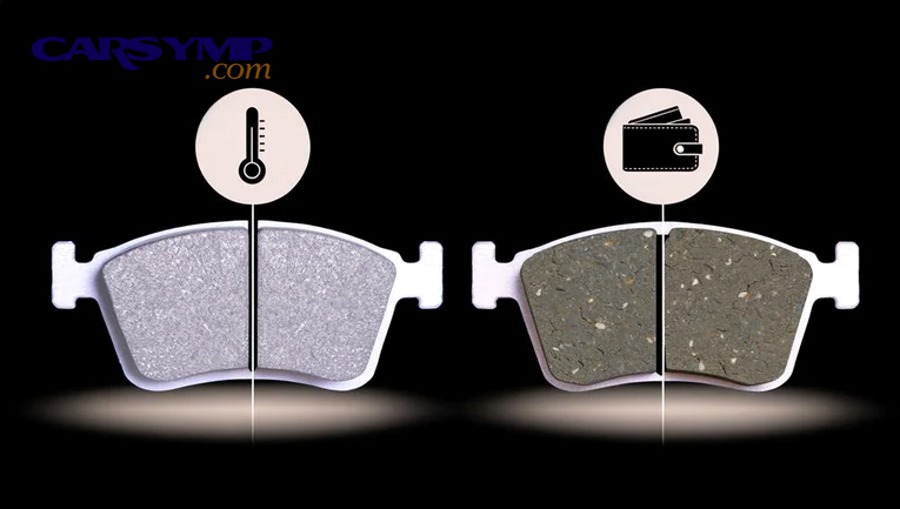
Ceramic pads use dense ceramic fibers and fillers in a resin binder, while semi-metallic pads blend a larger percentage of metal (often iron/steel/copper alloys) with friction modifiers to increase heat tolerance and bite.
To start, the simplest mental model is that ceramic compounds prioritize stable, low-noise contact and controlled dust, whereas semi-metallic compounds prioritize thermal robustness and torque under load—two different “design centers” for the same job.
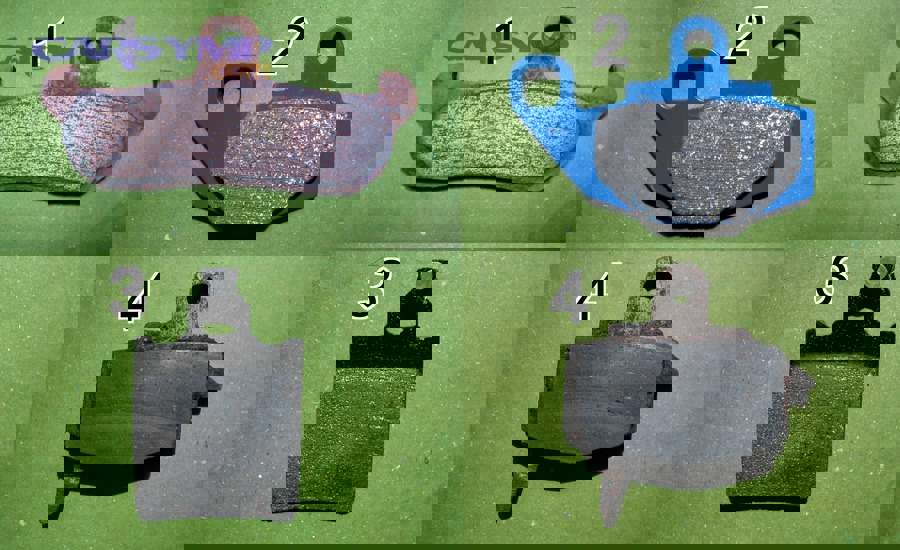
In practice, no friction material is “pure.” Both types combine: (1) a binder (resin), (2) reinforcing fibers, (3) abrasive particles that keep the rotor surface “fresh,” and (4) lubricants that smooth friction transitions. The ratio of these ingredients changes how the pad behaves in three critical phases: initial contact (first second), sustained braking (several seconds), and repeated braking (heat stacking).
Cụ thể, ceramic formulas commonly use ceramic fibers and fine mineral fillers to stabilize friction and suppress high-frequency vibration (the core cause of squeal). Semi-metallic formulas commonly use more metallic content to move heat away from the friction face and to keep friction strong when the rotor and pad get hot.
That difference explains why many daily drivers describe ceramic pads as “quiet and clean,” and why heavier vehicles often ship with semi-metallic or similar high-heat formulations from the factory. A 2021 SAE technical paper discussing ceramic pad formulations highlights the industry focus on low noise and low dust while maintaining wear and performance relative to semi-metallic designs.
Which pad type stops better in cold, hot, and heavy braking?
Semi-metallic pads usually deliver stronger high-heat bite and fade resistance, while ceramics often feel smoother and more consistent in normal temperature ranges but may have less aggressive “initial bite” in some applications.
However, stopping performance is more than maximum torque—so next we’ll separate “cold response,” “hot stability,” and “repeatability,” because each favors a different compound strategy.
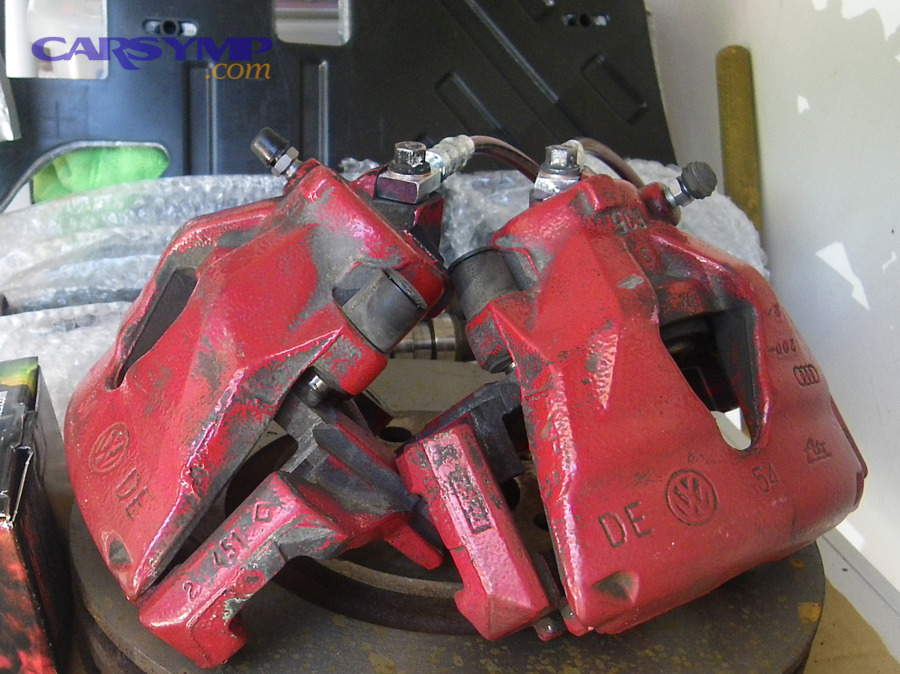
Cold response (first stop of the day): Many semi-metallic pads build friction quickly because metallic abrasives and friction modifiers can “grab” the rotor surface early. Some ceramic pads are optimized for quietness and low dust, and that can trade away a little initial bite—especially in cold weather or on lightly loaded rear brakes where the pad never gets very warm.
Hot stability (long downhill, towing, aggressive driving): Semi-metallic pads often hold friction better as temperatures climb because the metallic fraction helps conduct heat through the pad and resists the softening that can happen in some binders. That’s why they’re commonly chosen for trucks, larger SUVs, and drivers who regularly load the brakes.
Repeatability (stop after stop in traffic): Ceramics can feel very linear in everyday driving: pedal effort maps predictably to deceleration, and the pad can be less prone to “grabbiness” that triggers ABS early on slick roads. That smoothness is a comfort feature—but it can also be a control feature for some drivers.
To understand what you’re really feeling, distinguish two sensations: (1) friction level (how much deceleration per pedal force) and (2) friction stability (whether it changes as the pad warms). If your vehicle is tuned from the factory with a certain friction curve, matching the OEM compound “style” often restores the intended pedal feel.
Finally, don’t ignore the rotor. A pad that’s too aggressive for a given rotor metallurgy can create localized hot spots and uneven transfer film, which can feel like “warped rotors” even when the disc is dimensionally fine. In other words, pad choice can indirectly create the symptom you’re trying to avoid.
Which pad is quieter and produces less dust on wheels?
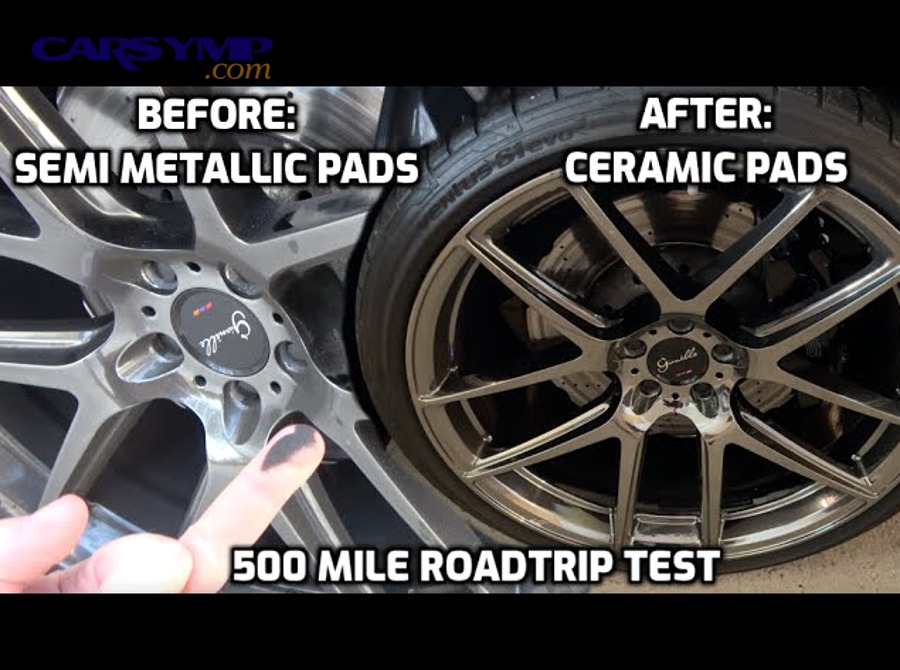
Ceramic pads are typically quieter and produce lighter, less visible dust, while semi-metallic pads can be noisier and often generate darker, grittier dust due to their higher metallic content.
Ngược lại, if you prioritize maximum heat handling, you may accept more dust and occasional noise—so next we’ll link noise and dust back to the same root cause: friction vibration and material shedding.
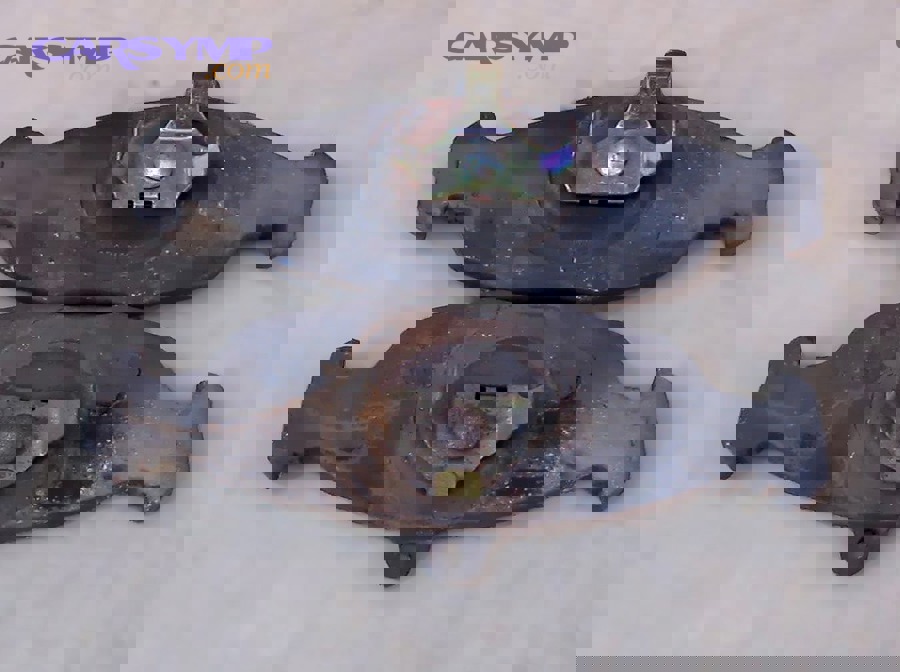
Why ceramics are often quieter: Brake squeal is usually a vibration problem, not a “bad pad” problem. Ceramics often damp vibration better and can form a more stable transfer layer on the rotor that reduces micro-stick-slip events (tiny grab-release cycles) that create audible frequencies.
Why semi-metallic can squeal: Higher metallic content can transmit vibration more readily, and some compounds are intentionally abrasive to maintain bite. That abrasiveness can excite hardware (shims, clips) and caliper resonances if lubrication and fit are not ideal.
Dust differences you actually see: Dark dust on bright wheels is mostly a cosmetic headache, but it also indicates material shedding. Many manufacturers and service guides note that ceramic formulations often lead to cleaner wheels compared with semi-metallic pads.
Health and environment nuance: “Less visible dust” doesn’t automatically mean “less harmful dust.” Theo nghiên cứu của University of Southampton từ (their published research news), vào 02/2025, microscopic particles from certain commonly used brake pads were reported as more toxic to human lung cells than diesel exhaust particles in laboratory testing.
Practical takeaway: If your top complaint is squeal or black wheels, ceramics are often a good first move—provided you also address hardware condition (shims/clips), caliper slide lubrication, and proper bedding. Without those, even “quiet” pads can become noisy.
How do ceramic and semi-metallic pads affect rotor wear and longevity?
Ceramic pads often wear rotors more gently in normal driving, while semi-metallic pads can be harder on rotors under certain conditions because they may be more abrasive and operate at higher friction energy levels.
To illustrate, rotor life is basically a story of heat plus abrasion—so next we’ll connect pad material to what happens at the rotor surface, not just what happens at the pedal.
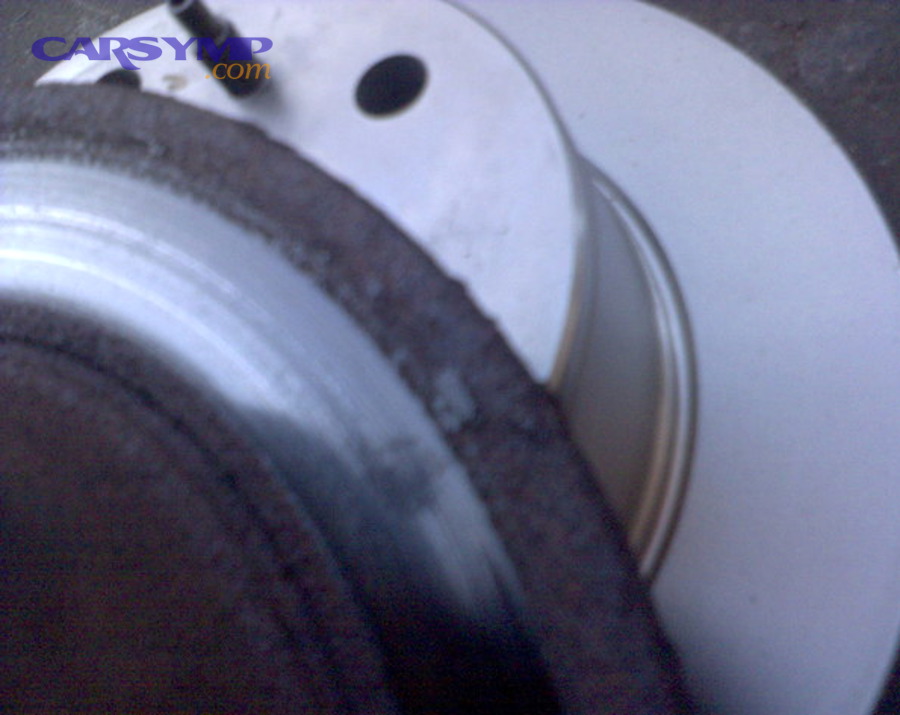
Rotor wear isn’t only “scratching”: Rotors lose thickness in two ways: (1) mechanical abrasion and (2) material transfer dynamics that can create uneven deposits. A pad that is too abrasive for your rotor can accelerate thickness loss, while a pad that deposits unevenly can create pulsation that leads to early rotor replacement even when thickness is still acceptable.
Why semi-metallic may increase rotor wear: Some semi-metallic compounds use stronger abrasives and metallic particles that maintain bite under high heat. That’s a benefit for severe duty, but it can increase rotor wear in light-duty commuting—especially if the driver brakes lightly and frequently, never fully warming the system to a stable transfer film state.
Why ceramics may extend “service feel”: Ceramics are often tuned for stable, quiet operation with controlled abrasiveness, which can help rotors stay smooth longer in daily driving. That doesn’t guarantee longer pad life in every vehicle, but it often reduces the odds of noisy, rough rotor surfaces that “feel bad” before they’re truly worn out.
But don’t ignore heat cracking and glazing: If you regularly tow, descend steep grades, or drive aggressively, the priority flips. In that world, a pad that survives high temperature without glazing (surface hardening that reduces friction) can protect the rotor by keeping friction stable and preventing panic braking events.
Rule of thumb: For normal commuting, choose the pad that matches OEM expectations for comfort and rotor friendliness; for repeated high-energy stops, choose the compound family known to hold friction at heat. The “best rotor life” is often the pad that keeps you from overheating the system in the first place.
Which pad fits city commuting, towing, mountains, and spirited driving?
Ceramics usually suit daily commuting and comfort priorities, while semi-metallic pads often suit heavy loads, steep descents, and repeated high-heat braking—though the right choice depends on vehicle weight, tire grip, and brake sizing.
Hơn nữa, it helps to pick by scenario rather than by marketing label, so below is a practical mapping of pad type to real-world use.
Before the table, remember what you’re optimizing: comfort (noise/dust), durability (pad/rotor life), and thermal margin (fade resistance). This table helps you choose by that optimization, not by brand claims.
| Driving scenario | Ceramic pads | Semi-metallic pads | What to watch for |
|---|---|---|---|
| City commuting, school runs | Often ideal: quiet, low dust, smooth response | Works, but can dust more and may squeal if hardware is marginal | Low-speed squeal, wheel dust, rotor deposits from light braking |
| Highway cruising, occasional braking | Very good: stable and clean | Fine, especially on heavier vehicles | Corrosion on rotors from low use; bedding matters after install |
| Towing, heavy cargo | May be acceptable on well-sized brakes, but watch heat | Often better thermal margin and bite under load | Fade on long grades, fluid boil risk, rotor heat checking |
| Mountain descents, repeated braking | Can work if rated for heat; otherwise may glaze | Common pick for heat handling and consistent torque | Downshift strategy, braking intervals, rotor temperature management |
| Spirited driving / autocross-lite | Street ceramics can feel soft when pushed | Usually stronger bite and stability at temperature | Pad fade vs tire grip, ABS cycling, rotor wear trade-off |
City drivers: If your biggest annoyance is squeal at parking-lot speeds or black dust on front wheels, ceramics are often the most satisfying “quality-of-life” choice.
Heavy-duty drivers: If your brakes smell on descents or you’ve felt the pedal get longer when hot, prioritize thermal stability. Semi-metallic compounds are commonly selected for that reason in trucks and performance-leaning applications.
Mixed use: Some drivers land in the middle with low-metallic or hybrid formulations; the best approach is to match the vehicle’s original friction target and your duty cycle rather than forcing a “ceramic only” rule.
What should you match to your vehicle: OEM feel, rotor type, and hardware?
Yes—matching the pad to your vehicle’s OEM friction target and hardware is usually the safest way to avoid noise, uneven deposits, and odd pedal feel, because the caliper, rotor, and ABS tuning were designed around a specific friction behavior.
Để hiểu rõ hơn, we’ll break “match” into three layers: friction profile, rotor compatibility, and hardware condition—because the wrong match in any layer can ruin a good pad choice.
Layer 1 — Friction profile (pedal feel): If the factory pad felt strong with light pedal effort, switching to a comfort-tuned ceramic may feel “weak” even if stopping distances remain safe. Conversely, switching to a more aggressive semi-metallic can feel grabby and increase low-speed noise. Choose the compound family that preserves the feel you trust.
Layer 2 — Rotor compatibility: Rotors vary: plain, slotted, drilled, coated, vented designs, and different metallurgy. Some pads are formulated to build transfer film quickly on plain cast rotors, while others assume higher temperatures and may not stabilize well in gentle use. Mismatches often show up as vibration, squeal, or a shiny glazed surface.
Layer 3 — Hardware condition: Many “pad problems” are actually hardware problems: seized slide pins, worn abutment clips, missing shims, rusty pad brackets, or a caliper piston that retracts poorly. If the pad can’t move freely, it drags—creating heat, noise, and tapered wear that no compound can fix.
Fast checklist (comfort-focused): If you want ceramics for quietness, ensure you also replace worn clips/shims, clean bracket lands to bare metal, apply the correct high-temp lubricant where specified, and confirm the rotor surface is clean and within thickness/runout specs.
Fast checklist (heat-focused): If you want semi-metallic for severe duty, confirm your brake fluid is healthy, your rotors aren’t already heat-checked, and your tires can actually use the extra torque without triggering constant ABS.
How do you choose based on noise tolerance, budget, and maintenance habits?
Ceramic pads are often the best pick when you value quiet braking and low wheel cleaning, while semi-metallic pads can be the better pick when you accept more dust/noise to gain heat capacity and strong bite—especially if you maintain hardware and rotors carefully.
Quan trọng hơn, the “best” pad is the one you will maintain correctly, so let’s link your habits—cleaning, inspection, and driving style—to the compound you’ll be happiest living with.
If you hate noise: Choose a quality ceramic set with included shims/clips when possible, and treat hardware service as mandatory. Noise is rarely fixed by compound alone; it’s fixed by controlling vibration paths.
If you hate dust: Ceramics typically win the cosmetics contest. Many service guides and manufacturers describe ceramics as producing less visible dust compared with semi-metallics.
If you drive hard or haul weight: Semi-metallic pads often provide reassurance because they tolerate heat and sustain friction. That reassurance can be worth more than the extra wheel cleaning, especially on long grades.
If you’re budget-driven: Don’t judge only by pad price. Factor in rotor replacement frequency, your time cleaning wheels, and the cost of chasing squeal (rework, resurfacing, new hardware). A “cheaper pad” that triggers vibration can become expensive quickly.
If you’re maintenance-light: Ceramics can be forgiving for comfort, but they still require correct installation. If you’re the type to install pads and never inspect again, pick the compound family most aligned with OEM and focus on a clean, correct install once.
Reality check: Marketing labels vary. Some “ceramic” pads are comfort-tuned; others are performance ceramics. Some “semi-metallic” pads are low-metallic blends. Read the manufacturer’s intended use (daily driver vs towing vs performance) and match it to your duty cycle.
How do you verify fit, thickness, and bedding to prevent squeal and vibration?
Verify the pad’s shape and hardware match, confirm rotor condition, and perform a controlled bedding procedure; these three steps prevent most noise and vibration issues regardless of whether you choose ceramic or semi-metallic.
Dưới đây, we’ll connect “fit,” “measurement,” and “bedding” into one workflow, because skipping any link in that chain is how good pads get a bad reputation.
Fit verification: Lay the new pads beside the old ones. Confirm the ears, backing plate outline, and wear sensor locations match. If your kit includes new clips, compare them too; the wrong clip can cause binding and constant contact with the rotor.
Thickness and rotor sanity: Use a caliper or brake gauge to confirm rotor thickness is above minimum spec and reasonably uniform. Many DIYers ask How to measure pad thickness because they want a simple rule: measure the friction material only (not the backing plate), and treat anything near a few millimeters as “service soon,” not “service later.”
Installation discipline: A clean bracket land and freely moving pad are non-negotiable. Rust on the bracket lands can pinch the pad and create taper wear, which then creates vibration and noise that looks like a “compound problem.”
Bedding (transfer film creation): Bedding is a controlled series of moderate stops that deposits an even transfer layer on the rotor. The goal is not to “heat the brakes until they smoke,” but to build uniform film and stabilize friction. A rushed or skipped bedding process is a classic reason a new set squeals or feels inconsistent.
Where people go wrong: They perform DIY brake pad replacement steps but skip hardware, skip cleaning, or skip bedding. The result is uneven deposits, hotspots, and complaints like “it squeals only at low speed” or “it shakes after a week.”
Front vs rear reality: Many drivers underestimate Front vs rear brake pad differences. Front brakes typically handle more braking energy, so they run hotter and are more sensitive to fade and rotor deposits; rear pads often run cooler and can squeal more if the compound never reaches its intended temperature window.
When to consider professional help: If you already have pulsation, heavy rust lips, or unknown rotor history, a proper rotor measurement and surface prep may save you from repeating the job. Even the best pad cannot “fix” an out-of-spec rotor.
Context hook: If your decision point is mainly comfort and cleanliness, this workflow makes ceramics shine; if your decision point is severe duty, this workflow ensures semi-metallic bite doesn’t turn into squeal and rotor abuse.
FAQ: Quick answers people want before buying
Yes—ceramic pads are usually the quiet/clean choice, while semi-metallic pads are usually the heat/bite choice; the safest shortcut is to match your vehicle duty cycle and OEM friction feel, then install and bed correctly.
Tiếp theo are the fastest clarifications that prevent common buying mistakes—especially when online listings make everything sound “premium.”
Will ceramic pads always reduce noise?
They often help, but noise depends on hardware, lubrication, rotor surface, and bedding; ceramics reduce vibration potential, yet a stuck slide pin or rusty bracket can still cause squeal.
Do semi-metallic pads always stop shorter?
Not always; in normal temperatures many ceramics stop excellently, and tires/ABS dominate real stopping distance. Semi-metallic advantages show up most under repeated high-heat braking where fade resistance matters.
Is dark dust “bad” for the car?
It’s mostly cosmetic, but heavy dust can indicate aggressive friction shedding. If you dislike constant wheel cleaning, ceramics are often a better match for your preference.
Can I mix pad types front and rear?
You can, but be careful: mixing friction profiles can change brake balance and stability control behavior. If you do it, test braking feel and stability in a safe area and favor OEM-like friction behavior.
Contextual Border
From here, we move beyond the main purchase decision and into edge cases—myths, labeling traps, and environmental considerations that can change how you interpret “ceramic” and “semi-metallic” in the real world.
Supplementary: Myths, edge cases, and environmental trade-offs
Ceramic isn’t automatically “eco” and semi-metallic isn’t automatically “noisy”; real outcomes depend on formulation details, copper content, hardware condition, and how the pad’s transfer film behaves on your specific rotor.
Bên cạnh đó, these edge cases explain why two drivers can buy “the same type” and report opposite results—because compound families contain many sub-types.
Are “ceramic” pads always copper-free and cleaner for air quality?
No; some ceramic formulations historically included copper fibers, and “low dust” doesn’t necessarily mean “low toxicity.” Theo nghiên cứu của University of Southampton từ (their published research news), vào 02/2025, brake wear particles from certain pad types were found highly toxic to human lung cells in lab testing, highlighting that non-exhaust emissions remain a health concern.
To start, treat “ceramic” as a friction family, not a single recipe. If environmental impact matters to you, look for manufacturer claims about copper reduction and compliance, and prioritize well-maintained brakes that minimize dragging and excess wear.
Why do some ceramic pads feel like they have less bite?
Because some ceramics are tuned for low noise and smoothness, and they may build friction more progressively—especially when cold—so the pedal feels less aggressive even if braking is still strong and consistent.
To illustrate, what many drivers call “bite” is friction rise rate: how fast torque ramps in the first moment of braking. If you prefer a sharper response, choose a ceramic pad marketed for performance street use—or match OEM compound style instead of switching families.
Why do semi-metallic pads squeal even when new?
Because squeal is usually a vibration/fit issue: imperfect hardware contact, missing shims, poor lubrication, or an uneven initial transfer layer can excite resonances, and metallic content can transmit that vibration more easily.
Quan trọng hơn, fixing squeal often means correcting the vibration path (hardware and bedding), not “downgrading” to a different pad type. Many practical service resources also note semi-metallic pads can be noisier and dustier than ceramics, which makes setup quality even more important.
When is a hybrid/low-metallic option the best compromise?
When you want more heat capacity than a comfort ceramic but less dust/noise than a traditional semi-metallic, a low-metallic or hybrid formulation can be a balanced middle ground—especially on heavier daily drivers.
Tóm lại, choose the friction family that matches your duty cycle, then make the install and bedding process flawless; that’s the combination that delivers quiet, strong, and repeatable braking more reliably than any label on the box.