


The brake warning light and the ABS light are not interchangeable: one usually points to a hydraulic braking or parking-brake condition, while the other flags a fault in anti-lock control that may still leave “normal” braking available.
Drivers mostly want two answers fast—what each light means and what to do next—because the right response can range from “check the parking brake switch” to “stop driving and inspect fluid level immediately.”
Another practical concern is how the car will feel: a red brake warning can correlate with a soft pedal or reduced braking, while an ABS light may only show up during hard stops or slippery-road events when anti-lock would normally intervene.
Giới thiệu ý mới: Below, you’ll learn how to read both lights like a technician, run quick checks safely, and decide when to drive, when to tow, and what repairs typically solve the root cause.
What’s the difference between the brake warning light and the ABS light?
The brake warning light prioritizes core braking safety (hydraulics/parking brake), while the ABS light targets anti-lock functionality; the first can demand immediate action, and the second often signals reduced stability control features rather than total brake loss.
To make that distinction clearer, the table below summarizes what each lamp usually indicates and what you should check first.
This table contains a quick “meaning vs action” comparison so you can decide whether to stop, inspect, or proceed carefully to a safe location.
| Light | Typical color/symbol | Primary system | What you may notice | First safe checks | Risk level |
|---|---|---|---|---|---|
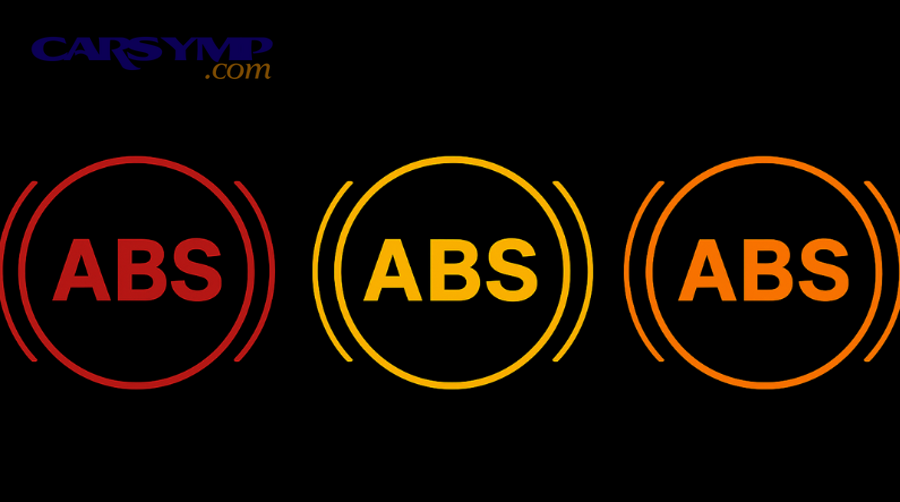
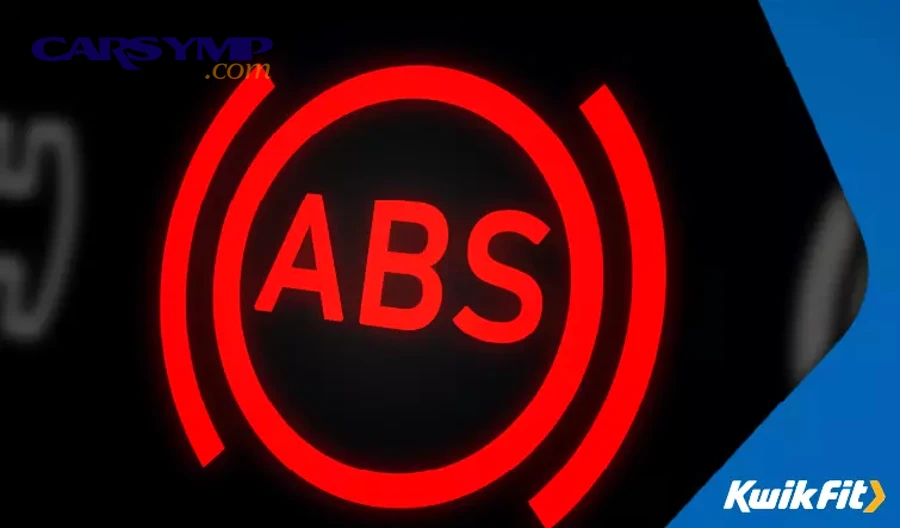
| Brake warning | Red “BRAKE” or ( ! ) in a circle | Hydraulic brakes / parking brake / fluid level | Soft pedal, longer stopping distance, low fluid, parking brake stuck | Confirm parking brake fully released, check brake fluid level, look for leaks | Often higher |
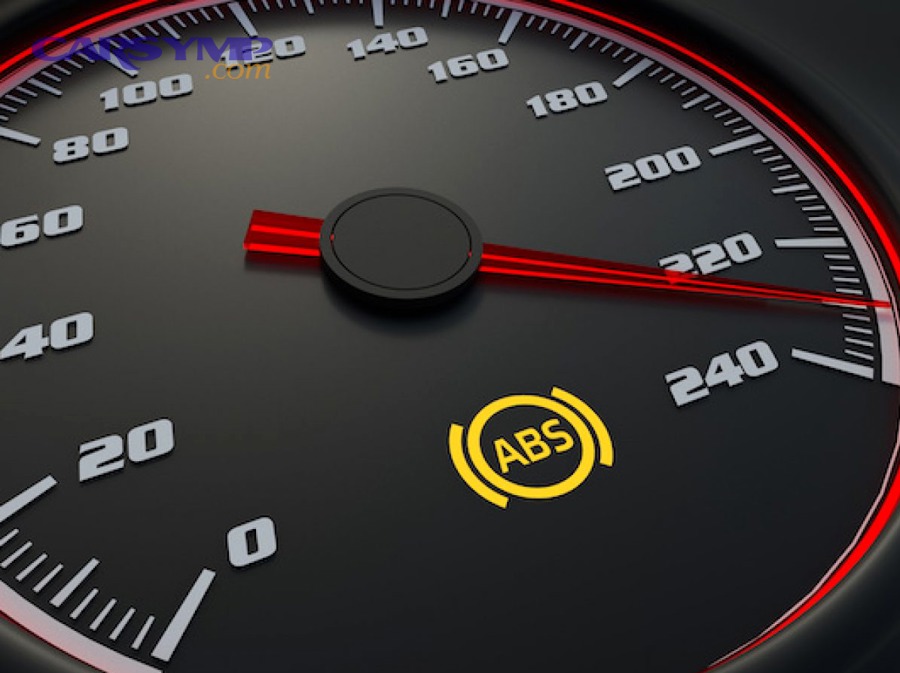
| ABS | Amber “ABS” | Anti-lock module, wheel speed sensing | Normal braking in gentle stops; no ABS pulsing during hard stops | Check battery voltage symptoms, inspect wheel sensor wiring, scan ABS codes | Usually moderate |
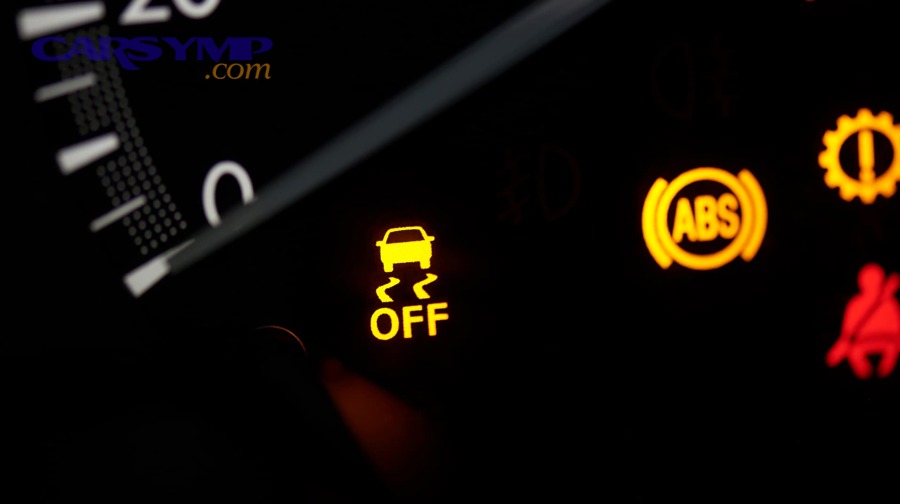
| Both on | Red brake + amber ABS | Braking + stability/traction integration | Warning chimes, disabled traction/stability, odd pedal feel possible | Stop safely, check fluid and leaks first, scan codes before driving far | Often high |
Next, it helps to “think in systems”: the brake warning lamp is the umbrella for the hydraulic circuit and parking-brake status, while ABS is an add-on control layer that needs sensors, wiring, and a module to do its job.

Why two separate lights exist in the first place
They exist because they represent different failure modes: one can indicate a direct threat to stopping ability, and the other can indicate that your braking is still present but loses the anti-lock “assist” that prevents wheel lock under maximum braking.
However, modern vehicles sometimes combine features: traction control and stability control often rely on the ABS network of sensors, so an ABS fault can disable other safety aids even if the pedal still feels normal.
When the “color” matters most
Red typically communicates urgency because it’s associated with primary braking readiness, low fluid, or a parking brake that may be partially applied; amber often communicates a system fault that reduces a function but does not always remove base braking.
In the real world, the best rule is to treat any red brake warning as “stop and verify immediately,” especially if the pedal feel changes or you smell hot brakes.
How dashboard wording can mislead
Some dashboards show “BRAKE,” others show a circle with an exclamation, and some display messages like “Brake System” or “ABS/Brake”; these labels can confuse drivers into thinking the ABS light is “the brake light.”
To avoid that confusion, always identify which icon is lit and whether it is red or amber, then link it to the right system and the right next check.
Which system does each light actually monitor?
The brake warning light usually monitors parking-brake status and hydraulic safety signals like fluid level, while the ABS light monitors sensor feedback, module health, and the electronic control of wheel lock prevention.
To connect those systems to symptoms you can feel, let’s map each light to its core components and what happens when they fail.
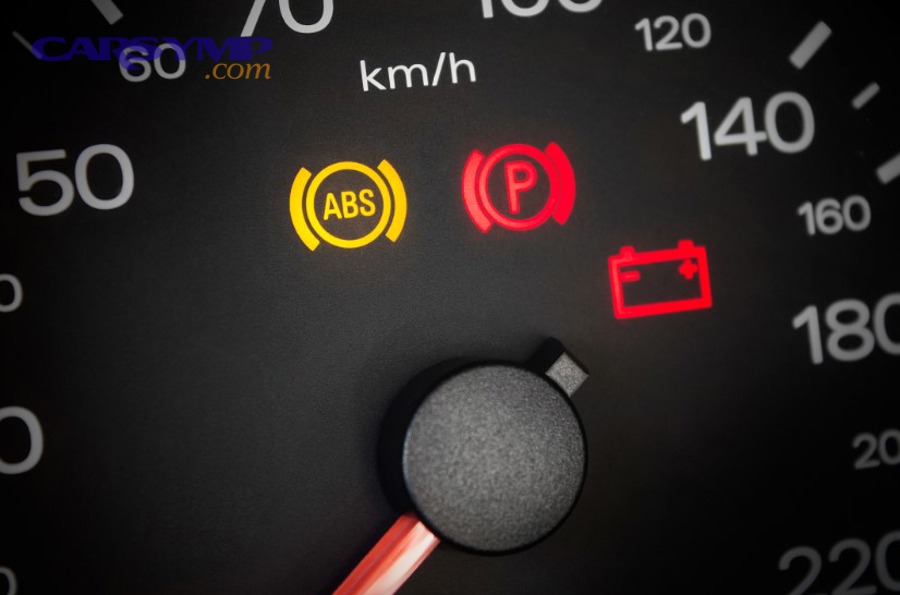
Brake warning: hydraulics, parking brake, and fluid-level safeguards
In many cars, the red brake warning lamp can be triggered by the parking brake switch, a low fluid float switch in the reservoir, or a pressure-differential warning switch in older dual-circuit systems.
That means the lamp may reflect anything from “parking brake is on” to “fluid is low because pads are worn” to “you may have a leak,” so the same icon can range from minor to critical.
ABS: wheel speed sensing and electronic intervention
ABS depends on wheel speed sensors, tone rings/reluctor rings, wiring to the module, and the ABS hydraulic modulator to pulse brake pressure when a wheel is about to lock.
If the module cannot trust sensor data—or if it detects internal faults—it disables ABS and turns on the amber light; base braking generally remains, but lock-up control is reduced or lost.
How stability control ties ABS to other features
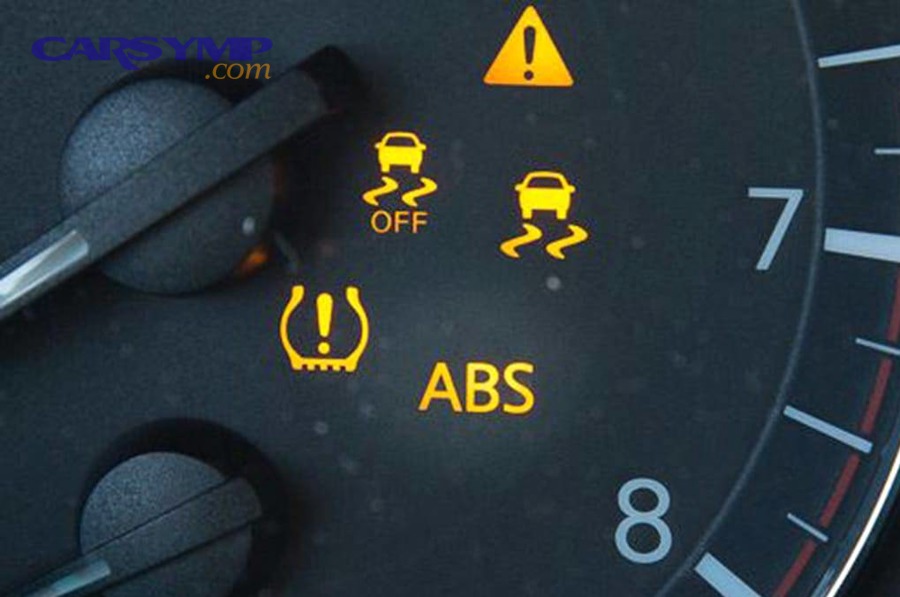
Stability control and traction control often borrow wheel speed data and hydraulic modulation from the ABS system, so an ABS light can also mean those driver aids are turned off.
That’s why you might see additional icons—like a skidding-car symbol—when the ABS network is impaired.
Is it safe to drive with these lights on?
Sometimes you can drive with an ABS light on, but a red brake warning light can mean reduced braking safety, so you should stop and assess fluid, leaks, and pedal feel before deciding to continue.
To keep that decision grounded, use a simple “feel + level + leak” logic before you move the car again.
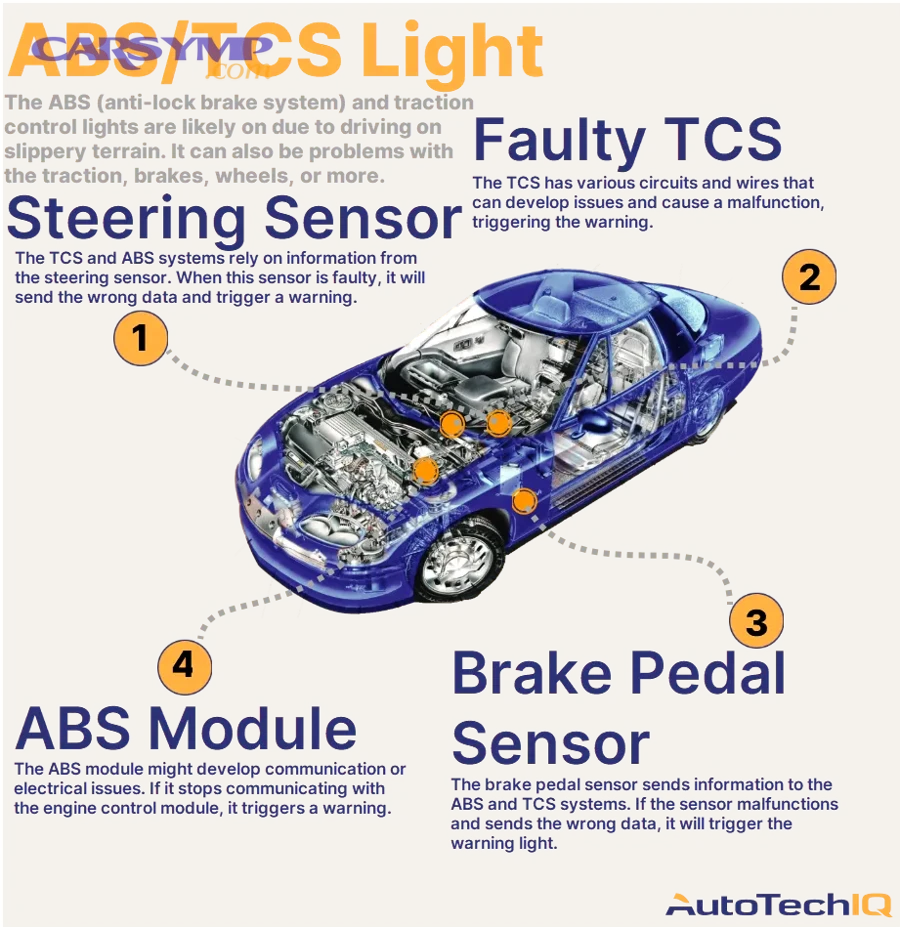
When an ABS light may allow cautious driving
If the amber ABS light is on by itself, the pedal feels normal, and stopping distances in gentle braking feel unchanged, you can often drive carefully to a shop—especially in dry conditions where you’re not relying on emergency ABS stops.
However, you should increase following distance and avoid aggressive braking, because the system may not prevent wheel lock on wet roads or gravel.
When a red brake warning means “stop now”
If the red brake warning lamp is on and you notice a sinking pedal, a spongy pedal, new grinding, or fluid on the ground, treat it as an immediate safety issue and do not continue driving.
Even if the car still stops, a leak can worsen quickly, and a low reservoir can introduce air into the system—making braking unpredictable.
How to phrase the safety question clearly
Many drivers search “Can you drive with brake warning light on” because they want a yes/no answer, but the correct answer depends on symptoms and evidence of hydraulic integrity.
So the safest rule is: amber ABS alone can be “drive carefully to service,” but any red brake warning with abnormal feel or low fluid is “stop and inspect or tow.”
What causes the brake warning light to turn on?
The brake warning light usually turns on due to the parking brake being engaged, low brake fluid, or a fault detected in the brake hydraulic safety circuit—so you should check the simplest mechanical causes first, then confirm fluid and leaks.
Next, we’ll walk through the most common triggers in the same order a technician would prioritize them.
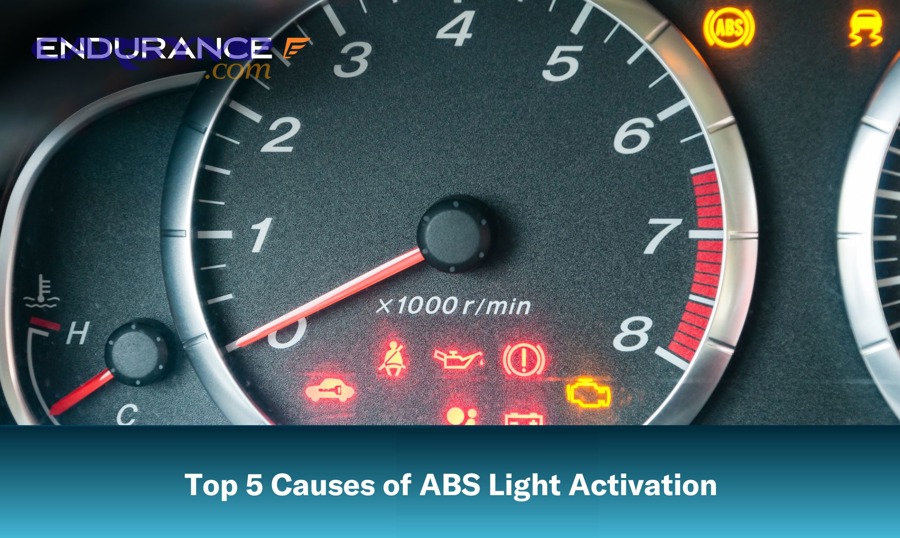
Parking brake partially engaged or switch misadjusted
A partially applied parking brake can keep the light on and can also overheat rear brakes, especially if the cable sticks or the mechanism doesn’t return fully.
Start by fully releasing the parking brake, rocking the pedal/handle through its range, and checking whether the light changes; if the brakes smell hot, stop driving and let them cool.
Low fluid from pad wear or a leak
Brake fluid level can drop as pads wear because the caliper pistons extend farther, storing more fluid in the calipers; this can trigger the reservoir level sensor without any leak at all.
However, a sudden drop—or a wet wheel, wet brake lines, or fluid on the driveway—suggests a leak that must be fixed before safe driving resumes.
In the body of a thorough brake warning light diagnosis, a shop will confirm whether the low level is normal pad wear, a leak, or a master-cylinder/internal seal problem that doesn’t leave obvious puddles.
Hydraulic imbalance or pressure-related warning circuits
Some vehicles use warning logic to detect pressure differences between circuits; if one circuit fails, the system flags a warning even if partial braking remains.
This is one reason the same red lamp can feel “sudden” after a line rupture or caliper leak—because the system senses a safety-critical imbalance.
Sensor, wiring, or cluster message issues
Although less common than real hydraulic causes, wiring faults at the reservoir sensor or parking brake switch can falsely trigger the lamp.
That said, you should treat the warning as real until you prove otherwise, because ignoring a genuine hydraulic issue is far riskier than checking a sensor.
What causes the ABS light to turn on?
The ABS light usually turns on when the module detects unreliable wheel speed data, electrical faults, or internal control errors—so the most common causes are sensors, tone rings, wiring damage, or voltage-related problems.
To narrow the possibilities, start with the parts exposed to road grime and movement, then move inward to electronics.
Wheel speed sensor contamination or failure
Wheel speed sensors live near hubs and axles, where metal shavings, rust, and road debris can interfere with signal quality.
A failing sensor may work intermittently, so the ABS lamp can appear after bumps, rain, or highway heat—then disappear after a restart, which is a classic “intermittent signal” pattern.
Tone ring (reluctor) rust, cracks, or misalignment
Tone rings can crack, swell with rust, or lose teeth, creating erratic speed readings; the module interprets that as wheel slip or sensor error and disables ABS.
Because the tone ring rotates with the wheel or axle, small physical defects can produce repeatable warning behavior at certain speeds.
Wiring, connector, and corrosion issues
ABS wiring flexes with suspension travel and steering angle, so broken strands inside insulation and corroded connectors are common, especially in salted winter climates.
Checking for rubbed-through harness sections and green corrosion in connectors can save hours of guesswork before replacing expensive modules.
Low battery voltage or charging issues
ABS modules are sensitive to voltage; weak batteries or charging problems can trigger fault codes or disable ABS during start-up or heavy electrical loads.
This is why a broader electrical check sometimes matters even when the symptom looks “brake-related.”
How can you tell which light is urgent by the symptoms?
You can judge urgency by pairing the light with pedal feel, braking performance, and smells/leaks: red brake warnings combined with soft pedal, pulling, or fluid loss are urgent, while ABS-only warnings often show up as missing ABS intervention during hard stops.
To make that pairing practical, use a short symptom-to-action map rather than guessing from the icon alone.
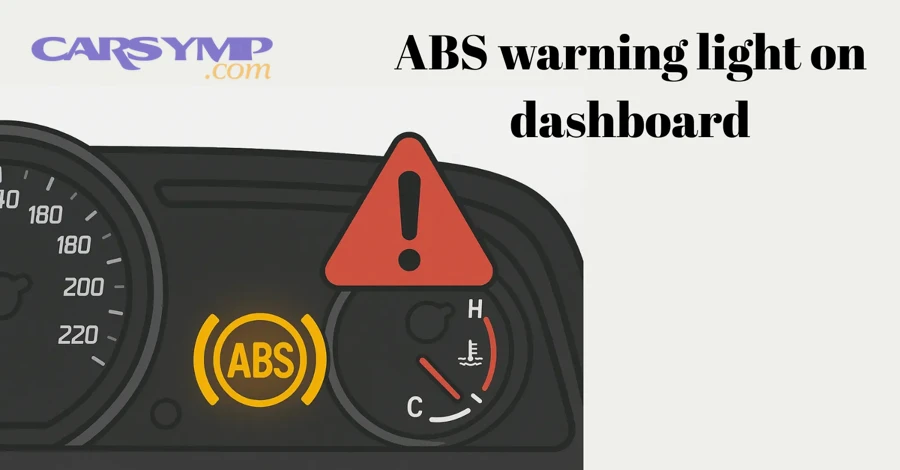
Pedal feel: soft, sinking, or spongy usually points to hydraulics
A soft or sinking pedal suggests air in the system, fluid loss, or internal bypass in the master cylinder, which aligns more with the brake warning lamp than with ABS-only faults.
If the pedal changes suddenly, stop driving, because that’s the “feel” signal that your base braking may be compromised.
Noise and heat: burning smell can mean a parking brake or sticking caliper
Overheated brakes can come from a partially applied parking brake, seized caliper slides, or stuck pads—conditions that can trigger the brake warning lamp and also damage rotors quickly.
Even if ABS is fine, heat is a safety issue; let brakes cool and inspect before proceeding.
Hard-stop behavior: absence of ABS pulsing can confirm ABS disablement
On a safe, empty, low-traction surface (and only if you can do it safely), a firm stop that locks wheels without ABS pulsing can match an ABS light being on.
But remember: you do not need to “prove” ABS failure with risky tests—scanning ABS codes is safer and more accurate.
Combined warnings: multiple icons usually increase urgency
When multiple brake-related warnings appear together—especially red brake plus ABS plus stability control—assume reduced system redundancy until you confirm fluid level and fault codes.
In many vehicles, combined warnings can also place the car in a conservative safety mode that limits driver-assist features.
What quick checks can you do at home before going to a shop?
You can do a quick driveway check by verifying parking brake release, inspecting brake fluid level and leaks, looking for obvious wheel sensor wiring damage, and noting pedal feel—then using that information to decide whether to drive or tow.
To keep those checks safe and structured, follow the checklist below in order and stop if you find evidence of a hydraulic issue.
Step 1: Confirm the parking brake is fully released
Ensure the lever/pedal returns fully, and check whether the light flickers with slight movement; a sticky cable or switch can keep the lamp on even after release.
If you suspect drag, feel for heat near wheels carefully (without touching hot components) and listen for rubbing noises at low speed.
Step 2: Check brake fluid level and look for leaks
With the engine off and the car on level ground, inspect the reservoir level against MIN/MAX markings; if it is below MIN, do not assume it’s “fine.”
Look for wetness at each wheel, behind tires, under the master cylinder area, and along visible brake lines; any wet brake fluid evidence is a strong reason not to drive.
Many “Low brake fluid warning causes” trace back to pad wear, leaks, or recent service errors, so your notes about level, wet spots, and recent repairs are extremely valuable to the technician.
Step 3: Observe pedal feel with the engine on and off
Press the pedal with the engine off to gauge firmness, then start the engine and feel for normal booster operation; a pedal that sinks steadily can signal hydraulic bypass or air.
If the pedal travel suddenly increases, stop further driving and arrange inspection—hydraulic integrity matters more than whether ABS is working.
Step 4: Do a visual ABS sensor/wiring walk-around
Look behind each wheel for damaged sensor wires or unplugged connectors; also note heavy rust near tone rings where applicable.
Even if you can’t confirm the exact fault, you can often spot obvious harness damage caused by road debris or improper routing after suspension work.
Step 5: Record conditions when the light appears
Write down when the light turns on (cold start, after rain, at highway speed, during turns), because pattern recognition helps pinpoint intermittent wheel sensor issues and voltage-related faults.
When you bring this info to a shop, you shorten the path to a correct fix instead of replacing parts by guesswork.
How do professionals diagnose these lights and confirm the root cause?
Professionals diagnose these lights by combining a brake system safety inspection with scan-tool data, confirming fluid level and hydraulic integrity first, then reading ABS fault codes and live wheel speed signals to find the failing sensor, circuit, or module.
To see what “good diagnosis” looks like, follow the typical workflow below so you can recognize thorough work and avoid unnecessary parts swapping.
They prioritize hydraulic safety before electronics
A competent technician checks for leaks, pad thickness, caliper condition, and fluid level before focusing on ABS, because a real hydraulic problem can be dangerous even if ABS codes exist too.
This is also where a careful inspection can reveal uneven wear, seized slides, or heat damage from a dragging parking brake.
They scan both the ABS module and the body/cluster network
ABS faults are stored in the ABS module, not always in the generic engine code list, so a proper scan tool is needed to retrieve specific codes and freeze-frame conditions.
They also check whether the instrument cluster or body module is misreporting a warning due to communication issues.
They verify wheel speed sensor data under real conditions
Live data lets technicians compare wheel speeds and detect dropouts; a sensor that looks “fine” at rest can fail under vibration or steering angle changes.
This method is especially important when the warning is intermittent and resets after a restart.
They match the fix to the failure mode, not the light
A good repair plan follows the evidence: replacing a sensor for a signal dropout, repairing wiring for a continuity fault, cleaning a tone ring area for contamination, or addressing voltage issues if codes indicate low supply.
That evidence-based approach is also the most reliable way to reduce repeat visits and recurring warnings.
What does it mean if both the brake warning light and ABS light come on together?
If both lights come on, you may have a hydraulic risk, a shared power/communication issue, or a fault that disables multiple brake-related features, so you should treat it as higher priority and check fluid and pedal feel immediately.
To understand why “both on” raises concern, it helps to see how modern systems share sensors, power supply, and control logic.
Shared power or voltage problems can cascade across systems
A weak battery, failing alternator, or poor ground can trigger multiple modules to report faults at once, including ABS and brake warnings, especially during start-up.
In that scenario, the correct fix might be electrical rather than mechanical—but you still must confirm the brakes are safe before driving.
Hydraulic issues can also force ABS to disable itself
If the module detects abnormal pressure behavior or system integrity concerns, it may shut down ABS as a protective measure, leaving you with base braking that may already be compromised.
This is why combined lights should prompt an immediate “fluid and leak check” first.
Stability/traction control may be disabled too
Many vehicles rely on ABS hardware to apply individual brakes for stability control, so when ABS faults appear, stability features often switch off for safety and consistency.
That can increase risk in wet or icy conditions, even if the car still stops normally in gentle braking.
Driver decision rule for “both on”
If the red brake lamp is on, treat the situation as urgent until proven otherwise; if the pedal feel changes or fluid is low, do not drive.
If fluid is normal and pedal feel is normal, you may be able to move the car slowly to a safer location—but you should still arrange a scan and inspection as soon as possible.
Contextual Border: From here, we move beyond “what the lights mean” into prevention, long-term reliability habits, and how to reduce repeat warnings through maintenance choices and smarter service communication.
How can you prevent repeat brake and ABS warnings over time?
You can prevent repeat warnings by keeping brake fluid at the correct level and condition, maintaining clean sensor environments at wheels, protecting wiring from damage, and addressing battery/charging weakness early so the ABS module always gets stable voltage.
To turn that into practical habits, use the four focus areas below as your long-term maintenance map.
Maintain fluid level and fluid condition without masking real problems
Brake fluid should not be treated like “top-off and forget”: if the level is low, you should ask why—pad wear, a leak, or recent service issues—before adding fluid.
Also, old fluid can absorb moisture and reduce performance under heat; scheduled fluid service helps protect calipers, ABS valves, and internal seals from corrosion.
In a “Car Symptoms” style mindset, consider the warning light a symptom and the fluid condition a clue—your goal is to solve the cause, not just silence the indicator.
Protect wheel speed sensors and tone rings from contamination and physical damage
When you do tire rotations or brake service, ask for a quick visual check of sensor wires and connectors; small harness clips and routing issues can prevent future rubbing and breakage.
In regions with road salt, cleaning heavy rust buildup around hubs and tone rings can reduce signal problems that lead to intermittent ABS warnings.
Keep battery and charging health strong for stable module operation
ABS modules and stability control systems depend on clean, stable voltage; weak batteries can cause false faults or repeated start-up warnings.
If you notice slow cranking, dim headlights, or frequent electrical glitches alongside ABS warnings, include charging system testing in your repair plan.
FAQ: common questions drivers ask about brake and ABS lights
Q: If ABS is off, do I still have brakes?
A: Usually yes—base hydraulic brakes still work—but you lose anti-lock control in hard stops, so increase following distance and get the fault diagnosed soon.
Q: Should I add brake fluid if the brake light is on?
A: Add fluid only after you check for leaks and confirm pad wear; low fluid can be a warning sign, and topping off can hide a leak if you don’t inspect first.
Q: Why did the light come on right after brake work?
A: Common causes include a sensor wire pulled during service, a reservoir level sensor triggered by pad compression changes, or a parking brake switch misadjustment—ask for a re-check with scan data.
Q: What should I say to the shop to avoid guesswork?
A: Share when the light appears, weather/speed patterns, pedal feel changes, and whether both lights are on; request ABS module code readout and a basic hydraulic inspection before parts replacement.
Finally, if you ever see a red brake warning with abnormal pedal feel, visible leaks, or strong burning smells, prioritize safety over convenience—because brakes are the one system you can’t “wait and see” on.