


Low refrigerant and a failing A/C compressor can both produce “not cold” cabin air, but they usually leave different clues in vent temperature stability, clutch behavior, and pressure patterns across the system.
To narrow it down quickly, you’ll compare what you can feel and measure—vent outlet temperature, compressor engagement, line temperatures, and (if available) gauge readings—rather than guessing from a single symptom.
You’ll also learn how to avoid common misreads, like assuming warm air always means “needs refrigerant,” or blaming the compressor when airflow or heat rejection is the real bottleneck.
Tiếp theo, we’ll map the fastest symptom checks first, then move into gauge-and-thermometer confirmation so each step naturally validates the one before it.
What symptoms most reliably separate low refrigerant from a compressor problem?
In most cases, low refrigerant shows up as inconsistent cooling that changes with engine RPM and driving speed, while compressor issues more often show cooling that stays weak even when conditions should help (high RPM, highway airflow, and proper fan operation).
To start the right way, focus on the “shape” of the symptom over time—how it behaves during idle, revs, and a 10–15 minute drive—because that pattern is harder to fake than a single vent temperature reading.
Does the air feel cold at first, then fade to lukewarm?
Yes—when cooling starts strong and then fades, low refrigerant is a frequent suspect because the evaporator may initially cool but cannot maintain stable heat absorption as the charge drops and superheat rises.
However, this is not a slam dunk; Ngược lại, a compressor with worn internals can also cool “a little” early on, then lose pumping efficiency as head pressure climbs and slip increases under load.
- Low refrigerant tendency: brief cool bursts, then longer warm stretches, often worse at idle and in traffic.
- Compressor tendency: consistently underwhelming cooling across conditions, sometimes accompanied by noise, vibration, or abnormal cycling.
Do you get cold air while driving but warm air at idle?
Often yes—if cooling improves at speed, it points toward a system that benefits from extra airflow and lower underhood temperatures, which can align with low refrigerant or marginal heat rejection rather than a “dead” compressor.
To connect the dots, remember that higher road speed increases condenser airflow and can lower high-side pressure, so a borderline system might “recover” on the highway; Cụ thể, that recovery is less common with a mechanically weak compressor that cannot build adequate pressure ratio under any condition.
Is the compressor clutch engaging, then rapidly clicking on and off?
Yes—rapid cycling can indicate low refrigerant when the low-pressure protection switch repeatedly opens as suction pressure drops, but it can also occur with electrical control faults and heat-related cutoffs.
So the transition is simple: if you confirm the clutch is being commanded normally but pressure collapses quickly, low charge rises on the list; Trong khi đó, if clutch control is erratic or absent, a compressor may be fine but never truly “allowed” to run.
How can vent temperature and time behavior point to the root cause?
You can separate many cases by tracking vent temperature stability over 10 minutes: low refrigerant typically produces swings and slow drift, while compressor inefficiency often produces a stubbornly “meh” temperature that barely responds to conditions.
To make that judgment fairly, use one consistent setup—recirculation on, blower mid-speed, doors closed—then repeat at idle and at 1,500–2,000 RPM; Để hiểu rõ hơn, the key is not the absolute number but how quickly and how smoothly it changes.
What does a “cold-then-warm” vent curve usually mean?
It usually means the evaporator starts out doing real work, but the system can’t sustain the refrigerant mass flow needed to keep evaporator saturation temperature low—this is a classic low refrigerant signature.
Next, connect this to what your hand feels under the hood: low charge often makes the suction line only mildly cool and may reduce sweating/condensation over time; Ngược lại, a compressor issue may leave both lines closer to ambient because the pressure difference is weak.
What does “never really cold” despite correct settings suggest?
When vent air never approaches “crisp cold,” even after several minutes, it can suggest weak compression, a stuck open control valve in variable-displacement designs, or internal leakage that prevents a strong pressure differential.
But the chain continues: before you condemn the compressor, verify airflow volume and condenser heat rejection because both can keep vents warm even with a good compressor; Bên cạnh đó, unstable engine idle or belt slip can reduce compressor speed and mimic weakness.
How do humidity and outside temperature change what “normal” feels like?
Hot, humid weather makes any weakness more obvious, because the system must remove both sensible heat and moisture; low refrigerant often struggles to dehumidify steadily, creating clammy air even if it feels “somewhat cool.”
To keep your logic consistent, compare behavior on two different days or at two different times (morning vs afternoon); Hơn nữa, if the system is dramatically better when it’s cooler outside, that leans toward marginal capacity rather than a total compressor failure.
What do gauge pressures and line temperatures reveal about each scenario?
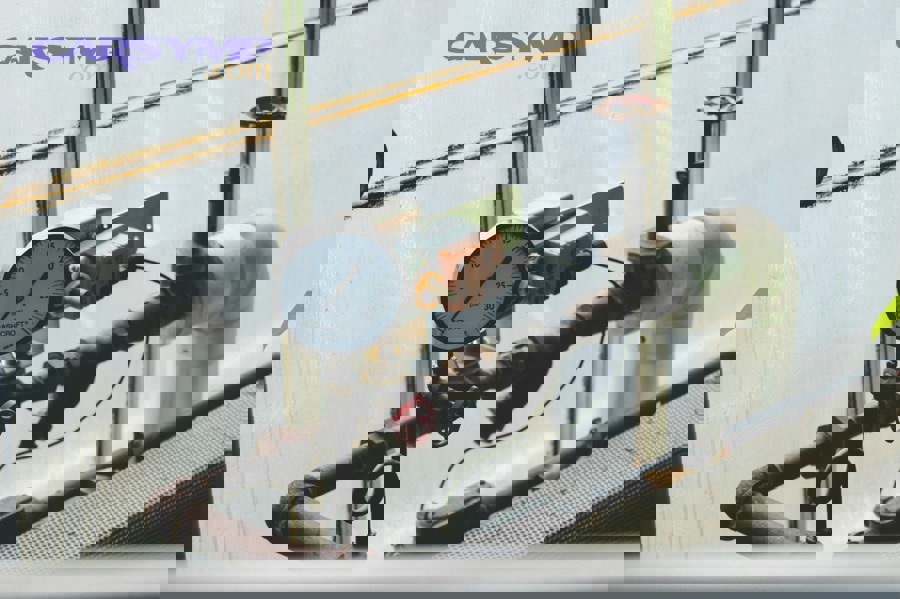
With manifold gauges and a thermometer, you can separate low charge from weak compression by checking whether the system builds a healthy low-side suction and high-side discharge split under stable conditions.
To do it safely, connect to the correct service ports, keep hands clear of belts/fans, and read pressures with the A/C stabilized for several minutes; Dưới đây is the pattern logic that matters more than any single PSI value.
What pressure pattern is common with low refrigerant?
Low refrigerant commonly shows low suction pressure and often lower-than-expected high-side pressure, because the system simply doesn’t have enough mass flow to move heat effectively through the condenser.
To extend this, you may also see high superheat (evaporator starved) and minimal subcooling; Cụ thể hơn, the suction line near the firewall may be cool but not robustly cold, and may stop sweating.
What pressure pattern is common with a weak compressor?
A weak compressor can show higher-than-expected suction pressure paired with lower-than-expected discharge pressure, because internal leakage and reduced pumping lower the pressure ratio the compressor can maintain.
Then the “móc xích” is straightforward: if the clutch is engaged and the compressor is spinning, yet the gauges barely separate from static equilibrium, suspect the compressor or its displacement control; Ngược lại, if suction dives hard, suspect starvation/charge issues.
How do line temperature “feels” support the gauge reading?
Line temperatures are a quick reality check: in a healthy system, the discharge line leaving the compressor should be hot, and the liquid line after the condenser should feel warm-to-hot depending on conditions.
So if discharge never gets convincingly hot while the clutch stays engaged, that supports a weak-compression theory; Trong khi đó, if discharge is very hot but cooling is poor, you may be looking at airflow/heat rejection or restriction rather than low charge alone.
This table helps you translate symptoms into likely causes and next steps before you spend money on parts.
| Scenario | Vent behavior | Clutch/cycling | Low-side trend | High-side trend | Under-hood feel | Best next step |
|---|---|---|---|---|---|---|
| Low refrigerant | Cold bursts, fades; worse at idle | May short-cycle | Lower than expected | Often lower than expected | Suction mildly cool; little sweating | Leak check + correct charge by weight |
| Weak compressor | Never truly cold | May run steady or cut out on protection | Higher than expected | Lower than expected | Discharge not very hot | Confirm command/controls, then compressor performance test |
| Heat rejection problem | Okay at speed, bad in traffic | Often steady | Can rise | Can spike high | Discharge very hot; condenser very hot | Verify fan operation, condenser condition, airflow path |
| Airflow across evaporator problem | Feels weak and uneven | Can cycle due to icing | May drop toward icing conditions | Varies | Evap line may get too cold/ice | Check cabin filter, blower performance, ice signs |
How can you diagnose safely at home without mischarging the system?
You can diagnose safely at home by using observation + temperature tracking + basic electrical checks before adding any refrigerant, because adding refrigerant blindly can turn a simple fault into a costly one.
To begin, aim for “proof before action”: prove the compressor is commanded, prove airflow is strong, prove temperatures respond logically, then decide whether gauges or a shop evacuation is the next step.
Step 1: Confirm basic operating conditions in 2 minutes
Start with the simplest truth tests: engine warmed up, A/C on max cool, recirculation on, windows up, blower mid-high, and watch whether engine load changes when A/C is switched on.
Then follow the chain: if the idle bumps slightly and you hear/see the clutch engage, you know the system is at least trying; Tiếp theo, you’ll decide whether it’s moving heat effectively or just spinning.
- Watch the compressor clutch face: does it pull in and spin with the pulley?
- Listen for abnormal squeal, grind, or rapid clicking.
- Check if radiator/condenser airflow increases when A/C is requested.
Step 2: Record vent temperature and stability
Place a thermometer in the center vent and record temperature at minute 1, 3, 5, and 10; you’re looking for the trend line and stability, not perfection.
Next, repeat at 1,500–2,000 RPM for one minute; Cụ thể, a system that improves dramatically with RPM may be charge-marginal or airflow-limited rather than purely “dead compressor.”
Step 3: If you use gauges, read patterns—not single numbers
When you attach manifold gauges, let the system stabilize; a single glance is not enough because pressures swing with fan cycling, engine RPM, and thermostat control.
So your best move is to observe: do pressures separate and hold, or do they collapse, spike, or equalize quickly; Đặc biệt, equalized pressures with the clutch engaged strongly suggest a pumping problem or a control/displacement issue.
When does clutch engagement and electrical control point away from “bad compressor”?
Electrical control can mimic compressor failure because the compressor may be mechanically fine but not being allowed to run due to pressure switches, sensors, relays, or control logic.
To keep the flow tight, treat “compressor issue” as two buckets—mechanical pumping weakness versus command/engagement failure—because each bucket has different evidence trails.
If the clutch never engages, what does that usually mean?
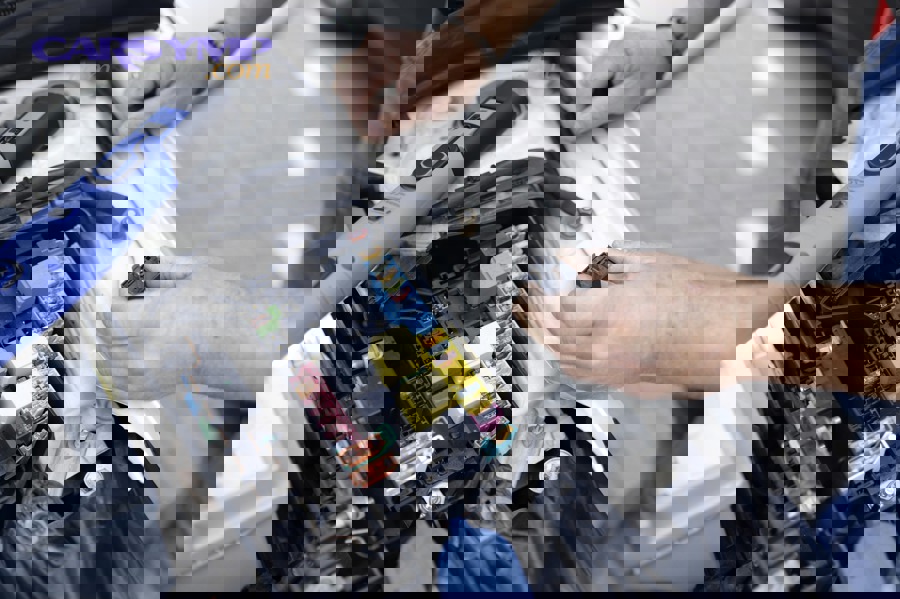
If the clutch never engages, it often means the system is protecting itself (low pressure, high pressure, overheat) or a control problem is preventing engagement (relay, fuse, wiring, sensor command).
Next, verify the simplest causes first: fuses, relay swap with a known-good identical relay, and visible connector condition; Cụ thể hơn, a low-pressure cutoff due to low charge is common, but you shouldn’t “force” the system on without confirming why it’s off.
If the clutch engages but cooling is weak, what should you check next?
If the clutch engages consistently, you’ve narrowed the field to heat transfer, charge state, restriction, or compressor pumping strength rather than a pure “no engagement” fault.
Then the bridge is gauge-and-thermal evidence: a healthy compressor should build a clear pressure split and create a hot discharge line; Ngược lại, minimal pressure split with the clutch engaged suggests internal leakage or displacement control failure.
How do variable-displacement compressors complicate the symptom picture?
Variable-displacement compressors may spin normally yet deliver low pumping if the control valve sticks or the unit stays at minimum displacement, producing “looks engaged but not cold” confusion.
So the transition is: don’t trust engagement alone; trust what the system does with heat—pressure ratio, line temperatures, and vent behavior over time; Quan trọng hơn, diagnosis may require scan tool data or professional testing in some platforms.
What risks come from running low refrigerant versus running with a failing compressor?
Low refrigerant risks poor lubrication and overheating, while a failing compressor risks debris contamination and system-wide damage that can spread to the condenser, expansion device, and receiver/drier.
To connect these risks to your decision, think in “damage pathways”: low charge can starve oil return, and compressor wear can seed metal into the loop; Hơn nữa, the wrong repair order can multiply costs.
Why can low refrigerant harm the compressor even if it “still cools a bit”?
Even when some cooling remains, low refrigerant can reduce oil circulation and raise discharge temperatures, increasing wear over time—especially in hot weather and stop-and-go driving.
So the practical rule is: if your A/C is clearly underperforming and you suspect low charge, avoid long “test drives” while forcing max A/C; Để hiểu rõ hơn, short diagnostic windows are safer than repeated long runs.
What are warning signs that compressor wear is spreading contamination?
Warning signs include grinding noises, repeated clutch failure, sudden loss of performance after noise events, and evidence of dark or glittery residue during service (professional inspection).
Next comes the cost logic: once debris is in the system, a simple recharge rarely lasts; Trong khi đó, many repairs require flushing compatible components and replacing debris-trapping parts depending on system design.
What does research say about performance loss from fault combinations?
The real world often involves stacked faults, and that’s why a single symptom can mislead; multiple small issues can hide within “safe” operation yet still slash performance.
The supporting evidence is clear: “Theo nghiên cứu của nhóm tác giả Hu và cộng sự từ phòng thí nghiệm thử nghiệm hệ thống nhiệt lạnh, vào 2021, các tổ hợp lỗi bao gồm thiếu hoặc thừa môi chất có thể làm giảm COP lên tới 34% ngay cả khi hệ thống vẫn hoạt động trong giới hạn an toàn.”
What quick checks reduce false diagnoses before you pay for parts?
You can reduce false diagnoses by verifying airflow volume, heat rejection capacity, and system command logic before you label it “low refrigerant” or “bad compressor.”
To keep the flow logical, treat this as a filter: if airflow is weak, fix airflow first; if condenser heat rejection is compromised, fix that before judging compressor performance; Sau đây are the high-value checks that catch the most common “look-alike” failures.
Is cabin airflow strong and consistent at all fan speeds?
Strong airflow matters because weak airflow can make vent air feel warmer and can prevent the evaporator from exchanging heat properly, confusing your interpretation of refrigerant and compressor health.
Then the bridge: if airflow is weak, your vent temperature test is no longer a clean indicator; Cụ thể, you should restore airflow first (filter, blower, obstructions) before reading deeper system signals.
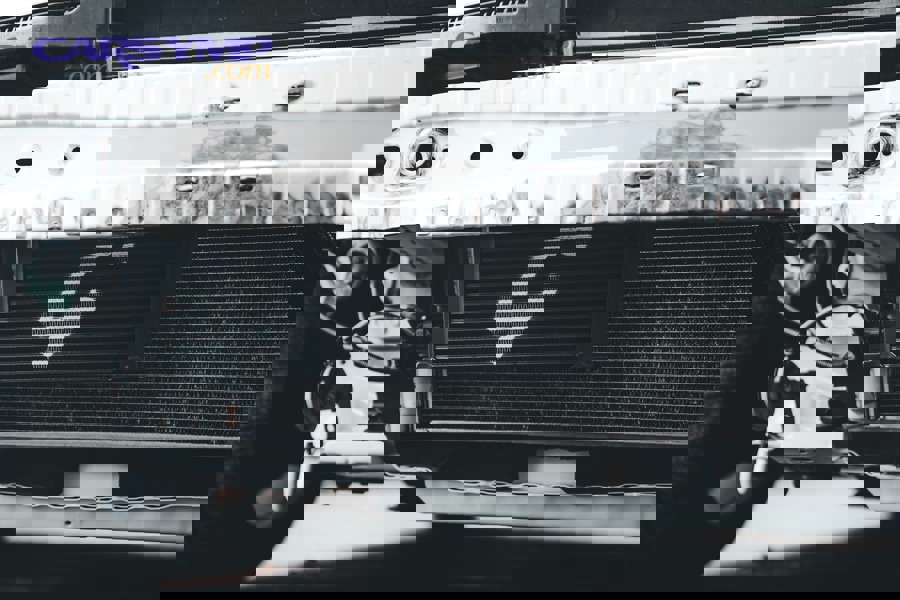
Is the condenser face clean and unobstructed?
A blocked condenser face can raise head pressure, reduce cooling, and cause cycling, especially at idle; this can mimic both low charge and compressor inefficiency depending on how the protection logic reacts.
Next, confirm the simple physical reality: debris, bent fins, and blocked airflow paths can change everything; Hãy cùng khám phá how fan operation ties into this in the next check.
Does heat rejection collapse mainly at idle and recover at speed?
If the symptom is strongly speed-dependent, it points to airflow and heat rejection sensitivity—often a better match for condenser-side problems than a purely weak compressor.
And here’s a useful anchor: “Theo nghiên cứu của Đại học Guanajuato từ khoa cơ khí, vào November 2024, tình trạng thừa môi chất trong chu trình nén hơi làm tăng áp suất xả và thời gian vận hành, kéo theo mức tiêu thụ năng lượng cao hơn trong điều kiện thử nghiệm.”
Contextual checks that often mimic low charge or weak compression
These checks sit at the contextual border because they can produce similar “warm vent” complaints while living outside the simple low-charge-versus-compressor frame; Ngoài ra, they are the reasons many people replace the wrong part first.
How can airflow direction and cabin temperature mixing mislead you?
Cabin temperature can be warm even with a cold evaporator if the air is being mixed with heated air inside the HVAC box; that’s why the phrase Blend door actuator problem signs matters in real diagnostics even when the refrigerant circuit is healthy.
To validate this, compare driver and passenger vent temps (if dual-zone) and test heat-to-cool transitions; Cụ thể, a stuck or slipping door can cause one side to blow warmer than the other.
How can an incorrect charge amount create confusing symptoms?
Too much refrigerant can raise head pressure, strain the compressor, and reduce cooling under certain conditions; in practice, Overcharged AC symptoms and fix often begins with recognizing high-pressure stress patterns rather than adding more refrigerant.
So the transition is simple: if your system was recently topped off with a can and cooling got worse, consider charge accuracy and professional recovery/recharge by weight; Ngược lại, adding more will not “push it colder.”
How can a cooling fan issue imitate “needs refrigerant”?
When condenser airflow is insufficient at idle, head pressure can climb and cooling can collapse, creating a complaint that sounds like low charge; that’s why Condenser fan not running diagnosis is a critical contextual checkpoint.
To test the logic, watch fan behavior when A/C is requested, and compare idle vs highway performance; Đặc biệt, a fan issue can make the system look fine in motion yet fail in traffic.
What should you do when the symptom is simply “not cold” but evidence conflicts?
If your evidence conflicts—good airflow, clutch engaged, but unstable cooling—pause before parts swapping and run a structured confirmation step such as a professional evacuation-and-recharge with leak check, because it establishes a known baseline.
In that context, the phrase AC not cold fix should mean “restore a verified baseline” rather than “add a can,” since the baseline is what lets you judge compressor and controls honestly; Tóm lại, diagnosis improves when you remove uncertainty from charge and airflow.
Frequently asked questions
This FAQ consolidates the most common decision points so you can act confidently without skipping the evidence trail.
Can low refrigerant still produce cold air sometimes?
Yes—low refrigerant can still produce intermittent cold air, especially at higher RPM or cooler ambient conditions, but the cooling often fades, cycles, or becomes inconsistent as the system struggles to maintain stable evaporator conditions.
Does a noisy compressor always mean it’s failing?
No—some noises come from belts, pulleys, or mounting issues, but grinding, squealing under load, or repeated clutch distress combined with weak cooling increases the likelihood of internal compressor problems.
Should you add refrigerant if you suspect low charge?
Only after you have evidence and ideally after a leak check, because adding refrigerant without knowing the true charge can push the system into an incorrect state and complicate the symptom picture.
What’s the safest “next step” if you’re stuck between two diagnoses?
The safest next step is a professional recovery/evacuation, leak test, and recharge by specified weight, because it removes uncertainty about charge level and lets you judge whether the compressor and controls can perform under a known-correct baseline.