


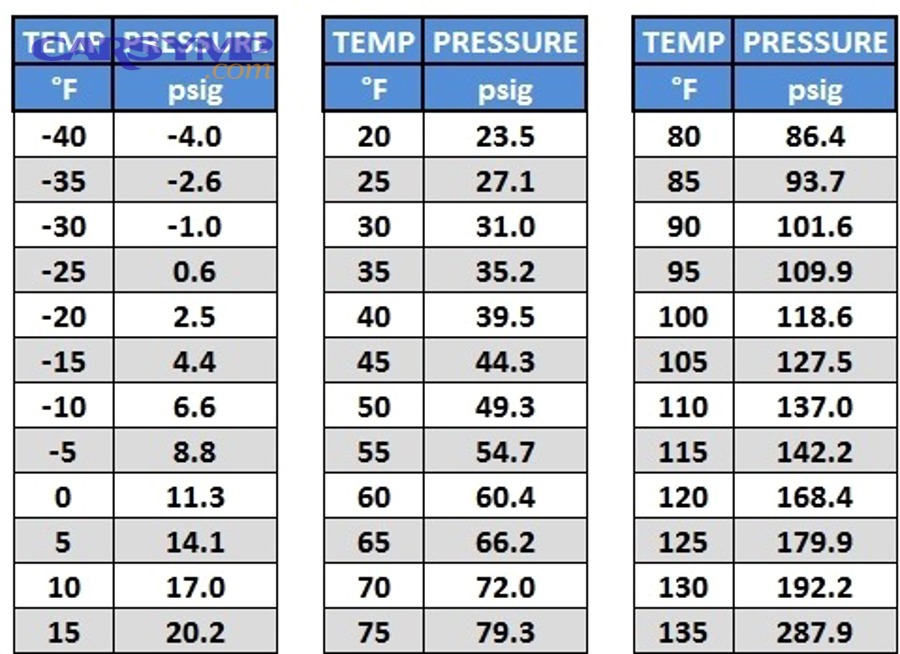
An AC pressure chart by ambient temp is a fast diagnostic reference that helps you decide whether your system pressures look reasonable for the outdoor temperature, or whether they are pointing toward an undercharge, restriction, airflow problem, or compressor control issue.
Beyond “numbers on gauges,” you’ll learn how to take readings in a repeatable way so your chart comparisons actually mean something, including when to read static pressure versus running pressure and how fan speed and heat load shift the results.
You’ll also see how pressure patterns typically differ when you’re chasing cooling complaints and performance problems, and how pressure charts connect to what you feel at the vents and observe under the hood.
To connect everything into a practical workflow, Giới thiệu ý mới: we’ll start with what the chart truly represents, then build toward a step-by-step method, interpretation patterns, and a clear line for when hands-on work should stop and a professional diagnosis should begin.
What does an AC pressure chart by ambient temperature actually tell you?
It tells you whether your gauge pressures are broadly consistent with the refrigerant’s behavior at a given outdoor temperature, helping you spot “in-family” readings versus pressures that strongly suggest a fault.
To connect that idea to real measurements, Tiếp theo we need to separate two concepts: the refrigerant’s saturation pressure (thermodynamics) and the system’s operating pressures (thermodynamics + hardware + heat load).
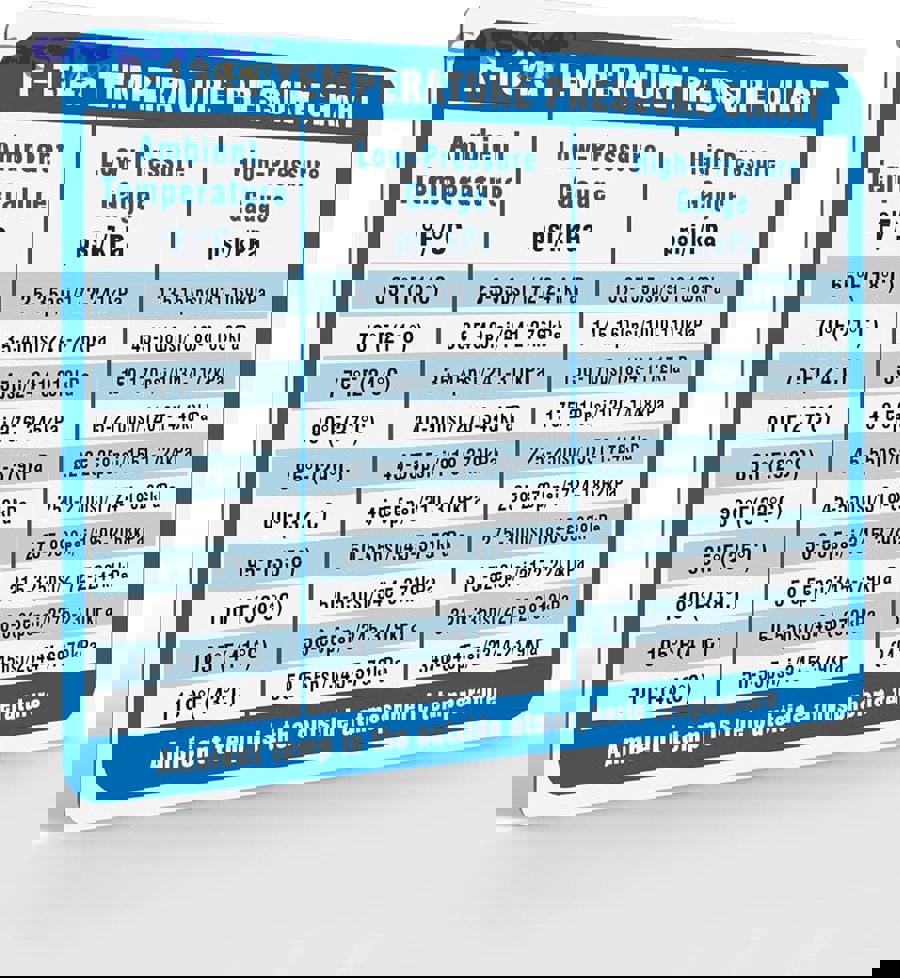
Why charts “work”: At a given temperature, a refrigerant has a predictable saturation pressure. When the system is stabilized and under a similar heat load, low-side and high-side pressures usually fall into ranges that experienced technicians recognize as “normal-ish” for that ambient condition.
Why charts can mislead: Two identical cars on the same 85°F day can show different high-side numbers if one has a partially blocked condenser, weak radiator fan, overcharge, or high humidity heat load, even though the ambient temperature is identical.
What a good chart does: It gives you a starting window—a range, not a single magic PSI—and it encourages you to confirm readings with airflow, vent temperature, and component behavior before you decide what to repair.
According to research by ASHRAE from the ASHRAE Handbook—Fundamentals, in 2021, the saturation pressure of common automotive refrigerants rises predictably with temperature, which is why ambient temperature is a valid anchor for baseline pressure expectations.
What are typical low-side and high-side pressure ranges by ambient temperature?
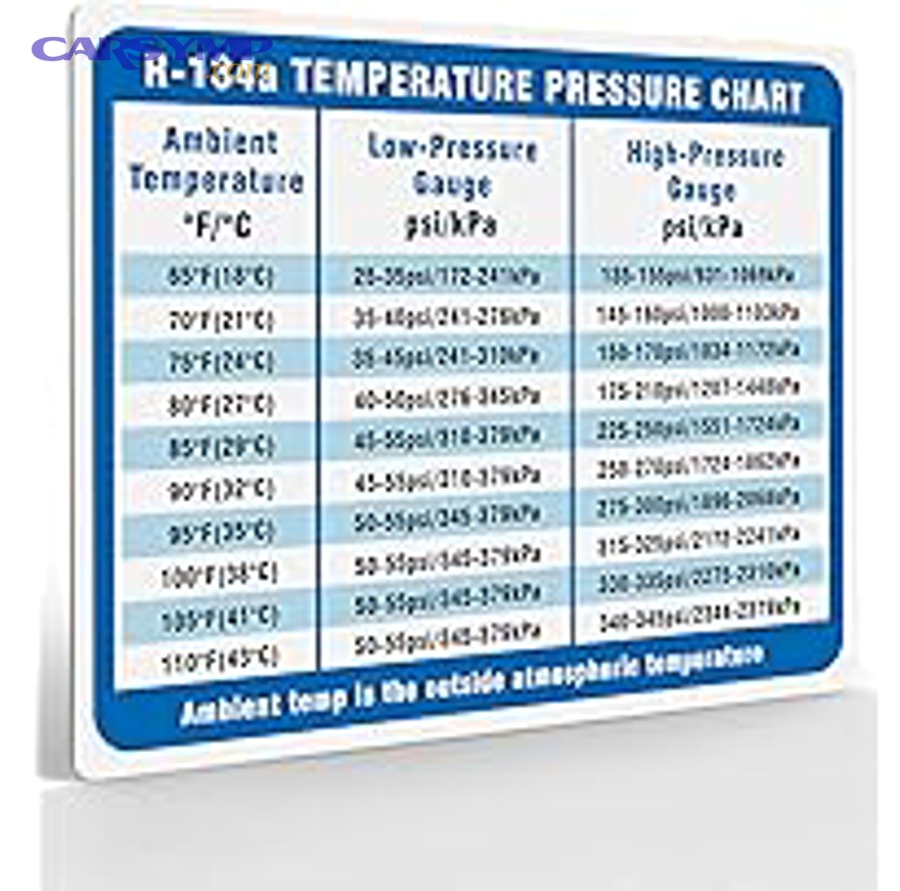
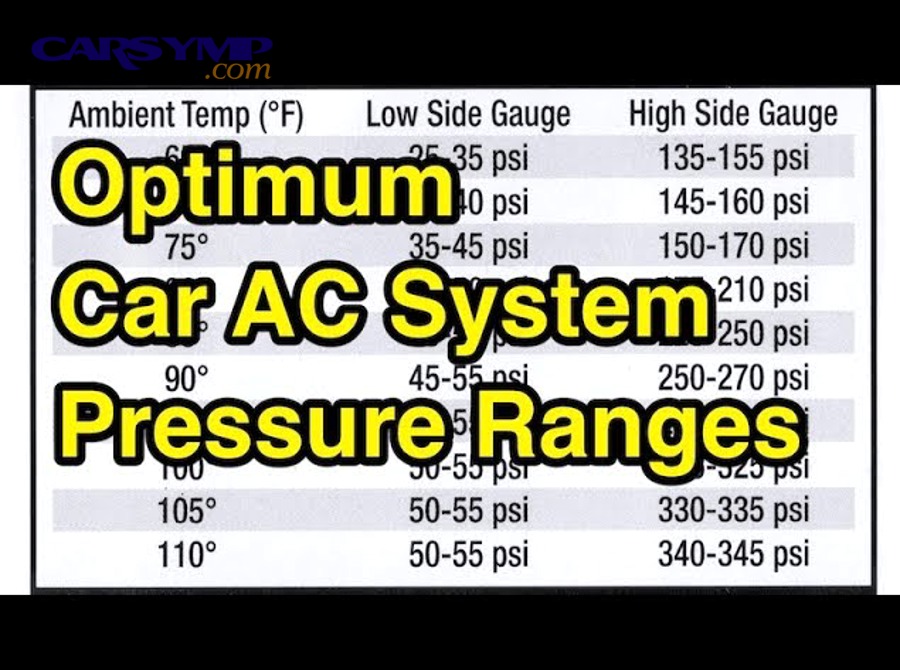
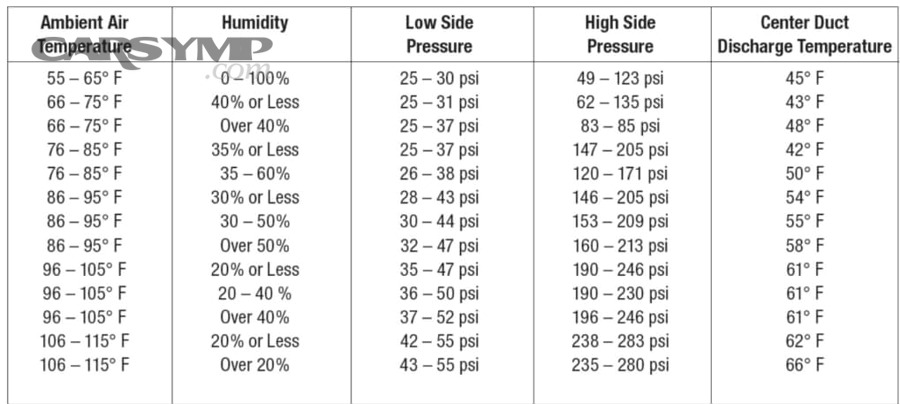
Typical ranges depend on refrigerant type, condenser airflow, and expansion device, but you can use an ambient-based chart to set a baseline window for low-side and high-side readings once the system stabilizes.
To make the ranges useful in practice, Dưới đây is a table that pairs ambient temperature with commonly observed operating ranges in many passenger vehicles under a standardized test setup.
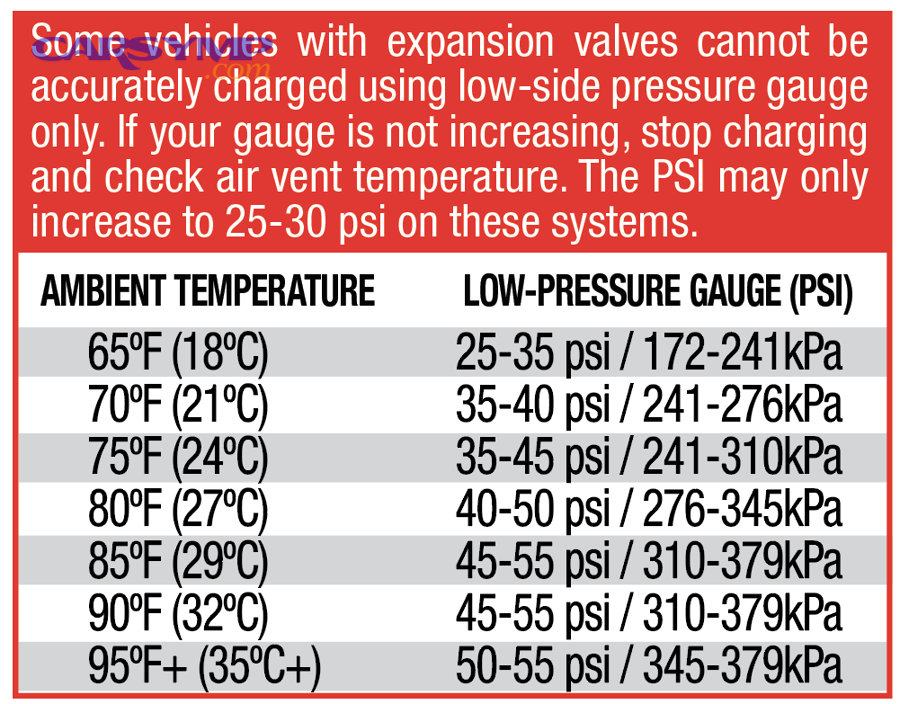
Before you use the table, assume a repeatable setup: engine fully warm, blower on high, A/C on max, recirculation on, doors open (or windows down), and the vehicle stationary with strong fan airflow through the condenser.
This table contains typical operating pressure ranges (not static pressures) by ambient temperature, helping you quickly categorize readings as “in-range,” “low,” “high,” or “split” patterns that need interpretation.
| Ambient Temp | R-134a Low Side (psi) | R-134a High Side (psi) | R-1234yf Low Side (psi) | R-1234yf High Side (psi) | Common Vent Temp Goal (°F) |
|---|---|---|---|---|---|
| 70°F (21°C) | 25–35 | 140–190 | 25–35 | 150–210 | 40–55 |
| 80°F (27°C) | 25–40 | 170–240 | 25–40 | 190–260 | 40–55 |
| 90°F (32°C) | 30–45 | 210–300 | 30–45 | 230–330 | 42–60 |
| 100°F (38°C) | 35–50 | 250–350 | 35–50 | 270–380 | 45–65 |
| 110°F (43°C) | 40–55 | 290–400 | 40–55 | 310–430 | 48–70 |
How to read this: If your high side is far above the range at a given ambient temperature, suspect condenser airflow problems, overcharge, non-condensables, or restrictions. If both sides are low, suspect undercharge or a compressor not pumping.
Why ranges overlap: Different cars use different compressor controls (fixed displacement vs variable), different condenser sizes, and different fan strategies; they can all be “healthy” while sitting in different corners of the range.
According to research by SAE International from its mobile air conditioning technical literature, in 06/2018, operating pressures in automotive A/C systems can vary widely by design and control strategy, which is why practical charts are expressed as ranges rather than single-point targets.
How do you take pressure readings so the chart comparison is valid?
Use a consistent procedure: verify airflow, stabilize engine speed, set cabin controls the same way each time, and wait for pressures to level off before comparing to an ambient-based chart.
To avoid “false problems,” Để bắt đầu treat pressure reading as a repeatable test, not a quick glance at needles.
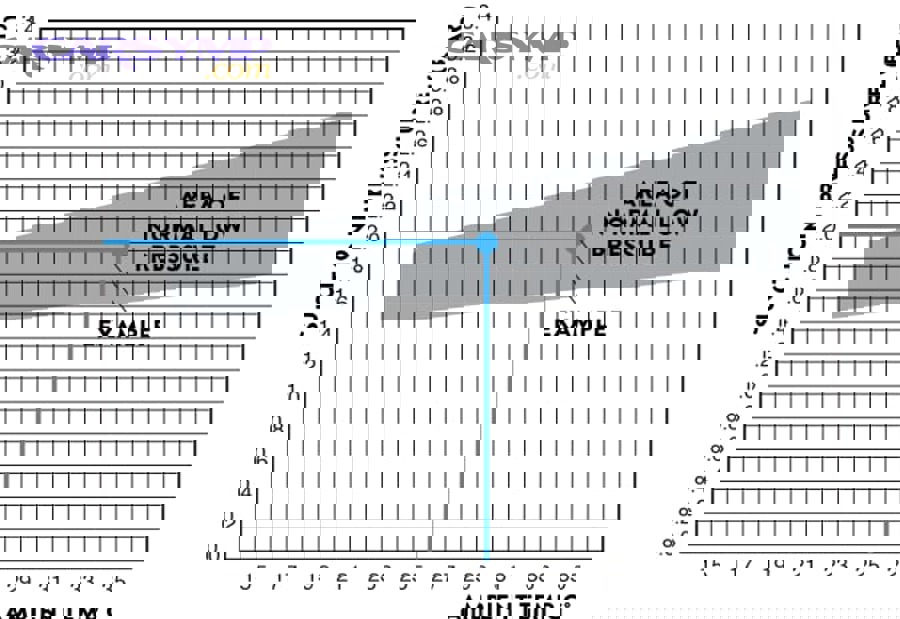
Step 1: Standardize the HVAC settings and heat load
Set A/C to max, blower high, recirc on, temperature full cold, and keep doors open so the evaporator sees a steady warm-air load.
To keep the test stable, Cụ thể avoid measuring right after a cold start or immediately after a highway blast where under-hood airflow is unusually strong.
Heat load matters: humidity, sun load, and cabin temperature can push high-side pressure upward while the system tries to move more heat. That’s normal—until it goes beyond what your ambient range suggests.
Step 2: Confirm condenser airflow and fan operation
Verify radiator/condenser fans run when the A/C is commanded on, and ensure the condenser face is not blocked by debris or bent fins.
To bridge pressure readings with airflow reality, Tiếp theo remember that high-side pressure is extremely sensitive to condenser heat rejection.
At idle, weak fans or restricted airflow can make a healthy refrigerant charge look “overpressure” on the high side—so airflow checks come first.
Step 3: Stabilize engine speed and wait for pressures to settle
Hold engine speed steady (often 1,500–2,000 rpm for testing if safe) and wait 2–5 minutes for pressures to stabilize before deciding what “normal” looks like.
To avoid chasing moving targets, Ví dụ note whether your system uses a variable displacement compressor that intentionally changes low-side pressure as demand changes.
Also watch for cycling: some systems cycle the compressor at lower ambients, which changes pressures on purpose.
Step 4: Record ambient temperature where the car actually is
Measure temperature at the front of the car (shade is ideal) rather than relying on a dashboard value that may lag or be heated by the engine bay.
To keep the chart anchored correctly, Quan trọng hơn remember that a 10°F error can shift “expected” pressures enough to cause a wrong conclusion.
According to research by ASHRAE from the Thermodynamics and Refrigeration section, in 2020, small temperature changes can produce meaningful pressure differences in saturated refrigerants, reinforcing the need for accurate ambient measurement.
What is the difference between static pressure and running pressure?
Static pressure is measured with the system off and equalized; it mainly reflects refrigerant temperature. Running pressure is measured with the compressor operating and reflects system performance under load.
To prevent a common mistake, Sau đây is the simplest rule: static pressure can hint at gross undercharge, but it cannot confirm correct charge or cooling performance.
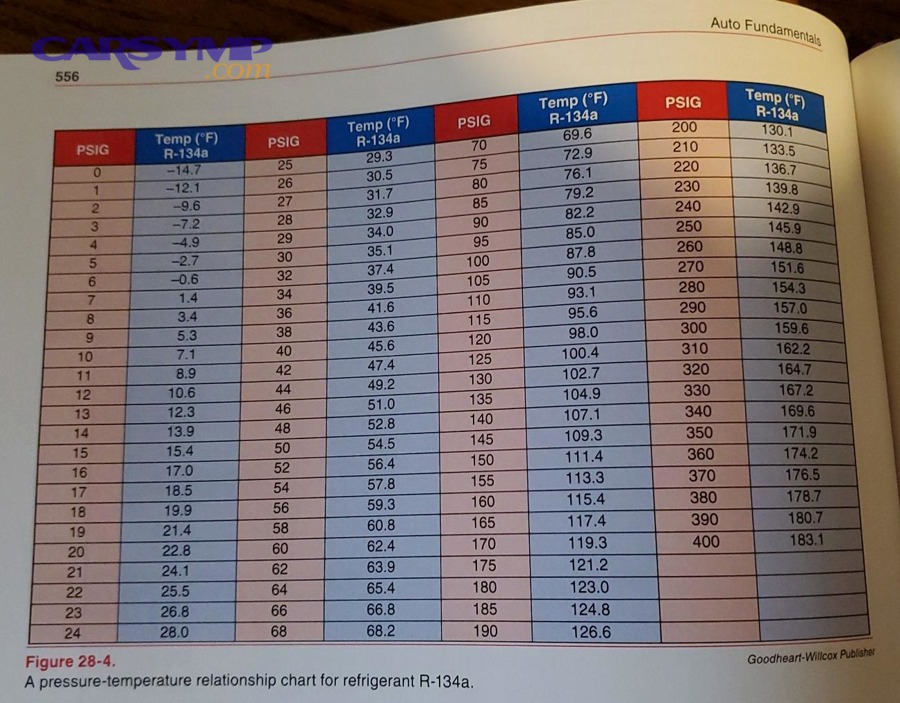
Static pressure is most useful when the car has been off long enough to equalize and the refrigerant temperature matches ambient. If static pressure is dramatically low for the ambient temperature, you may be very low on refrigerant or empty.
Running pressure is where diagnostic value explodes: low-side pressure tracks evaporator boiling temperature and suction conditions, while high-side pressure tracks how effectively the condenser rejects heat and how hard the compressor is working.
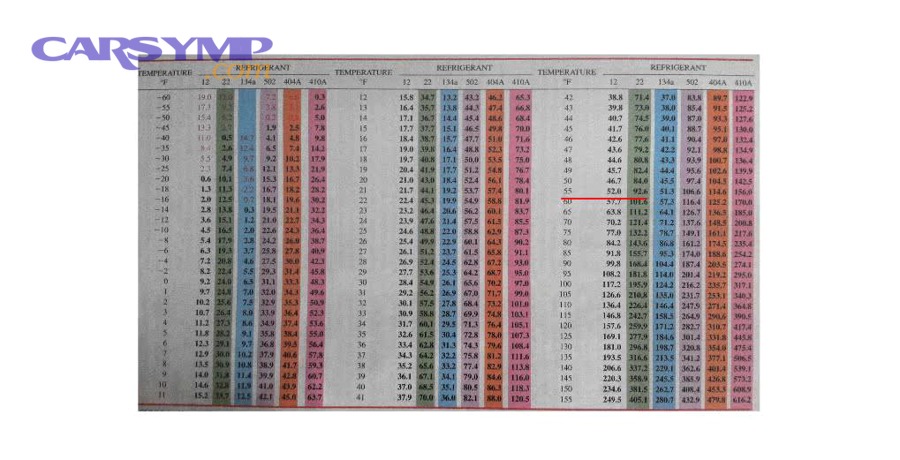
This table contains approximate static saturation pressure points (for quick sanity checks) that can help you decide if “static pressure makes sense for ambient” before you even start the engine.
| Ambient Temp | Approx. R-134a Static Pressure (psi) | Approx. R-1234yf Static Pressure (psi) |
|---|---|---|
| 70°F (21°C) | 70–75 | 75–85 |
| 80°F (27°C) | 80–90 | 90–100 |
| 90°F (32°C) | 100–110 | 110–125 |
| 100°F (38°C) | 120–135 | 130–150 |
According to research by ASHRAE from the Refrigerant Properties tables, in 2021, saturation pressures for common refrigerants at typical ambient temperatures fall into predictable bands, which is why static pressure can be a basic plausibility check.
How do you interpret pressure patterns to identify common fault types?
You interpret patterns by comparing both sides together: “low+low,” “high+high,” “low+high,” or “high+low,” then confirming the suspected cause with airflow, temperature drop, and compressor control behavior.
To make pattern-reading reliable, Tiếp theo treat the gauges like a story: each side is a sentence, and the fault is usually the paragraph they form together.
Pattern A: Low low-side and low high-side
This often indicates an undercharged system or a compressor that isn’t pumping effectively, especially if cooling is weak and the clutch/command behavior looks abnormal.
To connect the pattern to cause, Cụ thể hơn check static pressure first: if static is also low for ambient, undercharge becomes more likely.
Then verify compressor engagement/command, belt drive, and whether the compressor is being limited by the control system due to sensor inputs.
Pattern B: Low low-side and high high-side
This often points to a restriction (TXV/orifice tube, clogged condenser, kinked line) or a condenser airflow problem causing elevated discharge pressure while suction stays suppressed.
To narrow it down, Ví dụ feel for temperature differences: a sharp temperature drop across a component can indicate a restriction at that point.
Also confirm fans and condenser cleanliness; airflow faults can mimic restrictions by forcing the high side upward.
Pattern C: High low-side and low/moderate high-side
This can indicate a weak compressor, internal leakage, or a control issue where the compressor displacement is reduced, allowing suction pressure to rise while discharge doesn’t build normally.
To keep the logic grounded, Tuy nhiên remember that some variable-displacement systems can show higher low-side pressures by design under certain loads.
Confirm with vent temperature and scan data if available—especially compressor command, pressure sensor readings, and fan command.
Pattern D: High low-side and high high-side
This often suggests overcharge, poor heat transfer (airflow restriction or condenser inefficiency), or non-condensable gases in the system—especially if vent temps are mediocre and high side climbs quickly at idle.
To reduce guesswork, Quan trọng hơn check condenser airflow and verify that the system was evacuated properly before charging if recent service occurred.
According to research by ASHRAE from HVAC&R Systems and Equipment, in 2019, non-condensables and reduced heat transfer can elevate condensing pressures, which aligns with “high high-side” patterns seen in field diagnostics.
In real troubleshooting, these patterns are where many people search for an AC not cold fix, but the best results come from combining gauge interpretation with airflow checks and temperature measurements rather than relying on pressures alone.
What quick airflow checks should you do before blaming refrigerant pressures?
Do airflow checks first because restricted airflow can make pressures look abnormal even when the refrigerant charge is close to correct, and it can reduce cooling dramatically without a leak.
To build a reliable diagnostic chain, Bên cạnh đó airflow checks are low-cost, fast, and often reveal the real cause of poor vent performance.
Cabin air filter and duct restrictions
A clogged cabin filter can reduce airflow across the evaporator, lowering heat transfer and changing low-side behavior, while also making vent temperature feel inconsistent.
To turn this into a concrete test, Để minh họa measure airflow at the vents (even by feel) before and after replacing the filter, then retest pressures under the same settings.
In many cars, the cabin filter is an easy, high-value maintenance item; it can also reduce evaporator freeze risk because it helps maintain proper airflow distribution.
This is why Cabin air filter and airflow checks belong early in the workflow—before you interpret subtle pressure differences as refrigerant problems.
Evaporator icing and moisture management
If airflow starts strong and fades, or vent temperature swings from cold to warm, evaporator icing may be occurring due to low airflow, low refrigerant, or a control/thermistor issue.
To connect symptoms to pressures, Tiếp theo note that icing can pull low-side pressure down and then cause cycling or reduced cooling as airflow collapses.
Check for condensate drain flow and for a musty smell or fogging, which can hint at drainage and humidity issues that complicate performance.
Condenser face blockage and bent fins
Bugs, leaves, road debris, and bent fins reduce condenser efficiency, often raising high-side pressure at idle and making cooling degrade most on hot days or in stop-and-go traffic.
To keep this practical, Cụ thể inspect the condenser in daylight and use gentle cleaning methods; avoid damaging fins further.
If the condenser is heavily blocked, you can see a large improvement in high-side stability after cleaning—even without touching the refrigerant charge.
Radiator fan strategy at idle
Many “pressure too high” readings are actually a fan problem: a weak fan motor, failed resistor, stuck relay, or control module issue can let high-side pressure climb rapidly at a stop.
To verify quickly, Hơn nữa confirm fan speed steps if the vehicle has multiple speeds, and confirm that A/C demand triggers the expected fan response.
According to research by SAE International from vehicle thermal management studies, in 09/2017, condenser airflow at low vehicle speed is a dominant factor in A/C performance stability, which supports prioritizing fan and airflow checks before deeper refrigerant conclusions.
How can pressures help you separate “low refrigerant” from “compressor/control” problems?
Pressures help by revealing whether the system is failing to build differential pressure (often compressor/control) or whether both sides are depressed with poor cooling (often undercharge), but you must confirm with compressor command and airflow.
To make that split more dependable, Tiếp theo use a checklist that connects gauge patterns to observable mechanical and control behaviors.
What “low refrigerant” commonly looks like on gauges
Undercharge often produces low low-side and low high-side compared to the ambient chart, with vent temperature that may be cool at speed but weak at idle as heat load increases.
To reinforce the conclusion, Ví dụ look for oily residue at fittings or condenser seams, and confirm that static pressure after equalization is lower than typical for the ambient temperature.
Also remember: some systems with pressure-based compressor control may cycle the compressor frequently when charge is low, which can make readings jumpy if you don’t wait for stabilization.
What “compressor/control issue” can look like
A weak compressor or control-limited compressor may show higher-than-expected low-side and lower-than-expected high-side, because the system isn’t building strong pressure differential even with a decent heat load.
To connect gauges to controls, Cụ thể many modern cars use a pressure sensor and module logic that can reduce compressor displacement or shut it off to protect the system.
That’s why scan data (if available) matters: requested compressor output, actual pressure readings, evaporator temperature sensor input, and fan command can all explain a “pressure story” that looks odd without context.
Symptoms that point away from a simple undercharge
If the high side climbs but the low side stays unusually high, or if vent temperature never improves even when driving, you may be dealing with a restriction, condenser efficiency issue, or compressor performance limitation.
To keep diagnosis efficient, Ngược lại if both sides are simply low and cooling is marginal, undercharge becomes more plausible—especially if airflow is confirmed good.
People often search for Low refrigerant vs compressor issue symptoms at this stage; the most reliable answer comes from combining pressures, airflow verification, and compressor command/engagement observation in one pass.
According to research by ASHRAE from the Refrigeration fundamentals, in 2018, system capacity depends on maintaining appropriate evaporating and condensing conditions, which aligns with the field practice of diagnosing faults by how they shift low-side and high-side pressure relationships.
How do ambient heat, humidity, and driving conditions change what “normal” looks like?
Ambient temperature sets the baseline, but humidity, sun load, vehicle speed, and fan airflow change the heat the system must move and how efficiently it can reject it, shifting pressures within the “normal” range.
To make the chart realistic, Để hiểu rõ hơn consider each condition as a “multiplier” on heat load and condenser performance.
High humidity increases heat load
Humid air carries latent heat that the evaporator must remove (condensing moisture), which can push the system harder and shift pressures—often increasing high-side pressure as condensing temperature rises.
To connect this to your readings, Cụ thể expect higher high-side pressures on muggy days compared to dry days at the same ambient temperature, especially at idle.
Vent temperature may still be acceptable, but the compressor may work harder and fans may run more frequently.
Stop-and-go traffic vs highway airflow
At highway speed, condenser airflow is strong, often lowering high-side pressure and improving cooling. In traffic, the system relies on electric fans, so high-side pressure may rise and cooling can degrade if airflow is marginal.
To use this diagnostically, Tiếp theo compare pressures at idle versus a steady 1,500–2,000 rpm with fans running; a large improvement can point toward airflow and fan performance rather than charge.
Sun load and cabin heat soak
A car that has baked in the sun can show higher pressures and worse vent temps initially because the cabin materials radiate heat and the evaporator sees an intense load.
To keep your chart comparison fair, Quan trọng hơn allow a few minutes for stabilization and consider rechecking after the cabin cools slightly.
According to research by SAE International from studies on solar load and cabin thermal comfort, in 05/2016, solar gain can meaningfully increase HVAC cooling demand, explaining why initial readings may differ from stabilized conditions at the same ambient temperature.
How do you use the chart to guide a safe, step-by-step diagnostic workflow?
Use it as a decision tree: verify airflow and fan operation, establish baseline readings, compare to ambient ranges, then choose targeted checks (leak suspicion, restriction suspicion, control/compressor suspicion) rather than guessing.
To turn the chart into action, Dưới đây is a practical workflow that prioritizes low-risk checks before deeper service steps.
Phase 1: Baseline checks before gauges
Confirm blower strength, cabin filter condition, mode doors working, and that the condenser is clear and fans operate correctly with A/C commanded on.
To prevent wasted work, Hơn nữa confirm the complaint: is it “not cold at all,” “cold only while driving,” or “cycles between cold and warm”?
Phase 2: Stabilized gauge reading and comparison
Measure ambient temperature, stabilize system settings, then compare low-side and high-side readings to your ambient chart ranges.
To reduce error, Cụ thể wait for pressures to settle and record vent temperature at the center vent while you read gauges.
Phase 3: Pattern-based next checks
If both sides low: suspect undercharge or compressor not pumping; look for leak clues and confirm compressor engagement/command. If low+high split: suspect restriction or airflow; check for abnormal temperature drops and fan performance.
To keep the chain logical, Tiếp theo avoid “topping off” refrigerant blindly—pressure alone cannot confirm charge amount, and overcharge can create a new problem.
Phase 4: Decide whether to proceed or stop
If diagnosis points toward leak repair, evacuation, and precise recharge, that typically crosses into specialized equipment territory, and that’s where you should consider professional service.
According to research by ASHRAE from guidance on refrigerant charging practices, in 2019, accurate charging depends on controlled evacuation and mass-based charging, supporting the caution against relying on pressure-only “top-offs.”
At this stage, many drivers ask for an AC not cold fix. The chart helps you narrow the direction quickly, but the best fixes come from following the workflow in order, not skipping straight to refrigerant.
When should you stop DIY and seek professional A/C service?
You should seek professional service when pressures suggest a severe fault (very high high-side, near-zero static pressure, or rapid pressure spikes), when refrigerant handling is required, or when control-system diagnosis needs scan tools and specifications.
To make that boundary clear, Sau đây are the most common “stop signs” that justify professional help for safety and accuracy.
Stop sign 1: High-side pressure climbs rapidly beyond chart expectations
If high-side pressure rockets upward at idle and approaches unsafe levels, you may have a condenser airflow failure, restriction, overcharge, or non-condensables—conditions that can damage components or trigger relief events.
To avoid risk, Quan trọng hơn do not keep running the system “to see what happens.” Shut it down and diagnose airflow and control issues first.
Stop sign 2: Evidence of a leak or system empty/near empty
Very low static pressure for ambient temperature suggests low charge; leaks require proper repair, evacuation, and recharge by weight, not guesswork.
To connect this to best practice, Cụ thể professional shops use recovery/recycling equipment and vacuum testing to confirm integrity before charging.
Stop sign 3: Electrical/control complexity
Modern systems may disable the compressor due to sensor faults, module logic, or pressure transducer issues. Without scan data and wiring diagnostics, you can chase wrong causes.
To keep time and cost under control, Hơn nữa professional diagnosis can verify command signals, fan requests, pressure readings, and evaporator temperature sensor behavior quickly.
Stop sign 4: You suspect internal restriction or contamination
Restrictions, compressor debris, and contaminated systems often require component replacement and system cleaning procedures that are difficult to do correctly without specialized tools.
People often search for When AC needs professional service right here; a good rule is: if the fix involves recovering refrigerant, opening the system, or charging by weight, professional service is usually the safest and most accurate path.
According to research by SAE International from service standards discussions, in 03/2019, proper A/C service emphasizes recovery, evacuation, leak verification, and mass-based charging to reduce misdiagnosis and repeat failures.
Contextual border: what the chart cannot guarantee (and what to use instead)
An ambient pressure chart cannot guarantee “correct charge” or “healthy system” by itself because operating pressures are shaped by many variables; for precise diagnosis, you also use vent temperature, airflow measurement, component temperature checks, and control data.
To expand beyond chart limits, Tiếp theo we’ll cover a few less-discussed factors that explain why two charts can disagree and how to resolve the disagreement logically.
Supplementary: Why charts differ and how to reconcile them in real-world testing
Charts differ because they assume different test conditions, refrigerants, control strategies, and measurement methods; you reconcile them by matching your test setup to the chart’s assumptions and prioritizing temperature-based confirmation.
To keep your decisions accurate, Dưới đây are four “rare but important” factors that commonly explain mismatches between chart expectations and what your gauges show.
Factor 1: Variable displacement compressors and pressure targets
Many modern systems actively control compressor displacement to manage evaporator temperature and pressure, so “normal” low-side pressure can be higher or more stable than older fixed-displacement systems.
To reconcile this with a generic chart, Cụ thể focus more on high-side behavior under load and on vent temperature stability than on chasing a specific low-side PSI number.
Factor 2: TXV vs orifice tube behavior
TXV systems regulate superheat and can keep suction pressure in a tighter band, while orifice tube systems may show wider swings and more cycling depending on load.
To connect this to chart usage, Tuy nhiên charts that don’t specify expansion device type may overgeneralize low-side expectations.
Factor 3: Altitude and airflow assumptions
At higher altitude, air density is lower, which can reduce condenser heat rejection and shift pressures. Similarly, charts may assume strong fan airflow or certain rpm that you are not matching.
To correct for that, Quan trọng hơn replicate the chart’s conditions as closely as possible—or interpret the chart as a range guide, then verify with vent temperature and condenser temperature drop.
Factor 4: Temperature confirmation beats pressure-only conclusions
Using an infrared thermometer to compare line temperatures, condenser inlet/outlet temperatures, and vent temperature can validate whether the pressure pattern truly indicates a restriction or airflow failure.
To make this decisive, Ví dụ a major condenser outlet temperature that stays too high can support an airflow/heat rejection problem even if pressures appear only “slightly high.”
According to research by ASHRAE from the HVAC measurement guidance, in 2020, temperature profiling across components provides strong diagnostic signals in refrigeration cycles, supporting the practice of confirming pressure interpretations with temperature data.
FAQ
Is there one “perfect” PSI number for low side and high side at a given ambient temperature?
No—there is no single perfect number because vehicle design, compressor control strategy, airflow, humidity, and test method all shift operating pressures. Use ranges, stabilize conditions, and confirm with vent temperature and airflow.
Can I diagnose charge amount accurately using only the pressure chart?
No—pressure charts can suggest undercharge or overpressure patterns, but they cannot accurately determine the refrigerant mass in the system. Accurate charging typically requires recovery/evacuation and charging by weight.
Why does the high-side pressure spike at idle but look okay while driving?
That pattern often points to condenser airflow limitations at low speed—fans, shrouds, debris, or airflow path restrictions—because highway airflow improves heat rejection and stabilizes head pressure.
Should I “top off” refrigerant if my pressures look a little low?
Be cautious: slightly low readings can be caused by low heat load, control strategy, airflow changes, or measurement error. If you suspect a true undercharge, first look for leak evidence and consider professional evacuation and correct recharge rather than guessing.
What video can help me understand gauge readings and test setup?
To reinforce the procedure visually, watch a hands-on explanation of manifold gauge reading and stabilized testing methods before you attempt any measurements or adjustments.
When you combine an ambient-based pressure chart with airflow verification, stabilized test conditions, and temperature confirmation, you turn “PSI guessing” into a structured diagnostic method that protects parts, saves time, and points you toward the right next step—whether that’s cleaning airflow paths, repairing a leak, or seeking professional service for controlled evacuation and recharge.