


If your car’s A/C suddenly blows warmer after a “top-off,” cycles strangely, or shows unusually high pressure behavior, an overcharged system is a real possibility—and it has a clear, fixable path.
Beyond comfort, correcting an overcharge matters because excessive head pressure can stress seals, hoses, the condenser, and the compressor—especially in hot weather or at idle.
You’ll also learn how to separate “too much refrigerant” from look-alikes like weak airflow, condenser fan issues, or control problems that can mimic the same symptoms.
Giới thiệu ý mới: Below is a practical, safety-first diagnosis flow that helps you confirm overcharge and choose the right correction without guesswork.
What does an “overcharged AC” mean in a car system?
An overcharged car A/C means the system contains more refrigerant than the manufacturer-specified charge mass, which crowds condenser volume, elevates high-side pressure, and can reduce cooling instead of improving it.
To understand why, the key is that automotive A/C is a metered, closed loop designed around a specific refrigerant mass and oil balance; adding “a little extra” doesn’t create extra cold, it shifts pressures and heat rejection margins.
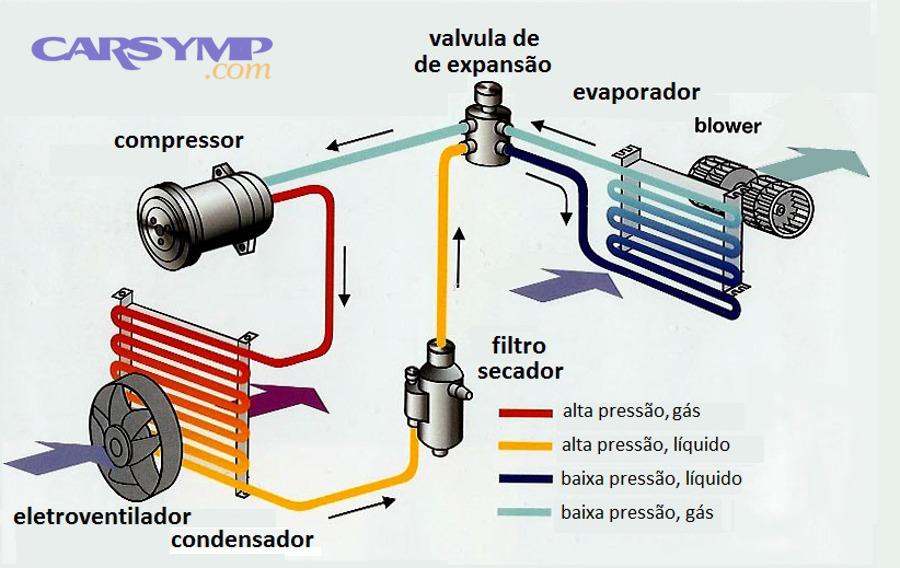
Specifically, overcharge increases the amount of liquid refrigerant sitting in the condenser and receiver sections (where equipped). That reduces effective condensing surface area and raises condensing temperature. As condensing temperature rises, the compressor must work harder to move heat out of the cabin, so vent temperature may worsen—especially at idle or in traffic.
In many modern vehicles, an overcharge can also trigger protective controls: high-pressure sensors can command the compressor to cycle off, reduce displacement (variable compressors), or ramp fans, making cooling inconsistent.
The definition also depends on the vehicle: small systems with tight condenser capacity can be sensitive to even modest overfills, while larger systems may “tolerate” small deviations but still lose efficiency.
The most important mindset shift is this: refrigerant is not a “consumable” that needs topping off unless a leak exists. If refrigerant was low, something left the system; adding without leak diagnosis can lead to both undercharge and overcharge outcomes.
Theo nghiên cứu của Purdue University từ International Refrigeration and Air Conditioning Conference (IRACC), vào 07/2010, vận hành thiết bị ở mức nạp thấp hoặc cao đều gây suy giảm hiệu suất và công suất làm lạnh theo điều kiện vận hành.
To connect this to real-world decisions, the best “AC not cold fix” is not adding more refrigerant by default—it’s restoring the correct charge and ensuring airflow and heat rejection are healthy.
What are the fastest symptoms that point to an overcharge?
Yes—overcharge has recognizable symptoms: poor cooling after recharge, high-side pressure running abnormally high, rapid compressor cycling, and cooling that worsens at idle or in hot ambient conditions.
Next, use the symptoms as a pattern, not a single clue: one symptom alone can mislead, but multiple together strongly point to overcharge.
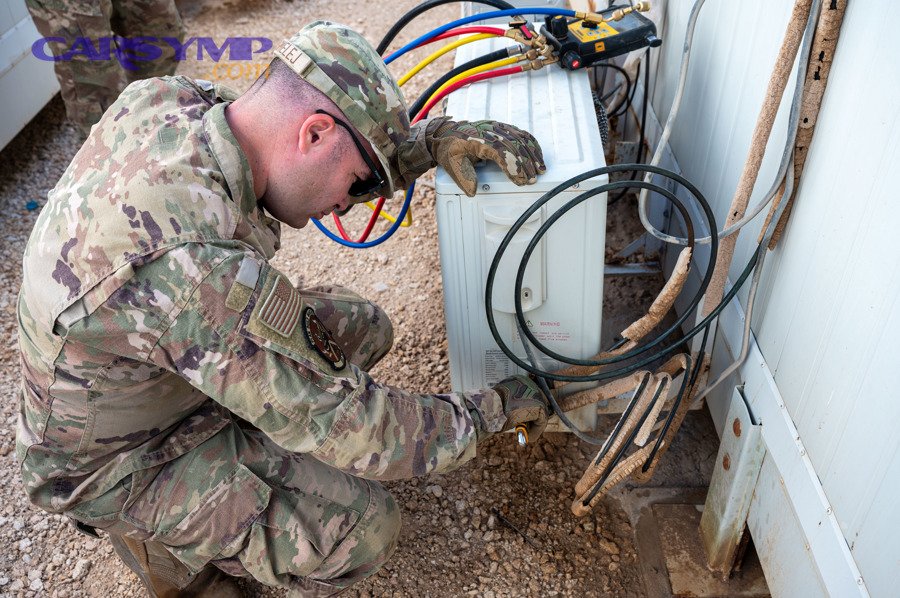
Common symptom clusters include:
- Cooling got worse right after adding refrigerant: vent temps rise, or cold comes and goes.
- Harsh compressor behavior: rapid cycling, louder load changes, or frequent cut-outs.
- High-pressure protection events: A/C stops under load, then returns later.
- Condenser fan “always on” behavior: fans run aggressively because the system is fighting head pressure.
- Warm at idle, slightly better moving: airflow helps the condenser, but pressure is still too high.
Before the next step, this table helps you separate overcharge from other common conditions—especially “Low refrigerant vs compressor issue symptoms” that can look similar on the surface.
| Observation | More consistent with overcharge | More consistent with undercharge / leak | More consistent with compressor/control issue |
|---|---|---|---|
| Cooling worsened immediately after adding refrigerant | Yes (classic pattern) | Sometimes (if leak is large and charge still low) | Possible but less direct |
| A/C cycles off under heat/idle, returns later | Yes (high-pressure cutout likely) | Possible (low-pressure switch), but often different pattern | Yes (sensor/commanded shutoff) |
| Vent air never gets cold, even at speed | Maybe | Yes (often) | Yes (no compression, clutch/control, or internal failure) |
| Frost/ice on low-side line or evaporator case | Less common | More common (restricted flow / low charge conditions) | Possible with restriction |
| Fans run hard, high-side pressure trends high | Yes | Sometimes (airflow issue can also do this) | Possible if control is wrong |
Theo nghiên cứu của SAE International từ Technical Paper program, vào 09/2023, tối ưu lượng môi chất lạnh trong hệ thống điều hòa ô tô cho thấy hiệu suất làm mát phụ thuộc mạnh vào “refrigerant quantity” theo điều kiện thử nghiệm trong buồng khí hậu và điều kiện đường.
To keep your workflow clean, treat symptoms as a “triage filter.” The next sections show you why overcharge can reduce cooling, and how to confirm it without unsafe shortcuts.
Why can an overcharge make the AC not cold or warmer at idle?
An overcharge can reduce cooling because it raises condensing pressure and temperature, shrinking the condenser’s effective heat-rejection area and forcing the compressor to work at a higher compression ratio.
Next, connect the physics to what you feel in the cabin: higher head pressure often equals higher compressor load and less stable evaporator conditions.
Here’s the practical chain reaction:
- Extra refrigerant backs up as liquid in the condenser, reducing available internal volume for condensing vapor.
- Heat rejection becomes less efficient, so the condenser runs “hotter” and pressure climbs.
- Compressor discharge temperature rises as compression ratio increases.
- Controls intervene: pressure sensor may cycle the compressor off, command fan max, or reduce displacement.
- Cabin feels unstable: cold bursts, then warm air, especially when stopped.
This is why an “AC not cold fix” should never assume “it must be low.” Overcharge and airflow problems often produce the same complaint, but the correction is opposite.
At idle, the condenser relies heavily on fan performance. If the system is already overcharged, the condenser is operating closer to its limit; any reduction in airflow (fan speed, debris, bent fins) magnifies the problem quickly.
Theo nghiên cứu của The ACHR NEWS từ kỹ thuật HVAC/R, vào 12/2021, hiện tượng môi chất lỏng “backed up” trong dàn ngưng do nạp quá mức có thể làm tăng head pressure vì giảm thể tích trao đổi nhiệt hữu hiệu của dàn ngưng.
To make your next decision easier, the next section focuses on risk: what parts are most vulnerable when pressures stay high.
Can an overcharged AC damage the compressor, hoses, or seals?
Yes—an overcharge can accelerate wear and failure because it elevates discharge pressure and temperature, increases compressor torque demand, and can force liquid management problems that stress the system.
Next, focus on the three biggest mechanical risks that matter for car owners and DIYers.
- High discharge temperature: hot discharge gas degrades oil and seals faster, especially during long idle periods in heat.
- High head pressure stress: hoses, crimp fittings, O-rings, and condenser joints see higher mechanical load.
- Control-driven cycling: frequent cycling can be harder on clutches (if equipped) and can cause inconsistent lubrication patterns in some designs.
In modern variable-displacement compressors, the system can sometimes “hide” the problem by reducing displacement, but that can also mask symptoms until ambient temperatures rise, at which point the system hits limits and cuts out.
If you smell hot oil or notice the A/C intermittently shutting off during high heat load, treat it as a warning sign rather than “normal behavior.”
Theo nghiên cứu của SAE International từ Technical Paper content, vào 2021, mô hình và đánh giá tối ưu lượng nạp môi chất lạnh cho thấy các điều kiện vận hành ngoài vùng tối ưu có thể làm thay đổi áp suất và trạng thái vận hành của chu trình theo thời gian, ảnh hưởng đến biên độ làm việc an toàn của hệ thống.
To reduce risk, the safest correction is not “bleeding off a bit.” The next sections show how to confirm overcharge with readings and airflow checks, then correct it properly.
How do manifold gauge readings look when the system is overcharged?
Typically, an overcharged system shows abnormally high high-side pressure and often a higher-than-expected low-side pressure, but exact numbers depend on ambient temperature, fan airflow, and compressor type.
Next, treat gauges as a diagnostic tool—not a refill permission slip.
Practical interpretation rules:
- High-side too high for ambient: the most consistent overcharge hint, especially if fans are working and condenser is not blocked.
- Low-side not “low”: overcharge can push the suction side upward, but some systems regulate suction aggressively, so don’t rely on this alone.
- High-side spikes at idle: if pressure climbs fast at idle and drops quickly with RPM/airflow, suspect condenser heat rejection limits—overcharge or airflow.
- Cycling with pressure events: compressor engages, pressure rises, then cuts off; repeats as pressure falls.
Gauge sanity checklist
- Verify both radiator and condenser fans operate at idle with A/C on.
- Confirm condenser face is not blocked by debris or bent fins.
- Compare pressures to an ambient-based chart for the refrigerant type.
- Look for repeated high-pressure cutouts rather than steady-state cooling.
Theo nghiên cứu của Taylor & Francis (Journal platform) từ nhóm nghiên cứu về hệ thống lạnh, vào 2024, tăng lượng nạp môi chất lạnh có xu hướng làm tăng áp suất và nhiệt độ xả của máy nén, đồng thời thu hẹp vùng vận hành cho phép theo điều kiện vận hành.
If you’re tempted to add refrigerant because the low side “looks low,” pause: many vehicles with variable compressors won’t match old fixed-orifice expectations. This is where “Quick AC troubleshooting checklist” habits prevent costly mistakes.
How to rule out airflow and condenser fan problems that mimic overcharge
Yes—poor airflow across the condenser can mimic overcharge because both conditions elevate head pressure and reduce heat rejection, so you must confirm fan operation and condenser condition before concluding refrigerant is the culprit.
Next, do airflow checks first because they are fast, safe, and often the real cause.
Use this quick approach:
- Fans at idle: with A/C on max, both radiator and condenser fans should run (some vehicles stage fans; still, you should see purposeful operation).
- Condenser face inspection: check for packed bugs/leaves, bent fins, or blocked airflow from aftermarket grilles.
- Temperature differential: a functioning condenser typically shows a noticeable temperature drop from inlet to outlet across the coil (careful around moving fans).
- High-side behavior: if head pressure is high and improves dramatically with additional airflow (shop fan in front of the condenser), airflow limitation becomes more likely.
Airflow issues are common “false overcharge” triggers. If you correct airflow and cooling improves, you may have avoided unnecessary refrigerant handling entirely.
Theo nghiên cứu của Purdue University từ IRACC, vào 2014, hiệu suất hệ thống lạnh phụ thuộc đồng thời vào tốc độ máy nén, lưu lượng gió qua dàn, và mức nạp môi chất lạnh—nên sai lệch ở bất kỳ yếu tố nào cũng có thể làm biến dạng chẩn đoán nếu chỉ nhìn một chỉ số.
Now that airflow is checked, you’re ready for the decision point: if overcharge still fits, how do you fix it safely and legally?
How to fix an overcharged car AC safely without guessing
The correct fix is to recover the refrigerant, evacuate as needed, and recharge by weight to the factory specification—because “letting some out” cannot precisely land on the target charge and can be unsafe and illegal.
Next, choose the safest correction method based on what you have access to.
Best-practice correction options:
- Professional recovery + recharge (recommended): a shop uses recovery equipment to remove and measure refrigerant, then recharges by weight. This is the most reliable way to correct overcharge and confirm system integrity.
- DIY with proper equipment: only if you have a recovery machine, a vacuum pump, a scale, and correct procedures. “DIY recharge risks and safer steps” matter here because venting refrigerant is not a safe or responsible workaround.
If the system was overcharged by “top-off” cans, recovery-and-recharge is especially important because those cans can also introduce sealants, mixed refrigerants, or oil amounts that complicate performance.
After recharging by weight, verify performance in a controlled way: measure vent temperature at a stable idle, then at ~1,500 RPM, while watching fan stages and observing whether cooling remains steady.
Theo nghiên cứu của U.S. EPA từ chương trình MVAC, vào 10/2025, phương pháp “top off” buộc kỹ thuật viên phải ước lượng lượng môi chất trong hệ thống nên dễ dẫn đến undercharge hoặc overcharge, trong khi “evacuation and recharge” giúp nạp đúng lượng theo quy trình.
If you only remember one rule, let it be this: correct charge is a number (mass), not a “pressure feel.” That’s how you stop the loop of repeated mischarging.
What to do if you suspect overcharge after a DIY can recharge
Yes—if cooling got worse after a DIY can, treat it as a controlled rollback: stop adding refrigerant, document what changed, and move toward a recovery-and-recharge correction rather than trying random additions.
Next, use a safer decision tree that reduces the chance of compounding the problem.
Safer steps (no venting, no guessing):
- Stop charging immediately once symptoms worsen or cycling appears.
- Confirm airflow basics: fans, condenser cleanliness, and cabin filter airflow.
- Check for obvious leak signs: oily residue at fittings, compressor nose seal area, condenser corners.
- Schedule proper service: request recovery and recharge by weight and ask them to identify if the system contains additives or mixed refrigerant.
It’s common for people to chase pressure readings with a single low-side gauge, but that tool cannot validate correct charge in modern systems. This is where “DIY recharge risks and safer steps” prevents expensive compressor damage.
Theo nghiên cứu của SAE International từ thử nghiệm tối ưu lượng nạp, vào 09/2023, thay đổi lượng môi chất lạnh có thể tạo ra khác biệt rõ rệt về nhiệt độ thổi và tải làm mát theo thời gian, nên các điều chỉnh “ước lượng” thường dẫn đến lệch vùng tối ưu.
To keep your troubleshooting efficient, the next section gives a compact “Quick AC troubleshooting checklist” you can run before any refrigerant decision.
Quick checks before touching refrigerant: a troubleshooting checklist
Use a quick checklist first: verify airflow, fan operation, belt/clutch behavior (if applicable), cabin filter flow, and temperature patterns—because many “not cold” complaints are not refrigerant quantity problems.
Next, run these checks in order so you don’t chase the wrong variable.
- Cabin airflow: blower strong on all speeds; cabin filter not clogged.
- Fan staging: condenser/radiator fans respond to A/C request and heat load.
- Compressor command: clutch engages (if clutch type) or compressor load changes (if variable).
- Line temperature feel (carefully): suction line cool/condensing line warm; extreme hot discharge line suggests high load.
- Vent temp trend: does it get colder at speed? does it cycle? does it worsen with heat soak?
In practice, this “Quick AC troubleshooting checklist” keeps you from mislabeling a weak condenser fan as “low refrigerant,” or mislabeling an overcharge as “needs more.”
Theo nghiên cứu của Purdue University từ IRACC, vào 2024, sai lệch mức nạp môi chất có thể gây giảm hiệu suất và thay đổi các chỉ số nhiệt-động theo tải, nên chẩn đoán tốt cần đồng thời kiểm soát điều kiện gió qua dàn và chế độ vận hành máy nén.
Once these checks are green, you can evaluate charge-related causes with higher confidence, including the question most people ask: overcharge or undercharge?
How to tell overcharge from undercharge without falling into the “pressure trap”
You can differentiate them by pattern: overcharge tends to drive high-side pressure high and trigger cutouts, while undercharge more often reduces mass flow, lowers cooling capacity, and can lead to evaporator starvation or unstable suction behavior.
Next, use “cause-and-effect” signals rather than single gauge numbers.
Reliable differentiators:
- Timing: if the problem started right after charging, overcharge becomes more likely.
- Heat sensitivity: overcharge often worsens rapidly with heat and idle, while undercharge may be consistently weak or show frosting/restriction patterns depending on the system.
- Cutout behavior: high-pressure cutouts suggest overcharge/airflow; low-pressure cycling can suggest low charge but can also indicate restrictions.
- Leak evidence: undercharge is usually tied to leakage; look for oily residue and dye traces if present.
Because the user-level goal is simple—restore stable cold air—the best “AC not cold fix” is to stop guessing and return the system to factory charge by weight, then diagnose any remaining issues (fans, blend doors, sensors, compressor control).
Theo nghiên cứu của Purdue University từ IRACC, vào 07/2010, hiệu suất có thể suy giảm khi mức nạp quá thấp hoặc quá cao, nên “về đúng mức nạp chuẩn” là điều kiện nền để chẩn đoán chính xác các lỗi còn lại.
Now, let’s make the diagnosis actionable: how do you confirm and correct the charge level in a way that holds up over time?
How to verify the fix after correcting an overcharge
After correction, verify in three ways: stable vent temperature under steady conditions, stable system behavior without frequent cutouts, and predictable fan staging and pressure trends that match ambient conditions.
Next, do verification before you declare victory, because a corrected charge can reveal an underlying airflow or compressor-control problem that was previously masked.
Practical verification steps:
- Stabilize conditions: doors closed, recirc on, blower mid-high, engine at idle for several minutes.
- Measure vent temperature: compare idle vs 1,500 RPM; look for consistency rather than brief cold spikes.
- Observe cycling: excessive rapid cycling suggests remaining control/pressure issues.
- Watch fans: fans should respond logically—ramping with load, not running in panic mode all the time.
If performance is still weak after correct charge, pivot away from refrigerant quantity and toward airflow, condenser condition, blend door issues, evaporator temperature sensor behavior, or compressor control valve problems.
Theo nghiên cứu của SAE International từ thử nghiệm điều hòa ô tô trong buồng khí hậu, vào 09/2023, các phép đo nhiệt độ theo thời gian tại vị trí cabin có thể phản ánh trực tiếp khả năng làm mát và mức tối ưu của lượng nạp theo điều kiện vận hành thực tế.
This is also where you decide whether to leak-test: a correct charge that drifts over days/weeks points to leakage, and repeated “top-offs” are the fastest way to end up overcharged again.
Contextual border: If you’ve confirmed charge is correct but symptoms remain, the problem often shifts to less obvious causes that mimic overcharge or sabotage cooling in specific driving scenarios.
Less obvious cases that mimic overcharge and what to do next
Even with correct charge, similar symptoms can come from condenser heat-rejection limits, control valve faults in variable compressors, contaminated refrigerant mixtures, or system restrictions that distort pressures.
Next, use these advanced checks to avoid repeating the same recharge loop.
Could a weak condenser or airflow limitation look exactly like overcharge?
Yes—restricted condenser airflow or internal condenser issues can create high head pressure and cycling just like overcharge, so confirm fan staging, coil cleanliness, and heat soak behavior before changing refrigerant again.
To connect the dots, if adding airflow (shop fan) dramatically improves cooling, treat airflow and condenser health as the priority rather than refrigerant quantity.
Theo nghiên cứu của Purdue University từ IRACC, vào 2014, lưu lượng gió qua dàn ngưng là biến số ảnh hưởng mạnh đến hiệu suất và trạng thái vận hành, có thể làm “giống triệu chứng” của sai lệch mức nạp.
What if the compressor is variable-displacement and the control valve is the real issue?
Yes—many modern compressors adjust displacement; a sticking control valve or incorrect command can cause poor cooling with confusing pressures, making people suspect charge when the control system is at fault.
To move forward, look for scan-tool data (requested vs actual A/C pressure, compressor command, fan command) and diagnose control faults before refrigerant handling.
Theo nghiên cứu của Taylor & Francis (Journal platform) từ nghiên cứu hệ thống lạnh, vào 2024, tăng áp suất và nhiệt độ xả theo mức nạp có thể giới hạn vùng vận hành cho phép, nên hệ thống điều khiển máy nén thường can thiệp mạnh khi tiến gần ngưỡng bảo vệ.
Are DIY cans and additives a hidden cause of ongoing problems?
Yes—some cans include sealants, extra oil, or blended refrigerants, which can alter heat transfer, foul equipment, and complicate correct charging, so a professional recovery-and-recharge is often the clean reset.
To minimize risk, avoid repeated “top-offs” and focus on leak diagnosis and a weighed charge instead—this is the safest path aligned with “DIY recharge risks and safer steps” even for motivated DIYers.
Theo nghiên cứu của U.S. EPA từ MVAC guidance, vào 10/2025, việc nạp kiểu “top off” dựa trên ước lượng có thể dẫn đến sai lệch mức nạp và làm suy giảm hiệu suất, nên quy trình thu hồi và nạp lại theo chuẩn giúp giảm rủi ro sai lệch.
Overcharge vs undercharge: what’s the simplest decision rule?
If cooling got worse after adding refrigerant and the system shows high-pressure cycling especially at idle/heat, overcharge or airflow limitation is more likely; if cooling was weak before and improves briefly with a small correct recharge, undercharge/leak is more likely—but the definitive solution is always recharge-by-weight.
To keep the rule practical, make your goal “restore factory charge and verify,” not “chase pressures,” because that’s how you avoid repeating the same mistake.
Theo nghiên cứu của Purdue University từ IRACC, vào 07/2010, hiệu suất suy giảm ở cả hai phía “thấp” và “cao” của mức nạp tối ưu, nên quy tắc đơn giản nhất là đưa hệ thống về đúng mức nạp chuẩn rồi mới chẩn đoán các biến còn lại.