


When your car’s A/C stops cooling, smells odd, or behaves inconsistently, professional service is often the fastest path to a safe, lasting fix—because modern systems combine refrigerant control, electronics, sensors, and airflow doors that can’t be verified by “guesswork.”
Beyond comfort, a struggling A/C can stress the compressor, raise under-hood heat, and hide leaks that worsen over time; that’s why symptom-based triage matters before you spend money on parts or refrigerant.
You can still do a few low-risk checks at home to separate “simple airflow problems” from “sealed-system problems,” and that separation is what tells you when to book a shop visit.
Giới thiệu ý mới: below are the practical signs, safe checks, and shop-level diagnostics that clearly answer when professional A/C service is needed—and what you should expect when you get it.
What warning signs mean your car A/C should be checked by a shop?
Yes—if cooling is weak, intermittent, noisy, or accompanied by odor or visible residue, you should schedule professional A/C service because these symptoms often point to sealed-system faults, electrical control issues, or airflow door failures that require proper testing.
To connect the dots, start by matching each symptom to what it usually indicates—then decide whether it’s a quick home check or a shop-only diagnosis.

Why “not cold” plus correct airflow is a shop-level clue
When air blows strongly but doesn’t get cold, the most likely causes involve refrigerant charge/flow, compressor control, heat-exchanger efficiency, or sensor logic—so the next step is measured diagnosis, not trial-and-error filling.
Next, treat this as a “temperature performance” problem: you’re testing cooling capacity, not just airflow.
If you’re searching for an “AC not cold fix,” the safest first move is to record what changes: does it cool at speed but not at idle, cool only on the highway, or cool briefly then warms up? Those patterns help a technician confirm condenser airflow, fan operation, and pressure behavior without guessing.
- Cold for 2–5 minutes then warm: can suggest pressure switches tripping, icing/expansion control issues, or clutch control problems.
- Cool on highway, warm at idle: often points to condenser airflow (fans, blocked fins, debris) or high head pressure behavior.
- Never cools, even at speed: can indicate low charge/leak, compressor not engaging, or internal compressor failure.
What noises, clicking, or cycling patterns usually mean
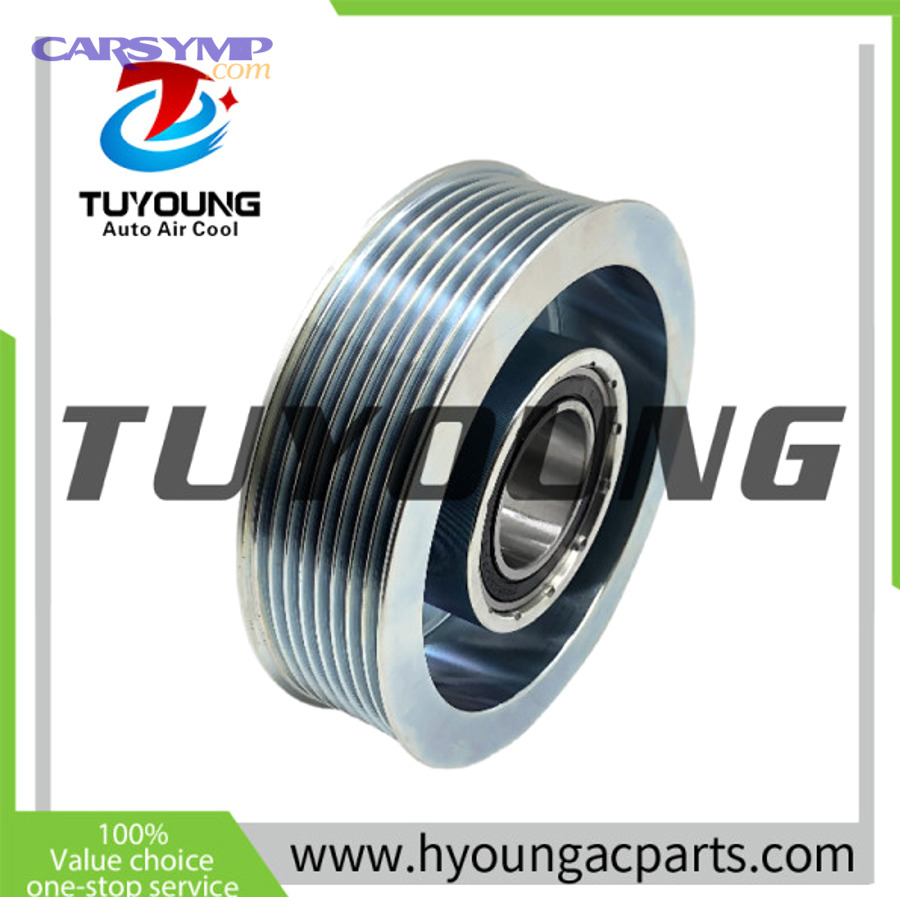
Noises and cycling are “mechanical or control” tells: clicking behind the dash often relates to HVAC door actuators, while squeal/grind near the belt area can involve pulleys or clutch bearings and deserves prompt inspection.
To keep the flow, separate where the sound comes from—dash area, engine bay, or vents—because location narrows the suspect system.
- Dash clicking/tapping when changing mode/temp: often actuator/door movement issues.
- Engine-bay chirp/squeal when A/C toggles: can be belt load changes, clutch bearing, or compressor load.
- Rapid compressor cycling: may indicate incorrect charge, pressure switch activity, or airflow/heat rejection problems.
Why smells, fogging, or oily residue shouldn’t be ignored
Smells and fogging can signal microbial growth on the evaporator, water drainage problems, or cabin filter restriction; oily residue in the engine bay can also suggest refrigerant oil leakage that a shop can confirm with dye or electronic detection.
Next, combine “odor” with “moisture behavior” (foggy windows, damp carpet) to avoid missing a drainage issue that mimics A/C failure.
Also note: if the A/C produces a sharp chemical smell or you see fresh oily grime near A/C lines, professional inspection is safer because refrigerant/oil leaks can worsen and contaminate components during operation.
How damaged condenser fins and corrosion translate into poor cooling
When condenser fins are clogged, bent, or corroded, heat can’t leave the refrigerant efficiently—so high pressure rises, cooling drops, and compressor strain increases.
To move from symptom to cause, the key is understanding that “front-of-car heat exchange” is the A/C’s choke point in hot weather.
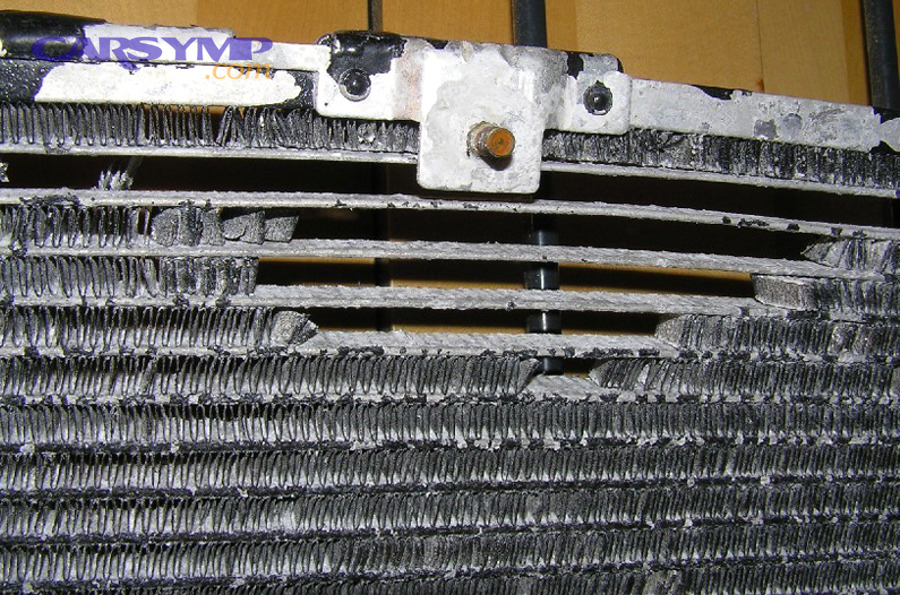
According to Professional Motor Mechanic’s technical feature (March 2017) discussing condenser fin loss, removing only one fin row can reduce thermal performance by up to about 3%, which helps explain why even “minor-looking” fin deterioration can create noticeable cooling loss.
Can you keep driving when the A/C is failing?
Yes, you can usually drive, but you shouldn’t ignore A/C failure if it brings belt noise, burning smells, electrical glitches, or overheating at idle—because those conditions can escalate into accessory-belt damage, compressor seizure risk, or cooling-system strain.
To guide your next step, treat this as a risk screen: “comfort problem” vs “mechanical or safety-adjacent problem.”
When it’s mostly a comfort issue
If the A/C simply blows warm air without unusual sounds, without belt squeal, and the engine temperature remains normal, driving is typically fine until you can schedule service.
Next, keep notes: ambient temperature, idle vs highway behavior, and whether recirculation changes performance—those details speed up diagnosis.
When you should stop using the A/C immediately
If you hear grinding/squealing from the compressor area, smell burning rubber, or see smoke, stop running the A/C because a failing clutch bearing or compressor can overload the belt and related pulleys.
To stay safe, turn off A/C and defrost mode (defrost can command A/C on many cars), then drive to a shop if the belt system sounds normal.
- Burning smell + noise: potential belt slip or clutch/bearing heat.
- Intermittent electrical issues: possible relay, wiring, or control module problems.
- Engine temp climbs at idle with A/C on: cooling fan, airflow, or heat rejection problem that can affect engine cooling too.
Why repeated “top-offs” can make the situation worse
Repeatedly adding refrigerant without confirming leaks can mask the real failure and may push the system into incorrect charge levels, which can reduce performance and stress components.
Next, think in systems: the sealed loop needs the right amount of refrigerant and oil—too little or too much can both harm cooling.
How can you do safe, basic checks before booking service?
You can do a few safe checks—cabin filter, condenser airflow, fan operation, and obvious electrical items—because these don’t require opening the refrigerant circuit and can quickly reveal whether the issue is airflow-related or sealed-system-related.
To keep the process practical, you’re aiming to collect “evidence,” not to recharge or vent anything.
Check airflow basics first: fan speed, vents, and cabin filter
If airflow is weak on all speeds or only certain speeds work, the problem may be blower control, resistor/module, or a clogged filter—issues a shop can confirm quickly without touching refrigerant.
Next, verify whether airflow changes by mode (face/floor/defrost) and by temperature setting; that pattern often separates “blower” from “door control.”
- Weak airflow at all speeds: filter blockage, blower motor, or airflow restriction.
- Only high speed works: common with resistor/module issues in many vehicles.
- Airflow strong but wrong vent location: possible door/actuator control issue.
Inspect the condenser area safely: debris, bent fins, and airflow blockage
A dirty, blocked, or physically damaged condenser reduces heat rejection and can cause warm air at idle or in traffic, even if the rest of the system is healthy.
Next, look through the grille with the engine off: leaves, bugs, and road debris often pack the fins.
If you see heavy fin damage or corrosion, that’s a strong reason to book professional service because restoring heat exchange may require cleaning, straightening, or replacement—and the performance impact can be larger than it looks.
Confirm cooling fan operation and idle behavior
If your A/C cools while driving but warms at idle, a non-functioning radiator/condenser fan or fan control issue is a prime suspect and should be checked promptly.
Next, observe with caution: fans can start automatically—keep hands and tools away.
- Fan never turns on with A/C commanded: potential fuse/relay/fan module or wiring issue.
- Fan runs but airflow is weak: damaged blades, shroud issues, or condenser blockage.
Use the right “test language” when you call the shop
Clear symptom notes—idle vs highway, cycling frequency, odor, noises, and whether recirculation changes output—help the shop plan the right diagnostics and estimate time more accurately.
Next, share what you checked (filter, debris, fan behavior) so the technician doesn’t repeat basics and can move straight to measured testing.
What problems require certified refrigerant handling and proper equipment?
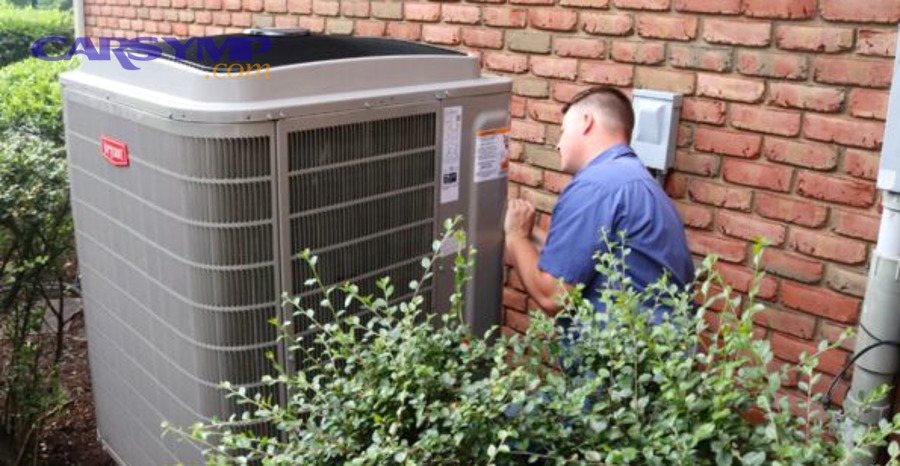
Any job that opens the refrigerant circuit—repairing leaks, replacing A/C components, or recovering and recharging refrigerant—should be done by a properly equipped professional because refrigerant must be recovered (not vented) and the system must be evacuated, leak-tested, and charged accurately.
To understand why, think of the A/C as a sealed chemical-and-mechanical loop: once opened, cleanliness, vacuum integrity, and charge accuracy become the whole game.
Why “recover, evacuate, recharge” is not the same as “add a can”
Professional service uses recovery and recycling equipment to capture refrigerant, followed by vacuum evacuation to remove air and moisture, then precise recharging by specification—steps that reduce repeat failures and protect the compressor.
Next, recognize the risk: air and moisture inside the system can lead to poor cooling and corrosion, while wrong charge can create abnormal pressures.

Legal and environmental reasons: venting refrigerant is prohibited
In many jurisdictions, releasing refrigerant to the atmosphere is prohibited; automotive technicians typically use approved recovery equipment and training/certification pathways for mobile A/C work.
Next, this is the practical takeaway: if the repair requires opening the lines, don’t DIY it—book a shop that can recover and recharge properly.
U.S. EPA guidance explains that refrigerant should be recovered rather than vented and outlines requirements and certifications related to motor vehicle A/C service.
Why sealants and guessing charge can damage equipment and components
Some consumer recharge products contain sealants that can contaminate systems and create downstream service problems; inaccurate charging can also raise head pressure and shorten compressor life.
Next, if you want a safer mindset, focus on measurement and inspection instead of “more refrigerant equals colder.”
When people look up “DIY recharge risks and safer steps,” the safest “step” is often not adding anything: verify airflow/fans, confirm compressor command, then let a certified shop recover, evacuate, leak-test, and charge by spec. ASE consumer guidance on automotive A/C emphasizes proper procedures and cautions that shortcuts can cause costly damage.
Why equipment standards matter for accurate results
Modern shops use dedicated machines and procedures for recovery/recycling/recharging, designed to ensure the system is serviced without venting and with correct charging performance.
Next, this is why shop quality varies: correct tools and process prevent repeat visits.
SAE standards such as J2845 describe performance and requirements for refrigerant recovery/recycling/recharging equipment for mobile A/C systems, which is part of why professional service can be more reliable than improvised methods.
How do technicians diagnose cooling, pressure behavior, and airflow control faults?
Technicians diagnose A/C failures by combining pressure readings, vent temperature checks, electrical command verification, and airflow door testing—because the same “warm air” complaint can come from low charge, poor heat exchange, clutch control issues, or a stuck airflow door.
To keep the chain of logic, professional diagnosis answers two questions: “Is the refrigerant loop producing cold?” and “Is the cabin receiving it correctly?”
What manifold gauge and temperature readings reveal
Gauge readings and temperature deltas help confirm whether the system is undercharged, overcharged, restricted, or suffering from poor condenser airflow—especially when paired with ambient temperature and fan operation.
Next, the key is correlation: pressures alone don’t tell the whole story without airflow and temperature context.
- Low-side very low + poor cooling: could indicate low charge, restriction, or control/valve issues depending on the full pattern.
- High-side excessive at idle: often suggests heat rejection problems (fan, debris, fin damage) or incorrect charge behavior.
- Vent temp changes but inconsistent: can indicate cycling, sensor logic, or door control issues.
How airflow doors and actuators create “false A/C failure” symptoms
If the refrigerant loop is making cold but the cabin still feels warm, the fault may be in the HVAC box—mode doors or temperature blend doors can misroute air or mix too much warm air into the stream.
Next, this is where many DIY efforts go wrong: adding refrigerant won’t fix an airflow door that’s stuck or miscalibrated.
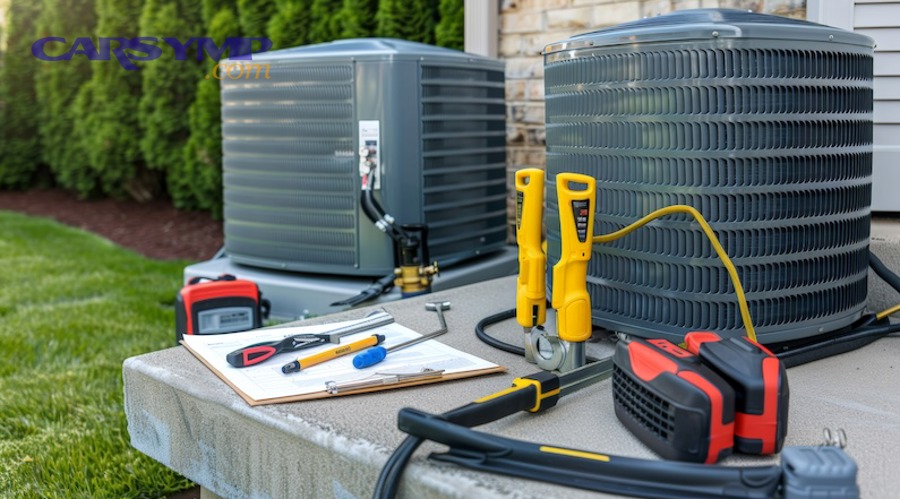
Common “Blend door actuator problem signs” include clicking behind the dash during mode/temperature changes, air stuck on defrost/floor, or temperature that won’t change even though the controls respond—symptoms that are diagnosed by command testing and observing door movement.
How electrical command testing prevents unnecessary parts replacement
A shop can verify compressor clutch or control valve command, pressure switch behavior, and module outputs, which prevents replacing expensive parts based on assumptions.
Next, this is why a measured diagnostic fee often saves money: it reduces “replace-and-hope” cycles.
Why leak detection is more than “look for wet spots”
Professional leak detection may involve UV dye, electronic sniffers, nitrogen pressure testing, and confirming service ports and seals—because small leaks can be invisible and still cause recurring low charge.
Next, the goal is to identify the leak source, not just restore cooling for a week.
How much does professional A/C service usually involve, and what affects cost?
Professional A/C service cost depends on diagnosis time, the type of fault (airflow/electrical vs sealed-system), parts access labor, and whether the system requires recovery, evacuation, and a precise recharge after repairs.
To make budgeting easier, think in tiers: inspection and basic service, leak repair and component replacement, and system restoration after contamination or major failure.
This table summarizes common service “buckets,” what they typically include, and what mainly drives price so you can ask smarter questions at the counter.
| Service bucket | What it usually includes | Main cost drivers |
|---|---|---|
| Diagnostic + performance check | Vent temp test, fan/condenser airflow check, control verification, basic pressure/scan assessment | Shop time, test complexity, access to components |
| Recover/evacuate/recharge (no parts) | Recover refrigerant, vacuum/evacuation, recharge to spec, basic leak check | Equipment use, refrigerant type/amount, procedure time |
| Leak repair + recharge | Leak detection, replace O-rings/lines/ports, recovery + vacuum + recharge | Leak location, parts availability, labor access |
| Component replacement | Compressor, condenser, evaporator, expansion device service plus correct recharging | Part cost, labor hours, flushing/contamination handling |
| Airflow door/actuator repair | Actuator testing, recalibration, actuator replacement, HVAC case access as needed | Dash access labor, calibration steps, related broken linkages |
What to ask the shop so you pay for results, not guesses
Ask what tests they’ll run (pressure/temperature, leak detection method, airflow door checks), whether they’ll charge by specification, and what warranty applies to parts and labor—because those answers reveal process quality.
Next, request the measured findings: vent temperature, ambient temperature, and what happened at idle versus higher RPM.
How to interpret “needs recharge” versus “needs repair” language
“Recharge” alone means the shop is restoring charge, but a low charge usually has a reason; if a shop can’t explain why it was low or won’t discuss leak evidence, you may be paying for temporary cooling.
Next, connect it back to reliability: a sealed system shouldn’t regularly need top-ups without a leak cause.
A quick evidence statement you can use with technicians
Try: “Airflow is strong, it cools only while moving, and it cycles rapidly at idle,” or “The dash clicks when I change modes and the vent location won’t switch.” That kind of detail shortens diagnostic time and improves accuracy.
Next, add what you observed: fan operation, visible condenser blockage, and cabin filter condition.
Contextual border: Up to this point, you’ve learned how to recognize shop-needed symptoms and what professional diagnosis does. Next, we’ll expand into prevention and “after-service” habits that reduce repeat failures and keep performance stable across seasons.
How to keep your A/C reliable after professional service
You can reduce repeat A/C problems by protecting condenser airflow, using the system regularly, and avoiding shortcuts that contaminate the refrigerant circuit—because most recurring failures come from heat-exchange degradation, leaks left unresolved, or improper charging practices.
To extend the benefit of service, focus on habits that keep heat rejection and airflow stable and prevent hidden moisture/contamination from building.
Keep the condenser and radiator stack clean and unobstructed
Gently removing debris from the grille area and keeping fins unobstructed helps maintain stable pressures and cooling performance, especially in traffic.
Next, remember the earlier linkage: fin loss and corrosion reduce heat-transfer surface, which can translate into real cooling loss under load.
Run the A/C periodically, even in cooler months
Using A/C periodically can help circulate lubricant through seals and keep moving components from sitting idle for long stretches.
Next, pair this with a practical routine: run A/C for a short period every couple of weeks to keep the system “awake.”
Insist on correct procedures when the system is opened
Whenever parts are replaced or lines are opened, proper recovery, evacuation, leak verification, and charging accuracy matter more than any single part brand because the system’s reliability depends on moisture-free, correctly charged conditions.
Next, this aligns with EPA guidance to recover refrigerant rather than vent it and to follow proper service practices for mobile A/C work.
Watch for early “pattern changes” and act before the compressor is stressed
If performance changes from “cold at idle” to “warm at idle,” or cycling becomes frequent, treat it as an early warning and schedule a check—because small airflow or leak issues can snowball into compressor overload.
Next, keep your notes: ambient temperature, idle vs speed behavior, and whether recirculation improves cooling.
Frequently asked questions about professional A/C service
These quick answers reinforce the decision rules above so you can act confidently when symptoms appear.
To keep it visual, here’s a diagnostic-style image that matches the “airflow door” and “control” themes that often confuse DIY troubleshooting.
Should I recharge my A/C if it’s only slightly warm?
Not automatically; slight warmth can come from airflow restrictions, fan problems, or door control issues, and adding refrigerant without confirming the fault can create incorrect charge and worse performance—so a measured diagnosis is safer.
Is it normal to need refrigerant every summer?
No; a properly sealed system shouldn’t need routine top-ups, so recurring “low charge” usually indicates a leak that should be identified and repaired with proper recovery and leak-testing steps.
Why does my A/C cool on the highway but not in traffic?
This pattern often points to condenser airflow or fan control issues, or fins/debris limiting heat rejection at low speed; a shop can confirm by observing pressures and fan behavior at idle versus higher RPM.
What does clicking behind the dash mean when I change temperature?
It commonly points to actuator/door movement problems, where the system can’t route air correctly; technicians confirm by command tests and observing door response instead of adding refrigerant.
What’s one reliable video to understand professional-style diagnosis?
This video demonstrates beginner-friendly A/C diagnosis steps using proper measurements and workflow, which helps you understand what a professional service process looks like before you visit a shop.