



The fuse-by-fuse method isolates the exact electrical branch that’s draining a vehicle battery by pulling one fuse at a time while watching a live current reading, so you can move from “mystery drain” to a named circuit.
Next, you’ll learn how to prepare the vehicle so modules go to sleep, how to connect a meter safely without blowing its fuse, and how to pull fuses in a way that doesn’t keep waking the car up.
After that, you’ll see how to interpret current-drop patterns (big drop, small drop, delayed drop), then translate a “bad fuse position” into the specific component, connector, or module causing the drain.
Giới thiệu ý mới: Below is a step-by-step workflow with practical guardrails so you can isolate the circuit reliably, even on modern vehicles with many computers.
What is the fuse pull method to isolate the circuit?
It’s a how-to isolation technique: you measure key-off battery current, then remove fuses one by one until the current drops, revealing which fused branch contains the drain. Next, you use that fuse label to trace the exact loads on that branch.
To start, it helps to picture what you’re really isolating: not “the whole car,” but a single fused path that feeds one or more loads, relays, and modules.
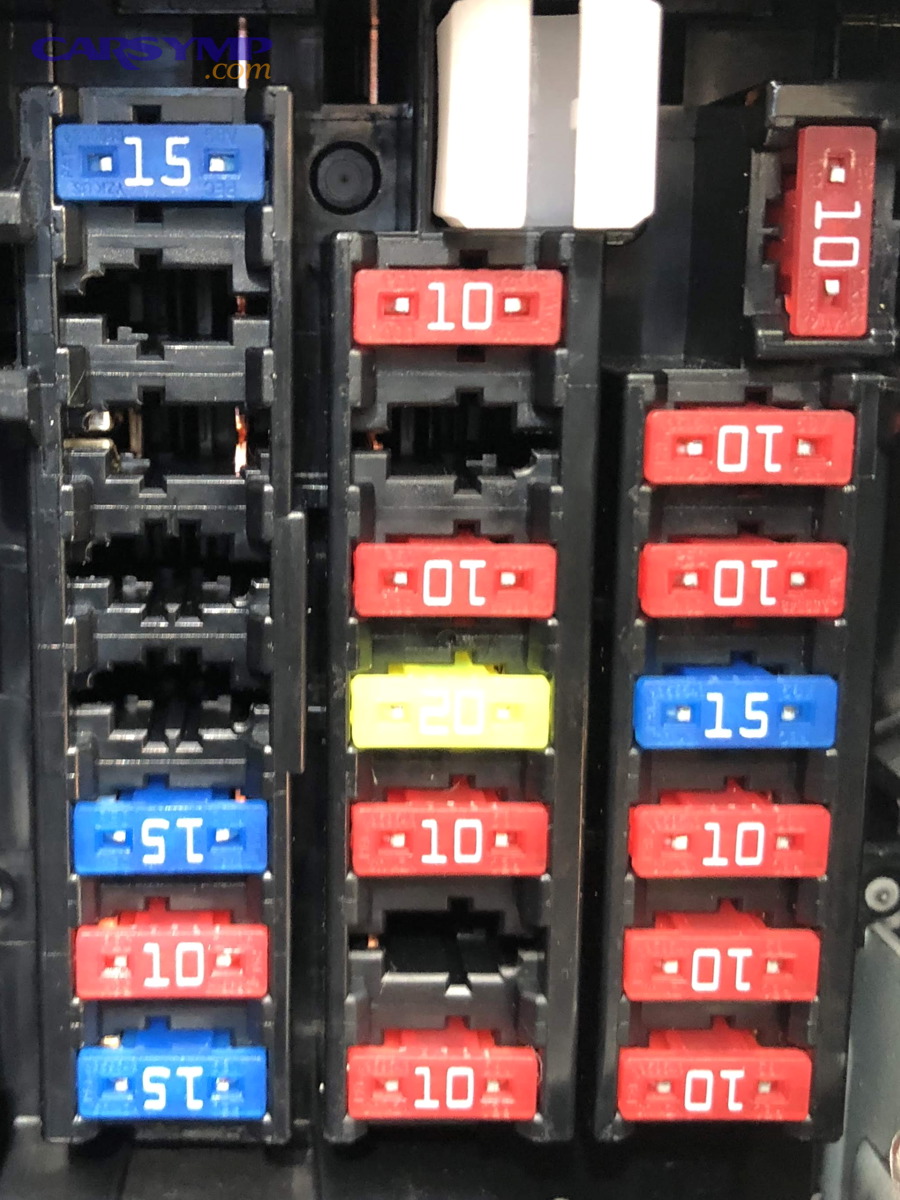
Why pulling one fuse works better than guessing parts
Because it turns a system-level symptom into a circuit-level clue: a measurable current drop ties the drain to a protected branch, so you stop swapping batteries, alternators, or starters blindly. Next, you’ll see how to set the test up so the reading is stable.
Practically, a fuse is a “gate” in the wiring tree. When you pull it, everything downstream of that fuse is disconnected. If your meter reading falls, the drain was downstream. If nothing changes, the drain is upstream (or on an unfused path like an alternator output or a direct-to-battery feed).
In real battery drain diagnosis, this is the moment you go from broad suspicion (lights, radio, alarms) to a precise list of candidates that share that fuse.
What the method can and cannot prove
It can identify the branch; it cannot automatically name the component: one fuse may feed multiple loads, and some drains happen on unfused or “always-hot” paths. Next, you’ll learn how to handle both situations without losing the trail.
The method is strongest when the drain is steady (a stuck relay coil, a shorted module, a light that stays on). It’s weaker when the drain is intermittent or when pulling the fuse wakes modules and changes the current pattern. The good news is that you can still isolate intermittent issues by logging readings and controlling wake-ups—covered later.
What tools and safety steps do you need before pulling fuses?
You need a stable current measurement setup and a safe workflow: a multimeter (or clamp meter) rated for automotive current, meter leads that won’t slip, and a plan to keep the car asleep. Next, you’ll set up the test without blowing the meter’s internal fuse.

Tool checklist that prevents false readings
Use the right tool for the draw size: a DMM in series is accurate for low mA, while a DC clamp meter is safer for higher current. Next, you’ll match the tool to the risk level of the vehicle.
- Digital multimeter with a fused 10A input and a mA input (for finer resolution after the draw is low).
- Inline fused jumper lead (optional but helpful) to maintain power while changing meter ranges.
- Fuse puller or needle-nose pliers with care (avoid crushing fuses).
- Flashlight (or headlamp) and a notepad/phone notes for fuse positions and current drops.
- Wiring diagram access (owner manual fuse legend is a start; service info is better).
If you’re working on a late-model vehicle, consider that opening a door, touching the brake pedal, or triggering keyless entry can wake multiple modules and change the reading instantly.
Safety rules to avoid damage or injury
Yes—follow three rules: prevent shorts, protect the meter, and protect vehicle electronics. Next, you’ll learn a low-drama connection method that avoids sparks and meter blowouts.
- Never crank the engine with the meter in series; the starter current can destroy the meter instantly.
- Start on the 10A range (or higher-capable setting) until you confirm the draw is low enough for the mA jack.
- Don’t let the cable disconnect suddenly while the meter is inline; the power loss can reset modules and create new behaviors.
Also, if the vehicle has high-voltage hybrid components, follow manufacturer procedures and avoid orange high-voltage cabling unless you are trained and equipped.
When a clamp meter is the smarter choice
A clamp meter is safer when the draw could be high: it measures current without breaking the circuit, reducing risk of sparks or meter fuse failure. Next, you’ll still use fuse pulling, but with current measured non-invasively.
Many DIYers begin with a series meter because it’s sensitive at low current. If your key-off reading is unexpectedly high (for example, over 2A), a clamp meter can quickly confirm the magnitude while you decide whether the drain is a stuck load (like a blower motor relay) or a charging-system leak path.
How do you set up a parasitic draw test before pulling fuses?
Use a consistent setup: connect the meter to measure battery current, then wait for modules to sleep so the draw stabilizes, and only then begin pulling fuses. Next, you’ll learn a sequence that keeps the car asleep while you work.

Step-by-step setup that avoids waking the vehicle
Follow an ordered routine: secure access, lock down wake-up triggers, then connect the meter. Next, you’ll confirm the baseline draw before touching fuses.
- Prepare the car to sleep: close doors, latch door strikers if you need doors open, turn off lights, and keep the key far enough away to prevent keyless wake-ups.
- Disable obvious loads: remove phone chargers, unplug accessories, ensure the trunk light is off, and keep the hood light from staying on.
- Connect the meter safely: start on the 10A range and place the meter in series with the battery cable (typically the negative terminal for convenience and safety).
- Wait for sleep mode: allow enough time for modules to time out; the draw may step down in phases.
To illustrate what “sleep” looks like, you might see a high initial spike, then a gradual decline, then a stable plateau. If the current never stabilizes, you’re probably waking modules repeatedly.
What is a “normal” key-off draw and why it matters
Normal draw is small and stable: many vehicles settle into a low tens-of-milliamps range after sleep, while a problematic draw stays elevated or cycles abnormally. Next, you’ll use the baseline to judge whether a fuse drop is meaningful.
Theo nghiên cứu của General Motors TechLink từ GM Service Technical College, vào 12/2020, nhiều xe đời mới được khuyến nghị có dòng nghỉ dưới khoảng 50 mA sau khi các module đã “sleep”.
Use that idea as a benchmark, not a universal law: some vehicles legitimately sit higher for a while, then drop later. The key is the pattern—does it settle down, and is the final draw consistent over several minutes?
A short video that demonstrates the workflow
Watching the sequence helps: seeing the meter behavior during sleep and fuse pulling reduces common mistakes. Next, you’ll apply the same order with your own vehicle’s fuse layout.
How do you pull fuses systematically without breaking the test?
Pull fuses in a controlled order while watching the live reading: remove one fuse, observe the current change, reinstall it (or keep it out if it’s the suspect), and document the result before moving on. Next, you’ll learn the “wait-and-watch” timing that prevents false drops.
Choose a fuse order that reduces chaos
Start with high-probability always-hot circuits: interior lights, infotainment memory, alarms, power seats, and convenience modules. Next, you’ll expand to secondary boxes (engine bay vs cabin) if needed.
Most vehicles have at least two fuse locations: an interior panel and an under-hood panel. The interior panel often contains the “always hot” comfort circuits that cause overnight drains, while the under-hood panel may contain higher-current feeds and relays.
If your vehicle has a fuse box map on the cover, use it to group fuses by function. That way, when a drop happens you already have a short list of components that share the branch.
Use timing rules so the reading stays meaningful
Wait after each action: some modules react immediately, while others shut down with a delay after power removal. Next, you’ll learn how to interpret delayed drops versus instant drops.
- After connecting the meter: wait for the sleep plateau before you touch fuses.
- After pulling one fuse: watch the reading for at least 10–30 seconds (sometimes longer) to see if it stabilizes at a new level.
- If you accidentally wake the car: stop pulling fuses and wait again for sleep; otherwise you’ll chase a moving target.
Modern networks may “complain” when you pull a fuse, causing temporary wake events. That’s why documentation matters: you’re looking for repeatable drops, not one-time noise.
A practical record-keeping table you can copy
This table helps you log fuse position, label, and the exact current change so you can repeat the result and avoid “I think it dropped” uncertainty.
| Fuse Location | Fuse ID / Label | Baseline Current (A or mA) | After Pull (A or mA) | Net Drop | Notes (wake-up, delay, shared loads) |
|---|---|---|---|---|---|
| Cabin panel | Example: DOME / INT LAMP | 0.180 A | 0.030 A | 0.150 A | Instant drop; likely light or BCM-controlled circuit |
| Engine bay | Example: RADIO / AMP | 0.030 A | 0.028 A | 0.002 A | Minor change; may be normal memory draw |

How do you interpret the current drop when a fuse changes the reading?
Interpret by magnitude and repeatability: a large, repeatable drop points to the draining branch; a tiny drop may be normal memory load; a delayed drop can indicate module shutdown behavior. Next, you’ll translate “drop patterns” into component-level suspects.
Big drop vs small drop: what it usually means
Big drops are your prime suspects: if the draw falls from hundreds of mA to a few tens of mA, you likely found the draining branch. Next, you’ll confirm by reinstalling the fuse and repeating the drop.
A big drop suggests one of three common scenarios:
- A load stuck on: glove box or trunk lamp, under-hood light, vanity mirror light, or an aftermarket accessory.
- A relay held closed: cooling fan relay, blower motor relay, fuel pump relay, or a power distribution relay.
- A module that never sleeps: infotainment, telematics, alarm, or body control behavior caused by a wake signal.
Small drops (for example, a few mA) can still matter if the vehicle should be extremely low, but most of the time they are expected memory loads.
How to verify it’s not a one-time wake event
Repeat the test: reinstall the fuse, let the vehicle settle, then pull the same fuse again and confirm the same net drop. Next, you’ll move from “branch confirmed” to “component isolated.”
This repeatability check is crucial because pulling any fuse can change network behavior briefly. If the drop only happens once, suspect that you accidentally changed the sleep state rather than removing the actual drain.
In stubborn cases, your notes should include what you touched (door handle, key proximity, hood switch). Eliminating those variables often makes the drop repeat cleanly.
Threshold table for decision-making
This table summarizes practical interpretation ranges so you can decide whether to keep hunting, switch meter ranges, or begin component-level isolation.
| Key-Off Current Pattern | Typical Interpretation | What to Do Next |
|---|---|---|
| Settles and stays in low tens of mA | Likely normal standby draw | Stop; verify battery condition and charging output |
| Stays above ~100 mA after sleep window | Likely abnormal drain | Begin fuse-by-fuse isolation on always-hot circuits |
| High draw (amps) with no settling | Stuck load or major fault | Use clamp meter; check relays, fans, obvious loads first |
| Draw cycles up and down | Module wake/sleep loop or intermittent trigger | Identify wake source; avoid touching car; log cycles |
What if pulling every fuse does not change the draw?
Yes, it can happen: if no fused circuit affects the reading, the drain may be on an unfused direct feed, a main relay path, or the charging system path. Next, you’ll test the common “outside the fuse box” culprits methodically.

Check unfused and direct-to-battery paths first
Start with the paths that bypass small fuses: alternator output, starter cable junctions, aftermarket power leads, and main distribution blocks. Next, you’ll isolate these without damaging connectors.
This is where many people miss the real cause: pulling small fuses won’t affect a drain that travels through a direct cable from battery to alternator or battery to a distribution stud.
Alternator diode drain symptoms often appear as a battery that dies after sitting, sometimes with a warm alternator case or a measurable draw that disappears when the alternator is disconnected (done carefully, with the vehicle off).
How to do an alternator isolation check safely
Do it only key-off and carefully: disconnect the alternator’s main output cable or unplug the alternator connector (depending on design) and watch the current reading for a drop. Next, you’ll confirm by reconnecting and repeating.
Because alternator output cables can be always-hot, avoid shorting the terminal to ground. If you’re not comfortable, stop and use professional help—an accidental short can cause burns, fire, or module damage.
This step also helps when you suspect a drain after a recent charging-system repair: a damaged rectifier or regulator can leak current backwards into the stator windings.
Understand the diode-bridge concept in one picture
A diode bridge is a one-way gate: healthy diodes prevent current from flowing backwards when the engine is off; a failed diode can leak and create key-off draw. Next, you’ll return to fuse isolation if the alternator is cleared.

How do you go from a “bad fuse” to the exact component causing the drain?
Use a narrowing process: once a fuse identifies the branch, list everything on that circuit, then disconnect loads one by one (or pull related relays/connectors) until the current drops again. Next, you’ll use a structured split-and-test approach.
Create a “circuit suspect list” from the fuse legend
Turn the fuse label into candidates: use the cover legend, owner’s manual, and service diagrams to list every load fed by that fuse. Next, you’ll separate “always-on memory” loads from “should-sleep” loads.
Many fuses are shared. For example, a “RADIO” fuse may feed the infotainment head unit, amplifier, telematics module, USB hub, and even a gateway module depending on design. Your goal is to identify which of those should truly stay alive and which should time out.
When you’re documenting the circuit, note anything aftermarket: remote starters, dash cams, GPS trackers, audio amplifiers, and phone chargers can all create unexpected standby loads.
Split the branch: relay pull, connector pull, or module unplug
Use controlled splits: remove a relay that feeds a sub-load, unplug a module connector, or disconnect an accessory, one step at a time. Next, you’ll verify each split with a repeatable current change.
Relays are often the fastest split point. If removing a relay drops the current significantly, the relay’s downstream load is suspect (or the relay itself is stuck closed). If unplugging a module drops the current, that module may be staying awake—or being kept awake by another trigger you haven’t identified yet.
Work slowly and label everything you unplug. On some vehicles, unplugging modules can set diagnostic trouble codes or change network sleep behavior. That’s fine as long as you keep your measurement consistent and repeat your checks.
Use a “prove it” loop before you replace parts
Confirm the cause twice: remove the suspect load and see the current drop, then restore the load and see the current return. Next, you’ll have confidence that the part you replace is actually the drain source.
This prove-it loop is what separates real diagnosis from coincidence. It’s especially important if the vehicle has multiple small drains that add up—your first fuse might reduce the draw, but not enough to meet the target. In that case, you may need to identify a second contributor, but only after confirming the first.
When should you stop DIY testing and move to a shop?
Yes—sometimes you should stop: if the drain is intermittent, the vehicle won’t sleep, or access requires advanced scan tools and wiring diagrams, a professional diagnosis can be faster and cheaper than repeated guesswork. Next, you’ll learn how to decide based on symptoms and cost.
Signs you’ve hit the DIY limit
Stop if risk or complexity rises: repeated module wake-ups, security system interference, or unfused high-current paths can turn DIY into a costly mistake. Next, you’ll see what information to bring to the shop to reduce labor time.
- Your current draw changes randomly and won’t repeat under the same conditions.
- The vehicle requires scan-tool “sleep mode” control or network monitoring to identify wake messages.
- The suspected path involves high-current distribution (main studs, alternator output, starter feed) and you can’t isolate safely.
- You’ve already confirmed more than one contributor and need deeper diagram-based tracing.
In practice, a shop can combine current measurement with scan data (module status, wake reasons, network activity) to pinpoint a culprit faster than fuse pulling alone.
How to reduce labor charges with your DIY notes
Bring your data: fuse ID, net current drops, and repeatability notes can shorten the diagnostic path. Next, your technician can jump directly to the suspect branch rather than starting from zero.
If you’re concerned about Shop diagnostic cost for battery drain, your best leverage is documentation: baseline current after sleep, the exact fuse that causes the largest drop, and the conditions under which the draw is worst (overnight, after locking, after charging, after rain).
Also mention any recent work: audio install, remote starter, battery replacement, alternator replacement, or collision repair—these changes often introduce wiring issues or wake triggers.
Contextual border: At this stage you know the core workflow. Next, we’ll cover edge cases that commonly mislead fuse pulling on modern vehicles, plus how to interpret confusing post-repair scenarios.
Edge cases that can fool fuse-by-fuse isolation
These cases are real and common: network wake loops, post-battery-install learning phases, and charging-system leakage can make the current reading look inconsistent. Next, you’ll learn how to recognize each pattern and adjust your approach.
Module sleep loops that reset the reading
A sleep loop means the car keeps waking itself: the current drops, then rises again, often triggered by a module that never “times out” or by an external wake input. Next, you’ll focus on eliminating wake triggers before you trust fuse results.
Common triggers include a faulty door-ajar signal, hood switch, trunk latch sensor, keyless entry antenna, or a telematics unit searching for signal. When the car keeps waking, fuse pulling can appear to “fix” the problem temporarily because the network behavior changes—not because you removed the actual drain source.
In this situation, use a strict no-touch rule: keep keys far away, latch doors, disable interior lights, and wait longer. If the loop continues, a scan tool that shows wake reasons becomes the fastest path.
Why Battery drain after new battery install can be normal—briefly
Yes, a short-term increase can be normal: some vehicles run post-install checks, relearn modules, or keep systems active longer after power loss. Next, you’ll decide whether you’re seeing relearn behavior or a true drain.
If the draw is higher only for the first minutes to an hour after reconnecting the battery, then settles down predictably, that can be normal. If the draw remains high every night, or worsens when locked, it’s likely a persistent drain.
Use your log: compare “just reconnected” behavior versus “fully settled after an hour.” Consistency across multiple nights is your strongest clue.
Charging-system leakage that bypasses fuse panels
Leakage can skip the fuse box: a failed rectifier diode can allow current to flow backward through the alternator windings with the engine off. Next, you’ll confirm with a safe alternator isolation step, then return to fuse pulling if needed.
This is the scenario where fuse pulling shows no change, yet the battery still dies. If alternator disconnection causes a dramatic draw drop, you’ve effectively isolated the charging system as the branch—even though it isn’t isolated by a small blade fuse.
Once confirmed, replacement or repair of the alternator/regulator assembly is usually the corrective action, followed by a repeat key-off draw test to verify the vehicle returns to a stable low standby level.
Smart fuse boxes and power distribution modules
Some “fuse boxes” are modules: smart junction boxes can contain solid-state drivers and internal logic that complicate classic fuse pulling. Next, you’ll rely more on service diagrams, scan data, and connector-level isolation.
When the distribution module itself is the problem, pulling downstream fuses may not stop the internal draw. In such cases, your best strategy is to identify which internal output stays active and use connector-level splits—something often faster with professional diagrams and diagnostic tools.
Frequently asked questions
These quick answers clarify common mistakes: they help you avoid blown meter fuses, false drops, and misread “normal” standby behavior. Next, apply the answer that matches your symptom and re-test for repeatability.
Should I pull fuses with the car unlocked or locked?
Usually locked and stable: locking often allows modules to sleep sooner, but some vehicles wake when locking or when keyless systems detect a key nearby. Next, choose the state that produces a stable baseline and keep it consistent.
If locking triggers a higher draw that never settles, that is itself a clue—often pointing toward security, body control, or keyless entry circuits.
Why did my multimeter fuse blow during the test?
Most often because the draw exceeded the meter range: connecting in series on the mA jack while the car is awake can exceed the internal fuse rating. Next, always start on the 10A range, let the car sleep, then switch to mA only after confirming the draw is low.
Also avoid opening doors or turning anything on while the meter is inline.
Can I pull multiple fuses at once to go faster?
No, not if you want a trustworthy result: pulling multiple fuses can wake modules and hides which branch caused the drop. Next, pull one fuse at a time and document the net change before moving on.
If you must speed up, group by panel (interior first), but still test one fuse at a time within the group.
What if two different fuses each reduce the current a little?
That can be real: you may have multiple contributors adding up to the total draw. Next, confirm each contributor with a prove-it loop, then re-test the final draw after each fix to ensure you reach a stable acceptable standby level.
This often happens when an aftermarket accessory adds a small constant load while a separate module stays awake due to a wake trigger.
How long should I wait for the vehicle to go to sleep?
Long enough for the draw to stabilize: some vehicles settle in minutes, others take longer depending on features and recent activity. Next, pick a consistent wait time, and only start pulling fuses after the current plateaus instead of continuing to trend downward.
If you can’t reach a plateau at all, focus on eliminating wake triggers or consider professional scan-based diagnosis.