Step-by-step battery drain diagnosis for drivers: drain vs charge
Battery drain diagnosis is the fastest way to stop a “starts fine today, dead tomorrow” pattern—by proving whether the battery is truly losing energy while parked, or whether the vehicle isn’t restoring charge during driving.
To do that, you’ll work from simple, high-signal checks (battery condition, connections, charging voltage) to targeted electrical testing that pinpoints the exact circuit pulling power when the car is off.
You’ll also learn how to avoid the most common mistakes that create false readings—like waking modules, opening doors, or measuring too soon before the vehicle’s electronics go to sleep.
After that, you’ll be able to decide whether this is a DIY fix (loose terminal, stuck light, accessory) or a deeper issue that justifies professional testing—Giới thiệu ý mới: we’ll map symptoms to tests so you can move from “guessing” to “confirming.”
What does battery drain diagnosis actually mean?
Battery drain diagnosis is the process of identifying where electrical energy is being lost—either through key-off power consumption, battery condition issues, or charging-system shortfalls—then confirming the cause with repeatable measurements rather than assumptions.
To make the diagnosis reliable, you need to separate three look-alike problems: (1) a battery that cannot hold charge, (2) a vehicle that is not charging the battery correctly, and (3) a key-off load that slowly consumes the battery while parked. After that, you can choose the correct test path instead of replacing parts at random.
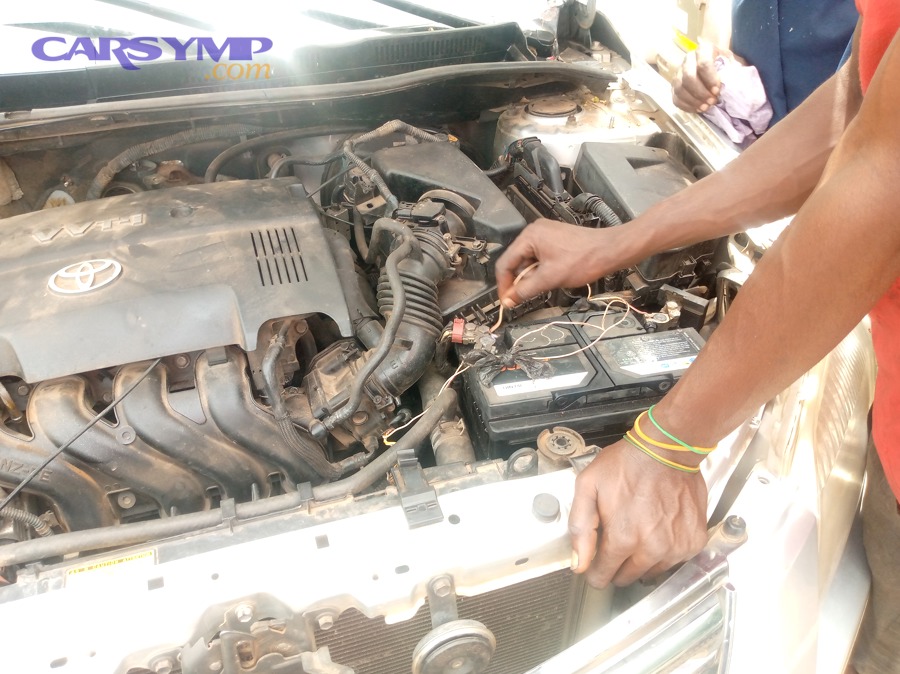
Why “drain” is not always an electrical fault
A battery can “go dead” without any abnormal key-off draw if it is sulfated, aged, undercharged repeatedly, or exposed to extreme temperatures. In that case, the battery voltage drops quickly under load even though nothing is actively draining it. Next, you’ll confirm the battery’s health before you chase wiring.
What “normal” key-off power use looks like today
Modern cars never go to absolute zero because memory keep-alives, security, and network listening remain active. The goal is to verify whether your vehicle settles into a stable, low standby current after it has fully powered down. Guidance from an automotive battery-support resource notes that newer vehicles often fall in a roughly 50–85 mA range once asleep, while older vehicles are often lower; readings above that range warrant deeper investigation.
Where the diagnosis usually ends (a single circuit)
Most successful cases end with one circuit or component: a light that stays on, an aftermarket accessory with poor shutoff behavior, a module that never sleeps, a charging diode leak, or a corroded connection causing repeated low-charge conditions. To get there efficiently, you’ll use a structured workflow—starting with “prove the complaint,” then “measure,” then “isolate.”
Is the battery really draining, or is it not recharging?
No—you should not assume the battery is draining until you confirm charging performance and battery condition, because a weak battery, a charging deficit, or short-trip driving can mimic the same symptom; the best approach is to test each in a specific order to avoid false conclusions.
To keep the workflow clean, start with charging-system confirmation, then battery capacity/health, and only then move to key-off draw. Next, you’ll see the quickest measurements that separate “drain” from “not charging.”
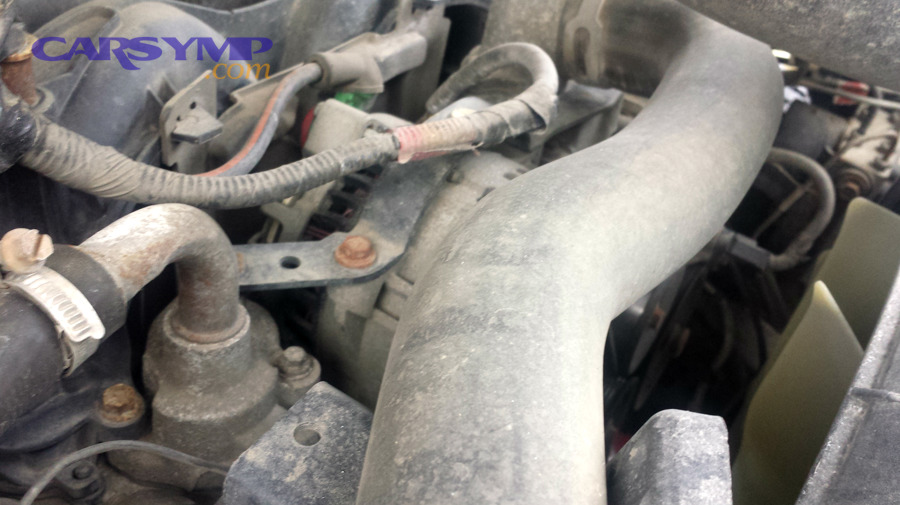
Fast charging-system checks you can do in minutes
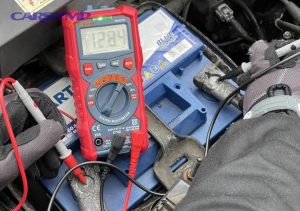
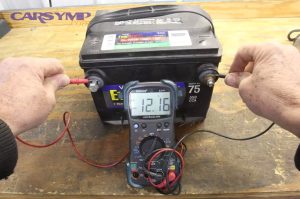
With the engine running, most vehicles should show a charging voltage above resting battery voltage; a stable reading in the mid-13s to mid-14s is common depending on temperature and smart charging strategy. If voltage stays near battery resting voltage while running, you may have a charging problem (belt, alternator, wiring, control strategy).
Battery condition checks that prevent “good alternator, still dead” loops
A battery can show decent voltage but still have poor capacity (it “looks charged” but collapses under load). If you have access to a load tester or conductance tester, use it. If not, watch for: slow crank, voltage drop under starter load, frequent jump-start needs, and rapid voltage recovery that falls again quickly.
When smart charging complicates diagnosis
Many vehicles modulate alternator output and may charge less aggressively once the battery is “good enough.” That doesn’t mean the alternator is bad, but it means you should verify charging under different conditions (headlights on, rear defrost on, moderate RPM). After that, if charging is clearly adequate, you can focus on key-off loads.
Which quick checks should you do before any tools?
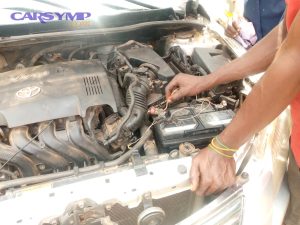
Before you connect a meter, do a quick inspection of connections, visible loads, and recent changes because these solve a large share of battery drain diagnosis cases with zero electrical testing.
Specifically, look for the easy-to-miss “always-on” culprits first, and then confirm battery and cable integrity. Next, you’ll reduce the chance of chasing a phantom problem created by a loose terminal or corrosion.
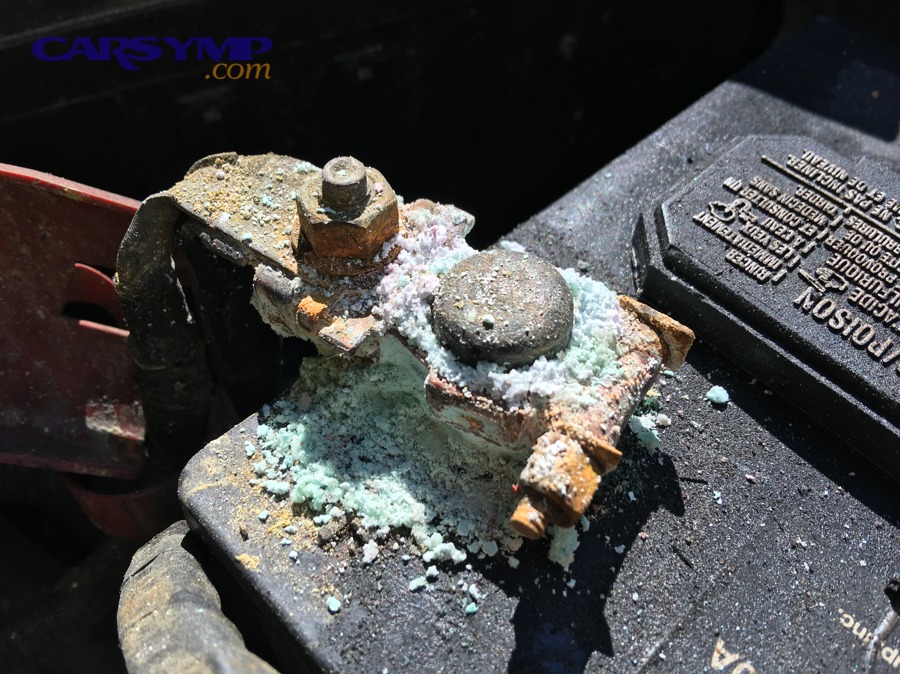
Connection integrity: the hidden “drain” that isn’t a drain
Loose terminals and corroded posts increase resistance, which can prevent proper charging and make starting demand spike. The result: the battery repeatedly operates undercharged and fails early. Clean, tighten, and verify that the clamp does not rotate by hand.
Visible loads: lights, chargers, and accessories
Check glove box, trunk, vanity mirror, and under-hood lights. Verify that phone chargers and dash cams shut off with ignition. If you have aftermarket audio amps, remote-start, or tracking hardware, note it—these frequently change key-off current behavior.
Recent changes matter more than age
If the issue started after a stereo install, alarm add-on, battery replacement, or body repair, treat that as a high-probability lead. In practice, the best diagnosis starts by asking: “What changed?” and then testing the circuits related to that change first.
How do you measure key-off current safely with a digital meter?
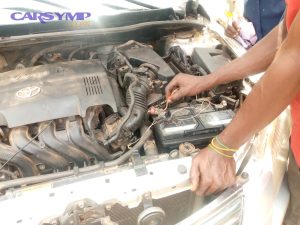
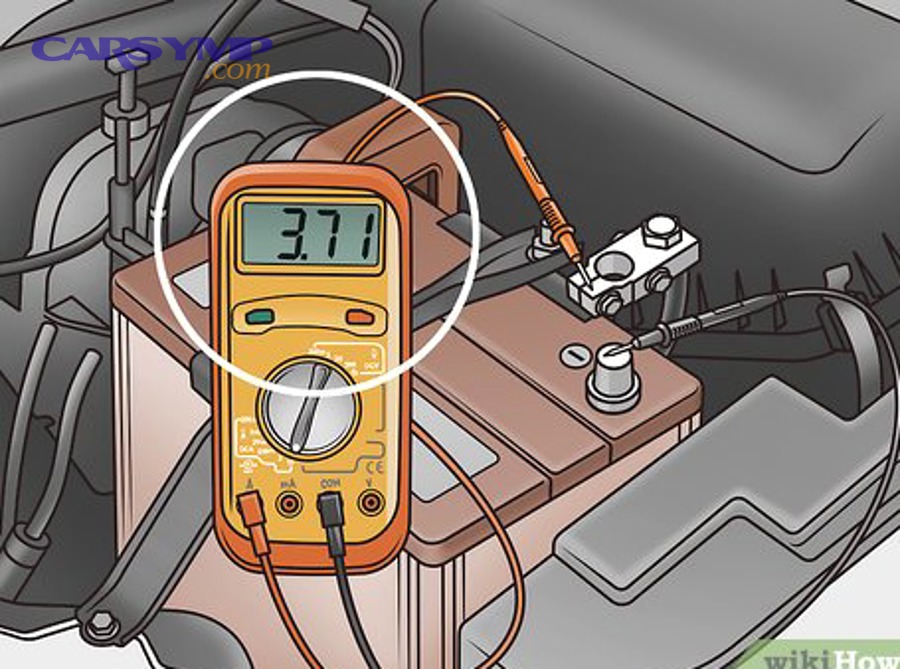
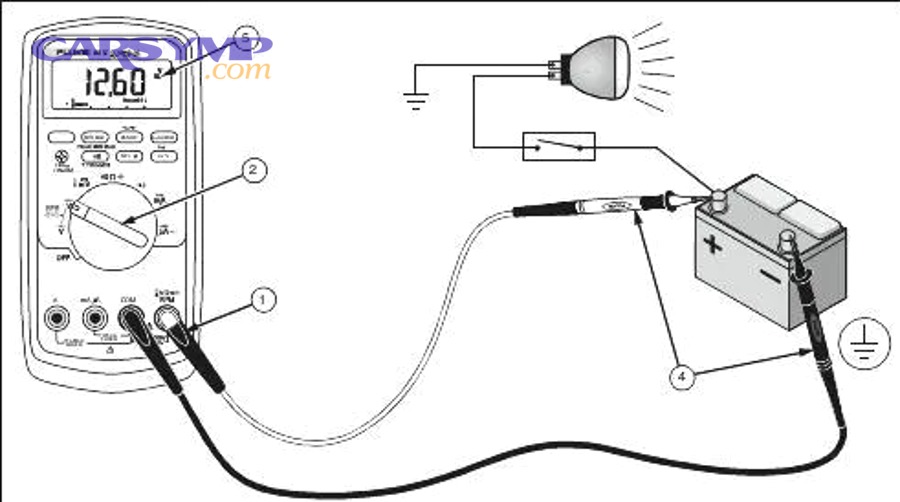
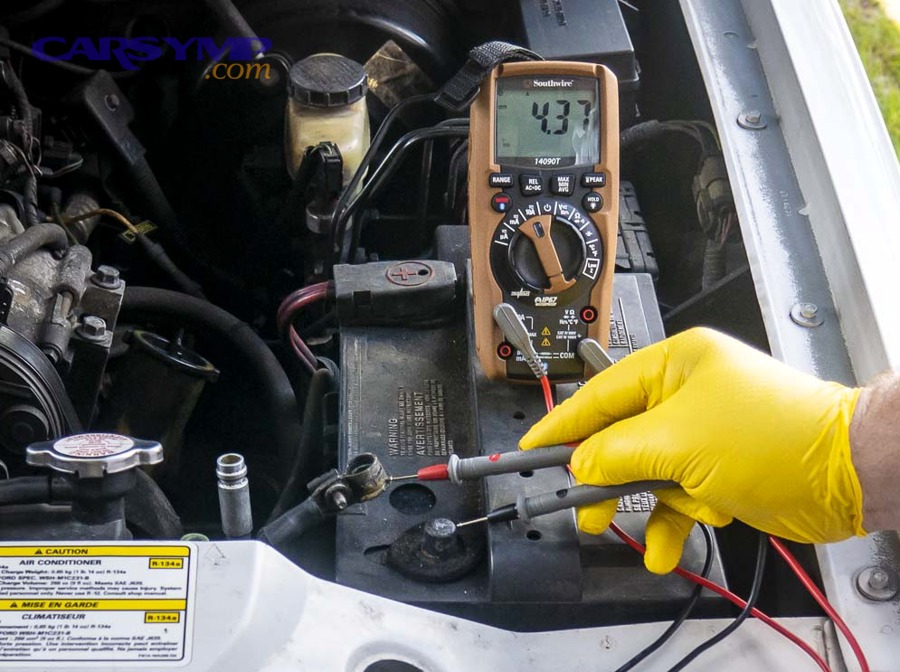
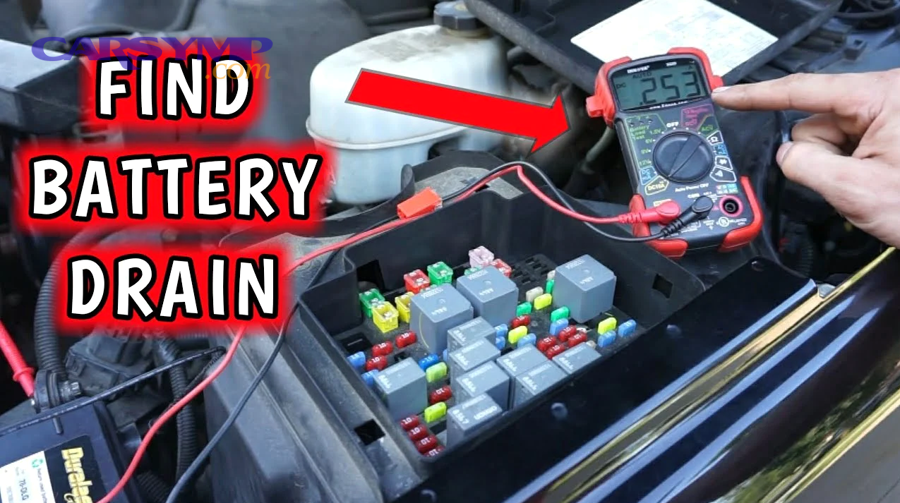
The safest method is to measure key-off current in series at the battery (or with a clamp meter designed for low DC current), then wait for the vehicle to enter sleep mode before judging whether the draw is normal or excessive.
To avoid blowing a meter fuse or waking modules, you must prepare the vehicle and the meter correctly. Next, you’ll walk through a clean setup that minimizes resets and false spikes.
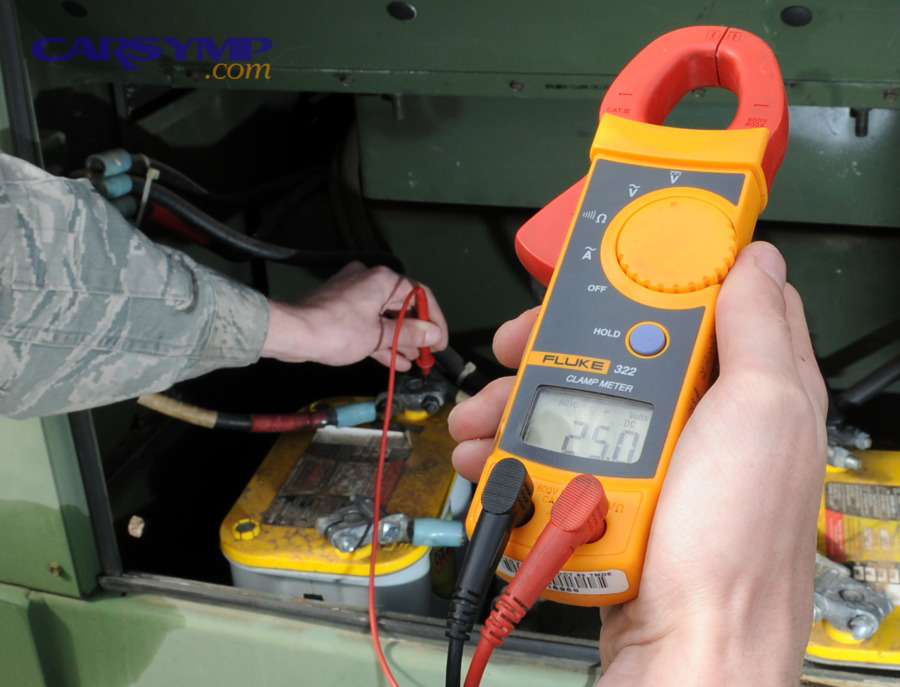
Preparation steps that prevent false readings
Disable under-hood lights, keep doors closed, latch door strikers if you need access, and lock the vehicle in the same way you normally park it. If your meter will be in series, set it to a high current range first, then step down only after you confirm the draw is within safe limits.
Sleep time is non-negotiable
Many vehicles remain awake for several minutes—and some for much longer—after shutdown. A technical service bulletin hosted by the U.S. safety defect database notes that quiescent current around roughly 30–50 mA can be considered normal under certain recent-unlock conditions and that measuring after locking and waiting helps obtain a valid reading.
How to interpret the number without panic
A brief spike right after shutdown is normal; what matters is the stabilized draw after sleep. If you stabilize in a typical low range and the battery still dies, shift focus to battery health or charging. If the draw remains high or never stabilizes, move to circuit isolation.
In practical terms, this is where “How to use a multimeter to find a draw” becomes a repeatable skill: you’re not hunting randomly—you’re confirming a stable baseline, then proving what changes it.
How can you isolate the problem circuit without guessing?
You can isolate the problem circuit by changing only one variable at a time—most commonly by removing fuses while monitoring stabilized key-off current—until the draw drops to normal, which identifies the circuit that is responsible.
This works because every fuse typically protects a defined branch of the electrical system. Next, you’ll use a controlled method that avoids waking modules and mislabeling the culprit circuit.
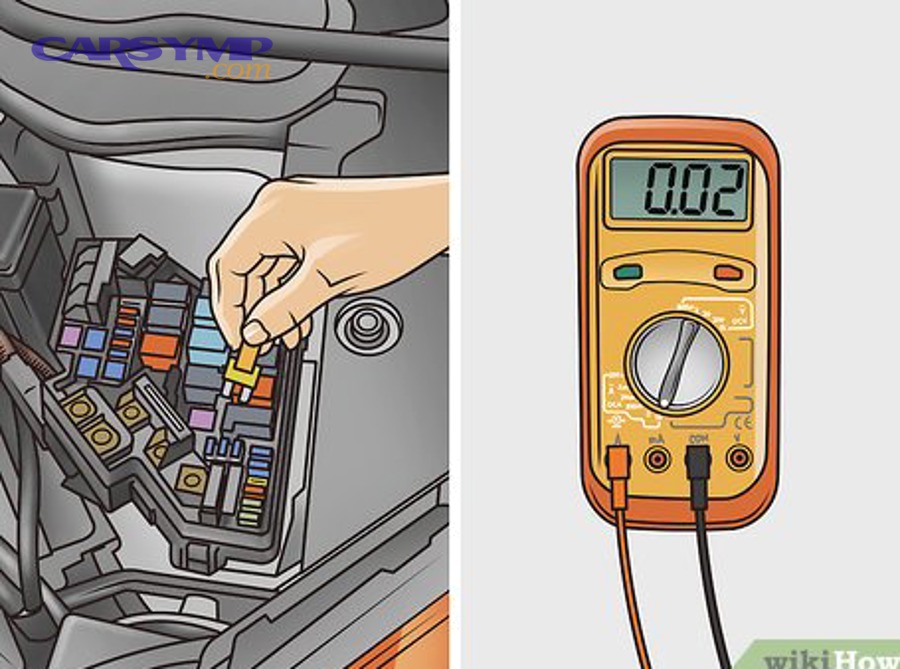
Fuse isolation done the “clean” way
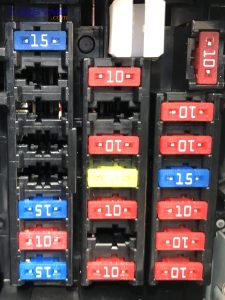
Once the vehicle is asleep and your current reading is stable, remove one fuse at a time and watch for a significant drop. Record: fuse location, label, current before/after, and whether re-inserting the fuse returns the draw. This is the most dependable “Fuse pull method to isolate the circuit” because it relies on before/after proof rather than assumptions.
What if pulling a fuse wakes the car?
If a fuse pull wakes a module, you may see temporary spikes. The fix is to restore the fuse, let the vehicle sleep again, and repeat with a different fuse sequence or use a low-amp clamp meter on individual branches where possible. Consistency beats speed here.
Use a table to map fuse results to next actions
This table helps you translate a fuse-drop result into the most likely next test, so you don’t stop at “this fuse did it” and still feel stuck.
| What you observe | What it usually means | Best next step |
|---|---|---|
| Large drop when a single fuse is pulled | One circuit branch is responsible | List components on that fuse; unplug one at a time to find the exact load |
| Small drops across many fuses | Multiple normal keep-alives, or measurement not stabilized | Re-check sleep state; verify baseline and time-to-sleep |
| No meaningful drop on any fuse | Possible unfused path (e.g., charging system leak) or measurement error | Check alternator leakage path; verify meter setup and grounds |
What usually keeps power on after the car is parked overnight?
There are several common categories of key-off power consumption that can kill a battery overnight: lighting that stays on, aftermarket devices, modules that never sleep, charging-system leakage, and intermittent wiring faults that appear only under certain conditions.
To make this actionable, you’ll group causes by how they behave, then pick tests that match that behavior. Next, you’ll learn patterns that let you recognize the culprit faster.
Lighting drains are simple—and extremely common
Interior, trunk, glove box, and vanity mirror lights can stay on due to misaligned latches or switch faults. This is why “Bad door switch and interior light drain” is a classic: the battery can lose a large amount of energy without any warning lights on the dash.
Accessories and add-ons that don’t truly shut down
Dash cams, OBD dongles, remote-start systems, amplifiers, and trackers can draw more than expected or fail to enter low-power mode. If your fuse test points to an accessory circuit, unplug the accessory first before replacing anything else.
Modules that never sleep (and the “awake” clue)
When a module stays awake, you may notice fans running after shutdown, a warm infotainment screen, repeated relay clicks, or the vehicle waking when you walk near it. This is where “Infotainment and module sleep issues” becomes a practical diagnosis category: the car behaves like it’s never fully off.
Charging-system leakage that mimics a perfect parasitic draw
A failed rectifier diode can allow current to leak backward through the alternator when the engine is off. An automotive repair resource explains that alternator diodes can create a closed path that depletes the battery overnight with ignition off.
In the field, technicians often describe this as “Alternator diode drain symptoms”: the battery dies when parked, yet fuse pulling doesn’t always reveal the issue because the alternator path may not be protected the way you expect.
When should you suspect the alternator, battery, or wiring?
You should suspect the alternator when charging behavior is inconsistent or key-off draw cannot be reduced by fuse isolation, suspect the battery when it cannot hold charge under load, and suspect wiring when the problem is intermittent, weather-related, or triggered by movement or vibration.
This comparison prevents the most expensive mistake: replacing a battery repeatedly when the root cause is charging or leakage. Next, you’ll see the signature clues that separate these categories.
Alternator suspicion clues
Clues include: battery warning light behavior, charging voltage irregularities, a draw that remains even after fuse isolation, and a pattern where the battery dies quickly after driving short trips with many electrical loads. If you can safely test alternator leakage (with proper procedure), it can confirm the issue without replacing parts blindly.
Battery suspicion clues
Clues include: the battery is older, has been deeply discharged multiple times, shows rapid voltage collapse under cranking, or fails a conductance/load test. Even if draw is normal, a weak battery can still “die overnight” if it starts the night undercharged.
Wiring and connection suspicion clues
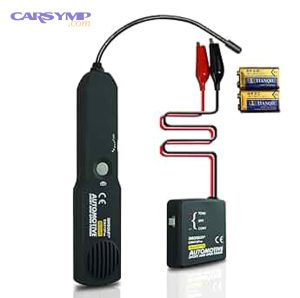
Intermittent drains often come from chafed wires, water intrusion, or poor grounds. If the problem appears after rain, car wash, or a repair, inspect harness routing and grounds near the affected circuit. Wiggling harnesses while monitoring current (carefully) can sometimes reproduce the change.
According to research by the Tofaş Ar-Ge Merkezi (R&D Center), in August 2024, standby power consumption procedures emphasize wake-up control and correct test setup, and also discuss how adding an electronic component can increase standby current and reduce battery life if not managed.
What does professional testing cost and what results should you expect?
Professional testing is worth it when the drain is intermittent, when access requires advanced scan tools and sleep-mode control, or when the vehicle architecture (multiple networks, smart charging) makes DIY testing unreliable; the “value” is not just the number—it’s the verified circuit and component list.
In other words, you’re paying for controlled conditions, known-good tools, and experience interpreting modern vehicle behavior. Next, you’ll know what to ask for so you get a useful answer, not just a vague estimate.
What a good diagnostic outcome looks like
A solid shop result includes: stabilized key-off current measurement, documentation of sleep time, identification of the circuit (via isolation), and the exact component(s) responsible. If a shop only says “battery is bad” without documenting key-off draw and charging, the root cause may remain.
When DIY results are “good enough”
If you find a clear stuck light, an accessory that stays on, a corroded terminal, or a single fuse that causes a major current drop—and you can confirm the fix with a stable low draw afterward—DIY is often sufficient.
How to talk to a shop so you get actionable data
Ask for: (1) stabilized draw reading and time to sleep, (2) which fuse/circuit changed the draw, (3) how they confirmed the component on that circuit, and (4) whether they checked alternator leakage and charging performance. This aligns with what many technicians informally call “Shop diagnostic cost for battery drain”—you’re paying for proof, not guesses.
According to research by the University of Michigan team publishing on arXiv, in January 2018, experiments showed that keeping vehicle electronics awake can multiply battery consumption (reported as at least 12.57× increase in average consumption), highlighting how wake-ups and network activity can materially affect parked battery life.
FAQ: Quick answers that keep battery drain diagnosis on track
This section answers the most common “stuck point” questions so you can continue the diagnosis without restarting from scratch.
Next, use these answers as checkpoints whenever your results feel confusing or inconsistent.
How long should you wait before trusting a key-off current reading?
Wait until the reading stabilizes and the vehicle is clearly asleep; on some vehicles this is 10–30 minutes, while others can take longer depending on network activity, security, and recent unlocking. If you open a door or trigger a wake-up, restart the sleep timer.
What if the battery drains only after a new battery is installed?
Sometimes “Battery drain after new battery install” is a perception issue: the new battery exposes an existing draw because it now has enough capacity to show the pattern clearly, or the vehicle needs battery registration/reset (on some platforms) to manage charging strategy correctly.
Can a single light really kill a battery overnight?
Yes. A trunk, glove box, or dome light can draw far more current than normal standby electronics. If your draw is high and you suspect lighting, visually verify shutoff and inspect switches and latches before deeper electrical work.
Why do fuse results sometimes change from test to test?
Because modules wake up and sleep in cycles, and because pulling a fuse can wake the vehicle. Stabilize conditions, keep the vehicle undisturbed, and repeat with consistent timing to confirm the pattern.
— Contextual Border — If you’ve identified the cause, the next step is preventing the drain from returning and avoiding repeat failures, especially on vehicles with complex electronics.
How can you reduce repeat drain problems long-term?
You can reduce repeat drain problems by confirming sleep behavior after repairs, managing accessories correctly, maintaining battery health, and addressing known triggers like stuck switches and charging-system leakage before they create another no-start event.
To make prevention practical, focus on habits and checks that keep standby current stable and keep the battery fully supported. Next, use the following scenarios to “future-proof” your fix.
Preventing repeat issues after repairs or installations
After any accessory install or electrical repair, re-check stabilized key-off current and confirm the vehicle can reach sleep mode. Many repeat failures happen because the original drain was fixed, but a new one was introduced (pinched wire, miswired accessory, incorrect constant power feed).
How to prevent a “new battery, same problem” cycle
Charge the battery fully after deep discharge, avoid repeated short trips that never restore charge, and verify that terminals and grounds are clean and tight. If your vehicle requires battery registration, follow the correct procedure so the charging strategy matches the battery’s characteristics.
Keeping lights and switches from becoming silent drains again
Make it a habit to verify trunk and glove box closure alignment, especially after cargo loading or body work. If you’ve experienced a switch-related drain once, consider proactively replacing marginal latches or switches rather than waiting for another failure.
Building a simple prevention routine you can repeat
Create a quick monthly routine: visual check for accessory shutoff, terminal inspection, and a quick voltage check after an overnight sit. In practice, “How to prevent future battery drain” becomes a routine—not a one-time fix—because batteries fail faster when repeatedly undercharged.