


A vacuum leak causing rough idle creates seven distinct warning signs: unstable RPM fluctuations at idle, excessive engine vibration, audible hissing or whistling sounds from the engine bay, check engine light with lean mixture codes (P0171/P0174), stalling or hesitation during acceleration, decreased fuel economy, and difficulty starting or maintaining idle. These symptoms occur because unmetered air enters the engine through cracks or gaps in vacuum hoses, intake manifold gaskets, or related components, disrupting the carefully balanced air-fuel ratio and forcing your engine to run lean with too much air and insufficient fuel.
Detecting and locating a vacuum leak requires systematic diagnostic approaches ranging from simple visual inspections to advanced smoke testing. Visual inspection methods involve examining vacuum hoses, intake manifold gaskets, PCV valves, and brake booster connections for visible cracks, splits, or loose fittings. The spray method using water or carburetor cleaner helps pinpoint leak locations by observing RPM changes when sprayed on suspected areas. Professional mechanics employ smoke tests that pump visible smoke through the vacuum system to reveal exact leak locations. Scan tool diagnostics confirm vacuum leaks by analyzing fuel trim values, with Short Term Fuel Trim (STFT) and Long Term Fuel Trim (LTFT) readings exceeding +15% at idle indicating lean conditions caused by vacuum leaks.
Understanding what causes vacuum leaks helps prevent future rough idle problems and guides effective repairs. Common causes include deteriorated vacuum hoses from age and heat exposure, warped or hardened intake manifold gaskets, failed brake booster diaphragms, malfunctioning PCV valves, stuck-open EGR valves, and cracked intake boots in turbocharged applications. Wear and tear naturally degrades rubber and plastic components over time, while improper installation during previous repairs can create immediate leak points that manifest as rough idle symptoms.
Repair costs vary significantly depending on the vacuum leak source, ranging from $10-50 for simple vacuum hose replacement to $200-1,000 for intake manifold gasket repairs. Below, we’ll explore each warning sign in detail, provide step-by-step detection methods, identify common causes, and explain repair solutions to help you diagnose and fix vacuum leak rough idle issues effectively.
What Is a Vacuum Leak and Why Does It Cause Rough Idle?
A vacuum leak is an unintended breach in the engine’s intake system that allows unmetered air to enter between the mass airflow sensor and the engine cylinders, disrupting the precisely calibrated air-fuel mixture and causing the engine to run lean. Specifically, the engine vacuum system operates on the principle that a running engine creates negative pressure (vacuum) in the intake manifold when the throttle valve restricts airflow during idle conditions. When cracks, gaps, or disconnections occur in vacuum hoses, intake manifold gaskets, or related sealing components, atmospheric pressure forces outside air into this low-pressure environment without passing through the mass airflow sensor that measures incoming air for fuel calculation purposes.
Understanding how vacuum leaks affect engine performance requires examining the relationship between air measurement and fuel delivery. Modern fuel-injected engines rely on the mass airflow sensor to measure the exact volume of air entering the engine, which the Powertrain Control Module (PCM) uses to calculate the precise amount of fuel to inject for optimal combustion. A vacuum leak introduces “unmetered air”—air that bypasses the mass airflow sensor—causing the actual airflow to exceed the measured airflow. Consequently, the PCM injects insufficient fuel based on the lower sensor reading, creating a lean air-fuel mixture with excessive air and inadequate fuel for proper combustion.
How Does a Vacuum Leak Affect Your Engine’s Air-Fuel Ratio?
The mass airflow sensor measures incoming air by calculating the volume of air passing through the intake system, sending this data to the PCM, which then determines fuel injection quantities to maintain the ideal stoichiometric ratio of approximately 14.7 parts air to 1 part fuel. When a vacuum leak allows additional air to enter downstream of the mass airflow sensor, the actual air-to-fuel ratio becomes leaner than the PCM expects, potentially reaching 16:1 or 17:1 instead of the optimal 14.7:1. This lean condition causes incomplete combustion, reduced power output, and the characteristic rough idle associated with vacuum leaks.
The PCM attempts to compensate for this imbalance by adjusting fuel trim values—Short Term Fuel Trim (STFT) for immediate corrections and Long Term Fuel Trim (LTFT) for sustained adjustments learned over time. However, when the vacuum leak introduces substantial unmetered air, the PCM’s compensation capabilities become overwhelmed, particularly at idle when airflow is naturally lower and the proportional impact of the leak is magnified. This explains why rough idle diagnosis often begins with checking fuel trim values, as STFT and LTFT readings consistently above +15% at idle strongly indicate vacuum leak conditions.
Why Is Rough Idle the Most Common Vacuum Leak Symptom?
Rough idle manifests as the primary vacuum leak symptom because the engine operates at its most sensitive state during idle conditions, with minimal airflow through the throttle body and maximum vacuum pressure in the intake manifold. At idle, the throttle valve closes nearly completely, restricting airflow to approximately 10-20 cubic feet per minute depending on engine displacement, which creates maximum vacuum pressure of 16-22 inches of mercury (Hg) in a healthy engine. When a vacuum leak introduces unmetered air during these conditions, it represents a much larger percentage of total airflow compared to higher RPM situations where the throttle opens wider and total airflow increases to 100+ cubic feet per minute.
The throttle body’s idle air control system struggles to maintain stable RPM when vacuum leaks disrupt the normal airflow balance. The idle air control valve or electronic throttle body continuously adjusts to maintain the target idle speed (typically 600-900 RPM), but a vacuum leak forces constant overcorrection as the system fights against the additional unmetered air entering the engine. This creates the characteristic RPM hunting behavior—fluctuations between low and high idle speeds—that defines vacuum leak rough idle symptoms. At higher engine speeds, the proportionally smaller impact of the leak becomes less noticeable as increased throttle opening and higher overall airflow mask the effects of the unmetered air entering through the vacuum leak.
According to automotive diagnostic research published by the Society of Automotive Engineers, vacuum leaks account for approximately 15-20% of all rough idle complaints in vehicles with over 75,000 miles, with the impact most pronounced during cold starts when idle air control systems have narrower operating margins.
What Are the 7 Warning Signs of Vacuum Leak Rough Idle?
There are seven primary warning signs that indicate a vacuum leak causing rough idle: unstable or bouncing RPMs at idle, excessive engine vibration when stopped, audible hissing or whistling sounds from the engine bay, check engine light illumination with lean mixture diagnostic codes, stalling or hesitation during acceleration, decreased fuel economy, and difficulty starting or maintaining idle. To better understand these symptoms, we’ll examine each warning sign individually, explaining the underlying mechanisms and providing specific diagnostic indicators to help you identify vacuum leak rough idle issues in your vehicle.
#1 – Does Your Engine Have Unstable or Bouncing RPMs at Idle?
Yes, unstable or bouncing RPMs represent the most recognizable vacuum leak rough idle symptom, characterized by tachometer needle fluctuations of 100-300 RPM above and below normal idle speed as the idle air control system struggles to compensate for unmetered air entering through the leak. Specifically, when you observe your vehicle at idle—whether at a stoplight, in park, or neutral—the tachometer needle should remain steady at your engine’s specified idle speed, typically between 600-900 RPM for most modern vehicles. However, vacuum leak rough idle causes the needle to bounce rhythmically or hunt between different RPM levels, sometimes dropping as low as 500 RPM before surging to 1,000 RPM or higher in irregular patterns.
The severity of RPM instability correlates directly with leak size and location. Minor vacuum leaks from small cracks in vacuum hoses create subtle RPM variations of 50-100 RPM that may seem like normal engine operation to untrained observers. Moderate leaks from deteriorated intake manifold gaskets produce more pronounced bouncing of 150-250 RPM, creating noticeable vibrations and an audibly uneven exhaust note. Severe vacuum leaks from disconnected brake booster hoses or large intake manifold cracks generate extreme RPM swings exceeding 300 RPM, often accompanied by complete stalling when the engine cannot maintain sufficient combustion to stay running.
Diagnostic technicians identify vacuum leak RPM instability by monitoring both the tachometer and OBD-II data streams simultaneously. While the tachometer shows RPM fluctuations, scan tool data reveals the idle air control valve position changing constantly (0-100% duty cycle variations) as it attempts to stabilize idle speed, and fuel trim values exceeding +15% as the PCM compensates for the lean condition. This combination—unstable RPM, active idle air control corrections, and elevated positive fuel trim—provides definitive evidence of vacuum leak rough idle requiring further investigation with spray tests or smoke diagnostics.
#2 – Is Your Engine Vibrating Excessively When Stopped?
Yes, excessive engine vibration during idle represents a physical manifestation of vacuum leak rough idle, occurring because RPM instability translates into uneven combustion forces that shake the engine on its mounts beyond normal operational levels. The relationship between RPM fluctuations and vibrations is direct: as the vacuum leak causes RPM to bounce between high and low speeds, the engine experiences alternating periods of strong combustion (during brief high-RPM surges) and weak combustion (during low-RPM dips), creating rhythmic shaking sensations transmitted through the steering wheel, seats, and floor panels.
Normal engine vibration at idle should be barely perceptible in properly functioning vehicles, with engine mounts designed to isolate combustion pulses from the passenger compartment. However, vacuum leak rough idle amplifies vibrations significantly because the irregular combustion pattern creates harmonic frequencies that engine mounts cannot effectively dampen. Drivers typically notice this excessive vibration when stopped at traffic lights, during extended idle periods in drive-through lanes, or immediately after starting the engine during cold starts when idle control systems operate with tighter parameters.
It’s crucial to differentiate vacuum leak vibrations from those caused by worn engine mounts, which produce constant, steady vibrations that worsen with load (shifting into gear, turning on air conditioning) rather than the fluctuating vibrations characteristic of vacuum leak rough idle. Engine mounts vs true rough idle diagnosis involves observing whether vibrations remain consistent regardless of RPM fluctuations (indicating mount issues) or whether vibrations intensify and diminish in sync with RPM bouncing (indicating vacuum leak or other idle control problems). This distinction matters because replacing worn engine mounts won’t resolve vacuum leak rough idle symptoms, though both conditions may coexist in high-mileage vehicles.
#3 – Do You Hear Hissing or Whistling Sounds From the Engine Bay?
Yes, audible hissing or whistling sounds emanating from the engine compartment indicate vacuum leaks, as atmospheric pressure rushing through cracks or gaps in the intake system creates distinctive high-pitched noises most noticeable during idle conditions. These sounds occur because vacuum leaks function like small wind instruments—when outside air at 14.7 PSI (atmospheric pressure) is drawn into the low-pressure intake manifold environment (typically 16-22 inches Hg below atmospheric pressure at idle), the pressure differential forces air through narrow openings at high velocity, generating frequencies in the audible range similar to whistling through pursed lips.
The characteristics of vacuum leak sounds vary based on leak location and size. Small pinhole leaks in vacuum hoses produce sharp, high-pitched whistling sounds resembling tea kettle whistles, often intermittent as engine vibrations flex damaged hoses. Moderate cracks in intake manifold gaskets create steady hissing sounds similar to compressed air escaping, with volume increasing during cold starts when vacuum pressure peaks. Large breaches such as disconnected brake booster hoses generate loud whooshing or sucking sounds audible from outside the vehicle, sometimes mistaken for turbocharger operation in non-turbocharged engines.
Locating the sound source requires systematic listening with the hood open while the engine idles, focusing on common vacuum leak areas including the intake manifold perimeter where gaskets seal to the cylinder head, vacuum hose connections at the brake booster, PCV valve, and EVAP system ports, and the throttle body gasket interface. Mechanics often use automotive stethoscopes or long screwdrivers held against suspected areas to amplify sounds and pinpoint exact leak locations. The DIY tests before visiting a shop approach involves carefully listening near these components during idle, noting that vacuum leak sounds typically intensify immediately after cold starts and may diminish slightly as the engine warms and components expand.
#4 – Is Your Check Engine Light On With Lean Mixture Codes?
Yes, check engine light illumination accompanied by lean mixture diagnostic trouble codes P0171 (System Too Lean Bank 1) or P0174 (System Too Lean Bank 2) strongly indicates vacuum leak rough idle conditions requiring diagnostic investigation. The PCM monitors oxygen sensor data downstream of combustion to verify whether the actual air-fuel ratio matches the commanded ratio based on mass airflow sensor and fuel injector calculations. When oxygen sensors consistently report higher oxygen content in exhaust gases than expected—indicating insufficient fuel relative to air—the PCM recognizes a lean condition and sets diagnostic codes after multiple drive cycles confirm the problem persists.
Specifically, P0171 and P0174 codes trigger when fuel trim values exceed programmed limits, typically when LTFT exceeds +25% or when combined STFT and LTFT values exceed +35% for sustained periods. These codes don’t definitively confirm vacuum leaks, as other conditions like failing mass airflow sensors, weak fuel pumps, or clogged fuel injectors also create lean conditions. However, when P0171/P0174 codes appear alongside rough idle symptoms, RPM instability, and fuel trim values that worsen at idle but improve at higher RPMs, vacuum leaks become the primary suspect requiring verification through spray tests or smoke diagnostics.
Scan tool diagnostics reveal the characteristic vacuum leak signature: STFT values ranging from +15% to +30% at idle, dropping to +5% to +10% at 2,000-2,500 RPM as the proportional impact of unmetered air diminishes with increased throttle opening and higher overall airflow. Additionally, the PCM may set secondary codes related to fuel system performance (P0170, P0173) or idle air control function (P0505, P0506) as it struggles to maintain proper air-fuel ratios and stable idle speed despite maximum compensation efforts. This combination of lean codes, elevated fuel trim at idle, and idle control codes provides strong diagnostic evidence for Rough idle causes checklist evaluation pointing toward vacuum leak sources.
#5 – Does Your Car Stall or Hesitate During Acceleration?
Yes, stalling or hesitation during acceleration occurs with vacuum leak rough idle because the engine operates in a fuel-starved condition where insufficient fuel combines with excess air, preventing proper combustion and limiting power generation when you demand increased performance. This symptom manifests differently depending on vacuum leak severity: minor leaks create slight hesitation or stumbling when accelerating from idle, moderate leaks produce pronounced lag before the engine responds to throttle input, and severe leaks may cause complete stalling when attempting to accelerate from stopped positions or when coasting to a stop as idle speed drops below sustainable levels.
The acceleration hesitation mechanism involves several factors working simultaneously against smooth power delivery. First, the lean air-fuel mixture caused by unmetered air entering through the vacuum leak burns slower and less completely than properly balanced mixtures, reducing the energy released per combustion cycle and limiting torque production during initial acceleration. Second, when you press the accelerator pedal from idle, the throttle opens rapidly, but the vacuum leak continues introducing unmetered air that the mass airflow sensor cannot account for, temporarily worsening the lean condition until higher airflow volumes dilute the leak’s proportional impact. Third, the PCM’s fuel trim compensations optimized for idle conditions may overcompensate or undercompensate during transient throttle changes, creating momentary fuel delivery mismatches that manifest as hesitation or stumbling.
Drivers typically notice this symptom when pulling away from stop signs or traffic lights, merging onto highways from ramps, or any situation requiring quick acceleration from low speeds. The engine may feel “gutless” or “choked,” responding slowly to throttle input despite normal pedal movement, sometimes accompanied by brief misfires that create popping sounds from the exhaust or backfires through the intake manifold. In severe cases, the engine may die completely when stopped at intersections, requiring restart attempts that may fail initially due to the extreme lean condition preventing ignition of the air-fuel mixture. This stalling risk makes vacuum leak rough idle not just a performance annoyance but a genuine safety concern requiring prompt repair attention.
#6 – Are You Experiencing Decreased Fuel Economy?
Yes, decreased fuel economy represents a counterintuitive vacuum leak symptom, as drivers often assume lean air-fuel mixtures would improve efficiency, but the PCM’s compensation strategy actually increases fuel consumption in attempts to restore proper combustion. When oxygen sensors report lean conditions caused by vacuum leak unmetered air, the PCM responds by enriching the fuel mixture through positive fuel trim adjustments, commanding fuel injectors to remain open longer and deliver additional fuel to compensate for the perceived air excess. This compensation continues constantly while driving, effectively wasting fuel to overcome a problem (unmetered air) that shouldn’t exist in properly sealed intake systems.
The fuel economy impact varies based on vacuum leak severity and driving conditions. Minor leaks causing +15% to +20% fuel trim corrections typically reduce fuel economy by 5-10%, translating to 1-3 MPG losses in typical passenger vehicles. Moderate leaks requiring +20% to +30% fuel trim compensation can decrease efficiency by 10-20%, potentially costing 3-6 MPG depending on baseline fuel economy. Severe leaks exceeding +30% fuel trim create such extreme compensation demands that fuel economy may drop 20-30% or more, though such severe leaks usually produce rough idle symptoms severe enough to prompt repair before drivers notice gradual fuel economy degradation.
Additionally, vacuum leak rough idle creates secondary fuel economy losses through incomplete combustion and increased idle time. The lean air-fuel mixture burns inefficiently, converting less chemical energy from fuel into mechanical work and wasting more energy as unburned hydrocarbons expelled through the exhaust. Extended rough idle periods at stoplights, drive-throughs, and parking lots consume more fuel than smooth idle operation while producing no vehicle movement, compounding the economy impact. Drivers monitoring fuel economy through vehicle information displays or fuel log tracking apps often notice gradual MPG declines of 2-5 MPG developing over weeks or months as vacuum leaks worsen through progressive deterioration of rubber hoses or gasket materials.
#7 – Does Your Engine Struggle to Start or Maintain Idle?
Yes, severe vacuum leaks cause engines to struggle during cold starts and fail to maintain stable idle speeds, with some cases preventing the engine from running at all when the leak introduces so much unmetered air that the air-fuel mixture becomes too lean for reliable ignition. This symptom represents the extreme end of vacuum leak progression, typically occurring after minor rough idle symptoms have been ignored for extended periods, allowing small leaks to enlarge through continued deterioration of damaged components. Cold start difficulties arise because cold engines require richer fuel mixtures (more fuel, less air) to compensate for fuel condensation on cold intake surfaces and reduced fuel vaporization at low temperatures, but vacuum leaks work against this enrichment by adding excess air the PCM cannot adequately compensate for during cold start fuel delivery strategies.
The starting and idle maintenance problems manifest in predictable patterns that help distinguish vacuum leaks from other starting issues. During cold starts, the engine may crank normally but require extended cranking periods (5-10 seconds instead of 1-2 seconds) before achieving sustained running, often accompanied by severe shaking and RPM fluctuations between 300-800 RPM during the first 30-60 seconds. Once running, the engine may die immediately when transitioning from high idle (1,200-1,500 RPM cold start idle) to normal idle (600-900 RPM), requiring multiple restart attempts. In extreme cases, the engine starts briefly but dies within 1-2 seconds unless the driver maintains throttle input to increase airflow and dilute the vacuum leak’s proportional impact.
Warm idle maintenance problems differ slightly from cold start issues. After the engine reaches normal operating temperature, vacuum leak rough idle may improve marginally as metal components expand and partially seal small cracks, but the fundamental problem persists. The engine may idle roughly but remain running at normal temperatures, only to die when additional loads activate (air conditioning compressor, power steering pump at full lock, electrical loads like headlights and rear defrosters) that reduce available engine power below the threshold needed to maintain combustion with the compromised air-fuel mixture. These load-related stalling events provide additional diagnostic clues that the rough idle causes checklist should prioritize vacuum leak investigation over other potential causes like idle air control valve failures or throttle body carbon buildup.
How Can You Detect and Locate a Vacuum Leak Causing Rough Idle?
Detecting and locating vacuum leaks requires four primary diagnostic methods: visual inspection of vacuum system components for visible damage, spray testing with water or combustible fluids to identify leak locations through RPM changes, professional smoke testing that pumps visible smoke through the intake system, and scan tool analysis of fuel trim values and oxygen sensor data. Each method offers distinct advantages for different skill levels and equipment availability, with visual inspection and spray testing accessible to DIY enthusiasts while smoke testing and comprehensive scan tool diagnostics typically require professional equipment and expertise.

What Is the Visual Inspection Method for Finding Vacuum Leaks?
Visual inspection represents the simplest and most cost-effective vacuum leak detection method, involving systematic examination of all vacuum system components for cracks, splits, disconnections, and deterioration that allow unmetered air to enter the intake system. To perform effective visual inspection, open the hood with the engine off and cool, then methodically examine vacuum hoses starting from the intake manifold and working outward to connected components including the brake booster, PCV valve, EVAP system purge valve, fuel pressure regulator (in older vehicles), and any auxiliary vacuum-operated accessories like HVAC actuators or cruise control servos.
Common vacuum leak locations include vacuum hose connections where rubber meets plastic or metal fittings, as these junction points experience movement during engine vibration that works hoses loose over time. Inspect each connection for proper seating, looking for gaps between hose ends and fittings, or hoses that slide off easily when gently pulled, indicating insufficient clamping force or oversized hose deterioration. Examine vacuum hoses throughout their length for surface cracks running perpendicular to the hose axis, particularly near heat sources like exhaust manifolds where elevated temperatures accelerate rubber degradation. Check hose flexibility by gently squeezing sections between your fingers—healthy vacuum hoses feel pliable and spring back, while deteriorated hoses feel stiff, brittle, or collapse and remain compressed.
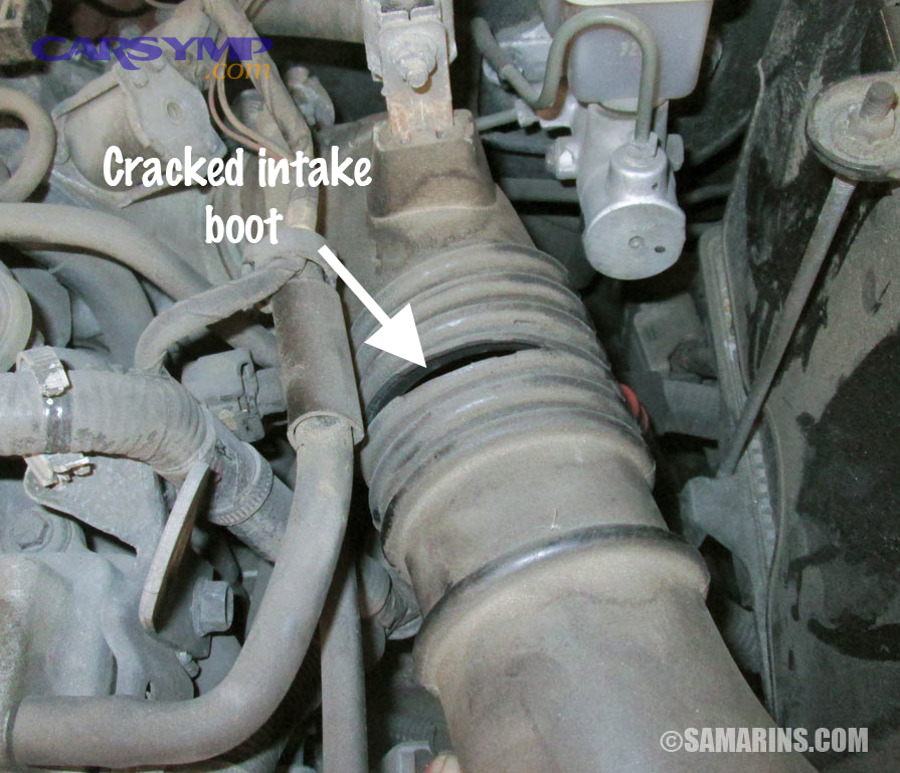
Intake manifold gaskets require special attention during visual inspection, though they’re largely hidden beneath the manifold itself. Look for carbon deposits, oil residue, or coolant staining along the manifold-to-cylinder head mating surfaces, as these indicate gasket failure allowing both vacuum leaks and fluid migration. Inspect the PCV valve and its connecting hoses, as PCV system failures commonly create vacuum leaks—remove the PCV valve and shake it to verify the internal check valve rattles freely, and examine PCV hoses for the characteristic oil-soaked deterioration that causes collapse and cracking. For turbocharged engines, pay particular attention to the intake boot connecting the turbocharger outlet to the throttle body, as this large-diameter rubber component frequently develops cracks near clamp locations or at bend points where flexing concentrates stress.
The brake booster represents another critical inspection point, particularly the large vacuum hose connecting the intake manifold to the booster check valve. Disconnect this hose at both ends to inspect for internal cracking or collapse not visible externally, and verify the booster check valve holds vacuum by attempting to blow through it from the engine side (air should not pass when the check valve functions properly). This DIY tests before visiting a shop approach allows you to identify obvious vacuum leak sources before investing in professional diagnostics, potentially saving diagnostic fees if visual inspection reveals clear damage requiring straightforward hose replacement.
How Do You Use the Spray Method to Identify Vacuum Leaks?
The spray method identifies vacuum leak locations by applying water, carburetor cleaner, or propane gas near suspected leak areas while the engine idles, then observing RPM changes that occur when the spray substance is drawn into the leak and temporarily alters combustion conditions. This diagnostic approach works on the principle that vacuum leaks create suction at breach points, pulling nearby substances into the intake manifold where they affect the air-fuel mixture and engine operation in detectable ways. Water spray creates temporary lean mixture improvements by adding moisture that promotes better fuel vaporization, while carburetor cleaner or propane enriches the mixture by providing combustible material that compensates for the vacuum leak’s lean condition.
To perform water spray testing safely and effectively, fill a spray bottle with clean water, start the engine and allow it to reach normal operating temperature, then systematically spray suspected vacuum leak areas while watching the tachometer for RPM changes. When water is drawn into a vacuum leak, engine RPM typically increases momentarily by 50-150 RPM as improved fuel vaporization temporarily compensates for the lean condition, or in some cases, RPM may decrease or the engine may stumble if excessive water volume overwhelms combustion. Concentrate spray application on vacuum hose connections, intake manifold gasket perimeters, throttle body gasket edges, PCV valve connections, and brake booster hose interfaces, spending 2-3 seconds spraying each location while monitoring for RPM responses.
Carburetor cleaner spray testing follows similar procedures but with critical safety precautions due to the product’s flammability. Use carburetor cleaner only in well-ventilated areas away from ignition sources, and never spray directly onto hot exhaust components or near spark plug wires. When carburetor cleaner is drawn into a vacuum leak, the combustible vapors enrich the lean air-fuel mixture, causing RPM to increase noticeably (100-300 RPM) and idle quality to improve temporarily as the added fuel compensates for the vacuum leak’s excess air. This RPM increase provides more dramatic indication than water spray, making carburetor cleaner testing particularly useful for small leaks that produce subtle symptoms. However, the fire risk requires careful application using the product’s provided spray straw to direct cleaner precisely at suspected leak points rather than broad-area spraying.
Propane enrichment testing offers a safer alternative to carburetor cleaner while providing similar diagnostic capabilities. Using an unlit propane torch with the valve barely opened to release a small, controlled propane stream, direct the gas near suspected vacuum leak areas while the engine idles. When propane is drawn into a leak, it enriches the mixture like carburetor cleaner, increasing RPM and smoothing rough idle temporarily. The advantage of propane testing is reduced fire risk compared to carburetor cleaner spray, though extreme caution remains necessary to prevent propane accumulation in the engine compartment. Regardless of spray method chosen, always have a fire extinguisher nearby and avoid testing in enclosed spaces where flammable vapors may accumulate—these DIY tests before visiting a shop can effectively locate vacuum leaks, but safety must take priority over convenience.
What Is a Smoke Test and When Should You Use It?
A smoke test is a professional diagnostic procedure that pumps dense, non-toxic, mineral oil-based smoke into the intake system under slight pressure (typically 0.5-2.0 PSI), allowing technicians to visually identify vacuum leak locations as smoke escapes through cracks, gaps, or damaged gaskets. This method provides definitive vacuum leak identification because smoke creates visible evidence of even small leaks that might escape detection through visual inspection or spray testing. Professional smoke machines generate consistent smoke volume and pressure while incorporating integrated leak detection capabilities including pressure decay monitoring and smoke density controls that help technicians distinguish between significant leaks requiring repair and minor seepage within acceptable tolerances.
The smoke test procedure begins with sealing the intake system to contain the introduced smoke. Technicians typically remove the intake tube between the air filter box and throttle body, installing a custom blockoff plate with a smoke machine connection port. Alternative connection points include the PCV system, brake booster vacuum line, or EVAP system purge port, depending on which provides the best access to the intake manifold vacuum network. Once connected, the smoke machine pumps mineral oil vapor into the sealed system while the engine remains off, building slight positive pressure that forces smoke through any vacuum leak openings. Technicians then visually inspect all vacuum system components, watching for smoke escaping from damaged areas.
Vacuum leaks reveal themselves as wispy smoke tendrils emerging from crack locations, gasket failures, or loose connections. Small leaks in vacuum hoses appear as thin smoke streams, while significant intake manifold gasket failures produce obvious smoke clouds rising from the manifold perimeter. The smoke machine’s pressure gauge helps assess leak severity—systems with major leaks cannot maintain pressure, with the gauge dropping rapidly as smoke escapes, while minor leaks show gradual pressure decay over several minutes. Experienced technicians correlate smoke test findings with rough idle diagnosis symptoms, prioritizing repair of leaks most likely to cause the customer’s specific complaints rather than addressing every minor imperfection discovered during testing.
Use professional smoke testing when visual inspection and spray testing fail to identify vacuum leak sources despite persistent rough idle symptoms and diagnostic code evidence of lean conditions. Smoke testing becomes particularly valuable for locating leaks in hidden areas like intake manifold gasket failures beneath the manifold itself, internal PCV valve passage cracks, or EVAP system leaks in hard-to-access locations. Additionally, intermittent vacuum leaks that only open under specific temperature or vibration conditions may escape detection during static visual inspection but become apparent during smoke testing as technicians can tap and manipulate components while observing for smoke emergence. The typical diagnostic fee for professional smoke testing ranges from $100-150, which many vehicle owners find worthwhile after spending hours attempting DIY detection methods without success.
Can You Use a Scan Tool to Confirm a Vacuum Leak?
Yes, scan tools confirm vacuum leaks through fuel trim analysis, with STFT and LTFT values providing quantitative evidence of lean air-fuel conditions caused by unmetered air entering the intake system, typically showing positive corrections exceeding +15% at idle that decrease toward normal ranges when engine speed increases to 2,000-2,500 RPM. This diagnostic pattern—excessive positive fuel trim at idle improving at higher RPM—creates a characteristic signature that distinguishes vacuum leaks from other lean condition causes like failing fuel pumps (lean at all engine speeds) or restricted fuel injectors (lean conditions worsen under load rather than improving at higher RPM).
To perform scan tool vacuum leak diagnosis, connect an OBD-II scan tool capable of displaying live data streams, navigate to the fuel trim parameters (found in the engine data PIDs), and observe STFT and LTFT values while the engine idles at normal operating temperature. Healthy engines display fuel trim values ranging from -5% to +5%, indicating the PCM makes only minor corrections to achieve proper air-fuel ratios. Vacuum leak conditions push these values into positive ranges—STFT values of +15% to +30% and LTFT values of +10% to +25% strongly suggest vacuum leaks, as the PCM adds substantial fuel to compensate for excess air entering through leak points.
The RPM-dependent fuel trim pattern provides additional confirmation. While observing fuel trim at idle (noting the elevated positive values), gradually increase engine speed to 1,500 RPM, then 2,000 RPM, then 2,500 RPM, watching how fuel trim values respond. Vacuum leak conditions show fuel trim decreasing (moving toward 0% or even slightly negative) as RPM increases because higher engine speeds create greater total airflow through the throttle body, reducing the proportional impact of the fixed amount of unmetered air entering through the vacuum leak. In contrast, fuel delivery problems like weak fuel pumps or clogged fuel filters show fuel trim remaining elevated or worsening at higher RPM as fuel delivery limitations become more pronounced under increased demand.
Advanced scan tools provide additional diagnostic data supporting vacuum leak confirmation. Monitor oxygen sensor voltage switching patterns—vacuum leaks often show oxygen sensors reporting lean conditions (low voltage, 0.1-0.3 volts) more frequently than rich conditions, creating an asymmetric switching pattern rather than the balanced oscillation seen in healthy systems. Check mass airflow sensor readings, comparing actual values against specification charts for your specific engine—vacuum leak conditions often show lower-than-expected MAF readings at idle because unmetered air enters downstream of the sensor. Review diagnostic trouble codes for the complete picture, as P0171/P0174 lean codes combined with idle air control codes (P0505, P0506) and elevated positive fuel trim creates comprehensive evidence supporting rough idle diagnosis pointing toward vacuum leak sources requiring physical inspection and testing to locate.
What Causes Vacuum Leaks That Lead to Rough Idle?
Vacuum leaks develop from six primary causes: deteriorated rubber vacuum hoses suffering age-related cracking and hardening, warped or hardened intake manifold gaskets failing to seal properly, ruptured brake booster diaphragms allowing unmetered air into the intake system, malfunctioning PCV valves and degraded PCV hoses, stuck-open EGR valves introducing exhaust gases that disrupt combustion, and cracked intake boots in turbocharged engines experiencing pressure cycling stress. Understanding these failure mechanisms helps owners prioritize preventive maintenance and guides technicians toward likely leak sources during rough idle diagnosis procedures.
Which Engine Components Commonly Develop Vacuum Leaks?
Engine components that commonly develop vacuum leaks include vacuum hoses (particularly those exposed to high heat), intake manifold gaskets, throttle body gaskets, brake booster diaphragms, PCV valves and hoses, EGR valves, and turbocharged engine intake boots. Vacuum hoses represent the most frequent vacuum leak source, as these rubber or silicone components undergo constant flexing from engine vibration while enduring temperature extremes from ambient cold to 200°F+ in the engine bay. Heat exposure near exhaust manifolds accelerates rubber degradation, causing hoses to become brittle, develop surface cracks running perpendicular to the hose length, or suffer internal collapse that creates partial restrictions with intermittent vacuum leaks.
Intake manifold gaskets fail through multiple mechanisms depending on gasket material composition. Modern multi-layer steel (MLS) gaskets resist heat and pressure effectively but can fail at sealing ridges when intake manifolds warp from repeated thermal cycling. Traditional composite gaskets containing paper, rubber, or cork materials deteriorate when exposed to oil, coolant, or prolonged heat, hardening until they lose sealing flexibility and allow vacuum leaks along the manifold perimeter. Aluminum intake manifolds—common in modern engines for weight reduction—particularly susceptible to warping as aluminum expands and contracts more than cast iron during temperature changes, progressively distorting the manifold sealing surfaces until gaskets can no longer maintain proper seal.
The brake booster vacuum system contains a large rubber diaphragm that separates the vacuum chamber from atmospheric pressure, using intake manifold vacuum to multiply brake pedal force and reduce the effort required for effective braking. Over time, this diaphragm develops cracks or pinholes from flexing cycles (every brake application), allowing atmospheric pressure to leak into the vacuum side and creating a significant vacuum leak connected directly to the intake manifold. Brake booster diaphragm failures often produce particularly severe rough idle symptoms because the large-diameter vacuum hose connecting the booster to the intake manifold (typically 3/8″ to 1/2″ inner diameter) allows substantial unmetered air to enter when the diaphragm fails.
PCV (Positive Crankcase Ventilation) system components frequently develop vacuum leaks as oil vapors coating internal passages degrade rubber materials and create sludge deposits that prevent proper valve sealing. The PCV valve contains a spring-loaded check valve that should allow crankcase gases to flow into the intake manifold during normal operation while closing to prevent backflow when the engine is off or during high-vacuum conditions. When PCV valves fail in the open position—often from carbon buildup or spring fatigue—they create permanent vacuum leak passages from the crankcase to the intake manifold. PCV hoses suffer particularly severe degradation from oil vapor exposure, becoming soft and swollen initially, then hardening and cracking as volatile compounds evaporate from the rubber compound.
Turbocharged engines experience unique vacuum leak vulnerabilities in the intake boot—the large rubber or silicone connection between the turbocharger compressor outlet and the throttle body inlet. This component endures significant stress from positive pressure (boost) and negative pressure (vacuum) cycling thousands of times during normal driving, combined with vibration from turbocharger operation and heat exposure from the hot-side turbo housing. Intake boots commonly crack at hose clamp locations where compression stress concentrates, or at bend points where flexing movement occurs, creating vacuum leaks that worsen progressively as cracks propagate through the material thickness.
According to data from the Automotive Service Association, vacuum hoses and PCV system components account for approximately 40% of vacuum leak repairs, intake manifold gaskets represent 30%, brake booster diaphragms contribute 15%, and throttle body gaskets, EGR valves, and other sources comprise the remaining 15%.
Does Wear and Tear Always Cause Vacuum Leaks?
No, vacuum leaks develop from both progressive wear and tear affecting aging components and immediate failures caused by improper installation, impact damage, or manufacturing defects, though age-related deterioration accounts for the majority of vacuum leak cases in vehicles exceeding 75,000 miles or seven years of service. Wear and tear mechanisms operate gradually, with rubber and plastic materials experiencing cumulative damage from thermal cycling, ozone exposure, chemical contamination from oil and fuel vapors, and mechanical stress from vibration and pressure fluctuations. This progressive deterioration explains why vacuum leak rough idle symptoms often develop slowly, with minor roughness gradually worsening over weeks or months as small cracks enlarge and gasket materials harden beyond their sealing capabilities.
Heat exposure accelerates material degradation significantly, particularly for vacuum hoses routed near exhaust manifolds, catalytic converters, or turbocharger housings. Rubber compounds contain volatile plasticizers that maintain flexibility at normal temperatures, but exposure to sustained heat above 200°F causes these plasticizers to evaporate, leaving behind brittle rubber that cracks easily under normal flexing. The rough idle causes checklist should prioritize inspection of high-heat vacuum hoses when diagnosing older vehicles, as these components predictably fail within 5-7 years in severe thermal environments despite appearing superficially intact from external visual inspection.
Installation errors create immediate vacuum leaks or set up conditions for rapid failure. Common installation mistakes include using incorrect hose sizes that fit loosely on fittings (allowing leaks), failing to properly seat intake manifold gaskets (creating gaps), over-torquing intake manifold bolts (crushing gaskets or cracking plastic manifolds), or routing vacuum hoses near sharp edges or moving components (causing abrasion damage). When vacuum leak symptoms appear immediately after engine work like intake manifold removal, spark plug replacement, or fuel system service, installation errors become the primary suspect rather than natural deterioration.
Manufacturing defects occasionally produce vacuum leaks in relatively new vehicles, particularly in intake manifold castings that develop porosity (microscopic voids in the cast material) allowing vacuum passage between the internal plenum and external atmosphere. These defects typically manifest as persistent rough idle symptoms in vehicles with low mileage (under 30,000 miles) that don’t respond to vacuum hose replacement or standard repairs. Additionally, some vehicle models experience design-related vacuum leak issues from inadequate gasket materials, insufficient manifold bolt clamping force, or vacuum hose routing that exposes components to excessive heat or vibration. Technical service bulletins (TSBs) address these systematic problems, often providing updated parts or revised installation procedures to prevent recurring vacuum leaks.
How Do You Fix a Vacuum Leak and What Are the Repair Costs?
Fixing vacuum leaks involves identifying the specific leak source through diagnostic procedures, then replacing the damaged component with appropriate parts and ensuring proper installation to prevent recurrence, with total repair costs ranging from $10 for simple vacuum hose replacement to $1,000+ for severe intake manifold gasket repairs requiring extensive disassembly. The repair approach varies dramatically based on leak location and accessibility—external vacuum hose replacement requires only basic hand tools and 15-30 minutes of work, while intake manifold gasket replacement demands several hours of labor to remove intake components, clean sealing surfaces, install new gaskets with proper torque specifications, and reassemble systems in reverse order.
What Is the Average Cost to Repair Common Vacuum Leak Sources?
The average cost to repair vacuum leaks ranges from $10-50 for DIY vacuum hose replacement using aftermarket parts, $100-300 for brake booster diaphragm replacement performed by professional technicians, $200-600 for intake manifold gasket replacement on simple four-cylinder engines, and $400-1,000+ for V6 or V8 intake manifold gasket jobs requiring extensive component removal and long labor hours. These cost variations reflect both parts pricing differences and labor time requirements, with simple external repairs heavily favoring DIY approaches while internal gasket failures justify professional service to ensure proper sealing and torque specifications.
Vacuum hose replacement represents the most economical repair option, with hoses available in various sizes (typically 1/4″, 5/16″, 3/8″, 1/2″ inner diameter) at auto parts stores for $2-8 per foot. Most vacuum hose repairs require only 1-3 feet of material, bringing typical DIY costs to $5-20 plus approximately 30 minutes of labor to locate the damaged hose, cut new hose to proper length, install it with firm connections at both ends, and verify the repair eliminates rough idle symptoms. Professional shops charge $75-150 for vacuum hose replacement including diagnostic time, though many technicians replace obvious vacuum hose damage during routine service without specific diagnostic charges.
Intake manifold gasket replacement costs vary dramatically by engine configuration and manufacturer. Simple inline four-cylinder engines with easily accessible intake manifolds typically require 2-4 hours of labor at $100-150 per hour plus $50-150 for gasket sets, bringing total professional costs to $250-750. Complex V6 and V8 engines with intake manifolds buried beneath multiple components (throttle bodies, fuel rails, ignition coils, wiring harnesses) may require 4-8 hours of skilled labor plus $100-300 for premium gasket sets and required sealants, pushing total costs to $500-1,200 or higher. Some engines require specialized tools for proper manifold removal or torque sequence verification, adding rental fees or forcing owners toward professional service rather than DIY approaches.
| Vacuum Leak Source | DIY Parts Cost | DIY Labor Time | Professional Cost | Notes |
|---|---|---|---|---|
| Vacuum Hose | $5-20 | 15-30 min | $75-150 | Easiest DIY repair |
| PCV Valve | $10-30 | 10-20 min | $50-100 | Simple replacement |
| Brake Booster Hose | $15-40 | 20-40 min | $100-200 | Check valve included |
| Throttle Body Gasket | $10-25 | 1-2 hours | $150-300 | Requires throttle removal |
| Brake Booster Diaphragm | $150-400 | 2-4 hours | $300-800 | Complex replacement |
| Intake Manifold Gasket (4-cyl) | $50-150 | 3-6 hours | $300-700 | Moderate difficulty |
| Intake Manifold Gasket (V6/V8) | $100-300 | 4-8 hours | $500-1,200+ | Professional recommended |
This table outlines common vacuum leak repairs showing the relationship between parts costs, labor requirements, and total professional service pricing to help owners make informed repair decisions.
Brake booster repair costs depend on whether the vacuum hose or the booster diaphragm itself requires replacement. Simple brake booster vacuum hose replacement costs $15-40 for parts (including the check valve typically integrated into the hose assembly) and requires 20-40 minutes for DIY installation, making this an economical repair appropriate for most skill levels. However, internal brake booster diaphragm failure necessitates complete booster replacement in most cases, as rebuild kits have become rare and replacement boosters ($150-400 depending on vehicle) offer better long-term reliability. Professional brake booster replacement typically costs $300-800 including parts and 2-4 hours labor to remove the master cylinder, disconnect vacuum and hydraulic lines, replace the booster unit, and bleed the brake system to remove air introduced during service.
Can You Drive With a Vacuum Leak or Is It Dangerous?
No, driving with a vacuum leak is not immediately dangerous for short distances in emergency situations, but it creates safety concerns through degraded engine performance affecting acceleration and braking assistance, risks long-term engine damage from lean combustion conditions, and may cause complete stalling in traffic creating hazardous situations. The safety implications depend significantly on vacuum leak severity—minor leaks from small vacuum hose cracks primarily cause rough idle annoyance and modest fuel economy losses, presenting minimal immediate danger. However, severe leaks from brake booster diaphragm failures or large intake manifold gasket breaches compromise both engine performance and brake system assistance, warranting immediate repair before continued driving.
Engine performance degradation from vacuum leaks creates the most obvious safety concern, as hesitation during acceleration reduces your ability to merge into traffic, pass slower vehicles, or respond to emergency situations requiring quick power application. When attempting to accelerate from stops with severe vacuum leaks, the fuel-starved engine may bog down or stall completely, leaving you stranded in intersections or unable to clear railroad crossings safely. Additionally, vacuum leak rough idle causes RPM instability that makes precise parking maneuvers difficult and increases the likelihood of inadvertent stalling when slowing for turns or stop signs, particularly in vehicles with manual transmissions where drivers must coordinate clutch and throttle inputs during low-speed operation.
Brake booster vacuum leaks create specific braking safety concerns, as brake booster function depends on intake manifold vacuum to multiply brake pedal force and reduce the physical effort required for effective stopping. When brake booster diaphragms fail, vacuum pressure cannot build in the booster chamber, eliminating power assist and requiring significantly greater pedal force to achieve equivalent braking. While the mechanical brake system continues functioning (you can still stop the vehicle), emergency braking situations may exceed available pedal force, particularly for smaller drivers or those with reduced leg strength. If you suspect brake booster vacuum leaks based on hard brake pedal feel combined with rough idle symptoms, limit driving to emergency situations only and arrange prompt professional repair.
Long-term engine damage from persistent vacuum leaks occurs through several mechanisms that worsen progressively the longer rough idle conditions continue. Lean air-fuel mixtures burn at higher temperatures than properly balanced mixtures, increasing heat stress on pistons, valves, and combustion chamber surfaces. Over extended periods (thousands of miles of driving with vacuum leaks), this elevated combustion temperature can cause valve face burning, piston crown cracking, and carbon buildup on intake valves that compounds performance problems. Additionally, the increased exhaust temperatures from lean combustion accelerate catalytic converter aging, potentially causing premature converter failure that adds $800-2,000 in repair costs to the original vacuum leak problem.
According to automotive repair cost analysis data, delaying vacuum leak repairs by 6-12 months while continuing to drive with rough idle symptoms typically increases total repair costs by 30-50% as secondary problems develop from the prolonged lean combustion conditions and increased engine stress.
How Long Does It Take to Fix a Vacuum Leak?
Fixing vacuum leaks takes 15 minutes to 30 minutes for simple external vacuum hose replacement, 1-2 hours for throttle body gasket or PCV valve repairs requiring modest disassembly, 2-4 hours for brake booster replacement involving brake system disconnection, and 3-8 hours for intake manifold gasket replacement depending on engine complexity and component accessibility. These time estimates assume proper diagnostic procedures have already identified the specific leak source, as diagnostic time adds 30 minutes to 2 hours depending on whether simple visual inspection suffices or whether smoke testing and comprehensive scan tool analysis prove necessary to locate hidden leaks.
Vacuum hose replacement speed depends primarily on hose accessibility and connection type. Easily accessed hoses with push-on connections or spring clamps replace in 10-15 minutes including time to route the new hose properly and verify firm connections at both ends. Hoses routed beneath intake components or secured with worm-gear clamps may require 30-45 minutes to access, remove old hoses, install replacements, and reassemble overlying components. The DIY tests before visiting a shop approach works well for vacuum hose repairs, as most vehicle owners possess sufficient mechanical aptitude to disconnect old hoses, measure their length and diameter, purchase matching replacement hose, and install it following original routing patterns.
Intake manifold gasket replacement represents the most time-intensive vacuum leak repair, with duration varying dramatically by engine design. Simple inline four-cylinder engines with top-mounted intake manifolds allow relatively straightforward access—disconnect throttle cables and vacuum hoses (30-45 minutes), remove intake mounting bolts (15-20 minutes), lift manifold to access gasket surfaces (10 minutes), clean old gasket material from both surfaces (30-60 minutes), install new gaskets with proper alignment (15-20 minutes), reinstall manifold following torque specifications and tightening sequence (30-45 minutes), and reconnect all systems with verification (20-30 minutes). Total time ranges from 3-5 hours for experienced technicians working on familiar engines.
Complex V6 and V8 engines with valley-mounted intake manifolds buried beneath numerous components require extensive preliminary disassembly before accessing intake manifold bolts. Technicians must remove upper intake plenums (if equipped), fuel rails and injectors, throttle bodies, various sensors and wiring harnesses, ignition components, and sometimes accessory drive components before manifold removal becomes possible. This preliminary work adds 2-4 hours to the basic gasket replacement procedure, pushing total repair time to 6-10 hours for difficult engines. Additionally, some intake manifold designs require sealant application in specific areas or use multi-piece gasket sets with separate components for different sealing zones, complicating installation and increasing the time required to ensure proper sealing without leaks after reassembly.
What Preventive Maintenance Can Stop Vacuum Leaks?
Preventive maintenance that stops vacuum leaks includes routine visual inspection of vacuum hoses during oil changes or tire rotations (every 5,000-7,500 miles), replacement of obvious vacuum hose deterioration before failures occur, periodic PCV valve replacement at manufacturer-specified intervals (typically 30,000-50,000 miles), and proactive intake manifold gasket replacement when performing timing belt service or other major engine work that requires intake manifold removal. These preventive approaches shift vacuum leak mitigation from reactive repairs responding to rough idle symptoms toward planned maintenance performed before failures create performance problems and potential secondary damage.
Vacuum hose inspection during routine service provides the earliest warning of impending failures, allowing hose replacement before complete breaches develop. During oil changes, tire rotations, or other under-hood service, spend 5-10 minutes systematically examining all visible vacuum hoses for surface cracking, hardening, softening, or connection looseness. Pay particular attention to hoses near heat sources (exhaust manifolds, turbochargers) and those subjected to significant movement (near engine mounts). When inspection reveals early deterioration signs—minor surface cracks, loss of flexibility, or slight looseness at connections—replace those hoses immediately using proper-diameter vacuum hose from auto parts stores, preventing the progression from minor deterioration to complete failure and rough idle symptoms.
Environmental protection extends vacuum hose service life significantly. When possible, route replacement vacuum hoses away from direct heat sources using available mounting points or heat shields, and secure hoses to prevent rubbing against sharp edges or moving components that cause abrasion damage. In extreme climates with temperature variations exceeding 100°F between summer and winter, consider premium silicone vacuum hose for critical connections, as silicone resists thermal degradation better than standard rubber compounds and maintains flexibility across wider temperature ranges. While silicone hoses cost 2-3 times standard rubber prices, the extended service life (7-10 years vs. 3-5 years) and reduced failure risk justify the premium for owners planning long-term vehicle retention.
PCV system maintenance prevents significant vacuum leak sources by replacing the PCV valve before carbon buildup causes stuck-open failures. Most manufacturers recommend PCV valve replacement at 30,000-60,000 mile intervals, though severe operating conditions (frequent short trips, dusty environments, oil consumption issues) warrant more frequent replacement at 20,000-30,000 miles. The simple DIY procedure involves locating the PCV valve (typically installed in a rubber grommet in the valve cover), pulling it from the grommet, disconnecting any hoses, installing the new valve in the grommet, and reconnecting hoses. The $10-30 PCV valve cost and 10-minute installation time make this preventive maintenance highly cost-effective compared to diagnosing and repairing the vacuum leak rough idle symptoms that occur when PCV valves fail in the open position.
For turbocharged engines, intake boot inspection deserves special attention given the severe stress these components endure from pressure cycling and heat exposure. During routine service, remove the intake boot from the turbocharger outlet and throttle body inlet to inspect internal surfaces for cracking that may not be visible when the boot is installed. Flex the boot through its full range of motion while observing for stress cracks appearing at bend points. Replace intake boots showing any internal cracking immediately, even if no vacuum leak symptoms currently exist, as turbocharger intake boot failures progress rapidly from small internal cracks to complete tears that create severe vacuum leaks affecting both boost pressure delivery and idle quality. Premium silicone intake boots designed for turbocharged applications resist cracking better than factory rubber boots and typically cost $50-150 depending on engine application, providing worthwhile protection against unexpected failures.
How Is a Vacuum Leak Different From Other Rough Idle Causes?
A vacuum leak differs from other rough idle causes through specific diagnostic patterns: vacuum leak rough idle shows elevated positive fuel trim values at idle that decrease at higher RPMs, responds temporarily to enrichment from carburetor cleaner spray testing, produces audible hissing sounds near leak locations, and creates lean diagnostic codes (P0171/P0174) without corresponding fuel delivery system faults. In contrast, spark plug misfires show specific cylinder misfire codes, idle air control valve failures display stuck IAC valve codes without lean fuel trim, and engine mount problems create consistent vibration regardless of RPM fluctuations. Understanding these distinctions prevents misdiagnosis and ensures technicians address the actual root cause rather than replacing components based on superficial symptom similarities.
What Is the Difference Between Vacuum Leak Rough Idle and Spark Plug Misfire?
Vacuum leak rough idle differs from spark plug misfire through fuel trim patterns, diagnostic code types, and symptom progression: vacuum leaks show positive fuel trim corrections across all cylinders with system-wide lean codes, while spark plug misfires produce cylinder-specific misfire codes identifying which cylinder(s) experience ignition failures, with fuel trim either normal or showing minor negative corrections as the PCM compensates for unburned fuel from misfiring cylinders. The diagnostic code distinction provides the clearest differentiation—vacuum leaks trigger P0171 (System Too Lean Bank 1) or P0174 (System Too Lean Bank 2) indicating overall lean conditions affecting an entire cylinder bank, whereas spark plug misfires set P0300 (Random Misfire) or P0301-P0312 (Cylinder-Specific Misfire) codes identifying precisely which cylinder experiences combustion failures.
Symptom progression patterns also distinguish these conditions. Vacuum leak rough idle typically worsens gradually over weeks or months as deteriorating hoses develop larger cracks or gaskets harden progressively, with consistent roughness at every cold start and idle period. Spark plug misfires may appear suddenly when plug gaps increase beyond ignition system capabilities or gradually as electrode wear progresses, but commonly show load-dependent behavior—misfires worsen under acceleration or load when higher cylinder pressures challenge weakened spark plugs, while vacuum leak symptoms remain most prominent at idle when the proportional impact of unmetered air peaks.
The spray test response provides definitive differentiation accessible to DIY diagnostics. When carburetor cleaner or propane is introduced near a vacuum leak source, rough idle immediately improves as the combustible spray enriches the lean mixture, with RPM increasing 100-300 RPM temporarily. Spark plug misfires show no response to vacuum leak spray testing because the root problem involves ignition system failure rather than air-fuel mixture imbalance—enriching the mixture with combustible spray cannot compensate for spark plugs that fail to ignite the mixture regardless of its composition.
Fuel trim analysis using scan tools reveals mathematical differences between these conditions. Vacuum leaks push both STFT and LTFT into positive ranges (+15% to +30%) as the PCM adds fuel attempting to compensate for unmetered air, with the greatest positive corrections occurring at idle. Spark plug misfires may show normal fuel trim values or slight negative corrections (-5% to -10%) as the PCM reduces fuel delivery to compensate for oxygen sensor readings showing unburned fuel in exhaust from misfiring cylinders. This distinction becomes particularly valuable when multiple problems coexist—a vehicle might have both worn spark plugs causing occasional misfires under load and small vacuum leaks creating rough idle, requiring technicians to address both issues rather than assuming a single root cause explains all symptoms.
How Does Vacuum Leak Rough Idle Differ in Carbureted vs Fuel-Injected Engines?
Vacuum leak rough idle differs significantly between carbureted and fuel-injected engines due to fundamental air-fuel metering differences: carbureted engines rely on intake vacuum to draw fuel from jets and passages, so vacuum leaks both lean the mixture (adding excess air) and reduce the vacuum signal pulling fuel through carburetor circuits, creating compounded lean conditions that often prevent idle completely. Fuel-injected engines use pressurized fuel delivery independent of vacuum, so vacuum leaks only affect the air side of the equation, allowing these engines to partially compensate through fuel trim adjustments and continue running roughly rather than stalling immediately like carbureted engines with equivalent leak severity.
Carbureted engine vacuum leak symptoms appear more severe because vacuum plays multiple critical roles in carburetor function. The idle circuit relies on high intake vacuum to draw fuel through small idle jets and mixing passages—when vacuum leaks reduce manifold vacuum from normal 18-22 inches Hg to 12-15 inches Hg, insufficient vacuum remains to properly meter idle fuel flow, effectively creating double-lean conditions from both excess air and insufficient fuel. This explains why carbureted engines with moderate vacuum leaks frequently refuse to idle at all, requiring drivers to maintain throttle input (increasing airflow and diluting the leak’s impact) to keep engines running. Additionally, vacuum-operated choke systems in carbureted engines may malfunction when vacuum leaks prevent proper vacuum signal delivery, causing cold start difficulties independent of the lean mixture problems.
Fuel-injected engines show more subtle vacuum leak behavior because electronic fuel injection eliminates vacuum’s role in fuel delivery. The PCM calculates required fuel based on mass airflow sensor or manifold absolute pressure sensor readings, then commands injectors to spray fuel under 40-60 PSI pressure regardless of intake vacuum levels. When vacuum leaks introduce unmetered air, the PCM recognizes lean conditions through oxygen sensor feedback and adds fuel via positive fuel trim corrections, partially compensating for the vacuum leak and allowing the engine to continue running despite rough idle symptoms. This compensation capability means fuel-injected engines typically display the seven warning signs described earlier—rough idle, vibration, stalling during transitions—rather than the complete inability to idle characteristic of carbureted engines with similar leak severity.
Diagnostic approaches differ between these engine types as well. Carbureted engine vacuum leak diagnosis relies heavily on manifold vacuum gauge readings showing lower-than-specification values (below 16 inches Hg typically indicates problems), spray testing with carburetor cleaner causing immediate RPM increases when applied near leak locations, and systematic visual inspection of numerous vacuum-operated accessories common in older vehicles (vacuum advance distributors, automatic transmission vacuum modulators, vacuum-operated HVAC controls). Fuel-injected engine vacuum leak diagnosis emphasizes scan tool fuel trim analysis, diagnostic code patterns (P0171/P0174 lean codes), and smoke testing to locate leaks in complex intake systems with multiple potential failure points.
The repair urgency differs as well—carbureted engine vacuum leaks demand immediate attention because affected vehicles often become undriveable, refusing to maintain idle or exhibiting such severe hesitation that safe operation becomes impossible. Fuel-injected engine vacuum leaks allow continued driving despite rough idle symptoms, though the long-term damage risks from lean combustion and the gradual fuel economy losses justify prompt repair rather than indefinite postponement. This difference explains why older carbureted vehicles rarely develop chronic vacuum leak issues (they get repaired immediately from necessity), while modern fuel-injected vehicles sometimes accumulate multiple small vacuum leaks over time as owners defer repairs based on “still runs okay” reasoning despite obvious rough idle symptoms.
Can a Stuck-Open EGR Valve Mimic Vacuum Leak Symptoms?
Yes, a stuck-open EGR valve mimics vacuum leak symptoms by allowing exhaust gases to flow continuously into the intake manifold during idle conditions when EGR should remain closed, creating rough idle, stalling, and difficult starting that closely resembles vacuum leak behavior, though the root causes differ fundamentally. The symptom overlap occurs because both conditions introduce unwanted substances into the intake manifold during idle—vacuum leaks introduce unmetered air while stuck-open EGR valves introduce exhaust gases—and both substances disrupt the combustion process by diluting the air-fuel mixture beyond acceptable limits for stable idle operation.
EGR (Exhaust Gas Recirculation) systems function by routing small amounts of inert exhaust gas back into the intake manifold during specific operating conditions (typically cruising at steady speeds with light throttle) to reduce combustion temperatures and control nitrogen oxide emissions. The EGR valve should remain completely closed during idle to prevent exhaust gases from entering the intake, as the engine needs maximum combustion efficiency at idle to maintain stable operation with minimal airflow. When EGR valves stick open due to carbon buildup on the valve pintle or diaphragm failure, exhaust gases continuously flow into the intake manifold even at idle, reducing oxygen availability for combustion and creating the lean misfire conditions characteristic of rough idle.
The diagnostic distinction between vacuum leaks and stuck-open EGR valves requires careful observation of symptom patterns and test responses. Both conditions worsen at idle and improve at higher RPM (as increased airflow dilutes the impact), but stuck-open EGR symptoms typically intensify after highway driving when high exhaust flow heats and expands the EGR valve components, making them more likely to stick. After highway trips, vehicles with stuck-open EGR valves often stall when exiting at off-ramps or stopping at the first traffic light, a pattern less common with pure vacuum leaks that behave consistently regardless of driving history. Additionally, EGR-related rough idle often improves significantly within 30-60 seconds of cold starts as the EGR valve cools and partially closes, while vacuum leak rough idle remains constant from initial startup through warm-up.
Testing for stuck-open EGR valves involves several specific procedures. Visual inspection with the engine off allows technicians to manually operate the EGR valve (if externally accessible) to verify free movement and complete closing—stuck valves resist manual movement or fail to return fully to the closed position when released. With the engine running at idle, blocking the EGR vacuum supply line should eliminate rough idle if a stuck-open EGR valve causes the problem, as cutting vacuum supply forces the valve closed mechanically. This test provides definitive differentiation: if blocking EGR vacuum cures rough idle, the EGR system requires repair; if rough idle persists with EGR vacuum blocked, vacuum leaks or other causes require investigation through spray testing or smoke diagnostics.
Scan tool analysis reveals subtle differences in how these conditions affect engine parameters. Vacuum leaks show elevated positive fuel trim across all operating conditions with gradual improvement at higher RPM, while stuck-open EGR valves may display relatively normal fuel trim at higher speeds (when EGR should operate anyway) but excessive positive corrections specifically at idle when EGR should remain closed. Additionally, diagnostic codes differ—vacuum leaks typically trigger only lean codes (P0171/P0174), while stuck-open EGR valves may set EGR flow codes (P0401 insufficient flow if the valve physically sticks, P0402 excessive flow if vacuum control fails) alongside lean codes, providing code-based diagnostic direction toward EGR system investigation.
Is Vacuum Leak Rough Idle the Same as Idle Air Control Valve Failure?
No, vacuum leak rough idle differs fundamentally from idle air control (IAC) valve failure, though both conditions create unstable idle RPM and rough running at low speeds: vacuum leaks cause rpm instability because unmetered air creates lean air-fuel mixtures the PCM cannot fully compensate for, while IAC valve failures cause RPM hunting because the mechanical or electronic valve controlling idle airflow becomes stuck, dirty, or electrically faulty and cannot maintain the PCM’s commanded idle speed. The diagnostic code patterns provide the clearest distinction—vacuum leaks trigger lean codes (P0171/P0174) with elevated positive fuel trim, while IAC failures set idle speed control codes (P0505, P0506, P0507) often with normal fuel trim values since the air-fuel mixture remains balanced despite idle speed control problems.
Idle air control systems function by regulating a small bypass passage around the closed throttle plate, allowing precise airflow adjustment to maintain target idle speed under varying loads (air conditioning, power steering, electrical loads) and operating conditions (cold starts, warm idle). The IAC valve contains a stepper motor or linear solenoid that moves a pintle in and out of the bypass passage, adjusting airflow in response to PCM commands. When IAC valves fail—typically from carbon buildup restricting pintle movement, worn motor gears preventing precise positioning, or electrical problems disrupting motor operation—the PCM loses accurate idle speed control, creating RPM hunting as the system over-corrects and under-corrects in attempts to reach target idle speed.
The symptom presentation differs noticeably between these conditions. Vacuum leak rough idle typically shows consistent pattern at every idle period—the same RPM fluctuation range, similar vibration intensity, identical improvement when revving the engine. IAC valve rough idle often displays variable behavior—sometimes idling perfectly for 30-60 seconds before RPM hunting begins, other times starting rough immediately after cold starts but smoothing as the engine warms and carbon deposits expand in the IAC passage. Additionally, IAC-related rough idle frequently responds to cleaning procedures (removing the IAC valve and cleaning carbon deposits from the pintle and passages), while vacuum leak rough idle shows no improvement from cleaning procedures and only resolves when the actual leak source receives repair.
Fuel trim analysis definitively separates these conditions. Vacuum leaks force positive fuel trim corrections (+15% to +30%) as the PCM adds fuel to compensate for unmetered air entering through leak points. IAC valve failures typically show normal fuel trim values (-5% to +5%) because the air entering through the IAC bypass passage flows through the mass airflow sensor before reaching the engine, allowing proper fuel metering despite idle speed control problems. This distinction makes scan tool fuel trim monitoring the gold standard for differentiating between vacuum leak rough idle (shows lean fuel trim) and IAC-related rough idle (shows normal fuel trim with IAC-specific codes).
The repair approaches and costs differ significantly. IAC valve cleaning represents a simple, often free DIY fix requiring only carburetor cleaner spray and 30 minutes to remove the valve, clean carbon deposits, and reinstall—many IAC rough idle cases resolve completely through this basic maintenance. IAC valve replacement costs $50-200 for the part plus 30-60 minutes of straightforward labor, bringing professional costs to $150-350 total. Vacuum leak repairs range from $10-50 for hoses to $500-1,200 for intake manifold gaskets, often requiring more complex diagnostic procedures (smoke testing) to locate leak sources before repairs can begin. Understanding these distinctions prevents unnecessary IAC valve replacement when vacuum leaks cause rough idle symptoms, or conversely, prevents extended vacuum leak diagnostic procedures when simple IAC cleaning would resolve the actual problem.
According to automotive technical training materials, approximately 30% of rough idle diagnostic cases involve overlapping symptoms from multiple causes—for example, a vehicle might have both a small vacuum leak and minor IAC carbon buildup, requiring technicians to address both issues for complete rough idle resolution rather than assuming single-cause diagnosis.