


A clicking sound from the front of your car is not random—it is a mechanical signal. Clicking front suspension components can be diagnosed by identifying which moving parts are under load, when the noise occurs, and how steering or road input triggers it. This article explains exactly how to trace that sound back to its source.
Beyond simple identification, many drivers want to know whether the noise is dangerous, which parts fail most often, and how to narrow down the cause without guesswork. Understanding these patterns prevents misdiagnosis and unnecessary repairs.
Drivers are also often confused by similar noises coming from non-suspension parts. Differentiating suspension clicks from CV joints, wheel bearings, or steering components is essential to avoid replacing the wrong part.
Introduce a new idea: once you understand what clicking means mechanically, you can move step by step through the suspension system and diagnose the issue logically rather than emotionally.
What Does a Clicking Noise in the Front Suspension Mean?
A clicking noise in the front suspension is a repetitive mechanical sound caused by looseness, wear, or movement between suspension components under load, typically originating from joints, bushings, or mounts designed to move silently.
To better understand this issue, let’s explore what actually creates the sound and why suspension systems are especially prone to clicking.
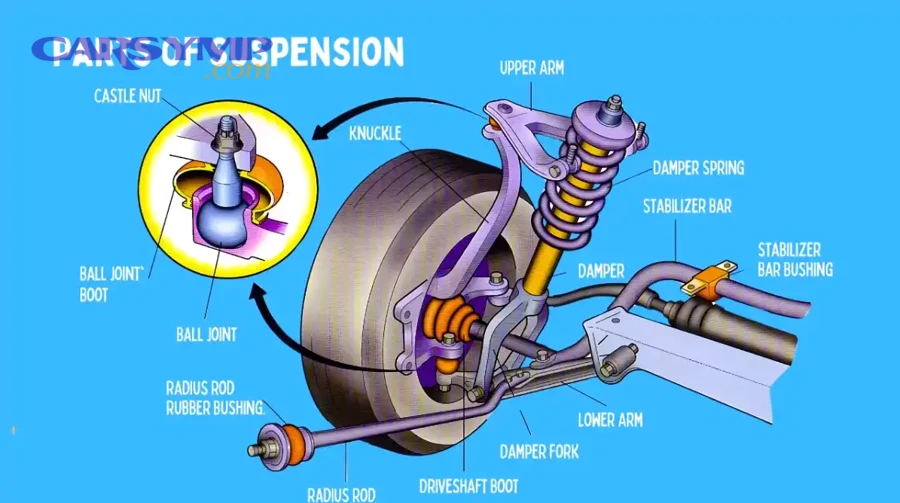
Front suspension systems rely on multiple pivot points that must articulate smoothly. When protective grease dries out, rubber bushings crack, or metal components develop play, controlled movement becomes intermittent contact—producing a click rather than a smooth motion.
Key mechanical characteristics of suspension clicking include:
- Load dependency: the noise appears only when weight shifts
- Direction sensitivity: often tied to steering angle or suspension compression
- Intermittency: clicking comes and goes rather than remaining constant
In practical terms, a click is the suspension telling you that two parts are no longer moving as one unit.
According to a study by the University of Michigan Transportation Research Institute in 2021, joint-related suspension noise increases measurably once component free play exceeds manufacturer tolerances by as little as 0.3 mm.
Can Front Suspension Components Cause Clicking While Driving?
Yes, front suspension components can cause clicking while driving due to load transfer, steering articulation, and vertical wheel movement, especially when joints or bushings are worn, dry, or loose.
To see why this happens, it helps to connect driving conditions directly to suspension behavior.
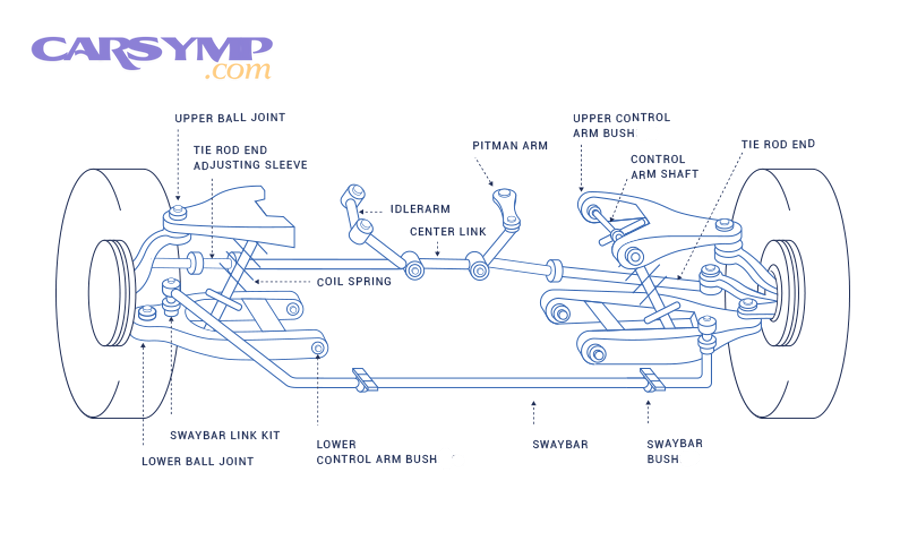
While driving, the suspension constantly responds to:
- Steering input
- Road surface irregularities
- Braking and acceleration forces
Each of these actions shifts force through control arms, ball joints, and sway bar links. When tolerances are exceeded, components momentarily shift and snap back—creating a click.
Does Clicking Usually Occur When Turning or Going Over Bumps?
Clicking occurs most commonly when turning at low speed, followed by driving over uneven surfaces, because these conditions place asymmetrical stress on suspension joints.
Specifically:
- Turning loads one side of the suspension more than the other
- Bumps compress suspension vertically, stressing bushings and mounts
This explains why many drivers report a clicking noise when turning into parking spaces but hear nothing on the highway.
Research from SAE International (2020) shows that low-speed steering articulation produces higher localized joint stress than steady-state cruising, increasing audible noise in worn components.
Which Front Suspension Parts Commonly Cause Clicking Noises?
There are five main front suspension parts that commonly cause clicking noises: ball joints, sway bar end links, control arm bushings, strut mounts, and loose mounting hardware, grouped by how they move under load.
Let’s break these down by component type and failure mode.
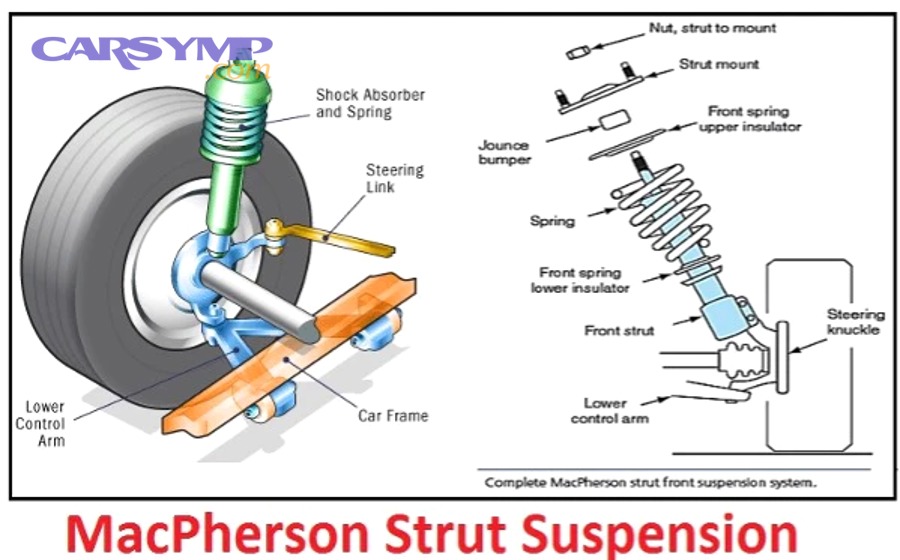
Which Joint-Based Components Click When Worn?
Joint-based components click when metal-to-metal contact occurs after grease loss or internal wear.
The most common joint-related culprits include:
- Ball joints: click when steering direction changes
- Sway bar end links: click during body roll or uneven wheel movement
These joints are designed to rotate smoothly. Once lubrication fails, rotational movement becomes segmented, producing a sharp click.
Which Bushing or Mount Components Cause Clicking Under Load?
Bushing- and mount-related clicks occur when rubber or polyurethane deforms unevenly under stress.
Typical sources include:
- Control arm bushings: click during braking or acceleration
- Strut mounts: click during steering input at low speed
These components are especially sensitive to temperature changes and aging, which explains seasonal noise variation.
According to a 2019 study by Continental Automotive Systems, degraded elastomer bushings increase impulse noise events by over 40% compared to new components.
How Can You Diagnose Clicking Front Suspension Components Accurately?
You can diagnose clicking front suspension components by correlating noise timing with steering angle, vehicle speed, and suspension movement, then confirming visually and physically.
Let’s explore a structured diagnostic approach.
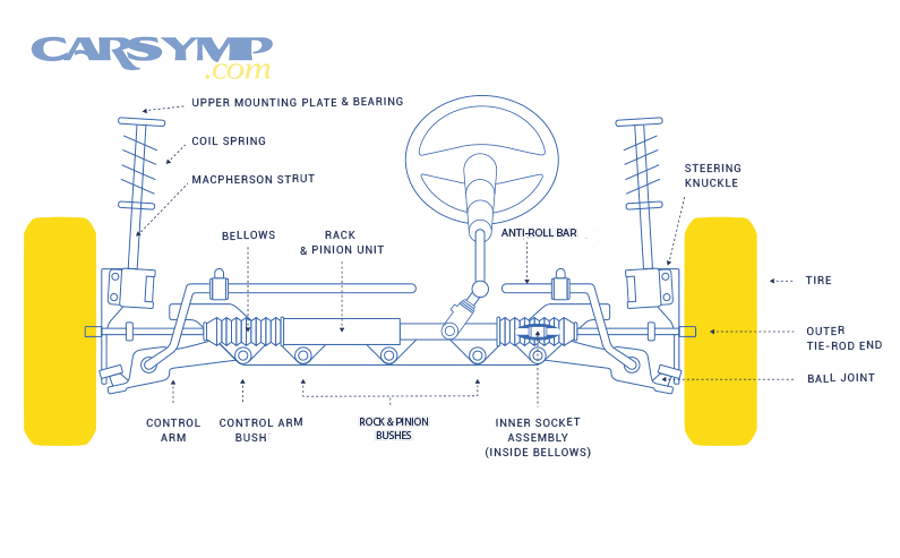
Can You Identify Clicking Suspension Parts Without Lifting the Car?
Yes, you can identify many clicking suspension issues without lifting the car by using controlled driving tests and visual inspection.
Effective driveway checks include:
- Turning the steering wheel lock-to-lock while stationary
- Driving slowly over uneven pavement
- Listening for noise asymmetry (left vs right)
These methods isolate movement-based noise before tools are involved.
What Driving Conditions Help Isolate the Clicking Source?
Certain driving scenarios act as diagnostic filters:
- Low-speed turns isolate steering joints
- Braking while turning stresses control arm bushings
- Uneven surfaces highlight sway bar and link issues
This logic also helps interpret Clicking at full lock vs mild turns clues, which often indicate whether the issue lies in joints or mounts.
A controlled test drive following these steps reduces diagnostic error significantly.
How Is Suspension Clicking Different From Other Front-End Noises?
Suspension clicking differs from other front-end noises in timing, repetition, and load sensitivity, making comparison essential for accurate diagnosis.
Let’s separate suspension noise from common impostors.
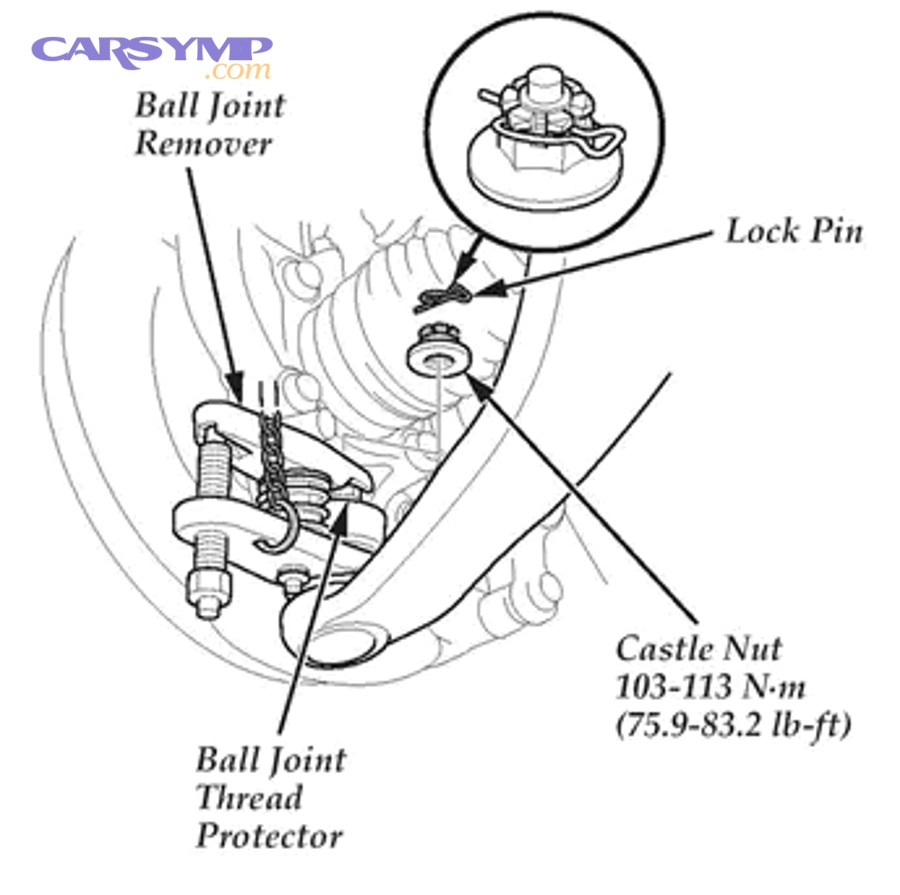
How Is Suspension Clicking Different From CV Joint Clicking?
Suspension clicking:
- Occurs without acceleration
- Changes with suspension movement
CV joint clicking:
- Appears primarily under acceleration
- Worsens at full steering lock
This distinction is critical and often overlooked during an Axle boot tear inspection checklist, where CV issues are mistakenly blamed for suspension sounds.
How Is Suspension Clicking Different From Wheel Bearing Noise?
Wheel bearing noise is:
- Continuous
- Speed-dependent
- Often a growl or hum
Suspension clicking is:
- Intermittent
- Load-dependent
- Sharp and momentary
According to a 2022 report from Bosch Automotive Aftermarket, over 30% of suspension noise complaints were initially misdiagnosed as wheel bearing failures.
What Less Common Factors Can Cause Clicking in the Front Suspension?
Less common causes of front suspension clicking include installation errors, structural movement, and material-specific behavior, which require deeper inspection.
Now we move beyond common failures into edge cases.
Can Improper Installation or Loose Fasteners Cause Suspension Clicking?
Yes, improperly torqued bolts or reused fasteners can click under load, especially after suspension repairs.
This often leads to confusing symptoms and inaccurate Repair cost estimate for common causes if overlooked.
Can Worn Subframe or Crossmember Mounts Create Clicking Sounds?
Subframe movement is rare but serious. Clicking occurs when the structure shifts slightly under torque, often felt through the steering wheel.
Do Aftermarket or Polyurethane Bushings Click When Dry?
Polyurethane bushings can click even when not worn if:
- Not lubricated correctly
- Exposed to moisture or debris
This is a material behavior, not a failure.
Can Temperature or Weather Affect Suspension Clicking Noises?
Cold temperatures stiffen rubber, increasing noise. Warm weather may temporarily mask the issue.
Understanding these patterns helps connect noise behavior with broader Car Symptoms rather than isolated events.
According to testing by Bridgestone Mobility Research (2020), elastomer stiffness increases up to 25% in cold conditions, correlating with higher audible suspension noise.
To sum up, diagnosing clicking front suspension components is a logical process rooted in understanding movement, load, and component design. When you follow the sound instead of guessing, the suspension tells you exactly what’s wrong.