


A clicking wheel noise after tire or wheel work usually indicates that a component disturbed during service is now interacting abnormally with another part, such as a brake shield, wheel hardware, or suspension joint. In most cases, the noise is not random—it follows clear mechanical logic that can be diagnosed systematically.
Beyond identifying the cause, car owners also want to know whether the clicking noise signals danger or is simply a minor post-service side effect. Understanding how and why these noises occur helps you avoid unnecessary repairs while still acting quickly when safety is involved.
Another common concern is diagnosis: many drivers hear a clicking noise when turning or accelerating and are unsure whether they can troubleshoot it themselves or need immediate professional help. Clear diagnostic steps reduce anxiety and prevent misinterpretation.
Introduce a new idea: once the fundamentals are understood, examining the most common causes and diagnostic methods allows you to interpret the sound the same way a mechanic would.
What Does a Clicking Noise After Tire or Wheel Work Usually Mean?
A clicking noise after tire or wheel work means that a wheel-adjacent component has shifted, loosened, or come into intermittent contact with another part during or after service.
To better understand why this happens, it helps to look at how wheel-related components interact once a vehicle is reassembled.
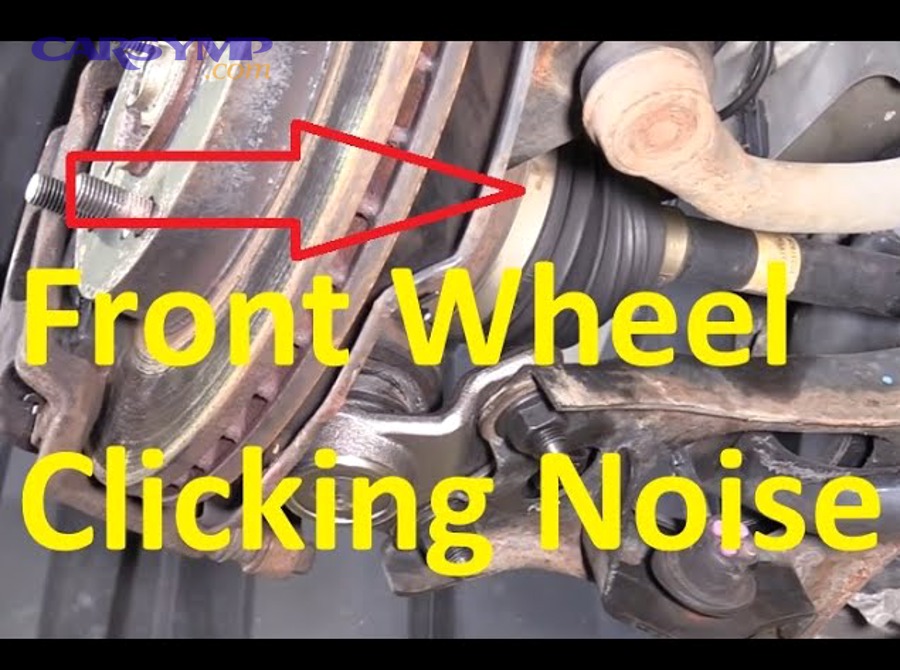
Wheel and tire service requires removing the wheel, which temporarily disrupts the relationship between several tightly packed components: brake rotors, calipers, dust shields, lug nuts, hubs, and suspension links. When the wheel is reinstalled, even a slight misalignment or foreign object can create a rhythmic clicking sound that matches wheel rotation.
The clicking is usually speed-dependent. At low speeds, it may sound slow and distinct; at higher speeds, it can become faster or blend into a tapping noise. This characteristic strongly suggests a mechanical interference rather than an engine or transmission issue.
In most cases, the noise appears immediately after service or within the first few drives. That timing is a key diagnostic clue because it narrows the cause to recently handled components rather than unrelated wear.
Can Tire or Wheel Work Directly Cause a Clicking Noise?
Yes, tire or wheel work can directly cause a clicking noise because the process involves removing, reinstalling, and torquing components that must sit within very tight tolerances.
To understand how this happens, it is useful to break down the most common service-related triggers.
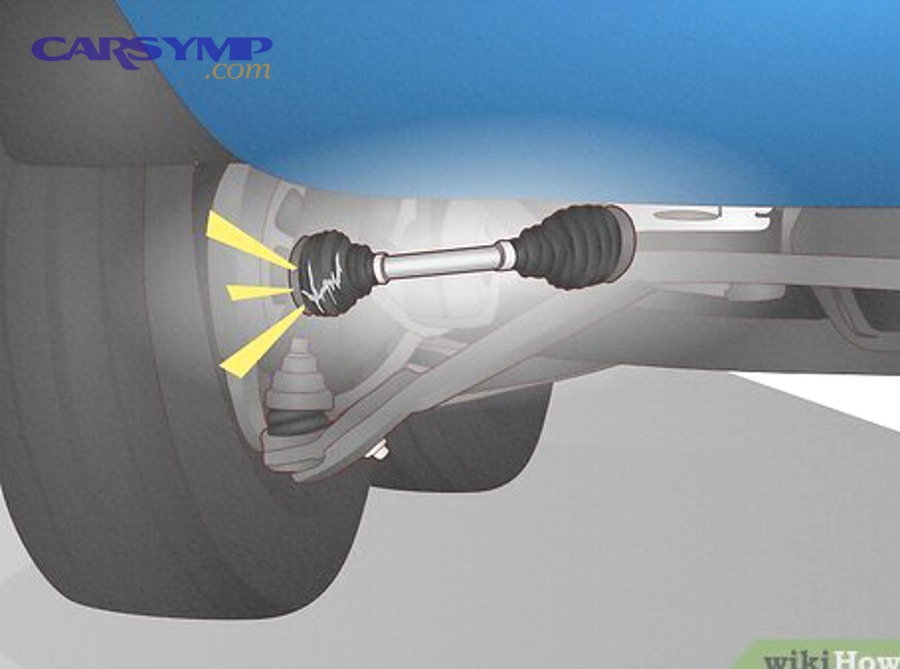
Even when performed correctly, wheel service can expose pre-existing weaknesses or create new contact points. Clicking noises after service usually fall into predictable categories linked to installation accuracy, component positioning, and residual debris.
Can Incorrect Lug Nut Torque Cause Clicking Sounds?
Incorrect lug nut torque can cause clicking sounds because loose or unevenly torqued lug nuts allow micro-movement between the wheel and hub.
More specifically, under-torqued lug nuts may shift slightly under load, producing a click during acceleration, braking, or direction changes.
Over-torquing can also cause problems. Excessive force may distort the brake rotor hat or wheel seating surface, leading to intermittent contact that creates a clicking or ticking noise. This is especially common on vehicles with thinner brake components or aftermarket wheels.
Mechanics use calibrated torque wrenches for a reason: consistent torque ensures uniform clamping force. When this step is skipped or rushed, noise symptoms often follow shortly after driving away from the shop.
Can Wheel Balancing Weights Create a Clicking Noise?
Wheel balancing weights can create a clicking noise if they contact brake components or suspension parts during rotation.
For example, clip-on weights mounted on the inner wheel lip may lightly strike the brake caliper or dust shield with each revolution.
Adhesive weights can also cause noise if they partially detach and flap against the wheel barrel. This type of clicking often speeds up with vehicle speed and disappears when the weight finally falls off.
This issue is more common after recent tire mounting because balancing weights are newly installed and may not yet be fully seated or cured, especially in cold or damp conditions.
What Are the Most Common Causes of Clicking Wheel Noise After Tire Service?
There are four main causes of clicking wheel noise after tire service: brake component interference, suspension joint movement, tire-related debris, and wheel hardware issues.
To see how each cause produces distinct symptoms, examining them individually provides clarity.
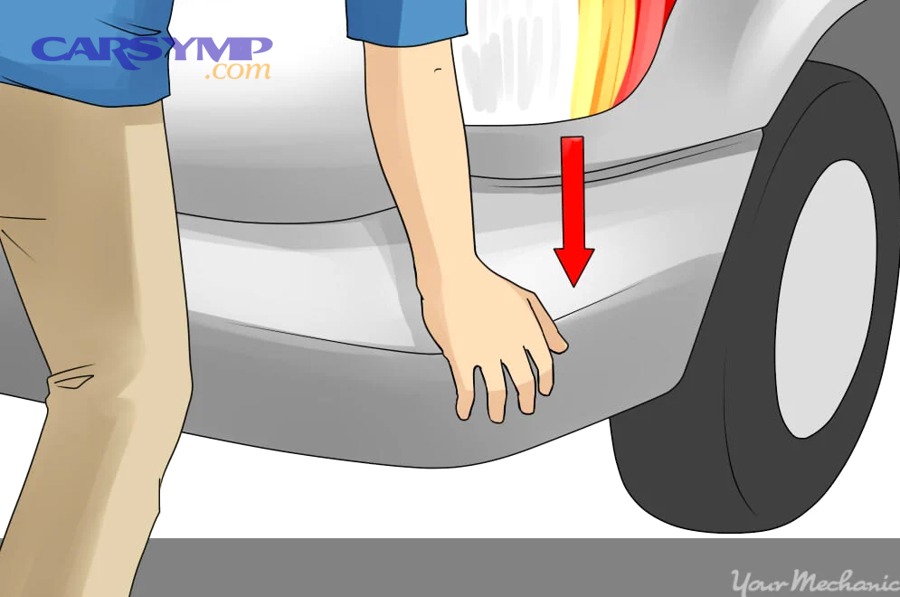
Each category has identifying characteristics that help narrow the diagnosis without immediately resorting to disassembly.
What Brake-Related Parts Commonly Click After Wheel Removal?
Brake-related clicking is most often caused by bent dust shields, loose caliper hardware, or pad retaining clips.
When wheels are removed, the thin metal dust shield behind the brake rotor can be accidentally bent inward, causing it to lightly scrape or click against the rotor.
Loose caliper bolts or worn anti-rattle clips can also produce a clicking noise that changes when braking. If the noise disappears under brake pressure, brake hardware is a strong suspect.
This type of clicking is usually harmless but persistent until corrected, and it often presents as a metallic tap rather than a dull click.
What Suspension or Steering Components Can Start Clicking After Rotation?
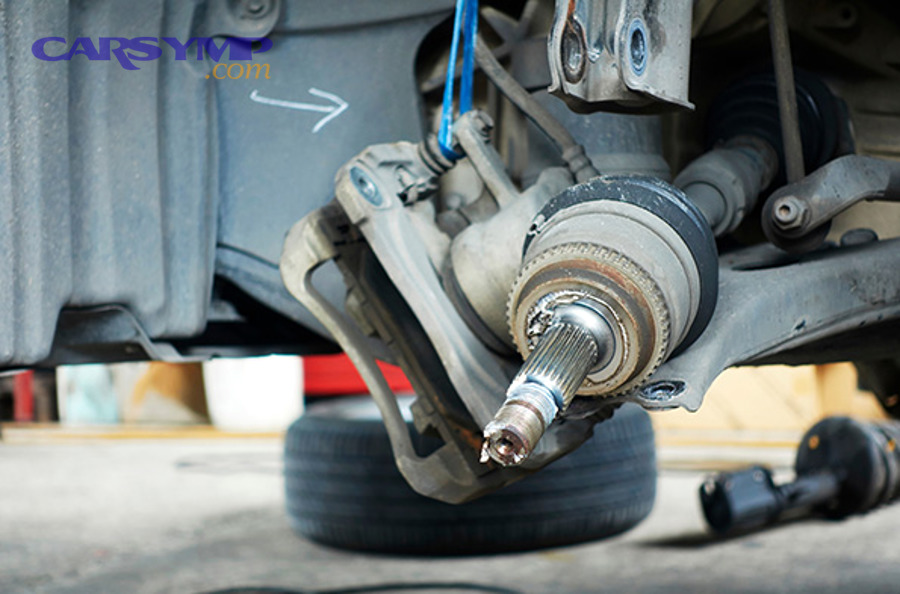
Suspension and steering components such as CV joints, sway bar links, and tie rods may start clicking after rotation because the load pattern on the drivetrain changes.
Specifically, rotating tires can shift wear patterns, revealing marginal CV joints that were previously quiet.
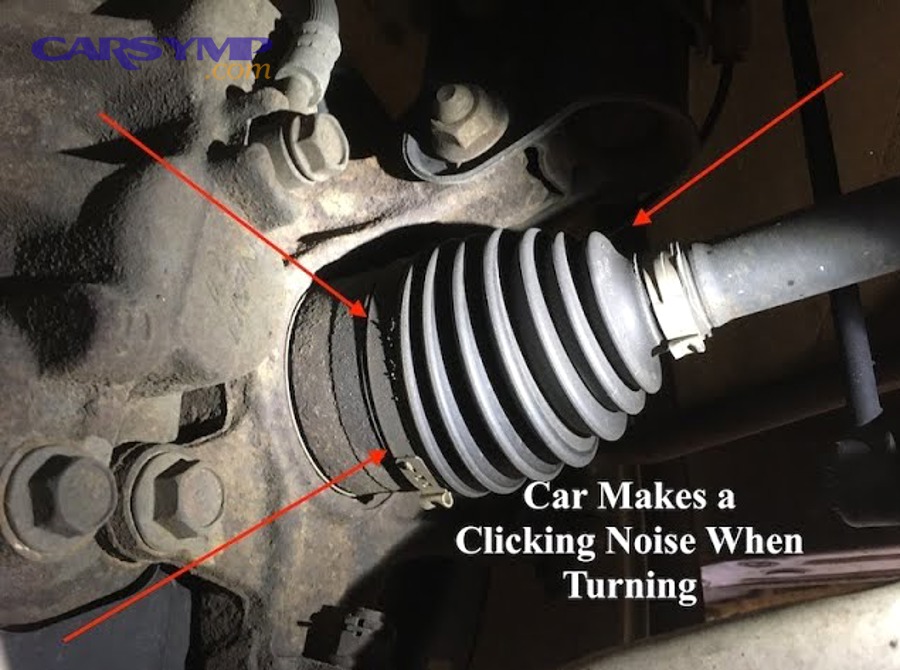
A classic example is a clicking noise when turning at low speed, especially during parking maneuvers. This symptom often points to CV joint wear rather than the tire work itself, even though the timing makes them seem connected.
In these cases, the service did not cause the issue but acted as the trigger that exposed it.
Can Debris or Tire Tread Issues Cause Repetitive Clicking?
Yes, debris lodged in the tire tread can cause repetitive clicking that matches wheel rotation.
Small stones, nails, or even hardened rubber fragments can create a sharp clicking sound each time they strike the pavement.
This cause is often overlooked because it feels too simple, but it is surprisingly common after tire service, when tires are handled, rolled, and exposed to shop floors and parking lots.
Removing the debris typically resolves the noise instantly, making this one of the easiest fixes.
How Can You Diagnose Clicking Noise Step by Step at Home?
You can diagnose clicking noise at home by observing sound behavior across speed, steering angle, and braking conditions to isolate the affected component.
To do this effectively, follow a structured observation process rather than guessing.
The goal is not to repair immediately but to narrow down the source with minimal tools.
Does the Clicking Change With Speed or Steering Angle?
If the clicking changes with speed, it is likely related to wheel rotation or tire contact rather than engine components.
A clicking noise when turning is particularly revealing: louder clicks during sharp turns often indicate CV joint or steering-related issues.
This distinction becomes clearer when comparing Clicking at full lock vs mild turns clues. Full steering lock amplifies joint angles and stresses, making underlying joint wear more audible.
If the clicking remains constant regardless of steering, wheel hardware or debris becomes more likely.
Is the Clicking Noise Coming From One Wheel or Multiple Wheels?
A noise from one wheel usually points to a localized issue such as a bent dust shield, loose lug nut, or debris.
In contrast, clicking from multiple wheels suggests a systemic issue, such as incorrect torque procedures applied across all wheels.
Listening from outside the vehicle at low speed, or having another person observe while driving slowly, can help pinpoint the location.
This step dramatically reduces unnecessary part replacement.
When Is a Clicking Noise After Tire Work Serious vs Harmless?
Some clicking noises after tire work are harmless and temporary, while others indicate safety-critical issues that require immediate attention.
Understanding the difference helps prioritize action without panic.
Severity depends on the component involved and whether the noise is getting worse.
Which Clicking Noises Are Safe to Drive With Temporarily?
Clicks caused by debris in the tire tread or light dust shield contact are generally safe to drive with temporarily.
These noises usually remain consistent and do not worsen rapidly.
However, even harmless noises should be addressed eventually to prevent wear or annoyance.
Which Clicking Noises Require Immediate Mechanical Inspection?
Clicking caused by loose lug nuts, failing CV joints, or suspension joints requires immediate inspection.
These issues can progress quickly and compromise vehicle control.
A professional Repair cost estimate for common causes often shows that early intervention is far cheaper than delayed repair.
According to a study by the National Highway Traffic Safety Administration (NHTSA) in 2021, wheel-related mechanical failures contribute to a measurable percentage of loss-of-control incidents, emphasizing the importance of prompt diagnosis.
Why Clicking Noises Sometimes Appear Even When Tire Work Is Done Correctly
Clicking noises can appear even when tire work is done correctly because service can alter load distribution and reveal pre-existing weaknesses.
This explains why reputable shops still encounter post-service noise complaints.
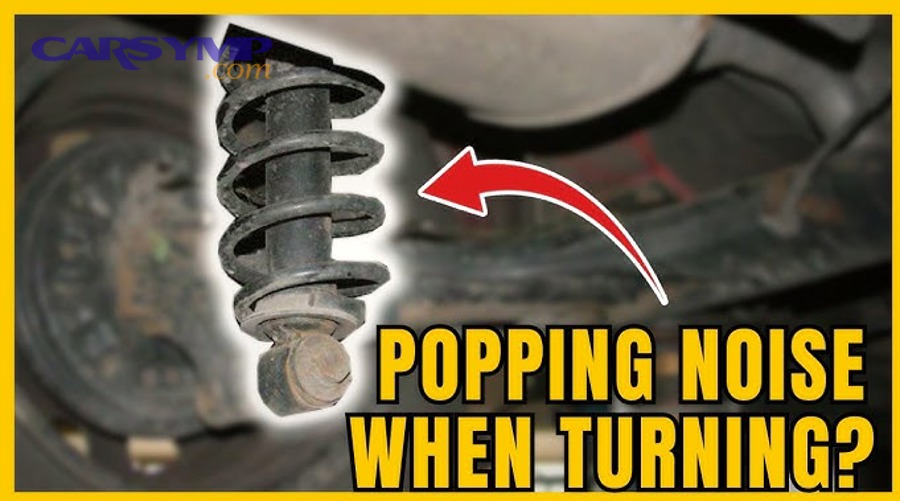
Understanding these edge cases prevents misplaced blame and improves diagnostic accuracy.
Can Tire Rotation Reveal Pre-Existing CV Joint or Hub Issues?
Tire rotation can reveal pre-existing CV joint or hub issues by changing torque load paths.
A joint that was marginal but quiet may begin clicking once its stress pattern shifts.
This is why clicking often starts immediately after service, even though the root cause existed beforehand.
How Do Aftermarket Wheels Increase the Risk of Clicking Sounds?
Aftermarket wheels can increase clicking risk due to hub-centric mismatches or incorrect offsets.
If the wheel does not seat perfectly on the hub, micro-movement can occur despite proper torque.
Hub rings reduce this risk, but when omitted, clicking or ticking noises may follow.
Can Temperature Changes After Service Cause Temporary Clicking?
Temperature changes after service can cause temporary clicking due to thermal expansion of metal components.
Brakes and wheels heat up quickly after reassembly, sometimes creating brief noises that disappear once components settle.
These noises typically fade within a few drive cycles.
What Clicking Noises Are Often Misdiagnosed After Tire Work?
Clicking noises are often misdiagnosed as engine or transmission problems when they originate from wheels or brakes.
Differentiating clicking from grinding or knocking is essential for accurate diagnosis.
In short, clicking wheel noise after tire work follows identifiable mechanical patterns. When those patterns are understood, the noise becomes a solvable problem rather than a mystery.