


If your car makes a harsh grinding sound and one wheel seems “draggy,” a seized (sticking) brake caliper is a top suspect—because it can keep one pad pressed against the rotor, turning normal braking friction into constant heat and rapid wear. The fastest way to confirm it is to look for a one-corner pattern: pull to one side, a single wheel running hotter than the others, and uneven inner/outer pad wear.
Next, you need to understand why the caliper is sticking so you don’t fix it twice. Some problems are piston-related, others are slide-pin related, and some aren’t the caliper at all—pads can bind in rusty hardware, or a brake hose can act like a one-way valve that traps pressure.
Besides that, safety matters more than diagnosis. A dragging brake can overheat the rotor, damage pads quickly, and in extreme cases boil brake fluid and reduce braking performance—so knowing when to stop, tow, or limp to a shop is part of the solution.
Introduce a new idea: once you know what “seized caliper grinding” looks like, you can do a few controlled checks to confirm the cause and choose the right repair path—clean/lube, rebuild, or replace—without guessing.
Is a seized (sticking) brake caliper the reason your brakes are grinding?
Yes—grinding brakes can be caused by a seized brake caliper, especially if (1) the noise is strongest at one wheel, (2) that wheel runs unusually hot, and (3) the pads show uneven or tapered wear.
Next, the key is to treat this like a pattern-matching problem: one corner, one heat source, one wear story—because that’s how caliper drag reveals itself.
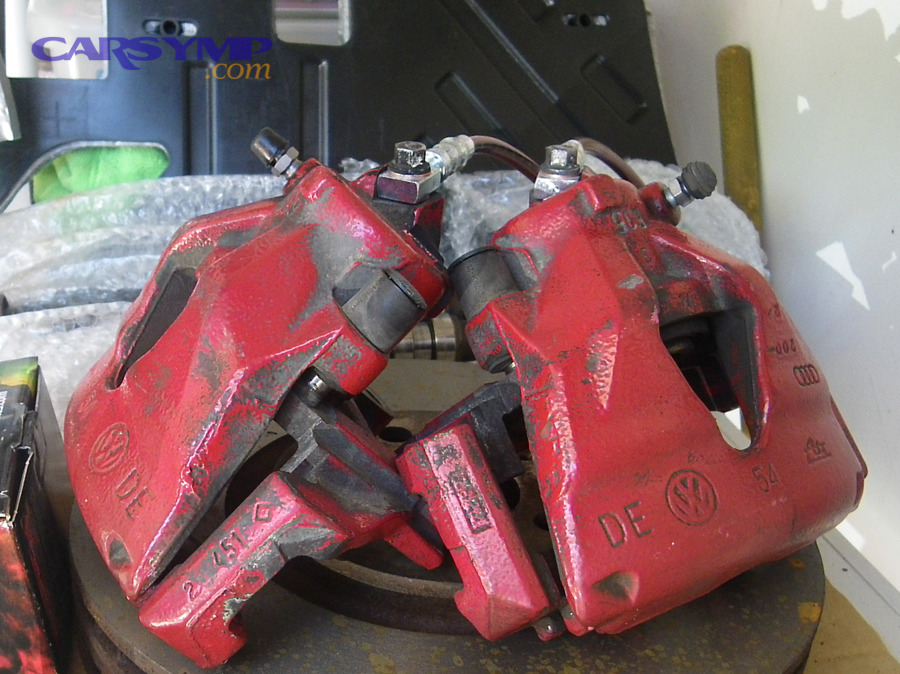
Here’s the quick reality check: “grinding noise when braking” is often worn pads going metal-on-metal, but a seized caliper is what makes that wear happen faster and more unevenly. A caliper that won’t release keeps the pad touching the rotor even when your foot is off the pedal. That constant contact creates heat, scrubs away friction material, and can turn a minor squeal into a full grind.
Use these three “fast flags” before you lift the car:
- One-sided symptoms: the sound seems to come from a single corner (front-left, rear-right, etc.).
- Heat/smell: you notice a burning smell after a short drive, or that wheel feels like it’s radiating heat.
- Handling change: the car drifts or pulls, especially after braking or on highway cruising.
Does the car pull to one side when braking or cruising?
Yes—if a caliper is sticking, it can pull the car toward the dragging wheel because that wheel is constantly resisting rotation, and the effect is strongest under braking, after braking, and during steady cruising when the drag remains.
However, you should separate when the pull happens, because timing tells you what’s dragging.
- Pull mainly while braking: could be a sticking caliper, but can also be uneven pad friction, rotor issues, or suspension alignment.
- Pull both while braking and while cruising: more consistent with a caliper that’s not releasing (or a severely binding pad).
- Pull that appears after a few minutes of driving: suggests heat buildup—classic for a dragging brake.
A practical clue: if the pull worsens the longer you drive (especially after stop-and-go), that “ramping up” behavior fits brake drag better than alignment, which usually feels constant.
Is one wheel noticeably hotter than the others after a short drive?
Yes—one abnormally hot wheel is one of the strongest signs of a sticking caliper because constant pad-to-rotor contact converts motion into heat on that corner alone.
More importantly, this is the safest “no-tools” check you can do—if you do it carefully.
Safer heat-check method:
- Drive 5–10 minutes with minimal braking.
- Park safely, don’t set the parking brake if the rear brakes may be involved.
- Hover your hand near each wheel (don’t touch).
- Compare corners: one corner that’s dramatically hotter is your suspect.
If you see smoke or you smell a sharp burning odor, treat that as a stop-now condition. Brake drag can escalate into overheating, and recalls/investigations have documented brake-drag scenarios leading to overheated components and even boiling brake fluid in some cases.
Do you hear grinding mostly on one corner, and does it change when turning?
A seized caliper “wins” as the cause if the grinding is loudest at one corner and changes mainly with braking pressure, while a wheel bearing is more likely if the noise changes with turning load even when you’re not braking.
To better understand, compare “noise triggers,” not just the sound itself.
- Caliper/pad/rotor grinding: often louder when you press the brake pedal, may pulse with wheel rotation, may worsen as heat builds.
- Wheel bearing growl: often changes when you steer left/right (load shifts), and can stay loud even with no braking.
- Dust shield/debris scraping: may be constant, sometimes changes after bumps, and can be inspected visually without removing caliper parts.
If your grinding happens right after a brake job, put a pin in that: “Grinding after new brakes causes” often include incorrect hardware fitment, seized slide pins that weren’t serviced, pad binding in corroded abutment clips, or a rotor surface that wasn’t compatible with the new pads.
Do you see uneven pad wear (inner vs outer) or tapered pads?
Yes—uneven or tapered pad wear strongly suggests a sticking caliper because a sliding (floating) caliper relies on free movement to clamp evenly, and a seized pin or piston makes one pad do most of the work.
Specifically, the wear pattern can tell you what is seized.
Common wear stories:
- Inner pad much thinner than outer pad: often points to a sticking slide-pin/caliper movement issue on many floating designs.
- Outer pad much thinner than inner pad: can happen with certain binding conditions and hardware problems, less common but still possible.
- Tapered (“wedge”) wear: often indicates one side isn’t sliding correctly or pads are binding in the bracket.
A general explainer for floating vs fixed calipers: fixed calipers don’t slide; floating calipers must slide freely, and corrosion/dirt can stop that movement.
What does “grinding brakes” mean when a caliper is sticking?
Grinding from a sticking caliper is friction material (or metal backing) scraping the rotor because the caliper fails to release, creating continuous contact, heat, and accelerated wear—often turning a mild warning noise into a harsh grind.
Specifically, the “grind” is your system telling you that normal braking friction has become abnormal, uncontrolled friction.
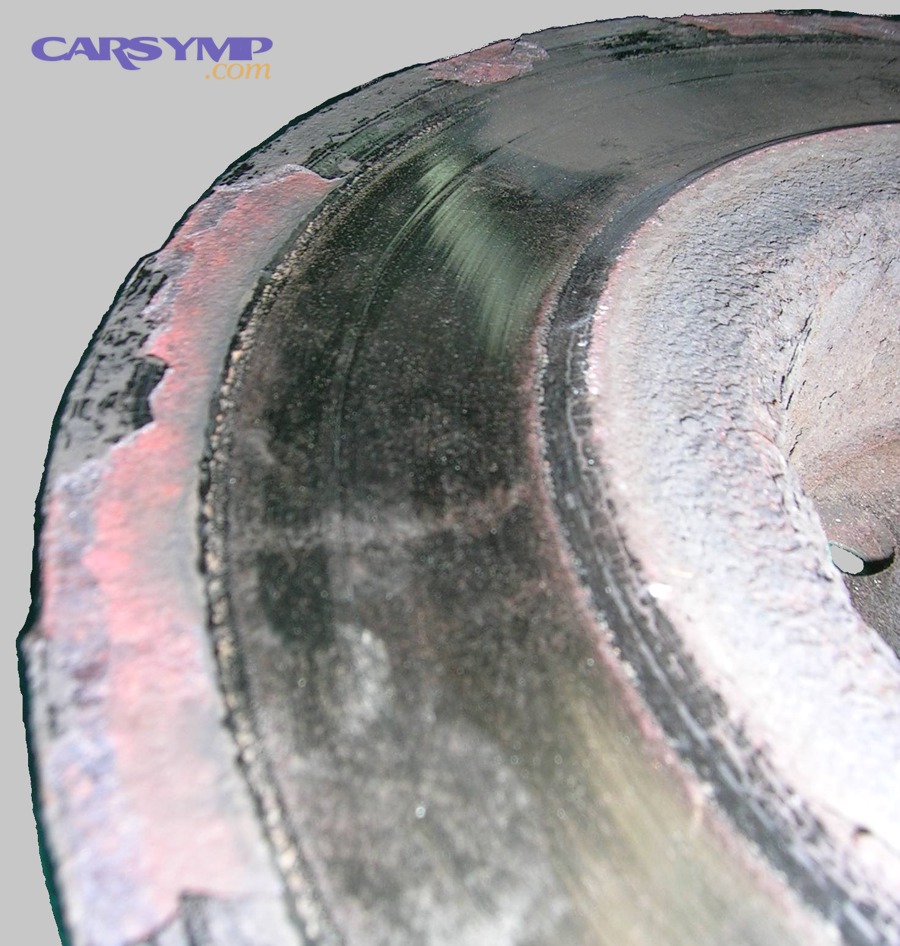
In the simplest terms: brakes are supposed to squeeze, release, and cool. A sticking caliper squeezes and keeps squeezing. That constant contact can do three things that each create grinding:
- Over-wears the pad until the backing plate touches the rotor.
- Scores the rotor so even new pads scrape on a damaged surface.
- Overheats the rotor/pad causing glazing and hotspots that can make noise and vibration worse.
What parts typically grind when a caliper won’t release?
The rotor and the brake pad are the primary grinding surfaces, and when the pad wears through, the pad’s metal backing plate grinds directly against the rotor, rapidly damaging both.
Moreover, once metal-to-metal contact starts, it can snowball fast.
Most “seized caliper grinding” scenarios end up in one of these physical contacts:
- Pad friction material ↔ rotor: noisy if contaminated, uneven, or severely glazed.
- Wear indicator ↔ rotor: often squeals first; not always grinding yet.
- Pad backing plate ↔ rotor: the classic harsh grinding, often accompanied by reduced braking smoothness.
What’s the difference between grinding, squealing, and scraping noises?
Grinding usually signals severe contact (often metal-to-metal), squealing often signals vibration or a wear indicator warning, and scraping is often a lighter, constant contact like a shield or debris—so grinding is typically the most urgent.
However, the trick is to connect the sound to the trigger.
- Squeal: may occur at light brake pressure; can be normal pad vibration or a wear indicator.
- Scrape: may happen even when not braking; check shields and debris.
- Grind: often loudest when braking and may be accompanied by rough pedal feel; treat as urgent until proven otherwise.
If your symptom is “grinding noise when braking,” you should assume friction surfaces are compromised until inspection shows otherwise.
Can a sticking caliper cause grinding even with “good” pads left?
Yes—a sticking caliper can create grinding even when pads still look “thick” because constant drag can glaze pads, embed debris, create rotor hotspots, and cause uneven contact that scrapes rather than stops smoothly.
In addition, “good pads” on one side can hide “bad pads” on the other.
Here’s how that happens in real life:
- A seized slide pin makes one pad do most of the work → that pad wears fast → the other pad looks fine.
- Heat from drag changes the pad surface (glazing) → braking becomes noisy and less consistent.
- Rotor develops grooves or heat marks → the pad edge rides the groove → scraping/grinding sound can show up even before pads are “gone.”
What causes a brake caliper to seize or stick in the first place?
There are 4 main causes of a caliper sticking—corrosion, loss of lubrication/mobility, hydraulic pressure problems, and heat/contamination—each pushing the caliper from “apply/release” into “apply/drag.”
More importantly, identifying which bucket you’re in determines whether cleaning is enough or replacement is smarter.
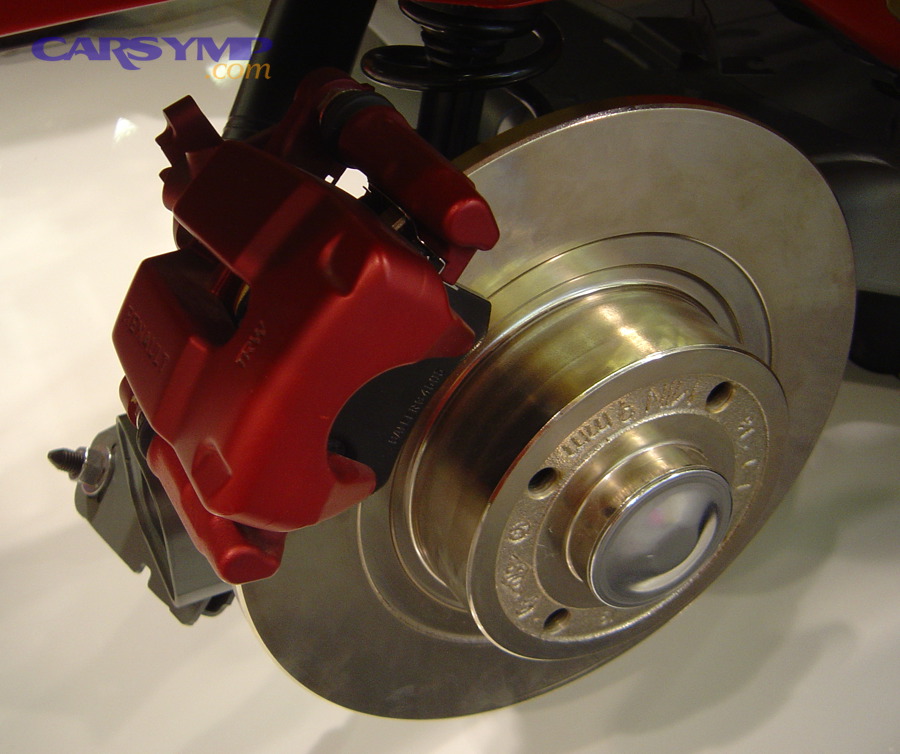
Think of a caliper as a controlled clamp. Anything that prevents free movement or prevents pressure from releasing will make it drag. The most common “root cause clusters” are:
- Corrosion and torn boots
- Rust forms on slide pins, piston surfaces, or in the bracket areas where pads must glide.
- Torn dust boots let water/salt in and grease out.
- Slide pin binding (floating calipers)
- Old grease dries out; corrosion locks the pin; the caliper can’t center itself.
- The inner pad often wears faster because the caliper can’t “pull” the outer pad into equal contact.
- Piston sticking
- Corrosion in the caliper bore, seal swelling, or contaminated fluid can prevent smooth piston retraction.
- Hydraulic issues
- A restricted brake hose can trap pressure at the caliper (acting like a check valve).
- Master cylinder issues can also keep residual pressure, though less commonly.
Is it the caliper piston, the slide pins, or the pads binding in the bracket?
Slide-pin seizure “wins” when one pad wears much faster and the caliper body won’t move freely, piston seizure is more likely when the piston won’t retract and the pad stays clamped, and pad-binding is most likely when pads are tight in rusty hardware even if pins move.
Specifically, use wear patterns and movement tests to separate them.
Slide pins seized
- Inner/outer pad wear mismatch is common.
- Caliper doesn’t slide smoothly on its pins.
- You may hear intermittent grinding as the caliper cocks under load.
Piston seized
- Pad stays tight even after releasing the pedal.
- You may see the piston boot damaged or signs of heat at that wheel.
- The wheel may be hard to spin even with pins moving.
Pads binding in bracket
- Pads fit extremely tight in the clips/abutments.
- Rust “jacks” the stainless clips upward, squeezing the pad ears.
- Grinding can appear “after new brakes” if hardware wasn’t cleaned/replaced.
Which driving conditions make calipers seize faster (water, road salt, heat)?
Road salt and repeated wet/dry cycles accelerate seizure the most, while sustained heat from mountain driving, towing, or stop-and-go can accelerate grease breakdown and boot damage that starts the sticking cycle.
For example, vehicles in salt-belt climates often develop more frequent brake hardware corrosion.
Mechanically, corrosion doesn’t need a dramatic event—just time, moisture, and exposure. Heat then compounds it by:
- Thinning or cooking lubricants on pins.
- Hardening rubber boots.
- Warping or stressing hardware so pads don’t retract cleanly.
Can old brake fluid contribute to caliper sticking?
Yes—old brake fluid can contribute to sticking because moisture and aging chemistry increase internal corrosion potential in brake components, including calipers and lines.
Besides, this is one of the “silent” contributors: you don’t feel it until something sticks.
According to a study by Budapest University of Technology and Economics from the Department of Transport Technology and Economics, in 2021, operational testing showed a significant decrease in brake-fluid quality over two years of vehicle operation, with boiling-point testing highlighted as an effective indicator of degradation.
How can you diagnose a seized caliper safely at home?
You can diagnose a seized caliper with a safe 4-step check—(1) confirm one-corner symptoms, (2) measure drag by spinning the wheel, (3) inspect pads/rotor for uneven wear and heat damage, and (4) rule out non-brake noises—so you stop guessing and start verifying.
Then, each step should narrow the cause without putting you at risk.
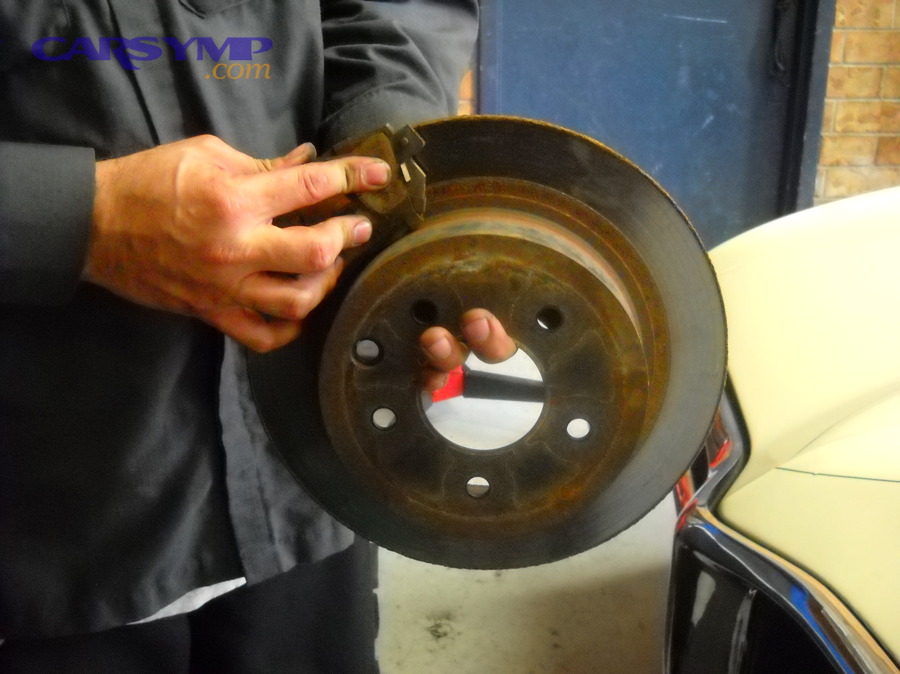
Before you lift anything: prioritize safety. Use wheel chocks, jack stands, and never put hands near a wheel that may be dangerously hot. If you’re seeing smoke, skip DIY diagnosis and move to a tow decision.
How do you do a quick wheel-drag test without special tools?
The quickest drag test is to lift the suspect corner safely and spin the wheel by hand: a healthy wheel spins freely with mild pad rub, while a sticking caliper creates strong resistance, abrupt stopping, or a “sandpaper” feel.
To begin, make the test repeatable so you can compare corners.
- Park on level ground, set the transmission in Park/gear, and chock the opposite wheels.
- Lift one corner and support it with a jack stand.
- Spin the wheel by hand:
- Normal: slight pad whisper, wheel rotates several turns (varies by vehicle).
- Suspect drag: wheel stops quickly, feels tight, or grinds audibly.
If you have a helper, you can do a controlled comparison:
- Spin the wheel freely.
- Have the helper press the brake pedal firmly once and release.
- Spin again. If it’s suddenly much tighter and doesn’t recover, that supports sticking.
What visual signs on the rotor and pads confirm caliper-related grinding?
There are 5 visual signs that strongly confirm caliper-related grinding—(1) one pad worn far thinner than its mate, (2) tapered pad wear, (3) deep rotor scoring, (4) blue/purple heat discoloration, and (5) crumbling or glazed pad surfaces.
More specifically, look for asymmetry: caliper problems rarely “wear evenly.”
Use this inspection checklist:
- Pads: compare inner vs outer thickness; look for cracks, glazing (shiny surface), or missing chunks.
- Rotor: look for grooves you can feel with a fingernail, lip at the edge, or heat spots.
- Hardware: check pad clips for rust swelling; pads should slide in/out smoothly.
How do you rule out wheel bearings or debris shields as the grinding source?
Wheel bearings usually get louder when turning and may drone even without braking, while a debris shield scrape is often a constant light contact you can see and bend away—so if the noise is brake-pedal dependent and localized, caliper/pad/rotor remains the top cause.
Meanwhile, a few targeted tests can separate them quickly.
Rule-out tests:
- Brake-pedal test: if the sound changes dramatically when you touch the brakes, it’s more likely brake-related than bearing-related.
- Steering-load test (safe area): if turning left makes it louder and turning right makes it quieter (or vice versa) without braking, consider bearing.
- Visual shield check: look behind the rotor for a dust shield touching the rotor; a small bend can cause a scrape.
What should you do next if the caliper is seized and grinding?
There are 3 practical fix paths—service-and-free-up, rebuild, or replace—and the correct choice depends on whether the seizure is in the slide pins, the piston, or the pad hardware, plus how much heat and rotor damage the grinding has already caused.
Especially, if you already have grinding and heat, you should assume more than “just lube” may be needed.
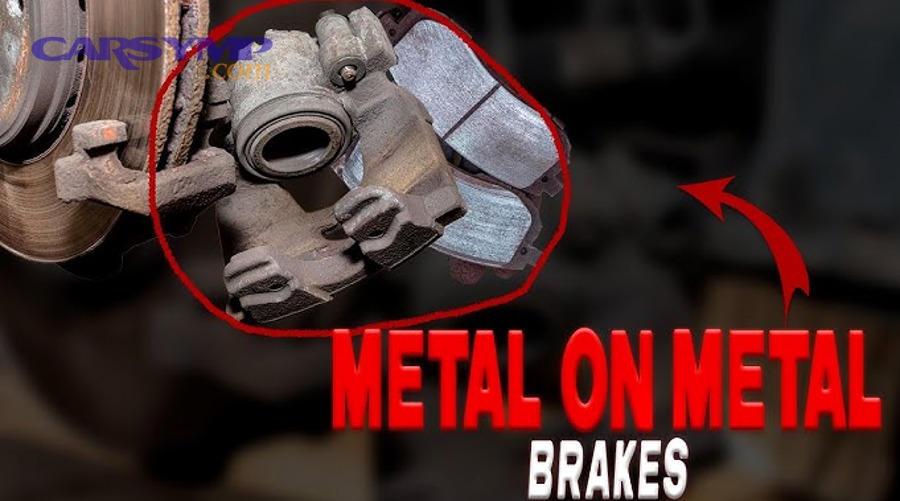
This is where many owners lose money: they replace pads, but skip the root cause. Then they end up searching “Grinding after new brakes causes” because the real issue was still there—stuck pins, binding pads, a damaged rotor, or a hose that won’t release pressure.
Here’s the decision logic you want:
Should you replace or rebuild the caliper?
Replacement wins for speed and reliability, rebuilding wins when the caliper body is in good shape and you’re correcting a known piston/seal issue—and “freeing it up” is only a temporary win if corrosion is already advanced.
However, your best choice depends on risk tolerance and the caliper’s condition.
Replace the caliper when:
- The piston boot is torn and there’s visible corrosion.
- The caliper overheated badly (discoloration, burnt smell, seized solid).
- The bleeder screw is compromised or the bore is pitted.
- You want the simplest “one-and-done” repair.
Rebuild the caliper when:
- The caliper body is solid and you can clean it properly.
- You’re comfortable with seal replacement and bleeding brakes.
- Parts availability makes rebuild more practical.
Only service slide pins/hardware when:
- The piston moves normally and the problem is clearly pin/hardware binding.
- There’s no severe heat damage.
- You can restore smooth sliding and proper pad movement.
Do you need new pads and rotors too, or can you reuse them?
You usually need new pads—and often rotors—if grinding has occurred, because grinding typically means the friction surfaces are damaged or contaminated; reuse is only reasonable when pads are thick, rotors are smooth, and there’s no heat or scoring damage.
More importantly, your braking quality depends on flat, consistent surfaces.
A practical rule set:
- Replace pads if: friction material is thin, uneven, glazed, cracked, or contaminated.
- Replace or machine rotors if: they are deeply scored, heat-checked, warped, or below minimum thickness.
- Consider reuse only if: the rotor surface is uniform and pads show normal wear with no glazing.
Grinding often leaves grooves that new pads can’t “fix” quickly; they may just inherit the noise. This is a core reason people experience “grinding after new brakes” even with quality parts—because the rotor finish and caliper movement weren’t corrected.
Should you replace one caliper or both on the same axle?
Replacing both calipers on the same axle is often the best choice for balanced braking and matched response, while replacing one caliper can be acceptable if the other is confirmed healthy and you service both sides’ hardware to keep braking even.
In short, the goal is symmetry.
Why both can be smarter:
- Both calipers have lived in the same environment (salt, heat, age).
- Uneven caliper performance can create pull, uneven wear, and inconsistent pedal feel.
- New caliper + old sticky caliper can create a new imbalance.
When “one side only” can work:
- The other caliper’s pins move freely, boots are intact, and pad wear is even.
- You still clean and lubricate hardware on both sides.
- You inspect the hose condition and flush fluid if needed.
Repair cost estimate for grinding brakes: costs vary widely by vehicle and region, but the big cost drivers are (1) whether you need one or two calipers, (2) whether rotors are replaced, and (3) whether there’s heat damage requiring extra parts (hoses, bearings, ABS sensors). A shop estimate is typically built from parts + labor + brake fluid service + any collateral damage.
Is it safe to drive with a seized caliper that’s grinding?
No—it is not safe to drive with a seized caliper that’s grinding because (1) braking performance can deteriorate as heat builds, (2) the car can pull unpredictably, and (3) overheating can damage rotors, pads, and brake fluid, increasing the risk of brake fade or loss of function.
Moreover, “a little driving” can turn a repair into a bigger repair very quickly.
A sticking caliper is not just “annoying noise.” It is continuous friction. Continuous friction is continuous heat. And heat is what reduces margin in braking systems.
Official safety communications around caliper defects and brake drag have described symptoms like hot brakes, overheating, and—in some cases—boiling brake fluid that may result in loss of brake function. That doesn’t mean every sticking caliper will reach that extreme, but it does justify a conservative approach.
When is it an immediate stop-and-tow situation?
It’s an immediate stop-and-tow situation if you have any of these 4 red flags: smoke or burning smell, severe pulling or shaking, brake pedal fade/softening, or a wheel that’s dangerously hot—because these indicate active overheating and rapidly escalating damage.
Especially, smoke is a hard stop signal.
Stop-and-tow red flags:
- Smoke from the wheel area or visible glowing at night.
- Strong burning odor that appears quickly and intensifies.
- Pedal feel changes (soft pedal, long travel, fading braking force).
- Vehicle pulls hard or feels unsafe to keep straight.
- Grinding suddenly gets much louder and braking becomes rough.
If you see these, the “cost” of a tow is often less than the cost of collateral damage.
If you must drive briefly, how do you minimize risk?
If you must drive briefly, reduce risk by driving slowly, avoiding highways, minimizing brake use, increasing following distance, and stopping immediately if heat, smell, or pedal feel worsens—because heat escalation is the main danger with a sticking caliper.
In addition, plan the trip like a controlled emergency, not normal driving.
Practical “limp strategy” (only when you have no safer option):
- Choose the shortest route with the lowest speeds and fewest stops.
- Leave huge gaps so you can coast instead of brake.
- Avoid downhill routes; avoid towing loads.
- Pause and re-check for heat/smell if anything changes.
If the grinding is heavy or the wheel is already hot, don’t limp—tow.
Contextual Border: You now have enough information to confirm whether a seized/sticking caliper is the cause of grinding, distinguish it from other common sources, and decide on a safe next step (stop/tow vs controlled drive) plus the most sensible repair path.
How can you prevent caliper seizure (and the return of grinding) after the repair?
You can prevent repeat caliper seizure by restoring free movement at every contact point (pins, boots, pad hardware), using brake-safe lubricants correctly, keeping brake fluid healthy, and addressing hidden causes like hose restriction or EPB service issues—because prevention is mostly about stopping corrosion and drag from starting again.
Next, focus on the small parts: they’re the usual reason a “fixed” brake becomes a repeat problem.
Which lubrication points and hardware parts matter most (pins, boots, abutment clips)?
There are 4 high-impact “micro points” to prevent seizure: slide pins, pin boots, pad abutment clips (hardware), and pad ears/contact points—because these are where corrosion and friction steal caliper movement first.
Specifically, you want smooth sliding, not just “wet-looking” grease.
Best-practice prevention steps:
- Replace pad hardware (clips/abutments) when rusty or swollen.
- Clean bracket lands down to smooth metal (without removing too much material).
- Lubricate slide pins with a brake-specific lubricant compatible with rubber boots.
- Avoid contaminating pad faces and rotor surfaces (keep lubricants off friction material).
A small but common cause of repeat drag is skipping hardware replacement: pads can bind in old, rust-jacked clips even when the caliper itself is fine—leading to that frustrating “Grinding after new brakes causes” loop.
How do floating vs fixed calipers change maintenance and failure patterns?
Floating calipers are more prone to sticking from pin/hardware corrosion, while fixed calipers rely more on piston health and even pad movement—so floating calipers demand more routine cleaning/lubrication, and fixed calipers demand closer attention to piston seals and even pressure.
However, both can seize—just in different ways.
- Floating (sliding) calipers:
- Pros: simpler, common, cost-effective.
- Failure pattern: pins seize → uneven wear and drag.
- Fixed calipers:
- Pros: more even clamping, performance benefits.
- Failure pattern: piston issues or uneven piston movement → uneven wear and drag.
Can an internally collapsed brake hose mimic a seized caliper, and how do you spot it?
Yes—an internally collapsed brake hose can mimic a seized caliper because it can trap hydraulic pressure at the caliper, keeping the brake applied even after you release the pedal; the giveaway is drag that “releases” when you open the bleeder or after pressure bleeds off slowly.
More importantly, hose restriction can make a new caliper feel “bad,” so it’s worth ruling out.
Common clues:
- The brake drags more after braking events (pressure-related).
- The wheel may free up after sitting for a while (pressure slowly leaks back).
- Bleeding the caliper can momentarily free it (pressure relief).
If you’re not comfortable testing this, it’s a good shop-level diagnostic, because improper handling of hydraulic parts can introduce air or fluid leaks.
Do rear electronic parking brake (EPB) calipers have special service considerations?
Yes—rear EPB calipers often require a service mode or electronic retraction procedure, and skipping it can cause improper pad fitment, dragging, or abnormal noise after service.
Besides, EPB systems add a “control layer” on top of normal caliper mechanics.
Practical advice:
- Confirm whether your vehicle has EPB before starting rear brake work.
- Use the correct service procedure to retract/initialize the EPB.
- After repair, verify free wheel rotation and proper parking brake operation.
Finally, remember the prevention loop: a dragging caliper often starts with small friction points (clips/pins) and becomes a big problem (heat, uneven wear, grinding). Keeping those micro points healthy is how you prevent the macro failure.
Evidence: According to a study by Budapest University of Technology and Economics from the Department of Transport Technology and Economics, in 2021, operational testing reported a significant decrease in brake fluid quality during two years of operation, supporting the practice of fluid condition monitoring to reduce corrosion-related risks in hydraulic brake components.