


Suspension components that rattle underneath your car typically include sway bar links, ball joints, control arm bushings, shock absorbers, strut mounts, tie rod ends, and sway bar bushings—seven critical parts that produce distinct rattling noises when worn or damaged. These components create metal-on-metal contact or excessive movement when their rubber isolators degrade, generating sounds that range from subtle knocking to loud clanking over bumps. Each component produces characteristic rattling patterns that can be identified through systematic listening, visual inspection, and hands-on testing methods.
Understanding how to diagnose which specific suspension component is rattling requires knowledge of diagnostic testing methods like the bounce test, leverage test, and visual inspection techniques. The rattling noise under car situations often originate from the front suspension system, where components endure the greatest stress from steering inputs and road impacts. Professional mechanics use a Listen-Inspect-Test (LIT) approach to systematically eliminate suspects and pinpoint the exact source of suspension rattles, a method that DIY enthusiasts can replicate with basic tools and safety equipment.
The safety implications of driving with rattling suspension components vary significantly depending on which part has failed. Ball joints and tie rod ends represent critical safety concerns that demand immediate attention, as their complete failure can result in loss of vehicle control. Meanwhile, worn sway bar links or bushings, while annoying, typically allow for continued driving until repairs can be scheduled. Recognizing these distinctions helps vehicle owners make informed decisions about repair urgency and whether professional assistance is necessary.
Beyond identifying the rattling component itself, understanding related causes of under-car rattles expands diagnostic capabilities. Heat shield rattle diagnosis often reveals that suspension-like sounds actually originate from loose exhaust components, while transmission issues occasionally mimic suspension problems. Next, we’ll explore the mechanical reasons suspension components develop rattles and how to systematically identify each of the seven most common culprits.
What Causes Rattling Noises From Suspension Components Under Your Car?
Rattling noises from suspension components occur when metal parts make direct contact due to worn rubber bushings, damaged mounting hardware, or failed isolator components that normally prevent vibration transmission. The suspension system relies on rubber and polyurethane bushings to cushion connections between metal components, absorbing road impacts and preventing noise. When these bushings deteriorate from age, exposure to road salt, oil contamination, or simple wear, the metal parts they separate begin striking each other during suspension movement.
To better understand this phenomenon, consider how suspension systems function under normal conditions. The suspension connects your vehicle’s frame to the wheels through a complex network of arms, links, joints, and dampers. Each connection point uses a bushing—essentially a rubber sleeve or pad—to prevent metal-on-metal contact. These bushings compress and flex thousands of times during each drive, gradually losing their elasticity and developing cracks or tears. Once the bushing material fails completely, nothing prevents the surrounding metal components from rattling against each other when the suspension articulates over bumps.
The seven most common suspension components that produce rattling noises share this fundamental failure mechanism but manifest in different locations and under varying driving conditions. Sway bar links connect the anti-roll bar to the suspension arms and typically fail first because they experience constant angular movement. Ball joints, which allow multi-directional rotation while bearing the vehicle’s weight, develop play in their sockets when internal grease escapes through torn boots. Control arm bushings endure both rotational and compressive forces, leading to rubber degradation that creates thunking sounds during acceleration and braking.
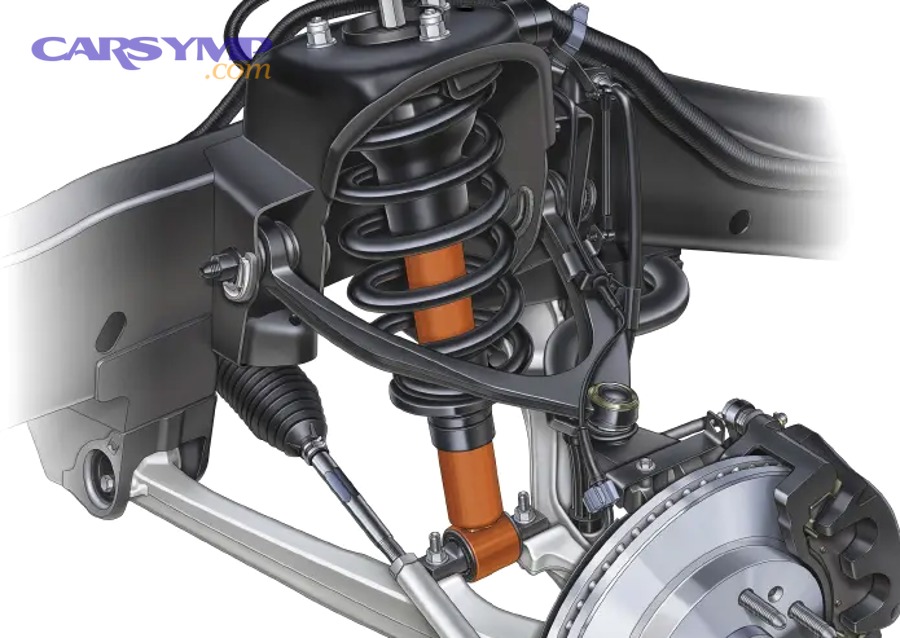
Shock absorbers and struts serve dual roles as dampers and structural components. When their internal valves fail or mounting bushings deteriorate, they produce rattling during compression and rebound cycles. Strut mounts contain both a bearing for steering movement and rubber isolators for vibration dampening; failure of either component generates distinct rattling sounds. Tie rod ends connect the steering rack to the wheels and develop play in their ball-and-socket joints, while sway bar bushings—the frame-mounted rubber clamps that hold the anti-roll bar—compress flat over time, allowing the bar to move and rattle against its mounting points.
The rate of bushing and joint deterioration accelerates in harsh environments. Vehicles driven in northern climates where road salt is prevalent experience faster rubber degradation due to chemical attack. Similarly, vehicles operating on unpaved roads or in areas with poorly maintained pavement encounter more severe impacts that stress suspension components beyond their design parameters. Understanding these wear mechanisms helps predict which components are most likely to fail based on your vehicle’s operating environment and mileage.
How Can You Tell Which Suspension Component Is Rattling?
You can tell which suspension component is rattling by using the LIT diagnostic method—Listen to identify sound location and characteristics, Inspect for visible damage, and Test with hands-on procedures that isolate each component. This systematic approach narrows the diagnostic field from seven potential culprits to the specific failed part within 15-30 minutes for most experienced DIY mechanics. The process begins with a stationary bounce test where you press down firmly on each corner of the vehicle and listen for rattles as the suspension rebounds.
Specifically, sound localization forms the critical first step in identifying rattling components. Stand beside your vehicle while a helper slowly drives over speed bumps or into a driveway entrance at an angle, creating suspension articulation. Listen carefully to determine whether the rattle originates from the front-left, front-right, rear-left, or rear-right corner. Front suspension rattles typically indicate sway bar links, ball joints, control arm bushings, struts, or tie rod ends, while rear rattles usually point to shock absorbers, rear control arm bushings, or rear sway bar components. Some rattles appear to come from multiple locations due to sound transmission through the chassis, making the next inspection phase essential for confirmation.
Before lifting the vehicle, perform the bounce test at each corner. Place both hands on the bumper or fender directly above the suspected wheel and push down firmly, then release quickly. A healthy suspension should rebound smoothly one or two times before settling. If you hear rattling, clunking, or continued bouncing, that corner requires detailed inspection. This test effectively identifies worn shock absorbers and struts but may not reveal issues with other components that need articulation under load to produce noise.
Safe vehicle lifting procedures prevent injury and enable thorough inspection. Park on level ground, engage the parking brake, and place wheel chocks behind the wheels that will remain on the ground. Position a floor jack at the manufacturer’s recommended lift points—typically reinforced areas of the frame or designated jacking points marked in the owner’s manual. Raise the vehicle until the wheel clears the ground by 3-4 inches, then immediately place jack stands under secure support points. Never work under a vehicle supported only by a jack, as hydraulic failure can occur without warning. Lower the vehicle onto the jack stands and shake the vehicle gently to ensure stability before beginning your inspection.
What Does a Rattling Sway Bar Link Sound Like?
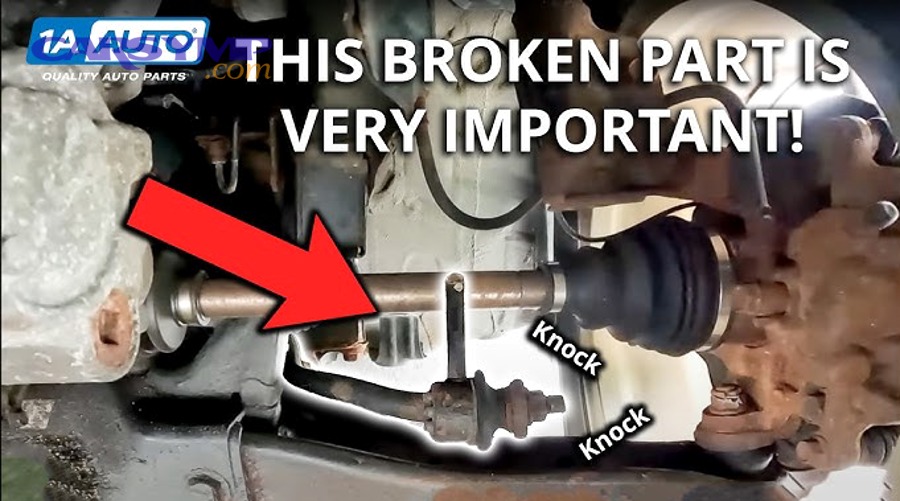
A rattling sway bar link produces a distinct knocking or clunking sound that occurs primarily when driving over bumps at low speeds, creating a rhythmic metal-on-metal noise that matches the frequency of road irregularities. The sound often resembles someone tapping metal components together and typically intensifies when the vehicle’s body rolls during cornering or when driving over speed bumps. Unlike the dull thud of worn bushings, sway bar link rattles have a sharper, more metallic quality that makes them relatively easy to identify once you know what to listen for.
To test sway bar links, grasp the link firmly with both hands where it connects to the sway bar and attempt to move it up and down, then side to side. A worn link will exhibit noticeable play, producing a clicking or rattling sensation you can feel in your hands. The ball joints within the link housing should have zero detectable movement when new; any play indicates wear. Some links use rubber bushings instead of ball joints, and these can be inspected visually for cracking, tearing, or compression. The test requires the wheel to remain on the ground initially, as suspending the wheel unloads the link and may not reveal play that exists under normal operating conditions.
Sway bar links rank as the most frequently replaced suspension component in many vehicle models due to their exposure to extreme angular movement and relatively lightweight construction. The links endure constant articulation as the suspension moves up and down while simultaneously controlling body roll, creating stress at both connection points. Most links fail between 50,000 and 100,000 miles, though aggressive driving or poor road conditions accelerate wear. Replacement costs range from $50-150 per side for parts when using quality aftermarket components with grease fittings, which allow periodic lubrication to extend service life.
How Do You Identify Rattling From Worn Ball Joints?
You identify rattling from worn ball joints by performing a leverage test using a pry bar to check for vertical play and listening for clunking sounds during suspension articulation, combined with visual inspection of the rubber boot for tears or grease leakage. Ball joints differ from other suspension components because they must bear the vehicle’s weight while simultaneously allowing multi-directional movement, making them critical safety components that require immediate replacement when worn. The characteristic sound of a failing ball joint resembles a hollow clunk or knock that occurs during driving over bumps, turning, or any suspension movement.
The leverage test provides definitive diagnosis of ball joint wear. Position a long pry bar or tire iron under the tire with the fulcrum point near the suspected ball joint location. For lower ball joints, place the bar under the tire and pry upward while watching the joint for movement; for upper ball joints, position the bar above the tire and pry downward. Any visible vertical movement between the ball stud and its housing indicates worn clearances that compromise safety. Ball joints should have zero detectable vertical play—even 1-2 millimeters of movement warrants replacement. Perform this test with the wheel loaded (touching the ground) for lower ball joints and unloaded (hanging free) for upper ball joints, depending on whether the spring loads the upper or lower control arm in your vehicle’s suspension design.
Visual inspection of the rubber boot surrounding the ball joint reveals early-stage failure before dangerous play develops. The boot seals grease inside the joint and prevents dirt and water contamination. Tears, cracks, or missing sections of the boot allow grease to escape and contaminants to enter, rapidly accelerating wear. Examine the boot from multiple angles using a flashlight, looking for signs of grease leakage indicated by black or brown residue on the boot exterior or surrounding components. Many vehicles mount the lower ball joint on the underside of the lower control arm, requiring a mirror or camera to inspect thoroughly.
Ball joints represent critical safety components because their complete failure results in wheel separation from the vehicle or collapse of the suspension, causing immediate loss of control. Unlike sway bar links or worn bushings that progressively worsen while remaining functional, ball joints can fail catastrophically without additional warning once significant play develops. Most automotive safety standards require immediate repair when ball joint play exceeds manufacturer specifications, which typically range from 0-0.040 inches of vertical movement. The repair urgency explains why professional inspections often prioritize ball joint evaluation during routine maintenance.
What Are the Signs of Failing Control Arm Bushings?
The signs of failing control arm bushings include thunking sounds during acceleration and braking, visible rubber cracking or tearing, and handling changes like wandering or imprecise steering response. Control arm bushings experience both rotational movement as the suspension articulates and fore-aft stress during acceleration and braking, creating a complex loading pattern that deteriorates rubber over time. Unlike ball joints that produce sharp clunking, worn control arm bushings generate deeper, more resonant thunking noises that coincide with power application or release.
The inspection procedure for control arm bushings requires visual examination from multiple angles with the wheel removed for best access. Upper and lower control arms each contain bushings at their frame mounting points—typically two bushings per arm positioned at the front and rear attachment locations. Healthy bushings maintain their original cylindrical shape with smooth rubber surfaces, while worn bushings show visible cracking radiating from the center bore, chunks of missing rubber, or complete separation between the rubber and metal sleeve. Some bushings compress significantly over time, allowing excessive movement that produces noise without visible damage. Comparing bushing appearance to the opposite side of the vehicle often reveals whether apparent wear is normal aging or failure requiring replacement.
Control arm bushing failure affects vehicle alignment and tire wear patterns in addition to creating noise. The bushings maintain precise control arm positioning relative to the frame, directly influencing camber, caster, and toe alignment angles. Worn bushings allow the control arm to shift position under driving forces, effectively changing alignment dynamically as you drive. This movement creates tire scrubbing that accelerates wear, particularly on the inner or outer tire edges. Drivers often notice vague steering response, vehicle wandering on straight roads, or a pulling sensation during acceleration before the rattling becomes prominent enough to prompt inspection.
Replacement timing for control arm bushings depends on symptom severity and inspection findings. Bushings showing surface cracking but maintaining structural integrity can typically continue service until the next scheduled maintenance, while those with large tears, missing chunks, or visible metal-on-metal contact require immediate replacement. Many mechanics recommend replacing all bushings on both control arms simultaneously when one side fails, as symmetrical wear patterns typically affect both sides similarly. This approach prevents repeated labor charges for suspension work within a short timeframe.
Which Suspension Parts Most Commonly Rattle Over Bumps?
Sway bar links most commonly rattle over bumps, followed by ball joints, worn shock absorbers, and control arm bushings based on failure frequency across vehicle types and age ranges. Sway bar links account for approximately 35-40% of suspension rattle complaints in vehicles over five years old, primarily because they endure constant articulation with relatively lightweight construction. Ball joints represent the second most common source at roughly 25-30% of cases, while shock absorbers and control arm bushings each contribute about 15-20% of suspension rattle diagnoses.
Moreover, the ranking of failure frequency varies by vehicle type and suspension design. Trucks and SUVs with long-travel suspension systems experience higher sway bar link failure rates due to increased angular movement, while sports cars with performance-tuned suspension typically see ball joint and control arm bushing wear from higher lateral forces during cornering. Front-wheel-drive vehicles place additional stress on front suspension components that also manage torque transfer, accelerating wear on control arm bushings and ball joints compared to rear-wheel-drive configurations.
Component failure rates correlate strongly with vehicle mileage and age. Most original equipment suspension components begin showing wear between 60,000-80,000 miles in normal driving conditions, with accelerated failure in harsh environments. The table below summarizes typical failure mileage for common rattling components:
| Component | Typical Failure Range | Contributing Factors | Repair Urgency |
|---|---|---|---|
| Sway Bar Links | 50,000-100,000 miles | Angular movement, lightweight construction | Low – Can delay 1-3 months |
| Ball Joints | 70,000-120,000 miles | Weight bearing, multi-directional stress | High – Replace within 1-2 weeks |
| Shock Absorbers | 60,000-100,000 miles | Fluid seal degradation, valve wear | Medium – Replace within 1 month |
| Control Arm Bushings | 80,000-150,000 miles | Fore-aft stress, rubber deterioration | Medium – Replace within 1 month |
| Strut Mounts | 70,000-120,000 miles | Bearing wear, rubber isolation failure | Medium-High – Replace within 2-3 weeks |
| Tie Rod Ends | 80,000-130,000 miles | Steering input stress, boot deterioration | High – Replace within 1-2 weeks |
| Sway Bar Bushings | 80,000-140,000 miles | Compression fatigue, mounting stress | Low – Can delay 2-4 months |
This mileage data represents average failure ranges observed across multiple vehicle makes and models in typical driving conditions. Individual component lifespan varies based on driving habits, road quality, climate, and maintenance practices. Vehicles driven primarily on smooth highways typically exceed the upper mileage ranges, while those operating on rough roads or in areas with severe winters may fail at the lower ranges or even earlier.
Are Worn Shock Absorbers or Struts Causing Your Rattle?
Yes, worn shock absorbers or struts cause rattling when internal components degrade, mounting bushings fail, or the spring seats become loose, producing sounds during compression and rebound cycles. The bounce test provides the primary diagnostic method for shock and strut evaluation, where pressing down firmly on each corner and releasing should result in one and a half rebounds before the suspension settles. Continued bouncing beyond this point indicates damping failure, while rattling during the test confirms worn mounting components or internal damage.
Specifically, shock absorbers and struts contain multiple components that can produce rattling when worn. The primary damping mechanism relies on hydraulic fluid flowing through internal valves that control compression and rebound speed. When valve components wear or fluid degrades, pressure fluctuations increase, causing internal parts to rattle. External inspection reveals fluid leakage through the main seal, indicated by oily residue coating the shock body below the piston rod. Any visible fluid leakage confirms damper failure requiring replacement, as even minor seepage allows dirt entry that accelerates internal wear.
The mounting hardware connecting shocks and struts to the vehicle provides additional rattle sources. Top mounts on struts contain rubber isolation bushings that separate the strut from the vehicle body, preventing vibration transmission. These bushings deteriorate similarly to control arm bushings, developing cracks and compression that allow rattling. The mounting hardware includes nuts and washers that can loosen over time, creating noticeable rattling distinct from internal shock wear. Checking mounting nut torque using the manufacturer’s specifications eliminates this possibility before condemning the shock itself.
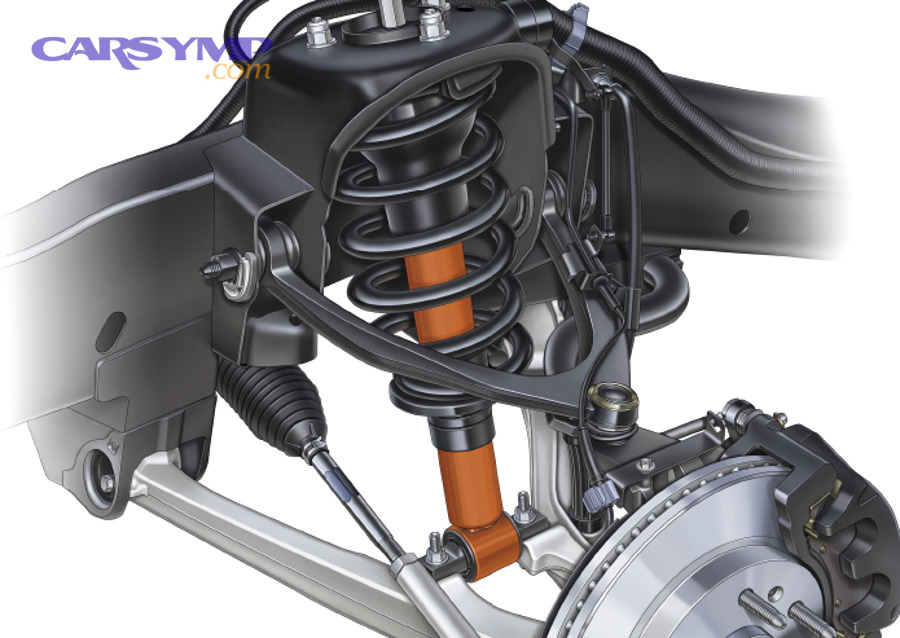
Strut-equipped vehicles (MacPherson strut design) integrate the shock absorber and spring into a single assembly that serves as a structural suspension component. This design places additional wear on strut mounts compared to conventional shock absorber designs because the mount must accommodate both vertical suspension movement and steering-related rotation. The bearing within the strut mount allows the spring and strut to rotate as the wheels turn, and bearing wear produces grinding or rattling sounds during steering inputs combined with suspension articulation. Testing requires turning the steering wheel while bouncing the suspension, listening for noises that occur only during combined movement.
Shock absorber and strut replacement should occur as pairs on the same axle to maintain balanced damping characteristics. Installing a new shock on one side while leaving a worn unit on the opposite side creates handling imbalances, causing the vehicle to pull toward the side with more damping during braking and reducing overall stability. The cost difference between replacing one shock versus a pair is minimal when considering labor, making pair replacement the recommended approach. Performance-oriented drivers often upgrade to aftermarket adjustable shocks or coil-over kits during replacement to improve handling characteristics beyond original equipment specifications.
How Do You Diagnose Rattling Strut Mounts?
You diagnose rattling strut mounts by inspecting the upper mounting point for rubber deterioration, checking the bearing for roughness or play, and performing a combined steering-and-bounce test that isolates mount-specific noises. Strut mounts contain both a bearing assembly that allows steering rotation and rubber isolation components that absorb vibration, making them susceptible to two distinct failure modes. The diagnostic procedure requires accessing the mount from above by opening the hood and locating the strut tower where the upper mount attaches to the vehicle body.
Visual inspection from the engine compartment reveals common strut mount issues without requiring suspension disassembly. Remove any plastic covers or panels obscuring the strut tower area and examine the rubber components surrounding the bearing for cracking, tearing, or separation from the metal mounting plate. Healthy mounts maintain their original dome shape with uniform rubber thickness, while failed mounts show compressed rubber, exposed metal, or complete separation between rubber layers. Some vehicles allow you to reach through and grasp the strut shaft, attempting to move it side-to-side; any perceptible play indicates bearing wear or mounting looseness.
The combined movement test definitively identifies strut mount rattling versus other suspension noises. Position yourself near the suspected strut tower with a helper in the driver’s seat. Have the helper turn the steering wheel approximately 20-30 degrees left and right while simultaneously bouncing in the seat to articulate the suspension. Listen carefully at the strut tower for grinding, creaking, or rattling sounds that coincide with steering input—these indicate bearing failure. Rattling that occurs during bouncing regardless of steering position suggests rubber isolation failure. Comparing the suspect side to the opposite strut mount helps distinguish abnormal noises from normal operation.
Strut mount failure affects wheel alignment and handling characteristics beyond noise generation. The mount maintains the strut’s angular relationship to the vehicle body, directly controlling caster and camber angles. Worn bearings or compressed rubber allow the strut to shift position, effectively changing alignment as the suspension moves. Drivers typically notice vague steering response, increased effort during parking maneuvers, or pulling to one side before rattling becomes prominent. These handling symptoms combined with noise confirm strut mount failure requiring replacement.
Strut mount replacement requires complete strut disassembly using a spring compressor—a specialized tool that contains the spring’s energy while the mounting hardware is removed. This procedure poses significant safety risks if performed incorrectly, as the compressed spring stores enough energy to cause severe injury if released unexpectedly. Many DIY mechanics choose to purchase complete strut assemblies with new mounts pre-installed, eliminating spring compression and reducing installation time despite higher parts costs. Professional installation costs $200-400 per strut including parts and labor, while DIY replacement using complete assemblies reduces costs by approximately 40-50% for those with appropriate experience.
Can Tie Rod Ends Create Rattling Sounds?
Yes, tie rod ends can create rattling sounds when the ball joint within the tie rod end develops play, producing knocking noises during steering inputs and suspension articulation. Tie rod ends connect the steering rack to the steering knuckle at each wheel, translating rack movement into wheel rotation while simultaneously allowing vertical suspension movement. This dual function places complex stresses on the internal ball joint that eventually wear the socket, creating the clearance that produces rattling. Unlike other suspension components, tie rod end failure directly affects steering control, making them critical safety components requiring immediate attention.
The diagnostic procedure for tie rod ends focuses on detecting lateral play at the wheel. Grasp the tire firmly at the 3 and 9 o’clock positions and attempt to rock it side to side (horizontally). Wear the appropriate gloves to protect your hands and apply firm force—any perceptible movement indicates looseness in the steering system, potentially from the tie rod end, steering rack, or steering column u-joints. To isolate the tie rod specifically, have a helper watch the tie rod end joint while you shake the wheel; visible movement at the ball joint confirms tie rod end wear. This test requires the wheel to remain on the ground with the vehicle’s weight loading the suspension, as unloading the suspension may mask play that exists under normal conditions.
Visual inspection of the tie rod end boot provides early warning of impending failure. The rubber boot sealing the ball joint prevents grease loss and contamination entry, similar to ball joint boots. Inspect the boot for tears, cracks, or grease leakage using a flashlight, checking all sides of the boot by turning the steering wheel to different positions for access. Torn boots warrant immediate replacement even without detectable play, as contamination rapidly accelerates wear once the seal fails. Many tie rod ends feature a grease fitting allowing periodic lubrication that extends service life when performed during routine maintenance.
Tie rod end failure creates urgent safety concerns because steering control depends entirely on these components functioning properly. Complete tie rod end failure allows the wheel to separate from the steering system, resulting in immediate loss of steering control for that wheel. While catastrophic failure during normal driving is relatively rare, the possibility justifies immediate replacement once significant play develops. Most states’ vehicle safety inspection standards mandate tie rod end replacement when play exceeds 0.040 inches, measured at the ball joint socket, reflecting the critical safety function these components serve.
The replacement procedure for tie rod ends requires careful attention to thread position and alignment preservation. Each tie rod end threads onto the tie rod shaft at a specific position that maintains proper toe alignment. Before removal, measure and mark the exact thread engagement position using paint or tape, then count the number of turns during removal. Installing the replacement tie rod end to the identical thread position maintains approximate alignment, though professional wheel alignment remains necessary after replacement. The mechanical connection between tie rod end and steering knuckle typically uses a castle nut secured with a cotter pin, providing a positive locking mechanism that prevents loosening during operation.
What Do Bad Sway Bar Bushings Sound Like?
Bad sway bar bushings sound like hollow clunking or knocking that occurs when the sway bar shifts within its frame-mounted brackets, producing noise during body roll, bumps, and suspension articulation. The sound resembles sway bar link rattles but typically has a slightly duller quality and occurs from a different location—the bushings mount where the sway bar attaches to the frame or subframe, while links connect the bar ends to the control arms. Distinguishing between bushing and link noise requires careful listening during the initial bounce test and may necessitate temporarily disconnecting the links to isolate bushing-specific sounds.
Specifically, sway bar bushings consist of split rubber or polyurethane clamps that encircle the sway bar and secure it to the vehicle frame using U-shaped brackets and bolts. These bushings must allow the bar to rotate freely during suspension articulation while preventing excessive movement that would create noise. New bushings maintain their original semi-circular shape and grip the bar firmly, while worn bushings show visible compression, cracking, or complete separation. The most common failure mode involves the rubber compressing flat over time, effectively enlarging the bushing’s inner diameter and allowing the bar to move within the clamp.
The inspection procedure requires accessing the sway bar mounting points, typically located on the front subframe or cross-member. Some vehicles provide reasonable access with the wheels on the ground, while others require lifting and removing protective covers or splash shields. Examine each bushing for the following failure indicators: rubber compression that flattens the bushing profile, cracks radiating from the inner bore, chunks of missing rubber, or complete separation from the metal bracket. Grasping the sway bar and attempting to move it up and down within the bushing reveals excessive clearance that produces rattling during driving.
The isolation test definitively determines whether bushings or links cause sway bar-related rattles. With the vehicle safely supported, disconnect both sway bar links from the control arms and secure them using zip ties or wire to prevent dangling. Carefully drive the vehicle over the same bumps that previously produced rattling, listening for noise changes. If the rattling disappears completely, the links were the problem; if rattling persists, the bushings require replacement. This test provides certainty before purchasing parts, potentially saving diagnostic time and preventing incorrect repairs.
Sway bar bushing replacement ranks among the simpler suspension repairs for DIY mechanics with basic tools. Most bushings split into two halves for installation without requiring complete sway bar removal, though access varies significantly by vehicle design. The U-bracket securing each bushing typically uses two bolts that remove easily with common hand tools. Some manufacturers recommend applying special bushing grease to the bar before installing new bushings to reduce friction and prevent future squeaking, though this practice remains optional for standard rubber bushings. Polyurethane bushing upgrades offer increased durability and tighter tolerances compared to rubber, appealing to performance-oriented drivers willing to accept slightly increased noise transmission.
How Do You Perform a DIY Suspension Rattle Diagnosis?
You perform a DIY suspension rattle diagnosis by following a systematic five-step process: conduct a pre-inspection bounce test to isolate the corner, safely lift and support the vehicle, visually inspect components for damage, physically test each suspect component for play, and document findings to guide repair decisions. This methodical approach typically requires 30-45 minutes for thorough execution and accurately identifies the rattling component in 85-90% of cases without specialized diagnostic equipment. The process emphasizes safety procedures while enabling DIY mechanics to avoid unnecessary parts replacement and diagnostic charges.
To begin, the pre-inspection bounce test localizes rattling to a specific corner and provides baseline information about noise characteristics. Walk around the vehicle and press down firmly on each corner above the wheel using both hands on the bumper or fender. Release quickly and listen carefully as the suspension rebounds. Note which corners produce rattling, clunking, or continued bouncing beyond one and a half cycles. This initial test often reveals obvious shock absorber or strut failures while establishing which corner requires detailed inspection. Repeat the test at each corner even if you already suspect a specific location, as multiple failed components frequently occur simultaneously in older vehicles.
Safe vehicle lifting procedures form the foundation of suspension inspection and prevent serious injury. Park on level, solid ground and engage the parking brake firmly. Place wheel chocks tightly against the wheels that will remain on the ground, positioning them on the uphill side if any slope exists. Locate the manufacturer’s recommended jacking points—usually reinforced sections of the frame rail or pinch welds marked in the owner’s manual. Position your floor jack at the appropriate point and raise the vehicle slowly until the tire clears the ground by 3-4 inches. Immediately slide jack stands under secure support points and lower the vehicle onto the stands before beginning any inspection. Test stability by gently shaking the vehicle; it should remain solidly supported without movement.
The systematic visual inspection examines each component in a logical sequence following the suspension’s load path from the frame to the wheel. Start at the strut or shock absorber mount and work downward, inspecting each connection point for loose hardware, damaged rubber components, or obvious wear. Use a bright flashlight to illuminate shadowed areas and a mirror to examine components from angles not directly visible. Check for oil leakage on shock absorbers, torn rubber boots on ball joints and tie rod ends, cracked or compressed control arm bushings, and missing or damaged sway bar components. Photograph any questionable components with your phone to compare against the opposite side or research online whether the condition warrants replacement.
Physical testing of each component provides definitive diagnosis when visual inspection reveals no obvious damage. Use a long pry bar or large screwdriver as a leverage tool, positioning it strategically to apply force that reveals excessive play. For ball joints, pry vertically at the connection point while watching for movement between the ball stud and housing. For tie rod ends, grasp the tire and apply lateral force while observing the tie rod connection. Sway bar links can be manually grasped and wiggled to feel for play. Control arm bushings require visual observation while a helper applies brake or accelerator pressure with the engine running and transmission in gear (with the vehicle securely supported). Document the location and degree of any detected play using written notes or video recording.
The documentation phase translates inspection findings into repair decisions and ensures you don’t forget critical details when shopping for parts or discussing the issue with professionals. Create a simple checklist noting each inspected component’s condition as “Good,” “Questionable,” or “Failed.” Record specific observations like “driver-side sway bar link has 3mm vertical play” or “passenger-side lower control arm bushing shows 45-degree crack on inner edge.” This documentation helps when researching typical failure patterns for your vehicle model and provides objective information for obtaining repair estimates. Many DIY mechanics use smartphone video to record their verbal observations while inspecting, creating a timestamped reference that captures details easily forgotten later.
What Tools Do You Need to Diagnose Suspension Rattles?
You need a floor jack, two jack stands, wheel chocks, a flashlight, work gloves, and a pry bar or tire iron to diagnose suspension rattles effectively and safely. These essential tools enable proper vehicle support, adequate lighting, and the leverage required to test for component play without requiring expensive specialized equipment. Most DIY mechanics already own these basic tools, making suspension diagnosis accessible with minimal additional investment. The total cost for purchasing quality versions of all essential tools ranges from $150-250 if starting from nothing.
The floor jack serves as the primary lifting device and must have adequate capacity for your vehicle’s weight. Hydraulic floor jacks rated for 2-3 tons suit most passenger cars and light trucks, providing stable lifting with minimal effort through their long handle and hydraulic advantage. The jack’s saddle—the pad that contacts the vehicle—should fit securely at the manufacturer’s jacking points without slipping. Low-profile jacks with thin saddles access pinch welds on lowered vehicles, while trucks and SUVs require standard-height jacks with greater lift range. Never substitute a scissor jack from your vehicle’s emergency kit for suspension diagnosis, as these jacks lack the stability and height needed for safe undercarriage access.
Jack stands represent the most critical safety equipment in your tool collection, as they provide the primary support preventing vehicle collapse. Purchase jack stands rated significantly above your vehicle’s weight—4-ton stands for a 3,000-pound car provides ample safety margin. The stands must sit on level, solid ground with their bases fully supporting the weight; soft ground, asphalt on hot days, or uneven surfaces compromise stability. Position stands at structural points capable of bearing the vehicle’s weight, typically the same locations used for jacking or other reinforced frame sections. Always use two jack stands (one per side) when lifting one end of the vehicle, never supporting weight on a single stand.
Wheel chocks prevent vehicle rolling during lifting and inspection, especially important for vehicles with automatic transmissions that may creep despite brake engagement. Commercial wheel chocks made from hard plastic or rubber provide superior grip compared to improvised blocks, featuring angled surfaces that wedge tightly against the tire. Position chocks on the uphill side of wheels if any slope exists, placing them both in front and behind the tires when maximum security is needed. The parking brake alone provides insufficient rolling prevention for safety-critical work underneath a vehicle.
A high-quality LED flashlight or work light illuminates suspension components in the shadowed undercarriage where inspection occurs. LED lights provide bright, white light that reveals component conditions better than incandescent bulbs while operating cooler and offering longer battery life. Flexible magnetic work lights that attach to metal suspension or frame components free both hands for inspection, while headlamp-style lights allow you to direct illumination wherever you look. Budget for at least 500 lumens of light output to adequately illuminate typical inspection areas; cheaper lights with lower output make it difficult to distinguish rubber cracking from shadows or dirt.
Optional diagnostic tools enhance inspection capability without being strictly necessary. A mechanic’s stethoscope—a simple metal rod with ear tips—amplifies sounds when touched to suspension components during the bounce test, helping localize rattles with precision. A mechanics’ mirror extends visual access to components otherwise visible only from above or below, particularly useful for inspecting tie rod end boots and upper ball joints. Digital calipers measure play at ball joints and tie rod ends in thousandths of an inch, providing objective data for comparison against manufacturer specifications. These optional tools typically cost $30-80 combined and prove valuable for anyone planning regular suspension maintenance.
Is It Safe to Drive With Rattling Suspension Components?
It depends on which component is rattling—driving with worn ball joints or tie rod ends creates immediate safety risks requiring urgent repair within 1-2 weeks, while rattling sway bar links or bushings pose minimal safety concerns and can typically wait 1-3 months for convenient repair scheduling. The safety distinction hinges on whether the failed component plays a critical role in maintaining wheel alignment, steering control, or vehicle stability. Critical components include ball joints, tie rod ends, and severely worn struts where catastrophic failure results in loss of vehicle control, while non-critical components like sway bar links affect only ride quality and handling precision until failure becomes complete.
More specifically, ball joint failure represents the highest safety risk among common rattling components because these joints bear the vehicle’s weight while allowing steering and suspension movement. Complete ball joint failure allows the wheel to separate from the suspension, causing immediate loss of control and potential vehicle collapse onto the failed corner. This catastrophic failure mode can occur suddenly without additional warning once significant play develops, making ball joint replacement urgent when rattling indicates advanced wear. The risk assessment changes based on play severity—minimal play detected during inspection might allow a few weeks of careful driving, while obvious looseness demands immediate repair or towing to a repair facility.
Tie rod end failure similarly compromises steering control because these components form the mechanical connection between the steering rack and wheels. Complete failure disconnects the steering linkage, rendering one wheel unresponsive to steering inputs. While the remaining wheel continues responding to steering commands, the vehicle pulls violently toward the failed side and becomes extremely difficult to control, particularly at highway speeds. The gradual wear process typically provides warning through increasing play and rattling before catastrophic failure, but the component’s critical function justifies treating tie rod end rattles as urgent repairs requiring completion within 1-2 weeks.

Worn shock absorbers and struts occupy a middle ground in the safety spectrum. These components primarily affect ride quality, handling precision, and braking stability rather than structural integrity. Continued driving with worn dampers increases stopping distances, reduces cornering stability, and accelerates tire wear but doesn’t typically result in catastrophic failure. The exception involves completely failed mounts or severely damaged struts where structural separation could occur, creating urgent safety concerns similar to ball joint failure. For standard damper wear indicated by rattling during normal operation, planning replacement within 2-4 weeks provides adequate safety while allowing convenient scheduling.
Non-critical components including sway bar links, sway bar bushings, and mildly worn control arm bushings affect primarily ride quality and handling feel rather than fundamental safety. Sway bar components control body roll during cornering but don’t maintain wheel positioning or steering control, meaning their failure reduces handling precision without creating immediate danger. Many vehicles operate for months with failed sway bar links producing constant rattling before owners schedule repairs. The gradual performance degradation allows extended driving while saving money for proper quality repairs rather than rushing into inadequate budget fixes. The Rattle under car causes checklist helps prioritize repair urgency based on component function and wear severity.
The driving behavior modifications during the waiting period reduce risks when continuing operation with known suspension wear. Reduce highway speeds by 10-15 mph to decrease impact forces and allow more reaction time for potential component failure. Increase following distances to compensate for potentially reduced braking stability from worn dampers. Avoid aggressive cornering that stresses already-worn components beyond normal operating loads. Minimize highway driving in favor of lower-speed routes that reduce both stress on worn parts and consequences of potential failure. These precautions help maintain reasonable safety when temporary continued operation becomes necessary due to scheduling or financial constraints.
What Other Car Parts Can Sound Like Rattling Suspension Components?
Heat shields, exhaust hangers, loose catalytic converters, and low transmission fluid can sound like rattling suspension components because these systems occupy the undercarriage area where sounds transmit through the chassis and appear to originate from the suspension. Distinguishing between suspension rattles and other mechanical noises requires understanding the timing, location, and characteristics of each potential source. Non-suspension rattles often correlate with engine speed, exhaust gas flow, or specific transmission operating conditions rather than purely suspension articulation over bumps, providing diagnostic clues that help differentiate the actual source.
The rattle under car causes checklist should include these alternative sources to prevent misdiagnosis and unnecessary suspension repairs. Experienced mechanics report that approximately 15-20% of initial suspension rattle complaints ultimately trace to non-suspension components after thorough diagnosis. The misattribution occurs because sounds transmit efficiently through the vehicle’s structure, making localization difficult without systematic testing. Heat shield rattle diagnosis represents one of the most common diagnostic challenges because heat shields occupy the undercarriage area adjacent to suspension components and produce metallic rattling sounds similar to worn suspension parts.
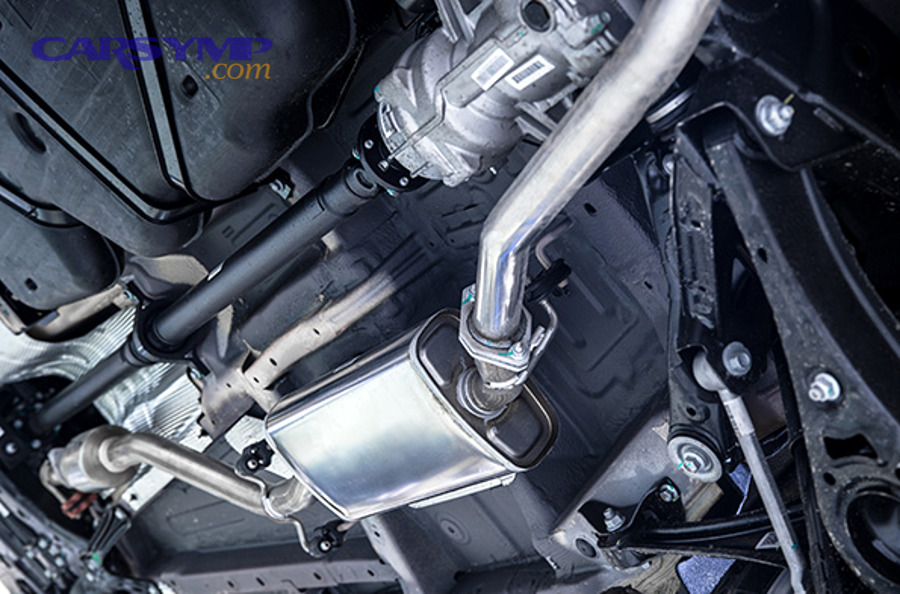
Exhaust system components create varied rattles depending on which part has failed or loosened. The heat shields surrounding the exhaust manifold, catalytic converter, and exhaust pipes prevent heat transfer to nearby components but attach with thin metal brackets prone to rust and breakage. When these brackets fail, the thin sheet metal heat shields vibrate against the exhaust pipe or surrounding structure, producing rattling that intensifies with engine vibration and exhaust gas pulses. The rattle typically correlates with engine RPM—increasing with acceleration and decreasing during deceleration—providing a key differentiating characteristic from suspension rattles that correlate strictly with road bumps regardless of throttle position.
Transmission-related rattles present diagnostic challenges because transmission location near the front suspension creates sound transmission paths that make localization difficult. Automatic transmissions with worn torque converters produce rattling at idle in gear that typically disappears when shifted to neutral or park, clearly distinguishing them from suspension issues once testing is performed. Manual transmissions with failing dual-mass flywheels generate metallic rattling audible during clutch operation, particularly when depressing or releasing the clutch pedal. Low transmission fluid levels allow internal components to strike together due to inadequate lubrication, creating rattles during acceleration or gear changes that might initially be attributed to suspension components, especially in front-wheel-drive vehicles where the transmission sits directly above the front suspension.
Can a Loose Heat Shield Mimic Suspension Rattles?
Yes, a loose heat shield can mimic suspension rattles by producing metallic vibration sounds when its mounting brackets fail, creating rattling that intensifies over bumps and often correlates with engine speed or exhaust gas flow. Heat shields consist of thin sheet metal panels positioned around hot exhaust components to reflect radiant heat away from fuel lines, floorboards, and other heat-sensitive parts. The shields attach using metal tabs, clips, or small bolts that corrode over time, particularly in climates where road salt accelerates rust formation. Once mounting integrity fails, the shield vibrates against nearby components, generating sounds easily confused with suspension rattles.
The diagnostic differentiation between heat shield and suspension rattles focuses on sound timing and correlation patterns. Heat shield rattles often intensify during acceleration as exhaust gas velocity increases, creating more pronounced vibration in the loose shield. The sound may also correlate with engine RPM rather than purely with road surface conditions—revving the engine while stationary can sometimes reproduce heat shield rattles, whereas suspension rattles require wheel movement over bumps. Visual inspection typically reveals heat shield issues quickly because the shields are visible when viewing the undercarriage, showing obvious gaps, missing fasteners, or physical damage that wouldn’t be apparent with suspension components.

The repair process for loose heat shields ranks among the simplest automotive fixes, often requiring only basic hand tools and minimal time. Many cases involve missing or broken sheet metal clips that secure the shield, replaced by purchasing inexpensive replacement clips from auto parts stores. Some mechanics use stainless steel hose clamps as improvised replacement fasteners when original-style clips are unavailable, wrapping the clamp around both the heat shield and exhaust pipe to secure the shield in position. Complete heat shield replacement becomes necessary when rust perforation or severe deformation prevents effective reattachment, typically costing $50-150 in parts depending on which shield requires replacement.
The functional importance of heat shields varies by location, with some shields preventing critical heat damage while others provide marginal benefit. Catalytic converter heat shields rank as most important because converters operate at extremely high temperatures (1,200-1,600°F) that can ignite dry grass, leaves, or other flammable materials contacted during off-road driving or parking. Upper heat shields protecting the cabin floor prevent uncomfortable heat buildup and potential damage to interior components, particularly important in warm climates. Lower heat shields beneath the exhaust system provide the least critical protection and can sometimes be removed entirely if repairs prove impractical, though this approach may violate emissions regulations in some jurisdictions.
How Do You Tell the Difference Between Suspension and Exhaust Rattles?
You tell the difference between suspension and exhaust rattles by analyzing when the rattle occurs—suspension rattles coincide specifically with wheel movement over bumps, while exhaust rattles often intensify during acceleration and may occur during idling without any suspension movement. This timing distinction provides the primary diagnostic criterion because suspension components only generate noise when they articulate or absorb impacts, whereas exhaust system components can rattle from vibration transmitted by the engine regardless of vehicle movement. A stationary test where you rev the engine while watching a helper press down on the vehicle corners often reveals exhaust rattles that increase with RPM, while suspension rattles remain silent until the suspension moves.
The location assessment provides additional differentiation once you narrow the general area. Exhaust system components run along the vehicle centerline from the engine back to the rear bumper, typically positioned higher than suspension components when viewed from underneath. Suspension components concentrate near each wheel, with control arms, struts, and linkages extending outward from the chassis. When crawling underneath with the engine running, carefully approaching (but never touching) the exhaust system while a helper maintains idle allows feeling for vibration in suspected exhaust components. The heat radiating from exhaust components aids identification, though extreme caution prevents burns from surfaces that may remain hot minutes after engine shutdown.
The system isolation test definitively determines the rattle source when timing and location assessments prove inconclusive. For exhaust system testing, carefully grasp exhaust components (only when completely cool) at hangers and pipe joints, gently moving them to check for play or contact with nearby chassis components. Mark any contact points with chalk, then test-drive the vehicle to confirm whether rattle characteristics change. For suspension isolation, the previously described procedure of disconnecting sway bar links enables driving without their contribution, determining whether they caused the original rattle. More comprehensive isolation requires lifting the vehicle and manually articulating each suspension component while listening for noise reproduction without road input.
Visual inspection techniques differ significantly between exhaust and suspension systems due to their distinct construction and failure modes. Exhaust systems show corrosion patterns, holes, and looseness at connection joints that indicate potential rattle sources, while suspension components display rubber deterioration, physical damage, or excessive play at pivot points. The exhaust system consists primarily of metal pipes and heat shields that remain visible when viewing from beneath, requiring no disassembly for inspection. Suspension components often hide behind wheel wells, splash shields, or protective covers, necessitating wheel removal and shield disassembly for comprehensive inspection. This accessibility difference sometimes leads to incomplete suspension inspections where only readily visible components receive evaluation, potentially missing hidden wear sources.
Can Transmission Issues Cause Rattling That Sounds Like Suspension Problems?
Yes, transmission issues can cause rattling that sounds like suspension problems when torque converter clutches wear in automatic transmissions or when dual-mass flywheels fail in manual transmissions, producing metallic rattling that transmits through the drivetrain and chassis. The transmission’s proximity to the front suspension in most front-wheel-drive vehicles and many rear-wheel-drive cars creates sound transmission paths that make precise localization difficult without systematic testing. Transmission rattles typically exhibit timing patterns distinct from suspension noise—appearing during specific gear operation, at idle in gear, or during clutch engagement—but casual observation during normal driving sometimes misses these correlation patterns.
Torque converter clutch wear represents the most common transmission-related rattle in automatic transmissions, particularly in vehicles exceeding 100,000 miles. The torque converter contains internal clutch plates that lock the converter for improved efficiency at cruising speeds, preventing energy loss through fluid coupling. Normal wear gradually increases clearance between these clutch components, allowing them to rattle when the clutch disengages or operates at the threshold between engagement and disengagement. The characteristic sound resembles metal washers or coins rattling together and typically appears at low speeds in stop-and-go traffic, sometimes disappearing at steady highway speeds when the clutch fully locks. Shifting to neutral at a stop light eliminates torque converter rattles as the transmission unloads, clearly distinguishing them from suspension rattles that persist regardless of transmission gear position.
Dual-mass flywheel failure in manual transmissions creates particularly prominent rattling that often gets misdiagnosed as suspension issues by owners unfamiliar with this component. The dual-mass flywheel incorporates springs between its two sections to dampen engine vibrations before they reach the transmission, protecting drivetrain components from torsional stress. These internal springs eventually fatigue and break, allowing the flywheel sections to contact each other with audible rattling. The sound intensifies during clutch engagement and disengagement, appearing most prominent when starting from a stop or during gear changes. Unlike suspension rattles that require road irregularities to occur, flywheel rattles happen during smooth-road driving whenever clutch operation occurs, providing clear differentiation once this pattern becomes recognized.
Low transmission fluid levels create additional rattle possibilities as inadequate lubrication allows internal gears and clutches to operate with metal-on-metal contact. The rattling typically correlates with transmission operation—intensifying during acceleration or gear changes—and may accompany other symptoms like delayed shifting, slipping, or transmission overheating. Checking transmission fluid level and condition provides a simple diagnostic step that potentially identifies fluid-related issues before they progress to component damage. Most vehicles feature transmission dipsticks or check plugs that allow fluid inspection with the engine running and transmission at operating temperature, though some newer vehicles eliminate dipsticks in favor of dealer-only fluid checks.
The repair urgency for transmission rattles varies by cause but generally warrants prompt attention to prevent progressive damage. Torque converter issues typically allow continued driving until convenient repair scheduling, though the failure may progress to loss of converter lockup and reduced fuel economy. Dual-mass flywheel failure requires eventual replacement but rarely fails catastrophically—the rattling represents primarily an annoyance until the next clutch service when flywheel replacement occurs simultaneously. Low fluid issues demand immediate attention as continued operation risks transmission damage far exceeding the cost of fluid addition or leak repair. The Rattle after recent repairs diagnosis should consider transmission work among possible causes, as improper fluid fill or incomplete component installation sometimes creates new rattles mimicking suspension issues.
How Much Does It Cost to Fix Rattling Suspension Components?
Fixing rattling suspension components costs between $50-800 per corner depending on the specific failed component, whether you perform DIY repairs versus professional installation, and whether you use economy, OEM, or performance parts. Sway bar links represent the most affordable repair at $20-60 per side for parts and $80-150 for labor, making them cost-effective to replace preventively when any play develops. Ball joints and tie rod ends cost $40-120 per side for parts and $150-300 for professional installation, with higher costs for vehicles requiring removal of entire control arms to access pressed-in ball joints rather than bolt-on designs.
The DIY versus professional cost comparison reveals significant potential savings for mechanically-inclined vehicle owners willing to invest time and effort. Professional repair shops typically charge $80-150 per hour for labor, with suspension repairs requiring 1-4 hours per corner depending on component accessibility and design complexity. Parts costs remain identical whether purchased by a shop or DIY mechanic when using the same quality level, though some shops mark up parts by 20-40% above retail prices. The table below compares typical costs for common suspension repairs:
| Component | Parts Cost (DIY) | Professional Labor | DIY Time | Difficulty (1-5) |
|---|---|---|---|---|
| Sway Bar Links (pair) | $40-120 | $100-200 | 1-2 hours | 2/5 – Moderate |
| Ball Joints (one side) | $40-150 | $150-350 | 2-4 hours | 4/5 – Advanced |
| Control Arm Bushings | $30-80 | $200-400 | 2-3 hours | 3/5 – Intermediate |
| Shock Absorbers (pair) | $100-400 | $150-300 | 2-3 hours | 3/5 – Intermediate |
| Strut Assembly (complete) | $200-500 | $200-400 | 2-4 hours | 3/5 – Intermediate |
| Strut Mounts (pair) | $60-150 | $100-250 | 1-2 hours | 2/5 – Moderate |
| Tie Rod Ends (one side) | $25-80 | $120-250 | 1-2 hours | 3/5 – Intermediate |
| Sway Bar Bushings (set) | $20-60 | $100-180 | 1 hour | 1/5 – Easy |
The difficulty ratings reflect typical installations and assume appropriate tools, safe working conditions, and mechanical aptitude. Some vehicles feature suspension designs that dramatically increase difficulty—pressed-in ball joints require hydraulic presses, certain luxury vehicles bury suspension components behind extensive underbody covers, and rust-belt vehicles present corroded fasteners requiring penetrating oil, heat, or cutting for removal. These variables can double installation time and complexity, sometimes making professional repair more cost-effective despite higher absolute costs.
Parts quality decisions significantly impact both initial costs and long-term value. Economy aftermarket parts cost 30-50% less than OEM equivalents but may use inferior materials or less precise manufacturing that reduces service life by 30-40%. Premium aftermarket brands match or exceed OEM quality while offering features like greaseable designs that extend longevity through periodic lubrication. Performance upgrades like polyurethane bushings or adjustable suspension components cost 2-3 times more than standard replacements but appeal to enthusiast drivers seeking improved handling. The optimal strategy balances component criticality against budget constraints—using OEM or premium parts for critical safety items like ball joints while accepting economy alternatives for less-critical components like sway bar bushings.
The preventive maintenance cost-benefit analysis generally supports early replacement of obviously worn components rather than waiting for complete failure. Driving with worn suspension components accelerates tire wear—potentially costing $400-800 for premature tire replacement—while also stressing other suspension components that absorb additional loads compensating for failed parts. The secondary damage costs often exceed the original repair expense, justifying proactive replacement when inspection reveals significant wear even without prominent rattling. Additionally, some states assess vehicle safety inspection failures as moving violations or refuse registration renewal for vehicles with failed suspension components, creating legal and administrative costs beyond pure mechanical expenses.
Preventing Future Suspension Rattles Through Maintenance
You can prevent future suspension rattles through regular inspections every 12,000-15,000 miles, prompt replacement of torn rubber boots, periodic lubrication of greaseable components, and addressing alignment issues that accelerate wear. Preventive maintenance costs significantly less than reactive repairs while extending suspension component lifespan by 30-50% in many cases. The proactive approach identifies developing problems during their early stages when repairs remain simple and inexpensive, contrasting with the emergency repairs required after complete component failure.
Specifically, the inspection schedule should align with routine maintenance intervals like oil changes and tire rotations, creating opportunities to examine suspension components without additional vehicle lifting. During each oil change, request that the technician performs a visual suspension inspection checking for torn boots, leaking shocks, and obvious wear patterns. Most reputable shops include this inspection as standard practice during routine maintenance, though explicitly requesting it ensures nothing gets overlooked. For DIY oil changes, incorporate suspension inspection into your routine by spending an additional 10-15 minutes examining visible components while the vehicle remains lifted.
Boot integrity maintenance prevents premature ball joint and tie rod end failure by preserving the grease seals that exclude dirt and moisture. Rubber boots typically develop small cracks or tears months before the underlying component fails, creating an early-warning opportunity for intervention. Some enthusiasts apply rubber preservative products to suspension boots annually, though the effectiveness of these treatments remains debated among mechanics. The more reliable approach involves visual inspection every 6-12 months specifically looking for boot damage, with immediate component replacement when tears appear before internal contamination occurs.
Greaseable suspension components require periodic lubrication to maintain optimal function and prevent premature wear. Many aftermarket sway bar links, ball joints, and tie rod ends incorporate grease fittings (Zerk fittings) that accept standard grease guns for lubrication. The recommended greasing interval varies by component and driving conditions but typically ranges from every 6,000-12,000 miles for severe service or annually for normal driving. Use high-quality chassis grease formulated for suspension applications rather than general-purpose grease, as suspension-specific formulas better resist water washout and maintain consistency across temperature extremes. Apply grease until fresh grease appears at the boot seal, indicating complete internal distribution and purging of contaminated grease.
Wheel alignment maintenance directly impacts suspension component longevity because misalignment creates asymmetric loading that accelerates wear on specific components. Vehicles operating with toe misalignment—where wheels point inward or outward rather than straight ahead—place abnormal stress on tie rod ends and ball joints while scrubbing tires and reducing fuel economy. Camber misalignment affects control arm bushings and ball joints by altering the angle at which forces transfer through these components. Schedule alignment checks annually or after any suspension work, tire replacement, or impact events like hitting curbs or severe potholes. The $80-150 alignment cost prevents premature suspension wear potentially costing hundreds in early component replacement.
Driving habit modifications reduce suspension stress and extend component life, particularly for vehicles operating in challenging environments. Slow down for speed bumps and potholes rather than striking them at full speed, reducing impact forces by 40-60% compared to high-speed impacts. Avoid loading vehicles beyond their rated capacity, as overloading increases stress on all suspension components. Reduce speeds on rough or unpaved roads where suspension articulation frequencies reach resonant points that amplify component stress. These behavioral changes require minimal effort while providing measurable component life extension, especially valuable for older vehicles nearing typical suspension replacement intervals.
The environmental protection strategy addresses external factors that accelerate suspension component degradation. Road salt used for winter ice control aggressively attacks rubber components and metallic fasteners, accelerating normal wear by 2-3 times in severe cases. Regular undercarriage washing during winter months removes salt accumulation before significant damage occurs, with particular attention to flushing suspension components and the areas behind wheels where salt concentrate. Aftermarket rubber boot protectants may provide marginal benefit in salt environments, though frequent washing proves more effective. Vehicles stored outdoors in direct sunlight experience accelerated rubber deterioration from UV exposure; covered parking or car covers mitigate this degradation.
The component upgrade strategy during normal replacement intervals installs improved parts that resist wear better than original equipment. Polyurethane control arm bushings outlast rubber equivalents by 50-100% while providing tighter tolerances that improve handling precision, though they transmit more vibration to the cabin. Greaseable aftermarket ball joints and tie rod ends enable periodic lubrication that extends service life beyond non-serviceable OEM designs. Gas-charged shock absorbers maintain damping performance longer than conventional twin-tube designs, justifying their 30-50% cost premium for performance-oriented drivers. These upgrades make most sense when replacing worn components anyway, adding moderate costs that pay back through extended service intervals.
Understanding Suspension Rattle Warning Signs Before They Become Problems
You recognize suspension rattle warning signs through subtle handling changes, unusual tire wear patterns, and intermittent noises that gradually intensify over weeks or months before becoming constant rattles. Early detection during this warning phase enables scheduled repairs during convenient timing rather than emergency service when complete failure occurs. Most suspension components telegraph their impending failure through progressive symptoms that attentive drivers notice well before catastrophic failure, creating opportunities for proactive intervention that prevents secondary damage and safety risks.
The handling characteristic changes manifest as gradually increasing steering vagueness, where the vehicle requires more frequent steering corrections to maintain lane position on straight roads. This wandering sensation develops as worn ball joints, tie rod ends, or control arm bushings allow small amounts of uncontrolled wheel movement, creating imprecise steering response. Drivers often adapt unconsciously to gradual handling degradation, failing to recognize the problem until they drive a different vehicle and notice the contrast. Periodic test drives of similar vehicles or attention to how your vehicle felt when new helps identify progressive handling deterioration indicating developing suspension wear.
Tire wear pattern analysis provides objective evidence of suspension problems often appearing months before rattling develops. Inner or outer edge wear indicates camber or toe misalignment frequently caused by worn control arm bushings that allow alignment angles to shift dynamically during driving. Feathering—where tread blocks develop sharp edges on one side—typically results from toe misalignment that may indicate tie rod end wear. Cupping or scalloping creates rhythmic high and low spots around the tire circumference, usually indicating worn shock absorbers that allow excessive tire bounce. Examining tire wear patterns during rotation services creates early detection opportunities while the tires still have substantial remaining life.
The noise progression typically begins with occasional sounds heard only over specific road irregularities like expansion joints or rough pavement textures. These intermittent noises gradually increase in frequency, eventually occurring over minor bumps and undulations previously absorbed silently. The final stage presents constant rattling over virtually any road surface irregularity, indicating advanced component wear. Drivers who dismiss early-stage intermittent noises as “normal” often face more extensive repairs when eventual diagnosis reveals secondary damage from continued operation with failed components. Investigating any new suspension noise within days of first noticing it enables correction before secondary problems develop.
The vibration feedback through the steering wheel or chassis provides additional warning signals preceding audible rattles. Worn tie rod ends create intermittent steering wheel vibration at specific speeds or during certain maneuvers, felt as a rapid shimmy distinct from wheel balance issues. Failed strut mounts transmit road impacts more directly to the chassis, creating harsh ride quality where bumps feel sharp rather than cushioned. Ball joint wear sometimes produces subtle vibration during cornering before developing into audible noise. These tactile feedback changes require attentive driving to notice but provide valuable early warnings when recognized.
The seasonal variation in suspension noise helps distinguish temperature-sensitive issues from mechanical failure. Rubber components stiffen in cold temperatures, causing suspension systems to produce more noise during winter months even without actual wear. Noises appearing only during cold weather and disappearing once temperatures exceed 50-60°F typically indicate rubber components near end of life but still functional. Conversely, noises worsening in warm weather when rubber softens suggest physical damage or separation rather than normal temperature-related stiffness. Understanding these seasonal patterns prevents unnecessary winter repairs while ensuring temperature-independent noises receive appropriate attention.
Advanced Diagnostic Techniques for Persistent Rattles
You employ advanced diagnostic techniques including acoustic stethoscopes, vibration analysis apps, and systematic component elimination when basic inspection fails to identify persistent rattles. These methods suit situations where multiple worn components create complex noise patterns or where unusual vehicle designs make standard diagnostic procedures ineffective. Professional mechanics resort to advanced techniques in roughly 10-15% of suspension rattle cases where straightforward diagnosis proves inconclusive, particularly in modern vehicles with complex multi-link suspension designs or extensive underbody covers that obscure visual inspection.
The automotive stethoscope provides precise noise localization by amplifying sounds at specific contact points while filtering ambient noise. This tool consists of a metal probe connected to headphones via flexible tubing, operating on the same principle as medical stethoscopes but designed for mechanical diagnosis. During the bounce test or a test drive with a helper, touch the probe to various suspension components, frame members, and body panels while listening for noise amplification that indicates the source location. The stethoscope definitively identifies whether rattles originate from suspension components versus nearby exhaust shields or body panel vibration, often resolving diagnostic uncertainty within minutes.
Smartphone vibration analysis apps transform your phone into a diagnostic tool that visualizes suspension movement and identifies resonant frequencies associated with specific components. These apps use the phone’s accelerometer to measure vibration patterns, displaying frequency spectrum graphs that reveal characteristic signatures of different failure modes. Mount the phone securely to the suspected area using magnetic holders or tape, then drive over bumps while recording vibration data. Comparing recorded patterns against known failure signatures—available through automotive forums and app databases—helps identify specific worn components. While less precise than professional vibration analyzers costing thousands, smartphone apps provide valuable diagnostic assistance at zero cost beyond the phone you already own.
The systematic component elimination strategy isolates rattles when multiple suspects exist by temporarily removing or securing individual components and retesting. This technique proved valuable earlier when discussing sway bar link versus bushing diagnosis but extends to broader applications. Secure potentially rattling components using zip ties, wire, or tape to prevent their movement, then test-drive over the same route that previously produced the rattle. If the noise disappears, the secured component was the source; if it persists, move to the next suspect. This process requires patience and systematic record-keeping but eventually identifies even the most elusive rattle sources through methodical elimination.
The load variation test reveals rattles that appear only under specific weight distributions or loading conditions. Some suspension rattles manifest only with multiple passengers or cargo weight, while others appear exclusively in the unloaded condition. Systematically vary vehicle loading by adding or removing weight equivalent to passenger or cargo loads, then test-driving over standardized routes. This technique proves particularly valuable for rear suspension diagnosis where weight variation significantly affects spring compression and suspension geometry. Document which loading conditions produce rattles to guide inspection focus toward components most stressed in those configurations.
The temperature cycling approach addresses rattles that appear only after extended driving when components reach operating temperature. Some rubber bushings expand when hot, creating interference fits that change noise characteristics compared to cold conditions. Metal components may rattle when cold but fit tightly after thermal expansion. Starting diagnosis immediately after a 30-minute highway drive ensures components are at operating temperature, potentially reproducing elusive rattles that disappear during short test drives or inspection immediately after cold starts. Conversely, testing immediately after overnight cold-soaking identifies temperature-sensitive issues manifesting only when cold.
Professional diagnostic equipment used by dealers and specialized shops includes suspension geometry measurement systems, computerized alignment equipment with load sensors, and ultrasonic thickness gauges for bushing evaluation. These tools cost $10,000-50,000, making them impractical for DIY use but valuable for resolving complex cases. When DIY diagnosis reaches its limits, professional diagnostic services typically cost $100-200 and provide definitive answers that prevent trial-and-error parts replacement. The diagnostic fee often applies toward repair costs when performed at the same facility, making professional assistance cost-effective for difficult cases.
Special Considerations for Different Vehicle Types
You must adapt suspension rattle diagnosis techniques for trucks, SUVs, sports cars, and electric vehicles because each category employs distinct suspension designs with unique failure modes and access challenges. Pickup trucks use solid rear axles or independent rear suspension with different component layouts than passenger cars, requiring modified inspection procedures. Sports cars feature low ride heights and performance-oriented components that fail differently than economy car suspensions. Electric vehicles incorporate heavy battery packs that alter weight distribution and stress patterns, affecting which components wear first.
Truck and SUV suspensions often incorporate components absent from passenger cars, including leaf springs, truck arms, track bars, and heavy-duty sway bars designed for towing capacity. Leaf spring suspensions develop rattles from worn bushings in the spring eyes (mounting points) or broken center bolts that allow individual leaves to separate and clunk against each other. The shackles connecting leaf springs to the frame use bushings that wear similarly to control arm bushings, producing thunking noises during acceleration and braking. Truck arms (also called trailing arms or radius rods) in independent rear suspensions contain large bushings prone to tearing, creating significant rear suspension rattles. The diagnostic approach requires familiarity with these truck-specific components and their characteristic failure patterns.
The access challenges in lifted trucks and large SUVs complicate inspection procedures designed for standard passenger cars. Ground clearance exceeding 12-15 inches makes crawling underneath feasible without lifting, but components sit further from the inspector, reducing accessibility. Conversely, lowered sport trucks reduce clearance below standard specifications, requiring low-profile jacks and limited-height jack stands. The additional weight of trucks and heavy SUVs necessitates higher-capacity jacks and stands—3-ton equipment adequate for cars proves insufficient for 6,000-pound trucks requiring 5-6 ton capacity. Budget for truck-specific equipment when maintaining these heavier vehicles to ensure safe working conditions.
Sports car suspensions employ performance-oriented components including adjustable dampers, performance bushings, and lightweight aluminum control arms that exhibit different wear characteristics than economy car parts. Polyurethane and Delrin bushings common in performance applications last longer than rubber but transmit more vibration and noise, making it difficult to distinguish normal operation from developing failures. Adjustable coil-over suspension systems incorporate additional adjustment hardware and locking collars that can loosen and rattle, requiring inspection beyond standard shock absorber evaluation. Performance ball joints with racing-style boots may appear damaged when actually functioning normally, requiring experience with these components to avoid misdiagnosis.
Electric vehicle suspensions carry significantly more weight than equivalent gasoline vehicles due to heavy battery packs, accelerating wear on load-bearing components. The instant torque delivery from electric motors creates sudden stress on control arm bushings and drivetrain mounts that develop differently from gradual internal combustion engine loading. Many EVs employ regenerative braking that alters typical brake wear patterns while changing suspension loading dynamics during deceleration. The battery pack positioning affects weight distribution, often creating front-heavy or rear-heavy balance that concentrates wear on specific suspension corners. EV owners should expect front control arm bushings and ball joints to wear 20-30% faster than traditional vehicles due to combined weight and torque factors.

Classic and vintage vehicle suspensions present unique diagnostic challenges due to outdated designs, component availability issues, and normal deterioration of rubber parts over decades. Vehicles manufactured before 1975 often lack replaceable bushings, instead using grease-packed steel-on-steel bushings requiring periodic lubrication through Zerk fittings. These designs develop rattles when lubrication fails, remedied by thorough cleaning and re-greasing rather than parts replacement. Kingpin-style front suspensions found in pre-1960s vehicles use completely different geometry than modern ball joint designs, requiring specialized knowledge for proper diagnosis. Parts availability challenges mean replacement components may come from overseas manufacturers with variable quality, necessitating careful parts selection to avoid premature re-failure.
The all-wheel-drive and four-wheel-drive system integration with suspension creates additional complexity in vehicles equipped with these drivetrains. CV joints in the drive axles can produce clicking or rattling sounds during tight turns, sometimes confused with ball joint noises. Transfer case mounts use large rubber isolators that deteriorate and cause rattling similar to engine mount failure. The additional rotating mass in AWD systems creates gyroscopic effects that load suspension components differently than two-wheel-drive equivalents, particularly during cornering. Diagnosis must consider drivetrain components as potential rattle sources beyond pure suspension evaluation.
Documentation and Record-Keeping for Suspension Maintenance
You should maintain detailed suspension maintenance records including inspection dates, component replacement history, alignment reports, and photographs documenting component condition over time. This documentation serves multiple purposes: tracking wear patterns to predict future failures, providing service history for resale value, guiding diagnosis when new symptoms appear, and protecting against warranty disputes for recently replaced components. Digital record-keeping using smartphone apps or cloud storage enables easy access and prevents loss of paper records, while photographs provide visual evidence of component conditions at specific mileage points.
The inspection documentation should record specific observations beyond simple “passed/failed” notations. Note measured play at ball joints in thousandths of an inch, describe bushing appearance (“slight cracking visible on inner surface”), photograph boot conditions showing any tears or grease loss, and record shock absorber extension/compression resistance feel. This detailed information helps distinguish between components requiring immediate replacement versus those nearing end of life but still serviceable. Comparing current inspection notes to previous records reveals progression rates, answering questions like “has this ball joint play increased since last year’s inspection?”
Component replacement records should include part numbers, brands, installation dates, and mileage to support warranty claims and track service intervals. Many suspension components carry warranties ranging from 12 months to lifetime, but successful claims require proof of purchase and installation dates. Recording part numbers enables reordering identical components when satisfied with their performance or avoiding specific parts that failed prematurely. The mileage notation creates clear service interval data, revealing whether components meet, exceed, or fall short of expected lifespan for future planning purposes.
Alignment reports provided by shops performing wheel alignment services contain valuable data about suspension condition and wear patterns. Save these reports permanently rather than discarding them after reviewing basic toe/camber/caster settings. The reports often include notes about components preventing optimal alignment achievement, warnings about worn parts discovered during alignment, and before/after specifications showing how far out of specification the vehicle measured. Comparing alignment reports over years reveals gradual specification drift indicating progressive component wear before rattles develop.
The photographic documentation provides objective visual records eliminating reliance on memory for component appearance at specific times. Photograph each major suspension component from multiple angles during initial inspection, then update photographs annually or when symptoms appear. Modern smartphones automatically timestamp and GPS-tag photos, creating verifiable records of when and where images were captured. Cloud storage services preserve these images even if phones are lost or upgraded, while remaining easily searchable by date. When discussing issues with mechanics or researching problems online, photographs enable precise communication about specific component conditions.
When to Seek Professional Diagnosis and Repair
You should seek professional diagnosis when DIY inspection reveals ambiguous findings, safety-critical components show potential failure, or when you lack the tools, space, or confidence to perform repairs safely. Professional mechanics bring specialized diagnostic equipment, manufacturer-specific repair procedures, and liability insurance protecting you from injury or vehicle damage during repairs. The decision between DIY and professional service balances costs against safety risks, time availability, tool investment requirements, and technical confidence levels.
The safety-critical component threshold represents a clear decision point favoring professional service for most vehicle owners. Ball joints, tie rod ends, and certain steering components require precise installation torque specifications, proper alignment procedures, and sometimes specialized presses or pullers for removal and installation. Improper installation of these components creates serious safety risks including wheel separation or steering failure, far outweighing any cost savings from DIY attempts. Unless you possess significant mechanical experience, proper tools, and complete confidence in your abilities, professional installation of safety-critical components represents the prudent choice even if you perform the diagnostic work yourself.
The tool investment analysis determines whether purchasing specialized tools makes economic sense for one-time repairs versus paying shop labor rates. Spring compressors for strut service cost $50-200 for safe consumer-grade units, only justifying purchase if you plan multiple strut replacements. Ball joint presses range from $100-400 depending on capacity and design, making them poor investments for single-use scenarios. Conversely, floor jacks, jack stands, and basic hand tools justify their costs after 2-3 uses, making them worthwhile purchases for anyone performing regular maintenance. Calculate total tool costs including items you need to purchase versus the labor component of professional repair estimates to guide decisions.
The workspace adequacy assessment examines whether your available working area provides safe conditions for suspension repairs. Suspension work requires level, solid surfaces supporting jack stands without risk of sinking or shifting. Garage floors or concrete driveways meet this requirement, while asphalt driveways, grass, or gravel create unsafe conditions where stands can sink under load. Adequate lighting enables thorough inspection and prevents errors during reassembly—poor lighting contributes to mistakes like cross-threaded fasteners or overlooked steps. Indoor workspace protects against weather interruptions and provides comfortable working conditions that reduce rushing and mistakes.
The technical confidence evaluation honestly assesses your mechanical abilities and comfort with complex repairs. Suspension work requires understanding three-dimensional component relationships, proper torque application preventing under- or over-tightening, and methodical procedures preventing missing steps. If you’ve successfully completed engine oil changes, brake pad replacements, and other intermediate repairs, basic suspension work like sway bar link replacement falls within reasonable DIY scope. Complex procedures like ball joint pressing, strut disassembly, or vehicles requiring extensive disassembly for access may exceed comfortable DIY thresholds even for experienced home mechanics.
The warranty consideration applies when recent suspension repairs fail prematurely or when vehicle age falls within manufacturer or extended warranty coverage. Professional repairs carry shop warranties (typically 12-24 months) guaranteeing workmanship and parts, while DIY repairs provide no such protection. If a professionally-installed component fails within warranty, the shop covers replacement costs; DIY failures require purchasing new parts again. For vehicles under manufacturer warranty, dealer-performed repairs ensure coverage validity, while aftermarket shops may void certain warranty provisions. Extended warranty policies usually require professional repair documentation for reimbursement, making professional service mandatory for coverage.
The time availability factor recognizes that suspension repairs often take longer than estimated, particularly when encountering corroded fasteners, hidden complexity, or missing specialized tools. A job estimated at 2 hours often extends to 4-6 hours when including parts acquisition, workspace setup, tool gathering, and problem-solving. Weekend DIY mechanics with only Saturday afternoon available may find themselves unable to complete repairs, leaving the vehicle non-operational until the following weekend. Professional shops complete most suspension repairs within single-day timeframes, typically offering same-day or next-day service for common repairs. For vehicle owners requiring reliable transportation, professional service eliminates the risk of extended downtime from DIY projects exceeding available time.
Identifying and diagnosing rattling suspension components combines systematic diagnostic procedures with knowledge of component-specific failure patterns and safety considerations. The seven most common rattling components—sway bar links, ball joints, control arm bushings, shock absorbers, strut mounts, tie rod ends, and sway bar bushings—account for the majority of suspension rattle complaints across all vehicle types. Distinguishing these suspension rattles from similar sounds produced by heat shields, exhaust hangers, and transmission components prevents misdiagnosis and unnecessary repairs.
The preventive maintenance approach including regular inspections, boot integrity monitoring, periodic lubrication, and prompt alignment correction extends suspension component lifespan by 30-50% while enabling early detection before rattles develop. Understanding warning signs like handling changes, unusual tire wear, and progressive noise development allows intervention during convenient timing rather than emergency repairs. The cost-benefit analysis generally favors prompt repair of obviously worn components rather than waiting for complete failure, considering secondary damage costs and safety implications.
Vehicle owners should begin suspension rattle diagnosis with the systematic Listen-Inspect-Test approach, progressing to advanced techniques only when basic procedures prove inconclusive. The decision between DIY and professional service depends on component type, tool availability, workspace adequacy, technical confidence, and time constraints. Safety-critical components including ball joints and tie rod ends warrant professional installation regardless of DIY diagnostic capabilities, while non-critical components like sway bar links suit confident DIY mechanics with basic tools. Proper documentation of inspections, repairs, and component condition supports long-term maintenance planning and protects against warranty disputes, creating value beyond immediate diagnostic assistance.