


When you diagnose serpentine belt and pulley whine correctly, you do not just chase a noise—you identify whether the sound comes from the belt, the tensioner, the idler pulley, or another accessory in the front-end drive system. In most cases, the fastest route is to compare the sound pattern, inspect the belt path, and test pulley behavior before replacing any parts. To begin, this guide explains how car owners can isolate the source of a whining noise from engine accessories without guessing.
That core diagnosis becomes easier when you understand what different sounds usually mean. A steady whine, a brief chirp, a cold-start squeal, and a grinding tone do not point to the same failure. Specifically, sound character, RPM response, and load changes often reveal whether the issue is belt slip, bearing wear, or misalignment.
The next layer of diagnosis is practical inspection. Looking at belt condition, observing tensioner movement, and checking pulley roughness by hand often reveal more than replacing the belt blindly. More importantly, a clear inspection sequence helps you decide whether the problem is safe to monitor briefly or serious enough to fix immediately.
A final part of accurate diagnosis is avoiding false positives. Some drivers hear a whining noise from engine accessories and assume the belt is bad, when the real cause is an alternator bearing, a power steering pump, or an A/C compressor. Introduce a new idea: the sections below move from direct diagnosis into the related issues that can imitate belt and pulley whine.
What does serpentine belt and pulley whine usually mean?
Serpentine belt and pulley whine usually means the accessory drive has a friction, bearing, tension, or alignment problem rather than a random harmless noise. To better understand that issue, you need to separate true belt-drive whine from other front-engine sounds before deciding which component to inspect first.
Is a whining noise from the belt drive always caused by the serpentine belt itself?
No, a whining noise from the belt drive is not always caused by the serpentine belt itself because rotating bearings, tensioner assemblies, and belt-driven accessories can all create similar high-pitched sounds. Specifically, the belt often becomes the first suspect only because it is visible, but many whining noises actually begin deeper in the system.
A serpentine belt transfers engine rotation to multiple accessories, so any component along that path can create a sound that seems to come from “the belt area.” An idler pulley with a dry bearing can whine. A tensioner pulley can whine when its bearing wears out or when the spring and damping mechanism allow unstable movement. An alternator front bearing can produce a sharp mechanical whine that rises with engine speed. A power steering pump can also create a hydraulic or mechanical whine, especially under steering load. That is why belt-drive diagnosis depends on source isolation rather than assumption.
The location of the noise can also mislead you. Sound reflects off engine covers, radiator supports, and the firewall, so a failing accessory bearing may appear to come from the belt even when the belt only passes nearby. In practice, the belt should be treated as one possible cause within a system that includes pulleys, brackets, and driven accessories.
When car owners replace the belt first without checking pulley condition, they often get temporary silence or no improvement at all. The new belt may grip differently for a short time, but a rough bearing, weak tensioner, or misaligned pulley will continue to create the same underlying problem. That is why the best first answer to this question is no: the belt is only one part of a larger diagnosis.
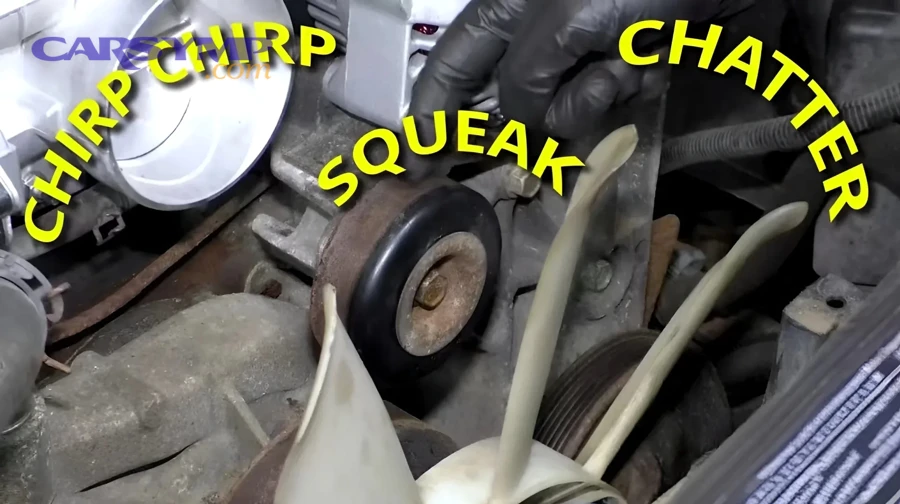
What is the difference between belt whine, pulley whine, squeal, and chirp?
Belt whine, pulley whine, squeal, and chirp differ mainly by sound character, operating condition, and likely mechanical cause. More specifically, a steady whine often points toward a rotating bearing or load-sensitive accessory, while squeal and chirp more often suggest slip, contamination, glazing, or misalignment.
A belt squeal usually sounds sharp, loud, and friction-based. It often appears on startup, during wet weather, or when an accessory suddenly loads the belt path. This sound commonly points to belt slip caused by low tension, contamination, glazing, or incorrect belt fit. If the belt loses traction on the pulley surface, the sound becomes more like a squeal than a refined whine.
A chirp is usually brief, rhythmic, and repetitive. It often matches pulley rotation or appears once per belt revolution. Chirping commonly points to slight misalignment, a damaged rib, edge wear, or a pulley groove issue. A chirp can also happen when the belt walks slightly across a misaligned pulley face.
A pulley whine or bearing whine tends to sound more continuous and mechanical. It usually becomes more obvious as RPM rises and may persist even when the belt appears visually normal. A worn idler pulley bearing often creates this type of sound. So can an alternator or tensioner pulley bearing. This is where the phrase Whine that changes with RPM clues becomes useful: if the noise rises smoothly with engine speed and does not behave like a sudden slip event, a rotating bearing becomes more likely.
A grinding or rumbling sound is different again. It suggests more advanced internal wear, often in a pulley bearing or driven accessory. Once the sound becomes rough or growling rather than high-pitched, the problem may be progressing beyond a mild whine.
In short, the sound category gives you the first clue. Squeal suggests traction loss. Chirp suggests alignment or belt-path irregularity. Whine suggests a rotating component under load. Grinding suggests wear that is already severe enough to affect bearing smoothness.
Which parts should you check first when diagnosing serpentine belt and pulley whine?
You should check three areas first when diagnosing serpentine belt and pulley whine: belt condition, pulley condition, and tension/alignment. Let’s explore that order, because starting with the easiest visible checks prevents unnecessary replacement and helps you rule out obvious causes before chasing more complex accessory problems.
What are the most common causes of serpentine belt and pulley whine?
There are seven main causes of serpentine belt and pulley whine: belt wear, glazing, contamination, weak tension, pulley bearing wear, misalignment, and accessory drag based on how the belt-drive system transfers load. Specifically, these causes appear so often because the accessory drive depends on friction, alignment, and smooth bearing rotation.
1. Belt wear and aging
A worn belt loses flexibility and surface integrity. Rib hardening, polishing, cracking, and uneven wear reduce its ability to grip and track correctly. Older belts may still look intact at a glance, but hardened ribs and glazing change how the belt contacts each pulley.
2. Belt glazing
Glazing happens when heat and slip polish the belt surface. A glazed belt becomes shiny and less effective at transmitting load quietly. It may squeal at startup or create a tone that blends into a light whine under steady RPM.
3. Fluid contamination
Oil, coolant, or power steering fluid on the belt changes friction dramatically. Even a small amount can make the belt slip or degrade faster. Contamination also attracts dust and grit, which can damage the belt surface and pulley grooves.
4. Weak or unstable tensioner
The tensioner maintains proper belt force. If the spring weakens or the damping action deteriorates, the belt can flutter, slip under load, or move unevenly across pulley faces. That changes both sound and belt tracking.
5. Worn idler pulley bearing
An idler pulley exists only to guide the belt path, but its bearing spins continuously. Once grease dries out or the bearing races wear, the pulley can create a steady mechanical whine that increases with RPM.
6. Pulley misalignment
A pulley that sits slightly out of plane forces the belt to track sideways. This can create chirp, edge wear, and, in some cases, a higher-pitched whine from belt friction or bearing stress. Misalignment can come from bracket distortion, improper installation, or wear in a component mount.
7. Accessory drag or bearing resistance
A failing alternator, A/C compressor, or power steering pump can load the belt unusually hard. The driver may hear a whining noise from engine accessories and blame the belt, but the real source may be a driven unit resisting rotation.
These common causes matter because they overlap. A weak tensioner can promote belt slip. A worn accessory bearing can overheat the belt path. A contaminated belt can stress pulleys and tensioners. Good diagnosis therefore moves from simple visual checks into component-level confirmation.
Is belt condition the first thing to inspect before blaming a pulley or tensioner?
Yes, belt condition is the first thing to inspect before blaming a pulley or tensioner because it is visible, easy to assess, and often reveals at least three direct clues: wear, contamination, and tracking problems. However, that first inspection should lead to system diagnosis, not to automatic belt replacement.
Start with the belt because it shows the history of the drive system. A belt with cracked ribs, frayed edges, glazing, missing chunks, or contamination has already recorded useful evidence. Edge wear may suggest misalignment. Shiny ribs may suggest slip or heat. Localized damage may point to a pulley problem. If you replace that belt without understanding why it wore that way, the new belt may quickly develop the same symptoms.
Inspect the full length of the belt as much as possible. Look for:
- Cracks across ribs
- Frayed or polished edges
- Missing rib material
- Oil or coolant residue
- Uneven wear from one side to the other
- Rib separation
- Hard, glossy surfaces
Then inspect how the belt sits in the pulley grooves. A belt that does not sit squarely or that rides unevenly can signal pulley alignment problems or incorrect belt dimensions. This matters because the belt can act like an indicator of a failing pulley long before the pulley fully seizes.
The key point is this: yes, the belt goes first in your inspection order, but not first in your list of assumptions. You inspect it first because it is the easiest evidence source, not because it is always the failed part.
How can you tell whether the noise is coming from the belt, the tensioner, or the idler pulley?
You can tell whether the noise is coming from the belt, the tensioner, or the idler pulley by comparing sound behavior, visual movement, and manual bearing feel across the drive system. Next, the goal is to match the symptom pattern to the component that most logically creates it.
How do you compare belt symptoms vs tensioner symptoms vs idler pulley symptoms?
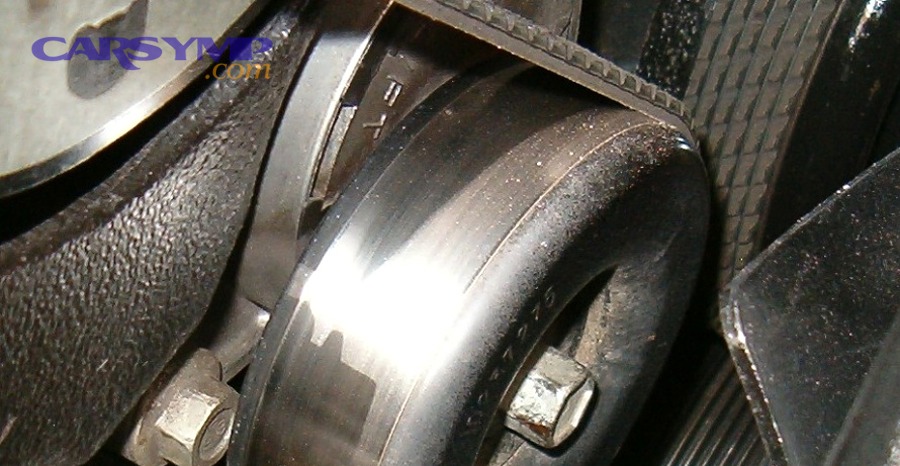
The belt wins as the likely cause when slip, glazing, or contamination dominate; the tensioner is best matched to flutter and unstable tension; the idler pulley is the leading suspect when bearing roughness and localized mechanical whine appear. To better understand that comparison, it helps to evaluate each component by the type of failure it most commonly produces.
The table below compares the three most common suspects in a way that matches what car owners actually hear and see during diagnosis.
| Component | Most common sound | Best clue | Typical operating pattern | Likely fix |
|---|---|---|---|---|
| Serpentine belt | Squeal, chirp, light whine | Glazing, contamination, visible wear | Worse at startup, wet conditions, sudden load | Replace belt and correct root cause |
| Belt tensioner | Flutter-related chirp/whine | Unstable arm movement, weak damping | Changes with RPM transitions and load changes | Replace tensioner assembly |
| Idler pulley | Steady whine or growl | Rough spin, wobble, bearing play | Rises smoothly with RPM | Replace idler pulley |
A belt-led problem usually reveals itself through traction symptoms. The sound may be louder on cold start, after rain, or when the A/C compressor engages. The belt may look shiny or contaminated, and the sound may change rapidly when friction conditions change.
A tensioner-led problem usually reveals itself through motion. Watch the tensioner arm while the engine idles. Excess movement, visible bounce, or rapid oscillation suggests the spring or damping mechanism is no longer controlling belt motion well. The belt may look acceptable, but tension becomes unstable.
An idler pulley-led problem usually reveals itself through bearing behavior. With the belt removed and the engine off, a bad idler pulley often feels rough, noisy, or loose when spun by hand. Even before removal, the whine may seem narrow, steady, and tied closely to RPM rather than humidity or startup slip.
This comparison matters because the right answer is rarely based on one clue alone. A good diagnosis combines sound, visual behavior, and manual inspection.
What signs point specifically to a failing belt tensioner?
A failing belt tensioner usually shows at least three clear signs: unstable arm movement, weak tension control, and noise that changes during RPM or accessory load transitions. Specifically, the tensioner becomes suspect when the belt itself looks acceptable but system stability does not.
The tensioner’s job is to maintain belt force while absorbing fluctuations in belt load. If its spring weakens, the belt can momentarily lose grip under changing demand. If its damping mechanism wears out, the arm may flutter or bounce. That motion can create chirp, intermittent whine, or small tracking errors that sound like belt problems.
Look for these signs:
- The tensioner arm vibrates excessively at idle
- The belt flutters between pulleys
- Noise changes during quick throttle blips
- Noise appears when accessories cycle on and off
- The tensioner pulley itself sounds rough
- The arm does not return smoothly when moved during service
A failing tensioner can also mislead the driver because it creates secondary belt symptoms. The belt may chirp or squeal briefly, but the real cause is unstable belt force rather than belt wear alone. That is why replacing only the belt often fails to solve the problem.
When the engine is running, observe the tensioner from a safe position. A small amount of controlled motion is normal. Large oscillations are not. If the arm visibly dances instead of holding steady, the tensioner deserves close attention.
What signs point specifically to a bad idler pulley bearing?
A bad idler pulley bearing usually shows three main signs: a steady mechanical whine, rough hand rotation, and measurable wobble or play. More specifically, the idler pulley becomes the top suspect when the sound rises with RPM and feels more like bearing noise than belt friction.
Unlike an accessory pulley, the idler pulley exists only to route the belt. That makes diagnosis simpler. If its bearing wears out, it has little else to blame. The sound often begins as a refined whine and gradually turns into roughness or growl as the bearing degrades.
Common idler pulley clues include:
- High-pitched whine that increases with engine speed
- Noise that persists despite a belt that looks acceptable
- Rough or dry feel when the pulley is spun by hand
- Side-to-side movement or visible wobble
- Metallic or gritty sensation during rotation
- Heat around the pulley after running
Because an idler pulley spins continuously, bearing wear can progress slowly enough that many drivers adapt to the noise. That delay makes the failure seem minor, but a seized idler pulley can shred or throw the belt. Once that happens, the engine may lose charging, cooling support, or power steering assistance depending on vehicle design.
This is one reason why a whining noise from engine accessories should never be dismissed as “just a belt sound” until the idler pulley has been checked.
Can pulley misalignment cause a whining noise even when the belt looks good?
Yes, pulley misalignment can cause a whining noise even when the belt looks good because the belt may still track sideways, generate edge friction, and load bearings unevenly without showing obvious early damage. However, the longer that misalignment continues, the more likely visible belt wear will eventually appear.
Misalignment can be angular or offset. In either case, the belt no longer runs in a straight, stable path. That creates small but continuous corrections as the belt moves across pulley grooves. A driver may hear chirp first, then a higher-pitched tone, especially as RPM rises. In some vehicles, the belt remains visually decent for a while, which makes diagnosis trickier.
Causes of misalignment include:
- Bent bracketry
- Improperly installed pulley
- Incorrect pulley spacing
- Worn mounting hardware
- Accessory movement under load
- Poor aftermarket part fit
The best clue is often belt tracking. Watch how the belt rides on the pulley faces. If it favors one edge, walks slightly, or sits inconsistently in the grooves, alignment deserves attention even if the ribs are not badly cracked. Belt edge wear, dust near the front of the pulley, or a repeating chirp can reinforce that conclusion.
Misalignment also explains why some new belts “start whining” almost immediately after installation. The new belt is not necessarily defective. It may simply be running on a path the old belt had already adapted to imperfectly.
How do you diagnose serpentine belt and pulley whine step by step?
The safest diagnosis uses five steps: inspect with the engine off, observe belt tracking, check tensioner behavior, reproduce the noise under controlled conditions, and confirm pulley roughness before replacing parts. Below, that sequence helps you identify the root cause without skipping the evidence each component provides.
What is the safest step-by-step process for diagnosing belt drive whine at home?
The safest step-by-step process for diagnosing belt drive whine at home uses five checks and one rule: inspect first, listen second, and never place hands near a moving belt. Specifically, the most effective home diagnosis is careful, slow, and evidence-based rather than improvisational.
Step 1: Start with the engine off and cool.
Open the hood, locate the belt path, and inspect the belt surface. Look for cracking, glazing, frayed edges, contamination, and rib damage. Use a flashlight to inspect pulley grooves and the front faces of accessible pulleys.
Step 2: Check the belt path and alignment visually.
See whether the belt sits centered on each pulley. Look for offset tracking, edge wear, or signs the belt is riding too high or too low in a groove. Compare pulley faces if one looks slightly out of plane.
Step 3: Observe the tensioner and belt behavior while the engine idles.
Stand in a safe position and watch the tensioner arm. Small controlled movement can be normal, but rapid oscillation, flutter, or visible belt instability suggests tension issues. Listen for whether the noise is steady or intermittent.
Step 4: Reproduce the sound under different loads.
Turn on the A/C. Increase steering load carefully if the vehicle uses hydraulic power steering. Watch whether the sound changes with engine RPM. These tests help distinguish a load-sensitive accessory from a simple belt slip issue. This is where Whine that changes with RPM clues becomes especially useful. A smooth RPM-linked rise often points toward a rotating bearing or accessory rather than momentary slip.
Step 5: Remove the belt only if you are qualified and the service procedure is clear.
With the engine off and the belt safely removed, spin accessible pulleys by hand. Feel for roughness, hear for dry bearing noise, and check for wobble. A rough idler pulley or tensioner pulley often reveals itself immediately during this step.
The one rule that matters most is safety. Never put fingers, tools, or clothing near a moving belt. Never spray random chemicals onto the belt path while the engine is running. Diagnosis is only useful if it stays controlled and safe.
Should you inspect the system with the engine off before listening with the engine running?
Yes, you should inspect the system with the engine off before listening with the engine running because the engine-off check gives three key advantages: safety, clearer visual access, and better manual confirmation of wear. In addition, that first inspection often prevents you from mistaking a visible belt problem for a mysterious noise source.
With the engine off, you can inspect rib condition, pulley alignment, and contamination without rushing. You can also rotate certain components by hand once the belt is removed during proper service. That manual contact is often the clearest way to detect bearing roughness or wobble.
When you skip directly to listening tests, you risk focusing on sound before understanding the physical evidence already present. A glazed belt, leaking fluid, or visibly crooked belt path may already have answered most of the question. The running test should confirm or refine the diagnosis, not replace the inspection.
Engine-running checks still matter because some noises appear only under active belt load. Yet those checks work best after you know what you are looking for. The sequence should therefore be inspection first, observation second, confirmation last.
Which operating conditions make the noise easier to identify?
There are six operating conditions that make serpentine belt and pulley noise easier to identify: cold start, warm idle, acceleration, added accessory load, steering load, and damp conditions based on how belt friction and bearing load change. More specifically, each condition stresses the system in a different way, and that stress pattern helps narrow the cause.
Cold start often highlights belt slip, hardened belts, and marginal tension. If the sound is loudest just after startup and then fades, the belt or tensioner becomes more suspect.
Warm idle can reveal steady bearing whine more clearly. Once the engine settles, a continuous tone from an idler pulley or alternator bearing may stand out better than during startup flare.
Acceleration or throttle blips help reveal load response. If the whine climbs neatly with RPM, a rotating bearing or accessory becomes more likely. If the sound appears only under abrupt demand, belt slip or tension instability may be involved.
Added A/C load is a classic diagnostic condition. When the compressor engages, the belt path experiences extra demand. If the sound worsens immediately, either the compressor circuit or the belt’s ability to carry load becomes important.
Steering load matters on vehicles with hydraulic power steering. Turning the steering wheel near a stop increases pump demand. This helps compare Power steering pump whine vs alternator whine because steering input changes one system directly while electrical load changes the other. If the noise intensifies during steering effort, the power steering pump becomes a stronger suspect. If it intensifies when headlights, blower motor, rear defroster, and charging demand rise, alternator load deserves more attention.
Wet or humid conditions can highlight belt traction issues. Moisture can temporarily change friction enough to make slip-related noises more obvious, though it can also confuse diagnosis if treated as proof of belt failure alone.
These operating conditions matter because good diagnosis depends on patterns, not isolated sounds. When the same noise behaves differently under different loads, the system is giving you useful information.
When does the diagnosis mean you need a new belt, pulley, tensioner, or professional repair?
The diagnosis means you need a new belt when wear or contamination is primary, a new pulley when bearing roughness is confirmed, a new tensioner when belt control is unstable, and professional repair when the cause extends beyond basic visual confirmation. In short, the part you replace should match the failure pattern you verified.
When should you replace the serpentine belt instead of the pulley or tensioner?
The serpentine belt is the correct replacement when visible wear, glazing, contamination, rib damage, or age-related hardening clearly leads the failure pattern. Specifically, the belt deserves replacement when it can no longer grip and track properly even if the pulleys still rotate smoothly.
Replace the belt when you find:
- Cracks across multiple ribs
- Frayed or damaged edges
- Glazing or polished surfaces
- Missing rib material
- Oil or coolant contamination
- Incorrect size or poor fit
- Significant age with clear hardening
A belt can also be the main culprit when the noise strongly reflects slip rather than bearing roughness. Startup squeal, wet-weather noise, and sound that follows friction changes more than RPM often point in that direction. Still, you should not stop at the belt alone if any pulley feels rough or if tensioner motion looks unstable.
The best belt replacement is corrective, not cosmetic. Replace it because you verified the belt has become the weak point, not because it is the easiest visible part.
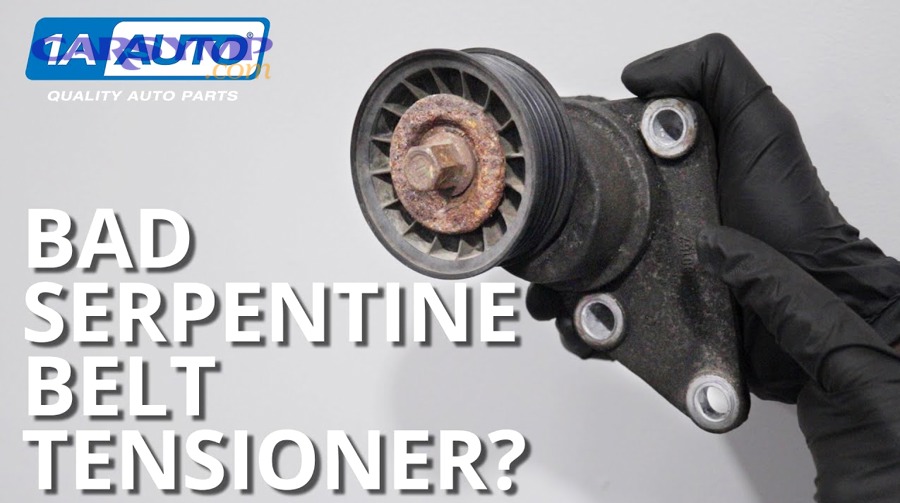
When should you replace the idler pulley or belt tensioner instead of the belt?
The idler pulley or belt tensioner should be replaced instead of the belt when bearing wear, wobble, or unstable tension control clearly causes the noise more than belt surface condition does. More importantly, these parts should not be ignored just because the belt also shows normal aging.
Replace the idler pulley when:
- It feels rough when spun
- It makes noise off the engine
- It wobbles or has play
- Its bearing tone matches the RPM-related whine
Replace the belt tensioner when:
- The arm oscillates excessively
- Belt flutter is obvious
- Spring control feels weak
- The tensioner pulley bearing is noisy
- Belt tension changes unpredictably
In many real-world cases, replacing the belt together with the tensioner or idler pulley is reasonable because the components age together and labor overlaps. Yet the diagnosis should still identify the true lead failure. That approach keeps the repair logical instead of random.
Is it safe to keep driving with serpentine belt or pulley whine?
No, it is not reliably safe to keep driving with serpentine belt or pulley whine because the noise can signal at least three escalating risks: belt loss, accessory failure, and loss of critical vehicle functions. However, the urgency depends on whether the problem is mild belt wear or an actively failing bearing.
A light whine from a mildly worn component may not mean immediate breakdown in the next few miles. But the danger is uncertainty. A rough idler pulley bearing can seize. A weak tensioner can let the belt slip or jump. A failing accessory bearing can increase drag until the belt overheats or breaks. On many vehicles, that can affect charging and cooling immediately. On some designs, steering assist may also be reduced.
Warning signs that make continued driving a bad idea include:
- Noise that is quickly getting louder
- Visible pulley wobble
- Belt dust around the front of the engine
- Burning smell
- Charging warning light
- Rising engine temperature
- Heavy steering effort
- Grinding instead of simple whine
If the sound is new, persistent, and clearly from the accessory drive, schedule repair soon. If the sound is severe, rough, or accompanied by visible movement, stop driving until the cause is confirmed. The accessory drive may look simple from the outside, but failure there can disable multiple systems at once.
According to guidance published by major belt-drive component manufacturers such as Gates and Dayco in their technical training materials, belt noise frequently traces back to tension, misalignment, or pulley wear rather than the belt alone, which is why system inspection is emphasized before part replacement.
What related issues can mimic serpentine belt and pulley whine?
Several related issues can mimic serpentine belt and pulley whine, especially alternator bearings, power steering pumps, A/C compressors, and other front-end accessories that change sound with load. Besides the core diagnosis, these look-alike problems matter because they often cause mistaken belt replacement and wasted repair time.
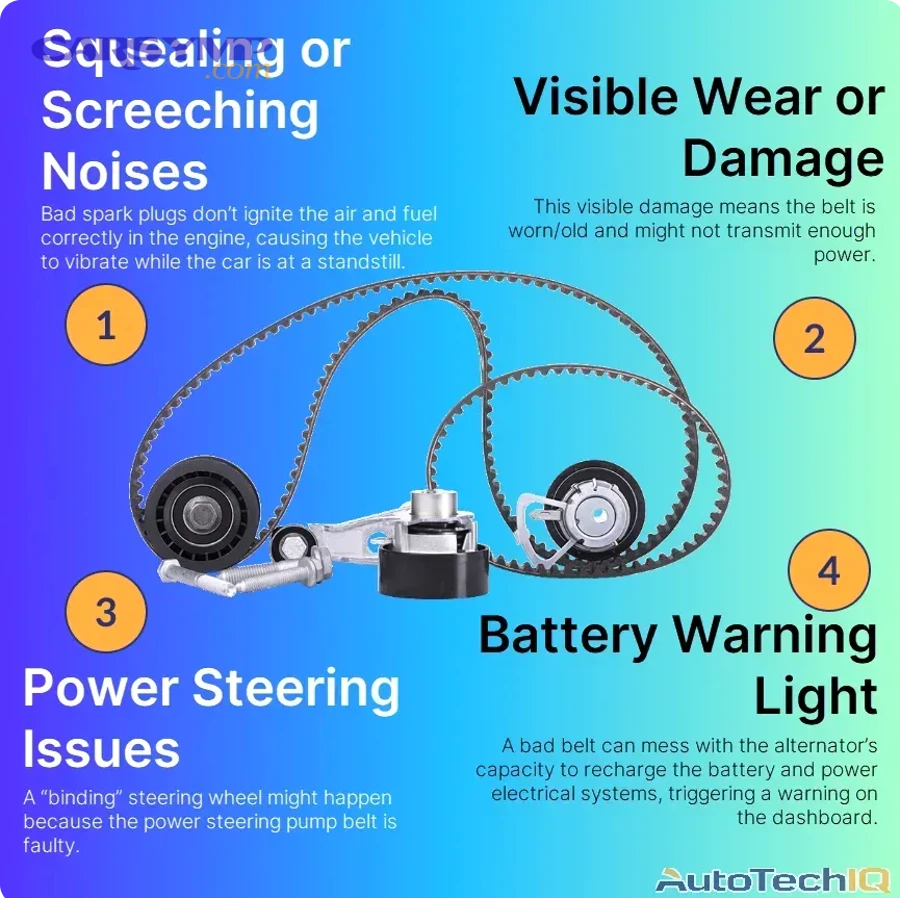
Can an alternator pulley, A/C compressor, or power steering pump sound like belt or idler pulley whine?
Yes, an alternator pulley, A/C compressor, or power steering pump can sound like belt or idler pulley whine because each component rotates under belt load and can generate a high-pitched tone that follows RPM or demand. Specifically, these accessories create some of the most common false positives in belt-drive diagnosis.
An alternator can whine because of front bearing wear or internal electrical loading characteristics. When charging demand increases, the alternator may produce a sharper sound that rises with RPM. That noise often sits close to the belt path, so many drivers misidentify it as belt noise.
An A/C compressor can produce noise when the clutch engages or when internal wear increases drag. If the sound appears mainly when the air conditioning is turned on, the compressor circuit deserves more attention than the belt alone.
A power steering pump can produce a classic hydraulic-mechanical whine. On vehicles that use hydraulic steering, low fluid, aeration, or pump wear can create a tone that becomes much more obvious when the steering is turned under load.
The key lesson is that belt-driven does not mean belt-caused. The accessory drive transmits engine power, but the component consuming that power may be the actual source of the sound.
What is the difference between accessory bearing whine and true belt slip noise?
Accessory bearing whine wins as the likely diagnosis when the sound is smooth, mechanical, and closely tied to RPM, while true belt slip noise is more often sharp, friction-based, and triggered by startup, moisture, or sudden load. To illustrate that difference, think of bearing whine as rotational resistance and belt slip noise as traction loss.
A bearing whine tends to rise cleanly with engine speed. It often sounds steady, narrow, and machine-like. It may persist in dry weather, warm operation, and under constant RPM. If the bearing worsens, the sound may become rough or gravelly.
A belt slip noise usually behaves more inconsistently. It may appear only for a few seconds after startup. It may worsen with rain or humidity. It may react to contamination or sudden compressor engagement. The sound often has a sharper edge, like friction rather than precision rotation.
This distinction helps prevent misdiagnosis. If the sound behaves like slip, inspect the belt and tension path closely. If it behaves like a rotating loaded component, move suspicion toward pulleys and accessories.
Does belt dressing fix the problem or hide the real diagnosis?
No, belt dressing does not reliably fix the problem because it often hides the real diagnosis, changes surface friction temporarily, and can encourage replacement decisions based on a masked symptom rather than a confirmed cause. More importantly, modern serpentine belts usually need correct tension, alignment, and clean contact surfaces—not chemical concealment.
If the belt is contaminated, glazed, or worn out, dressing does not restore the correct material properties. If the tensioner is weak, dressing cannot stabilize belt force. If a pulley bearing is dry, dressing does nothing to repair the bearing. In some cases, temporary sound reduction after dressing actually delays the correct diagnosis, which makes later failure more surprising.
That is why experienced diagnosis treats dressing as a distraction rather than a repair method. A better approach is to inspect the system, identify whether the noise is friction-based or bearing-based, and correct the actual cause.
Can cold weather, moisture, or engine load temporarily change the diagnosis?
Yes, cold weather, moisture, and engine load can temporarily change how the noise behaves because they alter belt friction, fluid behavior, and accessory demand. However, those changes usually affect symptom expression more than root cause, so they should guide diagnosis rather than replace it.
Cold weather can harden belt material slightly and increase startup resistance. Moisture can change friction enough to highlight a marginal belt or tension problem. Electrical and steering loads can expose accessory or bearing weakness that seems hidden at light load.
These variables matter because they can make the wrong conclusion feel convincing. A sound that appears only in damp weather may still involve a weak tensioner. A sound that appears only under steering load may point to the power steering pump rather than the belt. A sound that rises with headlights, blower motor, and rear defroster may shift suspicion toward the alternator.
So the environment does matter—but as a diagnostic amplifier, not as the diagnosis itself.
In short, serpentine belt and pulley whine diagnosis works best when you follow the evidence in order: define the sound, inspect the belt path, compare the symptoms of the belt, tensioner, and idler pulley, test how the noise reacts to RPM and load, and then decide whether the real culprit is the belt system or a nearby accessory. That method turns a vague whining noise from engine accessories into a clear repair decision.