


A low coolant (coolant level) warning light means your engine cooling system may not have enough coolant to control temperature safely, so you should treat it as an early “protect the engine now” signal—not a light to ignore until the next oil change.
Next, you’ll want to understand why the warning appeared in the first place, because the most common reason is coolant leaving the system (often a leak), and the “cause” determines whether a quick top-up is enough or whether you need repairs.
Then, you need a clear way to judge urgency, because the risk is not just “low fluid”—it’s what low fluid can lead to, including overheating and loss of cooling capacity, which can quickly escalate into expensive engine damage.
Introduce a new idea: once you know what the light means, what to do immediately, and how to top up correctly, the rest of the article shows you how to track down recurring coolant loss and prevent the warning from coming back.
What does the low coolant (coolant level) warning light mean?
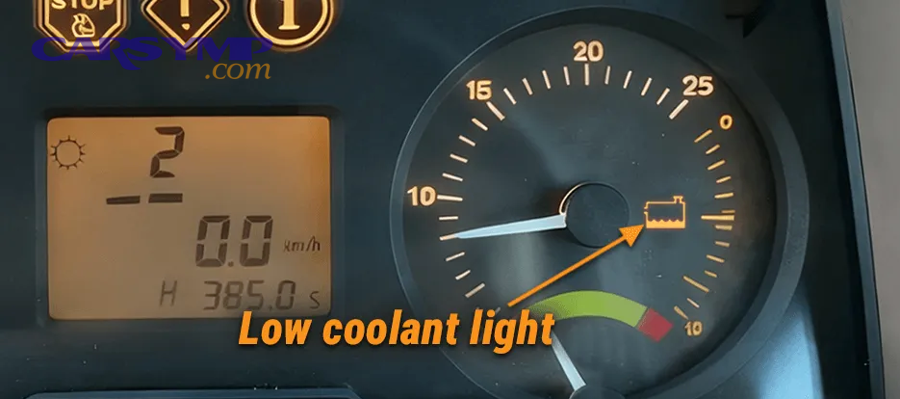
The low coolant (coolant level) warning light is a dashboard alert triggered by a coolant-level check (usually a sensor in the reservoir) that warns the system may be too low to cool the engine reliably, especially under load, heat, or long drives.
To better understand why this light matters, it helps to separate “low coolant level” warnings from “engine overheating” warnings, because they point to different problems and different immediate decisions.
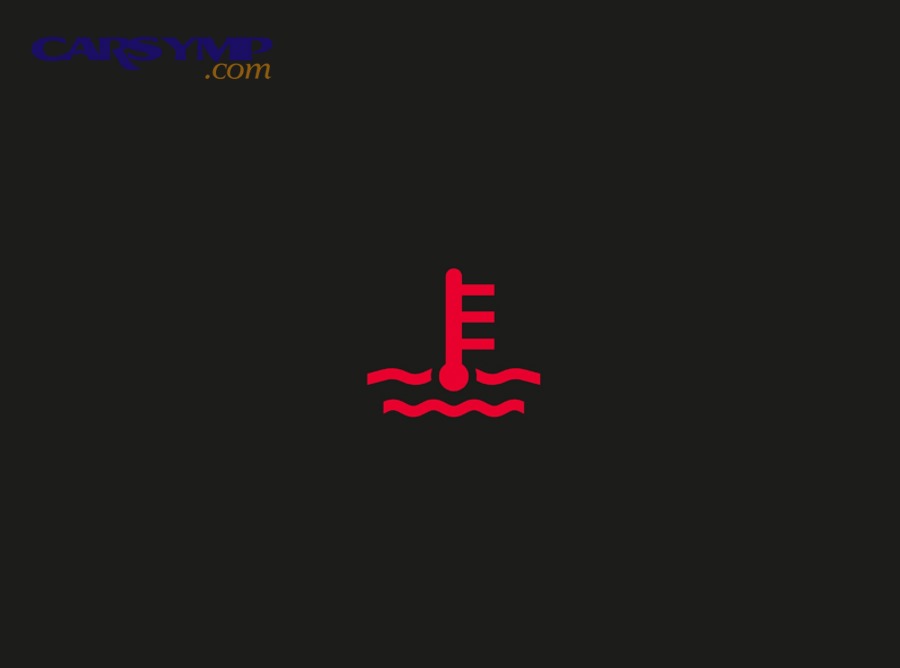
Is the low coolant warning light the same as the coolant temperature warning light?
Coolant level wins for “early warning,” coolant temperature is best for “immediate danger,” and a combined warning message is optimal for “stop-now clarity” because level alerts you before overheating, while temperature tells you the engine is already running too hot.
However, the confusion happens because many dashboards use similar icons (a thermometer over waves) and similar colors, even though the underlying triggers differ.
Here’s the practical distinction you can use in real time:
- Coolant level warning (low coolant warning light):
- Often comes on when the reservoir drops below a threshold.
- May appear before the temperature gauge moves.
- Commonly points to coolant loss, air in the system, or a level-sensor issue.
- Coolant temperature warning (overheating warning):
- Comes on when temperature is already high.
- Often escalates quickly (steam, hot smell, heater blowing cold).
- Requires immediate action to prevent damage.
Most importantly, both warnings can be connected: a low coolant level can lead to overheating, especially during highway speeds, stop-and-go traffic, or when climbing a hill. That link between warnings is why you should treat a low coolant warning as a “don’t delay” signal even if the engine feels normal in the moment.
Does a low coolant warning always mean you have a leak?
No, a low coolant warning light does not always mean you have a leak, because the warning can be triggered by coolant contraction when cold, trapped air after service, or a faulty/sticky level sensor—yet leaks are still the most common reason, and they usually worsen over time.
Specifically, you should think in terms of probability and patterns:
- Leaks are the most likely explanation because modern cooling systems are sealed and coolant does not “get used up” like fuel. If the level is down again after topping up, a leak is very likely.
- Air pockets can mimic low coolant after a refill, repair, or coolant service. Air moves and expands, causing unstable reservoir readings.
- Sensor or reservoir issues can cause false alerts—especially if the warning appears even when the coolant sits exactly at the correct MIN/MAX marks.
That said, the safest approach is to assume the warning is “real” until you confirm the level. If the coolant is truly low, the engine can lose cooling capacity long before the temperature gauge makes it obvious.
What should you do immediately when the low coolant light comes on?
The safest response is to follow a five-step method—reduce load, stop safely, cool down, check the reservoir level, and top up correctly—so you protect the engine from overheating and prevent a small coolant loss from turning into a breakdown.
Next, the key is deciding how urgent the situation is based on what your temperature gauge and symptoms are doing right now.

Should you stop driving right away when the low coolant light appears?
Yes, you should treat the low coolant warning light as a “stop soon” warning because low coolant reduces heat removal, the cause is often active coolant loss, and continuing to drive can trigger rapid overheating if the level drops further.
Then, use this simple decision framework so you don’t guess:
Stop immediately (shut the engine off) if any of these are true:
- The temperature gauge is climbing above normal or a red temperature warning appears.
- You see steam, smell a sweet/hot odor, or hear boiling/gurgling.
- The heater suddenly blows cold air while you’re driving (a classic sign coolant is too low to circulate through the heater core).
- The warning is paired with a message like “Engine overheating” or “Stop safely.”
Drive only a very short distance (to a safe shoulder or nearby service) if all are true:
- Temperature gauge stays normal and stable.
- No steam, no hot smell, no power loss.
- You can reduce speed and load (avoid hills, towing, hard acceleration).
Even in the “short distance” scenario, you’re not “clearing the issue”—you’re buying time to stop safely and check the coolant level before the situation escalates.
Can you add water instead of coolant in an emergency?
Yes, you can add water instead of coolant in an emergency because water restores liquid volume for heat transfer, reduces the immediate chance of overheating, and can get you to a safe place—but it is a short-term fix and should be corrected with the proper coolant mixture soon.
More specifically, think of water as a temporary rescue, not a long-term operating fluid:
- When water is acceptable:
- You’re stranded, coolant is low, and you need to prevent overheating to reach safety.
- Ambient temperature is well above freezing (so you don’t risk freeze damage).
- Why coolant is better than water long-term:
- Coolant mixture raises boiling protection under pressure, improves corrosion protection, and is designed to lubricate seals and protect metals.
- Plain water can increase corrosion risk and may boil sooner under heavy load.
Safety reminder: never open a hot radiator cap. If your vehicle uses a pressurized reservoir, still wait until it cools. A sudden release of pressure can spray scalding coolant.
A practical rule: if you add water to get home, plan to restore the correct coolant type and concentration as soon as possible—especially before freezing weather or a long trip.
What are the most common causes of a low coolant warning light?
There are four main causes of a low coolant warning light—actual coolant loss (leaks), pressure-control problems, circulation/air issues, and false readings from sensors—based on whether coolant is physically leaving the system or the system is misreporting the level.
To better understand which cause fits your situation, start with the most common: leaks and the visible clues they leave behind.
Which coolant leaks are most likely, and where should you look first?
There are five common leak zones to check first—hose connections, radiator seams, water pump weep hole, thermostat housing, and heater core—based on how often they fail and how easy they are to inspect.
Then, use these “coolant leak symptoms” to narrow the search quickly without special tools:
1) Hoses and clamps (top and bottom radiator hoses, heater hoses)
- Dampness near clamps, crusty residue, or a sweet smell after driving.
- Leaks may worsen under pressure when hot.
2) Radiator end tanks and seams
- Coolant residue along the radiator edges or lower corners.
- Puddles near the front of the car after parking.
3) Water pump weep hole
- Drips near the front of the engine, often behind pulleys.
- A failing pump seal commonly leaks from a small weep hole designed to show early failure.
4) Thermostat housing / engine coolant outlets
- Wetness where plastic housings meet metal engine parts.
- A slow seep can evaporate, leaving a chalky stain rather than a puddle.
5) Heater core
- Sweet smell inside the cabin, foggy windows, damp passenger-side carpet.
- Heat may fluctuate because coolant flow is compromised.
To make this more actionable, the table below maps Typical repair costs by leak source so you understand why identifying the exact leak location matters before you approve a repair.
| Leak source (most common) | What you usually notice | Typical repair complexity | Cost pattern (what drives price) |
|---|---|---|---|
| Hose/clamp | Drips, residue, smell | Low | Parts are cheap; labor varies by access |
| Radiator | Front puddle, wet seams | Medium | Radiator price + labor; may include coolant service |
| Water pump | Drips near pulley, chirp, seep hole | Medium–High | Labor rises if pump is behind timing components |
| Thermostat housing | Seep at housing, stains | Medium | Often bundled with thermostat replacement |
| Heater core | Sweet cabin smell, wet carpet | High | Dash labor can be major; time-intensive |
The “typical” range varies by vehicle, region, and access, but the pattern holds: leaks that require major disassembly (water pump behind timing, heater core behind dash) cost more because labor dominates.
Can a bad radiator cap or pressure issue trigger a low coolant warning?
Yes, a bad radiator cap or pressure issue can contribute to a low coolant warning light because weak pressure control lowers the boiling point, pushes coolant into overflow, and can create apparent “loss” after heat cycles even when no large external leak is obvious.
Moreover, pressure problems often show up as “mystery coolant loss” with these clues:
- Coolant smell after driving but no puddle (small boil-over or seep evaporating).
- Overflow reservoir repeatedly rising above normal and then dropping low later.
- Coolant wetness around the cap area or dried residue on the reservoir neck.
A healthy cooling system depends on holding pressure. When pressure drops, coolant can boil locally in hot spots, which can push vapor and fluid out of the intended circulation path and lead to unstable level readings. That instability is exactly what a level sensor can interpret as “low coolant,” especially on acceleration or hills.
Can a faulty coolant level sensor cause a false warning light?
Yes, a faulty coolant level sensor can cause a false warning light because sensors can stick, connectors can corrode, and coolant slosh can briefly uncover the sensor even when the reservoir is actually full.
Especially if the light appears intermittently—like after a speed bump, on a steep incline, or right after a cold start—consider the possibility of a false trigger.
Basic confirmation steps you can do safely:
- Check coolant level when cold and confirm it sits between MIN and MAX.
- Observe whether the warning disappears after a short, gentle drive and returns only in certain conditions.
- Look for residue or contamination in the reservoir that might interfere with a float-style sensor.
- If your vehicle provides a digital reading or message history, note the exact wording (some messages say “Top up” vs “Stop engine”).
If the coolant level is correct and stable but the warning persists, that’s when a technician may test the sensor circuit, inspect wiring, and confirm whether the reservoir/sensor assembly needs replacement.
How serious is it to drive with the low coolant light on?
Driving with the low coolant warning light on is serious because coolant volume supports stable circulation, prevents hot spots, and protects the engine from overheating—so a low level can escalate from “warning” to “damage” faster than most drivers expect.
In addition, the real danger depends on Overheating and temperature gauge behavior, because temperature movement is your strongest immediate clue that the system is losing control.

How long can you drive with a low coolant warning before damage happens?
Damage risk can begin within minutes if the system can’t circulate coolant properly, because low coolant can introduce air, reduce pump efficiency, and create localized boiling—even if the dashboard temperature gauge hasn’t spiked yet.
More specifically, “how long” depends on what the engine is doing:
- High load (highway, hills, towing): coolant demand is high; small losses become big problems quickly.
- Stop-and-go traffic: airflow is lower; radiators shed heat less effectively.
- Cold weather, light load: you may get more time, but you still risk a sudden shift if the level drops further.
A conservative rule that keeps engines safe:
- If the temperature gauge rises above normal, if you see steam, or if you lose cabin heat while driving—stop immediately.
- If temperature is stable and you can safely pull over within a mile or two—do so, check coolant cold, and correct the level before continuing.
When engines overheat, the damage path is predictable: oil thins, metal expands, seals deform, and the cylinder head can warp. That’s why “just making it home” can become a far more expensive decision than a tow.
Is a brief low coolant warning less risky than repeated warnings?
Yes, a single brief warning can be less risky than repeated warnings because momentary slosh or a cold-level threshold can trigger a short alert, repeated alerts indicate ongoing loss, and recurring low-level events steadily reduce your safety margin against overheating.
However, “less risky” does not mean “ignore it.” Use the pattern to guide your next move:
- One-time brief warning + level is normal when cold:
- Monitor closely over the next week.
- Recheck level after a few heat cycles.
- Repeated warnings or level dropping over days:
- Treat as active coolant loss until proven otherwise.
- Look for leaks and schedule diagnosis.
This is where drivers often get caught: the first warning comes and goes, the car still feels fine, and the second warning shows up on a longer drive—exactly when you’re farthest from help.
How do you confirm the coolant level correctly and top up the right way?
The correct method is to check coolant level when the engine is cold, read the reservoir MIN/MAX marks, add the right coolant type (or proper premix), and then verify stability over several drives—because correct level and correct chemistry both matter for reliable cooling.
Next, the two biggest mistakes to avoid are (1) checking while hot and (2) mixing incompatible coolant types.

Should you check coolant when the engine is hot or cold?
Cold checks win for safety, hot checks are best only for experienced diagnostics, and “warm with caution” is optimal for confirming circulation because cold readings reflect true baseline level, hot readings can be dangerous and misleading due to expansion and pressure.
Specifically, here’s the safe, accurate approach:
- Best practice: check when the engine is fully cold (after sitting several hours).
- Why cold is accurate: coolant expands when hot, so a hot reservoir can look “full” even if the cold level is low.
- Why hot is risky: opening any pressurized component can release scalding fluid.
If you must check soon after driving, do it cautiously:
- Look at the reservoir level visually (many are translucent).
- Do not open the radiator cap.
- If the reservoir is pressurized, do not open the reservoir cap until fully cool.
A stable cooling system should show a predictable pattern: level rises a bit when hot and returns near baseline when cold. If the cold baseline keeps dropping, you have a loss problem that topping up alone won’t solve.
Which coolant type should you add to avoid compatibility problems?
There are three main coolant compatibility paths—use the exact OEM-specified coolant, use a coolant explicitly listed as compatible with your spec, or use distilled water temporarily only if you must—based on whether the additive package matches your system metals and seals.
More importantly, the safest “no-drama” rule is simple: match the specification, not the color. Color is not a universal standard, and mixing can cause performance problems (sludge, reduced corrosion protection, or seal issues) in certain combinations.
A practical checklist before you add anything:
- Check the owner’s manual, reservoir label, or service documentation for the coolant spec.
- If you’re unsure, buy a premix that clearly states compatibility with your vehicle’s required spec.
- If you had to add water in an emergency, restore the correct mixture soon to maintain corrosion and freeze/boil protection.
Evidence helps clarify why mixtures matter: according to a study by Kırıkkale University from the Faculty of Engineering and Architecture (Mechanical Engineering) in 2021, increasing ethylene glycol ratio in radiator fluid mixtures was observed to decrease heat transfer, while also lowering freezing temperature—highlighting that coolant concentration affects cooling performance and must be chosen deliberately. (dergipark.org.tr)
How can you prevent low coolant warnings and diagnose recurring coolant loss?
The most effective approach is a four-part strategy—routine inspection, correct coolant service, targeted leak testing (pressure/UV dye), and escalation checks for air or internal leaks—because preventing repeat warnings requires both maintenance habits and evidence-based diagnosis.
Below, each section expands micro-level causes and fixes so you can stop guessing and start verifying.

What maintenance habits reduce low coolant warnings (flush intervals, inspections, and cap replacement)?
There are four high-impact habits—monthly level checks, seasonal hose/radiator inspections, timely coolant service, and proactive cap replacement—based on how cooling systems typically fail and how early detection reduces repair cost and breakdown risk.
To illustrate, the best habits are simple but consistent:
- Check cold coolant level monthly
- Use MIN/MAX marks; record the level mentally or with a quick photo.
- A slow trend downward is a diagnostic clue.
- Inspect common leak points every season
- Look for residue, dampness, or crusty deposits at hose junctions and radiator corners.
- Pay attention after long trips or extreme weather.
- Keep coolant service aligned with your vehicle’s schedule
- Old coolant loses corrosion inhibitors, and degraded chemistry can accelerate small leaks by attacking seals and metals.
- Service should include proper bleeding where required.
- Replace a weak radiator cap when symptoms appear
- If you see residue around the cap, smell coolant after driving, or notice repeated level fluctuation, the cap can be a low-cost fix with a high impact.
These habits don’t just “prevent a light”—they prevent the chain reaction of low coolant → air entry → circulation instability → overheating risk.
How do pressure testing and UV dye help find slow coolant leaks?
Pressure testing wins for proving a leak under controlled pressure, UV dye is best for locating tiny seepage paths visually, and using both is optimal because pressure reveals the leak exists while dye shows exactly where it escapes.
More specifically, here’s what each method contributes:
- Cooling system pressure test:
- A pump tool pressurizes the system (engine off and cool) to check whether pressure drops.
- If pressure drops, a leak is confirmed—even if it’s too small to drip immediately.
- UV dye method:
- Dye is added to coolant, the engine runs to circulate it, and a UV light reveals glowing traces at leak points.
- This is excellent for slow leaks that evaporate before forming puddles.
Many shops use this combined workflow because it replaces “maybe” with measurable proof. If you want a visual walkthrough, the video below demonstrates UV dye use for coolant leak tracing:
Can trapped air after a coolant refill cause repeated low coolant warnings?
Yes, trapped air can cause repeated low coolant warnings because air pockets move and compress, the reservoir level can swing as air burps through the system, and a level sensor can interpret those swings as low coolant even when total coolant volume is close to correct.
Especially after radiator replacement, thermostat work, water pump service, or a coolant drain/refill, air is a common “hidden culprit.”
Signs that point toward trapped air rather than a simple external leak:
- Heater output fluctuates between hot and cool.
- You hear gurgling behind the dashboard.
- The warning appears briefly after startup and disappears as the engine warms.
- The reservoir level changes unpredictably across short drives.
A careful bleed process (vehicle-specific) is the fix, and some vehicles require special bleed screws or vacuum-fill tools. If repeated warnings continue after correct bleeding and the level still drops over days, you likely have a true loss (external or internal) layered on top.
When is recurring coolant loss a sign of a head gasket problem?
Yes, recurring coolant loss can signal a head gasket problem because combustion gases can push coolant out, coolant can enter the cylinders and burn, and internal leaks can occur without obvious external drips—especially when overheating has happened previously.
This is where White exhaust smoke vs coolant leak clues becomes a useful distinction:
- White exhaust smoke that lingers and smells sweet can indicate coolant burning in the combustion chamber.
- Bubbles in the reservoir during revving can suggest combustion gas intrusion.
- Oil that looks milky can suggest coolant mixing with oil (not always present, but concerning when it is).
- Repeated overheating episodes combined with coolant loss raise suspicion significantly.
If you suspect an internal leak, don’t keep topping up and driving “to see what happens.” Internal coolant loss can worsen quickly, and the cost difference between early diagnosis and catastrophic overheating can be enormous.
Evidence (if any)
According to a study by Kırıkkale University from the Faculty of Engineering and Architecture (Mechanical Engineering), in 2021, experiments with different water–ethylene glycol mixture ratios in an automobile radiator observed that heat transfer decreased as ethylene glycol ratio increased, while freezing temperature decreased—showing why correct coolant mixture selection is a balance between protection and cooling performance. (dergipark.org.tr)