Spot Coolant Leak Symptoms Fast: 9 Warning Signs + Quick Checks for Everyday Drivers
A coolant leak is one of the few car problems where the “early clues” matter as much as the “big failure,” because small losses can quietly turn into overheating, warped components, or a roadside breakdown. Coolant leak symptoms are the driver-visible hints—smells, drips, warnings, heat changes, and cabin behavior—that tell you coolant is escaping or burning off somewhere it shouldn’t.
Next, you’ll learn the most common warning clues you can spot without being a mechanic, including what you may notice at idle, during highway driving, and after shutdown. Then, you’ll map those clues to the leak locations that fail most often—hoses, radiator seams, water pump weep holes, heater core, and gaskets—so you can narrow down the likely source before you spend money.
Below, you’ll also get quick confirmation steps you can do at home (safe checks, visual tracing, and simple level monitoring) and a clear decision guide for what’s “driveable for now” versus what’s a true emergency. Introduce a new idea: once you can recognize coolant leak symptoms early, you can prevent the kind of heat spike that snowballs into larger repairs.
What are coolant leak symptoms (and why do “symptoms” and “signs” mean the same thing here)?
Coolant leak symptoms are driver-observable clues that coolant is escaping the cooling system, showing up as smells, puddles, steam, warning lights, heating changes, or performance shifts that point to coolant loss.
To better understand why these clues matter, it helps to separate what you see (evidence) from what the car does (behavior).
What counts as a “symptom” versus a “leak” you can physically see?
A symptom is a clue that suggests coolant is leaving the system; a visible leak is proof you can physically observe (wetness, drips, residue, puddles, or spray). Symptoms often appear before you see a puddle, because coolant can evaporate on hot metal or get pushed out only under pressure.
Here’s how the distinction helps you diagnose faster:
- Symptoms (clues): sweet odor, low level over time, intermittent steam, cabin fogging, fluctuating temperature gauge, low-coolant warning, heater performance changes, gurgling sounds.
- Visible leak (proof): wet hose junction, crusty dried coolant residue, drip line from radiator tank seam, water pump weep trail, coolant pooling on splash shield.
A common trap is waiting for a puddle. Many real leaks don’t form one because the coolant hits hot parts and flashes off, or it only leaks under load, leaving little behind when parked.
Why coolant leaks show up as smell, puddles, steam, and overheating behavior
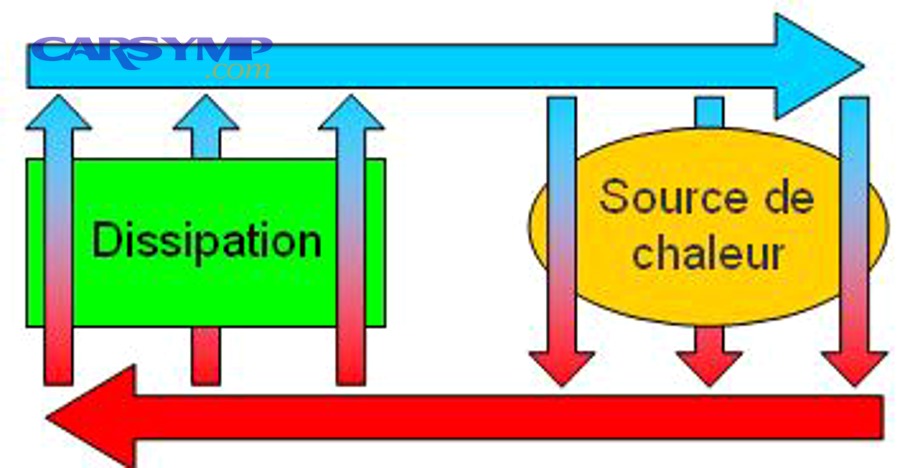
Coolant is designed to carry heat and resist boiling, so when it escapes, it changes the system’s pressure, fill level, and heat transfer ability. That’s why the same underlying problem can show up as:
- Smell: vaporized coolant carried through vents or around the engine bay
- Puddles or staining: coolant dripping to the ground or drying into colored residue
- Steam: coolant hitting hot surfaces or boiling in a low-pressure system
- Heat changes: less coolant volume + trapped air reduces cooling efficiency
According to a study by University of Oulu from the Faculty of Technology, in 2020, pressure control is central to cooling system function, and typical maximum system pressure in motor vehicles is about 150 kPa, with pressure helping keep coolant in effective contact with metal surfaces.
What are the 9 most common coolant leak warning clues drivers can spot?
There are 9 main coolant leak symptoms drivers can spot—odor, puddles, residue, steam, low level, warning lights, heater changes, gauge behavior, and exhaust clues—based on what the leak does to coolant volume, pressure, and where the escaping coolant travels.
Next, we’ll walk through the most reliable “spot it fast” clues, including a Coolant puddle color guide and the Signs of coolant leak while driving that people often miss.
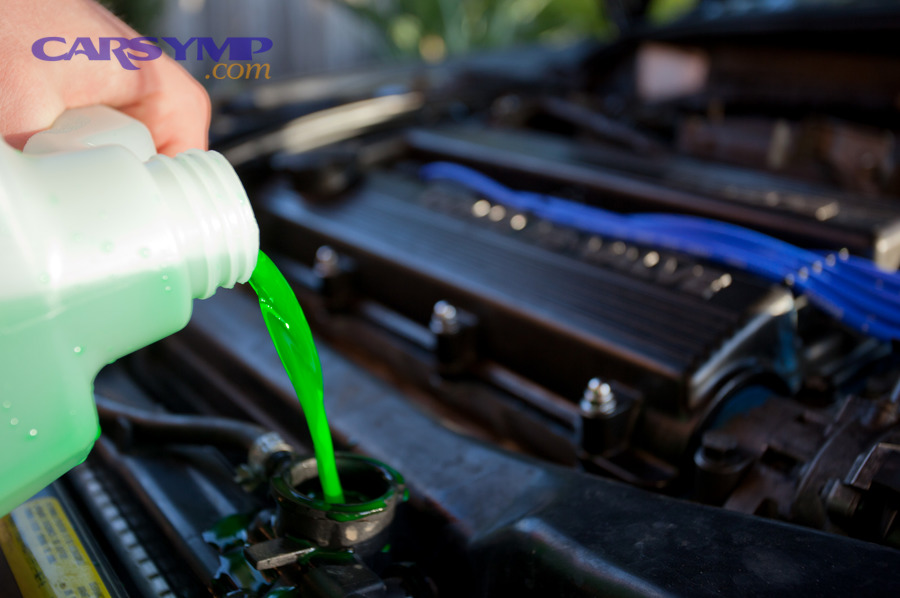
What does a coolant puddle look like (color, texture, smell)?
A coolant puddle usually looks watery (not oily), can feel slightly slick between fingers, and often has a sweet smell. The color varies by formula and brand, so use a Coolant puddle color guide mindset rather than assuming one “correct” color:
- Green: common traditional coolants
- Orange / red / pink: many extended-life or OEM-specific formulas
- Blue / purple / yellow: some modern OEM coolants
- Brown or rusty tint: may indicate contamination or corrosion mixed in
Where you find the puddle matters as much as the color:
- Front-center under bumper: radiator, lower hose, drain cock area
- Passenger-side near firewall: heater core hoses or heater core housing drain
- Near belts/pulleys (front of engine): water pump seepage
- Under engine bay but “rearward”: hose routing under intake, crossover pipes, or rear coolant flange areas (varies by engine)
If the puddle appears only sometimes, note the conditions: hot vs cold, after highway vs short trips, A/C on or off, parked on incline, etc.
What does a sweet smell mean—and why location (cabin vs engine bay) matters?
A sweet smell is one of the most classic coolant leak symptoms, but the location of the smell is what turns it into a diagnosis. Treat it as Sweet smell in cabin vs engine bay diagnosis:
- Sweet smell mostly in the engine bay (hood open): often external leaks—hose clamps, radiator seam, thermostat housing, water pump weep hole, reservoir crack.
- Sweet smell inside the cabin (especially with heat on): often heater-core-related—heater core leak, heater hose connection, or seep into HVAC housing.
If the smell becomes strongest when you turn the heater on, or you notice a sweet odor with the blower running, that points more strongly toward the heater circuit.
What does white steam under the hood mean versus white smoke from the exhaust?
White vapor is confusing, so treat it as two different questions:
- Under-hood steam: often coolant contacting hot engine/exhaust parts or boiling in an overflow event. It may appear after shutdown when heat “soaks” into the engine bay.
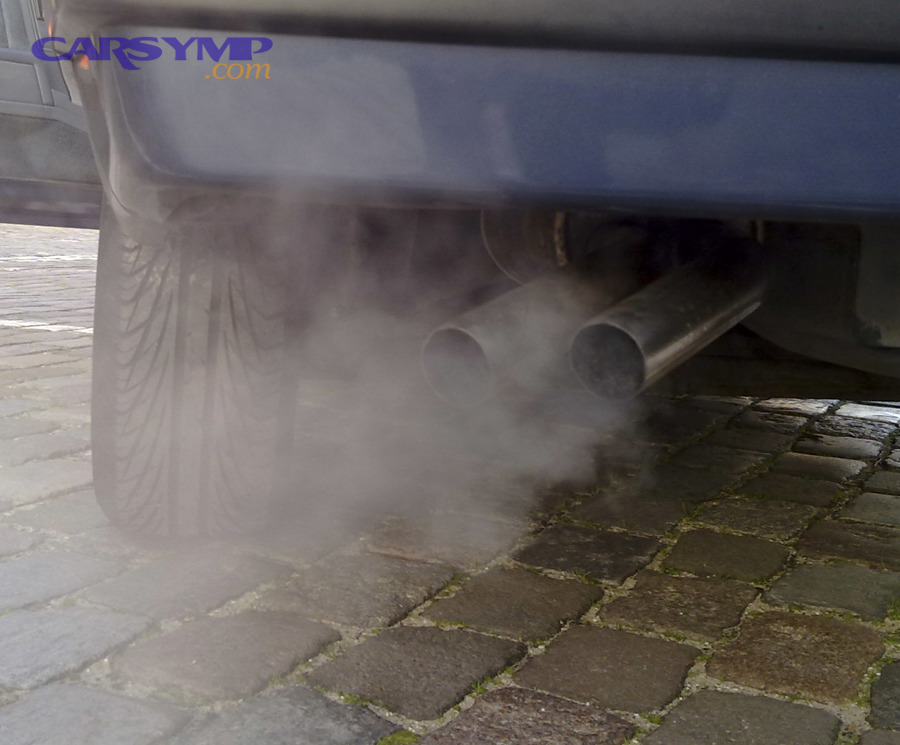
- White exhaust smoke: can be normal condensation on cold starts, but persistent thick white smoke with coolant loss is a red flag—use White exhaust smoke vs coolant leak clues to separate harmless vapor from combustion-side coolant entry.
A practical way to tell them apart:
- Under-hood steam usually comes with a sweet smell near the front and may leave wetness or residue nearby.
- Exhaust smoke concerns rise if you also see Coolant loss with no visible leak causes, repeated misfires on startup, or a sweet smell from the tailpipe.
What does the temperature gauge do when coolant is leaking?
Coolant leaks often change heat behavior in recognizable patterns, so watch Overheating and temperature gauge behavior instead of waiting for a warning light.
Common patterns include:
- Slow creep upward at idle: airflow is low; leaks that introduce air pockets can reduce circulation efficiency.
- Spikes on highway pulls or hills: higher load creates more heat and pressure; a leak may worsen under pressure.
- Gauge swings up then back down: can indicate air pockets moving past the temperature sensor, thermostat cycling abnormally due to low coolant, or intermittent contact with coolant.
- Sudden jump to hot: can happen if coolant drops below the sensor or circulation collapses.
If you see rapid movement toward hot, shift your mindset from “monitor it” to “protect the engine.”
Where do coolant leaks start most often in a car’s cooling system?
Coolant leaks most often start at hoses/clamps, radiator seams, water pump seals, thermostat housings, and heater circuit components, based on which parts experience the most heat cycles, vibration, and pressure stress.
To better understand what you’re seeing, it helps to group leak sources by “external leak points” and “internal/hidden leak points.”
Which components leak most: radiator, hoses, water pump, thermostat housing, heater core?
These are the usual suspects, in the order many shops check them:
- Radiator (tanks and seams): plastic end tanks can crack; seams can seep; fins can corrode.
- Upper/lower radiator hoses + clamps: rubber ages; clamps loosen; hose ends swell or split.
- Water pump: seal wear leads to seepage, often visible at a weep hole or as a trail down the front of the engine.
- Thermostat housing / outlet necks: plastic housings warp or crack; gasket surfaces seep.
- Heater core / heater hoses: leaks can be hidden behind the firewall or inside the HVAC box.
A useful rule: if the leak is front and low, suspect radiator/lower hose/water pump; if it’s smell in cabin, suspect heater-side components.
Why leaks are worse under pressure and load (and why “no puddle” is common)
Many leaks only show up when:
- the engine is hot,
- coolant expands,
- system pressure rises,
- the pump is moving high volume,
- and the car’s airflow changes the way droplets land and evaporate.
That’s why people report coolant loss but can’t find drips. Hot coolant can hit a hot surface and vaporize before it ever reaches the ground—especially near exhaust manifolds, turbo plumbing, or hot engine castings.
Also, splash shields can “catch” coolant and release it later, making the puddle appear far from the leak point.
What leak patterns suggest internal leaks (head gasket, intake gasket, heater core)
Internal or hidden leaks can still produce strong symptoms:
- Head gasket / combustion-side leak clues: persistent white exhaust smoke, sweet smell from exhaust, unexplained coolant loss, overheating under load, possible rough starts.
- Intake gasket (engine-dependent): coolant may enter intake runners or mix with oil on some designs; symptoms vary widely by engine family.
- Heater core leak: sweet smell in cabin, foggy windows, damp carpet, greasy film on windshield, reduced heat performance.
If you’re seeing coolant loss with no visible leak causes plus any combustion-side clues, shift quickly toward confirmation testing rather than guesswork.
How can you quickly confirm a coolant leak at home (without special tools)?
You can confirm a coolant leak at home by using two simple methods—cold visual tracing and short-interval level monitoring—so you can verify coolant is escaping and roughly where it’s going.
Next, we’ll add optional checks (still simple) that help you understand what you found, including Pressure test results interpretation if you do borrow or rent a tester later.
What safe checks can you do when the engine is cold?
Start cold because pressure and burn risk are low, and wet spots are easier to see.
- Check coolant level in reservoir (and radiator cap area only if accessible and safe).
- Look for wetness or crusty residue around:
- hose ends and clamps
- radiator end tanks and seams
- thermostat housing mating surface
- water pump area (front of engine)
- overflow reservoir seam and cap area
- Inspect the ground and splash shield under the engine for colored streaks.
- Smell check: engine bay vs cabin (use the same “location logic” from earlier).
If the reservoir is low, top up to the proper mark using the correct coolant mix, then observe whether the level drops again after a few drives.
How to trace leaks with cardboard, flashlight, and level monitoring
This is the fastest “proof” routine that doesn’t require tools:
- Cardboard test: place clean cardboard under the engine overnight. The next morning, note:
- puddle location relative to the front wheels and bumper
- color and spread pattern (drip vs splash)
- Flashlight tracing: follow the wet path upward. Coolant usually runs down and backward with airflow.
- Short-interval level monitoring: mark the reservoir level with a pen line (cold). Re-check:
- after one commute
- after a longer drive
- after an overnight cool-down
A consistent drop is confirmation that coolant is leaving the system, even if you haven’t found the exact hole yet.
If the leak only shows under load, watch for Signs of coolant leak while driving such as a sudden sweet smell at stops, steam after a hard pull, or a temperature rise in traffic.
How serious are coolant leak symptoms—and when should you stop driving immediately?
Yes—coolant leak symptoms can be serious, and you should treat them as urgent because coolant loss can cause overheating, overheating can cause rapid engine damage, and leaks can escalate suddenly once pressure rises.
More importantly, the decision isn’t “is it leaking?” but When to stop driving immediately versus when you can limp home safely.

What symptoms mean “stop now” to prevent engine damage?
Stop driving immediately (or as safely/soon as possible) if you have any of the following:
- Temperature gauge near hot / red zone or warning message
- Steam pouring out from under the hood
- Repeated overheating events in a single trip
- Coolant pouring out rapidly or visible spraying
- Strong coolant smell + heat spike + loss of cabin heat (can indicate low coolant)
- Low coolant light plus unstable temperature readings
These are the conditions where a “quickly worsening” situation can develop in minutes, not days.
If you must move the car to safety, do it with minimal load:
- turn off A/C,
- turn heater on full hot (only if it still works),
- keep RPM moderate,
- and stop if the gauge climbs.
What symptoms are “monitor and fix soon” versus “tow it”?
These usually mean you can monitor briefly, but you should schedule repair soon:
- Small puddle after parking, no temperature changes
- Slow coolant loss over a week, no overheating
- Slight sweet smell in engine bay, stable gauge
- Minor residue around a clamp without active dripping
These usually suggest towing or no-driving until fixed:
- Coolant leak near belts (risk of belt slip or coolant spray)
- Any overheating history paired with current coolant loss
- Cabin sweet smell + fogging windows (heater core leak can impair visibility)
- car overheating symptoms that return quickly after topping off
A key principle: topping off coolant is not a fix—it’s a short-term safety step to prevent overheating while you diagnose and repair.
According to a study by the University of West Bohemia from an engineering research group, in 2022, inadequate cooling system airflow capacity (for example, choosing a fan that doesn’t cover radiator pressure drop) can potentially cause engine overheating—reinforcing that cooling margin matters when the system is stressed.
How do you differentiate coolant leak symptoms from lookalike problems and confirm the exact source?
Coolant leak symptoms can look like oil leaks, A/C condensation, or normal exhaust vapor, so the best approach is to compare the fluid’s behavior, the smell, and the conditions that trigger it, then confirm with targeted checks.
Next, we’ll use comparisons to prevent misdiagnosis, and we’ll connect the clues to Typical repair costs by leak source so you can plan realistically.
Coolant vs water vs oil: how to tell puddles apart fast
Use quick comparisons:
- Coolant: colored (often), sweet smell, watery but slightly slick, may dry into crusty residue.
- Water (A/C condensation): clear, odorless, dries with no residue, usually appears after A/C use and pools near passenger-side front area.
- Oil: brown/black, thicker, slippery, strong petroleum odor, leaves darker stains.
If you’re unsure, the smell test plus the “dries into crust” clue usually separates coolant from water.
Sweet smell in cabin vs engine bay: heater core vs external leak diagnosis
Use this Sweet smell in cabin vs engine bay diagnosis checklist:
- Smell strongest inside + foggy windows: heater core leak is likely.
- Smell strongest with hood open + residue near hose/radiator: external leak likely.
- Smell inside only when heater on: heater circuit strongly suspected.
- Damp carpet on passenger side: heater core or heater hose leak into HVAC housing.
A heater core leak is often “invisible” from outside, but the cabin symptoms are loud if you know what to look for.
White exhaust smoke vs coolant leak clues: head gasket vs condensation
Use White exhaust smoke vs coolant leak clues in a structured way:
- Normal condensation: light vapor on cold start, disappears as engine warms, no coolant loss.
- Possible coolant burning: thick white smoke that persists warm, sweet odor, coolant level drops, possible rough start or misfire.
If the smoke persists warm and coolant keeps dropping, escalate quickly to confirmation (shop inspection and testing), because combustion-side leaks can worsen fast.
What a pressure test can confirm
A cooling system pressure test is one of the cleanest confirmations because it pressurizes the system without needing the engine to run. If you do use one, focus on Pressure test results interpretation:
- Pressure drops + external drip appears: you’ve found an external leak point.
- Pressure drops + no visible leak: suspect internal leak, hidden heater core leak, or coolant seeping into areas that don’t drip to the ground.
- Holds pressure steady: leak may be intermittent (only hot), cap-related, or only under driving load.
Typical practical takeaways:
- External leaks usually reveal themselves with patience and a bright light.
- “No visible leak” during a drop doesn’t mean “no leak”—it means “not visible yet.”
Here’s a helpful visual guide for performing a cooling system leak and pressure test:
Finally, to connect diagnosis to budgeting, this table gives Typical repair costs by leak source (ranges vary widely by vehicle, access, and labor rates), but it helps you prioritize:
| Leak source (common) | What you’ll usually see | Repair complexity | Typical cost range (US) |
|---|---|---|---|
| Radiator hose / clamp | Wet hose end, drip, crust | Low | $80–$250 |
| Radiator (tank seam / core) | Front puddle, residue on radiator | Medium | $300–$1,100 |
| Thermostat housing | Wet around housing, seep trail | Medium | $200–$700 |
| Water pump | Coolant trail near pulley, drip after drive | Medium–High | $450–$1,400 |
| Heater core | Sweet smell in cabin, fogging, damp carpet | High | $800–$2,500+ |
| Head gasket (coolant into combustion) | Persistent white smoke, coolant loss, overheating | Very High | $1,500–$4,000+ |
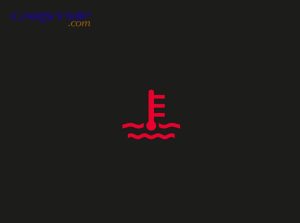
If you see Low coolant warning light and what it means is triggering frequently, treat it as an early-warning system: the engine is telling you the cooling system is no longer maintaining normal operating margin, and diagnosis should move from “maybe” to “confirm and fix.”