


A relay is an electrically operated switch that uses a low-power signal to control a high-power circuit through electromagnetic induction, serving as a critical component in electrical systems for circuit isolation, protection, and automation. Relays function by energizing a coil that creates a magnetic field, which then moves an armature to open or close contacts, allowing safe control of large loads from small control signals. This fundamental switching mechanism makes relays indispensable in automotive systems, industrial automation, home appliances, and countless electronic applications where direct manual control would be impractical or dangerous.
Understanding the different types of relays—electromechanical relays (EMR), solid-state relays (SSR), and reed relays—is essential for selecting the right component for specific applications. Each relay type offers distinct advantages: EMRs provide reliable mechanical switching with visual inspection capabilities, SSRs deliver fast, silent operation without moving parts, and reed relays offer compact size with minimal contact bounce. The choice between these technologies depends on factors such as switching speed requirements, current capacity, lifespan expectations, and environmental conditions.
Relay contact configurations, expressed through poles and throws terminology, determine how circuits can be controlled and connected. Single Pole Single Throw (SPST) relays provide simple on-off functionality, while more complex configurations like Double Pole Double Throw (DPDT) enable simultaneous control of multiple circuits with flexible routing options. Understanding Normally Open (NO) and Normally Closed (NC) contact behavior is equally important, as these configurations define the relay’s default state and determine fail-safe characteristics in critical applications.
Beyond basic operation, selecting the right relay requires careful consideration of technical specifications including voltage ratings, current capacity, switching speed, and mounting requirements. Advanced topics such as latching relays for energy efficiency, time-delay relays for sequential control, and troubleshooting common relay problems like contact failure and arc suppression become crucial for engineers implementing relay-based solutions. Below, we explore each aspect of relay technology in comprehensive detail to build both foundational knowledge and practical expertise.
What is a Relay?
A relay is an electrically operated switch that allows a low-power control signal to manage a high-power electrical circuit by using electromagnetic induction to mechanically move contacts that complete or interrupt the circuit path. This fundamental component serves as an intermediary device that isolates control circuits from load circuits, enabling safe remote operation of equipment without exposing operators or sensitive electronics to dangerous voltage levels. The relay concept mirrors a baton-passing relay race—one circuit receives the signal and passes control forward to another circuit, creating a chain of command that maintains electrical separation between different parts of a system.
To better understand relay functionality, consider how traditional manual switches require physical manipulation at the point of use, creating safety risks when controlling high-voltage equipment. Relays eliminate this danger by placing the physical switching mechanism inside a sealed component that responds to electrical signals from a distance. An operator can press a low-voltage button located safely away from hazardous machinery, and this small signal travels through wires to energize the relay coil, which then activates heavy-duty contacts capable of switching motors, heaters, or other power-hungry loads. This separation between control and power circuits represents the core value proposition of relay technology.
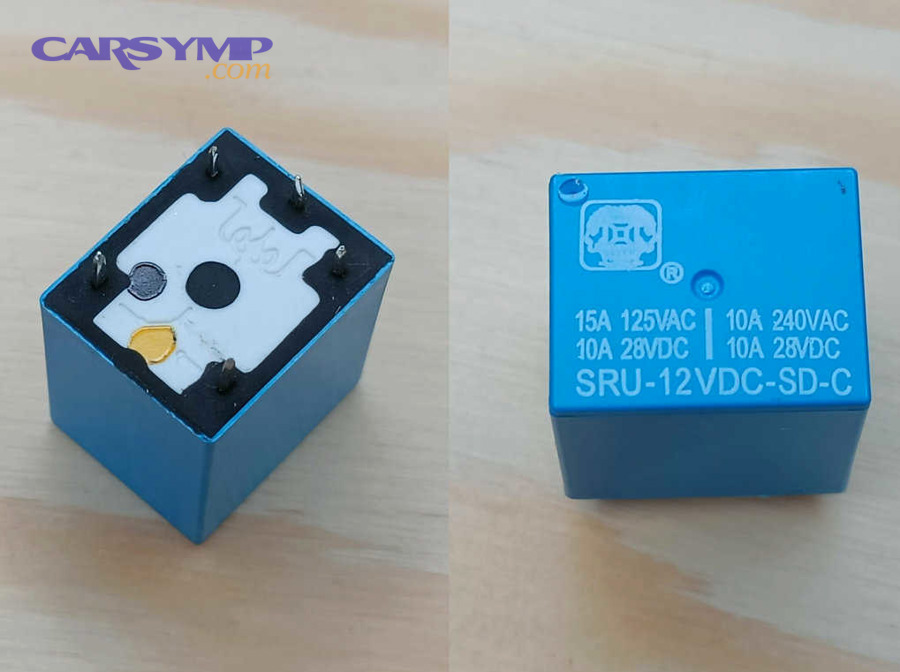
The physical construction of a relay typically includes a copper wire coil wrapped around a soft iron core, creating an electromagnet when current flows through it. This electromagnet generates a magnetic field strong enough to attract a movable iron armature, which is mechanically linked to electrical contacts. When the coil receives power, the armature moves, causing contacts to either connect or disconnect circuit paths. A spring mechanism returns the armature to its resting position when the coil is de-energized, ensuring predictable behavior and allowing the relay to cycle repeatedly throughout its operational lifetime.
Why are Relays Important in Electrical Systems?
Relays serve three critical functions in electrical systems: circuit isolation, load protection, and remote control capability, making them essential for safety, automation, and system reliability across countless applications. The isolation function prevents high voltages and currents in load circuits from damaging sensitive control equipment like microcontrollers, programmable logic controllers (PLCs), or human operators. Without relays, a single fault in a high-power circuit could send destructive voltage spikes backward through control wiring, destroying expensive electronics or creating electrocution hazards.
The protection aspect extends beyond isolation to include overload prevention and fault management. Relays can be designed to monitor current flow and automatically disconnect circuits when predetermined thresholds are exceeded, preventing wire overheating, equipment damage, and fire hazards. In industrial settings, protective relays guard expensive motors, transformers, and generators from damage caused by overcurrent, undervoltage, phase imbalance, and other abnormal conditions. These protective functions save organizations millions of dollars annually by preventing equipment failures before they cause catastrophic damage.
Remote control capabilities enabled by relays have revolutionized automation and smart building systems. A building management system can use low-voltage control signals to switch hundreds of lighting circuits, HVAC zones, and security systems throughout a facility without running dangerous high-voltage wiring to every control panel. This architecture reduces installation costs, simplifies troubleshooting, and allows for flexible system reconfiguration as building needs change. In automotive applications, relays allow dashboard switches carrying mere milliamps to control headlights, starter motors, and fuel pumps that draw tens or hundreds of amperes, making modern vehicle electrical systems both safe and practical.
According to research published by the Institute of Electrical and Electronics Engineers (IEEE) in 2023, relay-based protection systems prevent an estimated 67% of potential electrical failures in industrial facilities, with properly maintained relay systems demonstrating mean time between failures (MTBF) exceeding 100,000 operating cycles in controlled environments.
How Does a Relay Work?
A relay works by converting a small electrical control signal into mechanical motion through electromagnetic induction, which then physically moves metal contacts to open or close high-power circuits, completing the switching action. The process begins when voltage is applied to the relay’s coil terminals, causing current to flow through the many turns of copper wire wrapped around the soft iron core. This current flow creates a magnetic field whose strength is proportional to both the number of coil turns and the magnitude of current flowing through them, following the fundamental physics principle that current-carrying conductors generate magnetic fields.
The magnetic field produced by the energized coil creates an attractive force on the relay’s armature, which is a movable piece of ferromagnetic material positioned near the electromagnet. As the magnetic force overcomes the resistance of the return spring, the armature moves toward the electromagnet core, typically traveling a distance of one to several millimeters depending on relay size and design. This mechanical motion is crucial—it provides the physical movement necessary to connect or disconnect electrical contacts, translating electromagnetic energy into the mechanical work required for switching.
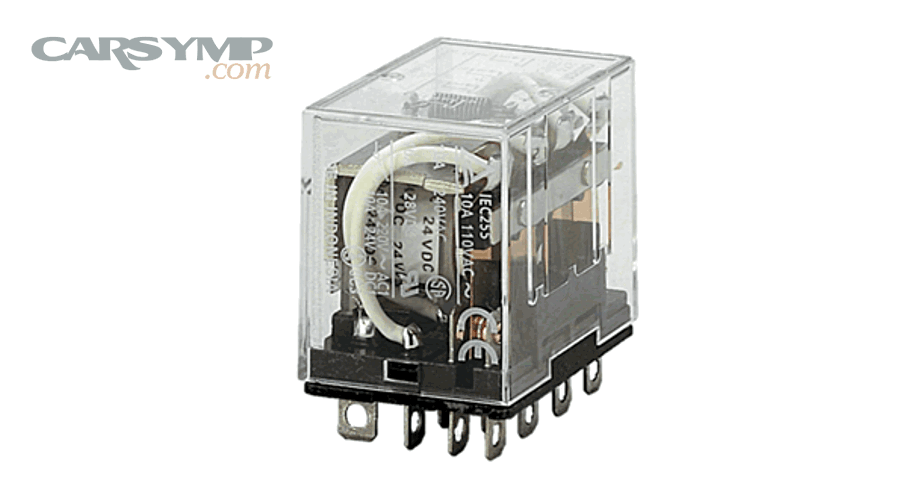
Connected to the moving armature are one or more electrical contacts, which are precisely engineered metal surfaces designed to make or break electrical connections with minimal resistance and maximum reliability. As the armature moves in response to magnetic attraction, these contacts either close to complete a circuit path or open to interrupt it, depending on whether they are configured as Normally Open (NO) or Normally Closed (NC) contacts. The contact materials—often silver alloys, gold plating, or tungsten compounds—are selected based on the electrical load they must switch, with different materials optimized for different voltage and current ranges.
When the control signal is removed from the coil, the magnetic field collapses almost instantaneously, typically within milliseconds. With no magnetic force holding it in position, the armature is pulled back to its resting state by the mechanical spring, which has been compressed or stretched during the energized phase. This spring-return mechanism ensures that the relay returns to a known, predictable state whenever power is removed, providing fail-safe behavior that is critical in many safety-critical applications. The entire energize-and-release cycle can occur in 5 to 15 milliseconds for typical electromechanical relays, though specialized high-speed relays can operate even faster.
What are the Main Components of a Relay?
The five main components of a relay are the electromagnetic coil, the armature, the electrical contacts, the spring mechanism, and the yoke frame structure, each contributing essential functionality to the relay’s switching operation. The electromagnetic coil consists of hundreds or thousands of turns of insulated copper wire wound around a bobbin, which surrounds a soft iron core that concentrates and amplifies the magnetic field. The number of wire turns and the wire gauge determine the coil’s electrical characteristics, including its resistance (typically ranging from 50 to 5,000 ohms) and the current required to generate sufficient magnetic force for reliable operation.
The armature serves as the movable element that responds to magnetic attraction, functioning as the mechanical link between electromagnetic force and contact motion. Manufactured from soft iron or silicon steel alloys selected for their high magnetic permeability and low remanence, the armature must be light enough to move quickly yet robust enough to withstand millions of operating cycles without mechanical failure. The armature’s pivot point or hinge mechanism determines the relay’s mechanical advantage and influences factors like operating speed, contact force, and mechanical life expectancy.
Electrical contacts represent the business end of the relay—the actual switching elements that make or break circuit connections. These contacts consist of carefully engineered metal alloys selected based on the expected electrical load characteristics. Silver and silver alloys offer excellent conductivity and reasonable cost for general-purpose applications, while gold-plated contacts provide superior resistance to oxidation for low-current signal switching. Tungsten and tungsten alloys excel at withstanding the extreme temperatures generated by electrical arcs when switching inductive loads like motors or transformers. Contact design includes considerations for contact pressure, wiping action during closure, and thermal mass to dissipate heat generated during current flow.
The spring mechanism provides the restoring force that returns the armature to its resting position when the coil is de-energized, and also determines contact pressure when the relay is energized. Springs must be precision-manufactured to provide consistent force throughout the relay’s mechanical life, maintaining adequate contact pressure to minimize connection resistance while not requiring excessive magnetic force for activation. The spring constant—the relationship between compression distance and force—critically affects relay performance parameters including pickup voltage (minimum voltage for reliable activation), dropout voltage (maximum voltage at which the relay releases), and contact bounce characteristics.
The yoke and frame structure completes the magnetic circuit, providing a low-reluctance path for magnetic flux while mechanically supporting all other components. Typically manufactured from soft iron or laminated steel to minimize eddy current losses, the yoke channels magnetic flux from the coil core to the armature, maximizing the magnetic force available for switching. The frame also includes mounting provisions, pin assignments for coil and contact connections, and often an external housing that protects internal components from environmental contamination. In sealed relays, the housing may be hermetically sealed to prevent moisture ingress and contact oxidation, extending operational life in harsh environments.
What Happens When a Relay is Energized vs De-energized?
When a relay is energized, current flows through the coil creating a magnetic field that attracts the armature, causing it to move and change contact positions, while in the de-energized state, the spring returns the armature to its resting position and contacts revert to their default configuration. The energizing process typically begins when a control switch or electronic circuit closes, allowing current to flow from the power source through the coil winding. As electrons begin moving through the copper wire, they establish a magnetic field according to Ampère’s law, with field strength building toward its steady-state value within milliseconds as the coil’s inductance allows current to ramp up.
During energization, the magnetic field strength reaches a threshold where the attractive force on the armature exceeds the opposing force of the return spring, causing the armature to accelerate toward the electromagnet core. This mechanical motion occurs rapidly—typical armature travel times range from 3 to 10 milliseconds depending on relay size and design. As the armature moves, contacts attached to it begin transitioning between their open and closed states. Normally Open contacts approach their mating surfaces and eventually make physical contact, while Normally Closed contacts separate from their mates, with both transitions happening nearly simultaneously as the armature reaches its fully-attracted position.
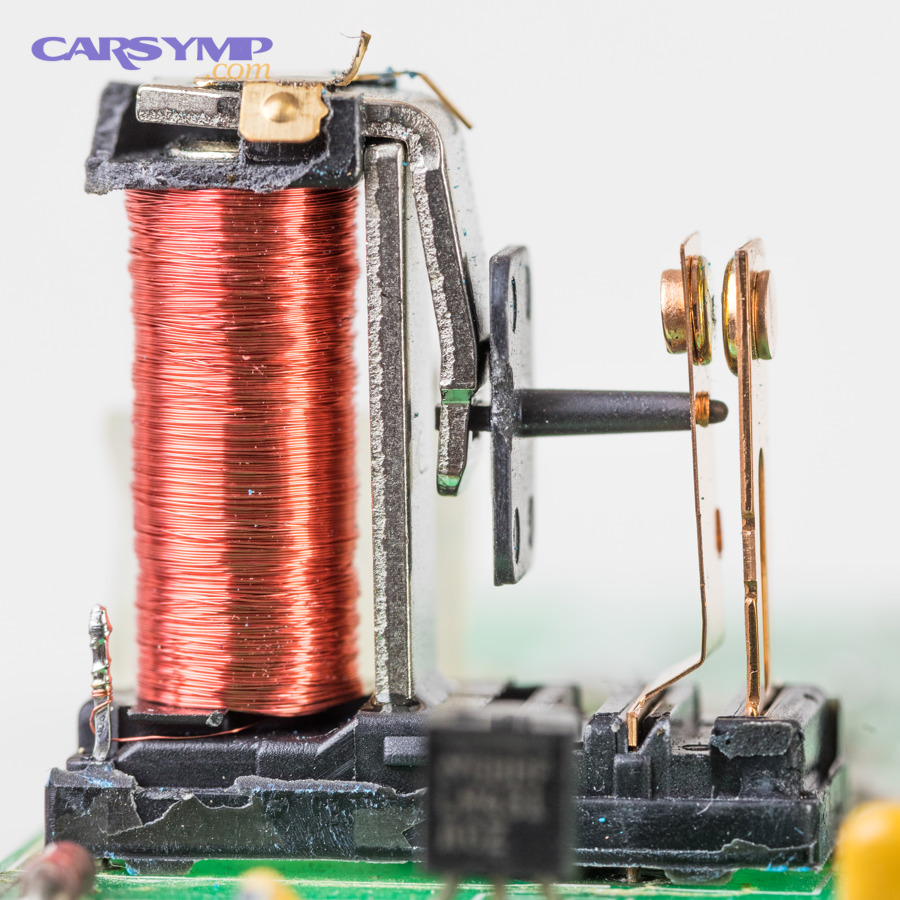
Contact closure is not instantaneous—when NO contacts first touch, they may bounce apart briefly due to mechanical elasticity before settling into stable contact. This contact bounce can last 0.5 to 2 milliseconds and creates multiple make-and-break transitions that can generate electrical noise or false triggering in sensitive circuits. Higher-quality relays minimize bounce through precise mechanical design, including optimized contact mass, spring stiffness, and damping mechanisms. Once settled, the closed contacts maintain pressure against each other determined by the spring force and armature position, creating a low-resistance electrical path—typically less than 50 milliohms—capable of carrying the relay’s rated current without excessive heating.
De-energization begins the moment control circuit current stops flowing through the coil, whether through switch opening, transistor turn-off, or control signal removal. The collapsing magnetic field induces a voltage spike across the coil terminals according to Faraday’s law of induction—this back EMF can reach several hundred volts and may damage control circuits if not properly suppressed with flyback diodes or other protection components. As the magnetic force rapidly diminishes, the return spring accelerates the armature back toward its resting position, typically completing the mechanical return stroke in 3 to 10 milliseconds similar to the energizing time.
During the return stroke, NO contacts separate and NC contacts reconnect with their mates. Contact separation while carrying current creates an electrical arc—a plasma discharge that bridges the gap between separating contact surfaces. This arc represents one of the most destructive phenomena in relay operation, as the extreme heat (thousands of degrees Celsius) erodes contact material with each switching cycle. Contact materials and relay designs specifically address arc suppression through various techniques including contact spacing, arc chutes, and magnetic blowout structures that extinguish arcs quickly. The de-energized state represents the relay’s stable, unpowered condition where it will remain indefinitely until the next energization cycle begins.
What are the Different Types of Relays?
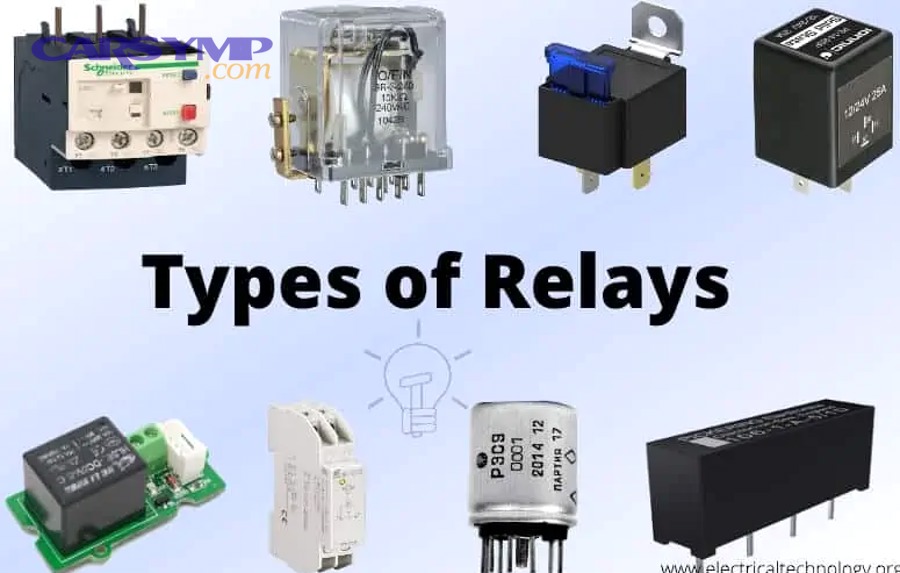
There are three main types of relays: electromechanical relays (EMR), solid-state relays (SSR), and reed relays, classified based on their switching mechanism and construction technology. This fundamental classification separates relays into mechanical switching devices that use moving contacts, semiconductor-based switches that operate electronically without moving parts, and specialized magnetic reed switches sealed in glass envelopes. Each category addresses different application requirements, with trade-offs between switching speed, current capacity, mechanical life, and operational characteristics that make certain relay types better suited to specific use cases.
Electromechanical relays represent the oldest and most widely deployed relay technology, dominating applications where visible switching confirmation, high current handling, and low contact resistance are priorities. These relays use the electromagnetic coil and armature mechanism described earlier to physically move metal contacts, providing complete galvanic isolation between control and load circuits. The mechanical nature of EMRs allows them to switch both AC and DC loads with equal ease, and their low contact resistance—often below 50 milliohms—minimizes power dissipation even when carrying hundreds of amperes.
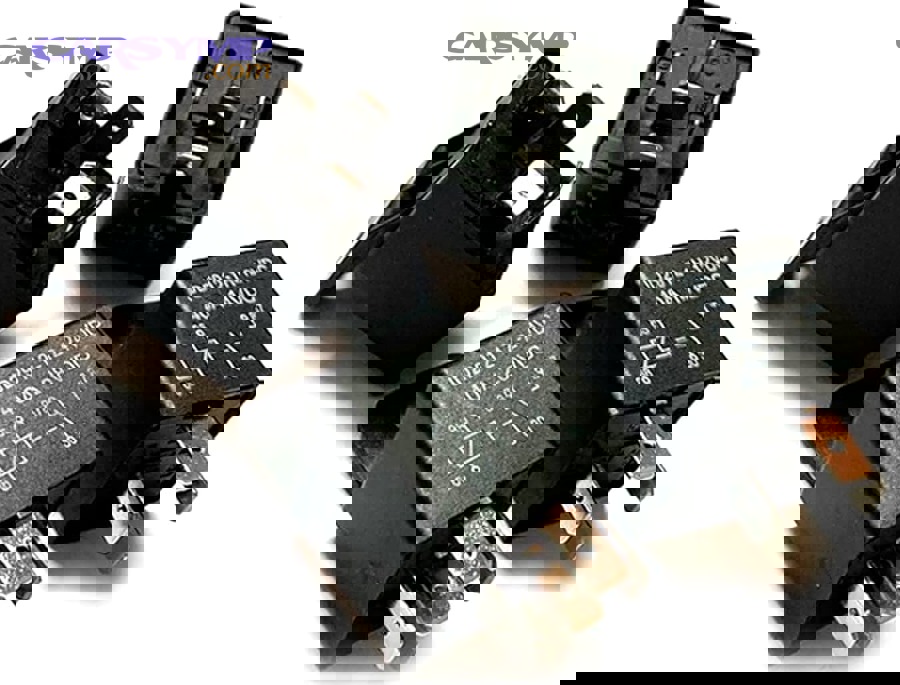
Solid-state relays emerged as an alternative to mechanical switching, using semiconductor devices such as thyristors, triacs, or MOSFETs to perform switching functions electronically. These relays eliminate the mechanical components that limit EMR switching speed and operational life, enabling switching times measured in microseconds rather than milliseconds and operational lifespans exceeding billions of cycles. SSRs particularly excel in applications requiring frequent switching, such as variable frequency drives, dimming circuits, and process control systems where mechanical relay contacts would wear out rapidly. However, SSRs introduce voltage drops across their semiconductor junctions (typically 1 to 2 volts), generating heat that must be dissipated through heatsinks in high-current applications.
Reed relays occupy a specialized niche, featuring ferromagnetic reed contacts sealed within glass tubes filled with inert gas, activated by magnetic fields from surrounding coils. These relays offer extremely fast switching times (less than 1 millisecond), minimal contact bounce, and excellent isolation resistance, making them ideal for test equipment, telecommunications, and instrumentation applications. The hermetically sealed contacts resist oxidation and contamination, but the delicate glass construction limits current capacity to typically less than 5 amperes and makes reed relays more susceptible to mechanical shock compared to ruggedized EMRs.
According to market research published by MarketsandMarkets in 2024, the global relay market distribution shows electromechanical relays commanding approximately 62% market share by unit volume, solid-state relays holding 28%, and reed relays comprising 7%, with the remaining 3% consisting of specialized relay types including mercury-wetted and hybrid designs.
What is an Electromechanical Relay (EMR)?
An electromechanical relay (EMR) is a switching device that uses an electromagnetically-operated mechanical armature to physically move metal contacts between open and closed positions, providing galvanic isolation while switching electrical loads. EMRs represent the traditional and most common relay type, with designs that have evolved over more than a century to optimize reliability, current capacity, and versatility. The fundamental architecture combines the electromagnetic coil assembly with a mechanical contact system, allowing low-power control signals to switch high-power loads through mechanically robust contact closures that can handle severe electrical environments.
The construction of EMRs prioritizes visual inspectability and field serviceability—technicians can often observe contact condition, measure coil resistance, and verify mechanical operation without specialized equipment. This transparency simplifies troubleshooting in industrial environments where downtime costs are significant. The mechanical contacts in EMRs typically use silver alloys or silver-cadmium-oxide compounds optimized for specific load characteristics, with contact ratings ranging from milliamperes at low voltage for signal switching up to hundreds of amperes at distribution voltages for power applications. The physical contact closure creates a very low resistance path—often 20 to 50 milliohms—that minimizes voltage drop and power dissipation even under heavy current flow.
EMRs excel at switching both alternating current (AC) and direct current (DC) loads without modification, since the mechanical contacts simply make or break a metallic connection regardless of current direction or polarity. This versatility simplifies system design and reduces inventory requirements in facilities that operate mixed AC and DC equipment. The mechanical switching action also provides true zero-crossing switching for AC applications when combined with appropriate control timing, and complete circuit isolation in the open state with no leakage current—a critical advantage over solid-state devices that exhibit small but measurable off-state leakage.
However, EMRs have inherent limitations stemming from their mechanical nature. The physical movement of the armature and contacts limits switching speed to typically 5 to 15 milliseconds for operation and release, making EMRs unsuitable for high-frequency switching applications. Contact bounce during closure creates multiple make-and-break transitions lasting 0.5 to 2 milliseconds that can interfere with sensitive electronics or require debouncing circuitry. Mechanical wear progressively degrades contact surfaces through erosion, oxidation, and material transfer, limiting operational life to typically 100,000 to 1,000,000 mechanical cycles depending on load characteristics and relay quality. radiator fan not working in vehicles often traces back to EMR contact failure after years of thermal cycling, demonstrating how environmental stresses accelerate contact degradation in harsh applications.
Typical EMR applications include motor control in industrial automation, where the ability to switch high inrush currents without damage makes EMRs the preferred choice for starting three-phase motors. Building HVAC systems rely on EMRs to control compressors, heating elements, and ventilation fans, taking advantage of their low cost and proven reliability in moderate-duty cycle applications. Automotive systems use specialized automotive EMRs to control headlamps, starter motors, fuel pumps, and cooling fans, with relay designs ruggedized to withstand vibration, temperature extremes, and the corrosive atmosphere under vehicle hoods.
What is a Solid-State Relay (SSR)?
A solid-state relay (SSR) is an electronic switching device that uses semiconductor components such as thyristors, triacs, or MOSFETs to control load circuits without any mechanical moving parts, providing fast, silent, and long-lasting switching capability. SSRs accomplish switching through the electronic control of semiconductor junction conductivity—applying a control signal to the input circuit modulates the semiconductor’s ability to conduct current in the output circuit, effectively creating an electronic switch. This approach eliminates the mechanical components that limit EMR performance, allowing switching times measured in microseconds and operational lifespans limited primarily by thermal stress rather than mechanical wear.
The internal architecture of an SSR typically includes three functional blocks: an input circuit that accepts the control signal, an isolation barrier that separates control from load, and an output switching element that carries load current. The input circuit often uses an LED as part of an optocoupler, converting electrical control signals into optical signals that cross the isolation barrier without electrical connection. This optical isolation provides excellent common-mode noise rejection and can withstand thousands of volts of isolation voltage between input and output circuits, making SSRs suitable for applications requiring high-voltage isolation or noise immunity.
The output switching element determines SSR performance characteristics and load compatibility. For AC loads, most SSRs use triacs or back-to-back thyristor pairs that can conduct in both directions, with zero-crossing switching circuits that trigger conduction at the voltage zero-crossing point to minimize electromagnetic interference. For DC loads, power MOSFETs serve as the switching element, offering very low on-state resistance (sometimes below 10 milliohms) and fast switching times ideal for pulse-width modulation applications. However, unlike mechanical contacts that exhibit essentially zero resistance when closed, all semiconductor switches have measurable voltage drops—typically 1.0 to 1.6 volts for triacs and thyristors, or 0.1 to 0.5 volts for MOSFETs—creating power dissipation that generates heat requiring thermal management.
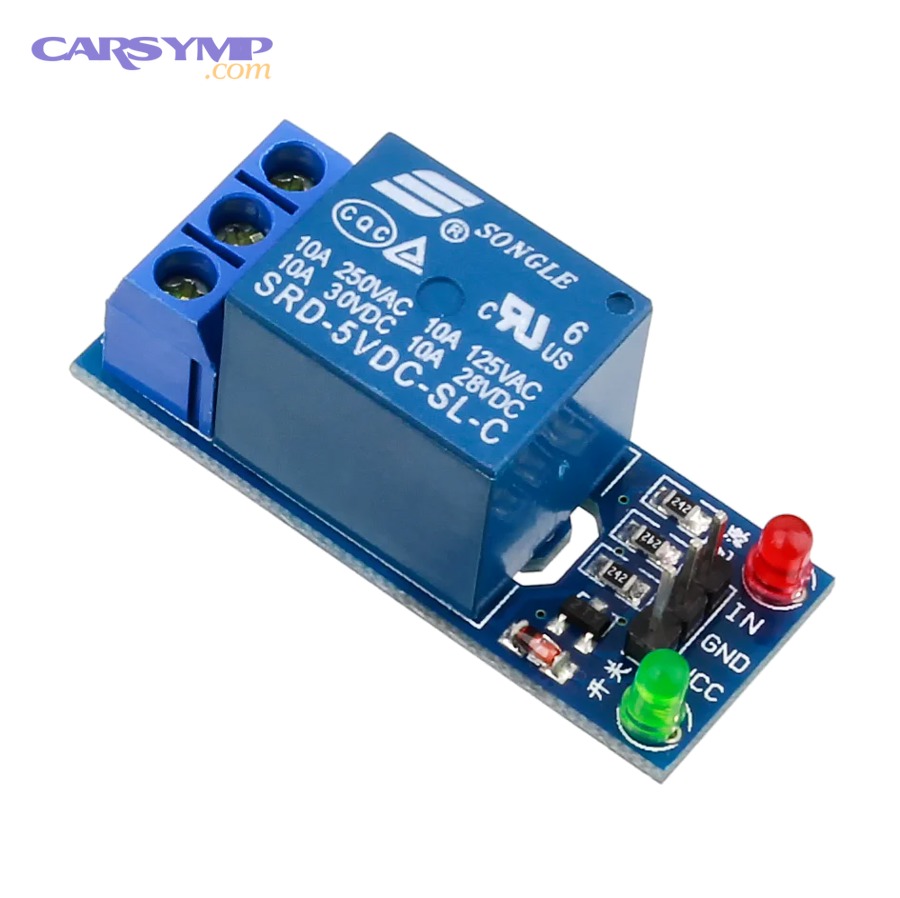
SSRs offer compelling advantages including silent operation (no audible click or buzz), immunity to shock and vibration, and no contact bounce or arcing that creates electromagnetic interference. The absence of moving parts enables switching frequencies from DC up to several kilohertz, making SSRs ideal for applications like heater control with phase-angle firing, LED dimming circuits, and motor speed control where rapid switching is essential. Operational lifetime often exceeds one billion switching cycles since semiconductor degradation occurs slowly compared to mechanical contact erosion, particularly when SSRs operate within their thermal limits and voltage ratings.
The disadvantages of SSRs center primarily on their semiconductor characteristics. The voltage drop across conducting semiconductor junctions creates continuous power dissipation calculated as voltage drop multiplied by load current—a 30-ampere SSR with 1.5-volt drop dissipates 45 watts of heat continuously when carrying full rated current. This heat generation requires substantial heatsinks in high-current applications, increasing cost and mounting space compared to low-resistance mechanical contacts. SSRs also exhibit small but measurable leakage current in the off state—typically a few milliamperes—that can be problematic for some loads, and they may fail short-circuit when subjected to voltage transients or thermal overload, whereas mechanical contacts more commonly fail open-circuit.
SSR applications focus on high-frequency switching scenarios including industrial temperature control where proportional heating requires rapid on-off cycling, solid-state motor starters that provide smooth acceleration profiles, and lighting control systems for theatrical and architectural applications. Semiconductor manufacturing equipment uses SSRs extensively for precise control of deposition processes, while medical equipment leverages SSR noise immunity and reliability for life-critical applications. Dual-fan systems troubleshooting in computer servers and telecommunications equipment often reveals SSR control circuits enabling variable-speed thermal management strategies.
What is a Reed Relay?
A reed relay is a specialized electromagnetic relay using ferromagnetic reed contacts sealed in a glass tube filled with inert gas, with switching accomplished by magnetic attraction when a surrounding coil is energized. The reed switch at the heart of this relay type consists of two thin metal blades (reeds) made from nickel-iron alloy, precisely aligned with a small gap between them inside the hermetically sealed glass envelope. These reeds serve dual purposes—they act as both the magnetic flux conductors and the electrical contacts, eliminating the separate armature mechanism used in conventional EMRs and creating an extremely simple and reliable switching element.
Operation begins when current flows through an external coil surrounding the glass tube, generating a magnetic field that penetrates the tube and magnetizes the ferromagnetic reed blades. The reeds become temporary magnets with opposite polarity at their overlapping ends, creating magnetic attraction that pulls them together until they make physical contact. The contact force depends on coil ampere-turns and reed geometry, typically producing contact pressures much lower than those in conventional relays—this limits current capacity but provides extremely low contact resistance for signal-level switching. When the coil is de-energized, the reeds’ springiness provides the restoring force that separates them, with the mechanical resonance damped by the inert gas atmosphere to minimize contact bounce.
The hermetic glass seal provides exceptional contact protection, shielding against oxidation, dust, moisture, and chemical contamination that degrade conventional relay contacts over time. This sealed environment enables reed relays to maintain stable contact resistance and low thermoelectric voltage for years or decades, making them indispensable in precision instrumentation and automatic test equipment. The inert gas fill—typically nitrogen or argon—also suppresses arc formation during contact separation, extending contact life when switching moderate currents. Some specialized reed relays use mercury-wetted contacts for even better performance, though environmental regulations have limited mercury-wetted relay availability in recent years.
Reed relays offer the fastest switching times among electromagnetic relays, with operate times typically 0.2 to 1.0 milliseconds and release times equally rapid. This speed advantage stems from the low mass of the reed blades compared to conventional armatures, combined with high spring stiffness that accelerates and decelerates the moving mass quickly. Contact bounce is minimal—often less than 0.1 milliseconds—due to the damping effect of the gas atmosphere and the low kinetic energy involved in reed closure. These characteristics make reed relays superior for scanning applications in data acquisition systems, matrix switching in telecommunications, and test point selection in automated test equipment where switching speed directly impacts measurement throughput.
The delicate nature of reed switches imposes limitations including relatively low current capacity (typically 0.5 to 5 amperes maximum), sensitivity to mechanical shock that can cause chatter or false triggering, and susceptibility to permanent contact sticking if subjected to overcurrent conditions. The glass envelope provides excellent dielectric isolation but creates fragility concerns in applications involving vibration or rough handling. Reed relays also exhibit sensitivity to external magnetic fields—stray fields from nearby current-carrying conductors or permanent magnets can cause inadvertent operation or prevent proper release, requiring careful layout consideration in dense electronic assemblies. and connector diagnosis becomes crucial when troubleshooting reed relay circuits, as poor terminal connections create intermittent faults that mimic relay failures.
Reed relay applications concentrate in test and measurement equipment including digital multimeters, spectrum analyzers, and signal generators where their low thermal EMF and stable contact resistance ensure measurement accuracy. Telecommunications systems use reed relay matrices for automated circuit testing and signal routing, capitalizing on their fast switching and long mechanical life. Medical diagnostic equipment, mass spectrometers, and scientific instruments leverage reed relay precision and reliability in signal-path switching applications where contact contamination would compromise measurement integrity.
How Do Hybrid Relays Combine EMR and SSR Technologies?
Hybrid relays integrate both electromechanical contacts and solid-state switching elements in a single package, using the EMR contacts for normal load current while the SSR handles transient switching events to extend contact life. This dual-technology approach attempts to capture the best characteristics of both relay types: the low on-state resistance and zero off-state leakage of mechanical contacts combined with the arc-free switching and extended lifetime of solid-state devices. The typical hybrid relay configuration places a small SSR electrically in parallel with EMR contacts, with control logic that coordinates their operation to minimize the electrical stress on both switching elements.
The switching sequence in a make-transition begins with the SSR turning on first, allowing it to establish current flow through its semiconductor junction before the mechanical contacts close. Once current is flowing through the SSR, the EMR contacts close, and after contact bounce settles, the SSR turns off, transferring all load current to the low-resistance mechanical path. This sequence eliminates the arcing and material transfer that normally occurs when contacts close under load, preserving contact surfaces and extending mechanical life. For a break-transition, the process reverses: the SSR turns on to bypass current around the mechanical contacts, which then open in a zero-current state, followed by SSR turn-off to interrupt current flow through the semiconductor at a controlled timing point that minimizes voltage transients.
The benefits of hybrid architecture include dramatically extended mechanical contact life—often 10 to 100 times longer than conventional EMRs for the same load—because contacts never switch current, only make and break connections in an unloaded state. This extended lifetime reduces maintenance costs in applications with high cycle counts, while the low on-state resistance of the mechanical path eliminates the heat dissipation problems that plague SSRs in continuous high-current operation. The mechanical contacts also provide true zero leakage in the off state, unlike pure SSRs that exhibit milliampere-level leakage currents problematic for some applications.
However, hybrid relays introduce complexity and cost that limit their adoption to specialized applications where their unique combination of attributes justifies premium pricing. The control logic and additional semiconductor components increase manufacturing cost substantially over simple EMRs, while the package size grows to accommodate both switching technologies. Reliability analysis becomes more complex with multiple failure modes from both mechanical and semiconductor elements, though properly designed hybrid relays can achieve excellent overall reliability by configuring the technologies to protect each other from their respective weakness.
What Do Relay Contact Configurations Mean?
Relay contact configurations describe the number of separate circuits a relay can control (poles) and the number of positions each circuit can be switched to (throws), determining the relay’s switching flexibility and circuit routing capabilities. This standardized terminology, inherited from mechanical switch nomenclature, provides a concise way to specify relay contact arrangements that can range from simple on-off switching to complex multi-circuit routing with multiple connection paths. Understanding contact configuration notation is essential for selecting relays that match specific application requirements, as choosing a relay with insufficient poles or throws necessitates using multiple relays in more complex and costly circuit designs.
The “pole” designation indicates how many separate and isolated circuits the relay can switch simultaneously. A single-pole relay controls one circuit path, while a double-pole relay simultaneously controls two independent circuits with a single coil activation. Some specialized relays offer three, four, or even more poles for complex switching applications, with each pole having its own set of contacts electrically isolated from other poles. This isolation means a four-pole relay can simultaneously switch four completely different circuits operating at different voltages or carrying different signals, all responding to one control signal applied to the relay coil.
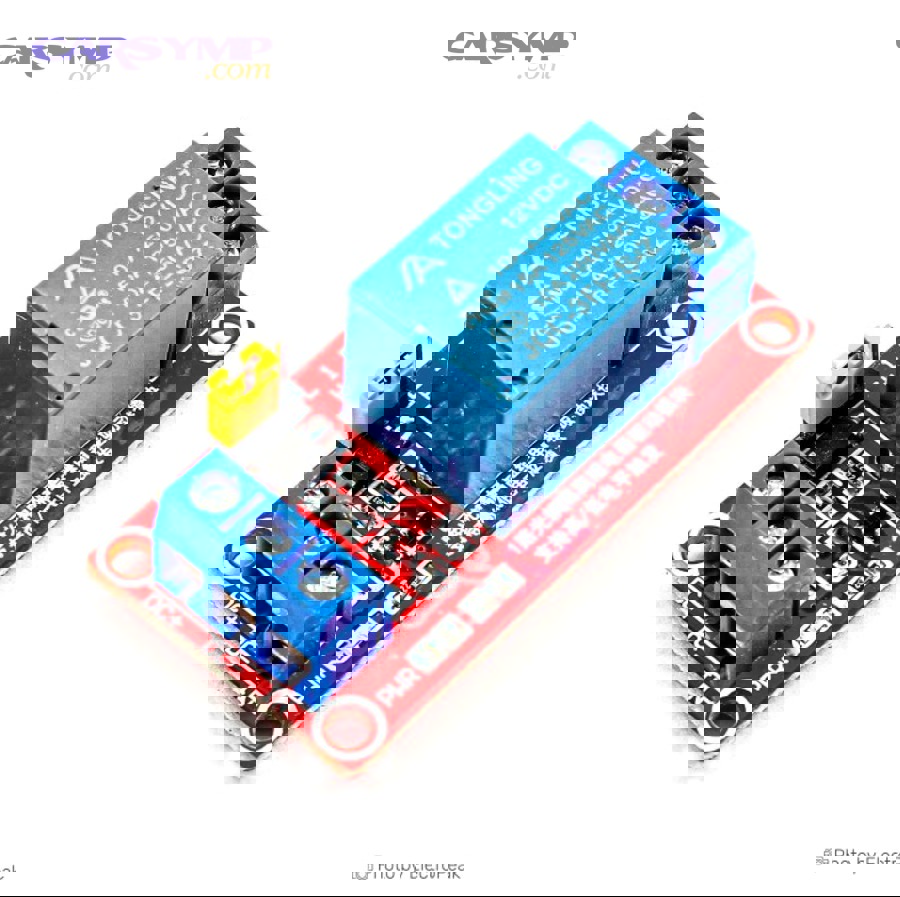
The “throw” designation specifies how many distinct positions each pole can connect to. Single-throw configurations provide a simple make-or-break action—the contact either connects or disconnects a single circuit path. Double-throw configurations offer routing capability—the pole contact can connect to either of two different terminals, but never to both simultaneously, functioning as a mechanical changeover switch. This throw capability enables applications like automatic transfer switches that route loads between normal and emergency power sources, or audio/video signal routing where one source must be selected from multiple inputs.
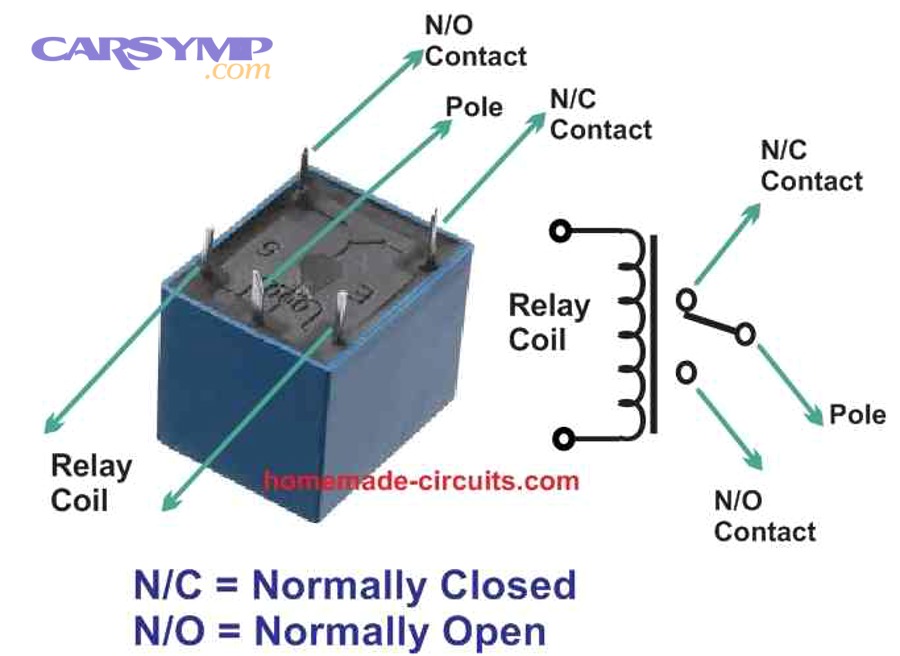
Contact terminology further distinguishes between Normally Open (NO) and Normally Closed (NC) states, defining the contact position when the relay coil is de-energized. NO contacts remain open (disconnected) in the resting state and close when the coil energizes, making them suitable for equipment that should remain off until commanded on. NC contacts stay closed in the resting state and open when energized, providing an inverted control function useful for fail-safe applications where loads should operate normally but shut down when the relay activates. Double-throw relays incorporate both NO and NC contacts inherently, with the common (COM) terminal alternating between the two positions as the relay energizes and de-energizes.
What is the Difference Between SPST, SPDT, DPST, and DPDT Relays?
SPST (Single Pole Single Throw) relays provide the simplest switching function with one circuit path that can be opened or closed, SPDT (Single Pole Double Throw) relays switch one circuit between two different connection points, DPST (Double Pole Single Throw) relays simultaneously control two independent on-off circuits, while DPDT (Double Pole Double Throw) relays offer maximum flexibility by switching two separate circuits each between two positions. These four configurations represent the most common contact arrangements, collectively addressing the majority of relay applications from basic load switching to complex signal routing.
The SPST configuration, also called a Form A contact when normally open, contains one movable contact that makes or breaks a connection to one fixed contact terminal. When the relay energizes, the contact closes, completing the circuit between two terminals and allowing current to flow. When de-energized, the contact opens, interrupting the circuit. This simple on-off functionality suits applications like controlling a single motor, lamp, or solenoid where only two-state switching is needed. SPST relays typically offer the highest current ratings within a given relay size since all contact resources focus on a single switching path, and their simple construction often translates to lower cost and higher reliability compared to more complex configurations.
SPDT relays, designated Form C contacts, add a routing dimension by incorporating both NO and NC contacts connected to a common moving contact. In the de-energized state, the common terminal connects to the NC terminal, while energizing the coil moves the common contact away from NC and toward the NO terminal. This configuration enables changeover switching—selecting between two different circuit paths with one control signal. Applications include power source selection (utility or generator backup), signal routing (selecting between two inputs), and reversing polarity for DC motor direction control. The SPDT configuration doubles the switching possibilities of SPST without requiring a second relay, saving space and cost in systems requiring routing functions.
DPST relays essentially package two SPST relays in one unit, with both poles activated by a single coil. When energized, both sets of contacts close simultaneously, and when de-energized, both open together. This configuration is essential for switching both sides of an AC power line (hot and neutral) as required by safety regulations in many applications, controlling two separate loads with one control signal, or breaking both poles of a DC circuit to ensure complete disconnection. Double-pole switching also serves in three-phase motor control, where two of the three phases can be switched with a DPST relay while the third remains permanently connected. The synchronized operation of both poles in DPST relays guarantees that connected circuits change state together, preventing undesirable half-switched conditions.
DPDT relays combine double-pole capability with double-throw routing, creating the most versatile common contact configuration. Each of the two poles can switch between two positions, enabling applications like reversing DC motor polarity while switching both supply lines, or routing two signals (such as stereo audio channels) between two different destinations. DPDT relays serve in transfer switch applications where two conductors must simultaneously switch between normal and emergency power sources, and in complex automation sequences requiring coordinated multi-circuit control. The increased contact count and mechanical complexity of DPDT relays typically result in larger physical size, higher cost, and somewhat reduced current ratings per pole compared to simpler configurations, but the circuit flexibility they provide often eliminates the need for multiple simpler relays.
According to data compiled by Omron Corporation in their 2023 relay selection guide, SPST and SPDT configurations account for approximately 75% of all relay applications by volume, with DPST comprising about 18% and DPDT approximately 5%, while specialized configurations with three or more poles represent the remaining 2% for niche industrial and aerospace applications requiring simultaneous control of multiple circuits.
What are Normally Open (NO) and Normally Closed (NC) Contacts?
Normally Open (NO) contacts remain disconnected in the relay’s de-energized state and close to complete a circuit when the relay coil is energized, while Normally Closed (NC) contacts stay connected when de-energized and open to interrupt the circuit upon energization. These terms describe the contact’s default or “normal” state—the position the contacts assume when no power is applied to the relay coil and the return spring holds the armature in its resting position. The NO/NC designation is fundamental to relay application since it determines whether loads are powered or unpowered by default, with critical implications for safety, fail-safe behavior, and energy consumption in the de-energized state.
NO contacts find widespread use in applications where equipment should remain off until actively commanded on by the control system. HVAC systems use NO relay contacts to energize compressors and fans only when temperature setpoints demand cooling or heating, ensuring equipment idles safely during standby periods and minimizing energy waste. Industrial safety systems often employ NO emergency stop circuits where critical machinery receives continuous control signals to maintain relay energization during normal operation—releasing the stop button or losing control power de-energizes the relay, opening NO contacts that interrupt power to dangerous equipment. This fail-safe arrangement ensures that power failures, control circuit faults, or emergency stop activation all result in equipment shutdown rather than continued operation.
NC contacts serve applications requiring fail-safe normally-operating configurations or inverting control logic. Security and fire alarm systems typically use NC contacts in detection circuits—sensors remain closed during normal conditions, allowing monitoring current to flow continuously. When a sensor detects intrusion or fire, the circuit opens, triggering the alarm. This approach ensures that tampering with wiring or sensor failure causes alarm activation rather than silent system failure. Building lighting controlled by occupancy sensors might use NC relay contacts that keep lights powered during occupancy, with the relay energizing when the space is vacant to turn lights off, inverting the sensor output logic to match the desired control behavior.
The Common (COM) terminal serves as the switching contact connection point in both NO and NC configurations. In a simple SPST NO relay, the COM terminal connects to the NO terminal when energized but remains isolated when de-energized. In an SPDT relay containing both NO and NC contacts, the COM terminal alternates between the two—touching NC when de-energized and switching to NO upon energization. This COM terminal always carries the switched current in single-throw configurations, making it the terminal that must handle the relay’s full current rating. Proper terminal identification is critical during installation, as reversing NO and NC connections inverts system control logic, causing loads to energize when they should remain off and vice versa. Overheating caused by fan failure signs often include burnt relay contacts or discolored terminals where improper NO/NC connections created unexpected current paths or prevented fans from operating correctly.
Selecting between NO and NC contacts depends on application-specific requirements including default load state, fail-safe behavior, energy consumption during standby, and control logic architecture. Systems designed for safety-critical applications generally prefer configurations where failures result in safe states—NC contacts interrupting power to dangerous equipment upon relay failure, or NO contacts requiring continuous control signals to maintain equipment operation. Energy efficiency considerations might favor NO contacts for loads that spend most time off, avoiding continuous coil power consumption to maintain energization. Control logic complexity sometimes determines the choice, with designers selecting contact types that minimize the number of logic inversions required in the control circuit.
Where are Relays Used?
Relays are used in automotive systems, industrial automation, home appliances, telecommunications, and countless other applications where electrical loads must be controlled remotely, safely, or automatically without exposing operators or control circuits to high voltages and currents. The versatility of relay technology spans from milliampere signal switching in test equipment to thousand-ampere circuit breakers in electrical substations, with relay designs optimized for each application’s unique requirements regarding voltage, current, switching frequency, environmental conditions, and reliability expectations. Modern society depends on billions of relays operating invisibly in infrastructure and equipment, providing the electrical switching backbone that makes automation, safety systems, and complex control possible.
The universal applicability of relays stems from their fundamental ability to interface between dissimilar electrical domains—connecting low-voltage control logic to high-voltage power circuits, isolating noise-sensitive electronics from electrically noisy industrial equipment, and enabling centralized control of distributed loads without running dangerous voltages throughout facilities. This interfacing capability creates architectural flexibility in system design, allowing engineers to optimize control circuits for safety, user interaction, and programmability while separately optimizing power circuits for efficiency, protection, and load requirements.
Environmental adaptation represents another key advantage—specialized relay designs address specific environmental challenges including extreme temperatures, vibration, moisture, and corrosive atmospheres. Aerospace relays withstand altitude pressure variations and radiation exposure, while marine relays resist saltwater corrosion and humid conditions. Explosion-proof relays contain internal arcing to prevent igniting flammable atmospheres in petrochemical facilities, and hermetically sealed relays maintain performance in vacuum or hostile chemical environments. This adaptability allows relay technology to function reliably across application domains that would destroy many electronic switching alternatives.
What are Common Relay Applications in Automotive Systems?
Automotive systems rely on relays extensively to control high-current loads including starter motors, fuel pumps, headlamps, cooling fans, and horn circuits from low-current dashboard switches and electronic control modules. The hostile under-hood environment creates severe operating conditions—temperatures ranging from -40°C in winter cold starts to +125°C adjacent to engine blocks, vibration from rough roads and engine operation, moisture from rain and humidity, and corrosive contaminants from road salt and combustion byproducts. Automotive relays must deliver reliable operation throughout a vehicle’s lifetime despite these challenges, typically requiring designs rated for 100,000+ switching cycles and capable of handling the high inrush currents associated with motor starting and lamp illumination.
The starter motor circuit illustrates relay necessity in automotive applications—starter motors draw 100 to 400 amperes during cranking, far exceeding the capability of ignition switches and wiring that connect to them. A starter relay or solenoid positions itself close to the battery, minimizing high-current cable length, while receiving activation signals through small-gauge wiring from the ignition switch. When the driver turns the key, a few milliamperes flow through the ignition switch to energize the relay coil, which then closes heavy-duty contacts capable of delivering hundreds of amperes from the battery to the starter motor. This arrangement protects the ignition switch from destructive arcing and overheating while reducing the copper required in the vehicle’s wiring harness.
Headlamp relays prevent dashboard switch damage and voltage drop in long wiring runs by positioning the relay near the battery or headlamps, powered through short, heavy-gauge cables that minimize resistance. Older vehicles that omitted headlamp relays often experienced dim lights and burned-out switches as high current (10 to 20 amperes per lamp) flowed through inadequate wiring and switch contacts. Modern headlamp systems universally employ relays controlled by the light switch, turn signal switch, or body control module, ensuring bright illumination while protecting control circuits. High-intensity discharge (HID) and LED headlamp systems use even more sophisticated relay control with soft-start functions to limit inrush current and PWM dimming capabilities for automatic leveling systems.
Radiator fan relays control engine cooling fans that draw 15 to 40 amperes, activated by engine coolant temperature sensors or the engine control module (ECM). Single-speed fans use simple relay switching for on-off control, while dual-fan systems troubleshooting often involves multiple relays that activate individual fans in stages as cooling demand increases. High-performance and heavy-duty vehicles may employ series-parallel relay configurations that run two fans in series for low-speed operation (quieter and more efficient) or parallel for maximum cooling capacity during severe conditions. Fan relay failures represent a common diagnostic scenario—when radiator fans fail to operate despite correct sensor readings and ECM commands, technicians routinely test relay coil resistance, verify switching voltages, and check contact integrity. Overheating caused by fan failure signs escalate rapidly if relay faults go undiagnosed, potentially causing engine damage from excessive coolant temperatures.
Fuel pump relays control electric fuel pumps that must operate continuously whenever the engine runs, typically drawing 5 to 15 amperes at 12 volts. Safety considerations demand that fuel pumps shut off immediately during collisions to prevent fuel spray on hot surfaces, accomplished through relay control circuits that de-energize upon inertial sensor activation. Many vehicles use a fuel pump relay controlled by oil pressure switches—if the engine stops rotating (indicated by loss of oil pressure), the oil pressure switch opens, de-energizing the relay and stopping fuel delivery as a fire-prevention measure. This simple relay-based safety interlock prevents fuel pumps from running indefinitely if ignition remains on after stalling or accidents, supplementing modern electronic crash detection systems.
What are Industrial Applications of Relays?
Industrial automation relies on relays for motor control, PLC interfacing, safety interlocks, HVAC management, and machine control, where their robustness, visual inspection capability, and ability to switch high currents make them indispensable despite advancing solid-state alternatives. Manufacturing facilities contain thousands of relays in motor control centers, control panels, and machine tool enclosures, with industrial-grade relays designed for decade-long service lives under harsh conditions including temperature extremes, dust, moisture, and electromagnetic interference. The ability to visually inspect relay status through indicator LEDs or transparent covers, combined with straightforward troubleshooting using basic test equipment, contributes to relays’ continued dominance in industrial applications where downtime costs thousands of dollars per minute.
Motor control represents the highest-volume industrial relay application, with contactors (large relays designed specifically for motor switching) controlling motors from fractional horsepower to hundreds of horsepower. Motor starters incorporate overload relays that monitor current draw and open control circuits if motors draw excessive current for prolonged periods, protecting expensive motors from burnout due to mechanical binding, phase loss, or excessive loading. Three-phase motor control requires at least three-pole contactors to simultaneously switch all three phases, with additional auxiliary contacts providing interlock functions that prevent forward and reverse operation from activating simultaneously. Variable frequency drive (VFD) systems use relays for bypass contactors that route power around failed drives, isolation relays that disconnect drives during maintenance, and output contactors that switch between multiple motors fed from one VFD.
Programmable Logic Controller (PLC) interfacing extensively employs relays to bridge between low-voltage control logic and higher-voltage field devices. Modern PLCs output 24V DC signals at relatively low current (typically 0.5 to 2 amperes), insufficient to directly drive many industrial solenoids, motor starters, and indicators requiring higher voltage or current. Interface relays with 24V DC coils receive PLC output signals and switch appropriate voltages and currents to field devices, providing electrical isolation that protects expensive PLC modules from voltage transients and faults. The reverse interface uses contact input relays to convert 120V AC or 24V DC field signals to PLC-compatible levels, with optical isolation protecting against miswiring that could damage PLC inputs. Relay-based I/O systems offer hot-swappable reliability—failed relays can be replaced without de-energizing the control system, unlike solid-state I/O that often requires module replacement and system downtime.
Safety interlock systems depend on relays with force-guided contacts that mechanically guarantee all contacts change state together, preventing dangerous half-switched conditions where some circuits energize while others remain off. Machine guarding applications use safety relays to ensure that access doors, light curtains, and emergency stops interrupt power to dangerous machinery, with relay contact arrangements that require specific sequences to reset after safety device activation. These safety relays often include monitoring circuits that verify contact position through auxiliary contacts, shutting down equipment if mechanical failures prevent expected contact operation. International safety standards including ISO 13849 and IEC 61508 specify relay designs and application methods that achieve required safety integrity levels (SIL) for life-critical applications, establishing relays as proven technology for functional safety implementations.
HVAC control in industrial facilities utilizes relays to sequence boilers, chillers, cooling towers, and air handling units according to temperature and pressure setpoints. Staging relays bring equipment online progressively as demand increases, avoiding the power consumption and wear associated with oversized equipment running continuously at partial load. Pump alternation relays rotate lead and lag pumps in multi-pump systems to equalize runtime and maintenance requirements, while pump lockout relays prevent simultaneous operation of pumps feeding common headers to avoid deadheading and pressure surges. Energy management systems use relays to shed non-critical loads during demand peaks, reducing electricity costs by interrupting HVAC, lighting, and process loads according to priority schemes that maintain production while minimizing demand charges.
How are Relays Used in Home Appliances?
Home appliances incorporate relays for compressor control in refrigerators and air conditioners, motor switching in washing machines and dryers, and various sequencing and safety functions that manage appliance operation throughout millions of cycles. The residential environment demands relay designs optimized for long service lives with minimal maintenance—consumers expect appliances to operate reliably for 10 to 20 years without service, requiring relay operational lifetimes exceeding 100,000 to 1,000,000 cycles depending on appliance type and usage patterns. Relay failures in home appliances frequently present as complete functional loss rather than gradual degradation, motivating manufacturers to carefully select relay ratings with adequate derating for reliable operation within appliance temperature and loading conditions.
Refrigerator compressor relays perform a critical starting function for single-phase hermetic compressor motors that lack the starting windings found in larger motors. These potential relays or current relays temporarily energize the motor’s start winding during initial acceleration, disconnecting it once the compressor reaches running speed. Start relay failure ranks among the most common refrigerator malfunctions—symptoms include compressor cycling on the thermal overload protector every few minutes without starting, clicking sounds at failed start attempts, or complete compressor failure to energize. Modern refrigerators often use solid-state PTC (Positive Temperature Coefficient) thermistor start devices instead of electromechanical relays, though many designs retain relay-based designs for their lower cost and proven reliability. Defrost cycle control also employs relays or solid-state alternatives to switch between cooling and defrost heating, with timers or adaptive defrost controllers determining when accumulated frost requires removal.
Washing machine control systems use multiple relays to sequence water valves, motor direction reversal, drain pumps, and dispensers through wash, rinse, and spin cycles. Water inlet valve relays energize solenoid valves that control hot and cold water flow, while motor direction relays switch polarity for agitate/spin motor operation in traditional agitator designs. Front-loading machines employ more sophisticated relay systems including drum lock relays that secure the door during high-speed spins, and pump relays that manage drain and recirculation pumps through complex wash cycles. The transition toward electronic controls has reduced relay count in premium appliances, with triac-based motor controllers and microprocessor-sequenced valve operation replacing some relay functions, though many manufacturers retain relays for critical high-current switching where their reliability and failure mode characteristics provide advantages over semiconductor alternatives.
Clothes dryer operation depends on relays for heater element control, motor switching, and safety circuit monitoring. Electric dryers use high-current relays or contactors to switch 208V or 240V heating elements drawing 15 to 30 amperes, responding to thermostat commands that maintain desired drying temperature. Gas dryers employ relays to control ignition transformers, gas valve solenoids, and blower motors, with interlock logic preventing gas flow unless the blower operates to ensure safe combustion. Safety thermal fuses in both electric and gas dryers open if excessive temperatures indicate blocked exhaust vents or failed thermostats, with these fuses typically interrupting relay coil circuits to ensure complete system shutdown rather than just heater disconnection. And connector diagnosis becomes essential when troubleshooting dryers that fail to heat despite motor operation—many service calls trace to corroded or burned relay socket connections rather than failed relay coils or contacts.
Microwave ovens, dishwashers, and room air conditioners similarly rely on relays for high-voltage switching, motor control, and sequencing functions. Microwave oven transformers draw 10 to 15 amperes at 120V, controlled by relays that respond to timer and interlock switch commands. Dishwashers sequence multiple relays to control water valves, circulation pumps, drain pumps, and heating elements through wash and dry cycles, often incorporating water level sensors and temperature monitors that modify relay operation based on actual conditions. Window and portable air conditioners use compressor relays identical in function to refrigerator relays, with additional relays controlling fan speeds and mode selection (cool, energy saver, fan only). The standardization of relay formats including plug-in bases and mounting dimensions simplifies replacement and reduces inventory requirements for service organizations supporting multiple appliance brands.
How Do You Select the Right Relay for Your Application?
Selecting the right relay requires evaluating load specifications, operating environment, switching frequency, contact configuration, mounting method, and certification requirements to match relay capabilities with application demands while maintaining adequate safety margins. This multi-factor decision process balances technical requirements against practical constraints including cost, availability, physical size, and vendor support, with improper selection potentially causing premature failure, safety hazards, or inadequate system performance. Engineers typically begin relay selection by characterizing the load—determining voltage, current, power factor, inrush characteristics, and duty cycle—then narrowing relay options based on environmental requirements, mechanical constraints, and control circuit compatibility.
The iterative selection process often involves consulting manufacturer catalogs and datasheets to identify candidate relays meeting primary requirements, then applying derating factors that ensure reliability under actual operating conditions. Manufacturers provide relay ratings based on standardized test conditions that may differ substantially from real-world applications—resistive loads at moderate temperatures with infrequent switching cycles. Applications involving inductive loads, high ambient temperatures, frequent switching, or difficult mounting orientations typically require derating current capacity by 20% to 50% or more to achieve target reliability levels. This derating philosophy acknowledges that relay performance degrades under stress and builds margin against the inevitable variations in manufacturing, environment, and usage that occur in production systems.
Modern relay selection increasingly involves online parametric search tools provided by manufacturers and distributors, allowing engineers to specify requirements across multiple dimensions and instantly identify compatible products. These tools filter thousands of relay variants by voltage, current, coil type, contact configuration, mounting style, operating temperature, and certifications, dramatically reducing the time required to identify suitable candidates. However, automated tools supplement rather than replace engineering judgment—experienced designers verify that automatically selected relays actually match application nuances including transient conditions, failure mode requirements, and integration constraints that automated systems may not fully capture.
What Specifications Should You Consider When Choosing a Relay?
Critical relay specifications include contact voltage rating, continuous current capacity, surge current capability, coil voltage and resistance, switching speed, contact material, operating temperature range, and mounting configuration, with each parameter affecting relay suitability and longevity in the target application. The contact voltage rating defines the maximum voltage the open contacts can withstand without arcing across the gap or breaking down through insulation paths—applications must operate below this rating with margin for transients and voltage variations. Continuous current capacity specifies the maximum current contacts can carry indefinitely without overheating, while surge current rating indicates the peak current contacts can interrupt safely, which differs substantially from continuous ratings especially for inductive loads that generate voltage spikes during turn-off.
Coil voltage and resistance determine the control circuit requirements—relay coils are available in standard voltages including 5V DC, 12V DC, 24V DC, 120V AC, and 240V AC, with DC coils offering polarity-insensitive operation and AC coils providing built-in alternating current compatibility. Coil resistance ranges from tens of ohms for high-current coils to thousands of ohms for low-power versions, determining the coil current draw and thereby the control circuit capacity required. Pickup voltage (minimum voltage for reliable activation) and dropout voltage (maximum voltage at which the relay releases) define the coil’s operating window, with typical specifications showing pickup at 70-80% of nominal voltage and dropout at 10-20% of nominal, providing hysteresis that prevents chattering as supply voltage fluctuates.
Switching speed specifications include operate time (delay from coil energization until contacts reach stable closed position) and release time (delay from coil de-energization until contacts reach stable open position), typically ranging from 5 to 15 milliseconds for standard EMRs. Contact bounce time quantifies how long contacts oscillate after initial closure before settling, typically 0.5 to 2 milliseconds, which can interfere with sensitive electronic loads or require debouncing circuitry. Maximum switching frequency indicates how rapidly the relay can cycle without overheating or premature wear, with typical EMRs rated for 10 to 30 operations per minute continuously, though some specialized relays handle much higher frequencies.
Contact material selection affects performance across various load types—silver alloy contacts offer excellent conductivity and general-purpose capability, gold-plated contacts provide superior low-level signal switching with minimal thermoelectric voltage and contact resistance, while tungsten-based contacts resist erosion when switching inductive loads that generate destructive arcs. The electrical life rating specifies expected operational cycles under specified conditions, typically presented in tabular or graphical form showing how life varies with load current and voltage. Mechanical life without load typically exceeds electrical life by 10x or more, indicating that electrical stress from arcing and heating limits relay lifespan more than mechanical wear in most applications.
Operating temperature range defines environmental compatibility—general-purpose relays typically operate from -40°C to +85°C, while industrial and automotive grades extend to +125°C or higher. Humidity specifications and sealing classifications indicate moisture resistance, with sealed relays withstanding moisture condensation and washdown environments that would cause rapid failure in open-frame designs. Vibration and shock specifications quantify mechanical ruggedness, particularly important in automotive, aerospace, and mobile equipment applications where mechanical stress accelerates contact degradation and can cause false triggering. Mounting method options include PCB through-hole, PCB surface-mount, socket plug-in, DIN rail, and panel mounting, with selection depending on assembly methods, serviceability requirements, and vibration conditions.
What is the Difference Between AC and DC Relays?
AC relays are designed to switch alternating current loads and operate from AC coil voltage, while DC relays switch direct current loads with DC coil operation, with key differences in arc suppression requirements, contact materials, and coil construction affecting their suitability for specific applications. The fundamental distinction stems from current behavior during switching—AC current naturally passes through zero voltage 100 or 120 times per second (depending on 50 Hz or 60 Hz line frequency), providing periodic opportunities for arc extinguishing as contacts open, while DC current maintains constant voltage that sustains arcs until contacts separate sufficiently to force arc extinction through physical gap length.
Arc suppression challenges differ dramatically between AC and DC applications. When AC contacts open under load, the arc initially formed bridges between separating contacts, but extinguishes automatically at the next current zero-crossing typically within 8 milliseconds (half-cycle at 60 Hz). This self-extinguishing characteristic simplifies AC relay design, though contacts must still withstand the arc energy during that half-cycle. DC contacts face sustained arcs that continue burning until contact separation distance exceeds the voltage’s ability to maintain plasma conduction—this requires larger contact gaps, longer arc chutes, or magnetic blowout structures that force the arc into extinction chambers where it cools and dissipates.
Contact material selection reflects these different arc environments. AC relays commonly use silver alloys optimized for 50/60 Hz zero-crossing characteristics, with compositions that minimize material transfer and erosion during relatively brief arc durations. DC relays employ harder contact materials such as silver-tungsten, silver-cadmium-oxide, or silver-nickel alloys that resist the sustained erosion from longer-duration DC arcs. The contact ratings also differ substantially—a relay rated for 10 amperes at 250V AC might only handle 3-5 amperes at 30V DC due to DC arcing difficulty, with derating curves provided by manufacturers to adjust AC relay ratings for DC usage.
Coil construction varies between AC and DC variants, with AC relay coils incorporating laminated cores to reduce eddy current losses and shading coils or rings to prevent contact chatter at voltage zero-crossings. The inductance of AC coils affects their impedance and current draw—a 120V AC relay coil might have high inductance (several henries) limiting current to 30-50 milliamperes despite relatively low DC resistance that would draw excessive current if connected to DC voltage. DC relay coils use solid iron cores since eddy currents are not problematic, with coil resistance and current draw specified directly for the rated DC voltage. Converting AC relays to DC operation typically results in overheating and rapid coil failure, while DC relays may fail to energize reliably on AC due to high DC resistance causing insufficient impedance.
Contact welding risk differs between technologies—AC contacts experience thermal cycling as current oscillates between peak and zero, helping prevent welds, while DC contacts maintain constant heating that increases welding probability under overload conditions. This factor often requires DC relays to use higher contact pressure and more robust return springs to separate contacts against welding forces, contributing to their generally lower current ratings compared to similar-sized AC relays. Applications requiring universal AC/DC capability typically employ relays specifically designed and rated for both current types, with conservative ratings and robust contact systems that handle both environments reliably.
What are Latching Relays and When Should You Use Them?
Latching relays maintain their switched position without continuous coil current after activation, requiring only momentary pulses to change state, making them ideal for battery-powered systems, energy-efficient designs, and applications requiring position memory during power loss. Unlike standard momentary relays that require continuous coil energization to maintain contact position (and therefore consume power continuously), latching relays use mechanical latches, permanent magnets, or magnetic remanence to hold contacts in their actuated position after the coil pulse ends. This bistable operation dramatically reduces power consumption in applications where relays spend extended time periods in one state, as only brief pulses are needed to change states while zero power is consumed maintaining position.
The two primary latching mechanisms are mechanical latching using physical over-center springs or levers, and magnetic latching using permanent magnets or remanent magnetic cores. Mechanical latching relays typically employ two coils or a single coil with polarity-sensitive operation—one pulse drives the mechanism over-center into the latched position, where it remains mechanically stable until a reverse pulse drives it back over-center to the opposite state. Magnetic latching designs use permanent magnets to supplement the coil’s magnetic field, requiring only momentary coil current to overcome the permanent magnet’s holding force and shift the armature to the opposite stable position where the permanent magnet holds it without coil current.
Power consumption advantages become substantial in applications with infrequent state changes or long dwell times in one position. A standard 12V DC relay with a 400-ohm coil draws 30 milliamperes continuously (360 milliwatts), consuming 8.64 watt-hours over 24 hours of energization. A latching relay switching the same load draws 30 milliamperes for perhaps 10 milliseconds during state changes, consuming under 0.01 watt-hours for the same 24-hour period including several state changes—representing over 99% energy savings. In battery-powered systems like security panels, remote monitoring equipment, or portable instruments, this power savings extends battery life from hours to weeks or months, potentially eliminating the need for external power in some installations.
Memory retention during power failures represents another critical advantage—latching relays remain in their last commanded position even if control power is lost, whether due to power outages, equipment shutdown, or battery depletion. This characteristic benefits applications where load state should persist during power cycling, such as mode selection relays that configure equipment options, or valve control in remote locations where frequent position verification is impractical. The non-volatile position memory eliminates the need for position sensors or initialization sequences to determine relay state after power restoration, simplifying control logic and ensuring equipment resumes operation in the correct configuration.
However, latching relay applications must account for several considerations including control circuit complexity and reset requirements. Latching relays require dual-polarity pulse circuits or separate set/reset coils, more complex than simple on-off control of standard relays. Position indication becomes crucial since latching relays provide no external indication of contact position without monitoring circuits or auxiliary contacts—control systems must track commanded position or use feedback contacts to verify actual position. Initial power-up procedures may need to cycle the relay through known state transitions to establish position certainty, particularly in safety-critical applications where position ambiguity poses risks.
Applications well-suited to latching relays include battery-powered remote terminal units (RTUs) in SCADA systems, where relays might switch once per day while maintaining position continuously; portable test equipment requiring minimal battery drain; motorized valve position memory in process control; and vending machines where relay coil power represents measurable energy cost over millions of vend cycles. Telecommunication systems historically used latching relays extensively for crossbar and step-by-step switching, though modern digital switches have largely eliminated mechanical crosspoints.
What are Time-Delay Relays and How Do They Work?
Time-delay relays provide programmable delays between coil energization and contact operation (on-delay) or between coil de-energization and contact return (off-delay), enabling sequential control, timed processes, and protective functions without requiring external timers. These relays incorporate timing mechanisms ranging from pneumatic dashpots and clockwork escapements in older designs to solid-state RC timing circuits and microprocessor-based timers in modern products, with timing accuracy and adjustment ranges varying widely based on technology and application requirements. The intentional delay allows automation sequences to pace operations, prevents rapid cycling that damages equipment, and provides controlled startup/shutdown sequences that optimize system performance.
On-delay relays, the most common type, energize their coil immediately when control voltage applies but delay contact operation until the timing period expires. This delay-on-operate functionality enables staged equipment startup sequences—for example, starting multiple motors with staggered delays to prevent excessive inrush current that would trip circuit breakers if all motors started simultaneously. HVAC systems use on-delay relays to prevent compressor rapid cycling after shutdown, ensuring refrigerant pressures equalize before restart attempts. The timing adjustment ranges from fractions of a second for short coordination delays to minutes or hours for long-cycle processes, with accuracy typically ±5-10% for electromechanical timers and ±1-2% for electronic versions.
Off-delay relays invert the timing relationship—contacts operate immediately when the coil energizes, but remain actuated for the programmed time after coil de-energization before returning to their rest state. This delay-on-release function supports applications like ventilation fan overrun, where fans must continue operating for several minutes after equipment shuts down to dissipate residual heat or odors. Stairwell lighting controlled by timed pushbuttons uses off-delay relays to maintain lighting for a preset duration after button release, ensuring sufficient time to traverse stairs safely. The controlled release prevents abrupt shutdowns that might damage equipment or create hazards in applications requiring gradual deceleration or cool-down periods.
Interval and recycling timers provide more complex timing patterns, generating fixed-duration output pulses in response to trigger inputs or operating in free-running oscillation modes that repeatedly cycle between energized and de-energized states. Interval timers serve applications like automated lubrication systems that periodically inject grease into bearings, or reminder systems that prompt operator actions at regular intervals. Recycling timers enable intermittent process control such as pump cycling in tank level maintenance, where a pump runs for a fixed duration, pauses, then repeats automatically to maintain level within a deadband.
The timing technology impacts performance characteristics including accuracy, repeatability, power consumption, and environmental sensitivity. Pneumatic timers use air-filled dashpots with adjustable restrictions—as the coil energizes, air bleeds through the restriction at a controlled rate until pressure builds sufficiently to actuate the contacts, with timing adjustment via restriction orifice size. These simple mechanisms offer good accuracy and are inherently explosion-proof, though they are sensitive to ambient pressure and temperature variations. Motor-driven timers employ synchronous motors turning cam mechanisms, providing excellent accuracy tied to power line frequency but requiring continuous motor operation during timing. Electronic timers using RC circuits or digital counters offer wide adjustment ranges, compact size, and excellent repeatability, though they consume more power than simple electromechanical alternatives and may be affected by temperature-induced component variations.
What are Common Relay Problems and How Do You Troubleshoot Them?
Common relay problems include contact failure from erosion or welding, coil burnout from overvoltage or overheating, mechanical jamming from contamination or wear, and inadequate contact force from weakened springs, with systematic troubleshooting isolating failures through voltage, resistance, and continuity measurements. Relay failures typically present as complete operational loss rather than gradual degradation—a circuit that previously worked reliably suddenly stops functioning, making troubleshooting a critical skill for maintenance personnel. The diagnostic process begins with verifying control signal presence at the relay coil, proceeds to checking coil resistance and mechanical operation, and concludes with contact integrity testing to isolate the failure mode and determine whether relay replacement is necessary.
The frequency and type of relay failures depend heavily on application characteristics including load type, cycling frequency, and environmental conditions. Resistive loads like heaters and incandescent lamps cause relatively benign contact wear through thermal cycling and minor arcing, typically allowing 100,000 to 1 million+ operations before failure. Inductive loads including motors, transformers, and solenoids generate voltage spikes during turn-off that cause severe contact erosion, potentially reducing life to 10,000-50,000 operations without suppression. Capacitive loads such as filter banks and power supplies create massive inrush currents during energization that weld contacts or erode them through extreme heating, sometimes causing failures in thousands of cycles if relay ratings are inadequate.
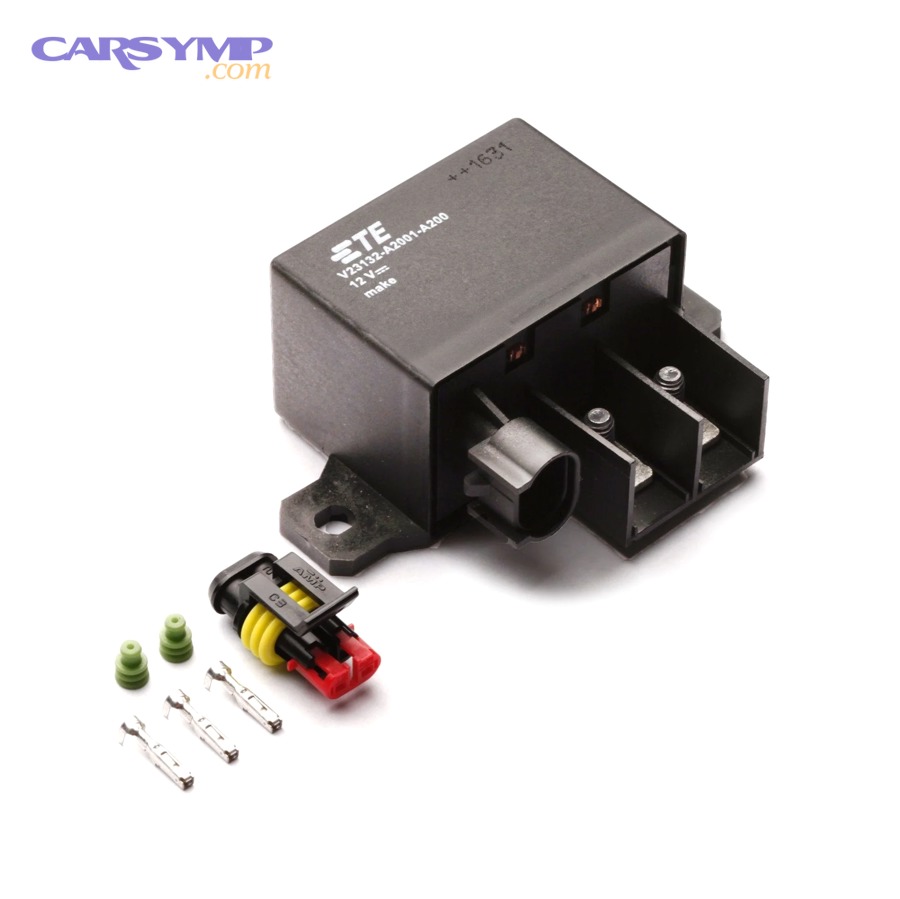
Environmental factors accelerate failure rates through multiple mechanisms—high ambient temperatures increase contact oxidation rates and soften spring temper, reducing contact force and interrupting capacity. Vibration causes fretting corrosion at contact interfaces and accelerates mechanical wear of pivot points and springs. Humidity enables corrosion of contact surfaces and can cause coil insulation breakdown, while dust and contamination particles lodge between contacts, increasing resistance or preventing complete closure. Sealed relays with hermetic or dust-tight enclosures extend life in contaminated environments, while properly applied contacts and adequate derating for temperature and load characteristics minimize failure rates in harsh conditions.
Preventive maintenance practices reduce unplanned failures by identifying relays nearing end-of-life before catastrophic failure occurs. Infrared thermal scanning detects overheating contacts caused by erosion or insufficient contact force, allowing replacement during scheduled maintenance rather than emergency repairs. Vibration monitoring identifies mechanical degradation in large contactors, while contact resistance measurements during equipment outages quantify erosion progression and predict remaining life. Cycling interval tracking for critical relays enables time-based replacement before expected wear-out, particularly for high-cycle-count applications where failure consequences justify preventive replacement costs.
What Causes Relay Contact Failure?
Relay contact failure occurs primarily through electrical erosion from arcing, contact welding from excessive current or inrush, surface contamination from oxidation or external pollutants, and mechanical wear of spring tension or pivot points. Electrical erosion represents the most common failure mode in switching applications—each time contacts interrupt current flow, an arc forms between separating surfaces as voltage attempts to maintain current conduction across the growing gap. This arc consists of ionized metal vapor at temperatures exceeding 3000°C, causing material vaporization and transfer from one contact to the other, progressively roughening surfaces and building insulating oxide layers that increase contact resistance.
The severity of arc erosion depends on load characteristics and interrupting conditions. Breaking inductive loads generates voltage spikes following L(di/dt) that can reach hundreds or thousands of volts as magnetic energy stored in inductance releases during turn-off, creating intense arcs that transfer substantial contact material. Suppression techniques including RC snubbers, MOV varistors, and flyback diodes limit voltage spikes and extend contact life significantly—properly designed suppression can increase operational life by factors of 10 to 100 times for inductive loads. Capacitive load switching creates the opposite problem with massive inrush currents that can momentarily reach 50 to 100 times steady-state current as the capacitor charges, generating sufficient magnetic force to repel contacts or weld them together through resistive heating.
Contact welding occurs when current density or mechanical shock generates sufficient heat to melt contact interface spots, causing the contacts to bond metallurgically rather than separate cleanly. Small-area contact (from erosion or contamination) concentrates current into reduced cross-sections where heating intensifies, making welding more probable as contacts age. Inrush currents from cold-filament lamps, motor starting, and capacitor charging create brief but intense heating pulses that risk welding, particularly if contacts close before fully seating or bounce apart repeatedly during closure transients. Once welded, contacts may remain stuck closed even after coil de-energization, causing loss of control and potentially dangerous conditions if the load should have de-energized for safety reasons.
Contamination failures manifest through increased contact resistance or intermittent connections that cause erratic operation, voltage drops, and heating. Atmospheric oxidation forms metal oxide films on silver and silver-alloy contacts—silver oxide and silver sulfide tarnish layers increase contact resistance from milliohms to ohms or kilohms, generating heating that accelerates oxidation in a positive feedback loop leading to failure. Gold-plated contacts resist oxidation but are limited to low-current applications since gold’s softness causes rapid wear under arcing conditions. Organic contamination from manufacturing residues, dust, or volatile compounds can polymerize on contacts due to arc heating, creating insulating films that prevent current conduction even though contacts physically close. Connector diagnosis techniques applying moderate overcurrent pulses sometimes clear oxide or organic films through controlled arcing, though this approach shortens contact life and works only for minor contamination.
Mechanical degradation occurs gradually as springs lose temper from thermal cycling, reducing contact force below levels required for reliable low-resistance connections. Pivot points and bearing surfaces wear through repeated motion, creating slop that affects contact alignment and bounce characteristics. Armature sticking from corrosion or lubrication degradation prevents proper operation, while worn contact surfaces develop pits and craters that reduce actual contact area and increase resistance. These mechanical failures often present as intermittent operation where the relay works sporadically depending on mounting orientation, vibration, or random mechanical alignment variations.
How Do You Test if a Relay is Working Properly?
Testing relay functionality requires measuring coil resistance with an ohmmeter to verify winding continuity, applying rated coil voltage while monitoring contact state changes with a continuity tester, and checking contact resistance when closed to identify excessive erosion or contamination. This systematic approach isolates failures to specific relay elements—coil, mechanical operation, or contacts—enabling accurate diagnosis and avoiding unnecessary relay replacements when external circuit problems cause symptoms that mimic relay failure. Proper testing procedures account for relay type variations including latching versus momentary operation, AC versus DC coil voltage, and contact configuration differences that affect measurement interpretation.
Coil resistance measurement provides the first diagnostic step, verifying that the coil winding remains continuous without internal opens or shorts. With power disconnected from the circuit, remove the relay or disconnect coil wiring and measure resistance between coil terminals using a digital multimeter set to the appropriate resistance range. Compare the measured value against specifications in relay datasheets—typical small relay coils measure 50 to 5000 ohms depending on voltage rating and relay size, with AC coils generally exhibiting higher inductance but similar DC resistance to comparable DC coils. An open circuit (infinite resistance) indicates coil wire breakage from thermal stress or mechanical damage, while very low resistance (below 10 ohms for coils rated over 24V) suggests shorted turns that will cause excessive current draw and overheating.
Functional operation testing verifies that applying rated coil voltage produces proper mechanical motion and contact switching. With the relay bench-mounted or accessible in the circuit (with appropriate safety precautions), apply rated coil voltage to coil terminals while observing or listening for armature motion—most relays produce an audible click as the armature moves. Simultaneously monitor contact continuity using a multimeter set to continuity or low-resistance mode, connecting test leads to contact terminals and observing whether continuity changes as expected when the coil energizes. For SPST NO relays, contacts should show open circuit (no continuity) when de-energized and closed circuit (low resistance) when energized. SPDT relays should show the common terminal alternating between NC and NO contacts as the coil cycles between de-energized and energized states.
Contact resistance measurement quantifies contact condition and predicts remaining life. With the relay energized to close contacts, measure resistance between closed contact terminals—new or healthy contacts typically measure 10 to 50 milliohms, while degraded contacts show 100 milliohms to several ohms depending on erosion severity and contamination. Resistance above 1 ohm indicates significant degradation warranting replacement, as this resistance will cause voltage drops, heating, and progressive failure acceleration. Some digital multimeters lack sufficient resolution for accurate milliohm measurements—specialized low-resistance ohmmeters or four-wire Kelvin measurement techniques provide better accuracy for contact resistance testing, though qualitative comparisons between multiple similar relays using standard multimeters often sufficiently identify outliers requiring replacement.
Advanced testing for intermittent failures requires monitoring relay operation under actual operating conditions including vibration, temperature, and electrical loading. Intermittent contact failures often result from inadequate contact force, mechanical misalignment, or contamination that affects contacts only under specific conditions not present during bench testing. Thermal cycling the relay through heating and cooling cycles while monitoring contact resistance sometimes reveals temperature-dependent failures. Vibration testing while operating identifies mechanical issues including loose mounting, worn pivots, or inadequate spring tension that allow contacts to chatter under vibration. Load testing with actual operating voltage and current stresses contacts similarly to field conditions, potentially revealing marginal contacts that function acceptably under no-load testing but fail when switching real loads with inrush currents and voltage spikes.
What is Contact Bounce and How Does It Affect Circuits?
Contact bounce is the mechanical oscillation of relay contacts during closure that creates multiple brief make-and-break transitions lasting 0.5 to 2 milliseconds before contacts settle into stable connection, potentially causing false triggering, count errors, and noise in sensitive circuits. This phenomenon results from the elasticity of contact materials and mounting structures—when the moving contact strikes the fixed contact during closure, kinetic energy converts to elastic deformation that causes contacts to rebound apart briefly before restoring forces bring them back together. The process repeats with diminishing amplitude as mechanical energy dissipates through internal damping until contacts finally settle into stable contact with pressure determined by spring force and armature position.
The duration and severity of contact bounce vary widely based on relay mechanical design, with factors including contact mass, spring stiffness, armature velocity, and damping mechanisms all affecting bounce characteristics. Small signal relays with lightweight contacts often exhibit 0.2 to 1 millisecond bounce duration, while larger power relays with heavier contacts may bounce for 1 to 5 milliseconds. During the bounce period, contacts alternate between closed and open states perhaps 3 to 10 times, with each transition potentially appearing as a valid switching event to circuits monitoring contact state. Reed relays typically exhibit minimal bounce (under 0.5 milliseconds) due to gas damping and low contact mass, while electromechanical relays with larger moving masses bounce more substantially.
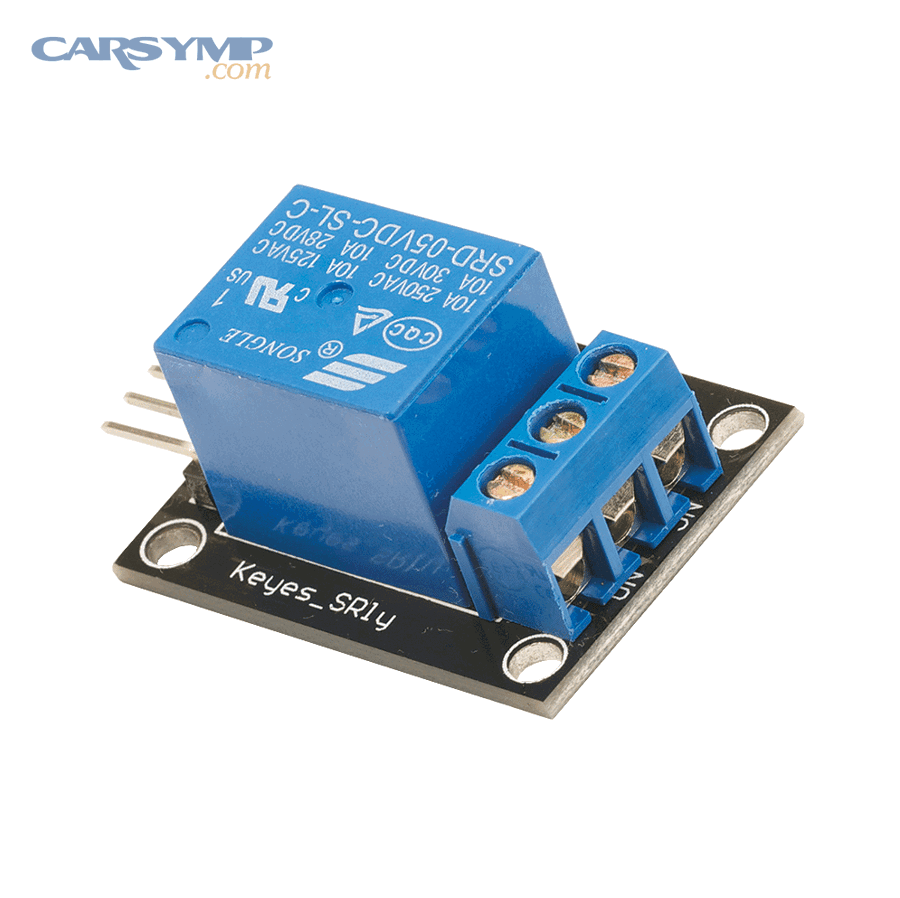
Circuit impacts from contact bounce range from minor nuisances to critical system failures depending on application sensitivity. Digital counters connected to relay contacts may register multiple counts from a single actuation if bounce pulses occur faster than the counter’s minimum input pulse width specification—a relay closing once might register as 5 or 10 counts if each bounce creates a countable pulse. Logic circuits interpreting contact closure as event triggers similarly misinterpret bounce as multiple events, causing repeated execution of functions intended to occur once. Precision timing circuits using contact closure as timing reference experience jitter in timing accuracy as the apparent closure instant varies across the bounce period. Serial communication systems using relays for line switching suffer data corruption if bounce creates glitches during active data transmission.
Debouncing techniques eliminate bounce effects through hardware or software methods that mask transitions during expected bounce periods. Hardware debouncing using RC low-pass filters integrates contact state over time periods longer than bounce duration—a resistor-capacitor network connected across the contacts charges slowly enough that brief opens during bounce don’t discharge the capacitor, maintaining a stable logic level at the circuit input. More sophisticated hardware debouncing employs SR latches that lock in the first closure and ignore subsequent transitions until a deliberate reset occurs. Software debouncing in microprocessor-controlled systems reads contact state repeatedly over several milliseconds, accepting a new state only after consistent readings for a period exceeding bounce duration, effectively filtering bounce in the time domain through successive polling.
Schmitt trigger input buffers provide hysteresis that helps reject bounce-induced noise by requiring different thresholds for low-to-high and high-to-low transitions—this built-in debouncing reduces but doesn’t eliminate bounce sensitivity. Optical isolators with built-in filtering similarly integrate contact state over time to provide bounce rejection, though careful selection of integration time constants must balance between bounce rejection and response speed requirements. In applications where contact bounce absolutely cannot be tolerated, designers may choose solid-state switching that eliminates mechanical bounce entirely, or may use relay contacts only for power switching while using separate clean logic signals for timing and counting functions that require bounce-free transitions.
What are Arc Suppression Techniques for Relay Contacts?
Arc suppression techniques limit voltage spikes and energy dissipation during contact opening by shunting inductive stored energy through alternative paths, reducing contact erosion and electromagnetic interference while extending relay operational life. The fundamental challenge in arc suppression stems from Faraday’s law of induction: voltage across an inductance equals L(di/dt), meaning that rapid current interruption in inductive loads generates voltage spikes proportional to inductance and current rate-of-change. Without suppression, these voltage spikes easily reach hundreds or thousands of volts even from moderate inductances like motor windings or relay coils, creating intense arcs that erode contacts and radiate electromagnetic interference affecting nearby electronics.
RC snubber networks represent the most common arc suppression technique for AC and DC applications, connecting resistor-capacitor series combinations across relay contacts or load terminals. The capacitor initially appears as a short circuit when voltage begins rising during contact opening, limiting voltage rise rate (dv/dt) and providing an alternative current path that reduces arc severity. The series resistor limits capacitor charging current and damps oscillations that would otherwise occur in the LC circuit formed by the inductance and snubber capacitor. Typical snubber values range from 0.1 to 1 microfarad capacitance with 50 to 500 ohm resistance depending on load characteristics, with optimal values determined experimentally or through analysis of load inductance and operating voltage.
Metal oxide varistors (MOVs) provide voltage-clamping suppression by exhibiting very high resistance at normal operating voltages but rapidly transitioning to low resistance when voltage exceeds the varistor’s clamping threshold. This voltage-dependent resistance shunts energy from voltage spikes into the varistor where it dissipates as heat, protecting both contacts and connected equipment from transient overvoltages. MOV selection requires choosing clamping voltage above normal operating peaks but below levels that would damage connected equipment, typically 1.5 to 2 times nominal circuit voltage. The energy-absorbing capacity of MOVs must exceed expected transient energy to prevent varistor failure through overheating or catastrophic breakdown.
Flyback diodes (also called freewheeling or snubber diodes) serve as simple and effective suppression for DC inductive loads, connecting in reverse polarity across the load so they don’t conduct during normal operation. When relay contacts open, interrupting current through the inductance, the collapsing magnetic field generates a voltage spike with polarity opposite to the supply voltage. This reverse polarity spike forward-biases the flyback diode, allowing inductive current to recirculate through the diode rather than arcing across opening contacts. The diode conducts current as the magnetic field collapses, dissipating stored magnetic energy over several milliseconds as resistive losses in the coil and diode. Fast-recovery or Schottky diodes minimize switching losses and improve suppression effectiveness compared to standard rectifier diodes.
Bidirectional suppression for AC circuits requires back-to-back diodes, RC snubbers, or MOVs since current alternates direction each half-cycle. Bidirectional transient voltage suppressors (TVS diodes) combine back-to-back zener diode action in a single package, clamping voltage spikes in both polarities while conducting minimal leakage current during normal operation. These devices respond extremely rapidly (nanoseconds) to voltage transients, providing excellent protection for sensitive electronics near relay-switched circuits. The selection process parallels MOV selection with clamping voltage, energy capacity, and peak current ratings determining component suitability.
Contact material selection represents another suppression approach—using materials specifically engineered to withstand arcing and resist erosion. Tungsten and tungsten-copper contacts excel at high-current DC interruption due to extreme melting temperature and erosion resistance, though their high contact resistance makes them unsuitable for low-level signals. Silver-tungsten and silver-cadmium-oxide contacts offer compromise characteristics balancing reasonable conductivity with good arc resistance for general industrial applications. The proper contact material extends life significantly compared to pure silver contacts in harsh switching environments, though material cost and contact resistance trade-offs require careful selection based on application priorities.
How Can Relays Fail and What Are the Warning Signs?
Relays can fail through coil burnout from overvoltage or overheating, contact erosion from electrical arcing, mechanical jamming from contamination or component breakage, and insulation breakdown from moisture or voltage stress, with warning signs including intermittent operation, audible buzzing, excessive heat, burning odors, and unexpected circuit behavior. Understanding failure modes and their precursors enables proactive maintenance that prevents system downtime, safety hazards, and secondary damage to connected equipment. The progression from healthy operation to complete failure often includes detectable intermediate stages where performance degrades gradually—technicians who recognize these warning signs can schedule replacement during planned maintenance windows rather than responding to emergency failures during critical operations.
Early detection of impending relay failure requires systematic monitoring combining visual inspection, thermal measurement, electrical testing, and operational observation. Visual inspection reveals physical damage including cracked housings, discolored coil bobbins indicating overheating, burned or pitted contact surfaces visible through transparent covers, and corrosion on terminals suggesting moisture ingress. Thermal imaging during operation identifies hot spots caused by high contact resistance, coil overheating from overvoltage, or inadequate ventilation around enclosed relays. Electrical measurements track performance trends—coil resistance increasing over time indicates turn-to-turn insulation breakdown, while contact resistance trending upward signals progressive erosion or contamination.
Operational anomalies provide behavioral clues to developing failures. Intermittent operation where equipment functions sporadically suggests marginal contact force, vibration sensitivity, or thermal effects causing contacts to open under load. Chatter during energization—rapid clicking sounds as the relay repeatedly attempts to close—indicates insufficient coil voltage, excessive mechanical friction, or shorted coil turns reducing magnetic force below levels needed to hold the armature against spring tension. Failure to release when control voltage removes points to contacts welded closed, mechanical binding, or residual magnetism in the core preventing armature return. Delayed operation or sluggish response compared to initial installation suggests increased friction, weakened springs, or coil degradation reducing available magnetic force.
The failure rate pattern for relays typically follows a bathtub curve with three distinct phases: infant mortality from manufacturing defects occurring within the first hundreds or thousands of cycles, a long useful life period with low constant failure rate extending through hundreds of thousands of cycles, and wear-out failures as contacts erode and mechanical components degrade. Understanding this pattern helps establish appropriate preventive maintenance intervals—new installations warrant closer monitoring during the infant mortality period to identify manufacturing defects, while aging installations approaching expected wear-out require increased inspection frequency and proactive replacement planning. Overheating caused by fan failure signs in cooling systems often correlate with relay failures in fan control circuits, as sustained high temperatures accelerate contact oxidation and coil insulation degradation, creating a cascade effect where thermal management system failures precipitate control system failures.
What Causes Coil Failures and How Do You Prevent Them?
Coil failures occur primarily from overvoltage exceeding insulation ratings, sustained overcurrent causing thermal breakdown, mechanical damage from vibration or impact, and moisture ingress degrading insulation resistance, with prevention strategies including proper voltage selection, protection devices, environmental sealing, and operating condition monitoring. The relay coil represents a precision-wound assembly of hundreds or thousands of turns of fine copper wire insulated with thin polymer coatings—this construction makes coils vulnerable to electrical, thermal, and mechanical stresses that gradually degrade insulation and conductors until failure occurs as an open circuit, short circuit, or partial short with reduced magnetic performance.
Overvoltage represents the most rapid path to coil destruction, as insulation breakdown voltage depends on material thickness, temperature, and aging condition. Applying voltage exceeding the coil’s continuous rating by 20% or more risks insulation puncture where electric field strength exceeds dielectric withstand capability, creating carbonized paths that conduct current between adjacent turns. Turn-to-turn shorts initially affect only a small percentage of coil turns, reducing inductance and magnetic field strength while increasing current draw—the relay may still operate but with reduced pull-in force and faster thermal degradation. Progressive turn shorting accelerates as localized heating from increased current density further weakens insulation, ultimately resulting in complete coil failure or thermal runaway where excessive current causes rapid overheating and catastrophic failure.
Protection against overvoltage requires selecting relay coil voltage ratings matching or exceeding worst-case supply voltage including transients and regulation tolerance. Power supplies with ±10% regulation feeding 24V DC relays should use relays rated for at least 27V continuous operation to maintain margin under all operating conditions. Transient voltage suppressors (TVS devices) or MOV varistors connected across relay coils clamp voltage spikes from power supply transients, lightning-induced surges, or switching events elsewhere in the electrical system. In automotive applications where battery voltage varies from 9V during cold cranking to 16V during high-speed charging, relay coil selections must accommodate this wide voltage range or incorporate series dropping resistors that regulate coil voltage across the operating range.
Thermal failures develop when sustained operating temperatures exceed coil insulation ratings, causing polymer degradation that reduces dielectric strength and mechanical integrity. Most relay coils use polyurethane or polyesterimide wire insulation rated for 130°C to 180°C continuous operation, with higher temperatures accelerating aging through oxidation and polymer chain scission. Ambient temperature, mounting orientation, and ventilation all affect coil temperature—enclosed relays mounted in panels without forced airflow may experience 30°C to 50°C temperature rise above ambient purely from coil self-heating, while relays located near heat-generating equipment face additional thermal stress. The combination of high ambient temperature (40°C industrial environment) plus self-heating (40°C rise) brings coil temperature to 80°C, consuming half the available thermal margin to the 130°C insulation rating and dramatically accelerating aging compared to operation at 25°C room temperature.
Prevention of thermal failures requires thermal management including adequate ventilation, heat sinking for high-duty-cycle applications, and derating current or duty cycle in high-temperature environments. Manufacturers provide temperature derating curves showing how continuous duty rating reduces as ambient temperature increases—a relay rated for continuous operation at 25°C might require 50% duty cycle derating at 60°C ambient to achieve equivalent lifespan. Thermal switches or thermistors mounted near high-value relays enable monitoring of actual operating temperatures, triggering alarms or load shedding if temperatures approach critical thresholds. In extreme environments, relays with Class H (180°C) or Class C (220°C) insulation systems provide additional margin, though at premium cost compared to standard Class B (130°C) designs.
Mechanical damage from vibration, shock, or physical impact can fracture coil wire at stress concentration points where it transitions between bobbin layers or connects to terminals. Aviation, automotive, and mobile equipment applications subject relays to sustained vibration and intermittent shock loads that fatigue copper conductors and loosen mechanical connections over thousands of stress cycles. Vibration-resistant relays incorporate strain relief features including potting compounds that immobilize windings, flexible wire routing that accommodates motion without conductor stress, and robust terminal connections that resist loosening under vibration. Proper relay mounting using shock-absorbing standoffs, orientation selection that minimizes stress on coil connections, and avoiding installation near high-vibration sources all reduce mechanical damage risk.
Moisture ingress degrades coil insulation resistance by providing conductive paths along insulation surfaces and through porous regions in polymeric materials. High humidity environments enable condensation on coil surfaces, creating current leakage paths that waste coil power and accelerate electrochemical corrosion of copper conductors. Sealed and hermetically enclosed relays prevent moisture exposure through gasketed covers or welded metal enclosures, maintaining internal humidity at levels established during manufacture. Conformal coatings applied to coil assemblies provide moisture barriers for open-frame relays used in humid environments, though coating damage from thermal cycling or mechanical stress can create entry points for moisture accumulation. Desiccant breathers installed in larger relay enclosures maintain low internal humidity even as temperature cycling induces breathing that would otherwise pump moist air into the enclosure.
What Are the Most Common Contact Problems in High-Cycle Applications?
High-cycle relay applications experience accelerated contact wear through electrical erosion from repeated arcing, contact heating from sustained current flow, and mechanical fatigue from millions of operating cycles, with failure symptoms including increased contact resistance, intermittent connections, and eventually complete loss of continuity or contact welding. Applications requiring tens of thousands to millions of switching cycles—industrial automation sequences, building automation systems, and test equipment—push relays toward their electrical and mechanical life limits, necessitating careful relay selection, load matching, and potentially alternative technologies when cycle requirements exceed economical relay capabilities.
Electrical erosion progresses cumulatively as each switching event transfers microscopic amounts of material between contacts through arcing and thermal vaporization. A relay switching an inductive load might erode 0.1 to 1.0 micrograms of contact material per operation—over 100,000 operations, this amounts to 10 to 100 milligrams of material loss, significantly reshaping contact surfaces originally weighing perhaps 200 to 500 milligrams. The transferred material forms crater and pip structures where one contact develops depression (crater) and the mating contact accumulates buildup (pip), progressively reducing contact area until only small high spots make electrical connection. This geometry increases current density in the remaining contact area, accelerating heating and erosion in a positive feedback loop that leads to catastrophic failure within a narrow operation window after gradual degradation.
Contact resistance monitoring provides early warning of approaching failure in critical applications—periodically measuring closed-contact resistance using precision milliohm meters or four-wire Kelvin measurement techniques tracks degradation trends. New relay contacts typically measure 10 to 30 milliohms, increasing to 50 to 100 milliohms at mid-life as erosion reduces contact area, and reaching 200+ milliohms as failure approaches. Establishing baseline measurements at installation and trending resistance over time enables predictive replacement before contacts reach resistance levels causing equipment malfunction. The resistance trend also validates load current derating effectiveness—properly derated relays show gradual linear resistance increase, while inadequately rated relays exhibit exponential resistance growth indicating accelerated erosion.
Duty cycle management extends contact life by reducing average power dissipation and limiting cumulative arc energy exposure. Continuous-duty applications maintain contacts closed for extended periods, accumulating thermal stress from I²R heating that oxidizes contact surfaces and softens spring materials. Intermittent operation with low duty cycles allows contacts to cool between switching events, dissipating heat through conduction to the relay body and radiation to the environment. Manufacturers specify electrical life ratings at various duty cycles—a relay rated for 100,000 operations at 100% duty cycle might achieve 500,000 operations at 20% duty cycle or 1,000,000 operations at 5% duty cycle due to reduced thermal stress and slower erosion accumulation. Dual-fan systems troubleshooting often reveals relay cycling patterns where continuous single-fan operation causes premature relay failure, while proper alternation between fans extends component life through reduced individual fan runtime and relay cycle count.
Load current derating represents the most effective strategy for extending high-cycle relay life, with conservative specifications recommending operation at 30% to 50% of rated contact current in applications requiring over 100,000 operations. A relay rated for 10 amperes at 100,000 mechanical life might achieve 1,000,000 operations when operated at 3 to 5 amperes, as reduced current lowers arc energy during each switching event. The derating factor required depends on load power factor and characteristics—resistive loads allow less derating (60% to 80% of rating), while inductive loads demand more aggressive derating (20% to 40% of rating) to compensate for increased arc severity. Contact material selection also influences appropriate derating, with silver-cadmium-oxide contacts tolerating higher derating factors than pure silver for equivalent lifetime in inductive applications.
Alternative technologies become cost-effective when cycle requirements exceed several hundred thousand operations or when rapid cycling rates exceed EMR switching speed capabilities. Solid-state relays eliminate mechanical wear entirely, achieving billions of switching cycles limited only by semiconductor degradation and thermal stress. However, SSR voltage drop and leakage current trade-offs require careful evaluation to ensure compatibility with application requirements. Hybrid relays combining SSR zero-current switching with mechanical contact current carrying provide extended mechanical life while maintaining low on-state resistance—initial installations costs increase significantly, but total lifecycle costs may decrease through eliminated replacement labor and reduced system downtime. Mercury-wetted relays historically offered exceptional high-cycle performance through self-healing contact surfaces maintained by liquid mercury wetting, though environmental regulations have severely restricted their availability and use in modern equipment.
How Does Temperature Affect Relay Performance and Reliability?
Temperature affects relay performance by altering coil resistance and magnetic force, contact resistance and material properties, spring characteristics and mechanical clearances, and insulation resistance, with extreme temperatures accelerating aging and reducing operational lifetime through multiple degradation mechanisms. Operating temperature represents one of the most critical environmental parameters in relay application, as thermal energy directly influences the physical and chemical processes determining relay behavior and longevity. Manufacturers specify relay performance across defined temperature ranges—typically -40°C to +85°C for commercial grades and -55°C to +125°C for military and automotive grades—with performance parameters guaranteed only within these ranges and reliability predictions based on operation at specified temperatures.
Coil resistance increases with temperature following copper’s positive temperature coefficient of approximately 0.4% per degree Celsius, causing coil current to decrease and magnetic force to reduce as temperature rises. A relay coil drawing 50 milliamperes at 25°C might drop to 47 milliamperesat 50°C and 45 milliamperes at 75°C due to resistance increase, reducing magnetic force by 10% to 15%. This force reduction decreases pull-in margin—the safety factor between available magnetic force and the force required to overcome spring tension and close contacts. Relays operating near their minimum pull-in voltage at room temperature may fail to energize reliably at elevated temperatures where coil current drops below critical thresholds. Conversely, operation at high voltage on the specified range provides margin that maintains reliable energization across the full temperature range despite current reduction at high temperatures.
Contact resistance exhibits complex temperature dependence combining beneficial and detrimental effects. The bulk resistivity of contact materials increases with temperature similar to the coil effect, raising contact resistance and power dissipation. However, thermal expansion at contact interfaces can increase contact force and contact area in some relay designs, offsetting resistivity increase and maintaining stable contact resistance. Contact oxidation rates accelerate exponentially with temperature following Arrhenius kinetics—operation at 100°C might produce 10 times faster oxidation than operation at 50°C, causing rapid degradation in contact resistance and eventual failure in applications with marginal contact wiping or inadequate contact force. Silver contacts are particularly susceptible to sulfide tarnish formation at elevated temperatures when sulfur-containing atmospheric contaminants are present, creating insulating films that increase contact resistance from milliohms to kilohms over weeks or months of high-temperature exposure.
Spring materials lose stiffness and strength at elevated temperatures as metal tempering degrades and elastic modulus decreases. The return springs that provide contact pressure and armature restoring force weaken progressively when operated above their design temperature range, reducing contact force and allowing contacts to open under vibration or electromagnetic repulsion forces during high-inrush switching events. Permanent deformation occurs in severely overheated springs, preventing proper relay operation even after temperatures return to normal ranges. Beryllium copper, phosphor bronze, and stainless steel spring alloys each exhibit different temperature-dependent characteristics, with material selection during relay design determining maximum safe operating temperature for mechanical reliability.
Thermal cycling between temperature extremes introduces additional failure mechanisms beyond steady-state high-temperature operation. Differential thermal expansion between materials with mismatched coefficients creates mechanical stress at joints and interfaces—copper coil wire expanding differently than plastic bobbins, contact materials expanding at different rates than steel frames, and solder joints experiencing stress from mismatched expansion of component leads and circuit boards. These stresses accumulate over repeated thermal cycles, causing solder cracks, wire bond failures, and mechanical misalignment that degrades relay performance or causes complete failure. Automotive and outdoor applications subject relays to daily thermal cycles from cold night temperatures to hot daytime operation, with seasonal variations adding larger-amplitude cycles that accelerate fatigue compared to temperature-stable indoor installations.
Life prediction models incorporate temperature effects using Arrhenius equations where relay lifetime decreases exponentially with increasing temperature. A common rule of thumb suggests relay life halves for each 10°C temperature increase above nominal rating, though actual factors depend on specific failure mechanisms and relay construction. A relay with 100,000-operation life expectancy at 25°C might achieve only 50,000 operations at 35°C, 25,000 operations at 45°C, and 12,500 operations at 55°C if thermal degradation dominates. Conversely, operation below nominal temperature generally extends life, with relays operating at 0°C potentially achieving 2x to 4x the lifetime of identical relays at 25°C due to reduced oxidation rates and slower chemical degradation processes.
Thermal management strategies mitigate temperature effects through relay selection, heat sinking, forced air cooling, and operating current derating. Selecting relays with high-temperature insulation systems (Class H 180°C or Class C 220°C) provides additional thermal margin in hot environments, though at cost premiums over standard Class B (130°C) designs. Heat sinks attached to relay mounting surfaces conduct heat away from coils and contacts, reducing internal temperature rise for given power dissipation levels. Forced air cooling from fans or ventilation systems maintains lower ambient temperatures around relay panels, with each 10°C ambient reduction potentially doubling relay life expectancy. Current derating reduces internal heat generation—operating relays at 50% of rated current might decrease internal temperature rise from 40°C to 10°C, substantially extending life in thermally challenging applications.
What Advanced Relay Technologies Are Emerging?
Advanced relay technologies emerging in modern applications include MEMS (Micro-Electromechanical Systems) relays using microscopic silicon structures for switching, telecom-grade sealed relays with billion-cycle lifespans, high-frequency RF relays for multi-gigahertz signal routing, and intelligent relays with integrated diagnostics, self-test capabilities, and communication interfaces for Industry 4.0 integration. These specialized technologies address application requirements that conventional electromechanical and solid-state relays struggle to meet, including ultra-miniaturization for portable electronics, extreme reliability for aerospace and medical devices, high-frequency signal integrity for test equipment, and predictive maintenance capabilities for smart manufacturing systems.
MEMS relay technology fabricates microscopic mechanical switches using semiconductor manufacturing processes, creating contact structures measured in micrometers on silicon substrates with integrated actuation mechanisms. These devices occupy volumes thousands of times smaller than conventional relays while achieving switching times under 100 microseconds and mechanical lifespans potentially exceeding 10 billion cycles due to minimal contact mass and precisely controlled manufacturing. MEMS relays maintain true galvanic isolation like mechanical relays without the semiconductor voltage drop limitations of SSRs, making them attractive for battery-powered devices where power efficiency is critical. However, current capacity remains limited to typically under 1 ampere, restricting MEMS relays to signal switching rather than power control applications.
High-reliability hermetically sealed relays serve aerospace, defense, medical, and industrial applications where failure consequences are catastrophic and maintenance opportunities are limited or nonexistent. These relays employ welded metal housings filled with dry nitrogen or inert gases, precious metal contacts resistant to oxidation, and materials selected for long-term stability under temperature cycling, vibration, and radiation exposure. Military-specification relays meeting MIL-PRF-39016 or MIL-PRF-6106 standards demonstrate failure rates below 1 per million operating hours (0.1% per 1,000 hours) through rigorous screening including thermal cycling, vibration, hermeticity testing, and life testing that eliminates infant mortality failures before fielding. Space-qualified relays incorporate additional radiation hardening to survive cosmic ray and solar radiation exposure in satellite and spacecraft applications where replacement is impossible.
RF signal relays for test equipment, communications systems, and scientific instruments switch high-frequency signals from DC to 40 GHz or higher while maintaining signal integrity through controlled impedance paths, minimal insertion loss, and high isolation between ports. These specialized relays use coaxial or microstrip transmission line construction to preserve 50-ohm characteristic impedance through the contact structure, with carefully designed contact geometry minimizing reflections and impedance discontinuities. Gold or gold-alloy plating on contacts maintains stable low-resistance connections free from oxide formation that would degrade high-frequency performance, while hermetic sealing prevents contamination that affects signal quality. The limited current capacity of precious metal contacts restricts RF relays to signal switching rather than power applications, with hot-switching ratings often limited to milliwatts to prevent contact degradation.
Smart relays with integrated electronics provide self-monitoring, diagnostics, and communication capabilities that enable predictive maintenance and Industry 4.0 integration. These devices incorporate microprocessors that count switching cycles, monitor operating temperature, measure contact resistance trends, and detect abnormal operating conditions indicating impending failure. Communication interfaces using industrial protocols like IO-Link, Modbus, or MQTT report relay status to central maintenance systems, enabling condition-based maintenance that replaces relays based on actual wear rather than fixed time intervals. Diagnostic capabilities include coil current monitoring detecting shorted turns, contact resistance measurement identifying erosion, and mechanical operation timing analysis revealing spring degradation or friction increase. The integration of intelligence into relay packages increases cost substantially but provides total ownership cost savings through reduced unplanned downtime and optimized maintenance scheduling in applications where failure costs justify premium component pricing.
What Are Best Practices for Relay Installation and Wiring?
Best practices for relay installation include proper mounting orientation to prevent contact misalignment, secure terminal connections to avoid high-resistance joints, adequate wire sizing to handle load currents without voltage drop, correct polarity observation for DC coils, and appropriate fusing or circuit protection to prevent damage from fault conditions. Installation quality directly impacts relay reliability and system performance, as even properly specified relays fail prematurely when installed incorrectly or wired with inadequate connections. Professional installations follow systematic procedures that account for mechanical, electrical, and environmental factors, ensuring that relay assemblies function reliably throughout their expected service lives while remaining accessible for inspection, testing, and replacement during maintenance activities.
Mounting orientation affects relay operation particularly in designs where gravity influences armature motion or contact pressure. Manufacturers specify preferred mounting positions—typically horizontal or vertical orientations—that optimize mechanical forces and ensure contacts close with sufficient pressure for reliable low-resistance connections. Mounting relays upside-down or at severe angles can reduce contact force through gravity effects, increase bounce during closure, or prevent proper release when the coil de-energizes. Panel-mounted relays should use appropriate mounting brackets, DIN rail clips, or socket bases that provide secure mechanical attachment preventing vibration-induced loosening or misalignment. Adequate spacing between adjacent relays ensures ventilation for cooling and provides clearance for manual operation, testing, and replacement without disturbing neighboring components.
Wire routing and connection practices prevent failures from loose terminals, wire fatigue, and electromagnetic interference. Terminal screws should be tightened to manufacturer-specified torque values—typically 0.5 to 1.5 Newton-meters for small relay terminals and 2 to 5 Newton-meters for power relay contactors—using calibrated torque screwdrivers or torque-limiting drivers that prevent both under-tightening (causing high-resistance connections) and over-tightening (damaging terminals or stripping threads). Ferrules crimped onto stranded wire ends prevent strand spreading during terminal tightening and provide defined contact surfaces that maintain connection integrity through thermal cycling. Wire strain relief using cable ties or clamps mounted near relay terminals prevents mechanical stress from transferring to connections where it could cause loosening or wire breakage at termination points.
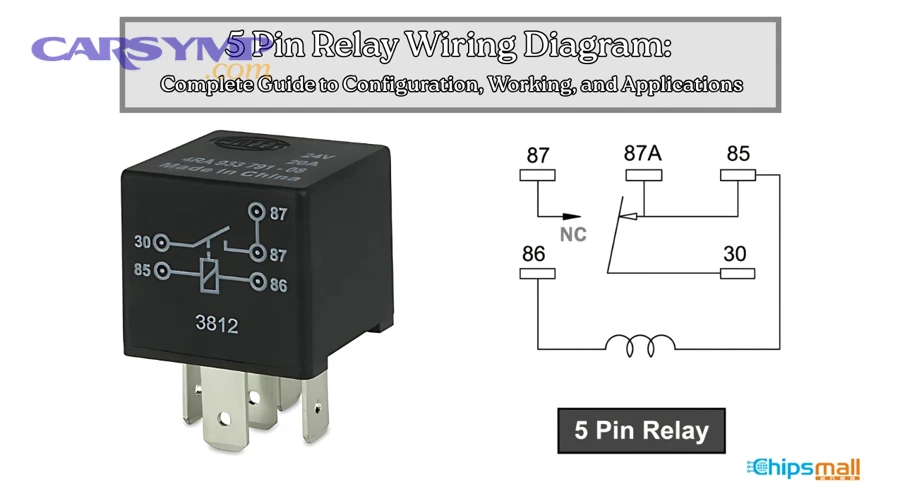
Load and control circuit segregation reduces electromagnetic interference and simplifies troubleshooting by physically separating high-current power wiring from low-level control signals. Control wiring should route separately from load wiring using different cable trays, conduits, or wire bundles, with crossing points arranged at right angles to minimize coupling. Shielded cable for control signals in electrically noisy environments provides immunity to interference from adjacent power conductors, motors, and switching transients, with shields grounded at one end only to prevent ground loop currents. Twisted-pair control wiring reduces susceptibility to magnetic field coupling through balanced cancellation, particularly important for long control wire runs in industrial facilities with heavy electromagnetic pollution from variable frequency drives and welding equipment.
Polarity marking and documentation prevent wiring errors that invert control logic or damage polarity-sensitive components. DC relay coils typically tolerate reverse polarity without damage but fail to energize, causing system malfunction that may not be immediately obvious during installation testing. Clearly marking positive and negative terminals using color coding (red for positive, black for negative) or terminal labels prevents polarity reversal, while diagrammatic wiring documentation showing actual terminal numbers and wire colors enables rapid troubleshooting and correct reconnection during maintenance. Latching relays requiring set and reset pulses need particularly careful documentation identifying which coil terminals provide each function, as miswiring can result in relays operating opposite to intended logic or failing to respond to control commands.
How Do You Size Wire and Protection Devices for Relay Circuits?
Wire sizing for relay circuits must accommodate both control circuit current to the relay coil and load circuit current through relay contacts, with each circuit requiring independent wire gauge selection based on current magnitude, wire length, voltage drop limitations, and thermal capacity within installed environment. Control circuit wiring typically uses small-gauge wire since relay coils draw minimal current—24V DC relay coils consuming 20-50 milliamperes function reliably with 22 to 18 AWG wire over typical control panel distances, while 120V AC coils drawing similar apparent current due to reactive impedance similarly use 18 to 16 AWG wire. The primary concern in control circuits involves voltage drop limiting reliable relay operation—wire resistance causing excessive drop may prevent coil energization especially during starting inrush or when supply voltage sits at the low end of tolerance ranges.
Voltage drop calculations determine minimum acceptable wire gauge by ensuring that voltage at relay coil terminals remains above pickup threshold under worst-case conditions. The formula V_drop = I × R × 2L (where I is current, R is wire resistance per unit length, L is one-way distance, and the factor 2 accounts for supply and return conductors) calculates voltage loss for DC circuits. A 50-milliampere coil supplied through 20 meters of 22 AWG wire (16.5 ohms per 1000 feet) experiences voltage drop of 0.05A × 0.054Ω/m × 40m = 0.11 volts—negligible for 24V systems but potentially problematic for 5V relay coils where 0.11V represents 2% of supply voltage. Conservative practice limits voltage drop to 3-5% of nominal supply voltage in control circuits, ensuring adequate margin for relay pickup under all operating conditions.
Load circuit wiring must safely carry maximum load current without overheating while limiting voltage drop to acceptable levels that prevent load performance degradation. Ampacity tables published in electrical codes including NEC (National Electrical Code) and IEC standards specify current-carrying capacity for various wire gauges under different installation conditions including ambient temperature, bundling with other conductors, and insulation types. A 30-ampere load requires minimum 10 AWG copper wire (40°C ampacity rating) when installed in conduit with multiple other conductors, while the same load might use 12 AWG wire in free air with isolated routing. Temperature derating factors reduce allowable current for elevated ambient temperatures—wire rated for 30 amperes at 30°C ambient might be derated to 24 amperes at 40°C and 21 amperes at 50°C to prevent insulation degradation from excessive heating.
Load circuit voltage drop calculations use similar formulas as control circuits but with more stringent percentage limitations—3% maximum from service panel to load represents typical practice for power circuits, ensuring that motors, heaters, and lighting receive voltage within equipment ratings. A 20-ampere, 240V load located 50 meters from the relay and power source requires wire size calculated as: V_drop = 20A × R × 100m ≤ 7.2V (3% of 240V). Solving for wire resistance yields maximum R = 7.2V / (20A × 100m) = 3.6 milliohms per meter, corresponding to approximately 8 AWG copper wire. Aluminum wire requires larger gauge for equivalent ampacity and voltage drop performance due to higher resistivity, with 6 AWG aluminum roughly equivalent to 8 AWG copper for both thermal capacity and conductivity.
Overcurrent protection devices including fuses and circuit breakers protect wire and relay contacts from damage during overload and short-circuit conditions, with protection device sizing ensuring prompt clearing of faults before equipment damage occurs. Control circuit protection typically uses fractional-ampere to 2-ampere fuses or circuit breakers sized 150-200% of nominal coil current, providing margin for inrush transients while protecting against coil short circuits. A relay coil drawing 50 milliamperes nominal might use a 125-milliampere slow-blow fuse that tolerates inrush surges but clears sustained overcurrent from turn-to-turn shorts. Load circuit protection must coordinate with relay contact ratings and load characteristics—a relay rated for 30 amperes continuous with 100-ampere inrush tolerance might use a 30-ampere circuit breaker with D-curve trip characteristics that tolerates motor starting inrush while protecting against sustained overloads and bolted short circuits.
Coordination between protection devices at different system levels prevents nuisance trips where fault conditions trip upstream protective devices unnecessarily rather than selectively clearing only the faulted branch. Time-current curves published by manufacturers show trip characteristics over ranges from milliseconds during high-magnitude faults to minutes during mild overloads, enabling engineers to select device combinations that provide selective coordination. A 100-ampere main breaker feeding multiple 20-ampere branch circuits should exhibit longer trip times at any given current magnitude than the branch breakers, ensuring that a fault on one branch trips only that branch breaker rather than the main breaker that would de-energize the entire panel. And connector diagnosis during commissioning verifies that protection devices actually operate as designed, testing trip currents and response times to confirm compliance with coordination studies and equipment protection requirements.
What Are Common Wiring Mistakes That Cause Relay Failures?
Common wiring mistakes causing relay failures include undersized wire creating excessive voltage drop, loose terminal connections generating heat and arcing, incorrect coil polarity preventing operation, lack of arc suppression on inductive loads causing contact erosion, and inadequate load circuit protection allowing fault currents to weld contacts. These preventable errors account for a significant percentage of field relay failures, with studies suggesting that 30-50% of premature relay failures trace to installation defects rather than component quality or application overstress. Recognition of typical wiring mistakes enables preventive quality control during installation and guides troubleshooting investigations when mysterious relay failures occur despite apparently correct specifications and application conditions.
Undersized control wiring represents a frequent error particularly in retrofit installations where existing wire repurposed for new relay controls proves inadequate for reliable operation. Small-gauge wire exhibiting acceptable performance in low-current applications fails when applied to relay coils, with resistance causing voltage drop sufficient to prevent reliable pickup or causing marginal operation where relays energize intermittently depending on supply voltage variations. The symptoms manifest as failure to energize, chattering during attempted pickup, or operation in cold conditions followed by failure as wiring warms and resistance increases. Measuring voltage at relay coil terminals under operating conditions reveals inadequate voltage, while resistance testing of control wiring confirms excessive conductor resistance for the wire length and current involved.
Loose or improperly terminated connections create high-resistance joints that generate localized heating, oxidation, and progressive degradation leading to complete connection failure. Terminal screws insufficiently tightened allow thermal cycling and vibration to worsen the connection over time as oxide films develop and mechanical pressure decreases. The high resistance at poor connections creates voltage drop that may prevent coil energization or reduce contact closure force below levels needed for reliable load current carrying. Thermal imaging during operation identifies overheated terminals showing elevated temperatures compared to properly connected circuits—temperature rises of 20°C or more above ambient at terminal points indicate problematic connections requiring immediate correction. Torque testing during quality inspections verifies that terminal screws meet minimum tightness specifications, preventing future failures from vibration-induced loosening.
Polarity reversal on DC relay coils typically prevents operation without causing immediate damage, though extended voltage application to reverse-biased coils may eventually damage flyback diodes if present or stress coil insulation from unusual voltage distributions across windings. The symptom presents as complete failure to energize despite correct coil voltage measurement, with troubleshooting revealing that swapping coil connections restores normal operation. Prevention requires clear polarity marking on relay terminals, wire color coding following standards (red for positive, black for negative), and installation verification procedures checking that actual coil connections match schematic documentation before energizing control circuits.
Omitting arc suppression components on inductive loads represents a critical error causing rapid contact erosion and early failure even when relays are otherwise properly specified and installed. Inductive loads including motors, solenoids, transformers, and relay coils themselves generate voltage spikes during turn-off that can reach 5 to 10 times supply voltage, creating intense arcs that erode contacts at rates 10 to 100 times faster than resistive load switching. The failure progression appears as increasing contact resistance over hundreds to thousands of operations rather than the tens of thousands to hundreds of thousands expected from properly protected circuits. Installing appropriate suppression—RC snubbers, MOV varistors, or flyback diodes depending on load and circuit type—extends relay life to design expectations while reducing electromagnetic interference that may affect nearby electronics.
Inadequate load circuit protection allows fault currents from short circuits or severe overloads to flow through relay contacts, often welding them closed or vaporizing contact material in single events rather than gradual degradation over time. Relay contacts rated for 30 amperes continuous might tolerate brief surges to 100-150 amperes during motor starting, but cannot interrupt bolted short-circuit currents reaching thousands of amperes without catastrophic damage. Proper protection requires circuit breakers or fuses rated to interrupt available fault current at the installation location, with trip characteristics coordinated to clear faults before relay contacts suffer damage. The protection device current rating must match or slightly exceed relay contact rating to protect contacts without nuisance tripping during normal load inrush, while interrupting capacity must meet or exceed the maximum prospective short-circuit current calculated from supply transformer characteristics and circuit impedances.
How Do Environmental Factors Influence Relay Installation Requirements?
Environmental factors including temperature extremes, humidity and moisture exposure, vibration and mechanical shock, dust and contamination, and corrosive atmospheres require specialized relay selection and installation practices to ensure reliable operation and normal service life in challenging conditions. Standard industrial-grade relays designed for controlled indoor environments fail rapidly when exposed to harsh conditions without appropriate protection, while properly specified and installed relays for severe environments operate reliably for years despite stresses that would destroy unprotected components within weeks or months. Environmental assessment during design phases identifies exposure conditions that drive relay specification, enclosure selection, and installation detail decisions that ensure long-term reliability.
Temperature extremes at both cold and hot limits require relay derating and selection of appropriate temperature-range variants. Cold environments below 0°C increase material brittleness, thicken lubricants increasing mechanical friction, and may cause moisture condensation during warm-up creating corrosion and insulation tracking risks. Relays specified for extended temperature ranges (-40°C to +85°C or beyond) incorporate materials and lubricants maintaining flexibility and mechanical operation across temperature extremes, while conformal coatings on coils and contacts prevent condensation-induced corrosion. Hot environments accelerate all temperature-dependent degradation mechanisms including coil insulation aging, contact oxidation, and spring relaxation, requiring temperature derating of current ratings and selection of high-temperature insulation classes (Class H or Class C) for coils that maintain insulation integrity despite elevated operating temperatures.
Humidity and moisture exposure cause contact corrosion, coil insulation tracking, and mechanical component degradation through electrochemical processes and condensation-induced shorting. Outdoor installations, marine environments, and industrial processes involving steam or water spray subject relays to humidity levels reaching 100% relative humidity with periodic condensation forming on all exposed surfaces. Hermetically sealed relays with welded metal housings or gasketed covers prevent internal moisture accumulation, while conformal coatings on printed circuit boards and relay contact assemblies provide secondary protection against moisture ingress in non-hermetic designs. Desiccant breathers installed in larger enclosures housing multiple relays maintain low internal humidity despite temperature cycling that would otherwise pump moist atmospheric air into enclosures, and drainage provisions prevent water accumulation in enclosure bottoms where it could submerge relay bases.
Vibration and mechanical shock in mobile equipment, industrial machinery, and transportation applications require vibration-resistant relay designs and shock-isolating mounting methods. Continuous vibration at specific frequencies may excite mechanical resonances in relay armatures or springs, causing contact chatter or false triggering as vibration forces exceed spring restoring forces periodically. Automotive relays designed for under-hood mounting withstand vibration amplitudes of 10-20 G at frequencies from 10 to 2000 Hz through robust construction using heavy contact springs, mechanical damping in armature pivots, and reinforced coil bobbin and terminal assemblies. Shock-isolating relay socket mounts using elastomeric cushions or spring suspensions reduce transmitted vibration to mounted relays, extending service life in extreme vibration environments beyond capabilities of rigidly mounted installations.
Dust and contamination from industrial processes including machining, grinding, chemical processing, and material handling introduce particles that lodge between contacts, increasing resistance or preventing complete closure. Standard open-frame relays allow atmospheric contamination access to contacts and mechanical assemblies where particles cause increased friction, contact contamination, and mechanical jamming. Dust-tight and sealed relay enclosures with elastomeric gaskets or welded seams prevent contamination ingress, maintaining clean internal environments despite severe external exposure. The NEMA (National Electrical Manufacturers Association) and IP (Ingress Protection) rating systems quantify enclosure protection levels, with IP65 indicating complete dust protection and protection against water jets, while IP67 adds protection against temporary immersion—selection of appropriate protection level ensures relay survival in application-specific contamination environments.
Corrosive atmospheres containing acidic gases, chlorine, hydrogen sulfide, or industrial chemicals attack relay contact surfaces, coil conductors, and mechanical components through chemical reactions that destroy materials or alter electrical properties. Offshore oil platforms, chemical plants, wastewater treatment facilities, and marine installations expose equipment to corrosive atmospheres requiring specialized relay designs using corrosion-resistant materials. Hermetically sealed relays with inert internal atmospheres isolate sensitive components from corrosive environments, while external metallization using nickel plating, epoxy coatings, or stainless steel housings protects mechanical structures and terminals from chemical attack. Material compatibility testing verifies that selected relay materials tolerate specific chemical exposures without degradation, preventing expensive field failures from unforeseen chemical interactions with relay components.
What Is the Future of Relay Technology?
The future of relay technology involves continued miniaturization through MEMS fabrication, integration of intelligence and communication for predictive maintenance, hybrid designs combining mechanical and solid-state advantages, environmentally sustainable materials replacing hazardous substances, and specialized variants addressing emerging applications in renewable energy, electric vehicles, and smart grid infrastructure. Despite predictions of obsolescence as solid-state switching advances, electromechanical relays continue evolving to address changing application requirements while maintaining fundamental advantages including galvanic isolation, zero leakage current, and fail-safe mechanical operation that ensure their relevance in future electrical and electronic systems.
Miniaturization through MEMS and advanced manufacturing enables relay functionality in package sizes orders of magnitude smaller than conventional designs, supporting portable electronics, wearable devices, and space-constrained applications where traditional relays cannot physically fit. MEMS relay development continues advancing toward current capacities rivaling small conventional relays while maintaining microscopic dimensions, with research prototypes demonstrating multi-ampere switching in packages measuring millimeters in each dimension. The semiconductor industry’s ongoing investment in MEMS manufacturing infrastructure drives cost reductions making MEMS relays economically competitive for volume applications, while performance improvements address current limitations in contact resistance stability and lifetime consistency that have hindered commercial adoption.
Intelligent relay integration incorporating embedded processors, sensors, and communication interfaces transforms simple switching devices into smart components that monitor their own condition, predict maintenance requirements, and optimize performance autonomously. Future relay designs may include contact erosion sensors measuring material loss in real-time, temperature monitoring enabling thermal management, cycle counters tracking operational history, and self-test circuits verifying functionality during equipment downtime. Communication via industrial Ethernet, wireless protocols, or power-line signaling connects relays to maintenance management systems enabling condition-based replacement strategies that optimize total ownership cost by replacing components based on actual wear rather than conservative fixed intervals. This intelligence enables relay participation in Industry 4.0 manufacturing strategies where all components contribute data for optimization, efficiency improvement, and predictive analytics.
Hybrid relay architectures combining mechanical contacts with solid-state switching elements represent a promising evolution addressing limitations of pure mechanical or pure solid-state approaches. Advanced hybrid designs may use solid-state switching for frequent cycling while mechanical contacts provide low-resistance paths during continuous conduction, or employ mechanical contacts for current carrying with solid-state pre-switching that eliminates arcing damage. Power electronics integration enables sophisticated control strategies including soft-start current limiting, voltage phase control, and active arc suppression that extend mechanical contact life far beyond conventional capabilities. The declining cost of power semiconductors and control electronics makes hybrid approaches economically viable in applications where their combined advantages justify modestly increased component cost.
Environmental sustainability drives development of lead-free solders, RoHS-compliant materials, and recyclable relay designs responding to regulatory requirements and corporate sustainability initiatives. Traditional relay manufacturing used various substances now restricted or banned including mercury in wetted contacts, cadmium in silver-cadmium-oxide contacts, and lead in terminal platings and solders. Alternative materials maintaining equivalent performance while meeting environmental regulations require significant development investment, with manufacturers reformulating contact alloys, coil wire insulations, and housing materials to achieve compliance. Design for recycling initiatives establish relay architectures facilitating material separation at end-of-life, enabling recovery of valuable materials including copper, silver, and rare-earth magnets that would otherwise enter waste streams.
Emerging application domains in renewable energy systems, electric vehicles, smart grids, and energy storage create demand for specialized relay designs addressing unique requirements. Photovoltaic systems require DC relays switching high voltages (up to 1500V) with minimal leakage current to prevent parasitic power loss, capable of interrupting fault currents without generating destructive arcs in DC circuits lacking natural current zeros. Battery management systems in electric vehicles demand relays combining high continuous current capacity (hundreds of amperes) with low contact resistance (microhms) to minimize power loss, plus sophisticated diagnostic capabilities detecting contact degradation before safety-critical failures occur. Smart grid infrastructure requires relays that respond to automated control commands within milliseconds while providing decade-long reliability without maintenance, operating in outdoor environments with extreme temperature ranges and severe electromagnetic interference from adjacent high-voltage transmission equipment. These specialized demands drive relay technology evolution toward higher performance, greater intelligence, and improved reliability addressing the next generation of electrical power and control challenges.
This comprehensive exploration of relay technology has progressed from fundamental electromagnetic principles through practical application considerations, installation best practices, troubleshooting methodologies, and future technological directions, providing readers with both theoretical understanding and practical knowledge needed to specify, install, maintain, and optimize relay-based control systems. The persistence of relay technology across nearly two centuries of electrical engineering history demonstrates the enduring value of simple, robust, mechanically-actuated switching that provides galvanic isolation, fail-safe operation, and visual confirmation impossible with purely electronic alternatives. As electrical systems grow increasingly complex, automated, and interconnected, the humble relay continues serving essential roles bridging control intelligence with power actuation, protecting expensive equipment and human operators through reliable switching and circuit isolation that remains unmatched by alternative technologies in countless applications worldwide.