


OEM usually costs the most, aftermarket often wins on price variety, and reman can deliver near-OEM performance for less—if you verify the rebuilder’s process, warranty, and core policy.
Beyond sticker price, the real comparison is total cost: fitment risk, downtime, warranty friction, and how likely you are to pay twice for the same repair.
To make the decision concrete, this guide breaks down what you’re paying for in each option and how to spot “cheap now, expensive later” traps.
To begin, think of parts as three supply chains—factory-new, third-party new, and factory-spec rebuilt—then follow the money through labor, warranty, and risk.
What do OEM, aftermarket, and remanufactured parts mean for pricing?
OEM parts are built to the vehicle maker’s specs, aftermarket parts are made by non-OEM manufacturers, and reman parts are rebuilt to a like-new standard—each category carries different costs for tooling, QC, and risk.
Next, the fastest way to understand price is to map what you’re actually buying: design authority, manufacturing controls, and how “new” the critical wear components are.
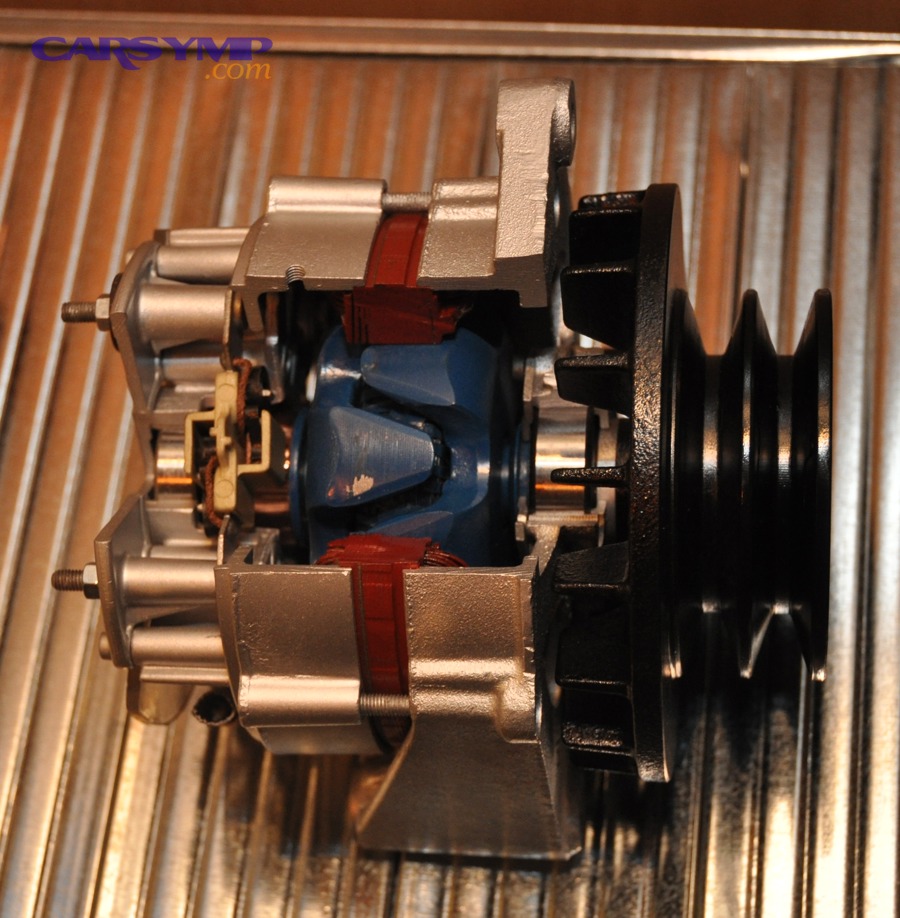
Why OEM parts usually sit at the top of the price range
Yes—OEM parts tend to cost more because you’re paying for original engineering, validated materials, tighter tolerances, and a distribution chain built around predictable fit.
However, OEM pricing is also influenced by limited competition and model-specific inventory, which can amplify cost on newer or lower-volume vehicles.
Concretely, OEM pricing often bundles three “hidden” value items: a documented spec baseline, stable revisions over the model lifecycle, and lower probability of small fitment issues that inflate labor time.
What “aftermarket” really includes (it’s not one quality tier)
There are multiple aftermarket tiers: economy, OEM-equivalent, and performance-focused—so “aftermarket” is a grouping, not a guarantee of cheap or risky.
In contrast to OEM, the aftermarket ranges from highly engineered replacements to price-driven copies, and the cost spread reflects that range.
Specifically, you’ll see different price points based on whether the manufacturer invests in material upgrades, corrosion protection, revised bearings, better seals, or simply targets minimum-viable specifications.
Remanufactured vs rebuilt vs refurbished: why the label matters
Remanufactured typically means fully disassembled, cleaned, inspected, worn components replaced, and tested to a target specification—while “rebuilt” and “refurbished” can mean less standardized work.
So, the price difference inside “reman” is often a proxy for process depth and test coverage rather than brand name alone.
To illustrate, a true reman process replaces predictable wear items (bearings, brushes, seals, regulators where applicable) and then validates output under load—steps that cost money but reduce repeat repairs.
Which option is cheapest upfront, and what are you trading for that price?
Aftermarket is often cheapest upfront, reman is commonly mid-priced, and OEM is usually highest—yet the trade-off is risk distribution: fit, longevity, and warranty convenience.
To understand that trade, compare not only purchase price but also the probability of a comeback repair and the cost of your time without the vehicle.
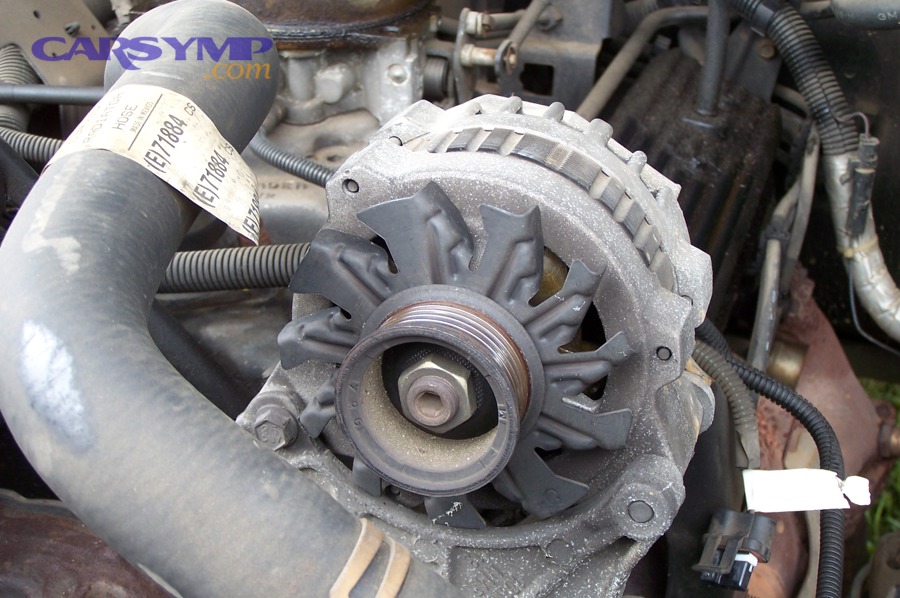
Upfront price: what usually drives the gap
Aftermarket can be cheaper because manufacturing is optimized for cost and competition, while OEM pricing reflects original validation and controlled supply.
Meanwhile, reman typically saves by reusing high-value cores and replacing only what’s worn, which can reduce material and energy costs.
The practical takeaway is simple: if the part is easy to swap and failure consequences are low, a lower upfront price may be rational; if the repair is labor-heavy or safety-critical, cheap parts can be a false economy.
Cost savings ranges you can use as a sanity check
Yes—reman often delivers meaningful cost savings, but the range depends on part type, core availability, and testing requirements.
More importantly, treat “too cheap” as a signal to investigate process quality, not as a win by default.
Theo nghiên cứu của McKinsey từ Automotive & Assembly, vào 10/2025, chi phí tiết kiệm từ remanufacturing có thể nằm trong khoảng 40–60% so với phương án mới tùy danh mục và chuỗi cung ứng.
Core charges: the hidden line item that changes the math
Yes—reman pricing often includes a refundable core charge, so your net cost depends on returning the old unit in acceptable condition.
Therefore, always ask two questions: “What is the core fee?” and “What makes a core unacceptable?” before you compare receipts.
In practice, damaged housings, missing key components, or severe corrosion can reduce your refund or void it, turning a “mid-priced” reman into a near-OEM expense.
How do quality control and failure risk change the true cost?
OEM tends to minimize fitment variance, high-quality aftermarket can match it, and reman can be excellent when test coverage is real—true cost depends on how failure probability multiplies labor and downtime.
Next, shift from “What does it cost?” to “What does it cost if it fails once?” because one repeat repair can erase any upfront savings.
Fitment accuracy: small mismatch, big labor bill
Yes—fitment differences matter because small misalignments, connector variations, or bracket tolerances can add significant labor even when the part “fits.”
In contrast, OEM and OEM-equivalent aftermarket typically reduce these surprises because the spec target is tighter or better documented.
Concretely, the riskiest scenario is a part that mounts but creates belt misalignment, vibration, or connector stress—issues that don’t show up until after installation.
Testing depth: what separates “reman” from “random used”
No—reman is not the same as used; a true reman unit should be cleaned, rebuilt with critical replacements, and validated under conditions that simulate real load.
So, ask how it is tested: bench load test, voltage regulation checks, thermal checks, and pass/fail criteria that match application demands.
To make this actionable, choose rebuilders that document replacement of predictable wear components and provide a test sheet or at least a clear testing standard.
Downtime cost: the invisible multiplier most people forget
Yes—downtime is a cost, even if you don’t write a check for it, because it can mean lost work, rentals, delivery fees, or schedule disruption.
Therefore, parts with higher variance can be more expensive overall even when their invoice line is lower.
If your vehicle is mission-critical (rideshare, delivery, field work), the “lowest price” option should be the one with the lowest probability of rework, not the lowest checkout total.
How do warranties differ across OEM, aftermarket, and reman options?
OEM warranties tend to be straightforward, aftermarket warranties vary widely by brand and tier, and reman warranties can be strong—but only if claim procedures and exclusions are clear.
Next, treat warranty as a contract for risk transfer: who pays if the part fails, and who pays for labor and collateral damage.

New-car warranty concerns: will a non-OEM part void coverage?
No—using a non-OEM replacement part does not automatically void a vehicle warranty, but the manufacturer may deny a specific claim if it proves the part caused the failure.
However, confusion persists because warranty language and dealer conversations often blur the line between “may affect a claim” and “voids everything.”
Theo nghiên cứu của Federal Trade Commission từ các diễn giải Magnuson-Moss Warranty Act, vào 05/2015, cơ quan này nhấn mạnh rằng việc dùng phụ tùng aftermarket hoặc tái chế không tự động làm mất hiệu lực bảo hành; từ chối bảo hành cần gắn với nguyên nhân gây lỗi cụ thể.
What to look for inside the warranty fine print
Yes—warranties differ by what they cover: parts-only, parts plus labor, and whether “consequential damage” is excluded.
So, compare four items: coverage length, coverage scope, claim process burden, and whether labor reimbursement is included.
In practice, a “long warranty” with strict installation documentation requirements can be less useful than a shorter warranty that actually pays quickly and predictably.
Labor reimbursement: the line that determines real protection
Yes—labor coverage is what turns warranty from marketing into real risk protection, because labor usually exceeds the part price on many repairs.
Therefore, prefer warranties that clearly specify labor limits, approved shop requirements, and the documentation needed to avoid denial.
When labor is excluded, the cheapest part can become the most expensive choice if you have to pay installation twice.
When does OEM make sense despite higher cost?
Yes—OEM can be the best value when fitment must be perfect, when the repair is labor-intensive, or when the part interacts with sensors and software calibrations that are sensitive to spec drift.
Next, identify “high-consequence” repairs where a repeat job is unacceptable, then match your part choice to that risk profile.
High labor, high consequence: the repeat-repair penalty
Yes—if access is difficult and labor hours are high, OEM often wins because it reduces the probability of a comeback and the secondary costs tied to rework.
In contrast, on quick swaps with easy access, high-quality aftermarket or reman can be rational without exposing you to large repeat labor risk.
As a rule of thumb, the harder the job and the tighter the packaging in modern engine bays, the more you should pay for predictable fit and stable revision control.
Electronics, emissions, and calibration-sensitive components
Yes—parts that interface with control modules, emissions systems, or advanced driver assistance can be more sensitive to minor deviations than purely mechanical components.
So, OEM becomes more attractive when the system expects known sensor curves, connector standards, and specific tolerances.
That doesn’t mean aftermarket is bad; it means you should choose an OEM-equivalent brand with documented compliance rather than an unknown-budget alternative.
Resale, documentation, and peace of mind
Yes—OEM receipts can help resale confidence and simplify conversations with service advisors, especially for late-model vehicles under extended coverage.
Therefore, if you value predictable service history and minimal disputes, OEM can be a strategic choice even when it isn’t the cheapest.
This is especially relevant when your time cost of handling disputes exceeds the savings you’d get at checkout.
How can you choose the best-value option for your car and budget?
Use a simple method: match the part to the risk of failure, the labor difficulty, and the warranty strength—then choose the cheapest option that keeps total cost low, not the cheapest invoice line.
To make that method practical, follow a short checklist that filters out risky choices and highlights the value tiers that actually fit your scenario.
Step 1: classify the repair by labor difficulty
Yes—start by classifying the job as low, medium, or high labor, because labor multiplies the cost of failure more than the part price does.
Next, decide your “failure tolerance”: can you afford to redo this repair once without major disruption?
If the answer is no, bias toward OEM or proven OEM-equivalent aftermarket; if yes, reman or reputable mid-tier aftermarket may be optimal.
Step 2: choose brands by process evidence, not packaging claims
Yes—brand matters, but process proof matters more: certifications, documented test steps, consistent supplier transparency, and clear return policies are stronger signals than marketing labels.
Therefore, favor manufacturers or rebuilders that explain what is replaced, what is measured, and what the pass/fail standard is.
When information is vague, you’re effectively buying uncertainty—and uncertainty is what turns “cheap” into “expensive.”
Step 3: compare warranties as risk-transfer contracts
Yes—compare warranty terms like a contract: who pays, what proof is required, and what exclusions can invalidate coverage.
Then, choose the warranty that matches your reality: DIY installers may face stricter documentation requirements than professional shops.
In many cases, a mid-priced option with straightforward warranty support beats a cheaper option that is difficult to claim.
What hidden costs should you budget for in real-world repairs?
There are several common hidden costs—diagnostics, hardware, fluids, and alignment-related steps—so your parts choice should account for the full job scope, not only the component itself.
Next, treat the job as a system: replacement often triggers related wear items, and skipping them can destroy your savings.
Related parts that can change the final invoice
Yes—gaskets, seals, belts, tensioners, fasteners, and electrical connectors can add meaningful cost and determine whether the repair lasts.
So, ask the shop (or your own plan) which items are “replace-once-you’re-in-there” to avoid paying labor twice.
For example, Additional parts that affect cost may include new mounting hardware, a belt, a tensioner, and sometimes a pigtail connector—items that are cheap compared to redo labor.
Why labor variability can eclipse parts savings
Yes—labor can swing widely by vehicle packaging, corrosion, and access, so the same part choice can have very different total costs across models.
Therefore, request a written estimate that separates labor and parts so you can see where savings really matter.
If you’re comparing options on a charging-system job, don’t ignore Labor cost breakdown and time because that is often the dominant line item in the final total.
Pricing example logic without locking to one vehicle
Yes—your exact total will vary, but the logic is stable: if parts are 30% cheaper but add even one extra hour of labor risk, the savings can vanish.
In contrast, if labor is low and the part is easy to return, a cheaper part can be a smart bet.
This is why alternator replacement cost discussions are often misleading unless they clearly separate the part tier (OEM/aftermarket/reman) and the labor difficulty for the specific vehicle.
A quick comparison table you can use at the counter
This table summarizes what you are buying with each option, which risks rise or fall, and what questions to ask before you pay.
| Option | Typical upfront cost | Best for | Main risks | Questions to ask |
|---|---|---|---|---|
| OEM | Highest | High-labor jobs, calibration-sensitive systems, warranty simplicity | Price premium, limited competition, possible delays on low-volume parts | Is this latest revision? Any supersessions? Dealer labor warranty included? |
| Aftermarket | Lowest to mid | Value repairs, older vehicles, quick-swap components, wide availability | Quality variance, fitment variance, warranty complexity by brand | Is it OEM-equivalent tier? Return policy? Labor coverage? Known fitment notes? |
| Reman | Mid | High-value components with strong rebuild processes and testing | Core charge issues, process variance, shipping/downtime if exchange is slow | What is replaced? What testing is done? Core fee and acceptance rules? |
Contextual border: With the core cost logic and risk model clear, we can now expand into the less obvious forces that shape reman value—supply chains, sustainability, and availability—without losing focus on total cost.
How do reman economics affect sustainability, availability, and long-term value?
Reman can reduce material and energy demand by reusing cores, which may improve availability during shortages and lower environmental impact—benefits that can translate into real-world value if the process is robust.
More importantly, sustainability is not just a moral bonus; it can be a supply advantage when new parts face backorders.
Why reman can be a supply-chain hedge
Yes—reman relies on core circulation, so it can stay available when new-part production or shipping is constrained.
Therefore, in disruption-heavy periods, reman may be the fastest path back on the road, not just the cheapest.
The practical move is to ask whether the supplier has “ready-to-ship exchange units” or requires waiting for your core to be rebuilt, which changes downtime cost.
Environmental impact: what credible studies suggest
Yes—remanufacturing can significantly reduce energy use and emissions compared with making a brand-new unit, especially for complex components.
So, if you care about lifecycle footprint, reman is often the most impact-efficient option that still delivers near-new function.
Theo nghiên cứu của University of Michigan Center for Sustainable Systems từ phân tích vòng đời, vào 10/2008, remanufacturing một máy phát (alternator) có thể giảm khoảng 68–83% năng lượng vòng đời và giảm khoảng 73–87% phát thải khí nhà kính so với sản xuất mới.
Energy preservation claims: how to interpret big percentages
Yes—high-level research often reports large “energy preserved” figures, but the exact number depends on part category and the baseline manufacturing footprint.
However, the direction is consistent: reusing the heavy metal core avoids much of the most energy-intensive manufacturing.
Theo nghiên cứu của ACEEE từ chương trình phân tích tài nguyên và năng lượng, vào 05/2003, remanufacturing phụ tùng ô tô có thể bảo toàn khoảng 85% năng lượng đã tiêu tốn để sản xuất sản phẩm gốc, nhờ tái sử dụng phần lõi và giảm nhu cầu vật liệu mới.
Right-to-repair reality: why it matters to your wallet
Yes—when consumers can access competitive parts channels, total repair cost tends to fall because pricing pressure increases and availability improves.
Therefore, understanding your warranty rights and documentation reduces the chance you overpay out of fear of “voiding coverage.”
If you’re operating under coverage, keep receipts, document installation steps, and ensure the part matches the vehicle application—these are the practical habits that minimize disputes and protect your total cost outcome.
Frequently asked questions
Is reman always better than aftermarket?
No—reman is only better when the rebuilding process is rigorous and testing is real; high-quality aftermarket can outperform low-quality reman, especially when reman sources inconsistent cores.
So, choose based on process evidence, warranty clarity, and supplier reputation rather than category labels alone.
Can a cheaper part really increase total cost if it fails once?
Yes—because you pay labor and downtime again, and repeat repairs can trigger extra collateral fixes, turning a small upfront saving into a large overall loss.
Therefore, match part tier to labor difficulty and failure consequences, not just budget pressure.
What should I ask before buying a reman unit?
Ask what is replaced, how it is tested, what the core charge is, what makes a core unacceptable, and whether the warranty covers labor or only the part.
Next, confirm return policy timing so you’re not trapped if fitment issues appear after installation.
How do I compare OEM-equivalent aftermarket brands fairly?
Compare documented specifications, material upgrades, independent reviews, warranty terms, and consistent fitment feedback for your exact vehicle configuration.
Finally, prioritize the brand that reduces repeat labor risk, because that is usually where your biggest hidden cost lives.
What’s the smartest default choice when I’m unsure?
If the job is labor-heavy or safety-critical, default toward OEM or proven OEM-equivalent aftermarket; if the job is easy and returnable, a reputable mid-tier aftermarket or well-documented reman often maximizes value.
Tóm lại, the best choice is the one that minimizes total cost under your real constraints—labor difficulty, downtime tolerance, and warranty leverage.