


Rotor resurfacing can reduce your brake job total when the rotors are still within spec, while rotor replacement becomes the safer (and sometimes cheaper-in-the-long-run) choice when thickness, runout, heat damage, or corrosion pushes machining past limits.
Beyond that simple choice, the real budget swing comes from add-ons: extra labor steps, shop fees, hardware kits, hub cleaning, caliper slide service, and “while-you’re-in-there” items that appear only after the wheels come off.
To help you avoid surprises, this guide breaks down what each option includes, what it triggers, and how to spot line items that are valid versus padded—so you can compare estimates on equal footing.
Tiếp theo, we’ll map the decision from safety limits (thickness and vibration causes) to practical estimate-reading, so you can control the total without gambling on braking performance.
Should you resurface or replace rotors to minimize add-on costs?
Resurface when the rotor can be machined above minimum thickness and is structurally sound; replace when machining would go under spec or the rotor has heat cracks, severe corrosion, or persistent vibration causes that resurfacing won’t correct.
To begin, the fastest way to predict add-ons is to understand which path creates extra steps: resurfacing adds machining labor and measurement documentation, while replacement adds parts cost but can reduce machining time and comebacks.

The “add-on” isn’t just money—it’s also process. Resurfacing requires a controlled cut, cleaning, and re-measurement. Replacement requires removing the old rotor, cleaning hub mating surfaces, and ensuring the new rotor sits flush. Either way, the shop may legitimately add time for rust removal, stuck screws, seized caliper hardware, or hub face cleanup—especially in salt-belt vehicles.
Here’s the cost logic that matters for shoppers:
- If machining is allowed and quick, resurfacing often lowers the total because you’re paying mostly labor, not new parts.
- If machining is borderline (near minimum thickness), resurfacing can become a “false savings” because the shop may have to replace anyway after measuring, and you may pay an attempt fee.
- If corrosion/runout is severe, replacement can be the better value because it reduces repeat vibration risk and avoids repeated machining limits.
The key is that resurfacing is only economical when the rotor has enough “thickness budget” to remove material and still stay above spec—otherwise replacement is not just safer, it’s also the more predictable estimate.
Theo nghiên cứu của General Motors từ Disc Brake Warranty Service and Procedures, vào May/2013, rotor replacement is required when refinishing would take the rotor under the Minimum Thickness specification.
What does “rotor resurfacing” include as an add-on, and what does it exclude?
Rotor resurfacing includes measuring thickness, machining the braking faces, and cleaning to remove machining debris; it typically excludes fixing caliper slide problems, hub runout issues, or heat-damaged metallurgy unless those are separately diagnosed and repaired.
Cụ thể, you should treat resurfacing like a “surface restoration” add-on—not a full brake-system reset.
Common resurfacing line items (the add-ons you’ll see on estimates):
- Measure rotor thickness (pre-service) and document lowest reading.
- Machine rotor (bench lathe or on-car lathe) to restore parallel, smooth surfaces.
- Non-directional finish (often sanding) to help pad bedding and reduce noise risk.
- Wash/clean rotor after machining (soap/water or approved cleaner) to remove particles.
What resurfacing does NOT automatically fix (often separate add-ons):
- Seized caliper slides that cause tapered pad wear and pulsation-like feel.
- Hub face corrosion that creates lateral runout even with a freshly machined rotor.
- Heat checking / cracking that compromises strength (machining can’t “erase” metal fatigue).
- Rotor thickness variation (DTV) root causes such as uneven torque, dirty hub, or worn suspension components.
Why this matters for cost: if a shop quotes resurfacing but later discovers the rotor is below spec, you may see a replacement add-on mid-job. That’s why the best estimates clearly state “resurface if within spec; replace if below minimum.”
Theo nghiên cứu của Volkswagen Group of America từ Technical Service Bulletin 46-19-02, vào June/2022, the rotor thickness must exceed the minimum specification after machining or the rotor must be replaced.
When is resurfacing allowed, and when does replacement become mandatory?
Resurfacing is allowed only if the rotor remains above minimum thickness after cutting and shows no structural damage; replacement becomes mandatory when thickness is below spec, when cracks/heat damage exist, or when runout/taper can’t be corrected within limits.
Để minh họa, think of your rotor as having three “pass/fail gates”: thickness, geometry, and integrity.
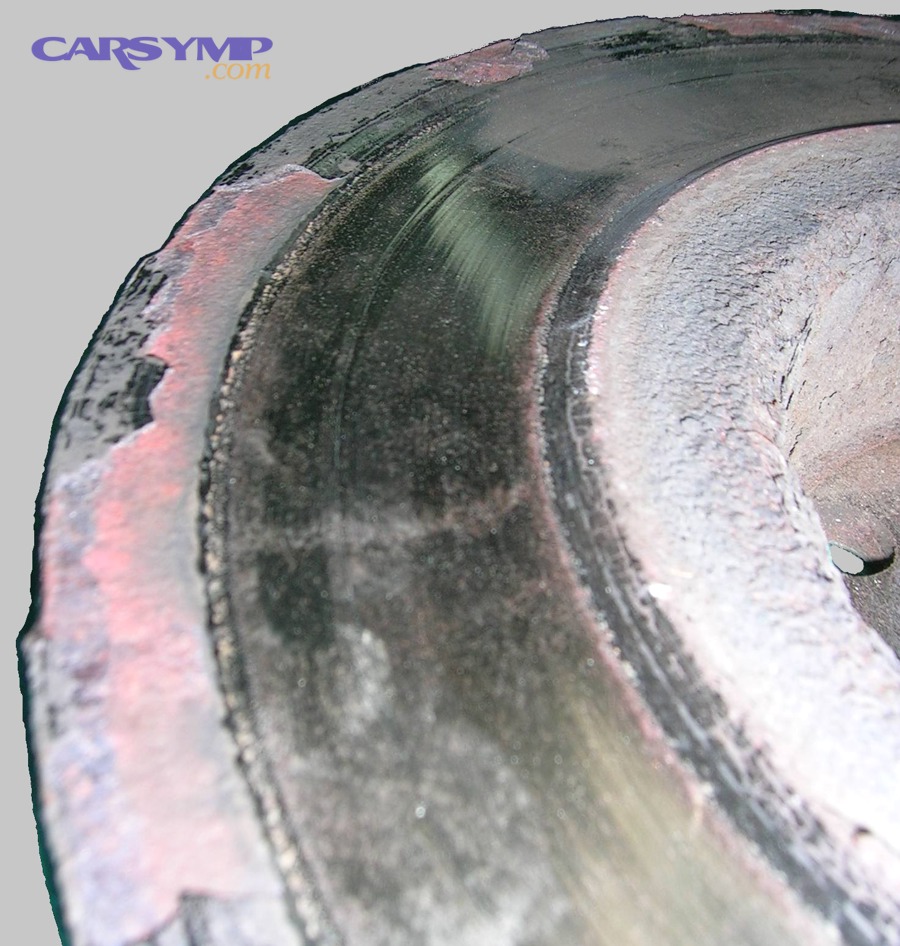
Gate 1: Minimum thickness (discard line)
Minimum thickness is the hard stop: if machining will drop the rotor below it, replacement is the only compliant outcome. This is why shops measure multiple points and record the lowest reading, not the average.
- What triggers add-ons: extra measuring time, documenting readings, and sometimes a “machine attempt” fee if the rotor fails after setup.
- What you can ask: “What is the rotor’s current thickness and the post-machine target thickness?”
Theo nghiên cứu của General Motors từ Brake Service Procedure, vào May/2013, multiple measurement points should be taken and the lowest measurement recorded to decide refinish versus replace using the stamped minimum thickness specification.
Gate 2: Geometry (runout and thickness variation)
A rotor can be thick enough yet still cause pulsation if thickness varies around the disc or if lateral runout is high. Machining can correct some geometry issues, but only within material limits.
Theo nghiên cứu của BMW từ Brake Disc and Brake Pad Guidelines, vào December/2013, brake disc thickness difference is capped at 0.020 mm, and readings beyond that require replacing the brake discs.
Gate 3: Structural integrity (cracks, heat checking, severe corrosion)
If you see cracks, heavy heat spots, or deep rust pitting at the friction surface, resurfacing may remove “symptoms” but not restore strength. That’s where replacement is a safety decision, not just a cost decision.
Practical shopper cue: if your estimate includes “inspect for cracks/heat damage” and later adds “replace rotor due to heat checking,” that add-on is usually legitimate.
How do replacement rotors change the estimate and the “add-on stack”?
Replacement rotors increase parts cost but can reduce machining labor, shorten bay time, and lower comeback risk from marginal thickness; add-ons commonly shift toward hub cleaning, fastener extraction, and torque/bed-in procedures rather than lathe work.
However, rotor replacement is not a single price—it’s a bundle of part choices plus install realities.
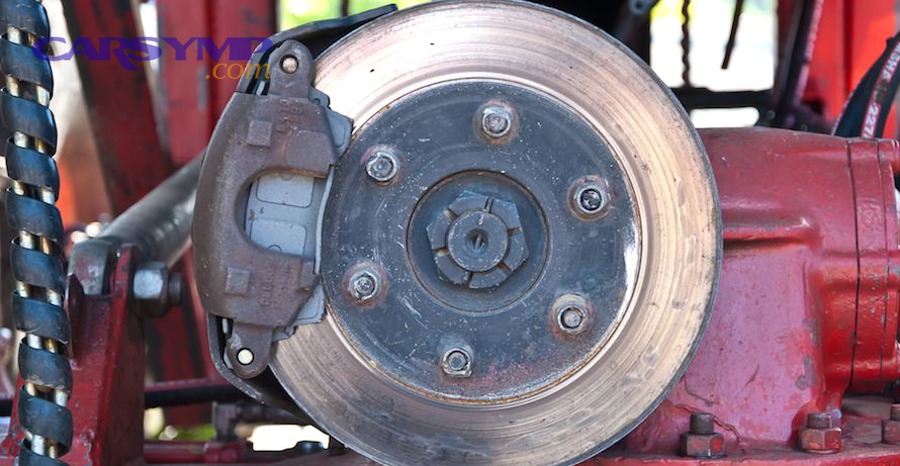
What usually appears when rotors are replaced:
- Rotor parts tier: economy, mid-grade coated, premium, or OEM/OE-equivalent.
- Hardware decisions: new rotor screws, clips, pad shims, or anti-rattle hardware (often separate lines).
- Surface prep: hub face cleaning is critical so the new rotor doesn’t inherit runout from rust.
- Break-in guidance: some shops include a brief bedding procedure; others only advise it.
Why this matters for add-ons:
- If the old rotor is seized to the hub, you may see additional labor for removal.
- If wheel studs are damaged or lug nuts were over-torqued, you may see stud/nut add-ons.
- If the vehicle uses retaining screws that strip easily, extraction can add time.
Even when replacing, the “cleaning and seating” steps are not optional. If a quote looks cheap because it skips hub cleaning, you’re paying later through vibration comebacks.
Theo nghiên cứu của General Motors từ Disc Brake Warranty Service and Procedures, vào May/2013, cleaning all mating surfaces between hub, rotor, and wheel is described as critical for successful brake service whether using on-car or bench lathe procedures.
Why “pulsation” and “judder” often become cost add-ons, not just symptoms
Brake pulsation and judder often stem from rotor thickness variation or runout; resolving them may require extra measurements, hub surface correction, or replacement when machining can’t keep the rotor within spec—each step adding labor and sometimes parts.
Để hiểu rõ hơn, shops price vibration fixes as add-ons because they require diagnostic proof, not guesswork.
Judder isn’t just “warped rotors.” In many cases, the rotor develops uneven thickness (DTV/RTV), which changes braking torque once per wheel rotation. That can feel like pedal pulsation, steering shake, or chassis vibration—especially at certain speeds and decel rates.
Theo nghiên cứu của Prognostics and Health Management Society từ Annual Conference Proceedings, vào September/2019, a rotor thickness variation of 36 micrometers or more was used to distinguish degraded rotors and links thickness variation to brake torque variation and judder symptoms.
Common “judder-related” add-ons you’ll see:
- Measure thickness in multiple locations (documented readings).
- Check runout / hub face if vibration has returned after prior brake work.
- On-car lathe machining when the shop needs to match the rotor to the hub to reduce runout influence.
If you came in for pads but complained about pulsation, a shop may be justified in recommending rotor correction rather than “pads only.” The important part is whether they can show you measurements or visible evidence.
What hidden add-ons commonly appear in the same visit as rotors?
The most common hidden add-ons involve caliper slide service, pad hardware/shims, stuck fasteners, hub cleaning, and sometimes brake fluid or parking brake adjustments—items revealed only after disassembly and inspection.
Bên cạnh đó, these add-ons are where estimates vary wildly between shops because labor policies differ.
Hidden add-ons that are often legitimate:
- Caliper slide cleaning/lube: if slides are dry, corroded, or binding.
- Hardware kit: anti-rattle clips, abutment hardware, pad shims (especially if rusty or missing).
- Rotor retaining screw extraction: common on certain makes with small Phillips/torx screws.
- Hub face cleaning: rust scale removal so rotor sits flush.
- Brake cleaner and corrosion protection: sometimes bundled, sometimes itemized.
Hidden add-ons that should be explained clearly:
- “Shop supplies” fees: ask what it covers and whether it’s capped.
- “Brake quiet” compounds: reasonable if noise history exists, but not mandatory for every job.
- Extra labor for “frozen hardware”: should come with photos or a quick show-and-tell.
Now, here’s the shopper move: ask for the estimate to separate “known” lines from “inspection-dependent” lines. That gives you a controlled decision point before the bill grows.
Also note: once you’re comparing totals, it helps to keep related budget references in mind (without letting them distort the rotor decision), such as brake pad replacement cost and how parts tier choices shift the final number.
How do you compare quotes fairly when shops bundle add-ons differently?
Compare quotes by normalizing to the same scope: per-axle parts, rotor action (machine or replace), hardware kit inclusion, and inspection-based contingencies; then ask for measured rotor condition so the recommended path matches the vehicle’s limits.
Hơn nữa, the best way to “defang” surprise add-ons is to force the estimate into a common checklist structure.
Use this approach to normalize any estimate:
- Scope first: front axle, rear axle, or all four? (Add-ons behave differently by axle.)
- Rotor action: “resurface if within spec” vs “replace regardless” vs “replace if below spec.”
- Hardware: included or not? (Clips/shims can be the hidden swing.)
- Labor overlap: confirm whether rotor labor is incremental or bundled into the brake service package.
- Contingencies: ask for a max range if fasteners are seized or rotors fail thickness check.
Below is a quick reference table to decode typical add-on lines and what they usually mean in real work.
This table contains common rotor-related add-ons, what they accomplish, and when they’re typically justified—so you can challenge vague line items without rejecting necessary work.
| Add-on line item | What it usually covers | When it’s justified | Shopper check |
|---|---|---|---|
| Rotor resurfacing (machine) | Lathe cutting + finish + cleaning | Rotor thick enough; no cracks; surface needs restoration | Ask for pre/post thickness target |
| Rotor replacement | New rotors + install | Below min thickness after machining, cracked, severe corrosion | Ask for parts tier and warranty |
| Hub face cleaning | Rust removal at rotor/hub interface | Rust scale visible; prior vibration; salt exposure | Ask if included by default |
| Hardware kit | Clips/shims/abutments | Old hardware corroded, noisy, or missing | Ask what’s replaced specifically |
| Caliper slide service | Clean/lube pins, free up movement | Tapered wear, sticking caliper signs | Ask to see seized/dry pins |
| Fastener extraction | Stripped screws, seized bolts | Hardware breaks during removal | Request photos if billed |
| Shop supplies | Cleaners, rags, minor consumables | Reasonable flat policy | Ask cap/percentage policy |
As you compare quotes, keep your evaluation consistent: don’t let marketing language replace measurable facts. If one shop emphasizes Dealer vs independent brake job pricing without showing rotor measurements, you still don’t know whether resurfacing is even allowed on your car.
And if you’re choosing pad material at the same time, don’t mix the decisions: pad choice can matter for performance and dust, but it’s separate from rotor viability. That’s where notes like Ceramic vs premium pad price comparison belong—inside your overall budget review, not in the rotor pass/fail decision.
Finally, if you want a repeatable way to compare estimates across shops, store a personal worksheet titled Brake job estimate checklist for shoppers and use it every time; it forces apples-to-apples comparisons and makes add-ons transparent.
Theo nghiên cứu của Volkswagen Group of America từ Brake Rotor Machining guidance, vào June/2022, thickness measurements should be taken in multiple locations with consistency to ensure the rotor remains above the minimum specification after machining.
How can you reduce rotor add-ons without increasing risk?
You reduce add-ons by pre-approving only measurement-based contingencies, insisting on hub-face prep and correct torque, and choosing resurfacing only when thickness margin exists; skipping these steps may lower today’s bill but raises vibration and redo risk.
Quan trọng hơn, the safest “cost control” is not refusing add-ons blindly—it’s preventing the conditions that create them.
Cost control moves that usually help (and don’t compromise braking):
- Ask for measurements first: thickness (lowest point) and whether it will clear spec after machining.
- Require hub mating surface prep: this reduces “mystery pulsation” after new parts.
- Confirm torque process: uneven lug torque can contribute to runout-related problems.
- Bundle smartly: if pads are near end-of-life, doing pads and rotors together can reduce repeat labor.
False savings that often backfire:
- Machining a rotor that is already near minimum thickness (shortened life, higher future cost).
- Replacing rotors but skipping hub prep (new rotor inherits the old vibration source).
- Reusing badly corroded hardware (noise, uneven wear, return visits).
Theo nghiên cứu của BMW từ Brake Disc and Brake Pad Guidelines, vào December/2013, disc thickness variation beyond specified limits requires replacement—highlighting that geometry limits can make resurfacing an unsafe or ineffective cost-saving choice.
FAQ: Quick answers about rotor resurfacing vs replacement add-ons
Yes—most “add-ons” are predictable if you anchor the job to measurements, minimum thickness rules, and hub/geometry checks; the rest are disassembly discoveries that should be documented with clear reasons.
Đặc biệt, these questions help you keep control without slowing the repair.
Is resurfacing always cheaper than replacement?
No. Resurfacing can be cheaper when the rotor is healthy and thick enough, but replacement can be cheaper when machining time, setup, or thickness risk makes resurfacing uncertain—especially if a rework is likely.
Can a shop charge both “resurface” and “replace” on the same rotor?
Sometimes—if the rotor failed the thickness check after setup, a shop may bill diagnostic/machining attempt time and then replace. The estimate should warn you this is possible and explain the threshold.
Do new rotors guarantee no vibration?
No. New rotors reduce risk, but hub corrosion, torque errors, and related wear can reintroduce runout and thickness variation patterns over time.
What’s the single best question to ask?
“What are the measured rotor thickness values and the minimum spec, and will resurfacing keep the rotor above spec?” If they can’t answer, the quote is not grounded.
Contextual Border
Beyond Price: Lifecycle Signals and Warranty Tradeoffs
Once you understand the add-ons, the next savings come from lifecycle math: how long the fix lasts, how predictable the braking feel remains, and what warranty and repeat-visit risk you’re actually buying with each option.
Resurfacing as a “shorter runway” choice
Resurfacing removes material, so you’re trading a lower upfront bill for a smaller remaining thickness reserve. That can be perfect for a commuter car you plan to sell soon, and a poor fit for towing, mountain driving, or long ownership horizons.
Replacement as a “stability and predictability” choice
Replacement often improves predictability because you reset thickness reserve and surface condition at once. When combined with proper hub prep and hardware renewal, it can reduce the probability of repeat pulsation complaints.
Warranty reality: parts vs workmanship
Warranty coverage differs by shop policy and parts tier. Your best leverage is to ask which lines are warrantied (rotors, pads, labor) and what conditions void coverage (overheating, contamination, incorrect torque).
Resale and inspection cues
For resale, quiet braking and stable pedal feel matter more than the invoice line items. If your current rotors show visible cracking, heavy scoring, or severe corrosion, replacement can be a “confidence upgrade” that pays back at sale or inspection time.