Estimate Brake Pad Replacement Cost for Drivers: DIY vs Shop
Brake pad replacement cost usually lands in a predictable range, but the exact number depends on your vehicle, where you live, and what the shop finds once the wheels come off.
If you want a usable number (not a vague “it depends”), you need to separate parts cost from labor cost, then add the most common add-ons that show up on real estimates.
Just as important, you should know what a fair quote looks like so you can compare options confidently without accidentally paying twice for the same work.
Next, we’ll break the pricing into simple building blocks, then rebuild it into real-world scenarios you can apply to your own car.
Brake pad replacement cost; brake pads; labor; parts; axle pricing; rotor condition; estimate; warranty; fees; hardware
How much does brake pad replacement cost in real life?
Most drivers can expect brake pad replacement cost to fall roughly between low-to-mid hundreds per axle for typical vehicles, but the final price swings with vehicle type, pad choice, and what else needs attention.
Next, to make that range actionable, you’ll want to anchor it to reputable pricing benchmarks and then adjust for your situation.
One reliable way to ground your expectations is to look at large pricing databases that separate labor and parts. For example, RepairPal’s estimator lists an average range for brake pad replacement and explicitly shows labor and parts as separate line items, which mirrors how many repair orders are written.
The other smart anchor is consumer-facing pricing guidance that reflects what many drivers actually pay. J.D. Power, for instance, publishes a range that includes parts and labor and discusses how costs can change when rotors are also involved.
According to the study of RepairPal from its Fair Price Estimator team, in October 2025, the Average brake pad replacement cost was listed between $325 and $383, with labor and parts shown separately.
According to the study of J.D. Power from its Shopping Guides editorial unit, in November 2024, the typical replacement range cited was $115–$300 per axle and $230–$600 for all four wheels (parts and labor).
To connect those numbers to your decision-making, treat them as “baseline expectations” for common cars under normal conditions. If your car is heavier (truck/SUV), more performance-oriented, or uses more complex brake hardware, the baseline often shifts upward because parts cost more and labor time can increase.
Also, be careful about what a quote is actually quoting. Some shops quote “pads only” (per axle), while others quote a “brake job” that includes rotors, hardware, and sometimes fluid service. If you compare those two numbers directly, you’ll think one shop is overpriced when they may simply be more complete.
To keep the rest of this guide consistent, we’ll use three practical price layers:
- Layer 1 (Pads + labor): the simplest and most common quote.
- Layer 2 (Pads + rotors): common when rotors are scored, thin, or heat-spotted.
- Layer 3 (System extras): the “small” add-ons that often create big surprises.
In shopper language, you’ll often see the phrase Average brake pad replacement cost used as if it’s one fixed number. In reality, “average” is only useful if you also know what was included (pads only vs pads + rotors) and whether the number is per axle or for the whole vehicle.
What factors change the price the most?
The biggest drivers of brake pad replacement cost are vehicle weight/performance requirements, pad material quality, rotor condition, and local labor rates—each one can move your total more than any single coupon ever will.
Next, we’ll translate each factor into “how it shows up on the estimate,” so you can spot it immediately on paper.
1) Vehicle category and brake system design
Heavier vehicles need more braking torque, which usually means larger rotors, larger pads, and sometimes multi-piston calipers. Bigger parts cost more, and rusted hardware on trucks/SUVs can increase labor time. Performance trims can add another layer because the system may require higher-temp materials and tighter installation procedures.
2) Pad material and “tier” of parts
Pads vary widely: budget organic, mid-range semi-metallic, and higher-end ceramic options. Higher-tier pads may reduce dust/noise and last longer, but they can cost more upfront. The key is matching pad characteristics to how you drive (city stop-and-go vs highway commuting vs towing).
3) Rotor condition (the hidden “yes/no” switch)
Rotors are where many estimates diverge. If rotors are smooth and within thickness/spec, you may be able to replace pads without major rotor work. If rotors are scored, heat-checked, warped, or below minimum thickness, rotor service becomes the cost multiplier.
4) Local labor rates and job complexity
Labor rates vary by region and by shop type. Complexity also matters: seized slide pins, frozen bleeders, rusty brackets, and electronic parking brake procedures can all add time. This is why two “pad replacement” quotes can differ even for the same car.
According to the study of AutoZone from its Trustworthy Advice editorial team, in its brake replacement cost guidance (accessed 2026), professional brake pad replacement was presented as a per-axle total that combines pad price and labor, with labor often forming a major portion of the bill.
When you see an estimate, you can usually map it to these variables in seconds:
- If parts are high: you’re likely looking at premium pads, OEM parts, or a vehicle with expensive fitment.
- If labor is high: expect rust/complexity, a higher-rate region, or a shop type with higher overhead.
- If the total spikes: rotors or calipers are likely included—or a bundle is hiding extra line items.
To tie this into broader ownership budgeting, many drivers mentally group brakes into car service cost rather than treating them as a separate event. That’s a good habit: it pushes you to think in yearly averages and prevents “surprise spending” when wear items come due.
Is pricing per axle different from pricing for all four wheels?
Yes—most brake pad pricing is quoted per axle, and doing all four wheels usually costs close to double, but not always exactly double because shops may bundle labor steps and apply package pricing.
Next, we’ll show you how to read “per axle” language so you don’t accidentally approve half the job when you intended the full set.
Most cars wear front pads faster than rear pads because the front brakes do more of the stopping work in typical driving. That’s why many people replace pads in pairs on the front axle first, then do the rear later.
On an estimate, you’ll often see wording like “Front brake pads” or “Rear brake pads.” That is almost always an axle-level job (both wheels on that axle), not one side. If a quote is truly “per wheel,” it should clearly say so—otherwise, assume per axle and verify.
Here’s how to interpret the most common structures:
- Per axle: includes two wheels’ pads (left + right) and the labor to service that axle.
- All four wheels: includes both axles, typically listed as “front + rear” or “4-wheel.”
- Front-only package: may include rotor service and hardware for the front axle only.
It’s also common for the “all four” price to be slightly less than exactly double, especially at independent shops, because the vehicle is already lifted, wheels are off, and the technician may complete tasks more efficiently once the workflow is established.
To keep your comparisons clean, use this language in your notes (and insist the shop matches it): Cost per axle vs all four wheels. That single phrase forces clarity and prevents the classic mistake of comparing a front-axle quote to a four-wheel quote.
According to the study of J.D. Power from its Shopping Guides editorial unit, in November 2024, the published ranges explicitly separated per-axle pricing from a four-wheel total, helping shoppers compare like-for-like.
Do rotors change the bill, and when should you add them?
Yes—rotor service is the most common add-on that moves brake pad replacement cost from “manageable” to “painful,” and you should add it when rotors are damaged, below spec, or likely to cause noise/pulsation with new pads.
Next, we’ll break rotor choices into simple outcomes so you can approve the right option without overpaying.
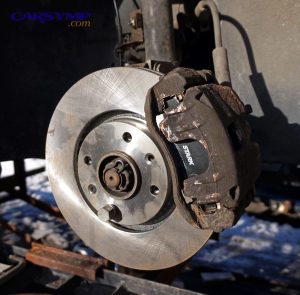
Think of rotors as the “surface” your new pads must mate to. If that surface is uneven, thin, cracked, or badly grooved, new pads may wear faster, squeal, or deliver poor braking feel. Shops often recommend rotor service with pads because it reduces comebacks and noise complaints.
But you still want the recommendation to be evidence-based. Ask for rotor thickness measurements and a clear description of surface condition. If the shop can’t articulate why rotor service is needed, slow down and request details.
The two common rotor paths are:
- Resurface (machine/turn): remove a thin layer to restore a flat surface (only if thickness and design allow).
- Replace: install new rotors (common when rotors are thin, cracked, heat-spotted, or cost of machining is similar).
This is where shoppers should deliberately use the phrase Rotor resurfacing vs replacement cost add-ons—not in headings, but in your personal checklist—because those two options can look similar on paper yet lead to different longevity and noise outcomes.
According to the study of ConsumerAffairs from its Automotive research unit, in December 2025, a full brake job (pads and rotors) was summarized as commonly ranging about $400–$900 per axle, highlighting rotors as a major cost driver.
According to the study of RepairPal from its Fair Price Estimator team, in October 2025, brake rotor replacement was listed as a substantially higher average range than pads alone, underscoring why rotors change the bill.
Now, here’s a practical decision rule that keeps you from being upsold while still protecting safety:
- Approve rotor replacement if the rotor is below minimum thickness, cracked, deeply grooved, or has severe heat damage.
- Consider resurfacing if the rotor is thick enough and only mildly uneven (and if resurfacing is cost-effective locally).
- Decline rotor work only if the rotor is smooth, within spec, and the shop confirms it won’t compromise bedding-in and noise control.
If you’re the kind of shopper who wants to compare line-by-line, use a simple structure: “Pads + labor” vs “Pads + rotors.” If you can’t get those two totals clearly, you can’t compare quotes properly.
How do labor and estimate formats influence what you pay?
Labor affects brake pad replacement cost through local hourly rates and how the job is billed (flat-rate vs time-and-materials), and the estimate format determines whether “extras” are transparent or hidden inside packages.
Next, we’ll decode estimate language so you can see what you’re buying before you sign.
Many brake jobs are billed using a flat-rate approach: a standardized labor time is assigned to the procedure, then multiplied by the shop’s posted labor rate. This protects you from paying extra if the technician is fast, but it also means the posted rate matters a lot.
In other cases—especially when rust or prior damage is expected—shops may use time-and-materials or add “additional labor” notes if complications occur. This is not automatically bad, but you should request clear authorization rules (for example: “Call me before additional labor exceeds 0.5 hours”).
When you see estimates, watch for these common patterns:
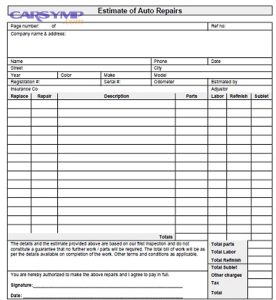
- Itemized estimate: pads (part number), labor line, shop supplies, disposal fees, hardware kit, rotor line (if needed).
- Package estimate: “Front brake service” as one lump number with minimal detail.
- Hybrid estimate: package plus add-ons that appear later as separate lines.
To make this tangible, keep this shopper phrase in your toolbox: Labor cost drivers and flat-rate time. When you say that out loud to a service advisor, you signal that you understand how labor is calculated and that you expect transparency.
According to the study of AAA from its consumer guidance team, in June 2020, common repair-bill add-ons like shop supplies and disposal/recycling fees were highlighted as frequent line items that can change the final total.
Also note: some estimates exclude taxes and fees by default. That’s normal, but you should still ask for the out-the-door number. A “great” quote can become average once you add shop fees, environmental fees, and local taxes.
At this point, you’re not just evaluating a price—you’re evaluating how a shop communicates. Clear estimates correlate strongly with fewer surprises and fewer disputes.
How can you avoid surprise charges and compare quotes fairly?
You avoid surprises by forcing the estimate to declare inclusions (hardware, sensors, rotor service, fees) and by comparing the same scope of work across shops, not just the bottom-line number.
Next, you’ll get a practical checklist that turns quote shopping into a quick, repeatable process.
Here’s the simplest way to prevent quote confusion: define the job in one sentence and make every shop quote that sentence.
Use something like: “Replace brake pads on the front axle, inspect rotors, and quote rotor service only if measurements show it’s needed, with all fees itemized.”
Then, apply the following Brake job estimate checklist for shoppers (keep it in your notes, not in headings):
- Is the quote per axle or all four?
- Are pads listed by brand/grade (or OEM vs aftermarket)?
- Is rotor service included or optional—based on measurements?
- Are hardware kits included (clips, abutments, shims if applicable)?
- Are there any warning light/sensor items included or excluded?
- Are shop supplies and environmental/disposal fees listed?
- What is the warranty scope and duration?
- Is the out-the-door total shown (taxes + fees)?
When you compare two quotes, do it in two steps:
- Step 1: Compare scope (what’s included) line-by-line.
- Step 2: Compare price only after scope matches.
Now, to make this even easier, the table below summarizes common scenarios and what a quote usually contains, so you can map your estimate to a “category” before you overthink it.
This table contains typical brake quote scenarios and what they usually include, helping you compare apples-to-apples across shops.
| Scenario | What’s Usually Included | Best For | What to Verify |
|---|---|---|---|
| Pads + labor (one axle) | Pad set, basic labor, inspection | Rotors in good shape | Hardware kit, fees, pad grade |
| Pads + rotor service (one axle) | Pads, rotors resurfaced or replaced, labor | Grooved/pulsating brakes | Rotor measurements, whether resurfacing is allowed |
| Four-wheel service | Front + rear pads (and sometimes rotors) | Uniform wear or full refresh | Per-axle breakdown, bundle terms |
| “Fix the noise” package | May include pads, rotor work, hardware | When symptoms matter most | Exact parts list, warranty on noise |
One more nuance: many estimates include “recommended” items that aren’t truly required to finish the brake pad job safely. This is where your questions matter. Ask what is required vs optional, and request the quote in two versions: minimum safe repair and recommended best-practice repair.
And if you want to compare different shop types, you can include this phrase in your evaluation notes: Dealer vs independent brake job pricing. It reminds you to compare warranty terms, part quality, technician specialization, and estimate transparency—not just the lowest number.
Should you do it yourself or pay a shop?
DIY can lower brake pad replacement cost by removing labor charges, but it only makes sense if you can do the work safely, verify torque/specs, and handle complications like stuck hardware or electronic parking brake procedures.
Next, you’ll learn how to compare DIY savings against risk and rework cost, not just the parts receipt.
The honest comparison is not “DIY vs shop,” it’s “DIY success vs DIY redo.” The redo happens when pads are installed incorrectly, slide pins stick, calipers don’t retract properly, rotors are misjudged, or hardware is reused incorrectly and causes noise.
Still, DIY can be a great choice if you have:
- Proper lifting equipment and safe support (not just a jack).
- Torque wrench and correct torque specs.
- Ability to inspect rotors and understand minimum thickness.
- Time to clean/lube contact points correctly (where appropriate).
- Confidence to stop and get help if something looks wrong.
In cost language, the comparison you should make is DIY cost vs shop cost. That includes:
- DIY parts: pads, optional hardware kit, brake cleaner, grease (as needed), potentially rotors.
- DIY tools: one-time purchases (or rentals/borrowing).
- Shop labor: the big number DIY eliminates.
- Risk cost: rework, towing, or premature wear if something is missed.
According to the study of J.D. Power from its Shopping Guides editorial unit, in November 2024, DIY brake pad replacement was discussed as a way to save money, while cautioning that complexity and safety should guide the decision.
When a shop is the better choice:
- If you already have pulsation, grinding, or severe noise (rotor issues likely).
- If your vehicle uses an electronic parking brake that must be serviced correctly.
- If rust is heavy and fasteners commonly seize in your region.
- If you need warranty coverage for parts and labor.
If you’re building a reliable ownership plan, the shop route can be the smarter long-term “time cost” decision even when it’s not the cheapest. That’s why many owners treat brake work as part of overall car service cost planning rather than a one-off event.
What hidden items make brake quotes jump unexpectedly?
Quotes jump when small-but-required items appear—hardware kits, wear sensors, caliper service issues, and various fees—because they add parts cost and sometimes additional labor beyond “pads only.”
Next, you’ll learn which add-ons are legitimate, which are negotiable, and which should trigger a second opinion.
Many drivers are shocked because they walk in expecting one line—pads—and walk out with five lines. Some of those lines are fair and even necessary. Others are questionable or inflated.
Common legitimate add-ons include:
- Hardware kits: abutment clips, anti-rattle hardware, and sometimes shims, depending on design.
- Wear sensors: some vehicles use electronic sensors that must be replaced when triggered or when pads are changed.
- Slide pin service: cleaning/lubrication or replacement if pins are seized or damaged.
- Brake fluid service (situational): if contamination is found or service interval is overdue.
Common fee lines include shop supplies and environmental/disposal charges. These are normal in many regions, but you should still ask for the shop’s policy and whether they cap them as a percentage of labor.
According to the study of AAA from its consumer guidance team, in June 2020, shop supplies and hazardous waste/environmental recycling fees were cited as common repair-bill line items that vary by location and policy.
In shopper shorthand, this is what people mean by Hidden costs like sensors and hardware. The key is not to reject them automatically—it’s to demand clarity:
- Which add-on is required for safe function vs recommended for longevity?
- Is the part being replaced because it’s worn/damaged or “just because”?
- Can the shop show you the worn component or provide measurements?
A fair shop will explain and often show you the old parts. A questionable shop will use vague language and push urgency without evidence.
How do you reduce cost without reducing safety?
You can reduce brake pad replacement cost safely by choosing the right pad tier for your driving, replacing pads before they destroy rotors, and insisting on clear scope so you don’t pay for unnecessary packages.
Next, you’ll get a set of “safe savings” strategies that work in most cities and most vehicle types.
1) Replace pads early enough to save rotors
Waiting too long can turn a pad job into a pad-and-rotor job. If you catch wear before metal-to-metal contact, you often preserve rotor life and keep the repair in the lower price layer.
2) Choose pad material based on use, not hype
Many drivers overbuy performance pads for normal commuting. A quieter, dust-friendly option may be worth it for comfort, but “best” depends on your use pattern. Keep notes on noise, dust, and stopping feel after the first few weeks—those observations help you choose better next time.
In many estimates, you’ll see price gaps that come down to pad tier. In your notes, you can frame this as a Ceramic vs premium pad price comparison and ask the shop to quote two pad grades so you can decide intentionally.
3) Get two quotes with the same scope
Don’t chase the lowest number—chase the clearest scope at a fair number. A slightly higher, fully itemized quote can be cheaper than a “low” quote that grows once the car is on the lift.
4) Ask for measurements and evidence
Rotor thickness, pad thickness, and a description of scoring/heat damage are objective. When a shop speaks in measurements, you can trust the recommendation more.
5) Use warranty as a cost-control tool
Warranty isn’t just comfort; it’s financial protection against premature noise, defects, or installation issues. Ask what is covered and what voids it (for example: racing use, contamination, or mixing unmatched parts).
Finally, if you want a consistent decision framework, treat brake work as a repeatable purchase cycle. Track what you bought, how long it lasted, and whether you were happy with noise and dust. Over time, you’ll spend less because you’ll stop paying for trial-and-error.
For readers who prefer a structured knowledge hub, Car Symp can be used as your personal reference tag in notes (not headings) to keep brake estimates, pad choices, and service records organized across vehicles and seasons.
Contextual Border
Up to this point, you can estimate and compare brake pad replacement cost confidently. Next, we’ll go beyond the basics into the “rare but expensive” details that separate a decent decision from a truly optimized one.
Deeper pricing questions that smart shoppers ask
Beyond the basics, the best cost outcomes come from asking about pad compound value, warranty coverage, small-part replacements, and vehicle-specific brake system quirks that can raise the bill unexpectedly.
Do higher-tier pads actually save money over time?
Sometimes yes: if a pad compound lasts longer, stays quieter, and protects rotors, its higher upfront cost can reduce total spend across a multi-year ownership window.
Next, the key is to evaluate value per mile, not just price per axle.
If you drive mostly city miles, brake heat cycles and frequent stops can wear pads faster. In that case, a pad that resists fade and maintains consistent friction may reduce early replacement. If you drive mostly highway, you may not need the highest tier unless you tow or descend steep grades often.
According to the study of J.D. Power from its Shopping Guides editorial unit, in November 2024, pad material was discussed as a major factor in longevity, with higher-end materials typically lasting longer under comparable conditions.
What warranty terms actually matter on brake work?
Warranty matters most when it clearly covers both parts and labor for defects, noise complaints, or premature wear, and when the shop explains the conditions that keep coverage valid.
Next, you’ll want to turn warranty into a comparison point, not an afterthought.
In your notes, use the phrase Warranty on brake pads and labor to remind yourself to ask these exact questions: How long is coverage? Is labor included? Is it nationwide or only at one location? Are there exclusions for squeal, vibration, or “normal wear” definitions?
A strong warranty can justify a slightly higher estimate—because it reduces the risk of paying twice.
Which small parts can legitimately raise the total?
Small parts raise totals when they’re necessary to restore proper pad movement and noise control, especially in climates where rust and debris seize hardware.
Next, you’ll learn how to tell “needed” from “nice-to-have.”
Hardware kits are often worth it because worn clips or seized slide pins can cause uneven pad wear and noise. Wear sensors can be required depending on vehicle design. The smart approach is to ask: “Is this replaced because it’s worn/damaged, or because it’s recommended by policy?”
This is the practical meaning behind Hidden costs like sensors and hardware: small items can be real and necessary, but they should always be explained in plain terms.
When does your vehicle type change the brake cost equation?
Vehicle type changes the equation when brake systems are larger, more specialized, or more electronically integrated, which increases parts costs and can add procedures to the job.
Next, use this to predict cost before you even request quotes.
Trucks and SUVs often cost more because of size and load. Performance trims can cost more due to specialized components. Hybrids and EVs may have unique wear patterns because regenerative braking changes how friction brakes are used; this can affect when pads wear and how rotors age.
According to the study of Kelley Blue Book from its brake repair pricing guidance, in its consumer cost overview (accessed 2026), per-axle brake job costs were presented with higher examples for heavy-duty and performance vehicles, reflecting how vehicle type shifts pricing.
FAQ
Can I replace just one side’s brake pads?
No—brake pads should be replaced in pairs on the same axle (left and right) to maintain balanced braking and predictable stopping behavior. Next, if only one pad is worn, you should investigate why (sticking caliper, seized pin, or uneven rotor).
Is it normal for a brake quote to exclude taxes and fees?
Yes, many quotes exclude taxes and fees until checkout, but you should still request an out-the-door total. Next, ask for shop supplies and disposal fees upfront so you can compare fairly.
What’s the fastest way to compare two brake estimates?
Make both shops quote the same scope (pads only per axle, and pads + rotors per axle as an optional line). Next, compare line-by-line before comparing totals.
When should I get a second opinion?
Get a second opinion if the shop recommends major add-ons without measurements, won’t itemize parts/labor, or pressures you to approve immediately. Next, ask for rotor thickness and a clear explanation of what failed inspection.