


Most drivers can compare dealership service center vs independent shop maintenance pricing accurately if they compare the total out-the-door cost—labor, parts, and fees—rather than staring at one number like the labor rate per hour. In practice, the “cheaper” option changes by service type, vehicle complexity, and how each shop writes the estimate.
Pricing differences usually come from predictable levers: the labor model (flat-rate vs hourly), parts tier (OEM vs aftermarket), and the shop’s built-in overhead and process. Once you know what each lever does, a quote stops feeling like a mystery and starts looking like a decision.
Hidden fees to watch for are real, but they’re not always “scams.” Some are legitimate pass-through costs (disposal, hazardous waste), while others are vague catch-alls (shop supplies) that should be capped and explained. You can protect yourself by forcing a clean, itemized maintenance cost estimate before approving work.
Introduce a new idea: the goal of this guide is to show you how to compare dealer and independent pricing like an expert—then choose the best value for your car, your time, and your risk tolerance.
Is dealership maintenance always more expensive than an independent shop?
No—dealership maintenance is not always more expensive than independent shop maintenance pricing, because (1) dealers sometimes discount routine services, (2) independents may mark up parts to offset lower labor rates, and (3) complex, tool-dependent work can be more efficient at the dealer.
However, the key is to compare the same service scope on the same parts tier with the same fee assumptions. Otherwise, you’re not comparing prices—you’re comparing different jobs.
Are routine services (oil changes, filters, fluids) usually cheaper at independent shops?
Yes—routine services are usually cheaper at an independent shop because independents often run lower overhead, price competitively to retain local customers, and can offer multiple parts/fluids tiers that fit your budget.
Here’s why routine work tends to favor independents:
- Lower overhead, lower minimums: Many independent shops can profit on a smaller margin for basic maintenance because they don’t carry the same showroom-style facility costs.
- Flexible fluids/filters: Independents may offer “good/better/best” options (for example, OEM filter vs high-quality aftermarket) and let you choose.
- Fewer bundled add-ons: Dealers sometimes bundle inspections, software checks, or “recommended” services into menu packages, which can raise the out-the-door number even if the base oil change is discounted.
That said, dealers can still win on routine services when they run loss-leader promotions (oil change coupons, seasonal service specials) designed to keep you in the brand ecosystem. If the dealership service center is running a transparent special that matches your exact oil spec and includes the filter you want, it can be a fair price—especially if you value service records tied to the VIN.
Are complex jobs (diagnostics, programming, ADAS calibration) often priced competitively at the dealer?
Yes—dealership service centers are often priced competitively on complex, brand-specific work because (1) they have direct OEM tools and software access, (2) technicians see the same platform repeatedly, and (3) the process reduces rework risk.
The practical logic is simple: complexity amplifies the cost of guessing.
- Programming and modules: Modern vehicles frequently require software steps after a repair—coding a module, initializing a steering angle sensor, programming keys, or performing a relearn. Dealers are built for this workflow.
- Advanced driver assistance systems (ADAS): After certain repairs (windshield replacement, suspension changes, alignment-related work), calibration may be required. Dealers tend to have standardized procedures and targets for their brands.
- High-stakes diagnosis: When a symptom is intermittent, a faster, more certain diagnostic path can be cheaper in total even if the labor rate per hour is higher.
In other words, the dealer doesn’t win because they’re “cheaper per hour.” The dealer sometimes wins because they’re cheaper per outcome on specialized problems.
What does “maintenance pricing” include at a dealer vs an independent shop?
Maintenance pricing is the total cost of scheduled service and wear-item replacements—labor, parts/fluids, shop fees, and taxes—priced through either a dealership service center or an independent shop, with the standout difference being parts tier and how labor time is calculated.
Next, it helps to separate “maintenance” from “repairs,” because pricing behavior changes when a shop is diagnosing a problem rather than performing a defined service.
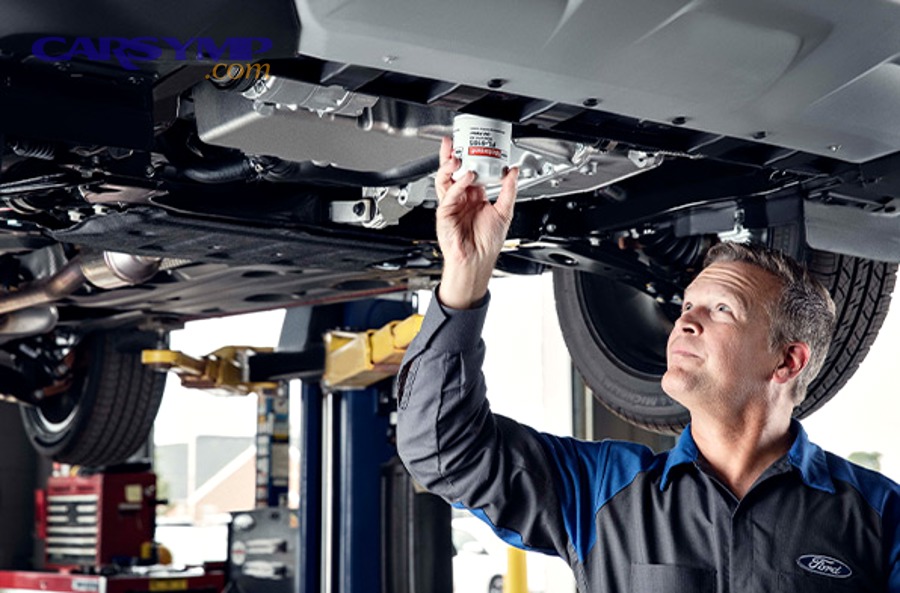
What’s the difference between scheduled maintenance and repairs in a quote?
Scheduled maintenance is planned service (oil, filters, fluids, inspections at mileage intervals), while repairs are symptom-driven fixes (noise, leak, warning light, drivability issue). The quote difference is that maintenance is scoping a known checklist, while repairs often start with diagnosis and may expand.
In pricing terms:
- Maintenance quotes are predictable: The job is known, the labor time is standard, and the parts list is stable.
- Repair quotes can be staged: You may see a diagnostic fee first, then an estimate once the issue is confirmed.
- Bundling is common in maintenance: Dealership menu pricing may package items (for example, “30k service”) in ways that hide the per-line detail. Independents may itemize more granularly.
If you want a fair comparison between a dealership service center and an independent shop, you must confirm you’re looking at the same scope: same oil grade, same number of quarts, same filter type, same inspection items, and same “includes/does not include” list.
What is the difference between flat-rate vs hourly billing explained for car owners?
Flat-rate vs hourly billing explained: flat-rate is a pricing method where the shop charges a standardized labor time for a job (based on labor guides), while hourly billing charges the actual time spent; the standout difference is that flat-rate prices the task, and hourly prices the time.
Then, connect this back to what you pay:
- Flat-rate affects your bill more than the posted rate. A shop with a higher labor rate per hour can still be cheaper if the flat-rate time is lower (because the platform is familiar and procedures are efficient).
- Hourly billing can be fair for unusual situations. If rust, prior damage, or modifications complicate a job, hourly billing may reflect reality better than a flat-rate “book time.”
- Your estimate should show hours. Whether flat-rate or hourly, you want to see labor hours and rate clearly, so you can compare apples to apples.
The takeaway: don’t argue about “$X per hour” until you’ve confirmed how many hours they’re charging.
What are the biggest pricing components: labor rate per hour, parts, and fees?
There are 4 main pricing components in dealership vs independent maintenance pricing: (A) labor cost, (B) parts/fluids cost, (C) fees and shop charges, and (D) taxes—based on the criterion of what directly scales the total out-the-door price.
To better understand why two quotes can differ by hundreds of dollars, you need to see how each component behaves in real estimates.

Which parts are you paying for: OEM vs aftermarket vs “OEM-equivalent”?
There are 3 main types of parts options: OEM, aftermarket, and OEM-equivalent, based on the criterion of who makes the part and how closely it matches original specifications.
- OEM (Original Equipment Manufacturer): Parts sold under the automaker’s brand. They’re often the default at a dealership service center.
- Best when: you want maximum spec certainty, warranty alignment, or the part is sensitive to design tolerances.
- Aftermarket: Parts made by third-party brands with varying quality tiers.
- Best when: you want price flexibility and you’re choosing reputable brands.
- OEM-equivalent: Parts made by suppliers that may also supply components to manufacturers, designed to match OEM performance closely.
- Best when: you want near-OEM performance without paying full OEM pricing.
What matters for pricing is not the label—it’s the tier. An independent shop might quote an excellent aftermarket part that outperforms a low-tier option. Conversely, a dealership may quote OEM parts that cost more but reduce fitment risk.
When you request a maintenance cost estimate, ask for the part brand/tier so your comparison is real, not hypothetical.
Which fees should appear on the estimate—and which are red flags?
There are 6 common fee categories you may see: diagnostic fee, shop supplies, disposal/hazmat, environmental fees, parts markup, and taxes, based on the criterion of whether the fee is a direct cost of the job or a general operating cost.
Fees that can be legitimate (but should be explained):
- Diagnostic fee: Time and tools used to confirm a repair path (more common for repairs than maintenance).
- Disposal/hazmat fee: Oils, coolant, tires, batteries, and contaminated materials often require regulated disposal.
- Shop supplies fee: Rags, solvents, small consumables—reasonable if capped and disclosed.
Red flags to challenge:
- Vague “admin” charges with no definition.
- Stacked fees that duplicate the same cost (for example, shop supplies + environmental + admin with no caps).
- Unapproved add-ons that appear after authorization.
A practical rule: if the fee is real, the shop should be able to explain it in one sentence and show it on the printed estimate before you approve work.
How does dealership pricing compare to independent pricing across common maintenance jobs?
Dealership service centers often win in software-dependent services, independent shops often win in routine maintenance pricing, and specialty independents can be optimal for brand-focused value—depending on the criterion of service type and diagnostic complexity.
However, you can’t compare without a common framework. The fastest way is to compare by job families.

How do oil service, brake service, and fluid exchanges compare between dealer and independent?
Independent shops usually win on oil service and fluid exchanges, while the winner for brakes depends on parts tier and whether the job includes calipers, rotors, sensors, or electronic service mode steps.
Oil service
- Independents: often cheaper because oil and filter sourcing is flexible and overhead is lower.
- Dealers: may match pricing with coupons, especially for common models, but confirm oil spec and included inspection items.
Fluid exchanges (coolant, transmission service, brake fluid)
- Independents: often cheaper and more flexible (drain-and-fill vs exchange machines, depending on manufacturer guidelines).
- Dealers: may be preferred when the fluid spec is unusual or the service procedure is brand-specific.
Brakes
- Price swing is large because rotors/pads can range from budget to premium.
- Dealers frequently use OEM components and may include additional steps (software-related parking brake service mode for some cars).
- Independents can be excellent value if they quote reputable parts and provide a clear warranty.
If you’re Building a maintenance budget for used cars, these are the “predictable” jobs to forecast because they occur on a schedule and are easier to quote in advance.
How do diagnostics, electrical work, and software-related services compare?
Dealership service centers often win on software-related services and certain electrical diagnostics because OEM tools and platform familiarity reduce trial-and-error, while independent specialists can be better value when they focus on a make (European, hybrid/EV, or a specific brand) and have the right equipment.
A good comparison lens is certainty:
- If the problem is a warning light tied to a specific module, the dealer’s path may be more direct.
- If the problem is mechanical and straightforward (a worn component with a clear inspection), independents can solve it efficiently.
- If the vehicle is older and the fix is conventional, independents may be faster and cheaper.
The goal is not to guess which shop is “better.” The goal is to match the shop’s strengths to the job type.
Why do dealership and independent shop prices differ even for the same service?
Dealership and independent prices differ because (1) their overhead and process costs differ, (2) parts sourcing and warranties differ, and (3) labor time assumptions differ—creating different out-the-door totals even when the service name sounds identical.

More specifically, the service label (“60k service,” “brake job,” “oil change”) hides a lot of operational reality.
How do overhead and “included perks” affect the final price?
Overhead and included perks raise dealership service center pricing because dealers often bundle facility costs, brand training programs, amenities, and formal inspection processes into their labor and menu pricing—while independents may run leaner and price more directly to the work performed.
Common “overhead-perk” items that affect pricing:
- Larger facilities and equipment investment
- Structured multipoint inspection processes
- Loaner cars or shuttle programs (at some dealers)
- Brand-specific training requirements
These aren’t automatically “bad.” They’re part of what you’re buying. If you value speed, service records, and predictable OEM procedures, that overhead may translate into perceived value. If you want maximum price efficiency for routine work, you may not want to pay for perks you won’t use.
How do technician skill, specialization, and equipment change labor time and total cost?
Technician specialization changes total cost because a specialist often completes the same work with fewer billed labor hours, fewer diagnostic loops, and fewer “replace-and-hope” steps—especially on platform-specific issues.
This is why the labor rate per hour can mislead you:
- A higher-rate shop that bills fewer hours can be cheaper overall.
- A lower-rate shop that bills more hours can cost more.
Evidence: According to a study by Northwestern University from the Kellogg School of Management, in 2013, auto repair shops changed price quotes based on how informed callers seemed—and the researchers collected quotes from thousands of shops, showing real-world price dispersion and negotiation effects in auto-repair quoting. (nber.org)
The practical takeaway from that evidence is not “shops are bad.” It’s: information changes outcomes, so your best defense is a clear, itemized estimate and informed questions.
Which option is the best value for your situation: dealer or independent?
Dealership service centers are best for warranty/brand-specific and software-heavy work, independent shops are best for routine maintenance value, and specialty independents are optimal for make-focused expertise—based on your vehicle’s complexity, age, and the service type.
Next, use a decision matrix instead of a gut feeling. “Best value” means the best combination of price, confidence, and convenience for your scenario.
Should you choose the dealer for newer cars, recalls, and software-dependent systems?
Yes—you should often choose the dealership service center for newer cars, recalls, and software-dependent systems because (1) recall and warranty workflows are integrated, (2) OEM tools and updates are direct, and (3) service documentation is streamlined inside the manufacturer ecosystem.
Situations where the dealer is usually the safer bet:
- Recall work (often covered and requires OEM procedure)
- Warranty-covered repairs
- Module programming, key coding, security-related procedures
- ADAS calibration workflows when brand-specific targets/procedures are required
If your goal is risk reduction—minimizing comebacks, misdiagnosis, and compatibility issues—the dealer’s system can be worth the premium.
Should you choose an independent shop for older cars, routine care, and price transparency?
Yes—an independent shop is usually the best value for older cars and routine care because (1) pricing is often more transparent and itemized, (2) parts options give you budget control, and (3) relationship-based service reduces upsells and improves long-term consistency.
Situations where independents commonly win:
- Oil services, filters, and scheduled maintenance on out-of-warranty cars
- Brakes, suspension wear items, and straightforward mechanical repairs
- Vehicles where you want to choose between OEM and aftermarket tiers
This is also where Building a maintenance budget for used cars becomes realistic: independents can help you forecast upcoming wear items and create a priority list, rather than pushing a single bundled package.
How can you compare quotes fairly and avoid overpaying?
You can compare quotes fairly by using a 7-point checklist—same scope, same parts tier, same labor hours, same fees, same taxes, same warranty terms, and same assumptions—so you avoid overpaying through hidden scope differences rather than actual price differences.
Then, apply the checklist to every maintenance cost estimate you receive.
What questions should you ask to make two estimates comparable?
Use these questions to force an apples-to-apples comparison between a dealership service center and an independent shop:
- What exactly is included in the service? (Ask for the checklist.)
- What parts brand/tier are you quoting? (OEM vs aftermarket vs OEM-equivalent.)
- How many labor hours are billed, and at what rate? (Don’t accept a lump sum.)
- Is the labor flat-rate or actual hourly time? (Flat-rate vs hourly billing explained matters here.)
- What fees are included and are they capped? (Shop supplies, disposal, diagnostic.)
- What warranty do you provide on parts and labor? (Months/miles; what’s excluded.)
- What assumptions could change the price after tear-down? (If any.)
If you run a car information site like carsymp.com, these questions are also the backbone of a helpful “how to read your estimate” guide—because they translate shop language into consumer decisions.
What are the simplest ways to lower the bill without cutting corners?
There are 5 reliable ways to reduce costs without sacrificing safety or quality:
- Ask for parts tier options: “Quote OEM and a reputable OEM-equivalent option.” You control the spend.
- Decline vague fees until explained: Hidden fees to watch for aren’t always illegitimate, but they should be specific and capped.
- Bundle intelligently, not blindly: Combine services that share labor overlap (for example, coolant service when replacing a related component), but avoid unnecessary packages.
- Use competitor quotes as leverage: A clean estimate gives you negotiation power—especially on routine maintenance.
- Prioritize by risk: Fix safety and reliability items first, then convenience items.
Evidence: According to AAA from its auto repair guidance, labor rates vary widely by location, meaning the Regional labor rate impact on maintenance costs can be substantial even for the same job. (aaa.com)
That evidence supports a practical rule: if you’re price-shopping, get at least two local quotes, because geography alone can swing the cost.
How do warranties, policies, and edge cases change dealer vs independent maintenance pricing?
Warranty and policy edge cases change dealer vs independent maintenance pricing because (1) some services become brand-procedural, (2) documentation requirements rise, and (3) liability decisions affect whether a shop will install customer parts or quote certain shortcuts.
Besides the core pricing comparison, these micro-details often decide which option feels “worth it.”
Does using an independent shop void your warranty—yes or no?
No—using an independent shop does not automatically void your warranty, because (1) manufacturers generally can’t require dealer-only service as a condition, (2) they must show a non-dealer service caused the problem to deny coverage, and (3) you can protect yourself with proper records and receipts.
Evidence: According to the U.S. Federal Trade Commission, companies can’t deny warranty coverage solely because a consumer used third-party parts or an independent repairer. (ftc.gov)
The practical advice is simple: keep your receipts, document the mileage/date, and ensure the shop follows the correct fluid specs and service intervals.
What happens when you bring customer-supplied parts—does it reduce cost or increase risk?
Customer-supplied parts can reduce cost on paper, but they often increase total risk and sometimes increase labor pricing—because shops lose control over part quality, fitment certainty, and warranty responsibility.
Typical outcomes:
- The shop may decline customer parts entirely.
- The shop may install them but limit warranty to labor only.
- The shop may charge higher labor because the job now includes fitment uncertainty.
If your goal is cost control, a safer strategy is to ask the shop to quote an OEM-equivalent option they’re willing to warranty, rather than bringing unknown parts.
Why can “shop supplies” and disposal charges vary so much between shops?
Shop supplies and disposal charges vary because each shop sets its own policy for recovering consumable and compliance costs—some cap them as a percentage of labor, others bill a flat fee, and some roll them into labor rates.
A fair way to evaluate the charge:
- Is it disclosed upfront on the estimate?
- Is it capped (not unlimited)?
- Can the shop define what it covers?
If the answer is yes across the board, it’s usually a normal cost-recovery mechanism, not a trick. If the shop can’t explain it, treat it as negotiable or a reason to choose a different provider.
When do modern vehicles require programming or ADAS calibration that changes the pricing equation?
Modern vehicles often require programming or ADAS calibration after work that changes sensors, modules, alignment geometry, or camera/radar mounting—meaning the pricing equation shifts from “replace the part” to “replace + software + calibration.”
Common triggers include:
- Windshield replacement on camera-equipped vehicles
- Suspension repairs followed by alignment and sensor recalibration
- Steering angle sensor resets after steering work
- Module replacement (battery management, body control, infotainment, etc.)
This is where dealership service centers and true specialists can justify higher prices—because the work is no longer purely mechanical.
Evidence (summary of sources used)
- Northwestern University, Kellogg School of Management (auto-repair price quote behavior study, 2013). (nber.org)
- AAA . (aaa.com)
- U.S. Federal Trade Commission (warranty restrictions and use of independent repairers). (ftc.gov)